Rethinking Africa is a forward looking blog dedicated to the exchange of innovative thinking on issues affecting the advancement of African peoples wherever they are. We provide rigorous and insightful analyses on the issues affecting Africans and their vision of the world.
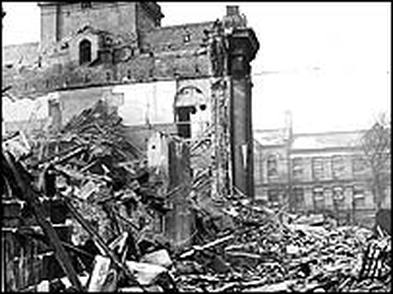
(part of the 16th Street Baptist Church Birmingham after the bombing)
In this terrorist attack on 15 September
1963, described by Martin Luther King as “one of the most vicious and tragic crimes
ever perpetrated against humanity”, four girls are murdered and 22 other
congregants sustain varying levels of injuries
(John
Coltrane Quartet, “Alabama”
[personnel: Coltrane, tenor
saxophone; McCoy Tyner, piano; Jimmy
Garrison, bass; Elvin
Jones, drums; recorded:
live, Jazz Casual Productions {host: Ralph Gleason}, 7 December 1963])
(Born 15 September 1889, Nairne Castle, Clarendon, Jamaica)
One of the leading intellectuals of the 1920s-1930s Harlem Renaissance – prolific poet, novelist, autobiographer, essayist, journalist, whose works include “If We Must Die” (1919), Harlem Shadows (1922), Home to Harlem (1928), Banjo (1929), A Long Way from Home (1937), Harlem (1940), My Green Hills of Jamaica (1979) and Amiable With Big Teeth (the eagerly awaited new novel from a 1941 McKay manuscript discovered in 2009 [68 years later!] in Columbia University archives) Twitter@HerbertEkweEkwe
Herbert Ekwe-Ekwe In 2065, fifty
years away, the Igbo people and the rest of the world will be making final
preparations to commemorate a century of the Igbo genocide. This will take
place on 29 May 2066.
Barbarism, Pestilence
It should be
recalled that on that dreadful mid-morning of Sunday 29 May 1966 and through
the course of 44 subsequent months of indescribable barbarity and carnage not
seen in Africa since the German-perpetration of the genocide against the
Herero, Nama and Berg Damara peoples of Namibia in the early 1900s, the
composite institutions of the Nigeria state, civilian and military, embarked on
the murder of Igbo people. 3.1 million Igbo or one-quarter of this nation’s
population were murdered during the genocide.
The Igbo genocide
is the foundational genocide of post-(European)conquest Africa. It inaugurated
Africa’s current age of pestilence. Singularly and quite dramatically, the
genocide shattered the capacity of this post-conquest state to capitalise on
the vast invaluable resources of multinationality and multiculturality emplaced
at such a critical phase to engineer a determined reconstructionary and
redevelopment programme of the country after the devastation of 60 years of the
British occupation.
Constitutive indices
To understand the
politics of the Igbo genocide and the politics of the “post”-Igbo genocide is
to have an invaluable insight into the salient features and constitutive
indices of politics across Africa in the past 50 years. Africans elsewhere
remained largely silent on the gruesome events in Nigeria but did not foresee
the grave consequences of such indifference as subsequent genocides in Rwanda,
Darfur, Nuba Mountains, South Kordofan (latter three in the Sudan) and
Zaïre/Democratic Republic of the Congo, and in other wars and conflicts in
every geographical region of Africa, during the period, have demonstrated
catastrophically: Liberia, Mali, Libya, Egypt, Côte d’Ivoire, Algeria, Sierra
Leone, Guinea-Bissau, southern Guinea, the Sudan, Ethiopia, Somalia, Uganda, Republic of the Congo, Burundi, Central
African Republic, Nigeria (Boko Haram insurgency in north, northcentral
regions). The haunting killing fields have indeed stretched, almost inexorably,
from Igboland to the rest of Africa…
Just as the Nigerian operatives of mass murder
appeared to have got away without censure from the rest of Africa, other
genocidal and brutal African regimes soon followed in Nigeria’s footpath,
murdering a horrifically additional tally of 12 million people in their
countries considered “undesirables” or “opponents” since the Igbo genocide in
January 1970. These 12 million murdered in the latter bloodbaths would probably
have been saved if Africans and the rest of the world had intervened, robustly,
to stop the initial genocide against the Igbo people. Surely, the world could
have stopped this genocide; the world should have stopped this genocide.
Bane of existence
Forty-nine years and 15 million murders on, Africans now realise, finally,
that there cannot be any meaningful advancement in their fortunes without
abandoning this post-(European)conquest state, this “Berlin-state”, essentially
a genocide-state. This state is the bane of African existence and progress.
Yet, thankfully, just as in Berlin, in November 1884-February 1885, when conquering Europeans
drafted their gruesome charter for the occupation of Africa, states are not a
gift from the gods but relationships painstakingly formulated and constructed
by a discernible group of human beings that inhabit an ascertainable
geo-historical territorial expanse on earth to pursue worldviews and interests
envisioned and articulated by these same human beings. The state, any state,
therefore, is transient; in contrast, human beings, people(s), endure.
Aimé Césaire, the poet and philosopher, once told interviewer Annick
Thebia Melson (“The liberating power of words: An interview with Poet Aimé
Césaire”,The Journal of
Pan-African Studies, Vol. 2, No 4, June 2008, pp. 2-7) during one of those
illuminating discourses of his on history: “History is always dangerous, the
world of history is a risky world; but it is up to us at any given moment to
establish and readjust the hierarchy of dangers” (2008: 7). It is indeed
in the very course to disrupt and “readjust” this hierarchy in this age of
pestilence in the”‘cursed” (to quote historian Basil Davidson) “Berlin-state”
in favour of Africa and African peoples that the constituent African nation or people (Igbo, Darfuri, Gĩkũyũ, Wolof,
Ibibio, Bakongo, Jola, Mongo, Akan, Luba, Ndebele, Mende, Luo, Herero, Serer,
Bamileke, etc., etc) – so long maligned, so long impoverished, so long
brutalised, so long humiliated and dehistoricised with often unprintable
epithets (t****, n****, n*****, n******, p********, b******, w**, sub-*******,
sub-*****, e*****, c***, c******, m*****, d******, h*******, f******-b******,
b****, m***, b********, c*******, b*********…), so long massacred, is
recognised, at last, as the principal actor and agency of its being and
geography.
So, for all African peoples or nations, the unambiguous message on the unfurled
banner for their freedom march in this next one-half of a century couldn’t be
more confident and focused: “We are because we are free; We are free because we
are”. Abandon the “Berlin-state” now: Nigeria, Niger, Chad, the Sudan, etc.,
etc., each and every one of this configuration, is a fraud. Create your own
state today, now. Now is the time! The constituent African nation, this people,
can and should create its own state if it so desires. Freedom. It is its inalienable right (http://re-thinkingafrica.blogspot.co.uk/2012/01/rights-for-scots-rights-for-igbo.html, accessed 10 September 2015). It does not therefore have to explain to anyone else why it has embarked on this track of freedom. It can now decide what precepts, what aspirations, what trajectory, what goals, it has set its new state to embark upon. As Césaire deftly puts it in the interview referred to, the challenges of the times become the “quest to reconquer something, our name (sic), our country … ourselves” (2008: 2).
(Sonny Rollins Quintet, “Decision” [personnel: Rollins, tenor saxophone, Donald Byrd, trumpet; Wynton Kelly, piano; Gene Ramey, bass; Max Roach, drums; recorded: Van Gelder Studio, Hackensack, NJ, US, 16 December 1956])
Let freedom ring!
Thus, the pressing point to reiterate here is that the immediate emergency that
threatens the very survival of African peoples is the enthralling “Berlin-state”
edifice entombed in African existence to serve the strategic interests of its
European World creator in perpetuity coupled with the pathetic bunch that
masquerades here and there as African leaderships but whose mission is to
oversee the pervasive manifestation that signposts contemporary Africa.
African women and
men will sooner, now, rather than later, abandon this fractured, fracturing,
conflictive, alienating and terror contraption. Africans must now focus on real
transformation – the revitalisation and consolidation of the institutions of
Africa’s constituent nations and polities, or what Okwuonicha Nzegwu has
described, succinctly, as the “indigenous spaces of real Africa” (Nzegwu,Love, Motherhood and the African
Heritage, 2001: 41). In these institutions and spaces of African
civilisation lie the organic framework to ensure transparency, probity,
accountability, investment in people, humanised wealth creation, respect for
human rights and civil liberties, and a true commitment to radically transform
African existence.
The future for the constituent nations and peoples of Africa couldn’t be more
reassuring on the morrow of that which, since 1 January 1956, has been
classified as the post-(European)conquest “Berlin-state” or genocide-state of
Africa. All successor states, organically constituted, really have their work
cut out. Their mission is not to begin to construct states that are merely
post-genocide or post post-conquest/post post-“colonial” states (cancelling
out, in some mechanical venture, that which was “Berlin-state” Africa here and
there!) but a realisation, a reclamation of that which makes usall human and part of humanity.
The new states have an opportunity to begin to build a new civilisation where
human life, fundamentally, issacrosanct.
This is an inclusive state where women and men live as co-operators and
co-creators in fundamentally transforming their society. This is a state that
accepts and accords full rights to all minority groups. This is a state where
people enjoy the rights to differ and to dream dreams and dream different sets
of dreams as they choose. This is a state dedicated to furthering and nurturing
the resilience of its people and to enabling them pursue their highest creative
endeavours. This state continuously strives to remove all limitations in the
paths of its people and committed to making life better and better and better.
This is a state that primes its people to flourish.
Finally, the long drawn out nightmare of nearly 200 years, since November 1884-
February 1885, is over and truly Africans do stand poised on the eve of a new
beginning.
(Ornette
Coleman Quartet, “Tomorrow is the question” [personnel: Coleman, alto saxophone; Don Cherry, trumpet; Percy Heath, bass; Shelly Manne, drums; recorded: Contemporary’s Studio, Los Angeles, US,
9/10 March 1959])
*****(slightly
edited version of paper originally published inPambazuka News: Pan African Voices
for Freedom and Justice, Issue 680, 29 May 2014, as part of collection of
essays focusing on“Africa in 50 years’ time – inventing a new
Africa”)
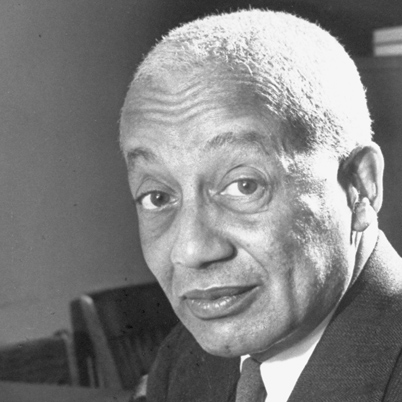
Distinguished philosopher and prolific multidisciplinary scholar aptly described by Martin Luther King as one of the preeminent philosophers that “came through the universe”, dean of the 1920s-1930s Harlem Renaissance
Agricultural engineer, outstanding theorist and philosopher of the national liberation resistance (see, particularly, Amilcar Cabral, Revolution in Guinea [New York: Monthly Review, 1970] and Cabral,Return to the Source [New York: Monthly Review, 1973]) and founder of Partido Africano da Independência da Guiné e CaboVerde (African Party for the Independence of Guinea and Cape Verde) that frees Guinea-Bissau and Cape Verde in 1974 from 500 years of the Portuguese conquest and occupation
No people who
survives genocide is a “loser”: Kongo, Mongo, Luba, Boulangui, Mangbetu-Azande,
Berg Damara, Nama, Herero, Armenians, Jews, Igbo, Tutsi, Darfuri... Someone or
a people that survives genocide is at
once a survivor and victor, hence that stunning incantation of the triumph
of life itself on the morrow of overcoming the slaughter: “Happy
Survival”! (http://re-thinkingafrica.blogspot.co.uk/2015/06/on-christopher-okigbo-africas-leading.html, accessed 2 September 2015)
Foundation
In the case of the Igbo genocide, 29 May 1966-12 January 1970, the foundational
genocide of post-(European)conquest Africa in which Nigeria murders 3.1 million
Igbo (one-quarter of this nation’s population), the agency that has
consistently acknowledged this fact of thesurvivor-victor, throughout this dreadful epoch, is, pointedly, if not ironically, none
other than Nigeria – the key perpetrator of this crime itself. Whatever else
explains why Nigeria segues almost effortlessly to a new phase of its campaign,
as early as 13 January 1970, to coincide with that Igbo celebratory
life-invocation-of- “Happy Survival” that they proclaimed to the whole world:
(a) new
vistas of charging murder trails since (i.e., 13 January 1970-10 September 2015),
targeting and slaughtering tens of thousands of Igbo domiciled particularly in
the geographies of north Nigeria but also elsewhere in the country with the
murder-machine now morphed into Boko Haram and the Buhari regime, arguably
the most terror-retrograde fraction of the Nigeria genocidist power-bloc
(b) enhanced
disarticulation/degradation/dismantling of Igboland economy and programmed
“marginalisation” of the well-known contending assets of Igbo
intellectual/politico-economic-cultural establishment – a crucial plank of the
overarching goal of theNigeriaoccupation which the Buhari regime has expanded with relish since May 2015
(c)
unrelentingly fiendish valorisation of the genocide by genocidist “theorists”/
commanders/commandants/heads-of-regime/regime enthusiasts-propagandists
including that notorious 6 April 2015 royal edict by Rilwan Akiolu, the king or oba of Lagos (west Nigeria) and fulsome supporter
of the Buhari regime, calling publicly for the mass murder of Igbo people (http://re-thinkingafrica.blogspot.co.uk/2015/04/c.html, accessed 6 September 2015).
(d) not one
official of the Buhari regime, either in the regions or the centre in Abuja, has
denounced this Akiolu-death decree
(e) not therefore
fortuitous that, since the Akiolu-death decree, regime troopers have murdered
scores of Igbo in Igboland itself –
at the Ariara International Market, Aba (eastcentral region), on 31 July 2015, and at the Oshimili River bridgehead of the Oshimili delta, Onicha (northwest
region), on 31 August 2015
(John Coltrane Quartet, “Living space” [personnel: Coltrane, soprano saxophone, McCoy Tyner, piano; Jimmy Garrison, bass; Elvin Jones, drums; recorded: Van Gelder Studio, NJ, US, 16 June 1965])
Biafra
Yet despite the
desperation and savagery of genocidistNigeria,
particularly heightened currently, the Igbo refuse
to go under. Igbo will never go under, thanks to the resilience of the
survivor-victor. In dazzling contrast, the world presently watches,
unmistakeably, asNigeriatrots along
to an ignominious collapse, having run the course of its bloody trail in
history, begun on Sunday 29 May 1966.
Consequently, for
the Igbo, they have their work cut out as they embark on constructing a new civilisation
in Biafra in the aftermath ofNigeria. This is the news the world awaits most eagerly. In Biafra, the Igbo don’t
only have to negate, in its entirety, that which wasNigeria but subvert the very ideational crucible which inaugurated this
pulverising nightmare unleashed by the epoch of the British conquest of the peoples and occupation of the states of this
southwestcentral region of Africa in 1885 – 130 years ago. Twitter@HerbertEkweEkwe
Joe R Feagin, How Blacks built America (Abingdon & New York: Routledge, 2015, 252 pp.),
£90.00/US$25.24-US$136.47hc; £24.99/US$36.39-39.95pbk; £23.74/US$36.26kindle
Book summary
How Blacks Built Americaexamines the many positive and dramatic contributions made by
African Americans to this country over its long history. Almost all public and
scholarly discussion of African Americans accenting their distinctive societal
position, especially discussion outside black communities, has emphasized
either stereotypically negative features or the negative socioeconomic
conditions that they have long faced because of systemic racism. In contrast,
Feagin reveals that African Americans have long been an extraordinarily
important asset for this country. Without their essential contributions,
indeed, there probably wouldnot have been a
United States. This is an ideal addition to courses race and ethnicity courses.
Author
Joe R Feagin is Ella C McFadden professor of sociology, Texas
ARM University, and prolific author whose books include Racist America (2002), Systemic racism (2006), Two faced racism (2007),
White party, White government (2012), The white racial frame (Second edition,
2013), Racist America (Third Edition, 2014) Twitter@HerbertEkweEkwe
Herbert Ekwe-Ekwe is specialist on the state and on genocide & wars in Africa in the post-1966 epoch – beginning with the Igbo genocide, 29 May 1966-present day, the foundational and most gruesome genocide of post-(European)conquest Africa. 3.1 million Igbo or 25 per cent of this nation’s population were murdered by Nigeria and its allies, principally Britain. Africa and the rest of the world largely stood by and watched as the perpetrators enacted this horror most ruthlessly. The world could have stopped this genocide; the world should have stopped this genocide. This genocide inaugurated Africa’s current age of pestilence. During the period, 12 million additional Africans have been murdered in further genocide in Rwanda (1994), Zaïre/DRCongo (variously, since the late 1990s) and Darfur – west of the Sudan – (since 2004) and in other wars in Africa. African peoples have, presently, no other choice but exit/dismantle the extant genocide-state (the bane of their existence & progress) & construct own nation-centred states that serve their interests. He is author of several books & papers on the subject and his new book is entitled The longest genocide – since 29 May 1966 (2019).