Rethinking Africa is a forward looking blog dedicated to the exchange of innovative thinking on issues affecting the advancement of African peoples wherever they are. We provide rigorous and insightful analyses on the issues affecting Africans and their vision of the world.
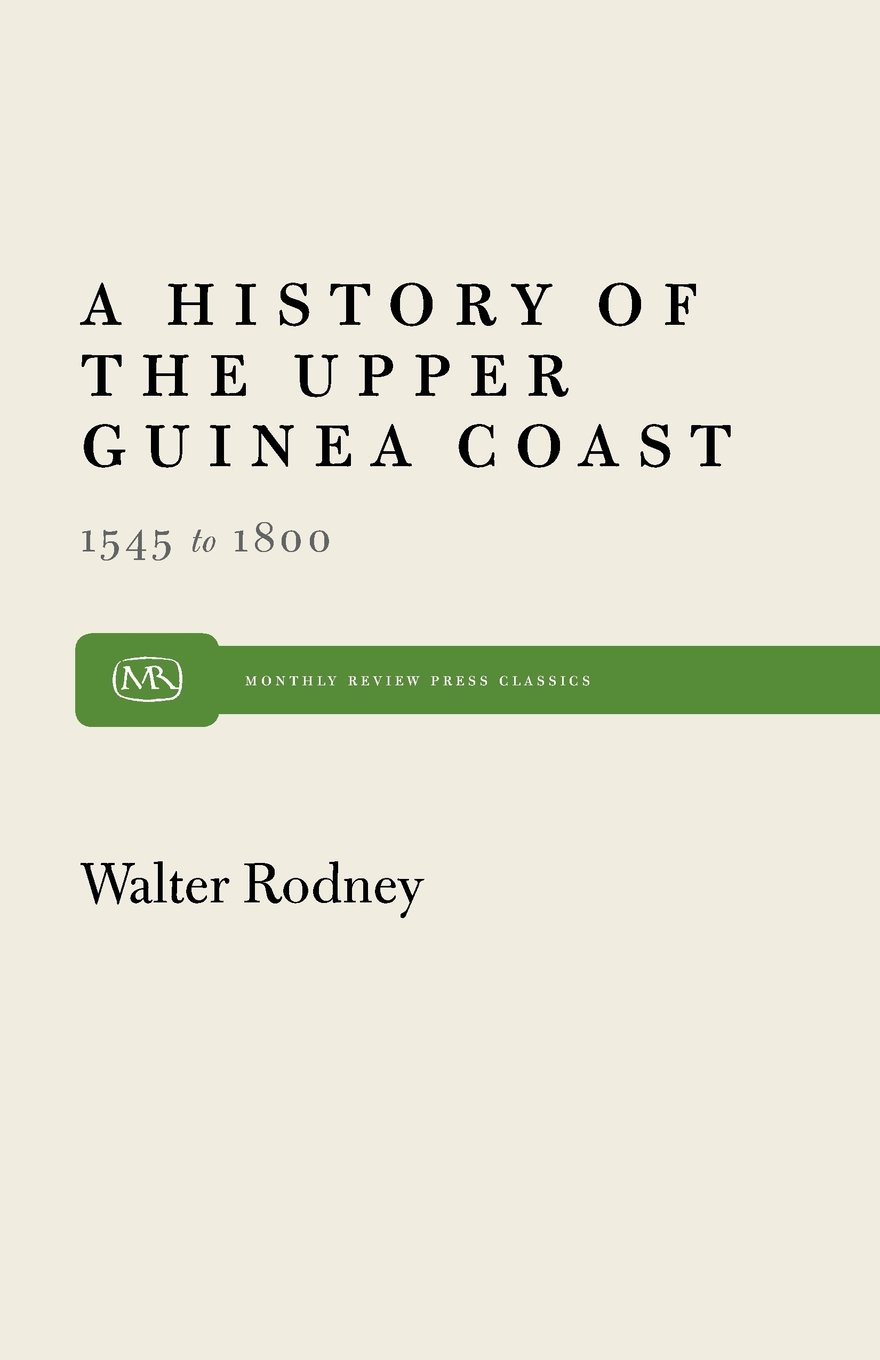
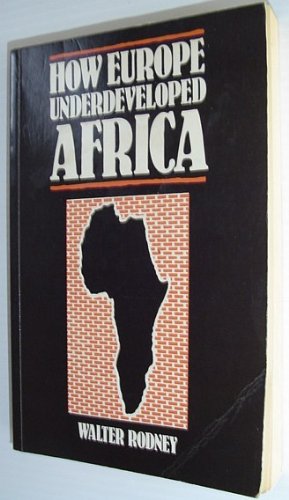
One of Africa’s preeminent historians whose A History of the Upper Guinea Coast, 1545-1800 (1970) and How Europe Underdeveloped Africa (1972) are compulsory references in the study of Africa and African peoples worldwide of the past 500 years
Eloquent and iconic news presenteron Biafran resistance radio broadcasting corporation during the Igbo genocide, 29 May 1966-12 January 1970, and versatile actor whose play of the Okonkwo character in a 1987 television adaptation of the classicThings Fall Apart(Chinua Achebe) remains critically acclaimed Twitter @HerbertEkweEkwe
One of the most prolific and distinguished film directors of his generation (releasing over 30 movies in a career begun 1983, including the classic Malcolm X [1992]), actor, producer, writer, academic
(Biafrans marching in the Waterford parade, Thursday 17 March 2016 [24:01 mins]... the Biafrans join the parade at 7.23 mins into the video clip: … hearty, resolute, focussed)
(Yvonne Chioma Mbanefo, Okowaokwu Igbo Umuaka: Igbo Dictionary for Children [L0ndon: Learn Igbo Now, 2016], 308pp, £10.00pb, £6.99 kindle/Euro 13.72pb, Euro 7.73 kindle/US$14.00pb, US$8.62 kindle)
(Yvonne Chioma Mbanefo: Okowaokwu Igbo Umuaka: Igbo Dictionary for Children)
Yvonne Chioma Mbanefo has won numerous
awards for her contributions to Igbo language learning. She is one of the
organisers of the Annual International Igbo conference at the School of Oriental
and African Studies, University of London. Mbanefo is a Fellow of the Higher
Education Academy, United Kingdom. She is a digital strategist and director at
a London based IT firm. She is trained in digital media, information design,
and elearning. She has done extensive research in the use of both digital and
traditional media in modern language learning. In her spare time she uses her
digital and information design skills to create Igbo language learning
materials at www.LearnIgboNow.com.
Herbert Ekwe-Ekwe The “Igbo Question” is intrinsically linked to the Igbo strategic goal,
presently, which is to end the occupation of their Biafran homeland by
genocidist Nigeria– imposed
since 13 January 1970. This is a structural facet of phase-IV of the genocide,
launched byNigeriaon 29 May 1966. 3.1 million Igbo
people or one-quarter of this nation were murdered byNigeriaand
Britain. Britain supported the genocide right from conceptualisation to
execution – politically, diplomatically, militarily. These were 44 months of
uninterrupted, unimaginable carnage and barbarity perpetrated on a people. Pointedly,
no single nation or people inAfricahas suffered this extent of gruesome
and devastating state(s)-premeditated and organised genocide in history.
(George Russell Sextet, “Thoughts” [personnel: Russell, piano; Don Ellis, trumpet; Dave Baker, trombone; Eric Dolphy, bass clarinet; Steve Swallow, bass; Joe Hunt, drums; recorded Riverside Record, New York, US, 28 May 1961])
The genocide continues unabated (as several essays and other recent entries
in re-thinking.blogspot.co.uk demonstrate) and Britain’s support continues
unflinchingly crucial. For Britain, contrary to the often clanking histrionics
of prevailing international politics rhetoric, its strategic alliance here, in
this African region, has always been with the islamist north region
Hausa-Fulani leadership which vociferously opposed the restoration of African
independence from the British occupation. It is Britain’s alliance with this leadership
situated atop the Nigeria constellation-equation that makes up the
Anglo-Nigerian amalgam that executed the Igbo genocide. It is also from groupings
with this same leadership that both Boko Haram (currently the world’s most
ruthless terrorist organisation, according to the Institute for Economics &
Peace, http://re-thinkingafrica.blogspot.co.uk/2015/11/institute-for-economics-peace-global.html) and the Fulani militia (see also the IE&P’s study on this militia) were
created and unleashed to murder tens of thousands of Africans and others in
these times.
So, given the critical links between the salient features of the
politics of the Nigerian occupation of Biafra and the overarching architecture
of the genocidal campaign, it is the case that the Igbo termination of the
occupation is at once the beginning of their freedom march from Nigeriaand the
implementation of an unprecedentedly expansive socioeconomic programme of
reconstruction. The route remains Igbo freedom from Nigeria, an inalienable Igbo
right with or without the genocide as I have argued severally. If the Scots,
for instance, one-tenth of the Igbo population and without a genocide
antecedent would wish to leave a union they have largely been
exponential beneficiaries for 300 years (“Rights for Scots, Rights for the
Igbo”, http://re-thinkingafrica.blogspot.co.uk/2012/01/rights-for-scots-rights-for-igbo.html), the
Igbo, surely, don’t require any agonisingly turgid historical and sociological
treatise to wish to leave Nigeria.
Rarefication Contrary to the amazingly ahistorical
discourses on the nature of the state and its survivability in some circles,
particularly in Africa where the prevailing eurocentric conquest social sciences
curriculum essentially rarefies the “state”, the state is very much a transient
relationship in human history: Kemet, Roman “empire”, Ghana “empire”,
Mali “empire”, Czarist “empire”, Austro-Hungarian “empire”, Ottoman
“empire”, Portuguese “empire”, Spanish “empire”, British “empire”, French Indo-China, Malaya Federation, Anglo-Egyptian-Sudan, Central African Federation, United Arab Republic, Mali Federation, Senegambia Confederation, West & East Pakistan, Soviet Union, Yugoslavia,
Czechoslovakia, Ethiopia,
the Sudan...
What has indeed been the grounding feature of the state in world history on this
accord, thankfully, has rather been “divisibility”, “dissolubility”, “destructibility”,
each the antonym of that 3-headed genocidist mantra mouthed off at random by
quite a few spokespersons of especially the genocide-state in Africa.
It is therefore not surprising that twenty-three
(23) new states have, for example, emerged in Europe since
the end of the 1980s. Even though a population of about 350 million, one-third
of Africa’s, Europeans presently have more states per capita than peoples of Africa! And
as history shows, the catastrophe is not the collapse of the
state; the catastrophe is the attempt to destroy constituent peoples within the state as the Anglo-Nigeria amalgam has sought in Biafra since 29 May 1966. Here
lies the Igbo Question.
Herbert Ekwe-Ekwe is specialist on the state and on genocide & wars in Africa in the post-1966 epoch – beginning with the Igbo genocide, 29 May 1966-present day, the foundational and most gruesome genocide of post-(European)conquest Africa. 3.1 million Igbo or 25 per cent of this nation’s population were murdered by Nigeria and its allies, principally Britain. Africa and the rest of the world largely stood by and watched as the perpetrators enacted this horror most ruthlessly. The world could have stopped this genocide; the world should have stopped this genocide. This genocide inaugurated Africa’s current age of pestilence. During the period, 12 million additional Africans have been murdered in further genocide in Rwanda (1994), Zaïre/DRCongo (variously, since the late 1990s) and Darfur – west of the Sudan – (since 2004) and in other wars in Africa. African peoples have, presently, no other choice but exit/dismantle the extant genocide-state (the bane of their existence & progress) & construct own nation-centred states that serve their interests. He is author of several books & papers on the subject and his new book is entitled The longest genocide – since 29 May 1966 (2019).