Rethinking Africa is a forward looking blog dedicated to the exchange of innovative thinking on issues affecting the advancement of African peoples wherever they are. We provide rigorous and insightful analyses on the issues affecting Africans and their vision of the world.
(Nnamdi Kanu: ... leader of Indigenous People of Biafra and freedom broadcaster, Radio Biafra)
Full text of
letter by Ifeanyi Ejiofor, Nnamdi Kanu’s counsel, to British government’s top
representative in Nigeria
24th March, 2016
The High Commissioner
British High Commission, Abuja
19 Torrens Close
Maitama, Abuja.
Dear Sir
RE: FEDERAL REPUBLIC OF NIGERIA VS NNAMDI KANU & 2 ORS CHARGE NO:
FCT/ABJ/CR/383/15
NNAMDI KANU: A VICTIM OF TRAVESTY OF JUSTICE AND A CALL FOR THE BRITISH
GOVERNMENT TO BE ON THE WATCH
We are Counsel to Nnamdi Kanu, the 1st Defendant in the above captioned
criminal charge, hereinafter refers to as “Our Client”, and on whose authority
and firm instruction, we formally bring to the attention of the British
Government the deliberate design by the Nigerian Government to subvert the
course of justice in the above criminal trial.
It is repeating the obvious to state that Our Client is a full
British citizen, by virtue of which position he is entitled to all Rights,
Privileges and Protections, guaranteed under the British Laws and conventions.
We are therefore constrained in the circumstance, to formally notify the
British Government vide this medium, of our well informed reservations, and
apprehension, that Our Client is undergoing persecution in the charge above
referred, and deliberate design by the persecutors to frustrate every effort of
the Defense team aimed at giving Our Client a fair trial.
We are not under any illusion that the British Government has taken notice of
the highlights in the presidential media chat granted by President Muhammed
Buhari on the 30th day of December 2015.
Prominent among his worrisome but most prejudicial comments in the said media
chat, is his insistence, that Our Client cannot be granted bail by any Court.
The President in the referenced media chat, referred to Our client as a flight
risk for possessing dual citizenship.
It is the position of our Law, that dual citizenship is a constitutional right
of the citizens of Nigeria, clearly provided for under section 28 of the 1999
Constitution of the Federal Republic of Nigeria as amended 2011. Dual citizenship
is not a crime under our Law.
Our reservations on the President’s comment was underpinned by the findings
made in the ruling delivered on the 29th day of February 2016, by Hon. Justice
John Tsoho, wherein Our Client and the two other Defendants were denied bail.
The learned Judge, in advancing his reasons for arriving at the decision, and
in consistence with the direction conveyed in the aforesaid media chat,
specifically referred to Our Client as a flight risk, on grounds of his dual
citizenship, and on the basis of which he denied him bail.
It is apposite in the circumstance to remind the British Government, that
Judges of the Federal High Court of Nigeria are appointed by the President of
the Federal Republic of Nigeria in line with the provisions of Section 250(2)
of the 1999 Constitution of the Federal Republic of Nigeria as Amended 2011.
This Section provide thus; Section 250; APPOINTMENT OF CHIEF JUDGE AND JUDGES
OF THE FEDERAL HIGH COURT 250(2): “The
appointment of a person to the office of a Judge of the Federal High Court
shall be made by the President on the recommendation of the National Judicial
Council.”
We therefore submit, most respectfully Sir, that by virtue of the powers
conferred on the President in the above cited Law, the President, Commander in
Chief of the Armed Forces of the Federal Republic of Nigeria, President
Muhammed Buhari, has overriding control over the appointment of the Federal
High Court Judges.
The learned trial Judge in denying Our Client bail on the 29th day of January,
2016, granted accelerated hearing of the substantive charge. Accelerated
hearing ordered by the learned presiding Judge in the matter connotes total
annihilation of all forms of delay in the trial intended to debilitate the
tenets of fair hearing.
Also, instructive to mention, that the Court is under duty to allow the
Defendants unfettered access to relevant materials and facilities that will aid
them in the defense of their case. This duty is not only sacrosanct and
compelling, but is provided for under Chapter (iv) of the 1999 Constitution of
the Federal Republic of Nigeria as (Amended) 2011, particularly in section
36(6) (b), among the fundamental rights of the citizens. In the course of our
defense, We are usually confronted with situation where we are handed the short
end of the stick in the face of deliberate refusal/delay in obliging us copies
of the Ruling delivered in open Court.
The 1999 Constitution of the Federal Republic of Nigeria as
Amended (2011), specifically section 36(7), allows a Court or Tribunal, only
seven days, in a criminal trial, to keep records of the proceedings, Rulings
and Judgment delivered therein, within which, it shall be made available to the
Accused person(s) or person applying through him.
It is disheartening, that our successive applications for the
certified true copies of Rulings delivered by the Honourable Court, on the 9th
February 2016, 19th February 2016, and 7th March 2016, have not receive any
attention. Either by deliberate design or omission, the Rulings, above
referred, are still being shielded from us as at today.
It is more painful, when it comes to mind that these Rulings are
not only fundamental but a necessity to a successful transmission of records of
the Court to the Appellate Court. The Court has always been served with copies
of our Notices of Appeal, anytime an application for the certified true copy of
the Ruling is submitted, which ordinarily, would have spurred it for
expeditious action but the reverse is usually the case.
On the face of this frustration, the defense is confronted with
apparent dilemma in offering our client the best legal services he deserved, in
the defense of these bogus charges preferred against him.
The Application brought by the Federal Government of Nigeria, requesting the
Court to protect the identities of the prosecution witnesses by the aid of
facial masks and screens while giving evidence in the course of proceeding, was
heard on the 19th day of February 2016.
Upon the hearing of the aforesaid application, and our objection,
the Court declined to grant the application, and consequently ordered that the
hearing of the matter should be conducted in the open. Members of the public
and press were also ordered by the Court to continue to participate in the
proceedings.
Surprisingly, on the 7th day of March, 2016, when the trial was
scheduled to commence, the Director of Public Prosecutions orally applied that
the subsisting order of the Honourable Court, made on the 19th day of February,
2016, be varied.
The Learned D.P.P, insisted that the prosecution witnesses have
refused to attend Court to give evidence, unless their identities are shielded
from the public. On the strength of the above application, and despite our
vehement opposition to the application, the Honourable Court made a volte-face,
and proceeded to grant their request, by varying the very order it made on the
19th day of February, 2016.
Though we have successfully lodged an appeal against this
perverse ruling of the Honourable Court, but it is now incumbent on the British
Authority to turn their torchlight on the process complained of, against the
obvious persecution of its own citizen.
Relevant to mention that the detail accounts provided by our
Client in his vicious experience in the hands of the operatives of the State
Security Services while in their custody, revealed how the investigating
officers boasted to him that the British Government was instrumental to his
arrest and dare him to watch out for future development in the matter. It is
therefore, our humble expectation that the demonstration of palpable commitment
by the British Government will to a larger extent neutralize the concerns and
fears raised by the remark under reference. It is on the strength of this
obvious maneuvering and deliberate design to subvert the course of justice that
we most humbly request the British authority to begin a race against time, for
more noticeable impact in this matter.
Attached herewith for your ease of reference, are copies of our
press briefing granted on the 18th day of March 2016, Certificates of
registration of Indigenous People of Biafra (IPOB) and Radio Biafra
respectively, in the United Kingdom Registration certificates of Indigenous
people of Biafra (IPOB) in other countries of the world, and video clips of how
the Nigeria Military personnel massacred innocent and Defenseless members of
Indigenous People of Biafra (IPOB) in Aba-Abia State, on the 9th day of
February 2016.
We shall keep you abreast of every development in this matter as
we progress.
Accept the assurances of our deepest regards Sir.
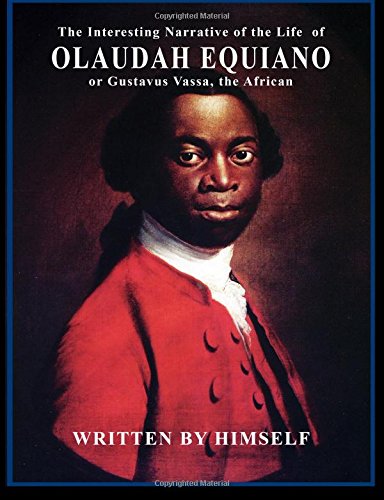
(Born c1745, Essaka, Biafra; dies 31 March 1797, London, England) One of the African World’s most celebrated intellectuals – sailor, explorer, expeditionist, entrepreneur, orator, versatile campaigner and active exponent of African freedom (during the 1780s in Britain) from enslavement and other spheres of subjugation by an assemblage of European states and interests and their “successor states” in the Americas/Caribbean, begun in the 15th century, visionary of eventual African liberation, author of the classic, The Interesting Narrative of the Life of Olaudah Equiano, or Gustavus Vassa, the African (1789)
(Ornette Coleman Quartet, “Ecars” [personnel: Coleman, tenor saxophone; Don Cherry, pocket trumpet; Jimmy Garrison, bass; Ed Blackwell, drums; recorded: Atlantic Studios, New York, US, 27 March 1961])
This piece is indeed
part of work in progress and is only presented here because of the recent
interview of USPresident Barack Obama in The
Atlantic magazine (Jeffery Goldberg, “The Obama Doctrine”, The Atlantic, April 2016 Issue, http://www.theatlantic.com/magazine/archive/2016/04/the-obama-doctrine/471525/, accessed 11 March 2016). It
is therefore going to be skeletal but its essence is not provisional as the final outcome of the study next year will demonstrate.
In 2001, I called on
the leaders of the world’s principal arms-manufacturing states to ban all arms sales/transfers to Africa
(Herbert Ekwe-Ekwe, African Literature in Defence of History: An Essay on
Chinua Achebe, 2001: 134-138). This was in response to the rampaging
post-(European)conquest genocide and other wars in Africa, begun
catastrophically by Nigeria and its British ally when they both perpetrated the
Igbo genocide in May 1966-Janaury 1970 with the murder of 3.1 million Igbo people or
one-quarter of this nation’s population. Since the Igbo genocide, 12 million
additional Africans have been murdered in follow-up genocides in Rwanda, Darfur
and in other regions in the Sudan, and the Democratic Republic of the Congo,
and in multiple wars across virtually all regions of the continent. Besides being
co-perpetrator of the Igbo genocide, Britain has also emerged as the lead arms
supplier to Africa including its genocide-states, especially Nigeria.
In June 2009, six
months after the inauguration of Barack Obama as the 44th president of the US,
I updated the appeal to the globe’s lead arms-manufacturing countries and noted,
as follows:
US President Obama, his country’s first African-descent head of
state, can be assured of a lasting legacy of his presidency by imposing a
comprehensive US arms embargo on this continent of his fathers at the cusp of
constructing new states of organic sensibilities – away from the terror of the
genocide state. Obama should expand this initiative to involve other
arms-exporters-to-Africa especially on such forums as the UN security council
and the G-8. Arms ban to Africa should be internationally mandatory and
enforceable (Herbert Ekwe-Ekwe, Readings from Reading: Essays on African
Politics, Genocide, Literature, 2011: 193).
Seven years and
three months into his 2-term presidency which ends nine months away in January
2017, Obama gives the interview to The
Atlantic. It is on his foreign policy during the period. This is a
wide-ranging survey but one that hardly focuses on any subject on Africa except
the 2011 US-British-French invasion of Libya, itself discussed, instead, within
the overarching parameters of Middle East/Arab/islamic affairs. Muammar
Gaddafi’s regime is overthrown during the course of the invasion, Gaddafi is
murdered as well as some members of his family in addition to some influential
officials of his regime, most Libyan cities and infrastructure (irrefutable
landmark achievements of the Gaddafi years in office) are spectacularly smashed
up, and Libya is subsequently, today, an “ISIS haven” (as The Atlantic interviewer Jeffery Goldberg terms it), largely controlled
by groupings within the islamist jihadist international conglomeration – part
of who Gaddafi was at war with prior to the West Trio invasion and murder.
In the interview, Obama
describes the aftermath of the Libya invasion as a “mess”, a “s*** show”,
blames the British and French leaders (David Cameron and Nicolas Sarkozy
respectively) who he co-led the invasion for this resultant “ISIS haven – that he
[Obama] has [latterly] targeted with air strikes” but, curiously, absolves
himself from the débâcle. For Obama, Cameron’s and Sarkozy’s roles in the
campaign are those of “free riders” who obviously cherish the perceived political
capital that such invasions bring from enthusiastic sectors of domestic
political opinion but are often less thoughtful of the consequences that such
devastating acts of violence have on the ground or region of the world of perpetration,
as they await eagerly for the invasion next time!
So, on Libya, after
the troika-invasion, Obama recalls with barely disguised criticism, Cameron and
Sarkozy just moved on… Cameron loses interest on this phase of the
crisis/emergency, the “follow-up”, as he is “distracted by other things” whilst
Sarkozy appears more interested to “trumpet the flights he [is] taking in the
[invasion’s] air campaign” even though, Obama is keen to emphasise, “we [the
US] had wiped out all [Libyan] air defenses and essentially set up the entire
infrastructure [for the invasion]”.
Raft of ironies
What is at the crux
of the politics of this post-Libya invasion apparent dilemma is the
operationalisation of Obama’s so-called leading-from-behind strategy in the
pursuit and promulgation of foreign policy projects with his allies, especially
those in Europe, on the crucial task of role assignment/rationalisation. On
this accord, ironically, Sarkozy’s exaggerated claims of France’s role in the
invasion is a boon to Obama’s “leading-from-behind” positioning as it enabled
the US to “purchase France’s involvement in a way that made it less expensive
for us and less risky for us”. The key phrase is of course “less risky”
and the Africa continent, in focus, where the French already had the notorious
record of having carried out forty-nine (49)
invasions of most of the 22 “francophonie” countries here in the previous 51
years with hardly any international repercussions, couldn’t be better placed than
anywhere else in the world, particularly the South World, as the geographical
site to mount such an aggression involving the US with minimal risks. It should
also be noted that “leading-from-behind” is a cardinal feature of the overall presumed “retrenchment” thrust or
dynamics of Obama’s foreign policy based on his readings of US’s international
relations in the past: “We have history … We have history with Iran, we have
history with Indonesia and Central America. So we have to understand our history
when we start talking about intervening, and understand the source of other
people’s suspicions”. Yet the 2011 US co-led invasion of Libya fits in more
appropriately with this “we have history”-heritage than a candidacy for some
envisaged “retrenchment” of interventionist/expansionist programmes overseas.
In yet another
startling irony, not covered in The
Atlantic interview, Obama had, in 2010, one year in office, reinstated the trail of France’s invasion history in Africa (mentioned above) which
President Bush, his predecessor, had frozen for seven years as “punishment” for
the French 2003 refusal to join the US-led coalition invasion of Iraq. Soon
after the embargo was lifted, Sarkozy ordered the French military, true to
type, to attack Abidjan, Côte d’Ivoire (French invasion no. 49 of an African
state since 1960), a presage to the
following year’s Sarkozy-Cameron-Obama Libya invasion (again for the French,
Africa invasion no. 50 since 1960), overthrew state president Laurent Gbagbo,
arrested him and his wife and dragged them to an international court in The
Hague for “trial” on trumped-up charges, installed a local puppet as a Gbagbo
replacement, murdered 2300 Africans during the course of the assault, and significantly
destroyed several business and residential districts of Abidjan. In 2012,
following his loss in the French presidential elections, Sarkozy passes his
country’s invasion-baton-for-Africa to successor François Hollande, who, in
turn, has since dispatched the French military to invade Mali (2013) and
Central African Republic (2013).
Not-“retrenchment”
and ongoing Igbo genocide in Biafra
It should now be
evident that Africa does not figure distinctly in the frame of Obama’s assumed
policy of “retrenchment” of spheres of US interventionism abroad. On the
contrary, Africa very much represents the territorial zone of US’s
not-“retrenchment”. Despite Obama’s criticism of the British and French
leaderships on post-Libya invasion intra-coalition relations, he has in fact
privileged the role of these dual lead-conqueror states of Africa in the
pursuit of other goals of US interventionism on the continent more under the contemptuous
tactical rubric of “Africa is direct responsibility of London and Paris”, a
throwback particularly to the 1950s-1970 era of the Dwight Eisenhower-Lynden
Johnson presidencies, which also manifests itself in that working slogan
already cited, “leading-from-behind”. We will refer to one other goal as an
example and this has profound consequences across the African World and history.
Considering this importance, it requires a bit of background for elucidation.
In March 2015, the
US, in close collaboration with Britain, imposed Muhammadu Buhari as head of
Nigeria regime (echoes of “we have a history with Iran”?/“we have a history
with Indonesia”?). Buhari has been known to the British for 50 years – since the
outbreak of the May 1966 Igbo genocide, the foundational genocide of
post-(European)conquest Africa, launched by its client state Nigeria. As
already noted, 3.1 million Igbo or 25 per cent of the Igbo population were
murdered during the genocide. Britain, which until six years earlier was the
conqueror-occupying power in Nigeria for sixty-years, supported the genocide politically,
diplomatically and militarily – right from its launch date, Sunday 29 May 1966,
and throughout its gruesome and devastating three phases during the course of
44 months ending 12 January 1970 ( http://re-thinkingafrica.blogspot.co.uk/2015/10/herbert-ekwe-ekwe-conquerors-concord-in.html). Nigeria launched phase-IV of the genocide
on 13 January 1970. This has continued unabated with tens of thousands of
Igbo murdered and their Biafra homeland effectively occupied by Nigeria.
Britain has maintained support for the genocide wholeheartedly and steadfastly during
this latter phase (http://re-thinkingafrica.blogspot.co.uk/2015/10/herbert-ekwe-ekwe-conquerors-concord-in.html).
Muhammadu Buhari himself has been a
genocidist operative in the Nigeria military – straight ahead from the launch date
of the Igbo genocide and during the Nigerian expansive trail of the mass
slaughter of Igbo military and civilians alike in north and west Nigeria
regions from 29 July 1966-July 1967 to encapsulate phases I-II of the genocide
timeframe. During phase-III of the genocide, the invasion of Biafra, July
1967-January 1970, Buhari was commander of a genocidist corps in north and
northcentral Biafra, slaughtering to the hilt. As from 13 January 1970,
beginning of phase-IV of the genocide, Buhari has adhered rigidly to or
overseen the Nigeria regime’s blanket policy of non-development of occupied
Biafra, the regime’s aggressive degradation of socioeconomic life in Biafra,
and the regime’s exponential expropriation of the rich oil reserves of Biafra.
Biafran assets looted by the occupation stand at US$1000 billion. Over time,
since 13 January 1970, Buhari has exhibited a calculated, deafening silence
over the course of the murder of those tens of thousands of Igbo people across
Nigeria but especially in his north Nigeria homeland by regime forces/allied
forces including those massacred by the Boko Haram terrorist organisation in
the past six years.
So sinceBuhari came to power in May 2015 as a
result of that US-British intervention and imposition, hundreds of Igbo people
demanding the restoration of their independence and the release of several
members of the freedom leadership including Nnamdi Kanu, head of the Indigenous
People of Biafra and broadcaster at Biafra freedom radio, have been murdered –
usually shot at sight during peaceful freedom marches by the Nigerian genocidist
military and police equipped mostly with British weapons. Beginning at the
Oshimili River twin city of Onicha on 2 December 2015, this orgy of massacres by
the Nigerian military has spread to other Biafran cities including Asaba,
Enuugwu, Igwe Ocha, Umuahia and Aba through the remaining of December and into
January-March 2016. The massacres have been meticulously documented by several
news organisations and individuals and human rights groups (http://re-thinkingafrica.blogspot.co.uk/2016/03/onitsha-nigeria-4-th-march2016.html). The 9 February
2016 Aba massacre of 22 Biafrans attending a morning prayer session in a local
high school by the genocidists (International Society for Civil Liberties &
the Rule of Law, Onicha, 21 February 2016) was particularly
gruesome and shocking and very disturbing images from the scene have since gone
viral on the internet. In a sentence, genocidist Nigeria military contingents
are literally at loose in Biafra massacring and maiming defenceless people who
express their inalienable right to freedom and beginning in early February
(2016), they have been joined by Fulani
militia terrorists rampaging swathes of villages in north, northcentral and
southwest of Biafra. On a comparative
note, the Nigerian genocidist troopers have attacked chosen or pre-targeted
Biafran population centres with the same spontaneity, precision and virulence
that a Boko Haram terrorist cell would employ in attacking fishing communities
in Baga, north Nigeria, or a church in Yola (north Nigeria) or an ISIS
terrorist unit would effect whilst attacking the Charlie Hebdo editorial board
meeting in Paris, France, or attacking a Jewish supermarket in Paris or a rock
concert in Paris or attacking an airport terminal in Brussels, Belgium, or
attacking a metro train in Brussels…
Noticeably, there has been no condemnation of
any of the stretch of Nigerian genocidist military attacks on the Biafran
public during these past three months (launched 2 December 2015) from David
Cameron’s British government. The same haunting silence pervades from the Obama
administration. Not a word. In sharp contrast, when on 12 December (2015) a
Nigeria military brigade operating in Zaria, northcentral Nigeria, attacked and
murdered several shiite muslim protesters in a procession, there was a robust response
from the US government: “The United States calls on the government of Nigeria to
quickly, credibly, and transparently investigate these events in Zaria and hold
to account any individuals found to have committed crimes”. This same US government wouldn’t,
didn’t follow up with similar or any other statements of concern in the
following acts of Nigerian genocidist attacks on Igbo population in Biafra:
Onicha (17 December), where eight Biafrans were murdered and scores wounded;
Aba (19 January 2016), where 10 Biafrans were murdered and scores wounded; Aba (9
February), where 22 were murdered and scores wounded.
(Aba massacre:…
genocidist Nigeria military guns down 22 peaceful Biafrans involved in an early morning open air prayer session for freedom, National High
School Aba, Biafra, Thursday 9 February 2016)
“African American
son”
In introducing the
section of The Atlantic interview
with Obama that focuses on Israel, Jeffery Goldberg recalls a conversation
between Obama and Israeli prime minister Benjamin Netanyahu which perhaps
captures the “frosty” characterisation that many an observer has used in describing
the latter’s relationship in the past seven years. “Obama felt that Netanyahu
was behaving in a condescending fashion,” Goldberg writes, as the Israeli
leader had “launched into something of a lecture about the brutal region in
which he lives…” Obama retorts: “Bibi, you
have to understand something … I’m the African American son of a single mother,
and I live here, in this house. I live in the White House. I managed to get
elected president of the United States. You think I don’t understand what
you’re talking about, but I do.”
As I indicated at
the beginning of these reflections, Africa, the African World, hardly features anywhere
as a subject of focus or discussion in
this interview covering Obama’s foreign policy during seven years in office as
US president. The reader may therefore wonder what relevance Obama’s reference
to “African American son” or indeed his “White House” home address during the exchange
with Netanyahu has to the entire thrust of the interview beyond the record
reminder, an important one that must be stressed, given the pivotal role played
by the African humanity in this history, of the first person of African descent
to occupy the position of president of the United States 233 years after the
founding of the republic. But the focus, surely, cannot begin and just end with
an African “entry” in the “White House”! What does the occupier do whilst there
in residence? How do they embody and respond to the weight of the African
history antecedent? What is this African history? What has the occupier done
whilst there in residence?
African Atlantic
discourses
Soon after Obama’s
inauguration as president in January 2009, quite a few African World scholars
envisaged the reactivation, in some formats, of those democratic forums and
spaces where African Atlantic discourses involving a range of outstanding
intellectuals were so instrumental in launching and implementing transformative
initiatives that have been of profound benefits across the African World
especially in the past 300 years. Unfortunately, this reactivation hasn’t
occurred and, interestingly ironical, that Netanyahu’s “lecture”-designation
Goldberg referred to in the interview hasn’t been totally dissimilar to what
some African continental heads of regime feel has been Obama’s own approach to
them in their relations.
Still on the African
Atlantic discourses, it is extraordinary to wish to contemplate how the
intellectuals engaged in this circle would deliberate over the historic tragedy
of an African-descent occupier in the “White House” residence who has watched in
deafening silence since 2 December 2015 as the head of the ruthless genocidist
regime in Nigeria, whom he had earlier on installed in office in collaboration with
the British prime minister, murders peaceful and defenceless Africans in Biafra
so ghastly for a reason not any more complicated than that 7-letter word that
has come to define the strategic quest of the African World for 400 years: freedom. So, what would the following from
some of the brightest minds of this assemblage think of the tragedy – Olaudah
Equiano, Sojourner Truth, Harriet Tubman, Edward Wilmot Blyden, Frederick
Douglass, WEB Du Bois, James Baldwin, Léopold Sédar Senghor, CLR James, Eric Williams, Martin Luther King,
Malcolm X, Chinua Achebe, Cheikh Anta Diop, John Henrik Clarke, Fela
Anikulapo-Kuti, George Lamming, John Coltrane, Julius Nyerere, Alain Locke, Nelson
Mandela, Steve Biko, Ivan Van Sertima, Aimé Césaire, Nicolás Guillén, Chukwuemeka
Odumegwu-Ojukwu, Mariam Makeba, Ossie Davis, Marcus Garvey, Ruby Dee, Louis Armstrong, George
James, Walter Rodney, Jacob Carruthers, Toni Morrison, Théophile
Obenga, King
Jaja of Opobo, Duke Ellington, Samuel Coleridge-Taylor, Christopher Okigbo, Kwame Nkrumah,
Martin Delaney, Adu Boahen, Nwafor Orizu, Mbonu Ojike, Bethuel Ogot, Amilcar Cabral, Max Roach, Bob
Marley, Robert Sobukwe, George Russell, Okot p’Bitek, W Arthur Lewis, Chancellor Williams, Patrice
Lumumba, Kenneth Onwuka Dike, David Diop, Adiele Afigbo, Peter Tosh, Kofi
Awoonor, Molefi Kete Asante, Charles Mingus, Uche Okeke, Wangari
Maathai, Ifeanyi Menkiti, Esiaba Irobi, Maurice Bishop, Dedan Kimathi, Michael Echeruo, Maulana Karenga,
Alioune Diop, Eni Njoku, Ama Ata Aidoo, Ngũgĩ wa Thiong’o, Eric Dolphy, Ousmane Sembéne, Mariama Bâ, Léon-Gontram
Damas, Agwuncha Arthur Nwankwo, Sydney Poitier, Abbey Lincoln, Uzo Egonu, Langston Hughes, Emmanuel Obiechina, Mariamba Ani,
Thomas Sankara, Hilary Beckles.
(George Russell Sextet here plays
“Nardis”, a composition by Miles Davis[personnel: Russell, piano;Don
Ellis, trumpet;Dave Baker,
trombone;Eric Dolphy,
bass clarinet;Steve Swallow,
bass;Joe Hunt, drums;
recorded: Riverside Records, New York, 8 May 1961])
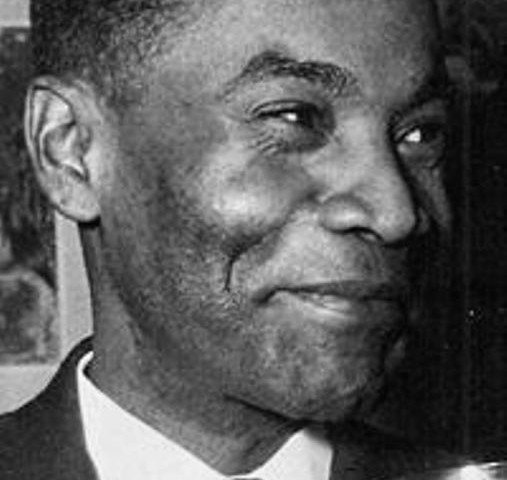
(Born 28 March 1912, Cayenne, French-occupied Guiana)
Poet, editor, philosopher, academic, co-founder, with Léopold Sédar Senghor and Aimé Césaire, of the 1930s-1940s “negritude” intellectual movement of African affirmation in Paris, France, and whose demonstrable volume of poetry, Pigments (1937), gives notice of the engaging trajectory of the movement:
Herbert Ekwe-Ekwe is specialist on the state and on genocide & wars in Africa in the post-1966 epoch – beginning with the Igbo genocide, 29 May 1966-present day, the foundational and most gruesome genocide of post-(European)conquest Africa. 3.1 million Igbo or 25 per cent of this nation’s population were murdered by Nigeria and its allies, principally Britain. Africa and the rest of the world largely stood by and watched as the perpetrators enacted this horror most ruthlessly. The world could have stopped this genocide; the world should have stopped this genocide. This genocide inaugurated Africa’s current age of pestilence. During the period, 12 million additional Africans have been murdered in further genocide in Rwanda (1994), Zaïre/DRCongo (variously, since the late 1990s) and Darfur – west of the Sudan – (since 2004) and in other wars in Africa. African peoples have, presently, no other choice but exit/dismantle the extant genocide-state (the bane of their existence & progress) & construct own nation-centred states that serve their interests. He is author of several books & papers on the subject and his new book is entitled The longest genocide – since 29 May 1966 (2019).