Rethinking Africa is a forward looking blog dedicated to the exchange of innovative thinking on issues affecting the advancement of African peoples wherever they are. We provide rigorous and insightful analyses on the issues affecting Africans and their vision of the world.
Pianist, pianists’ pianist whose “encyclopaedic knowledge” (to quote the recurring phrase from many a critic) of the jazz piano repertoire ensures he ranges effortlessly in his solo take from the stride traditions of the 1920s-1930s (James Johnson, Willie “The Lion” Smith, Fats Waller) to the late 1940s/early 1950s revolutionary breakthroughs of Thelonious Monk and Herbie Nichols and the later flights of Cecil Taylor but still sounding Jaki Byard, academic, indelible footprints on the Charles Mingus jazz workshop – particularly the classic sextet: Mingus, bass; Johnny Coles, trumpet; Eric Dolphy, alto saxophone, bass clarinet, flute; Clifford Jordan, tenor saxophone; Byard, piano; Dannie Richmond, drums
(Charles Mingus Sextet – with Eric Dolphy, Cornell University 1964, “Orange was the color of her dress, then blue silk” [personnel: Mingus, bass; Johnny Coles, trumpet; Dolphy, bass clarinet; Clifford Jordan, tenor saxophone; Byard, piano; Dannie Richmond, drums; recorded: live, Cornell University, 18 March 1964])
(Born 11 June 1920, Port of Spain, Trinidad & Tobago)
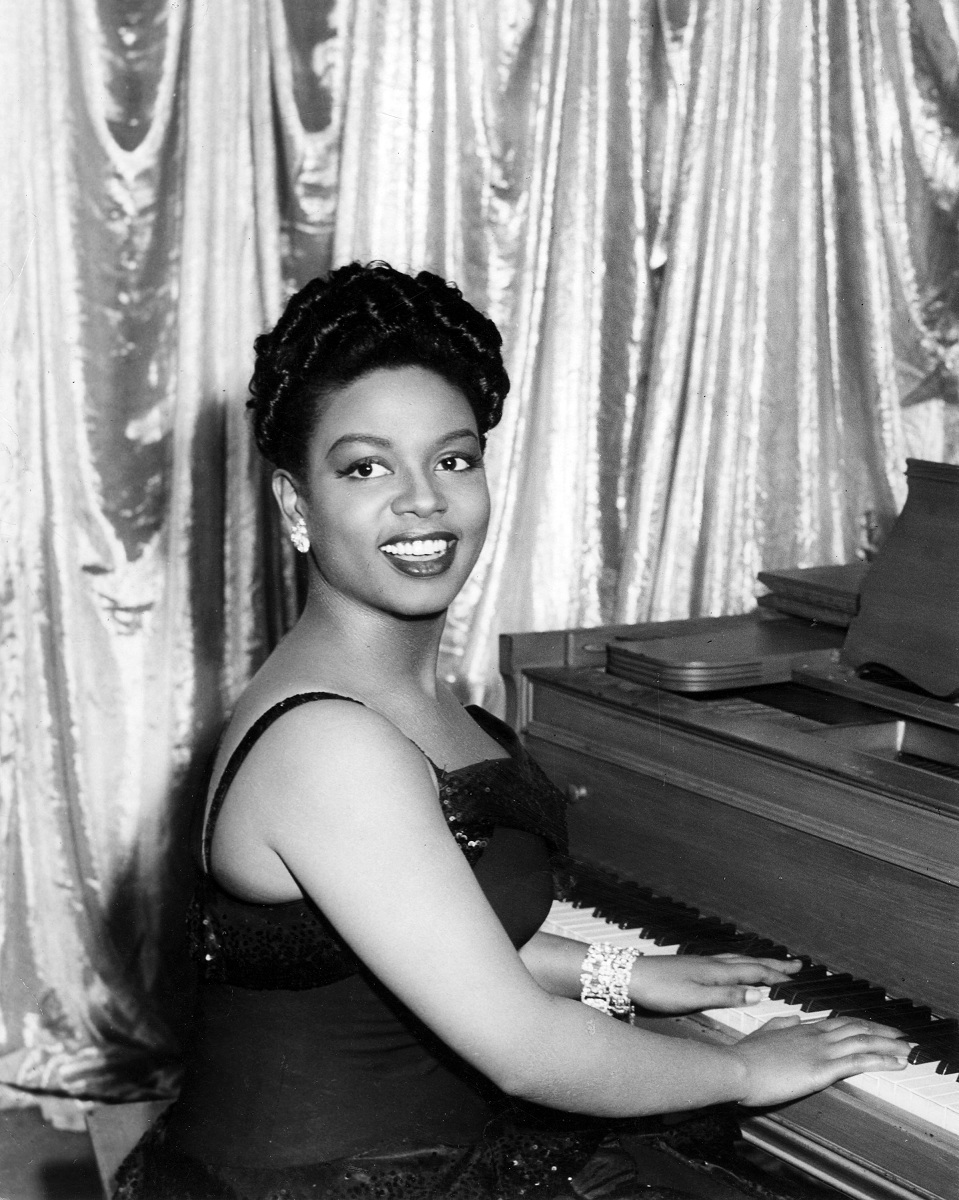
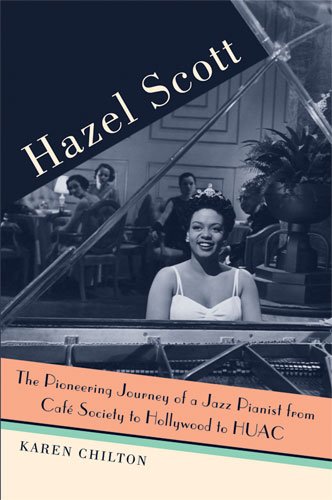
Perspicacious pianist, singer, actress and freedom activist whose incomparable affirmation of her African American identity in Hollywood of the 1940s-1950s remains a towering legacy
(Professor Scott: Seminar! [The Hazel Scott Show, summer 1950])
(Hazel Scott Trio, “Foggy day” [personnel: Scott, piano; Charles Mingus, bass; Rudy Nichols, drums; recorded: French Television, 1955])
Amnesty
International stresses in its report (see link below) published in London today,
Friday 10 June 2016: “This is not the first time that IPOB [Indigenous People of Biafra] supporters have died
at the hands of the military. It is becoming a worrying pattern and this
incident and others must be immediately investigated”
Herbert Ekwe-Ekwe (The paper“‘Sub-Sahara Africa’ is racist”, previously published on 28 August 2012, is reissued here with few changes in the original) “Sub-Sahara Africa” is racist***** It appears increasingly fashionable for a number of broadcasters (BBC, CNN, France24, etc., etc) websites (see, for instance, CNN, France24, BBC), news agencies (Reuters, AP, AFP, etc., etc), newspapers (The Times, Financial Times, Washington Post, Le Monde...) and magazines, the United Nations/allied agencies and some governments, writers and academics to use the term “sub-Sahara Africa” to refer to all of Africa (54 countries) except the 5 predominantly Arab states of north Africa (Morocco, Algeria, Tunisia, Libya, Egypt) and the Sudan, a northcentral African country. Even though its territory is mostly located south of the Sahara Desert, the Sudan is excluded from the “sub-Sahara Africa” tagging by those who promote the use of the epithet because the regime in power in Khartoum describes the country as “Arab” despite its African peoples’majority population. Which science? As we now demonstrate, the concept “sub-Sahara Africa” is absurd, misleading, if not a meaningless classificatory schema. Its use defies the science of the fundamentals of geography but prioritises hackneyed, stereotypical, racist labelling. It is not obvious, on the face of it, which of the four possible meanings of the prefix, “sub”, its users attach to the “sub-Sahara Africa” labelling. Is it “under” the Sahara Desert or “part of”/“partly” the Sahara Desert? Or, presumably, “partially”/“nearly” the Sahara Desert or is it the application of “in the style of, but inferior to” the Sahara Desert, especially considering that there is an Arab people sandwiched between Morocco and Mauritania (northwest Africa) called Saharan? The example of South Africa is appropriate here. Crucially, this is a reference underlined in the relevant literature of the era especially those emanating from the West, the United Nations (principally UNDP, FAO, WHO, UNCTAD), the World Bank and IMF, the so-called NGOs/“aid” groups, and some in academia who all are variously responsible for initiating and sustaining the operationalisation of this “sub-Sahara Africa” dogma. The point is that prior to the formal restoration of African majority government in 1994, South Africa was never designated “sub-Sahara Africa” by anyone in this portrait, unlike the rest of the 13 African-led states in southern Africa, which were also often referred to, at the time, as the “frontline states” (reference to their strategic support for the historic African liberation movement across their borders in South Africa). South Africa then was either termed “white South Africa” or the “South Africa sub-continent” (as in the “India sub-continent” usage, for instance), meaning “almost”/“partially” a continent – quite clearly a usage of “admiration” or “compliment” employed by its subscribers to essentially project and valorise the perceived geostrategic potentials or capabilities of the erstwhile European-minority population’s occupation regime-led country. But soon after the triumph of the African freedom movement there, South Africa became “sub-Sahara Africa” in the quickly adjusted schema of this representation! What happened suddenly to South Africa’s geography to be so differently classified?! Is it African liberation/rule that renders an African state “sub-Sahara”?[1] Does this post-1994 West-inflected South Africa-changed classification make “sub-Sahara Africa” any more intelligible? Interestingly, just as in the South Africa “sub-continent” example, the application of the “almost”/“partially” or indeed “part of”/“partly” meaning of prefix “sub-” to “Sahara Africa” focuses unambiguously on the following countries of Africa: Morocco, Algeria, Tunisia, Libya and Egypt, each of which has 25-75 per cent of its territory (especially to the south) covered by the Sahara Desert. It also focuses on Mauritania, Mali, Niger, Chad and the Sudan, which variously have 25-75 per cent of their territories (to the north) covered by the same desert. In effect, these ten states would make up sub-Sahara Africa.
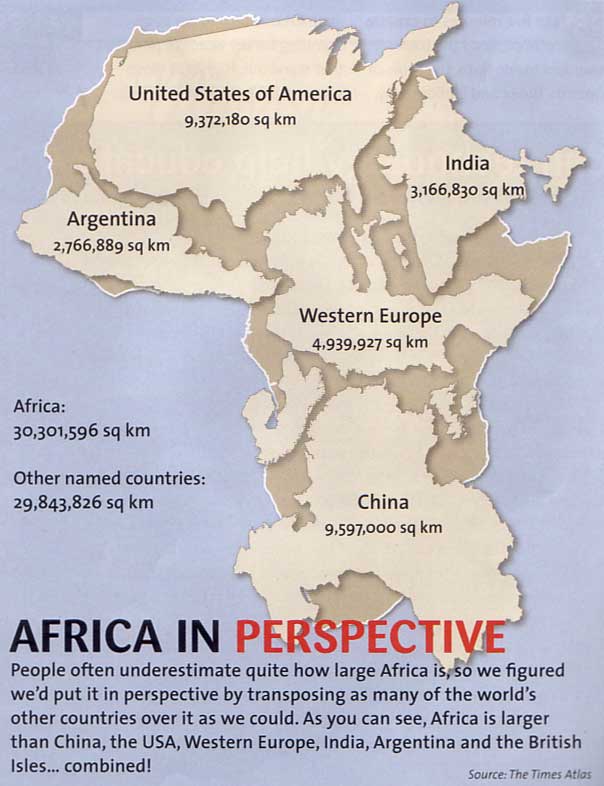
Morocco, Algeria, Tunisia, Libya and Egypt, the five Arab north Africa countries, do not, correctly, describe themselves as Africans even though they unquestionably habituate African geography, the African continent, since the Arab conquest and occupation of this north one-third of African territory in the 7th century CE. The West governments, press and the transnational bodies we referred to earlier (which are led predominantly by West personnel and interests) have consistently “conceded” to this Arab cultural insistence on racial identity. Presumably, this accounts for the West’s non-designation of its “sub-Sahara Africa” dogma to these countries as well as the Sudan, whose successive Arab-minority regimes since January 1956 have claimed, but incorrectly, that the Sudan “belongs” to the Arab World. On this subject, the West does no doubt know that what it has been engaged in, all along, is blatant sophistry, not science. This, however, conveniently suits its current propaganda packaging on Africa, which we shall be elaborating on shortly. It would appear that we still don’t seem to be any closer at establishing, conclusively, what its users mean by “sub-Sahara Africa”. Could it, perhaps, just be a benign reference to all the countries “under” the Sahara, whatever their distances from this desert, to interrogate our final, fourth probability? Presently, there are 54 so-called sovereign states in Africa. If the 5 north Africa Arab states are said to be located “above” the Sahara, then 49 are positioned “under”. The latter would therefore include all the 5 countries mentioned above whose north frontiers incorporate the southern stretches of the desert (namely, Mauritania, Mali, Niger, Chad and the Sudan), countries in central Africa (the Congos, Rwanda, Burundi, etc., etc), for instance, despite being 2000-2500 miles away, and even the southern African states situated 3000-3500 miles away! In fact, all these 49 countries, except the Sudan (alas, not included for the plausible reason already cited!), which is clearly “under” the Sahara and situated within the same latitudes as Mali, Niger and Chad (i.e., between 10 and 20 degrees north of the equator), are all categorised by the “sub-Sahara Africa” users as “sub-Sahara Africa”. “Sub-”s of the world? To replicate this obvious farce of a classification elsewhere in the world, the following random exercise is not such an indistinct scenario for universal, everyday, referencing: 1. Australia hence becomes “sub-Great Sandy Australia” after the hot deserts that cover much of west and central Australia 2. East Russia, east of the Urals, becomes “sub-Siberia Asia” 3.China, Japan and Indonesia are reclassified “sub-Gobi Asia” 4. Bhutan, Nepal, Pakistan, India, Sri Lanka, Bangladesh, Myanmar, Thailand, Laos, Cambodia and Vietnam become “sub-Himalaya Asia” 5. All of Europe is “sub-Arctic Europe” 6.Most of England, central and southern counties, is renamed “sub-Pennines Europe” 7.East/southeast France, Italy, Slovenia, Croatia are “sub-Alps Europe” 8. The Americas become “sub-Arctic Americas” 9.All of South America south of the Amazon is proclaimed “sub-Amazon South America”; Chile could be “sub-Atacama South America” 10. Most of New Zealand’s South Island is renamed “sub-Southern Alps New Zealand” 11. Mexico, Guatemala, Honduras, Nicaragua, Costa Rica and Panama become “sub-Rocky North America” 12. The entire Caribbean becomes “sub-Appalachian Americas” African-centred scholarship So, rather than some benign construct, “sub-Sahara Africa” is, in the end, an outlandish nomenclatural code that its users employ to depict an African-led “sovereign” state – anywhere in Africa, as distinct from an Arab-led one. It is the very possibility of the unfettered freedom of the peoples of Africa from centuries of European World conquest, subjugation and expropriation that the promoters of this epithet dread. It is the users’ non-inclusion of the Sudan in the “sub-Sahara Africa” grouping (despite its majority African population and geographical location) but its inclusion of South Africa only after the latter’s 1994 liberation that gives the game away! More seriously to the point, “sub-Sahara Africa” is employed to create the stunning effect of a supposedly shrinking African geographical landmass in the popular imagination, coupled with the continent’s supposedly attendant geostrategic global “irrelevance”, precisely during an age when Africans are not only net-exporters of capital to the West World, but African émigré in the West and elsewhere in the world outside Africa are now the principal exporters of capital back to Africa (as indeed a 2003 World Bank study clearly shows – in this year, these émigrés transferred the gargantuan sum of US$200 billion to Africa, investing directly in their communities [World Bank, “Migrant Labor Remittances in Africa”, Africa Regional Paper Series, No. 64, Washington, November 2003, p. 12.]). “Sub-Sahara Africa” is undoubtedly a racist geopolitical signature in which its users aim repeatedly to present the imagery of the desolation, aridity, and “hopelessness” of a desert environment. This is despite the fact that the overwhelming majority of 1 billion peoples of African do not live anywhere close to the Sahara, nor are their lives so affected by the implied impact of the very loaded meaning that this dogma intends to convey. Except this steadily pervasive use of “sub-Sahara Africa” is robustly challenged by rigorous African-centred scholarship and publicity work, its proponents will succeed, eventually, in substituting the name of the continent “Africa” with “sub-Sahara Africa” and the name of its peoples, “Africans”, with “sub-Sahara Africans”****** or, worse still, “sub-Saharans” in the realm of public memory and reckoning. *****This essay is a slightly updated version of a paper, Herbert Ekwe-Ekwe, “What is ‘sub-Sahara Africa’?”, read at the IDeoGRAMS Conference: Contemporary Media,University of Leicester, 14 September 2007
******The BBC, one of the most insistent purveyors of this racist epithet, now routinely adopts “sub-Sahara Africans” in its reference to peoples of Africa on its website (HE-E, Thursday 9 June 2016)
(Charles Mingus Sextet with Eric Dolphy Cornell 1964, “Fables of Faubus” [personnel: Mingus, bass; Johnny Coles, trumpet; Dolphy, bass clarinet; Clifford Jordan, tenor saxophone; Dannie Richmond, drums; recorded live, CornellUniversity, 18 March 1964])
Twitter @HerbertEkweEkwe
[1]Roger Tangri, Politics in Sub-Sahara Africa (London and Portsmouth, NH: James Currey, 1985), p. ix, passim.
The
Princeton University Library is pleased to announce (https://blogs.princeton.edu/manuscripts/2016/06/07/toni-morrison-papers-open-for-research/, accessed 8 June 2016) that the major portion of
the Toni Morrison Papers (C1491), part of the Library’s permanent collections
since 2014, is open for research (as of June 8, 2016). The papers are located
in the Manuscripts Division, Department of Rare Books and Special Collections,
in the Harvey S. Firestone Memorial Library. They contain more than two hundred
linear feet of archival materials that document the life and work of Toni
Morrison, Nobel Laureate in Literature (1993) and Robert F. Goheen Professor in
the Humanities (Emeritus) at Princeton University. Morrison’s papers were
gathered from multiple locations over more than two decades, beginning with the
files recovered by the Library’s Preservation Office after the tragic fire that
destroyed her home in 1993. Over the past eighteen months, the most significant
of the papers have been organized, described, cataloged, and selectively
digitized. The papers are described online in a finding aid.
Most
important for campus-based and visiting researchers are some fifty linear feet
of the author’s manuscripts, drafts, and proofs for the author’s novels The Bluest Eye(1970), Sula (1973), Tar Baby (1981), Beloved (1987), Jazz (1992), Paradise (1997), Love (2003), A Mercy (2008), Home (2012), and God Help the Child (2015).
The only exception are materials for Song of Solomon (1977),
which are believed lost. In the interest of preservation, by agreement with the
author, all of these manuscripts have been digitized in the Library’s Digital
Studio. Research access to digital images of Morrison’s manuscripts will be
provided in the Rare Books and Special Collections Reading Room. The study of
Morrison’s manuscripts illustrates her approach to the craft of writing and
help trace the evolution of particular works, from early ideas and preliminary
research, to handwritten drafts on legal-size yellow notepads, and finally
corrected typescripts and proofs. The early drafts often differ substantially
from the published book in wording and organization, and contain deleted
passages and sections.
A
single yellow notepad may contain a variety of materials, including content
related to other works, drafts of letters, inserts for later typed and printed
versions, and other unrelated notes. Corrected typescript and printout drafts
often show significant revisions. Material from various stages of the
publication process is present, including setting copies with copy-editor’s and
typesetter’s marks, galleys, page proofs, folded-and-gathered pages (not yet
bound), blueline proofs (“confirmation blues”), advance review copies (bound
uncorrected proofs), and production/design material with page and dust-jacket
samples. In addition to documenting Morrison’s working methods, the papers make
it possible to see how books were marketed to the reading public and media, and
also to trace the post-publication life of books, as they were translated,
repackaged, reprinted, released as talking books, and adapted for film.
Among
unexpected discoveries that came to light during archival processing are
partial early manuscript drafts for The Bluest Eye and Beloved; and born-digital files on floppy disks,
written using old word-processing software, including drafts of Beloved, previously thought to have been lost. Morrison
also retained manuscripts and proofs for her plays Dreaming Emmett (1985) and Desdemona (2011); children’s books, in
collaboration with her son Slade Morrison; short fiction; speeches, song
lyrics; her opera libretto for Margaret Garner,
with music by the American composer Richard Danielpour; lectures; and
non-fiction writing.
Also
valuable for researchers is Morrison’s literary and professional
correspondence, approximately fifteen linear feet of material, including
letters from Maya Angelou, Houston Baker, Toni Cade Bambara, Amiri Baraka,
Gwendolyn Brooks, Ossie Davis and Ruby Dee, Leon Higginbotham, Randall Kennedy,
Ishmael Reed, Alice Walker, and others. Additional literary correspondence is
found in Morrison’s selected Random House editorial files, where her authors
included James Baldwin, Toni Cade Bambara, Angela Davis, and Julius Lester.
Morrison also retained drafts, proofs and publication files related to two
works by Toni Cade Bambara, which Morrison posthumously edited for publication;
as well as photocopies of selected correspondence of James Baldwin, 1957-1986,
and materials relating to Baldwin’s literary estate.
The
remaining Morrison Papers are being processed and will be made available for
research gradually over the next year, with arrangement and description to be
completed by spring 2017. These include her Princeton office files and teaching
materials, fan mail, appointment books (sometimes called diaries), photographs,
media, juvenilia, memorabilia, and press clippings. Complementing the papers
are printed editions of Morrison’s novels and other published books;
translations of her works into more than twenty foreign languages; and a
selection of annotated books. Morrison’s additional manuscripts and papers will
be added over time.
Beyond
the Toni Morrison Papers, the Department of Rare Books and Special Collections
holds other archival, printed, and visual materials about African American
literature and history. The best files are in American publishing archives. For
example, the Manuscripts Division holds the Harper & Brothers author files
for Richard Wright’s books Uncle Tom’s Children (1938), Native Son (1940), Black Boy (1945), Outsider (1953), Black Power (1954),
and Pagan Spain (1957); Charles Scribner’s Sons author
files for Zora Neale Hurston, chiefly pertaining to her novel Seraph on the Suwanee (1948); and the Quarterly Review of Literature files of Ralph
Ellison’s corrected typescripts and proofs for three extracts from early
working drafts of his second, posthumously published novel Juneteenth (1999).
For
information about the Toni Morrison Papers, please consult the online finding
aid. For information about visiting the Department of Rare Books and Special
Collections and using its holdings, please contact the Public Services staff at rbsc@princeton.edu
(Early draft of Morrison’s Beloved in the collection...)
Herbert Ekwe-Ekwe is specialist on the state and on genocide & wars in Africa in the post-1966 epoch – beginning with the Igbo genocide, 29 May 1966-present day, the foundational and most gruesome genocide of post-(European)conquest Africa. 3.1 million Igbo or 25 per cent of this nation’s population were murdered by Nigeria and its allies, principally Britain. Africa and the rest of the world largely stood by and watched as the perpetrators enacted this horror most ruthlessly. The world could have stopped this genocide; the world should have stopped this genocide. This genocide inaugurated Africa’s current age of pestilence. During the period, 12 million additional Africans have been murdered in further genocide in Rwanda (1994), Zaïre/DRCongo (variously, since the late 1990s) and Darfur – west of the Sudan – (since 2004) and in other wars in Africa. African peoples have, presently, no other choice but exit/dismantle the extant genocide-state (the bane of their existence & progress) & construct own nation-centred states that serve their interests. He is author of several books & papers on the subject and his new book is entitled The longest genocide – since 29 May 1966 (2019).