Showing posts with label Igbo genocide 29May1966-12Jan1970. Show all posts

Saturday, 5 January 2019

Ghana, Aburi accords, Igbo genocide: 52 years to the day of unprecedented African diplomatic initiative to halt gruesome genocide in southwestcentral Africa


Herbert Ekwe-Ekwe

I HAVE argued variously  that without the ferociously pursued British military, diplomatic and political support to its client Fulani islamist/jihadist-controlled Nigeria state in southwestcentral Africa, right from the outset, the Igbo genocide, this foundational genocide of post-(European)conquest Africa, would probably not have occurred (see, for instance, Herbert Ekwe-Ekwe, “Rights for Scots, Rights for the Igbo”,
http://re-thinkingafrica.blogspot.com.br/2012/01/rights-for-scots-rights-for-igbo.html). 

Definitely, the Nigerians would not have embarked on the third phase of the genocide, the direct invasion of Biafra, beginning on 6 July 1967, without receiving firm support for the operation from Britain. Colonel Robert Scott, who was a British military advisor on the invasion, later broke ranks with his employer, to acknowledge, gravely, that as the Nigerians unleashed their attacks on Biafran towns and villages, they were the “best defoliant agent known” (Daily Telegraph, London, 11 January 1970). 3 million Igbo people were slaughtered during the course of the 30-month stretch of invasion, 29 May 1966-12 January 1970, phase-III of the gnocide

Resilience despite catastrophe

Earlier on, 100,000 Igbo had been murdered by the genocidists in waves after waves of meticulously-coordinated savage campaigns across the entire north region of Nigeria as well as in parts of the country’s Yoruba/west, Lagos and midwest regions during phases I and II of the slaughter – 29 May 1966-5 July 1967. Two million Igbo survived and escaped from these killing fields and returned to the east. Such a sudden influx of displaced people was a major task that confronted the Chukwuemeka Odumegwu Ojukwu government in Enuugwu. The resources of the east had been stretched extensively between 29 May 1966 and December 1966 after it allocated £3 million in emergency funding for the expansion of housing units, office space, schools, and recreation facilities to cope with the returnees. Thanks to the region’s booming economy and the remarkable intervention of its esteemed extended-family system in “absorbing” a high proportion of the welfare needs of the returnees, the east was able to avert what was potentially a major humanitarian catastrophe. Unlike the distressful imagery often associated with comparable emergencies in contemporary Africa, there was no outside aid involved in this extraordinarily resourceful and successful resettlement programme – not from the Organisation of African Unity, not from the United Nations, and not least from the Yakubu Gowon military junta in Lagos that had itself coordinated the genocide on the ground from the end of July 1966. Biafrans and the rest of the African World must be proud of this thrust of resilience.

IT WAS against this background of the brazen brutalisation of Igbo people by fellow compatriots that the head of neighbouring Ghana’s military administration, General Joseph Ankrah, invited Ojukwu, Gowon and the rest of the members of Nigeria’s pre-Igbo genocide governing military council to Aburi, Ghana, in January 1967 to discuss the Nigerian débâcle. 

Just prior to the Aburi invitation (the previous month, December 1966), Ojukwu had turned down a British-sponsored “conference of mediation” that would involve all the members of the same council on board a British naval frigate anchored off Lagos in which the British would chair. The east governor could not accept the presumption of “neutrality” or “even-handedness” inherent in London’s invitation to host such a summit, considering Britain’s activist role in the Igbo genocide since the weeks and months leading to the outbreak in May 1966, especially its work with the Gowon-Muhammed-Danjuma genocidist cells in the military and the north emirs, as well as with staff and students at the Ahmadu Bello University, the epicentre of the planning and execution of the genocide. Furthermore, Ojukwu, the historian, could not have ignored the lessons of a similar event in the 19th century, 1887. Then, King Jaja of Igwe Nga (Opobo), an Igbo nationalist monarch opposed to British territorial aggression and expansionism along the Atlantic coast of Igboland, was kidnapped by the British navy and exiled to St Vincent, the Caribbean (where he eventually died), after accepting, in good faith, a British offer of “peace talks” on board a British vessel berthed off the Igwe Nga shores, the Bight of Biafra.

Extraordinary

The Aburi African-led and controlled diplomatic initiative and resultant summit are indeed extraordinary, the likes of which we haven’t seen on the African political scene since. After two days of talks, 4-5 January 1967, the delegates achieved an exceptional degree of agreement, in spite of the genocide of the previous seven months. A brief examination of the key points of the agreement underscores our conclusion. Two areas require comment. First, the resolution that focuses on the renouncement of force and the importation of arms: (1) “renounce the use of force as a means of settling the present crisis in Nigeria” (2) “agree that there should be no more importation of arms and ammunition until normalcy [is] restored”. Second, the provisions that deal with the ruling military council of which Gowon had declared himself “supreme commander” since he seized power (29 July 1966) during the course of the genocide and the reorganisation of the army. Four articles are relevant here: (1) “military is to be governed by the Supreme Military Council” (2) “creation of area command corresponding with the existing region and under the charge of an area commander” (3) “during the period of the military government, military governors will have control over their area commands on matters of internal security” (4) “agree that any decision affecting the whole country must be determined by the Supreme Military Council and where a meeting is not possible such a matter must be referred to military governors for comment and concurrence”.
Jackie McLean Sextet, “Appointment in Ghana” [personnel: McLean, alto saxophone; Blue Mitchell, trumpet; Tina Brooks, tenor saxophone; Kenny Drew, piano; Paul Chambers, bass; Art Taylor, drums; recorded: Van Gelder Studio, Englewood Cliffs, NJ, US, 1 September 1960])  

Peer-review: “cleverest”, “compulsive-logic”

IN EFFECT, the Aburi decision to transfer the constitutional responsibility of the Nigeria military from the position of the supreme commander to the supreme military council extensively limited the executive (and “legislature) powers of the position of “supreme commander and head of state” which Gowon had exercised in the previous seven months of the genocide (these powers were originally contained in General Aguyi-Ironsi’s January 1966 decree no.1 which had made the occupant of that office, and not the SMC, the principal person in charge of decision making in the country). In future, following the Aburi accord, “any decision affecting the whole country must be decided by the Supreme Military Council” (added emphasis) – namely, the eight members that made up the body gathered in Ghana including, pointedly, the military governors of the regions of which Ojukwu, the only member that had refused to recognise genocidist Gowon in that position, was one.

It is of immense significance that this provision on the new powers of the SMC also states that “where a meeting [of the SMC] is not possible such a matter must be referred to military governors for comment and concurrence” (added emphasis). This referral procedure was aimed evidently at meeting Ojukwu’s contention, repeatedly stated throughout the meeting, that he would not attend any meetings in Nigeria where the Nigerian military, which had played the central role in the prosecution of the Igbo genocide, was positioned and operating. Ojukwu had in fact converted the Aburi gathering into a peer-review session, unprecedented in recent African history. Here at Aburi, an African leader bluntly told his colleagues, who only 18 months earlier would have all shared the conviviality of an officers’ mess or one of the other’s residence to wine and dine, that he had no confidence in them and the troops they commanded because they had been involved in the perpetration of a genocide that claimed the lives of 100,000 Africans within nine months. This was indeed an historic rendezvous. It would take another 40 years for the world at large to increasingly begin to lecture African leaders to openly condemn crimes committed by one of their own (Herbert Ekwe-Ekwe, “Nigeria does not deserve UN Security Council”,
http://re-thinkingafrica.blogspot.com.br/2010/10/nigeria-does-not-deserve-un-security.html)

Back to Aburi (1967), Ojukwu had laid bare, for the crucial reckoning of African history, the apposite moral and juridical dilemma surrounding the status of lead-genocidist commander Yakubu Gowon. Ojukwu had insisted at the talks that Gowon must neither be seen nor aided by his peers to appropriate the position and the powers invested in Nigeria’s top political and military leadership after his perpetration of the mass murder of tens of thousands of Igbo people and the murder of General Aguyi-Ironsi, the commander-in-chief, under whom Gowon served as chief of army staff.  Ojukwu’s reply to a question about Gowon’s status, posed by Mobalaji Johnson (governor of Lagos), was undoubtedly the turning point at Aburi. It led to the challenge and dramatic reconfiguration of Gowon’s acquired position and powers that he had exercised so ruthlessly since 29 July 1966. Astonishingly, this outcome was approved and signed by all the eight principal participants at the meeting, including Gowon himself! – Colonel* Adebayo, west region governor; Colonel Ejoor, midwest region governor; Colonel Gowon, head of the genocidist forces in control of Lagos/west/north regions; Major Johnson, Lagos region governor; Colonel Katsina, north region governor; Colonel Ojukwu, east governor; Mr Salem, head of police, and Commodore Wey, head of navy.

Following objections that Ojukwu had earlier made during the proceedings to one of the participants who referred to Gowon as “supreme commander”, Johnson had asked: “Is there a government in Nigeria today? Is there a central government in Nigeria today?” Ojukwu: “That question is such a simple one that anybody who has been listening to what I have been saying would know that I do not see a central government in Nigeria today.  [Following the genocide] Nigeria resolved itself into three areas – Lagos, West and North area; the Mid-West area; and the East area”. 

OJUKWU was in effect highlighting the territorial reach and distribution of the Gowon-controlled genocidist forces across the country – Lagos/west-north regions where they occupied, and the east and midwest regions, which were still free of their presence. In the light of Aburi, Gowon’s overall control of the Lagos/west/north regions had in fact come under question. With the newly acquired powers of individual governors on the supreme military council at the expense of those hitherto wielded by Gowon, it followed, for instance, that the governors of Lagos, west and north (where the Gowonist forces were entrenched) would in future be expected to exercise greater powers of control in their respective regions than Gowon.

IF AN audio-recorded transcript of the entire deliberations of the Aburi conference did not exist today** as a treasured historic document, it would have been extremely difficult to appreciate Ojukwu’s phenomenal success in persuading the rest of the participants to accept an extensively decentralised structural solution to Nigeria’s crisis after the devastating first and second phases of genocide, looting, and the displacement of 2 million Igbo people. That Gowon, himself, appended his signature to this Ojukwu prepared text at a gathering that had, as a result of these developments, clipped his powers so extensively, was not just because the east governor was the “cleverest … the only one who understood the real issues” (quoted in Olusegun ObasanjoMy Command [Ibadan and London: Heinemann, 1980] p. 10),  as writer Walter Schwarz has observed, or that the rest of the conferees were “too unserious[ly] minded to meet with Ojukwu’s compulsive logic” (ThisWeek, Lagos, 13 July 1987, p. 23),  as Joe Garba, a leading genocidist officer in the Gowonist forces and Nigeria’s foreign minister in the 1970s, has noted. On the contrary, Gowon and each of the other Nigerian leaders at Aburi (Adebayo, Ejoor, Johnson, Katsina, Salem, Wey – all of whom, bar Ojukwu, had recognised Gowon as “supreme commander and head of state” since end of July 1966) signed this remarkable document because they were each and collectively in awe of the frankness and rectitude of Ojukwu’s strictures of them for executing such a despicable act of genocide against Igbo people during the course of 1966.
(Chukwuemeka Odumegwu Ojukwu: ... cleverest , compulsive logic)

Britain, Yoruba, and them all

OVERNIGHT, the outcome of the Aburi discourses radically altered the contours of the political landscape of Nigeria. The centralising features of Aguyi-Ironsi’s decree no. 34 dispensation of the previous year, since adopted by the Gowon junta, despite the irony, had been abandoned. More importantly, though, the powers of the regions vis-à-vis the centre had become more enhanced – much more than at any time in Nigeria’s history, even including the epoch of the feverishly-pursued British occupation’s “regionalisation drive” of the 1950s. Aburi had in effect inaugurated an extensively decentralised constitutional solution to the Nigerian impasse, to the consternation of the British, who had followed the talks with nervousness, the north, the military, and the central, essentially Yoruba(now)-run bureaucratic establishment in Lagos. Obafemi Awolowo, the Yoruba leader, would later join the opposition to Aburi when offered the princely position of deputy to Gowon’s genocide prosecution-cabinet, effectively regime prime-minister, and head of the powerful finance ministry and “chief theorist” of the genocide campaign.
(Obafemi Awolowo: ... genocidist “chief theorist” and head of finance ministry)

BRITAIN rejected the Aburi outcome out of hand and began to pressurise Gowon, who for two days during the Ghana conference was out of reach from his British intelligence minders for the first time in almost a year, to renege on it. Britain was therefore pleased when the north and other interest groups in Nigeria joined in the opposition against the accord. 
(Yakubu Gowon: ... head of genocidist forces who signed the Aburi accords thanks to Ojukwu’s “compulsive logic”)
(Yakubu Gowon: renages on the Aburi accord which he had signed, willingly, in the Ghana summit just a few days back in Nigeria in direct response to the Wilson government’s own trenchant opposition to the agreement)  
Gowon’s ultimate renegation of an accord that he signed, willingly, in Ghana, in the presence of all the other seven members of the Nigerian governing military council, their five secretaries, and General Ankrah, their host, was a reminder, if ever such an evidence was sought, of who, eventually called the shots at the crucial junctures of the course of the Igbo genocide: Britain. Such was the British disappointment of Gowon’s performance in Aburi that they ensured that Gowon would in future no longer be “exposed” to Ojukwu or any of these Igbo with “compulsive logic”. Subsequently, the often more “coherent” spokespersons who tried to put across some “form of explanation” of the Anglo/Nigerian position on the Igbo genocide, especially in Britain where there was a groundswell popular opposition to the slaughter, were from a hired pool of consultants of ex-British conquest administrators who had worked in Nigeria.
(Harold Wilson: ... British prime minister furiously opposed to the Aburi accords and lead advocate of the final solution to the “Igbo Question ... Just 18 months after Aburi, Wilson would insist on record: “[I] would accept a half million dead Biafrans if that was what it took...” Nigeria to destroy the Igbo resistance to the genocide.)

SO, the Aburi critics launched a chorus of fierce opposition on the accord, forcing the Gowon junta to renege on the agreement a few days after returning to Nigeria from Ghana. The groups felt that Gowon and the rest of the non-east delegation at Aburi had capitulated to Ojukwu’s uncompromising censure of his former colleagues’ involvement in the Igbo genocide. As a consequence, notes the critics, Ojukwu had out-manoeuvred fellow conferees in accepting as de jure the increasingly autonomous political direction which the east had embarked upon in the wake of the genocide, in addition to according this same status to the other regions of Nigeria – a move that further eclipsed Gowon’s powers as “head of state”.  But for the east, the implementation of the Aburi agreement was the minimal condition for maintaining further political links with Nigeria: “It was Aburi or a clean break with Nigeria”. 

In a radio broadcast in Enuugwu in February 1967, Ojukwu gave notice that the east would begin to implement the Aburi agreement as from the end of March (1967) even if Gowon and the rest of the accord’s signatories did not do so. Gowon responded by threatening to attack the east if it went ahead to implement the agreement. Ironically, Gowon’s threat was itself a clear violation of one of the key articles of the accord, which pronounced unambiguously: “renounce[d] the use of force as a means of settling the Nigerian crisis”. Ojukwu nonetheless went ahead to implement the Aburi accord after 31 March. This move further enhanced the virtually autonomous position that the east had had in relation to the rest of the country since especially October 1966. For his part, Gowon imposed a total economic blockade of the east. Effectively, this was the prelude to his forces’ invasion, the expansion of the territorial reach of their yearlong genocidal campaign on the Igbo to Igboland, Biafra, itself.

Phase-III 

THIS “final solution” of the Igbo Question” had become the proffered one since sought by the British and their Nigerian genocidist allies  particularly Fulani, Yoruba, Hausa, Edo, Kanuri, Urhobo, Tiv, Nupe, Jukun and Bachama. And they soon unleashed a cataclysmic surge of violence in Biafra, the most gruesome and expansive in Africa, in which 3 million Igbo children, women and men or 25 per cent of this nation’s population were murdered by 12 January 1970.

++++++++++++++++++++++

*All military rank references here to the Aburi conference participants are statuses achieved and recognised prior to the outbreak of the Igbo genocide, 29 May 1966.

**There are persistent indications that the east conference staff may have additionally filmed the Aburi meetings and their tape(s) are lodged safely in some archives.


*****Herbert Ekwe-Ekwe is the author, with Lakeson Okwuonichaof Why Donald Trump is great for Africa (2018)

Twitter @HerbertEkweEkwe


Friday, 5 January 2018

Ghana, Aburi accords, Igbo genocide: 51 years to the day of unprecedented African diplomatic initiative to halt genocide in southwestcentral Africa


Herbert Ekwe-Ekwe

I HAVE argued variously  that without the ferociously pursued British military, diplomatic and political support to its client Hausa-Fulani/islamist-controlled Nigeria state in southwestcentral Africa, right from the outset, the Igbo genocide, this foundational genocide of post-(European)conquest Africa, would probably not have occurred (see, for instance, Herbert Ekwe-Ekwe, “Rights for Scots, Rights for the Igbo”,
http://re-thinkingafrica.blogspot.com.br/2012/01/rights-for-scots-rights-for-igbo.html). Definitely, the Nigerians would not have embarked on the third phase of the genocide, the direct invasion of Biafra, beginning on 6 July 1967, without receiving firm support for the operation from Britain. Colonel Robert Scott, who was a British military advisor on the invasion, later broke ranks with his employer, to acknowledge, gravely, that as the Nigerians unleashed their attacks on Biafran towns and villages, they were the “best defoliant agent known” (Daily Telegraph, London, 11 January 1970). 3 million Igbo people were slaughtered during the course of the 30-month stretch of invasion.

Resilience despite catastrophe

Earlier on, 100,000 Igbo had been murdered by the genocidists in waves after waves of meticulously-coordinated savage campaigns across the entire north region of Nigeria as well as in parts of the country’s Yoruba/west, Lagos and midwest regions during phases I and II of the slaughter – 29 May 1966-5 July 1967. Two million Igbo survived and escaped from these killing fields and returned to the east. Such a sudden influx of displaced people was a major task that confronted the Chukwuemeka Odumegwu-Ojukwu government in Enuugwu. The resources of the east had been stretched extensively between 29 May 1966 and December 1966 after it allocated £3 million in emergency funding for the expansion of housing units, office space, schools, and recreation facilities to cope with the returnees. Thanks to the region’s booming economy and the remarkable intervention of its extended-family system in “absorbing” a high proportion of the welfare needs of the returnees, the east was able to avert what was potentially a major humanitarian catastrophe. Unlike the distressful imagery often associated with comparable emergencies in contemporary Africa, there was no outside aid involved in this extraordinarily resourceful and successful resettlement programme – not from the Organisation of African Unity, not from the United Nations, and not least from the Yakubu Gowon military junta in Lagos that had itself coordinated the genocide from the end of July 1966. Biafrans and the rest of Africa must be proud of this thrust of resilience.

IT WAS against this background of the brazen brutalisation of Igbo people by fellow compatriots that the head of neighbouring Ghana’s military administration, General Joseph Ankrah, invited Odumegwu-Ojukwu, Gowon and the rest of the members of Nigeria’s pre-Igbo genocide governing military council to Aburi, Ghana, in January 1967 to discuss the Nigerian débâcle. Just prior to the Aburi invitation (the previous month, December 1966), Odumegwu-Ojukwu had turned down a British-sponsored “conference of mediation” that would involve all the members of the same council on board a British naval frigate anchored off Lagos in which the British would chair. The east governor could not accept the presumption of “neutrality” or “even-handedness” inherent in London’s invitation to host such a summit, considering Britain’s activist role in the Igbo genocide since the weeks and months leading to the outbreak in May 1966, especially its work with the Gowon-Muhammed-Danjuma genocidist cells in the military and the north emirs, as well as with staff and students at the Ahmadu Bello University, the epicentre of the planning and execution of the genocide. Furthermore, Odumegwu-Ojukwu, the historian, could not have ignored the lessons of a similar event in the 19th century. Then, King Jaja of Igwe Nga/Opobo, an Igbo nationalist monarch opposed to British territorial aggression and expansionism along the Atlantic coast of Igboland, was kidnapped by the British navy and exiled to the Caribbean (where he eventually died) after accepting, in good faith, a British offer of “peace talks” on board a British vessel berthed off the Igwe Nga shores.

Extraordinary

The Aburi African-led and controlled diplomatic initiative and resultant summit are indeed extraordinary, the likes of which we haven’t seen on the African political scene since. After two days of talks, 4-5 January 1967, the delegates achieved an exceptional degree of agreement, in spite of the genocide of the previous seven months. A brief examination of the key points of the agreement underscores our conclusion. Two areas require comment. First, the resolution that focuses on the renouncement of force and the importation of arms: (1) “renounce the use of force as a means of settling the present crisis in Nigeria” (2) “agree that there should be no more importation of arms and ammunition until normalcy [is] restored”. Second, the provisions that deal with the ruling military council of which Gowon had declared himself “supreme commander” since he seized power (29 July 1966) during the course of the genocide and the reorganisation of the army. Four articles are relevant here: (1) “military is to be governed by the Supreme Military Council” (2) “creation of area command corresponding with the existing region and under the charge of an area commander” (3) “during the period of the military government, military governors will have control over their area commands on matters of internal security” (4) “agree that any decision affecting the whole country must be determined by the Supreme Military Council and where a meeting is not possible such a matter must be referred to military governors for comment and concurrence”.
Jackie McLean Sextet, “Appointment in Ghana” [personnel: McLean, alto saxophone; Blue Mitchell, trumpet; Tina Brooks, tenor saxophone; Kenny Drew, piano; Paul Chambers, bass; Art Taylor, drums; recorded: Van Gelder Studio, Englewood Cliffs, NJ, US, 1 September 1960])  
Peer-review: “cleverest”, “compulsive-logic”

IN EFFECT, the Aburi decision to transfer the constitutional responsibility of the Nigeria military from the position of the supreme commander to the supreme military council extensively limited the executive (and legislature) powers of the position of “supreme commander and head of state” which Gowon had exercised since the genocide (these powers were originally contained in General Aguyi-Ironsi’s January 1966 decree no.1 which had made the occupant of that office, and not the SMC, the principal person in charge of decision making in the country). In future, following the Aburi accord, “any decision affecting the whole country must be decided by the Supreme Military Council” (added emphasis) – namely, the eight members that made up the body gathered in Ghana including, pointedly, the military governors of the regions of which Odumegwu-Ojukwu, the only member that had refused to recognise genocidist Gowon in that position, was one.

It is of immense significance that this provision on the new powers of the SMC also states that “where a meeting [of the SMC] is not possible such a matter must be referred to military governors for comment and concurrence” (added emphasis). This referral procedure was aimed evidently at meeting Odumegwu-Ojukwu’s contention, repeatedly stated throughout the meeting, that he would not attend any meetings in Nigeria where the Nigerian military, which had played the central role in the prosecution of the Igbo genocide, was positioned and operating. Odumegwu-Ojukwu had in fact converted the Aburi gathering into a peer-review session, unprecedented in recent African history. Here at Aburi, an African leader bluntly told his colleagues, who only 18 months earlier would have all shared the conviviality of an officers’ mess or one of the other’s residence to wine and dine, that he had no confidence in them and the troops they commanded because they had been involved in the perpetration of a genocide that claimed the lives of 100,000 Africans within seven months. This was indeed an historic rendezvous. It would take another 40 years for the world at large to increasingly begin to lecture African leaders to openly condemn crimes committed by one of their own (Herbert Ekwe-Ekwe, “Nigeria does not deserve UN Security Council”,

Back to Aburi (1967), Odumegwu-Ojukwu had laid bare, for the crucial reckoning of African history, the apposite moral and juridical dilemma surrounding the status of lead-genocidist leader Yakubu Gowon. Odumegwu-Ojukwu had insisted at the talks that Gowon must neither be seen nor aided by his peers to appropriate the position and the powers invested in Nigeria’s top political and military leadership after his perpetration of the mass murder of tens of thousands of Igbo people and the murder of General Aguyi-Ironsi, the commander-in-chief, under whom Gowon served as chief of army staff.  Odumegwu-Ojukwu’s reply to a question about Gowon’s status, posed by Mobalaji Johnson (governor of Lagos), was undoubtedly the turning point at Aburi. It led to the challenge and dramatic reconfiguration of Gowon’s acquired position and powers that he had exercised so ruthlessly since 29 July 1966. Astonishingly, this outcome was approved and signed by all the eight principal participants at the meeting, including Gowon himself! – Colonel* Adebayo, west governor; Colonel Ejoor, midwest governor; Colonel Gowon, head of the genocidist forces in control of Lagos/west/north regions; Major Johnson, Lagos governor; Colonel Katsina, north governor; Colonel Odumegwu-Ojukwu, east governor; Mr Salem, head of the police, and Commodore Wey, head of navy.

Following objections that Odumegwu-Ojukwu had earlier made during the proceedings to one of the participants who referred to Gowon as “supreme commander”, Johnson had asked: “Is there a government in Nigeria today? Is there a central government in Nigeria today?” Odumegwu-Ojukwu: “That question is such a simple one that anybody who has been listening to what I have been saying would know that I do not see a central government in Nigeria today.  [Following the genocide] Nigeria resolved itself into three areas – Lagos, West and North area; the Mid-West area; and the East area”. 

ODUMEGWU-OJUKWU was in effect highlighting the territorial reach and distribution of the Gowon-controlled genocidist forces across the country – Lagos/west-north regions where they occupied, and the east and midwest regions, which were still free of their presence. In the light of Aburi, Gowon’s overall control of the Lagos/west/north regions had in fact come under question. With the newly acquired powers of individual governors on the supreme military council at the expense of those hitherto wielded by Gowon, it followed, for instance, that the governors of Lagos, west and north (where the Gowonist forces were entrenched) would in future be expected to exercise greater powers of control in their respective regions than Gowon.

IF AN audio-recorded transcript of the entire deliberations of the Aburi conference did not exist today** as a treasured historic document, it would have been extremely difficult to appreciate Odumegwu-Ojukwu’s phenomenal success in persuading the rest of the participants to accept an extensively decentralised structural solution to Nigeria’s crisis after the devastating first and second phases of genocide, looting, and the displacement of 2 million Igbo people. That Gowon, himself, appended his signature to this Odumegwu-Ojukwu prepared text at a gathering that had, as a result of these developments, clipped his powers so extensively, was not just because the east governor was the “cleverest … the only one who understood the real issues” (quoted in Olusegun ObasanjoMy Command, Ibadan and London: Heinemann, 1980, p. 10),  as writer Walter Schwarz has observed, or that the rest of the conferees were “too unserious[ly] minded to meet with [Odumegwu-]Ojukwu’s compulsive logic” (ThisWeek, Lagos, 13 July 1987, p. 23),  as Joe Garba, a leading genocidist officer in the Gowonist forces and Nigeria’s foreign minister in the 1970s, has noted. On the contrary, Gowon and each of the other Nigerian leaders at Aburi (Adebayo, Ejoor, Johnson, Katsina, Salem, Wey – all of whom, bar Odumegwu-Ojukwu, had recognised Gowon as “supreme commander and head of state” since end of July 1966) signed this remarkable document because they were each and collectively in awe of the frankness and rectitude of Odumegwu-Ojukwu’s strictures of them for executing such a despicable act of genocide against Igbo people during the course of 1966.

Britain, Yoruba, and them all

OVERNIGHT, the outcome of the Aburi discourses radically altered the contours of the political landscape of Nigeria. The centralising features of Aguyi-Ironsi’s decree no. 34 dispensation of the previous year, since adopted by the Gowon junta despite the irony, had been abandoned. More importantly, though, the powers of the regions vis-à-vis the centre had become more enhanced – much more than at any time in Nigeria’s history, even including the epoch of the feverishly-pursued British occupation’s “regionalisation drive” of the 1950s. Aburi had in effect inaugurated a confederal, extensively decentralised constitutional solution to the Nigerian impasse, to the consternation of the British, who had followed the talks with nervousness, the north, the military, and the central, essentially Yoruba(now)-run bureaucratic establishment in Lagos. Obafemi Awolowo, the Yoruba leader, would later join the opposition to Aburi when offered the princely position of deputy to Gowon’s genocide prosecution-cabinet, effectively regime prime-minister, and head of the powerful finance ministry and “chief theorist” of the genocide campaign.

BRITAIN rejected the Aburi outcome out of hand and began to pressurise Gowon, who for two days during the Ghana conference was out of reach from his British intelligence minders for the first time in almost a year, to renege on it. Britain was therefore pleased when the north and other interest groups in Nigeria joined in the opposition against the accord. 

Gowon’s ultimate renegation of an accord that he signed, willingly, in Ghana, in the presence of all the other seven members of the Nigerian governing military council, their five secretaries, and General Ankrah, their host, was a reminder, if ever such an evidence was sought, of who, eventually called the shots at the crucial junctures of the course of the Igbo genocide: Britain. Such was the British disappointment of Gowon’s performance in Aburi that they ensured that Gowon would in future no longer be “exposed” to Odumegwu-Ojukwu or any of these Igbo with “compulsive logic”. Subsequently, the often more “coherent” spokespersons who tried to put across some “form of explanation” of the Anglo/Nigerian position on the Igbo genocide, especially in Britain where there was a groundswell popular opposition to the slaughter, were from a hired pool of consultants of ex-British conquest administrators who had served in Nigeria.

SO, the Aburi critics launched a chorus of fierce opposition on the accord, forcing the Gowon junta to renege on the agreement a few days after returning to Nigeria from Ghana. The groups felt that Gowon and the rest of the non-east delegation at Aburi had capitulated to Odumegwu-Ojukwu’s uncompromising censure of his former colleagues’ involvement in the Igbo genocide. As a consequence, notes the critics, Odumegwu-Ojukwu had out-manoeuvred fellow conferees in accepting as de jure the increasingly autonomous political direction which the east had embarked upon in the wake of the genocide, in addition to according this same status to the other regions of Nigeria – a move that further eclipsed Gowon’s powers as “head of state”.  But for the east, the implementation of the Aburi agreement was the minimal condition for maintaining further political links with Nigeria: “It was Aburi or a clean break with Nigeria”. In a radio broadcast in Enuugwu in February 1967, Odumegwu-Ojukwu gave notice that the east would begin to implement the Aburi agreement as from the end of March (1967) even if Gowon and the rest of the accord’s signatories did not do so. Gowon responded by threatening to attack the east if it went ahead to implement the agreement. Ironically, Gowon’s threat was itself a clear violation of one of the key articles of the accord, which pronounced unambiguously: “renounce[d] the use of force as a means of settling the Nigerian crisis”. Odumegwu-Ojukwu nonetheless went ahead to implement the Aburi accord after 31 March. This move further enhanced the virtually autonomous position that the east had had in relation to the rest of the country since especially October 1966. For his part, Gowon imposed a total economic blockade of the east. Effectively, this was the prelude to his forces’ invasion, the expansion of the territorial reach of their yearlong genocidal campaign on the Igbo to Igboland, Biafra, itself.

Phase-III 

THIS “final solution” of the Igbo Question” had become the proffered one sought by the British and their Nigerian genocidist allies since. And they soon unleashed a cataclysmic surge of violence in Biafra in which 3 million Igbo children, women and men or 25 per cent of this nation’s population were murdered by 12 January 1970.

++++++++++++++++++++++

*All military rank references here to the Aburi conference participants are statuses achieved and recognised prior to the outbreak of the Igbo genocide, 29 May 1966.

**There are persistent indications that the east conference staff may have additionally filmed the Aburi meetings and their tape(s) are lodged safely in some archives.


Twitter @HerbertEkweEkwe

Thursday, 5 January 2017

50 years to the day – unprecedented African diplomatic initiative to halt genocide in southwestcentral Africa: Ghana, Aburi accords, Igbo genocide (Wednesday 4-Thursday 5 January 1967)


Herbert Ekwe-Ekwe

I HAVE argued variously  that without the ferociously pursued British military, diplomatic and political support to its client Nigeria state in southwestcentral Africa, right from the outset, the Igbo genocide, this foundational genocide of post-(European)conquest Africa, would probably not have occurred (see, for instance, Herbert Ekwe-Ekwe, “Rights for Scots, Rights for the Igbo”,
http://re-thinkingafrica.blogspot.com.br/2012/01/rights-for-scots-rights-for-igbo.html). Definitely, the Nigerians would not have embarked on the third phase of the genocide, the direct invasion of Biafra, beginning on 6 July 1967, without receiving firm support for the operation from Britain. Colonel Robert Scott, who was a British military advisor on the invasion, later broke ranks with his employer, to acknowledge, gravely, that as the Nigerians unleashed their attacks on Biafran towns and villages, they were the “best defoliant agent known” (Daily Telegraph, London, 11 January 1970). 3 million Igbo people were slaughtered during the course of the 30-month stretch of invasion.

Resilience despite catastrophe

Earlier on, 100,000 Igbo had been murdered by the genocidists in waves after waves of meticulously-coordinated savage campaigns across the entire north region of Nigeria as well as in parts of the country’s Yoruba/west, Lagos and midwest regions during phases I and II of the slaughter – 29 May 1966-5 July 1967. Two million Igbo survived and escaped from these killing fields and returned to the east. Such a sudden influx of displaced people was a major task that confronted the Chukwuemeka Odumegwu-Ojukwu government in Enuugwu. The resources of the east had been stretched extensively between 29 May 1966 and December 1966 after it allocated £3 million in emergency funding for the expansion of housing units, office space, schools, and recreation facilities to cope with the returnees. Thanks to the region’s booming economy and the remarkable intervention of its extended-family system in “absorbing” a high proportion of the welfare needs of the returnees, the east was able to avert what was potentially a major humanitarian catastrophe. Unlike the distressful imagery often associated with comparable emergencies in contemporary Africa, there was no outside aid involved in this extraordinarily resourceful and successful resettlement programme – not from the Organisation of African Unity, not from the United Nations, and not least from the Yakubu Gowon military junta in Lagos that had itself coordinated the genocide from the end of July 1966. Biafrans and the rest of Africa must be proud of this thrust of resilience.

IT WAS against this background of the brazen brutalisation of Igbo people by fellow compatriots that the head of neighbouring Ghana’s military administration, General Joseph Ankrah, invited Odumegwu-Ojukwu, Gowon and the rest of the members of Nigeria’s pre-Igbo genocide governing military council to Aburi, Ghana, in January 1967 to discuss the Nigerian débâcle. Just prior to the Aburi invitation (the previous month, December 1966), Odumegwu-Ojukwu had turned down a British-sponsored “conference of mediation” that would involve all the members of the same council on board a British naval frigate anchored off Lagos in which the British would chair. The east governor could not accept the presumption of “neutrality” or “even-handedness” inherent in London’s invitation to host such a summit, considering Britain’s activist role in the Igbo genocide since the weeks and months leading to the outbreak in May 1966, especially its work with the Gowon-Muhammed-Danjuma genocidist cells in the military and the north emirs, as well as with staff and students at the Ahmadu Bello University, the epicentre of the planning and execution of the genocide. Furthermore, Odumegwu-Ojukwu, the historian, could not have ignored the lessons of a similar event in the 19th century. Then, King Jaja of Igwe Nga/Opobo, an Igbo nationalist monarch opposed to British territorial aggression and expansionism along the Atlantic coast of Igboland, was kidnapped by the British navy and exiled to the Caribbean (where he eventually died) after accepting, in good faith, a British offer of “peace talks” on board a British vessel berthed off the Igwe Nga shores.

Extraordinary

The Aburi African-led and controlled diplomatic initiative and resultant summit are indeed extraordinary, the likes of which we haven’t seen on the African political scene since. After two days of talks, 4-5 January 1967, the delegates achieved an exceptional degree of agreement, in spite of the genocide of the previous seven months. A brief examination of the key points of the agreement underscores our conclusion.   Two areas require comment. First, the resolution that focuses on the renouncement of force and the importation of arms: (1) “renounce the use of force as a means of settling the present crisis in Nigeria” (2) “agree that there should be no more importation of arms and ammunition until normalcy [is] restored”. Second, the provisions that deal with the ruling military council of which Gowon had declared himself “supreme commander” since he seized power (29 July 1966) during the course of the genocide and the reorganisation of the army. Four articles are relevant here: (1) “military is to be governed by the Supreme Military Council” (2) “creation of area command corresponding with the existing region and under the charge of an area commander” (3) “during the period of the military government, military governors will have control over their area commands on matters of internal security” (4) “agree that any decision affecting the whole country must be determined by the Supreme Military Council and where a meeting is not possible such a matter must be referred to military governors for comment and concurrence”.
Jackie McLean Sextet, “Appointment in Ghana” [personnel: McLean, alto saxophone; Blue Mitchell, trumpet; Tina Brooks, tenor saxophone; Kenny Drew, piano; Paul Chambers, bass; Art Taylor, drums; recorded: Van Gelder Studio, Englewood Cliffs, NJ, US, 1 September 1960])  

Peer-review: “cleverest”, “compulsive-logic”

IN EFFECT, the Aburi decision to transfer the constitutional responsibility of the Nigeria military from the position of the supreme commander to the supreme military council extensively limited the executive (and legislature) powers of the position of “supreme commander and head of state” which Gowon had exercised since the genocide (these powers were originally contained in General Aguyi-Ironsi’s January 1966 decree no.1 which had made the occupant of that office, and not the SMC, the principal person in charge of decision making in the country). In future, following the Aburi accord, “any decision affecting the whole country must be decided by the Supreme Military Council” (added emphasis) – namely, the eight members that made up the body gathered in Ghana including, pointedly, the military governors of the regions of which Odumegwu-Ojukwu, the only member that had refused to recognise genocidist Gowon in that position, was one.

It is of immense significance that this provision on the new powers of the SMC also states that “where a meeting [of the SMC] is not possible such a matter must be referred to military governors for comment and concurrence” (added emphasis). This referral procedure was aimed evidently at meeting Odumegwu-Ojukwu’s contention, repeatedly stated throughout the meeting, that he would not attend any meetings in Nigeria where the Nigerian military, which had played the central role in the prosecution of the Igbo genocide, was positioned and operating. Odumegwu-Ojukwu had in fact converted the Aburi gathering into a peer-review session, unprecedented in recent African history. Here at Aburi, an African leader bluntly told his colleagues, who only 18 months earlier would have all shared the conviviality of an officers’ mess or one of the other’s residence to wine and dine, that he had no confidence in them and the troops they commanded because they had been involved in the perpetration of a genocide that claimed the lives of 100,000 Africans within seven months. This was indeed an historic rendezvous. It would take another 40 years for the world at large to increasingly begin to lecture African leaders to openly condemn crimes committed by one of their own (Herbert Ekwe-Ekwe, “Nigeria does not deserve UN Security Council”,

Back to Aburi (1967), Odumegwu-Ojukwu had laid bare, for the crucial reckoning of African history, the apposite moral and juridical dilemma surrounding the status of lead-genocidist leader Yakubu Gowon. Odumegwu-Ojukwu had insisted at the talks that Gowon must neither be seen nor aided by his peers to appropriate the position and the powers invested in Nigeria’s top political and military leadership after his perpetration of the mass murder of tens of thousands of Igbo people and the murder of General Aguyi-Ironsi, the commander-in-chief, under whom Gowon served as chief of army staff.  Odumegwu-Ojukwu’s reply to a question about Gowon’s status, posed by Mobalaji Johnson (governor of Lagos), was undoubtedly the turning point at Aburi. It led to the challenge and dramatic reconfiguration of Gowon’s acquired position and powers that he had exercised so ruthlessly since 29 July 1966. Astonishingly, this outcome was approved and signed by all the eight principal participants at the meeting, including Gowon himself! – Colonel* Adebayo, west governor; Colonel Ejoor, midwest governor; Colonel Gowon, head of the genocidist forces in control of Lagos/west/north regions; Major Johnson, Lagos governor; Colonel Katsina, north governor; Colonel Odumegwu-Ojukwu, east governor; Mr Salem, head of the police, and Commodore Wey, head of navy.

Following objections that Odumegwu-Ojukwu had earlier made during the proceedings to one of the participants who referred to Gowon as “supreme commander”, Johnson had asked: “Is there a government in Nigeria today? Is there a central government in Nigeria today?” Odumegwu-Ojukwu: “That question is such a simple one that anybody who has been listening to what I have been saying would know that I do not see a central government in Nigeria today.  [Following the genocide] Nigeria resolved itself into three areas – Lagos, West and North area; the Mid-West area; and the East area”. 

ODUMEGWU-OJUKWU was in effect highlighting the territorial reach and distribution of the Gowon-controlled genocidist forces across the country – Lagos/west-north regions where they occupied, and the east and midwest regions, which were still free of their presence. In the light of Aburi, Gowon’s overall control of the Lagos/west/north regions had in fact come under question. With the newly acquired powers of individual governors on the supreme military council at the expense of those hitherto wielded by Gowon, it followed, for instance, that the governors of Lagos, west and north (where the Gowonist forces were entrenched) would in future be expected to exercise greater powers of control in their respective regions than Gowon.

IF AN audio-recorded transcript of the entire deliberations of the Aburi conference did not exist today** as a treasured historic document, it would have been extremely difficult to appreciate Odumegwu-Ojukwu’s phenomenal success in persuading the rest of the participants to accept an extensively decentralised structural solution to Nigeria’s crisis after the devastating first and second phases of genocide, looting, and the displacement of 2 million Igbo people. That Gowon, himself, appended his signature to this Odumegwu-Ojukwu prepared text at a gathering that had, as a result of these developments, clipped his powers so extensively, was not just because the east governor was the “cleverest … the only one who understood the real issues” (quoted in Olusegun ObasanjoMy Command, Ibadan and London: Heinemann, 1980, p. 10),  as writer Walter Schwarz has observed, or that the rest of the conferees were “too unserious[ly] minded to meet with [Odumegwu-]Ojukwu’s compulsive logic” (ThisWeek, Lagos, 13 July 1987, p. 23),  as Joe Garba, a leading genocidist officer in the Gowonist forces and Nigeria’s foreign minister in the 1970s, has noted. On the contrary, Gowon and each of the other Nigerian leaders at Aburi (Adebayo, Ejoor, Johnson, Katsina, Salem, Wey – all of whom, bar Odumegwu-Ojukwu, had recognised Gowon as “supreme commander and head of state” since end of July 1966) signed this remarkable document because they were each and collectively in awe of the frankness and rectitude of Odumegwu-Ojukwu’s strictures of them for executing such a despicable act of genocide against Igbo people during the course of 1966.

Britain, Yoruba, and them all

OVERNIGHT, the outcome of the Aburi discourses radically altered the contours of the political landscape of Nigeria. The centralising features of Aguyi-Ironsi’s decree no. 34 dispensation of the previous year, since adopted by the Gowon junta despite the irony, had been abandoned. More importantly, though, the powers of the regions vis-à-vis the centre had become more enhanced – much more than at any time in Nigeria’s history, even including the epoch of the feverishly-pursued British occupation’s “regionalisation drive” of the 1950s. Aburi had in effect inaugurated a confederal, extensively decentralised constitutional solution to the Nigerian impasse, to the consternation of the British, who had followed the talks with nervousness, the north, the military, and the central, essentially Yoruba(now)-run bureaucratic establishment in Lagos. Obafemi Awolowo, the Yoruba leader, would later join the opposition to Aburi when offered the princely position of deputy to Gowon’s genocide prosecution-cabinet, effectively regime prime-minister, and head of the powerful finance ministry and “chief theorist” of the genocide campaign.

BRITAIN rejected the Aburi outcome out of hand and began to pressurise Gowon, who for two days during the Ghana conference was out of reach from his British intelligence minders for the first time in almost a year, to renege on it. Britain was therefore pleased when the north and other interest groups in Nigeria joined in the opposition against the accord. 

Gowon’s ultimate renegation of an accord that he signed, willingly, in Ghana, in the presence of all the other seven members of the Nigerian governing military council, their five secretaries, and General Ankrah, their host, was a reminder, if ever such an evidence was sought, of who, eventually called the shots at the crucial junctures of the course of the Igbo genocide: Britain. Such was the British disappointment of Gowon’s performance in Aburi that they ensured that Gowon would in future no longer be “exposed” to Odumegwu-Ojukwu or any of these Igbo with “compulsive logic”. Subsequently, the often more “coherent” spokespersons who tried to put across some “form of explanation” of the Anglo/Nigerian position on the Igbo genocide, especially in Britain where there was a groundswell popular opposition to the slaughter, were from a hired pool of consultants of ex-British conquest administrators who had served in Nigeria.

SO, the Aburi critics launched a chorus of fierce opposition on the accord, forcing the Gowon junta to renege on the agreement a few days after returning to Nigeria from Ghana. The groups felt that Gowon and the rest of the non-east delegation at Aburi had capitulated to Odumegwu-Ojukwu’s uncompromising censure of his former colleagues’ involvement in the Igbo genocide. As a consequence, notes the critics, Odumegwu-Ojukwu had out-manoeuvred fellow conferees in accepting as de jure the increasingly autonomous political direction which the east had embarked upon in the wake of the genocide, in addition to according this same status to the other regions of Nigeria – a move that further eclipsed Gowon’s powers as “head of state”.  But for the east, the implementation of the Aburi agreement was the minimal condition for maintaining further political links with Nigeria: “It was Aburi or a clean break with Nigeria”. In a radio broadcast in Enuugwu in February 1967, Odumegwu-Ojukwu gave notice that the east would begin to implement the Aburi agreement as from the end of March (1967) even if Gowon and the rest of the accord’s signatories did not do so. Gowon responded by threatening to attack the east if it went ahead to implement the agreement. Ironically, Gowon’s threat was itself a clear violation of one of the key articles of the accord, which pronounced unambiguously: “renounce[d] the use of force as a means of settling the Nigerian crisis”. Odumegwu-Ojukwu nonetheless went ahead to implement the Aburi accord after 31 March. This move further enhanced the virtually autonomous position that the east had had in relation to the rest of the country since especially October 1966. For his part, Gowon imposed a total economic blockade of the east. Effectively, this was the prelude to his forces’ invasion, the expansion of the territorial reach of their yearlong genocidal campaign on the Igbo to Igboland, Biafra, itself.

Phase-III 

THIS “final solution” of the Igbo Question” had become the proffered one sought by the British and their Nigerian genocidist allies since. And they soon unleashed a cataclysmic surge of violence in Biafra in which 3 million Igbo children, women and men or 25 per cent of this nation’s population were murdered by 12 January 1970.

++++++++++++++++++++++

*All military rank references here to the Aburi conference participants are statuses achieved and recognised prior to the outbreak of the Igbo genocide, 29 May 1966.

**There are persistent indications that the east conference staff may have additionally filmed the Aburi meetings and their tape(s) are lodged safely in some archives.

Twitter @HerbertEkweEkwe

Friday, 11 November 2016

Year 50 – Igbo genocide and its comeuppance?

(Tony Williams Quintet, “From before” [personnel: Williams, drums; Sam Rivers, tenor saxophone; Wayne Shorter, tenor saxophone; Herbie Hancock, piano; Gary Peacock, bass; recorded Van Gelder Studios, Englewood Cliffs, NJ, US, 12 August 1965])

Herbert Ekwe-Ekwe

BESIDES ALL the lead-countries involved in the Igbo genocide which have apparently had or still appear to have their comeuppance as a result, as perceptive sociologist and criminologist Biko Agozino aptly reminds us (“Why Obasanjo may be heading to hell”, http://massliteracy.blogspot.com.br/2013/08/why-obasanjo-may-be-heading-to-hell.html  – accessed 18 December 2014), each lead-personage involved in perpetuating this heinous crime against humanity has had their life/life’s vital interests spectacularly collapse around them: 

1. Olusegun Obasanjo (genocidist commander, south Biafra, who ordered the shooting down of an international Red Cross DC-7 relief-carrying aircraft to the blockaded and bombarded Biafrans near Eket, south Biafra, on 5 June 1969; for an update on this fellow, see, for instance, daughter Iyabo Obasanjo’s December 2013 open letter to her father, http://www.vanguardngr.com/2013/12/iyabo-obasanjo-writes-father-says-dear-daddy-dont-nigeria/ – accessed 18 December 2013)
(Olusegun Obasanjo: ... obusonjo genocidist commander, south Biafra)
2. Murtala Muhammed (genocidist commander, northwestcentral Biafra and commander of brigade that carried out the 7 October 1967 mass execution of 700 Igbo boys and men at Asaba, west Oshimili River, Oshimili Delta, Biafra)
3. Harold Wilson
(Harold Wilson: “would accept a half million dead Biafrans if that was what it took...”)
4. Ibrahim Taiwo (parallel commander of genocidist brigade that carried out the 7 October 1967 mass execution of 700 Igbo boys and men at Asaba, west Oshimili River, Oshimili Delta, Biafra)

5. Leonid Brezhnev

6. Abdel Gamal Nasser

7. Benjamin Adekunle (genocidist commander, south Biafra)
(Benjamin Adekunle: unleashes sheer savagery in south Biafra)
8. Yakubu Gowon (head of genocidist-prosecuting  regime, Lagos, Nigeria)

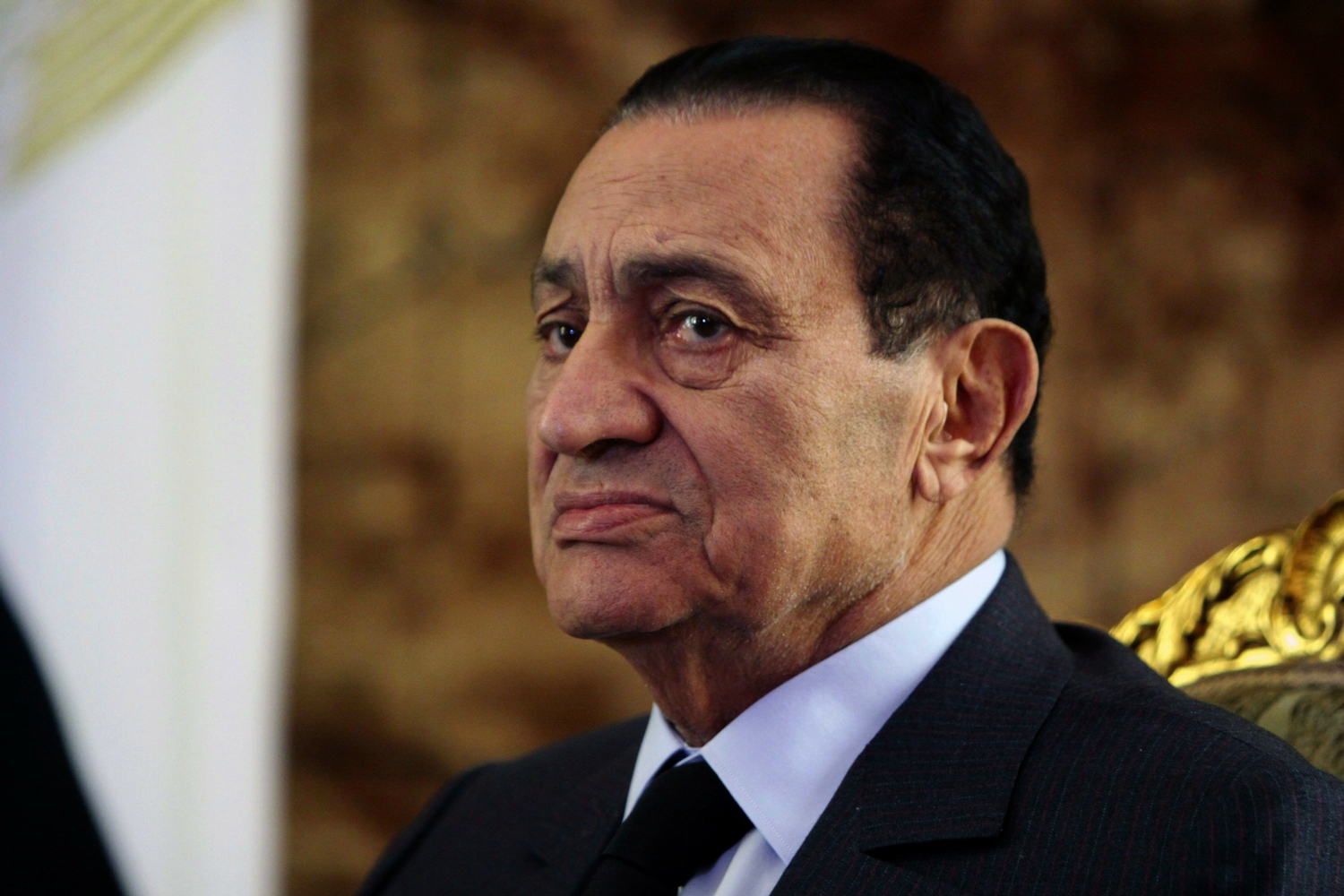
9. Hosni Mubarak (former commander, Egyptian air force [and later head of regime until swept away by the mass Egypt’s uprising, February 2011] whose squadrons of pilots, loaned to the genocidists, flew Soviet-built MiGs from the then East Germany [GDR] and engaged in the cowardly carpet bombings of Biafran markets, hospitals, city centres, churches, shrines, children’s playgrounds, villages, farms throughout the duration of the genocide)
(Hosni Mubarak: ... carpet bombing ... swept away)
10. Tony Enaharo (genocidist roving envoy)

11. U Thant (former secretary-general, UN, from Burma, contemporary Myanmar)

12. Ahmadou Ahidjo (head of regime, Cameroon)

13. Mashood Abiola (expansive weapons-contractor during the genocide who was on the verge of becoming head of regime, Nigeria, 1998)

14. Obafemi Awolowo (chief genocidist “theorist”, head of finance ministry, and deputy head of genocidist prosecuting junta who desperately craved to be post-genocide head of regime, Nigeria)
(Obafemi Awolowo: ... génocidaires’ “theorist”, accounts’ sequestrator, £20.00-enforcer)
15. Gbadamosi King (genocidist air force pilot who shot down the international Red Cross DC-7 relief-bearing aircraft over the skies of south Biafra, 5 June 1969)

16. Muhammadu Shuwa (genocidist commander, north and northcentral Biafra)

17. Hafez al-Assad (head of regime, Syria, father of Bashar al-Assad)

18. Illiya Bisalla (genocidist commander, northcentral Biafra)

19. Sekou Toure (head of regime, Guinea-Conakry)

20. Houari Boumedienne (head of regime, Algeria)

21. Ismail al-Azhari (head of regime, the Sudan)

22. Diallo Telli (OAU first secretary-general)

23. Faisal bin Abdulaziz Al Saud (king of Saudi Arabia, 1964-1975)

24. Allison Ayida (Rise and fall of Nigeria, 1990, co-principal secretary, genocidist-prosecuting regime)

25. David Cameron (former British prime minister who, with US President Obama, imposed Muhammadu Buhari, one of the vilest Nigerian genocidist operatives throughout these 50 years of the Igbo genocide, as head of Nigeria regime, March 2015 [since taking power, the Buhari regime’s military and other genocidist assets, true to type, have murdered hundreds of Igbo across occupied Biafra without any condemnation by the Cameron government]; Cameron resigned his prime minister’s position precipitously on 13 July 2016 after losing the “Brexit” referendum on British membership of the European Union)
(David Cameron: ... imposes genocidist operative Buhari ... precipitous resignation)
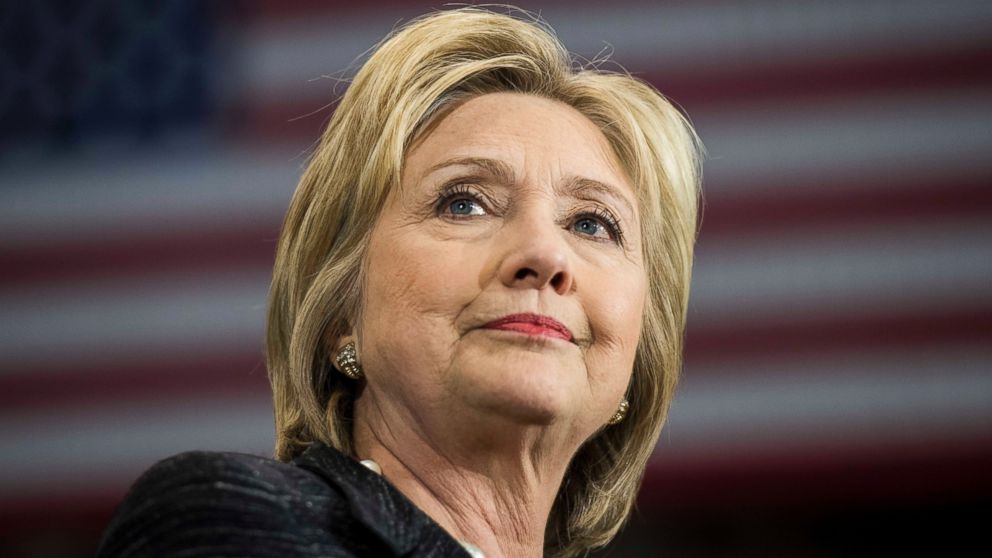
26. Hillary Clinton (former US secretary of state, Obama administration, January 2009-January 2013 – remained unrelentingly adamant, throughout her tenure, of not designating the islamist, northcentral/northeast-based insurgent organisation, Boko Haram, a terrorist organisation despite the latter’s murder of thousands of African peoples, overwhelmingly Igbo, during the period [it wouldn’t be until November 2013 that the US declared Boko Haram “terrorist” because Washington judged the group was “{now} develop{ing} links with other {islamists} such as al-Qaeda … to wage a global jihad”]; on 8 November 2016, contrary to overwhelming opinion poll indicators and leading pundits’ analyses and predictions, Clinton received a crushing defeat in the US presidential election by anti-establishment rival candidate Donald Trump – Clinton had run her campaign on a political platform billed largely on the continuation of the cardinal policies of the Obama presidency which includes its unflinching support for the Nigeria genocidist regime)
(Hillary Clinton:... unrelenting adamance ... crushing defeat)
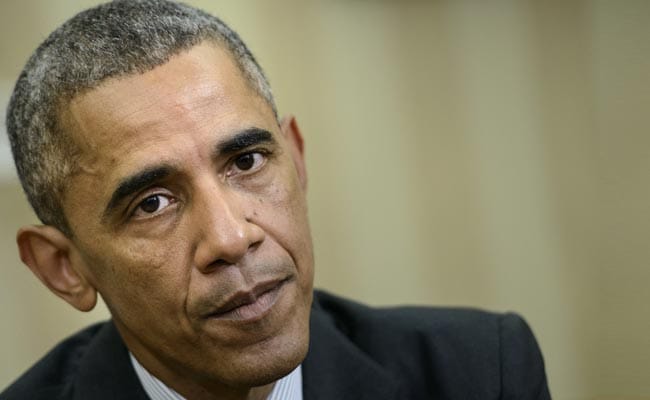
27. Barack Obama (US President who, with David Cameron, former British prime minister, imposed Muhammadu Buhari, one of the vilest Nigerian genocidist operatives during these 50 years of the Igbo genocide, as head of Nigeria regime, March 2015 [since taking power, the Buhari regime’s military and other genocidist assets, true to type, have murdered hundreds of Igbo people across occupied Biafra without any condemnation by the Obama administration]; Obama is the first African-descent president of the US republic in 233 years of existence and his unflinching support for an African-led genocidist regime in Africa waging a genocide against an African people is surely an unconscionable tragedy of his presidential legacy)
(http://re-thinkingafrica.blogspot.co.uk/2016/03/herbert-ekwe-ekwe-this-piece-is.html)
(Barack Obama:... imposes genocidist operative Buhari ... unconscionable tragedy of a legacy)
...

Free fall vs freedom and justice

Boko Haram and close cousin Fulani militia’s insurgency incrementally ravage north Nigeria, the epicentre of the planning and execution of the Igbo genocide and the preceding “dual dress rehearsals”-Igbo pogroms (1945, 1953) without letup...  But, most pointedly, the clearly discernible contours of all-Nigeria as Boko Haram becomes the most ruthless global terrorist organisation presently (http://www.abc.net.au/news/2015-11-17/global-terrorism-index-increase/6947200, accessed 17 November 2015) and the vile Buhari is emplaced congenitally as regime hemlsperson: for the alu this Nigeria genocide state has unleashed on Igbo people these past 50 years (29 May 1966-11 November 2016), it is indeed spiralling in free fall as the rest of the world reflects cogently...

If ever there was any doubt, the evidence, so far, demonstrates the contrary – namely, that no one, no agency, murders 3.1 million Igbo children, women and men in this foundational genocide of post-(European)conquest Africa and walks away free...  Apart from the now 50 million Igbo survivors, the 3.1 million are individually and collectively involved in the current historic Biafran quest for freedom and justice...  

And Biafra will get this freedom and justice. Undoubtedly.

Twitter @HerbertEkweEkwe