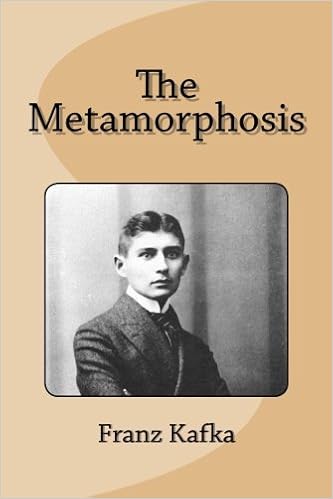
(Franz Kafka: The Metamorphosis, The Trial, The Castle)
FWD:
Katie Beiter, “A ‘metamorphosis’ for Franz Kafka papers: Journey to the national
library of Israel”, Jerusalem Post, Monday 8 August 2016
This
week, after a week-long battle, the Supreme Court ruled that a trove of
manuscripts and drawings by Franz Kafka and Max Brod called the Kafka Papers be
handed over to the National Library of Israel. The controversy surrounding
these papers has pitted the Hoffe family, an Israeli family that has retained
custody of the papers since Brod’s death, against the National Library.
The trail of the papers, which has wound its way from Czechoslovakia to Israel
and Switzerland, sounds like it could be one of Kafka’s own stories involving
greed, governments and grievances.
“The National Library, naturally, has the goal
and the task of accumulating, preserving and providing access to works, which
are part of the Israeli and Jewish legacy,” Dr. Guy Pessach, a senior lecturer
at the Hebrew University, told The Media Line.
“In the context of Kafka, however, it is
much more complicated because even though Kafka was a Jew, the question of his
cultural and intellectual relationship to the Jewish tradition is not something
that is a natural derivative.”
Dr. Pessach added that while Kafka studied
Hebrew, his connection to the Judaism and his attitudes towards Zionism are
much more complex.
Franz Kafka, a 20th century Jewish novelist, was
born in Prague in 1883 and died of tuberculosis in 1924. He is best known for
his literary works “The Metamorphosis,” “The Trial” and “The Castle.”
Brod, a Czech Jew, was a writer, journalist and
even a music composer, publishing 83 separate works in his lifetime. He is
renowned in German literary circles and is most famous for receiving custody of
Kafka’s papers.
Franz Kafka and Max Brod met in 1902 at Charles
University in Prague and quickly became very close friends. Before Kafka died
in 1924, he bequeathed his estate, which included all of his works and papers,
to Brod.
Kafka asked Brod to burn his unpublished works,
but Brod disobeyed Kafka’s wishes, publishing “The Trial,” “The Castle” and
“Amerika” in the late 1920s and 1930s.
When Brod and his wife, Elsa, fled Nazi-occupied
Prague for Tel Aviv in 1939, Brod carried all of Kafka’s papers with him in a
suitcase.
After Brod’s wife died in 1942, he became close
with Otto and Esther Hoffe, a Jewish couple living in Palestine, eventually
employing Esther Hoffe as his secretary amid rumors the two had a romantic
relationship as well.
Brod left his literary estate, which included
both his papers and Kafka’s, to Esther Hoffe when he died in 1968, and asked
that she donate them, preferably to the National Library of Israel, when she
died.
Against Brod’s wishes, Esther sold the
manuscript of “The Trial” for two million dollars to the German Literature
Archive, a contentious move seeing that Kafka was not German and his three
sisters died in concentration camps.
Following her death in 2007, Esther Hoffe left
the remaining papers to her two daughters, Ruth Wiesler and Eva Hoffe. The
following year, when Eva and Ruth wanted to sell the papers, they were met with
opposition from the National Library of Israel.
The library stated that Brod’s 1961 will
requested that the papers be donated to the National Library of Israel.
The two sisters had planned to sell the papers
to the German Literature Archive in Marbach and, since 2008, they had been
immersed in a legal battle with the National Library, which ended this past
Monday in the Library’s favor.
Brod, a self-proclaimed Zionist, wanted his
papers archived in Israel. And, since the 1970s, the National Library of Israel
has worked tirelessly to acquire the Kafka papers.
In the 1950s, most of Kafka’s manuscripts were
actually transferred to Oxford University’s Bodleian Library by his heirs;
therefore, the contents of these “Kafka Papers” is up for debate.
“It’s a very long list. Most of the stuff is
Brod’s stuff and there is very little that is Kafka’s,” Dr. Aviad Stollman,
head of collections at the National Library, told The Media Line.
“There might be some drawings of Kafka’s, but
everything we have has been published.”
The contents of the papers seem to swirl around
Brod, who was, in his own right, one of the most important authors of the 20th
century, according to Dr. Stollman. “Some years he was more well-known than
Kafka and he invested his lifetime to publishing Kafka’s work.”
Dr. Stollman said that because Max Brod was the
closest person to Kafka, there might be documents in these papers that tell us
more about Kafka and help us understand his literary works.
While researchers hope to find unpublished
manuscripts by Kafka in the safes, it could cause legal issues.
“Presuming there are such manuscripts in the
safe, their legal status is much more complicated,” Dr. Pessach told The Media
Line.
“It is unclear under which power and under which
legal basis the Israeli courts have the jurisdiction to decide that manuscripts
by Kafka, which are not part of Max Brod’s literary estate, should be devoted
to the National Library.”
The National Library expects to receive the
documents within the next two or three months and has plans to digitize most of
the collection.
Twitter@HerbertEkweEkwe