Rethinking Africa is a forward looking blog dedicated to the exchange of innovative thinking on issues affecting the advancement of African peoples wherever they are. We provide rigorous and insightful analyses on the issues affecting Africans and their vision of the world.
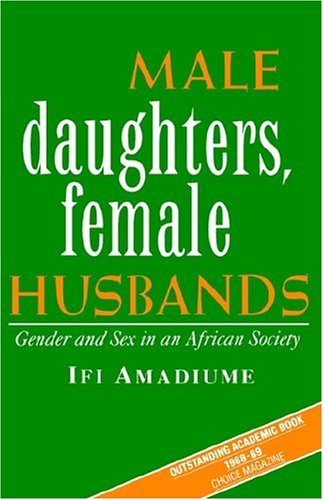
Poet and anthropologist, one of the theorists in the early circle of scholars that embarks on the study and transformation of the epistemology of Igbo Women’s Studies inaugurated in the 1960s-1970s by novelist Flora Nwapa and sociologist Kamene Okonjo, author of Male Daughters, Female Husbands (1987), the seminal text that examines the historic dual-gender complementarity and consequential socioeconomic dynamism of pre-(British)conquest Biafra
(Alice Coltrane Quintet, “Blue Nile” [personnel: Coltrane, harp;Joe Henderson, alto flute, Pharoah Sanders, alto flute;Ron Carter, bass;Ben Riley, drums; recorded: Coltrane home studios, Dix Hills, New York, US, 26 January 1970])
Outstanding bassist, composer and bandleader whose music encapsulates all the critical junctures of jazz history and his Jazz Workshop a landmark conservatoire of an age
(Charles Mingus Sextet featuring multiinstrumentalist Eric Dolphy plays the Billy Strayhorn classic composition, “Take the ‘A’ train” [Mingus, bass; Johnny Coles, trumpet; Dolphy, bass clarinet; Clifford Jordan, tenor saxophone; Jaki Byard, piano; Dannie Richmond, drums; recorded: live, University Aula, Oslo, 12 April 1964])
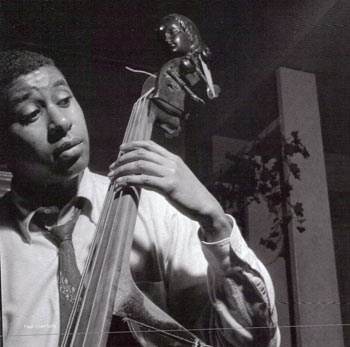
Virtuosic bassist, composer, member of Miles Davis First Great Quintet/Sextet (1955-1963) and subject of salutary, standard compositions by varying artistic colleagues: tenor saxophonist John Coltrane, “Mr P.C.”; tenor saxophonist Sonny Rollins, “Paul’s Pal”; pianist Tommy Flanagan, “Big Paul”; pianist Red Garland, “Mr P. C. Blues”; drummer Max Roach, “Five for Paul”
(John Coltrane Quartet featuring Paul Chambers, “Walkin’” and “The
theme” [personnel: Coltrane, tenor saxophone, Wynton Kelly, piano; Chambers, bass; Jimmy Cobb, drums; recorded: live, German television, Düsseldorf, Germany, 28 March 1960]) Twitter @HerbertEkweEkwe
[report edited
from the original filed by Ebele Orakpo – HE-E]
A team of
seven Biafran engineering students at the Nnamdi Azikiwe University, Oka,
Biafra, has successfully built a minibus for their bachelor’s degree
programme. They are Callistus Ezeigwe, Victor Obinani, Chinaza Okoro, Ifeanyi
Ezeanolue, Ogbu Ikenna, Fidelis Ominigbo and Nnamdi Nwobodo, and their project
supervisor is Chinonso Achebe, a professor of mechanical engineering at the
university.
The team,
known as the “Autozik Group”, relied mostly on local materials for the
construction of the bus which took five months. The bus is named “Autobully”,
adapted from the shape of the familiar bullion van. Commenting on the production,
Callistus Ezeigwe, the team’s spokesperson states: “The bus was constructed from
start to finish at the university’s workshop, using all necessary design
software and computer-aided design tools. We constructed the chassis, down to
every single part of the minibus … We made the mini bus using mere hand tools.
This means we did all of the construction and folding with our hands since the
university could not provide us with the ground equipment as used in most automobile
companies.”
(John Coltrane Quartet, “Pursuance”, part-III of the four-part suite of the classic, A Love Supreme [personnel: Coltrane, tenor saxophone, McCoy Tyner, piano; Jimmy Garrison, bass; Elvin Jones, drums; recorded: Van Gelder Studio, Englewood Cliffs, NJ, US, 9 December 1964])
Even if the Igbo were not subjected to the cataclysmic
genocide of 29 May 1966-12 January 1970, the foundational genocide of
post-(European)conquest Africa in which suzerain Britain and its Nigeria client
state murdered 3.1 million Igbo or one-quarter of this nation’s population, and the current phase of the genocide that the
Muhammadu Buhari regime and its adjunct duo Boko Haram and Fulani militant (erroneously tagged “Fulani herdspeople” in the media in Nigeria) forces are waging in occupied Biafra, they, the Igbo, just like any
other peoples, have a right to declare themselves free from Nigeria or
indeed any other state in Africa they find themselves domiciled if they so
wish.
This was precisely why the Igbo didn’t have to offer some
justification for its 30 year-old vanguard role (1930s-October 1960) in formally
terminating 76 years of the British conquest and occupation of Nigeria, not
even to the north region Hausa-Fulani Arabised-islamist political
establishment, strategic ally of the occupation opposed to African liberation and
progenitor of the prevailing dominant regime forces in Nigeria. No
comparable political forces anywhere else in the South World (Africa, Asia,
Oceania, the Americas), during this epoch, wanted their lands occupied indefinitely
by any of the conqueror pan-European states (Britain, Germany, Belgium, France,
Italy, Portugal, Spain) as this north Nigeria formation. The British aptly “rewarded”
the formation with overseeing power, beginning 1 October 1960, to protect Britain’s
vast economic interests in Nigeria in perpetuity as well as wage a 50-year-old genocide
against one of the most enterprising and progressive nations in Africa. The
catastrophe that is Nigeria becomes hugely intelligible in the context of this
history.
Besides, the compositional aftermath of the
(European)conqueror/conquered/conquest-state of Africa (Nigeria, Chad, Niger,
Central African Republic, the Sudan, the Congo-B, the Congo-K, Guinea-B,
Guinea-C, Guinea-E, whatever!) cannot be the basis of the
restoration-of-independence for the peoples as this historic right to freedom
affirmation rests incontrovertibly on the hitherto conquered constituent
African nation or people – Igbo, Bakongo, Wolof, Luo, Ibibio, Darfuri, Gĩkũyũ, Herero, Efik, Akan, Bakongo,
Gur, Ijo, Punu, Ovambo, Bamileke... “To be” This right to freedom for a people, for all peoples, isinalienable. As I have demonstrated
severally on this platform, it is the state, any state, that is transient;
definitely, not the people(s) except, of course, they are a target or programmed for genocide by some state(s) or some other agency. No one, no people, therefore, has to offer a
reason for being free, for freedom. So, the rather perfunctory remarks,
“agitating for Biafra”, “Biafra agitators”, often made by some commentators to
highlight the current historic drive of the Biafran freedom movement is ironically an
assault on the very essence of this freedom. One doesn’t “agitate” for freedom;
they, instead, proclaim it: “I am because I am free; I am free because I am”.
(John Coltrane Quintet,“To be” [personnel: Coltrane, flute; Pharaoh Sanders, flute, piccolo, tambourine; Alice Coltrane, piano; Jimmy Garrison, bass; Rashied Ali, drums; recorded: Van Gelder Studio, Englewood Cliffs, NJ, US, 15 February 1967])
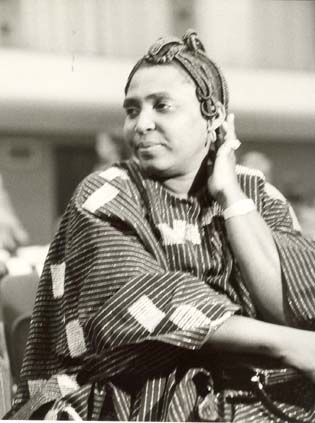
First mathematics doctorate in Biafra/southwestcentral Africa, rigorous academic and public intellectual, aptly described by theoretical physicist Alexander Obiefoka Animalu as the “foremost African mathematical genius of the 20th century”
(JohnColtrane Quartet, “Equinox” [personnel: Coltrane, tenor saxophone; McCoy Tyner, piano; Steve Davis, bass; Elvin Jones, drums; recorded: Atlantic Studios, New York, US, 26 October 1960])
Herbert Ekwe-Ekwe is specialist on the state and on genocide & wars in Africa in the post-1966 epoch – beginning with the Igbo genocide, 29 May 1966-present day, the foundational and most gruesome genocide of post-(European)conquest Africa. 3.1 million Igbo or 25 per cent of this nation’s population were murdered by Nigeria and its allies, principally Britain. Africa and the rest of the world largely stood by and watched as the perpetrators enacted this horror most ruthlessly. The world could have stopped this genocide; the world should have stopped this genocide. This genocide inaugurated Africa’s current age of pestilence. During the period, 12 million additional Africans have been murdered in further genocide in Rwanda (1994), Zaïre/DRCongo (variously, since the late 1990s) and Darfur – west of the Sudan – (since 2004) and in other wars in Africa. African peoples have, presently, no other choice but exit/dismantle the extant genocide-state (the bane of their existence & progress) & construct own nation-centred states that serve their interests. He is author of several books & papers on the subject and his new book is entitled The longest genocide – since 29 May 1966 (2019).