Rethinking Africa is a forward looking blog dedicated to the exchange of innovative thinking on issues affecting the advancement of African peoples wherever they are. We provide rigorous and insightful analyses on the issues affecting Africans and their vision of the world.
Showing posts with label John Coltrane Quintet. Show all posts
Showing posts with label John Coltrane Quintet. Show all posts
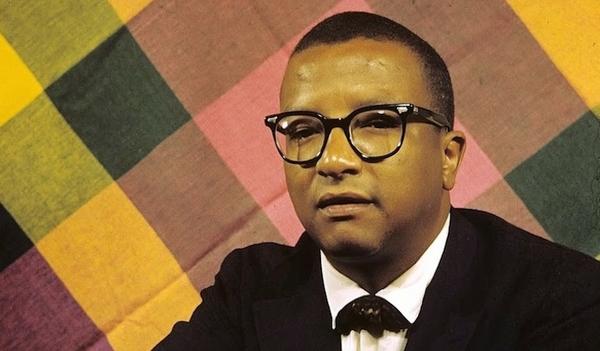
Herbert Ekwe-Ekwe MULTIINTRUMENTALIST geniuswhose compositions, recordings and evocative soloing with any of his chosen instruments (alto saxophone, bass clarinet, flute, bassoon, oboe...) in his multicombo-led settings and across a range of collaborative ensembles (especially those headed by drummers Chico Hamilton and Max Roach, alto saxophonist Ornette Coleman, pianists George Russell and Andrew Hill, alto and tenor saxophonist Oliver Nelson,tenor and soprano saxophonist John Coltrane, and bassist Charles Mingus) have a distinctly recognisable Dolphyian signature that has impacted the jazz repertoire most profoundly
(Eric Dolphy Quartet, “Softly as in a morning sunrise” [personnel: Dolphy, bass clarinet; Herbie Hancock, piano; Eddie Khan, bass; JC Moses, drums; recorded: live, University of Illinoi, Champaign, Illinoi, 10 March 1963])
(John Coltrane Quintet, “Brasilia” [personnel: Coltrane, tenor saxophone; Eric Dolphy, alto saxophone; McCoy Tyner, piano; Reggie Workman, bass; Elvin Jones, drums; recorded: live, at The Village Vanguard, New York, US, 1 November 1961])
(Charles Mingus Sextet – with Eric Dolphy, Cornell University 1964, “Meditations” [personnel: Mingus, bass; Johnny Coles, trumpet; Dolphy, flute, bass clarinet; Clifford Jordan, tenor saxophone; Jaki Byard, piano; Dannie Richmond, drums; recorded: live, Cornell University, 18 March 1964])
******Herbert Ekwe-Ekwe is the author of The longest genocide – since 29 May 1966 (2019) and co-author, with Lakeson Okwuonicha, of Why #DonaldTrump is #great for #Africa (2018)
Herbert Ekwe-Ekwe RENOWNED composer, pianist and arranger whose near 30 years (1938-1967) of collaborative work with composer, pianist and bandleader Duke Ellington has been the focus of expansive recordings, research and publications
(Charles Mingus Sextet, featuring Eric Dolphy, plays theBilly Strayhorn classic, “Take the ‘A’ train” [Mingus, bass;Johnny Coles, trumpet; Dolphy, bass clarinet;Clifford Jordan, tenor saxophone; Jaki Byard, piano;Dannie Richmond, drums; recorded: live, University Aula, Oslo, 12 April 1964])
(Joe Henderson Quintet plays the Billy Strayhorn classic, “Johnny come lately” [personnel: Henderson, tenor saxophone; Wynton Marsalis, trumpet; Stephen Scott, piano; Christian McBride, bass; Gregory Hutchinson, drums; recorded: Van Gelder Studio, Englewood, Cliffs, NJ, US, 3-8 September 1991])
(John Coltrane Quintet plays the Billy Strayhorn classic, “Lush life” [personnel: Coltrane, tenor saxophone; Donald Bryd, trumpet; Red Garland, piano; Paul Chambers, bass; Louis Hayes, drums; recorded: Van Gelder Studio, Hackensack, NJ, US, 10 January 1958)
RENOWNED composer, pianist and arranger whose near 30 years (1938-1967) of collaborative work with composer, pianist and bandleader Duke Ellington has been the focus of expansive recordings, research and publications
(Charles Mingus Sextet, featuring Eric Dolphy, plays theBilly Strayhorn classic, “Take the ‘A’ train” [Mingus, bass;Johnny Coles, trumpet; Dolphy, bass clarinet;Clifford Jordan, tenor saxophone; Jaki Byard, piano;Dannie Richmond, drums; recorded: live, University Aula, Oslo, 12 April 1964])
(Joe Henderson Quintet plays the Billy Strayhorn classic, “Johnny come lately” [personnel: Henderson, tenor saxophone; Wynton Marsalis, trumpet; Stephen Scott, piano; Christian McBride, bass; Gregory Hutchinson, drums; recorded: Van Gelder Studio, Englewood, Cliffs, NJ, US, 3-8 September 1991])
(John Coltrane Quintet plays the Billy Strayhorn classic, “Lush life” [personnel: Coltrane, tenor saxophone; Donald Bryd, trumpet; Red Garland, piano; Paul Chambers, bass; Louis Hayes, drums; recorded: Van Gelder Studio, Hackensack, NJ, US, 10 January 1958)
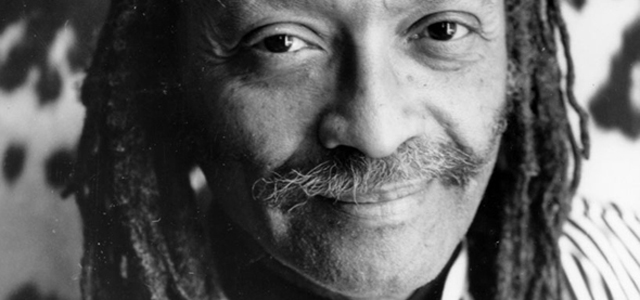
Virtuoso pianist and one of the preeminent leaders of the free-jazz movement beginning in the mid-1950s, prolific composer, poet, academic
(Two masters’ rare and perhaps only known recording session together: John Coltrane and Cecil Taylor play Coltrane Time, featuring the following four compositions: “Shifting down”, “Just friends”, “Like someone in love”, “Double clutching” [full personnel: Coltrane, tenor saxophone; Kenny Dorham, trumpet; Taylor, piano; Chuck Israels, bass; Louis Hayes, drums; recorded: United Artists Records, New York, US, 13 October 1958])
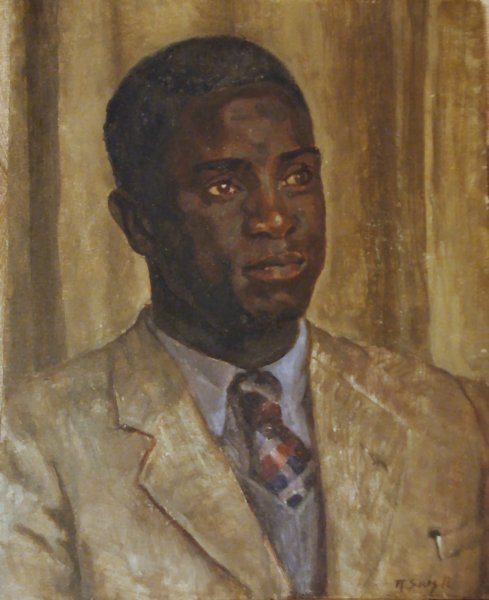
HISTORIAN, doyen of the Reconstructionary School of African Historical Studies in the aftermath of 400 years of the pan-European enslavement, dispersal, conquest and occupation of the African World, lays the foundation of this restoration of the African as subject and agency in history in the 1956 publication of his classic, Trade and Politics in the Niger Delta, 1830-1885, inaugurates a stretch of an encompassing African heritage archive and becomes the first African vice-chancellor (president/rector) of the University of Ibadan, and later, 1966-1969, travels the world as one of the envoys of eminent Biafran intellectuals who campaigns tirelessly against the Igbo genocide waged by Nigeria and its suzerain state Britain, under the premiership of Harold Wilson, in which 3.1 million Igbo people (25 per cent of this nation’s population) are murdered between 29 May 1966 and 12 January 1970 in this foundational genocide of post-(European)conquest Africa
(John Coltrane Quintet, “Miles’ mode” or “Red planet” [personnel: Coltrane, tenor saxophone; Eric Dolphy, alto saxophone; McCoy Tyner, piano; Reggie Workman,
bass; Elvin Jones,
drums; recorded: live, Village Vanguard, New York, US, 1 November 1961])
Even if the Igbo were not subjected to the cataclysmic
genocide of 29 May 1966-12 January 1970, the foundational genocide of
post-(European)conquest Africa in which suzerain Britain and its Nigeria client
state murdered 3.1 million Igbo or one-quarter of this nation’s population, and the current phase of the genocide that the
Muhammadu Buhari regime and its adjunct duo Boko Haram and Fulani militant (erroneously tagged “Fulani herdspeople” in the media in Nigeria) forces are waging in occupied Biafra, they, the Igbo, just like any
other peoples, have a right to declare themselves free from Nigeria or
indeed any other state in Africa they find themselves domiciled if they so
wish.
This was precisely why the Igbo didn’t have to offer some
justification for its 30 year-old vanguard role (1930s-October 1960) in formally
terminating 76 years of the British conquest and occupation of Nigeria, not
even to the north region Hausa-Fulani Arabised-islamist political
establishment, strategic ally of the occupation opposed to African liberation and
progenitor of the prevailing dominant regime forces in Nigeria. No
comparable political forces anywhere else in the South World (Africa, Asia,
Oceania, the Americas), during this epoch, wanted their lands occupied indefinitely
by any of the conqueror pan-European states (Britain, Germany, Belgium, France,
Italy, Portugal, Spain) as this north Nigeria formation. The British aptly “rewarded”
the formation with overseeing power, beginning 1 October 1960, to protect Britain’s
vast economic interests in Nigeria in perpetuity as well as wage a 50-year-old genocide
against one of the most enterprising and progressive nations in Africa. The
catastrophe that is Nigeria becomes hugely intelligible in the context of this
history.
Besides, the compositional aftermath of the
(European)conqueror/conquered/conquest-state of Africa (Nigeria, Chad, Niger,
Central African Republic, the Sudan, the Congo-B, the Congo-K, Guinea-B,
Guinea-C, Guinea-E, whatever!) cannot be the basis of the
restoration-of-independence for the peoples as this historic right to freedom
affirmation rests incontrovertibly on the hitherto conquered constituent
African nation or people – Igbo, Bakongo, Wolof, Luo, Ibibio, Darfuri, Gĩkũyũ, Herero, Efik, Akan, Bakongo,
Gur, Ijo, Punu, Ovambo, Bamileke... “To be” This right to freedom for a people, for all peoples, isinalienable. As I have demonstrated
severally on this platform, it is the state, any state, that is transient;
definitely, not the people(s) except, of course, they are a target or programmed for genocide by some state(s) or some other agency. No one, no people, therefore, has to offer a
reason for being free, for freedom. So, the rather perfunctory remarks,
“agitating for Biafra”, “Biafra agitators”, often made by some commentators to
highlight the current historic drive of the Biafran freedom movement is ironically an
assault on the very essence of this freedom. One doesn’t “agitate” for freedom;
they, instead, proclaim it: “I am because I am free; I am free because I am”.
(John Coltrane Quintet,“To be” [personnel: Coltrane, flute; Pharaoh Sanders, flute, piccolo, tambourine; Alice Coltrane, piano; Jimmy Garrison, bass; Rashied Ali, drums; recorded: Van Gelder Studio, Englewood Cliffs, NJ, US, 15 February 1967])
Even if the Igbo were not subjected to the cataclysmic genocide of 29 May 1966-12 January 1970, the foundational genocide of post-(European)conquest Africa in which Nigeria and its allies, centrallyBritain, murdered 3.1 million Igbo or one-quarter of this nation’s population, they, just like any other peoples, have a right to declare themselves free from Nigeria or indeed any other states in Africa they find themselves domiciled if they so wish. This was precisely why the Igbo didn’t have to offer some justification for its 30 year-old vanguard role (1930s-October 1960) in terminating the British conquest and occupation of Nigeria, not even to the then north region Hausa-Fulani religio-racial political establishment, strategic clients of the occupation opposed to African liberation, and progenitor of the prevailing regime forces in Nigeria. Besides, the compositional aftermath of the (European)conqueror’s/conquered/conquest-state of Africa (Nigeria, Chad, Niger, Central African Republic, the Sudan, the Congo-B, the Congo-K, Guinea-B, Guinea-C, Guinea-E, whatever!) cannot be the basis of the restoration-of-independence for the peoples as this historic right to freedom affirmation rests incontrovertibly on the hitherto conquered constituent African nation or people (Igbo, Bakongo, Wolof, Luo, Ibibio, Darfuri, Gĩkũyũ, Herero, Efik, Akan, Bakongo, Gur, Ijo, Punu, Ovambo, Bamileke...). “To be” This right to freedom for a people, for all peoples, isinalienable. It is the state, any state, that is transient; definitely, not the people(s). No one, no people, therefore, has to offer a reason for being free, for freedom: “I am because I am free; I am free because I am”.
(John Coltrane Quintet,“To be” [personnel: Coltrane, flute; Pharaoh Sanders, flute, piccolo, tambourine; Alice Coltrane, piano; Jimmy Garrison, bass; Rashied Ali, drums; recorded: Van Gelder Studio, Englewood Cliffs, NJ, US, 15 February 1967])
Herbert Ekwe-Ekwe is specialist on the state and on genocide & wars in Africa in the post-1966 epoch – beginning with the Igbo genocide, 29 May 1966-present day, the foundational and most gruesome genocide of post-(European)conquest Africa. 3.1 million Igbo or 25 per cent of this nation’s population were murdered by Nigeria and its allies, principally Britain. Africa and the rest of the world largely stood by and watched as the perpetrators enacted this horror most ruthlessly. The world could have stopped this genocide; the world should have stopped this genocide. This genocide inaugurated Africa’s current age of pestilence. During the period, 12 million additional Africans have been murdered in further genocide in Rwanda (1994), Zaïre/DRCongo (variously, since the late 1990s) and Darfur – west of the Sudan – (since 2004) and in other wars in Africa. African peoples have, presently, no other choice but exit/dismantle the extant genocide-state (the bane of their existence & progress) & construct own nation-centred states that serve their interests. He is author of several books & papers on the subject and his new book is entitled The longest genocide – since 29 May 1966 (2019).