Rethinking Africa is a forward looking blog dedicated to the exchange of innovative thinking on issues affecting the advancement of African peoples wherever they are. We provide rigorous and insightful analyses on the issues affecting Africans and their vision of the world.
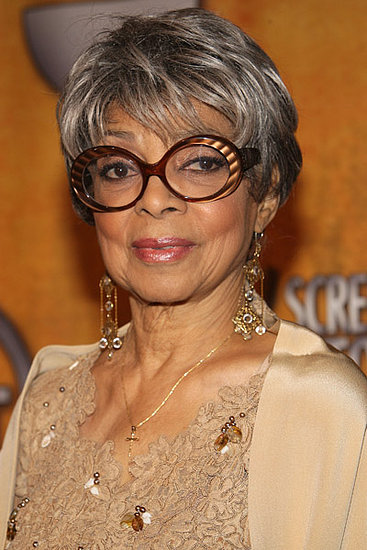
Celebrated award-winning actress and freedom proponent who continues to work till her 90th birthday – with signature film performances which include The Jackie Robinson Story (1950), Edge of a City (1957), The Raisin in the Sun (1961), Gone are the Days (1963), The Incident (1967), Peyton Place (television: 1968-1969), Roots – The Next Generation (television: 1979), I Know Why the Caged Bird Sings (television: 1979), With Ossie and Ruby! (television: 1980-1982), Go Tell It on the Mountain (television: 1985), Do the Right Thing (1989), Jungle Fever (1991), Their Eyes were watching God (television: 2005), American Gangster (2007)
(Alice Coltrane Trio, “Lovely sky boat”[personnel: Coltrane, harp; Jimmy Garrison, bass; Rashied Ali, drums; recorded: Coltrane home studio, Dix Hills, New York, US, 6 June 1968])
Prolific and indefatigable scholar on Igbo origins and civilisation and relationship with neighbouring states and peoples and rest of the world
(Alice Coltrane Trio, “Turiya and Ramakrishna”[personnel: Coltrane, piano; Ron Carter, bass; Ben Riley, drums; recorded: Coltrane home studio, Dix Hills, New York, US, 26 January 1970])
(Nnamdi Kanu: ... leader of Indigenous People of Biafra and freedom broadcaster, Radio Biafra)
At a stroke, the Biafran resistance has abolished that
contrived “fear” always generated hitherto by the genocidists and their allies
especially in academia and media (particularly those emplaced in the
Lagos-Ibadan [west Nigeria] conurbation) of regime threats to “relaunch” the Igbo
genocide full scale to thwart any “escalation” in the
manifestation and drive for freedom by the freedom movement. This is
indeed extraordinary.
(Alice Coltrane Quartet, “Lord, help me to be”[personnel: Coltrane, piano; Pharoah Sanders, tenor saxophone; Jimmy Garrison, bass; Ben Riley, drums; recorded: Coltrane home studio, Dix Hills, New York, US, 29 January 1968])
WHY AND HOW DOES a state exist to dominate, exploit, and, in cases such as Nigeria, Rwanda, the Sudan, and the Democratic Republic of the Congo, for instance, embark on a mission to destroy some of its constituent nations or peoples? 15 million Africans have been murdered in the genocides in these foursome states and in other wars elsewhere in Africa between 1966 and 2016. As most people know, the states that Europe created in Africa, in the aftermath of its leaders’ infamous November 1884-February 1885 Berlin-conquest conference, cannot lead African peoples to the reconstructive changes they deeply yearn for after the tragic history of centuries of conquest and occupation.
Create own state now
Such changes were and never are the mission of these states but instruments to expropriate and despoil Africa by the conquest in perpetuity. This is the “curse” of Berlin. But, thankfully, just as in Berlin, states are not a gift from the gods but relationships painstakingly formulated and constructed by groups of human beings on planet earth to pursue aspirations and interests envisioned and articulated by these same human beings. For the Igbo, Darfuri, and all other peoples presently besieged by the haematophagous monster of a state emplaced, the message on the unfurled banner for their freedom march couldn’t be more confident and focused: “I am because I am free; I am free because I am”. Create your own state today. This right is inalienable. Now is the time! Challege to the genocidists of Africa: Break up the barrel & blade for the slaughter Let Africa’s constituent peoples or nations unleash at once a dazzling contest of creativity and progress, a continuing mutual bombardment, sharing, and transformation of ideas and streams of possibilities, akin to what the world has seen in south and southeast Asia and elsewhere in the world in the past 40 years – not the “Berlin-state”-programmed seasons of 50 years of mass murdering, pillaging, nihilism, particularly in the genocidist lairs called Nigeria, the Sudan... “Let the kite perch and let the eagle perch, too. If one says no to the other, let their wing break”.
Most surely, now is the time to embark on this rebirth, this beginning for peoples in Africa.
(The New York Contemporary Five plays “Sound barrier” [personnel: Archie Shepp, tenor saxophone; Don Cherry, pocket trumpet; John Tchicai, alto saxophone; Don Moore, bass; JC Moses, drums; recorded: live, Jazzhus Montmarte, Copenhagen, Denmark, 15 November 1963])
(Born 21 October 1917, Cheraw, South Carolina, US)
VIRTUOSO TRUMPETER who, with alto saxophonist Charlie Parker, plays a vanguard role in the bebop revolution in jazz in the 1940s/early 1950s and whose creative genius has influenced a stretch of trumpet luminaries subsequently: Fats Navarro, Miles Davis, Clifford Brown, Booker Little, Donald Bryd, Kenny Dorham, Lee Morgan, Art Farmer, Clarence Shaw, Richard Williams, Nat Adderley, Ted Curson, Johnny Coles, Woody Shaw, Lester Bowie, Don Cherry, Alan Shorter, Donald Ayler Dizzy Reece, Freddie Hubbard, Jon Faddis, Wynton Marsalis, Terence Blanchard
(Charlie Parker Quintet plays Tadd Dameron’s classic composition, “Hot House” [personnel: Parker, alto saxophone; Gillespie, trumpet; Dick Hyman, piano; Sandy Block, bass; Charlie Smith, drums; recorded: Dumont Television Studios, New York, US, 24 February 1952])
(The Giants of Jazz,Live album, Copenhagen [personnel: Gillespie, trumpet; Kai Winding, trombone; Sonny Stitt, alto saxophone, tenor saxophone; Thelonious Monk, piano; Al McKibbon, bass; Art Blakey, drums; recorded: live, Tivoli, Copenhagen, Denmark, 9 November 1971])
IN DECEMBER 1920,Hugh Clifford, the British conquest and occupation governor in Nigeria, makes the following contribution to a “Legislative Council Debate, Lagos”:
[Nigeria is a] collection of Independent … States, separated from one another by great distances, by differences of history and traditions and by … racial … political, social and religious barrier.[1]
Today, Thursday 20 October 2016, 96 years on, would Hugh Clifford conceivably make these same assertions? If so, why? If not, why not?
(The New York Contemporary Five plays Don Cherry’s composition, “Consequences” [personnel: Archie Shepp, tenor saxophone; Cherry, pocket trumpet; John Tchicai, alto saxophone; Don Moore, bass; JC Moses, drums; recorded: live, Jazzhus Montmarte, Copenhagen, Denmark, 15 November 1963])
Twitter @HerbertEkweEkwe
[1]Quoted in George CE Enyoazu, “Sovereign National Conference – Will the people have their say at last?”, African Democrat, 30 October 2013.
Celebrated self-developed musician and Rastafarian who plays a seminal role, beginning in the 1960s, to transform reggae, Jamaica-originated music genre, into an international cultural movement engaged in opposition to centuries of African peoples’ subjugationand all other forms of oppression, and for the promotion of a fairer, equal forms of human relations across the board, offering his prodigious compositional output to the goal, especially: “Get up, Stand up”, “400 years”, “Equal rights”, “Love”, “No sympathy”, “Mama Africa”, “No nuclear war”, “Africa”, “African”, “Here comes the sun”, “Sun valley”, “Creation”, “Oppressor man”, “(You gotta walk and) don’t look back”, “Vampire”, “Apartheid”, “Why must I cry?”, “Go tell it on the mountain”, “You can’t fool me again”, “Keep on moving”
(Peter Tosh: ... “400 years”, 1975)
400 YEARS (400 years, 400 years. Wo-o-o-o)
And it’s the same –
The same (wo-o-o-o) philosophy
I’ve said it’s four hundred years;
(400 years, 400 years. Wo-o-o-o, wo-o-o-o)
Look, how long (wo-o-o-o)
And the people they (wo-o-o-o) still can’t see
Why do they fight against the poor youth of today?
And without these youths, they would be gone –
All gone astray
Come on, let’s make a move:
(make a move, make a move. Wo-o-o-o, wo-o-o-o)
I can (wo-o-o-o) see time (wo-o-o-o) - time has come
And if-a fools don’t see
(fools don’t see, fools don’t see. Wo-o-o-o)
I can’t save the youth:
The youth (wo-o-o-o) is gonna be strong
So, won’t you come with me;
I’ll take you to a land of liberty
Where we can live – live a good, good life
And be free
Look how long: 400 years, (400 years, 400 years) – Way too long! (wo-o-o-o) That’s the reason my people (wo-o-o-o) - my
people can’t see Said, it’s four hundred long years – (400 years,
400 years. Wo-o-o-o) Give me patience (wo-o-o-o) – same philosophy It’s been 400 years, (400 years, 400 years) Wait so long! Wo-o-o-o, wo-o-o-o How long? 400 long, long years
(lyrics: “400 years”)
(Peter Tosh: ... “Oppressor man”, 1977)
(Peter Tosh and 14-piece band, “Get up, Stand up” [Tosh and Bob Marley composition]; recorded: Randy’s Studio, Kingston, Jamaica, 1977)
GET UP, stand up
Stand up for your rights
Get up, stand up
Don’t give up the fight
Get up, stand up
Stand up for your rights
Get up, stand up Don’t give up the fight
You, preacher man, don’t tell me
Heaven is under the earth
You, a duppy and you don’t know
What life is really worth
It's not all that glitter is gold
And half the story has never been told
So now we see the light
We gonna stand up for your rights, come on
Get up, stand up
Stand up for your rights
Get up, stand upDon’t give up the fight
Get up, stand up
Stand up for your rights
Get up, stand upDon’t give up the fight
’Cause you know most people think
A great God will come from the skies
Take away everything
And left everybody dry
But if you know what life is worth
Then you would look for yours on earth
And now you see the light
We gonna stand up for your rights
Get up, stand up
Stand up for your rights
Get up, stand up
Don’t give up the fight
Get up, stand up
Stand up for your rights
Get up, stand upDon’t give up the fight
We’re sick and tired of this game of technology
Humbly asking Jesus for his mercy
We know and we know and understand
Almighty Jah is a living man
You fool some people sometimes
But you can’t fool all the people all the time
And now we see the light
We gonna stand up for our rights
Get up, stand up
Stand up for your rights
Get up, stand upDon’t give up the fight
Get up, stand up
Stand up for your rights
Get up, stand upDon’t give up the fight
Herbert Ekwe-Ekwe is specialist on the state and on genocide & wars in Africa in the post-1966 epoch – beginning with the Igbo genocide, 29 May 1966-present day, the foundational and most gruesome genocide of post-(European)conquest Africa. 3.1 million Igbo or 25 per cent of this nation’s population were murdered by Nigeria and its allies, principally Britain. Africa and the rest of the world largely stood by and watched as the perpetrators enacted this horror most ruthlessly. The world could have stopped this genocide; the world should have stopped this genocide. This genocide inaugurated Africa’s current age of pestilence. During the period, 12 million additional Africans have been murdered in further genocide in Rwanda (1994), Zaïre/DRCongo (variously, since the late 1990s) and Darfur – west of the Sudan – (since 2004) and in other wars in Africa. African peoples have, presently, no other choice but exit/dismantle the extant genocide-state (the bane of their existence & progress) & construct own nation-centred states that serve their interests. He is author of several books & papers on the subject and his new book is entitled The longest genocide – since 29 May 1966 (2019).