Rethinking Africa is a forward looking blog dedicated to the exchange of innovative thinking on issues affecting the advancement of African peoples wherever they are. We provide rigorous and insightful analyses on the issues affecting Africans and their vision of the world.
(Born 25 September 1911, Port of Spain, Trinidad & Tobago)
Herbert Ekwe-Ekwe ONE OF THE most outstanding African Caribbean intellectuals of all time, author of Capitalism and Slavery(1944), classic on African enslavement in the Americas by the pan-European World – from his 1938 Oxford University doctoral thesis, and first prime minister of Trinidad and Tobago, 31 August 1962, after centuries of the British/European World conquest, enslaving and occupation
(Andrew Hill Sextet, “Spectrum” [personnel: Hill, piano; Kenny Dorham, trumpet; Eric Dolphy, alto saxophone, bass clarinet, flute; Joe Henderson, tenor saxophone; Richard Davis, bass; Tony Williams, drums; recorded: Van Gelder Studio, Englewood Cliffs, NJ, US, 21 March 1964])
*****Herbert Ekwe-Ekwe latest books on the Igbo genocide and Biafra are The longest genocide – since 29 May 1966 (2019) and co-author, with Lakeson Okwuonicha, Why #DonaldTrump is #great for #Africa (2018)
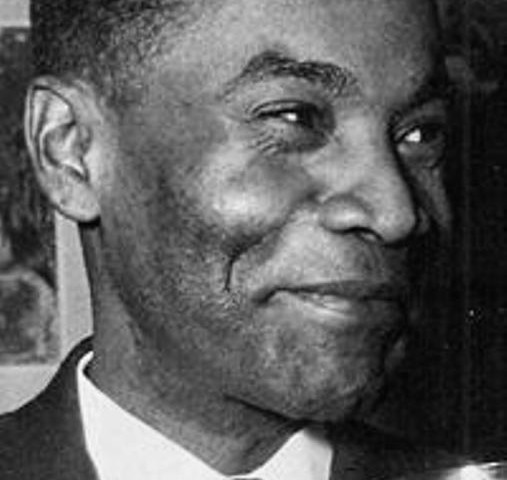
(Born 28 March 1912, Cayenne, French-occupied Guiana, east of Suriname, S America)
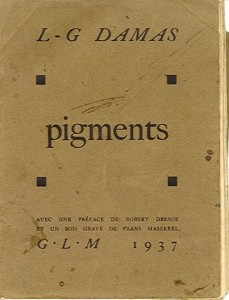
Herbert Ekwe-Ekwe POET, editor, philosopher, academic, co-founder, with Léopold Sédar Senghor and Aimé Césaire, of the 1930s-1940s “negritude” intellectual movement of African-peoples affirmation in Paris, France, and whose demonstrable volume of poetry, Pigments (1937), gives notice of the engaging trajectory of the movement:
… my hatred thrived on the margins of culture
the margin of theories the margin of idle talk
with which they stuffed me since birth
even though all in me aspired to be [African]
while they ransacked my Africa
(Andrew Hill Sextet, “Spectrum” [personnel: Hill, piano; Kenny Dorham, trumpet; Eric Dolphy, alto saxophone, bass clarinet, flute; Joe Henderson, tenor saxophone; Richard Davis, bass; Tony Williams, drums; recorded: Van Gelder Studio, Englewood Cliffs, NJ, US, 21 March 1964])
*****Herbert Ekwe-Ekwe is the author of The longest genocide – since 29 May 1966 (2019) and co-author,
with Lakeson Okwuonicha, of Why #DonaldTrump is #great for #Africa (2018)
(B 28Mar1912, Cayenne, French-occupied Guiana, S America)
POET, editor, philosopher, academic, co-founder with Léopold Sédar Senghor and Aimé Césaire of the 1930s-1940s “negritude” intellectual movement of African affirmation in Paris, France, and whose demonstrable volume of poetry, Pigments (1937), gives notice of the engaging trajectory of the movement:
… my hatred thrived on the margins of culture
the margin of theories the margin of idle talk
with which they stuffed me since birth
even though all in me aspired to be [African]
while they ransacked my Africa
(Andrew Hill Sextet, “Spectrum” [personnel: Hill, piano; Kenny Dorham, trumpet; Eric Dolphy, alto saxophone, bass clarinet, flute; Joe Henderson, tenor saxophone; Richard Davis, bass; Tony Williams, drums; recorded: Van Gelder Studio, Englewood Cliffs, NJ, US, 21 March 1964])
Historian, writer, activist archivist on sources and resources on African history in the Americas and Europe, 1900-1938, and seminal contributor to the Harlem Renaissance, beginning in 1919, with New York public library’s Schomburg Center for research in African American culture named in his honour
(Schomburg Center, New York)
(Andrew Hill Sextet, “Spectrum” [personnel: Hill, piano; Kenny Dorham, trumpet; Eric Dolphy, alto saxophone, bass clarinet, flute; Joe Henderson, tenor saxophone; Richard Davis, bass; Tony Williams, drums; recorded: Van Gelder Studio, Englewood Cliffs, NJ, US, 21 March 1964])
(B 28Mar1912, Cayenne, French-occupied Guiana, S America)
Poet, editor, philosopher, academic, co-founder with Léopold Sédar Senghor and Aimé Césaire of the 1930s-1940s “negritude” intellectual movement of African affirmation in Paris, France, and whose demonstrable volume of poetry, Pigments (1937), gives notice of the engaging trajectory of the movement:
… my hatred thrived on the margins of culture
the margin of theories the margin of idle talk
with which they stuffed me since birth
even though all in me aspired to be [African]
while they ransacked my Africa
(Andrew Hill Sextet, “Spectrum” [personnel: Hill, piano; Kenny Dorham, trumpet; Eric Dolphy, alto saxophone, bass clarinet, flute; Joe Henderson, tenor saxophone; Richard Davis, bass; Tony Williams, drums; recorded: Van Gelder Studio, Englewood Cliffs, NJ, US, 21 March 1964])
GIVEN THE CRITICAL links between the salient
features of the politics of the genocidist anti-African peoples’ Fulani-led islamist jihadists and their loyal pan-African constituent nations’ allies of Yoruba and Jukun and Urhobo and Hausa and Edo and Nupe and Jawara and Tiv and Bachama and Kanuri’s mutually shared frenzied escapades of 50 years of looting and pillaging the immense wealth of Biafra, their follow-up blanket occupation of Biafra since 13 January 1970 (jointly employing that notorious “Nigeria” imprimatur in the process), and the overarching architecture of these 50
years of a genocidal campaign, begun on 29 May 1966, few now doubt that the
Igbo termination of the occupation is at once the resumption of their
disrupted historic freedom march from Nigeria and the implementation of an expansive
socioeconomic programme of reconstruction unprecedented in this southwestcenral
region of Africa.
IF THIS is the case, one does not need an “Igbo presidency” in Nigeria to achieve this freedom goal as some Igbo
commentators as well as a few others have, at times, contended, but quite
uncritically. Just recently, according to reports in the media in Nigeria, even
raging génocidaire trooper Olusegun
Obasanjo has waded into this perverse advocacy, “supporting [sic] Igbo
presidency in 2019” (Vanguard, Lagos, 25 January 2017). This very development
is tellingly dreadful. Obasanjo is one of the most notorious operatives of
the Igbo genocide during phases I-III, 29 May 1966-12 January 1970. At its
apogee, 1968/1969, an Obasanjo-led brigade, operating in the outstretched south
Biafra, had converted this panhandle into a veritable killing field in which it
slaughtered tens of thousands of Igbo people –
“… everything that moves … we shoot at
everything, even at things that don’t move”, as
this brigade’s previous commander, the equally notorious Benjamin Adekunle,
had so grimly proffered (The Economist, London 24 August 1968). The skies of Biafra were neither spared from
this “shoot-at-everything” monstrosity by the
Obasanjo death squad. In June 1969, Obasanjo ordered his
air force to shoot down a 3-person crew international Red
Cross aircraft bringing urgent relief to the encircled, blockaded, and
bombarded Igbo, and he later boasted fiendishly of this crime in his memoirs, aptly
entitled My Command (Ibadan & London, 1980: 78-79).
It is anyone’s guess, 50 years on, what indeed
a surviving Igbo-descent president in a Nigeria is supposed to
be working on in their role as “president of Nigeria” as prescribed
by precisely none other than one of the most loathsome of the architects and
operatives of this genocide.
Inexorable logic & repulsive legacy
IT CANNOT be overstressed that no “Igbo presidency”
in Nigeria, not even one reinforced with an all-Igbo personnel in
the key cabinet military/police/“security”-positions can halt this ongoing
genocide by Nigeria and its British suzerain state. This campaign has now
acquired an inexorable logic to its being. The Nigeria military and its adjunct
forces, especially Boko Haram and the Fulani militia, now strategise and
coordinate the prosecution of the genocide as the world has seen particularly
since Muhammadu Buhari, yet another génocidaire, was imposed head of regime in March 2015 by ex-British Prime Minister David Cameron and ex-US President Barack Hussein Obama, the first African-descent president of the United States, 233 years after the founding of the republic. Buhari has murdered 2000 Igbo people since this imposition. Barack Hussein Obama’s support for the Igbo genocide is the abhorrent legacy of his presidency which formally ended a week ago.
What the emergence of Boko Haram and its Fulani
militia cousin (part of the five most deadly terrorist organisations in the
world presently, according to the Sydney-based Institute for Economics and
Peace [Melissa Clarke, “Globally, terrorism is on the rise – but little of it occurs in Western countries”, ABC News, 17 November 2015, https://www.abc.net.au/news/2015-11-17/global-terrorism-index-increase/6947200, accessed 17 November 2015]), has demonstrated in Nigeria is that each of the (now) tripartite-prosecuting
agency of the Igbo genocide has become very much decentred, very much
motivated, very much engagingly virulent. The typical Boko Haram
suicide-operating cell is a handful-strength, in single digits, and none in the
group knows any of the others until they meet at the designated, targeted site
of operation – in which they, invariably, are not expected to survive! If any
survives, the person, of course, becomes a member of a new cell of hitherto
unknown members and the cycle goes on... A Fulani militia cell, employing this
decentred operational flexibility, carries out its terror outrage accompanied by a herd of cattle as cover... An army, air force, navy, so-called DSS
(“department of state services”)/other terror service units based anywhere
in occupied Biafra can organise a murder onslaught anytime on the occupied
population without waiting for “direct authorisation” from the
genocidist high command back in Abuja, Nigeria...
Inalienable
Proir to this amalgamation of genocidist forces in Nigeria, still on the “Igbo presidency”, we mustn’t forget that Nigeria was under the leadership
of an Igbo general when the genocide began on 29 May 1966. Thus, “Igbo presidency” offers no route to the Igbo halting the genocide, one of the
strategic goals of the Biafra freedom movement. None whatsoever. THE ROUTE REMAINS Igbo
freedom from Nigeria. This is an inalienable Igbo right with or without the genocide as I have
argued severally. If the Scots, for instance, one-tenth of the Igbo population
and without a genocide antecedent would wish to leave a union they
have largely been exponential beneficiaries for 300 years (Herbert Ekwe-Ekwe,
“Rights for Scots, Rights for the Igbo”, (http://re-thinkingafrica.blogspot.co.uk/2012/01/rights-for-scots-rights-for-igbo.html), the Igbo, surely, don’t require any
agonisingly turgid historical nor sociological treatise to wish to leave
Nigeria.
Resolution
GENOCIDIST Nigeria does know that the Igbo are not Nigerian. The Igbo are from Biafra. The
Igbo are Biafran. Whilst the Igbo worked extraordinarily hard by playing thevanguardrole in the liberation of Nigeria
from the British conquest (beginning from the mid-1930s to October 1960), the Igbo ceased to be
Nigerian onSunday 29 May 1966. This is the day
Nigeria launched the Igbo genocide. Consequently, Nigeria became a raging tragedy – one of the five deadliest human-made tragedies in African World history. The Igbo renouncement of their Nigerian
citizenship is the irrevocable Igbo indictment on a state that embarked on the
destruction of 3.1 million Igbo people, 25 per cent of this nation’s population
at the time. Tens of thousands of additional Igbo have subsequently been murdered during phase-IV of the genocide which the Nigerians launched on 13 January 1970. The genocide continues unabated. The only future a genocide-state has is that those murdered by it
or others apprehensive that it could extend its murderous heritage on them
abandon it – nothing else. In the specific Nigeria case, that epitome of
its savagery, presidency nigeriãna,
is at once repudiated for what it is worth. IT IS this possibility of a transformative future of Africa that the Obasanjos and the Adekunles and the Buharis and
others in the genocidist lair and war outposts on the continent responsible for
the murder of 15 million African peoples in the past 50 years dread most
profoundly. Ascent Biafrans have sinceabandonedgenocidist Nigeria
and are on their way torestore their
sovereigntyin their Biafran
homeland as their resilient and confident freedom movement breathtakingly demonstrates
currently. Its outcome on the African scene is of immense epochal consequence,
the likes of which we haven’t seen.
THE BIAFRA FLAG is on the ascent. There can
never be a reversal. This will be
one of the most outstanding breakthroughs of the freedom movement of the age.
(Andrew Hill Sextet, “Spectrum” [personnel: Hill, piano; Kenny Dorham, trumpet; Eric Dolphy, alto saxophone, bass clarinet, flute; Joe Henderson, tenor saxophone; Richard Davis, bass; Tony Williams, drums; recorded: Van Gelder Studio, Englewood Cliffs, NJ, US, 21 March 1964])
*****Herbert Ekwe-Ekwe’s books on the Igbo genocide and Biafra include Readings from Reading:
Essays on African Politics, Genocide, Literature (2011), Biafra Revisited
(2006) and African Literature in Defence of History: An essay on Chinua Achebe
(2001)
Historian, writer, activist archivist on sources and resources on African history in the Americas and Europe, 1900-1938, and seminal contributor to the Harlem Renaissance, beginning in 1919, with New York public library’s Schomburg Center for research in African American culture named in his honour
(Schomburg Center, New York)
(Andrew Hill Sextet, “Spectrum” [personnel: Hill, piano; Kenny Dorham, trumpet; Eric Dolphy, alto saxophone, bass clarinet, flute; Joe Henderson, tenor saxophone; Richard Davis, bass; Tony Williams, drums; recorded: Van Gelder Studio, Englewood Cliffs, NJ, US, 21 March 1964])
Herbert Ekwe-Ekwe is specialist on the state and on genocide & wars in Africa in the post-1966 epoch – beginning with the Igbo genocide, 29 May 1966-present day, the foundational and most gruesome genocide of post-(European)conquest Africa. 3.1 million Igbo or 25 per cent of this nation’s population were murdered by Nigeria and its allies, principally Britain. Africa and the rest of the world largely stood by and watched as the perpetrators enacted this horror most ruthlessly. The world could have stopped this genocide; the world should have stopped this genocide. This genocide inaugurated Africa’s current age of pestilence. During the period, 12 million additional Africans have been murdered in further genocide in Rwanda (1994), Zaïre/DRCongo (variously, since the late 1990s) and Darfur – west of the Sudan – (since 2004) and in other wars in Africa. African peoples have, presently, no other choice but exit/dismantle the extant genocide-state (the bane of their existence & progress) & construct own nation-centred states that serve their interests. He is author of several books & papers on the subject and his new book is entitled The longest genocide – since 29 May 1966 (2019).