Rethinking Africa is a forward looking blog dedicated to the exchange of innovative thinking on issues affecting the advancement of African peoples wherever they are. We provide rigorous and insightful analyses on the issues affecting Africans and their vision of the world.
Herbert Ekwe-Ekwe POET, literary critic, academic, university vice chancellor (president/rector), offers selfless and distinguished service as head of the Biafra resistance government’s communication directorate during phases I-III of the Igbo genocide, 29 May 1966-12 January 1970, foundational genocide of post-(European)conquest Africa, carried out by Fulani islamist/jihadist-led Nigeria and its suzerain state Britain who murder 3.1 million Igbo people or 25 per cent of this nation’s population; in phase-IV of the genocide, 13 January 1970-present day, the dual genocidists have murdered an additional tally of tens of thousands of Igbo people – including the 3000 murdered by the
Muhammadu Buhari regime and its adjunct Fulani militia since November 2015,
following Buhari’s imposition in power in March 2015 by ex-US President Barack
Obama and ex-British Prime Minister David Cameron
(Booker Little Sextet, “We speak” [personnel: Little, trumpet; Julian Priester, trombone; Eric Dolphy, alto saxophone; Don Friedman, piano; Art Davis, bass; Max Roach, drums; recorded: Nola’s Penthouse Studios, New York, US, 17 March 1961])
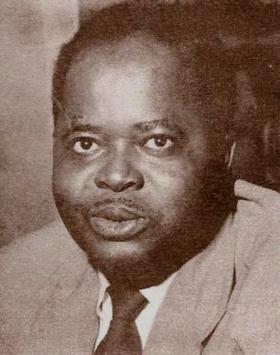
Herbert Ekwe-Ekwe PHYSICIANand irrepressible advocate of harnessing Africa’s vast agricultural resource potential as launch base to embark on far-reaching societal transformation; head of pre-military junta 15 January 1966 east region Nigeria government then home to Africa’s most resourceful and dynamic economy en route to emerging as a major manufacturing and industrial power in its own right but for the catastrophe of the Igbo genocide, 29 May 1966-12 January, when the quintessentially indolent and anti-African Fulani islamist/jihadist-led Nigeria and its suzerain state Britain murdered 3.1 million Igbo people in this foundational genocide of post-(European)conquest Africa; 52 years on, the Biafra freedom movement, on the cusp of the restoration of Biafra sovereignty, can’t wait to resume the construction of the state and societal transformative project of the Michael Okpara legacy and its consequential impact on the African World and the rest of the globe
(Booker Little Sextet, “We speak” [personnel: Little, trumpet; Julian Priester, trombone; Eric Dolphy, alto saxophone; Don Friedman, piano; Art Davis, bass; Max Roach, drums; recorded: Nola’s Penthouse Studios, New York, 17 March 1961])
*****Herbert Ekwe-Ekwe is the author, with Lakeson Okwuonicha, of Why Donald Trump is great for Africa (2018)
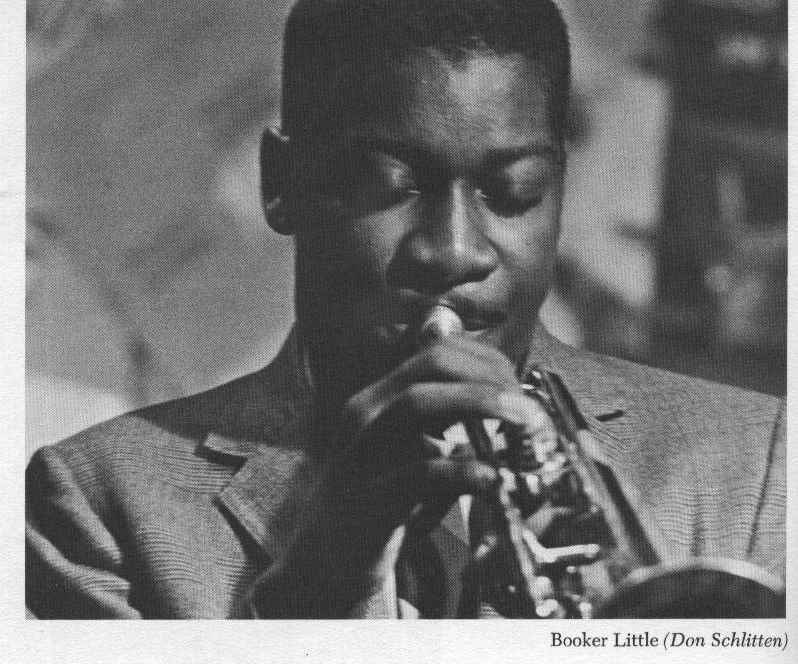
PRODIGIOUSLYcreative trumpeter and composer who, whilst still in his teens/early 20s, records critically acclaimed albums with masters Roach, Coltrane, and Dolphy, with whom he co-leads a 3-volume classic recording of music their quintet (Little, trumpet; Dolphy, alto saxophone, bass clarinet, flute; Mal Waldron, piano; Richard Davis, bass; Ed Blackwell, drums) plays during a 2-week residency at New York’s (US) Five Spot Café in July 1961
(Booker Little Sextet, “We speak” [personnel: Little, trumpet; Julian Priester, trombone; Dolphy, alto saxophone; Don Friedman, piano; Art Davis, bass; Roach, drums; recorded: Nola’s Penthouse Studios, New York, US, 17 March 1961])
(Booker Little Sextet, “Moods in free time” [personnel and recording details as in above])
(Booker Little Quartet, “Minor sweet” [personnel: Little, trumpet; Tommy Flanagan, piano; Scott LaFaro, bass; Roy Haynes, drums; recorded: Time Label, New York, US, 13 April 1960])
Physician and irrepressible advocate of harnessing Africa’s vast agricultural resource potential as launch base to embark on far-reaching societal transformation, head of pre-military junta 15 January 1966 east region Nigeria government then home to Africa’s most resourceful and dynamic economy en route to emerging as a major manufacturing and industrial power in its own right but for the catastrophe of the Igbo genocide, 29 May 1966-12 January, when the quintessentially indolent and anti-African Hausa-Fulani/islamist-led Nigeria and its suzerain state Britain murdered 3.1 million Igbo people in this foundational genocide of post-(European)conquest Africa; 51 years on, the Biafra freedom movement, on the cusp of the restoration of Biafra sovereignty, can’t wait to resume the construction of the state and societal transformative project of the Michael Okpara legacy and its consequential impact on the African World and the rest of the globe (Herbert Ekwe-Ekwe)
(Booker Little Sextet, “We speak” [personnel: Little, trumpet; Julian Priester, trombone; Eric Dolphy, alto saxophone; Don Friedman, piano; Art Davis, bass; Max Roach, drums; recorded: Nola’s Penthouse Studios, New York, 17 March 1961])
Prodigiously creative trumpeter and composer who, whilst still in his teens/early 20s, records critically acclaimed albums with masters Roach, Coltrane, and Dolphy, with whom he co-leads a 3-volume classic recording of music their quintet (Little, trumpet; Dolphy, alto saxophone, bass clarinet, flute; Mal Waldron, piano; Richard Davis, bass; Ed Blackwell, drums) plays during a 2-week residency at New York’s (US) Five Spot Café in July 1961
(Booker Little Sextet, “We speak” [personnel: Little, trumpet; Julian Priester, trombone; Dolphy, alto saxophone; Don Friedman, piano; Art Davis, bass; Roach, drums; recorded: Nola’s Penthouse Studios, New York, US, 17 March 1961])
(Booker Little Sextet, “Moods in free time” [personnel and recording details as in above])
(Booker Little Quartet, “Minor sweet” [personnel: Little, trumpet; Tommy Flanagan, piano; Scott LaFaro, bass; Roy Haynes, drums; recorded: Time Label, New York, US, 13 April 1960])
Physician and irrepressible advocate of harnessing Africa’s vast agricultural resource potential as launch base to embark on far-reaching societal transformation, head of pre-military junta 15 January 1966 east region Nigeria government, then home to Africa’s most resourceful and dynamic economy en route to emerging as a major manufacturing and industrial power, in its own right, but for the catastrophe of the Igbo genocide, 29 May 1966-12 January, when Nigeria and its suzerain state Britain murdered 3.1 million Igbo people in this foundational genocide of post-(European)conquest Africa; 50 years on, the Biafra freedom movement, on the cusp of the restoration of Biafra sovereignty, can’t wait to resume the construction of the state and societal transformative project of the Michael Okpara legacy and its consequential impact on the African World and the rest of the globe
(Booker Little Sextet, “We speak” [personnel: Little, trumpet; Julian Priester, trombone; Eric Dolphy, alto saxophone; Don Friedman, piano; Art Davis, bass; Max Roach, drums; recorded: Nola’s Penthouse Studios, New York, 17 March 1961])
At last, a
major news organisation in the United States/West has come out to challenge the
deafening silence that has pervaded across the West World over the genocidist Muhammadu Buhari
regime in Nigeria installed in office in March 2015 by the David Cameron and
Barack Obama administrations. Today’s (Wednesday 18 May 2016) New York Times
editorial (http://www.nytimes.com/2016/05/18/opinion/block-the-sale-of-warplanes-to-nigeria.html?_r=0, accessed 18 May 2016) has unambiguously called on the US government not to sell war planes to the murderous regime. But it completely
misses the compelling geographical focus of the crime against humanity being perpetrated
by Buhari: it is not northeast/northcentral region of Nigeria in some “war”
with Boko Haram/Fulani militants. No, itsn’t. Buhari is not “at war” with Boko
Haram/Fulani militants. On the contrary, Buhari is an integral component of
Boko Haram/Fulani militants.
Free-fire zone... Muhammadu
Buhari’s war, since his March 2015 imposition,
is to the south of Nigeria – in Biafra, occupied by Nigeria since 13 January
1970. Buhari has continued the Nigeria state genocide against the Igbo people,
fully supported by Britain, which he, himself, as a lieutenant then in the
genocidist army has been a ruthless active participant right from launch date,
29 May 1966. 3.1 million Igbo people or one-quarter of this nation’s population were murdered in the three phases of the
genocide (foundational genocide of post-[European]conquest Africa) prior to 13 January 1970 and hundreds of thousands have been murdered
subsequently, including those murdered since Buhari’s current position in power, especially beginning November 2015 and has continued unabated. During this period, Buhari has essentially turned Biafra into a free-fire zone where his occupying troops and adjunct forces Boko Haram and Fulani militants have tactically picked and chosen where andwhen and what targeted firing range to murder the next Igbo child, woman or man as the grim record of the committed murders by the tripartite amalgam in the following population layouts in Biafran cities, towns and villages attest chronologically: Onicha … Igwe Ocha … Ubulu-Ukwu ... Asaba … Oka … Enuugwu … Aba … Igwe Ocha … Asaba … Enuugwu … Igwe Ocha … Onicha … Uzo-Uwani ... Onicha ...
Ban all arms
sales/transfers to Nigeria
Buhari will surely
use any US planes in his armoury against Biafra. Nowhere else. Buhari is very
much aware of the sheer savagery of the carpet-bombing campaigns that Igbo
population centres were subjected to (during October 1966-January 1970) by loaned
Egyptian pilots flying Nigeria air force Soviet-supplied MiGsand looks forward, eagerly, to a repeat performance. Besides denying Buhari planes to murder Biafrans,
the New York Times and other public institutions and the US public in general should
now intensify a principled demand on their government to ban all US arms sales/transfers
to Nigeria. Any American bullet, pistol, rifle, grenade, rocket, bazooka, helicopter
gunship, naval gunship, the fighter aircraft, the bomber, the tank… – each and
everyone of these items sent to the Buhari regime would be more likely than not
deployed to murder Igbo people, one of the world’s most peaceful and resourceful peoples. The United States can no longer remain bystanders as this
orgy of murdering is brazenly carried out in Biafra day in, day out.
(Booker Little Sextet, “We speak” [personnel:Little, trumpet; Julian Priester, trombone; Eric Dolphy, alto saxophone; Don Friedman, piano; Art Davis, bass; Max Roach, drums; recorded: Nola’s Penthouse Studios, New York, US, 17 March 1961])
Herbert Ekwe-Ekwe is specialist on the state and on genocide & wars in Africa in the post-1966 epoch – beginning with the Igbo genocide, 29 May 1966-present day, the foundational and most gruesome genocide of post-(European)conquest Africa. 3.1 million Igbo or 25 per cent of this nation’s population were murdered by Nigeria and its allies, principally Britain. Africa and the rest of the world largely stood by and watched as the perpetrators enacted this horror most ruthlessly. The world could have stopped this genocide; the world should have stopped this genocide. This genocide inaugurated Africa’s current age of pestilence. During the period, 12 million additional Africans have been murdered in further genocide in Rwanda (1994), Zaïre/DRCongo (variously, since the late 1990s) and Darfur – west of the Sudan – (since 2004) and in other wars in Africa. African peoples have, presently, no other choice but exit/dismantle the extant genocide-state (the bane of their existence & progress) & construct own nation-centred states that serve their interests. He is author of several books & papers on the subject and his new book is entitled The longest genocide – since 29 May 1966 (2019).