Rethinking Africa is a forward looking blog dedicated to the exchange of innovative thinking on issues affecting the advancement of African peoples wherever they are. We provide rigorous and insightful analyses on the issues affecting Africans and their vision of the world.
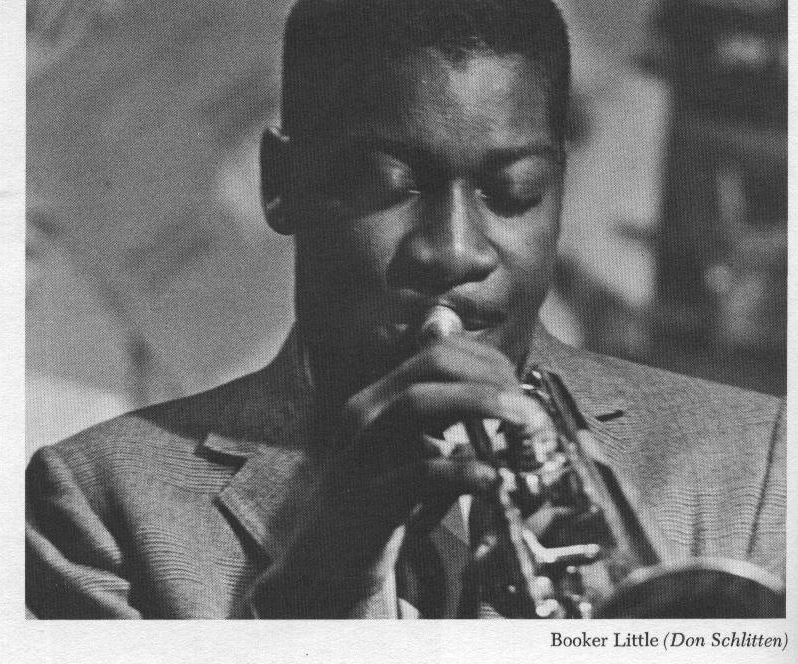
PRODIGIOUSLYcreative trumpeter and composer who, whilst still in his teens/early 20s, records critically acclaimed albums with masters Roach, Coltrane, and Dolphy, with whom he co-leads a 3-volume classic recording of music their quintet (Little, trumpet; Dolphy, alto saxophone, bass clarinet, flute; Mal Waldron, piano; Richard Davis, bass; Ed Blackwell, drums) plays during a 2-week residency at New York’s (US) Five Spot Café in July 1961
(Booker Little Sextet, “Moods in free time” [personnel: Little, trumpet; Julian Priester, trombone; Dolphy, alto saxophone; Don Friedman, piano; Art Davis, bass; Roach, drums; recorded: Nola’s Penthouse Studios, New York, US, 17 March 1961])
(Booker Little Quartet, “Minor sweet” [personnel: Little, trumpet; Tommy Flanagan, piano; Scott LaFaro, bass; Roy Haynes, drums; recorded: Time Label, New York, US, 13 April 1960])
*****Herbert Ekwe-Ekwe is the author of The longest genocide – since 29 May 1966 (2019) and co-author, with Lakeson Okwuonicha, of Why #DonaldTrump is #great for #Africa (2018)
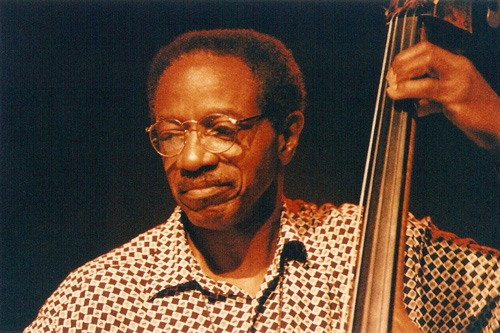
VERSATILE and celebrated bassist with an expansive collaborative recording register that includes ensembles led by John Coltrane, Thelonious Monk, Max Roach, Art Blakey,Lee Morgan, Mal Waldron, Wayne Shorter, Archie Shepp, John Tchicai, Freddie Hubbard and David Murray; band leader, composer, academic whose outstanding music education initiatives stretch beyond the confines of the academy to address varying community needs and aspirations particularly those involving the youth
(Reggie Workman Quartet, “Evolution” [personnel: Workman, bass; Sam Rivers, soprano saxophone; Geri Allen, piano; Gerry Hemingway, drums; recorded: Sound on Sound, New York, US, 27/28 April 1995])
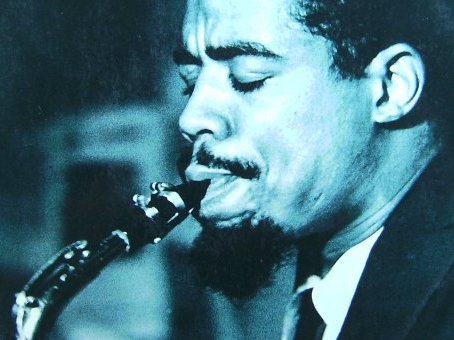
Multiinstrumentalist genius – alto saxophone, clarinet, bass clarinet, flute, bassoon, oboe… – whose compositions, recordings and evocative soloing with any chosen instrument in his own multicombo-led settings and across a range of collaborative ensembles (especially those led by drummers Chico Hamilton and Max Roach, alto saxophonist Ornette Coleman, pianists George Russell and Andrew Hill, tenor and soprano saxophonist John Coltrane and bassist Charles Mingus) have a distinctly recognisable Dolphyian signature and impacted the jazz repertoire most profoundly
(Eric Dolphy Quartet, “Red planet” [personnel: Dolphy, alto saxophone; Herbie Hancock, piano; Eddie Khan, bass; JC Moses, drums; recorded: live, University of Illinoi, Champaign, Illinoi, 10 March 1963])
(Eric Dolphy Duo, “Alone together” [personnel: Dolphy, bass clarinet; Richard Davis, double bass; recorded: Fuel Records, New York, US, {May?June?July?} 1963])
PRODIGIOUSLYcreative trumpeter and composer who, whilst still in his teens/early 20s, records critically acclaimed albums with masters Roach, Coltrane, and Dolphy, with whom he co-leads a 3-volume classic recording of music their quintet (Little, trumpet; Dolphy, alto saxophone, bass clarinet, flute; Mal Waldron, piano; Richard Davis, bass; Ed Blackwell, drums) plays during a 2-week residency at New York’s (US) Five Spot Café in July 1961
(Booker Little Sextet, “We speak” [personnel: Little, trumpet; Julian Priester, trombone; Dolphy, alto saxophone; Don Friedman, piano; Art Davis, bass; Roach, drums; recorded: Nola’s Penthouse Studios, New York, US, 17 March 1961])
(Booker Little Sextet, “Moods in free time” [personnel and recording details as in above])
(Booker Little Quartet, “Minor sweet” [personnel: Little, trumpet; Tommy Flanagan, piano; Scott LaFaro, bass; Roy Haynes, drums; recorded: Time Label, New York, US, 13 April 1960])
PERCIPIENT tenor saxophonist and composer who, for 30 years, beginning in the mid-1950s, builds up an impressive range of collaborative work with leading rhythm and brass instrument-bandleaders of the age including Roach, Mingus, Chambers, Davis, Waldron, Walton, Weston, Hill, Gillespie, Morgan, Farmer, Reece, as well as work with multiinstrumentalist Dolphy and fellow tenorist Gilmore (ps: the gritty cascading texture of Jordan’s tenor solo in Charles Mingus’s “Meditations”[below], this freedom anthem, beginning 21.07 minutes into the recording, opens up yet another vista of creativity in this seminar at Cornell when it appears that all had been exhausted by the brilliant readings of Dolphy [flute/bass clarinet], Byard [piano], Coles [trumpet] and Mingus [bass] himself premiered 21 minutes earlier...)
(Charles Mingus Sextet – with Eric Dolphy, Cornell University 1964, “Meditations” [personnel: Mingus, bass; Johnny Coles, trumpet; Dolphy, flute, bass clarinet; Clifford Jordan, tenor saxophone; Byard, piano; Dannie Richmond, drums; recorded: live, Cornell University, 18 March 1964])
Versatile and celebrated bassist with an expansive collaborative recording register that includes ensembles led by John Coltrane, Thelonious Monk, Max Roach, Art Blakey,Lee Morgan, Mal Waldron, Wayne Shorter, Archie Shepp, John Tchicai, Freddie Hubbard and David Murray; band leader, composer, academic whose outstanding music education initiatives stretch beyond the confines of the academy to address varying community needs and aspirations particularly those involving the youth
(Reggie Workman Quartet, “Evolution”
[personnel: Workman, bass; Sam Rivers, soprano
saxophone; Geri Allen, piano; Gerry Hemingway, drums;
recorded: Sound on Sound, New York, US, 27/28 April 1995]) Twitter @HerbertEkweEkwe
Multiinstrumentalist genius – alto saxophone, clarinet, bass clarinet, flute, bassoon, oboe… – whose compositions, recordings and evocative soloing with any chosen instrument in his own multicombo-led settings and across a range of collaborative ensembles (especially those led by drummers Chico Hamilton and Max Roach, alto saxophonist Ornette Coleman, pianists George Russell and Andrew Hill, tenor and soprano saxophonist John Coltrane and bassist Charles Mingus) have a distinctly recognisable Dolphyian signature and impacted the jazz repertoire most profoundly
(Eric Dolphy Quartet, “Softly as in a morning sunrise” [personnel: Dolphy, bass clarinet; Herbie Hancock, piano; Eddie Khan, bass; JC Moses, drums; recorded: live, University of Illinoi, Champaign, Illinoi, 10 March 1963])
Prodigiously creative trumpeter and composer who, whilst still in his teens/early 20s, records critically acclaimed albums with masters Roach, Coltrane, and Dolphy, with whom he co-leads a 3-volume classic recording of music their quintet (Little, trumpet; Dolphy, alto saxophone, bass clarinet, flute; Mal Waldron, piano; Richard Davis, bass; Ed Blackwell, drums) plays during a 2-week residency at New York’s (US) Five Spot Café in July 1961
(Booker Little Sextet, “We speak” [personnel: Little, trumpet; Julian Priester, trombone; Dolphy, alto saxophone; Don Friedman, piano; Art Davis, bass; Roach, drums; recorded: Nola’s Penthouse Studios, New York, US, 17 March 1961])
(Booker Little Sextet, “Moods in free time” [personnel and recording details as in above])
(Booker Little Quartet, “Minor sweet” [personnel: Little, trumpet; Tommy Flanagan, piano; Scott LaFaro, bass; Roy Haynes, drums; recorded: Time Label, New York, US, 13 April 1960])
(Born 10 January 1924, Newland, North Carolina, US)
Drummer, one of the influential innovators of the be-bop jazz revolution of the 1940s-1950swith fellow-drummer Kenny Clarke and lead proponents Charlie Parker (alto saxophone), Dizzy Gillespie (trumpet), Thelonious Monk (piano) and Bud Powell (piano) and later Charles Mingus (bass) and Miles Davis (trumpet), influential band leader, composer, academic
(Max Roach Quartet, “Speak, Brother, Speak!” [sides I and II; personnel: Roach, drums; Clifford Jordan, tenor saxophone; Mal Waldron, piano; Eddie Khan, bass; recorded live, The Jazz Workshop, San Francisco, US, 27 October 1962])
Herbert Ekwe-Ekwe It is no mean achievement that Charles Mingus’s music encapsulates all the critical junctures of jazz. His work with the pioneering geniuses of Charlie Parker, Duke Ellington, Louis Armstrong, Lionel Hampton and Art Tatum in New York of the early 1950s gives Mingus the compositional and arranging insights that would soon be the bassist’s forte.
Few jazz scholars would now disagree that the success of that much discussed May 1953 concert at Toronto’s Massey Hall featuring the Parker Quintet (Parker, alto; Dizzy Gillespie, trumpet; Bud Powell, piano; Mingus, bass; Max Roach, drums) is not just a Parkerian triumph but equally that of the iconoclastic bassist from Los Angeles.
Beginning with Mingus, the bass ceases to be merely an “accompanying” time-keeping, harmonic instrument in jazz. It still has to contend with “time-keeping”, but it has entered into the interplay as a polyphonic participant. The work of subsequent bassists particularly Paul Chambers, Ron Carter, Jimmy Garrison, Scott La Faro, Gary Peacock, Eddie Khan, Charles Haden and Dave Holland attest to this Mingusian redesignation
In 1954, Mingus launched his Jazz Workshop experimentation which was to emphasise more of “group” or “collective” improvisation in jazz, away from what was then increasingly becoming the tedious and formularised “theme-solo-theme” structures of the bebop revolution that had been launched in the 1940s by the Parker-Gillespie-Thelonious Monk troika. As a critic once observed, it was not that Mingus was “avoiding Bebop, he straddled it”. He still had to absorb the great jazz heritage to move the music forward to wrestle with the new possibilities.
Creativity and rehearsals and creativity
It is therefore the case of Mingus trying to return jazz to the “group feeling” of those years of its early development in the closing decades of the 1800s. The soloist still has a great deal of space in Mingus’s thinking but their musical concepts has to develop in anticipation and in response to the polyphony of collective interaction; there are now multisided and multiple centres of creativity soon after that infectious bass intro! The act of creativity is no longer dependent on some space and time limitation. The workshops could not distinguish between rehearsals, for instance, and real performances! Creativity during rehearsals becomes rehearsals of creativity occurring at bandstands with or without an audience (for the latter, listen to the ethereal 1962 album Mingus Presents Mingus, featuring multiinstrumentalist Eric Dolphy). The music is always in a state of flux: evolving, developing, maturing, breaking up, only to form the nucleus of another centre of activity, itself interacting with other centres of the medley.
With the classic Pithecanthropus Erectus album (1956), Mingus gives notice to this sense of continuous creativity – after all, this composition is his portrait of the formulaic development of a cataclysmic human form and the (predictable?) resultant chaos that this produces in the world by the end of the 20th century. Using distinct but unusual forms of squeals, grunts, duets and harmony, the composition exacts a coherent understanding of this tragic travelogue that a 1996 earth inhabitant would perhaps be familiar with (exhaustion/appropriation/destruction of the world’s limited resources, rupture of the ozone layer) than their counterpart 40 years before. The impassioned crystalline-striking lyricism of altoist Jackie McLean, the Rollinsesque rebuttals of tenorist J R Monterose and the plodding, haunting echoes of pianist Mal Waldron strokes keep the narrative of the age on course and there is relief, at the final movement, when the pulverising destroyer falls, is destroyed.
In Blues and Roots album that follows suit, Mingus pays homage to the sacred music of his roots. The rhythmic tension at play by soloists McLean, Booker Ervin (tenor), John Handy (alto) and Jimmy Knepper (trombone) over such compositions as “Tensions”, “Moanin’”, “Cryin’ Blues” and “E’s Flat Ah’s Flat Too” always calls for new insights, ever more challenging interpretations on replays. “Wednesday Night Prayer Meeting” is predictably such a joy and by the time this composition is confronted yet again by a new Mingus personnel line up live in Antibes, Juan-Les-Pins (France) in 1960, detailing Mingus (bass and piano), Ted Curson (trumpet), Dolphy (alto), Ervin (tenor) and Dannie Richmond (drums), it has become the launching pad for intuitive flights and virtuosity.
Commentary
Mingus’s vivid commentaries on contemporary American life and worldwide developments are prolific. These samples range from ballads (“Sue’s Changes”, “1 X-Love”, “Bemoanable Lady”, “Celia”) to the very humorous (“Eat that Chicken”, “Hog Callin Blues”, “Wham Bam Thank You Ma’am”, “Old’ Blues for Walt’s Torin”, “My Jelly Roll Soul”), sentimental/sensuous (“Portrait of Jackie”, “Love Chant”, “Orange was the Color of her Dress, then Blue Silk”, “Peggy’s Blue Skylight”) to outright, politically serious (“Pithecanthropus Erectus”, “Ecclusiastics”, “Passions of a Man”, “Wednesday Night Prayer Meeting”,“Letter to Duke”, “MDM – Monk, Duke, Mingus”, “Oh Lord Don’t Let Them Drop That Atomic Bomb On Me”, “Meditations on Integration”, “All the Things You Could Be By Now If Sigmund Freud’s Wife Was Your Mother”, “Fables of Faubus”, “Haitian Fight Song”, “Weird Nightmare”, “So Long Eric”) and dirge – “Goodbye Pork Pie Hat”, Mingus’s salute to tenorist Lester Young, and of course Epitaph, his 127-minute long composition which was performed posthumously by a 30-piece orchestra at the New York’s Lincoln Center in 1989.
Nearly a decade before critics would use the term “free jazz” to describe the music of revolutionaries such as Ornette Coleman and Don Cherry, John Coltrane, Albert Ayler, Cecil Taylor, etc., etc., the Mingus workshops were already redefining and laying the foundation of new points of departure for jazz. Names of workshops’ alumni read like the priority core zone of the restless and most adventurous innovators of the jazz directory of the era: drummers Willie Jones and Dannie Richmond; trumpeters Clarence Shaw, Richard Williams, Ted Curson and Johnny Coles; altoists Jackie McLean, Charlie Mariano, John Handy, Eric Dolphy (also flute and bass clarinet virtuoso), Charles McPherson; tenorists Teo Marcero, J R Monterose, Roland Kirk, Booker Ervin and Clifford Jordan; trombonist Jimmy Knepper; pianists Mal Waldron, Jaki Byard, Horace Parlan, Roland Hanna.
*****This essay was first published 20 years ago to the day in the African Peoples Review (Vol. V, No. 3, September-December 1996, p. 22) under the signature of Nnamdi Nzegwu. It is reissued here in the original – HE-E
(Charles Mingus Sextet – with Eric Dolphy, Cornell University 1964, “Meditations” [personnel: Mingus, bass; Johnny Coles, trumpet; Dolphy, flute, bass clarinet; Clifford Jordan, tenor saxophone; Jaki Byard, piano; Dannie Richmond, drums; recorded: live, Cornell University, 18 March 1964])
(Born 10 January 1924, Newland, North Carolina, US)
Drummer, one of the influential innovators of the be-bop jazz revolution of the 1940s-1950swith fellow-drummer Kenny Clarke and lead proponents Charlie Parker (alto saxophone), Dizzy Gillespie (trumpet), Thelonious Monk (piano) and Bud Powell (piano) and later Charles Mingus (bass) and Miles Davis (trumpet), influential band leader, composer, academic
(Max Roach Quartet, “Speak, Brother, Speak!” [sides I and II; personnel: Roach, drums; Clifford Jordan, tenor saxophone; Mal Waldron, piano; Eddie Khan, bass; recorded live, The Jazz Workshop, San Francisco, US, 27 October 1962])
BBC News (Tuesday 15 December 2015): “Saudis announce
anti-terrorism coalition”
FOX News (Tuesday 15 December 2015): “Saudi Arabia announces
anti-terror alliance of Islamic nations”
According to each of these two news channels, 34 countries in the Middle
East, Asia and Africa have agreed to join this “Islamic military alliance” to “fight
terrorism with a joint operations” centre based in Riyadh, Saudi capital.
The
34 countries listed “are also part of the larger Organization of Islamic
Corporation, which is headquartered in Saudi Arabia” (FOX). Twenty African
countries cited as members of this alliance are: Benin, Chad, Comoros, Djibouti, Egypt, Gabon,
Guinea, Ivory Coast [Côte d’Ivoire], Libya, Mali, Morocco, Mauritania, Niger,
Nigeria, Sénégal, Sierra Leone, Somalia, Sudan, Togo, Tunisia
++++++++++++++++++++++++++++++++++++++++++++
Question
(1): Who/Which is islamic state in Africa?
Question (2): Do the publics/constituentnations’ populations in each of these
listed African countries know that their regimes have signed them up to this “Islamic
military alliance”?
Question (3): What due democratic processes occurred in these
countries (within elected bodies, constituentnations’organisations/representatives, women, youth,
etc., etc) before any of these “listed
states” joined this “Islamic military alliance”?
Question (4): Who made the final decision in the “listed [African] states”to join this “Islamic military alliance”? Why? When?
Question (5): Are states Benin, Gabon, Côte d’Ivoire, Nigeria, Sierra
Leone, Togo“islamic states”? Since when? How? Why?
Question
(6):
Are states Benin,
Gabon, Côte d’Ivoire, Nigeria, Sierra Leone, Togo members of “Organization
of Islamic Corporation”? Since when? Why? Question (7): According to the Institute for Economics and Peace’s “Global Terror Index 2015”, Nigeria, one of the members of this “Islamic military alliance”, currently harbours the world’s most ruthless terrorist organisation (http://www.abc.net.au/news/2015-11-17/global-terrorism-index-increase/6947200, accessed 17 November 2015). Would this “Islamic military alliance” be confronting the organisation in its Nigeria, fellow member-state? How?
(Max Roach Quintet, featuring Abbey Lincoln, “All Africa” [personnel: Roach, drums; Lincoln, vocals; Clifford Jordan, tenor saxophone; Coleridge Perkinson, piano; Eddie Khan, bass; recorded: Belgian television, January{?}1964])
The Igbo and all other peoples who have lived through the terror of the post-(European)conquest genocide “Berlin-state” in Africa must abandon it at once to survive and advance towards the construction of higher levels of civilisation. They have no other choice.
Each and every constituent African people or nation (Asante, Baganda, Bakongo,Bambara,Gĩkũyũ, Ibibio, Igbo, Ijo, Luo, Wolof, etc., etc) can build this civilisation outside the existing genocide state of enthralled and degenerative agglomeration.
Creativity
Let Africa’s constituent peoples or nations unleash a dazzling contest of creativity and progress, a continuing mutual bombardment, sharing, and transformation of ideas and streams of possibilities, akin to what the world has seen in Asia, South America and elsewhere in the world in the past 40 years – not the “Berlin-state”-programmed seasons of mass murdering, pillaging, nihilism ... “Let the kite perch and let the eagle perch too. If one says no to the other, let their wing break”. Most surely, now is the time to embark on this beginning for peoples in Africa.
(Max Roach & Anthony Braxton, “Birth” [personnel: Roach, drums; Braxton, reeds; recorded: Ricordi Studios, Milan, Italy, 7 September 1978])
(Born 10 January 1924, Newland, North Carolina, US)
Drummer, one of the influential innovators of the be-bop jazz revolution of the 1940s-1950s with fellow-drummer Kenny Clarke and lead proponents Charlie Parker (alto saxophone), Dizzy Gillespie (trumpet), Thelonious Monk (piano) and Bud Powell (piano) and later Charles Mingus (bass) and Miles Davis (trumpet), influential band leader, composer, academic
(Max
Roach Quartet, “Speak, Brother, Speak!” [personnel: Roach, drums; Clifford
Jordan, tenor saxophone; Mal Waldron, piano; Eddie Khan, bass; recorded live,
The Jazz Workshop, San Francisco, US, 27 October 1962])
Drummer, one of the influential innovators of the be-bop jazz revolution of the
1940s-1950s with fellow-drummer Kenny Clarke and lead proponents Charlie Parker
(alto saxophone), Dizzy Gillespie (trumpet), Thelonious Monk (piano) and Bud
Powell (piano) and later Charles Mingus (bass) and Miles Davis (trumpet),
influential band leader, composer, academic Twitter @HerbertEkweEkwe
It is no mean achievement that Charles Mingus’s music encapsulates all the critical junctures of jazz. His work with the pioneering geniuses of Charlie Parker, Duke Ellington, Louis Armstrong, Lionel Hampton and Art Tatum in New York of the early 1950s gives Mingus the compositional and arranging insights that would soon be the bassist’s forte.
Few jazz scholars would now disagree that the success of that much discussed May 1953 concert at Toronto’s Massey Hall featuring the Parker Quintet (Parker, alto; Dizzy Gillespie, trumpet; Bud Powell, piano; Mingus, bass; Max Roach, drums) is not just a Parkerian triumph but equally that of the iconoclastic bassist from Los Angeles. Beginning with Mingus, the bass ceases to be merely an “accompanying” time-keeping, harmonic instrument in jazz. It still has to contend with “time-keeping”, but it has entered into the interplay as a polyphonic participant. The work of subsequent bassists particularly Paul Chambers, Ron Carter, Jimmy Garrison, Scott La Faro, Charles Haden and Dave Holland attest to this Mingusian redesignation
In 1954, Mingus launched his Jazz Workshop experimentation which was to emphasise more of “group” or “collective” improvisation in jazz, away from what was then increasingly becoming the tedious and formularised “theme-solo-theme” structures of the bebop revolution that had been launched in the 1940s by the Parker-Gillespie-Thelonious Monk troika. As a critic once observed, it was not that Mingus was “avoiding Bebop, he straddled it”. He still had to absorb the great jazz heritage to move the music forward to wrestle with the new possibilities.
Rehearsals of creativity
It is therefore the case of Mingus trying to return jazz to the “group feeling” of those years of its early development in the closing decades of the 1800s. The soloist still has a great deal of space in Mingus’s thinking but their musical concepts have to develop in anticipation and in response to the polyphony of collective interaction; there are now multisided and multiple centres of creativity soon after that infectious bass intro! The act of creativity is no longer dependent on some space and time limitation. The Workshops could not distinguish between rehearsals, for instance, and real performances! Creativity during rehearsals becomes rehearsals of creativity occurring at bandstands with or without an audience (for the latter, listen to the 1962 album Mingus Presents Mingus, featuring multiinstrumentalist Eric Dolphy). The music is always in a state of flux: evolving, developing, maturing, breaking up, only to form the nucleus of another centre of activity, itself interacting with other centres of the medley.
With the classic Pithecanthropus Erectus album (1956), Mingus gives notice to this sense of continuous creativity – after all, this composition is his portrait of the formulaic development of a cataclysmic human form and the (predictable?) resultant chaos that this produces in the world by the end of the 20th century. Using distinct but unusual forms of squeals, grunts, duets and harmony, the composition exacts a coherent understanding of this tragic travelogue that a 1996 earth inhabitant would perhaps be familiar with (exhaustion/appropriation/destruction of the world’s limited resources, rupture of the ozone layer) than their counterpart 40 years before. The impassioned crystalline-striking lyricism of altoist Jackie McLean, the Rollinsesque rebuttals of tenorist J R Monterose and the plodding, haunting echoes of pianist Mal Waldron strokes keep the narrative of the age on course and there is relief, at the final movement, when the pulverising destroyer falls, is destroyed.
In Blues and Roots album that follows suit, Mingus pays homage to the sacred music of his roots. The rhythmic tension at play by soloists McLean, Booker Ervin (tenor), John Handy (alto) and Jimmy Knepper (trombone) over such compositions as “Tensions”, “Moanin’”, “Cryin’ Blues” and “E’s Flat Ah’s Flat Too” always calls for new insights, ever more challenging interpretations on replays. “Wednesday Night Prayer Meeting” is predictably such a joy and by the time this composition is confronted yet again by a new Mingus personnel line up live in Antibes (France) in 1960, detailing Ervin, Dolphy (alto, bass clarinet, flute), Ted Curson (trumpet), Mingus himself and Danny Richmond (drums), it has become the launching pad for intuitive flights and virtuosity.
Mingus’s vivid commentaries on contemporary American life and worldwide developments are prolific. These samples range from ballads (“Sue’s Changes”, “1 X-Love”, “Bemoanable Lady”, “Celia”) to the very humorous (“Eat that Chicken”, “Hog Callin Blues”, “Wham Bam Thank You Ma’am”, “Old’ Blues for Walt’s Torin”, “My Jelly Roll Soul”), sentimental (“Portrait of Jackie”, “Love Chant”, “Orange was the Color of her Dress, then Blue Silk”, “Peggy’s Blue Skylight”) to outright, politically serious (“Pithecanthropus Erectus”, “Ecclusiastics”, “Passions of a Man”, “Wednesday Night Prayer Meeting”,“Letter to Duke”, “MDM – Monk, Duke, Mingus”, “Oh Lord Don’t Let Them Drop That Atomic Bomb On Me”, “Meditations on Integration”, “All the Things You Could Be By Now If Sigmund Freud’s Wife Was Your Mother”, “Fables of Faubus”, “Haitian Fight Song”, “Weird Nightmare”, “So Long Eric”) and dirge – “Goodbye Pork Pie Hat”, Mingus’s salute to tenorist Lester Young, and of course Epitaph, his 127-minute long composition which was performed posthumously by a 30-piece orchestra at the New York’s Lincoln Centre in 1989.
Nearly a decade before critics would use the term “free jazz” to describe the music of revolutionaries such as Ornette Coleman and Don Cherry, John Coltrane, Albert Ayler, Cecil Taylor, etc., etc., the Mingus Workshops were already redefining and laying the foundation of new points of departure for jazz. Names of Workshops’ alumni read like the priority core zone of the restless and most adventurous innovators of the jazz directory of the era: drummers Willie Jones and Danny Richmond; trumpeters Clarence Shaw, Richard Williams, Ted Curson and Johnny Coles; altoists Jackie McLean, Charlie Mariano, John Handy, Eric Dolphy (also flute and bass clarinet virtuoso), Charles McPherson; tenorists Teo Marcero, J R Monterose, Roland Kirk, Booker Ervin and Clifford Jordan; trombonist Jimmy Knepper; pianists Mal Waldron, Jaki Byard, Horace Parlan and Roland Hanna.
*This essay was first published in the African Peoples Review (September-December 1996, Vol V, No. 3, p. 22) under the signature of Nnamdi Nzegwu. It is reissued here in the original – HE-E
It is no mean achievement that Charles Mingus’s music encapsulates all the critical junctures of jazz. His work with the pioneering geniuses of Charlie Parker, Duke Ellington, Louis Armstrong, Lionel Hampton and Art Tatum in New York of the early 1950s gives Mingus the compositional and arranging insights that would soon be the bassist’s forte.
Few jazz scholars would now disagree that the success of that much discussed May 1953 concert at Toronto’s Massey Hall featuring the Parker Quintet (Parker, alto; Dizzy Gillespie, trumpet; Bud Powell, piano; Mingus, bass; Max Roach, drums) is not just a Parkerian triumph but equally that of the iconoclastic bassist from Los Angeles. Beginning with Mingus, the bass ceases to be merely an “accompanying” time-keeping, harmonic instrument in jazz. It still has to contend with “time-keeping”, but it has entered into the interplay as a polyphonic participant. The work of subsequent bassists particularly Paul Chambers, Ron Carter, Jimmy Garrison, Scott La Faro, Gary Peacock, Eddie Khan, Charles Haden and Dave Holland attest to this Mingusian redesignation
In 1954, Mingus launched his Jazz Workshop experimentation which was to emphasise more of “group” or “collective” improvisation in jazz, away from what was then increasingly becoming the tedious and formularised “theme-solo-theme” structures of the bebop revolution that had been launched in the 1940s by the Parker-Gillespie-Thelonious Monk troika. As a critic once observed, it was not that Mingus was “avoiding Bebop, he straddled it”. He still had to absorb the great jazz heritage to move the music forward to wrestle with the new possibilities.
Creativity and rehearsals and creativity
It is therefore the case of Mingus trying to return jazz to the “group feeling” of those years of its early development in the closing decades of the 1800s. The soloist still has a great deal of space in Mingus’s thinking but their musical concepts have to develop in anticipation and in response to the polyphony of collective interaction; there are now multisided and multiple centres of creativity soon after that infectious bass intro! The act of creativity is no longer dependent on some space and time limitation. The Workshops could not distinguish between rehearsals, for instance, and real performances! Creativity during rehearsals becomes rehearsals of creativity occurring at bandstands with or without an audience (for the latter, listen to the 1962 album Mingus Presents Mingus, featuring Eric Dolphy). The music is always in a state of flux: evolving, developing, maturing, breaking up, only to form the nucleus of another centre of activity, itself interacting with other centres of the medley.
With the classic Pithecanthropus Erectus album (1956), Mingus gives notice to this sense of continuous creativity – after all, this composition is his portrait of the formulaic development of a cataclysmic human form and the (predictable?) resultant chaos that this produces in the world by the end of the 20th century. Using distinct but unusual forms of squeals, grunts, duets and harmony, the composition exacts a coherent understanding of this tragic travelogue that a 1996 earth inhabitant would perhaps be familiar with (exhaustion/appropriation/destruction of the world’s limited resources, rupture of the ozone layer) than their counterpart 40 years before. The impassioned crystalline-striking lyricism of altoist Jackie McLean, the Rollinsesque rebuttals of tenorist J R Monterose and the plodding, haunting echoes of pianist Mal Waldron strokes keep the narrative of the age on course and there is relief, at the final movement, when the pulverising destroyer falls, is destroyed.
In Blues and Roots album that follows suit, Mingus pays homage to the sacred music of his roots. The rhythmic tension at play by soloists McLean, Booker Ervin (tenor), John Handy (alto) and Jimmy Knepper (trombone) over such compositions as “Tensions”, “Moanin’”, “Cryin’ Blues” and “E’s Flat Ah’s Flat Too” always calls for new insights, ever more challenging interpretations on replays. “Wednesday Night Prayer Meeting” is predictably such a joy and by the time this composition is confronted yet again by a new Mingus personnel line up live in Antibes, Juan-Les-Pins (France) in 1960, detailing Mingus (bass and piano), Ted Curson (trumpet), Dolphy (alto), Ervin (tenor) and Danny Richmond (drums), it has become the launching pad for intuitive flights and virtuosity.
Commentary
Mingus’s vivid commentaries on contemporary American life and worldwide developments are prolific. These samples range from ballads (“Sue’s Changes”, “1 X-Love”, “Bemoanable Lady”, “Celia”) to the very humorous (“Eat that Chicken”, “Hog Callin Blues”, “Wham Bam Thank You Ma’am”, “Old’ Blues for Walt’s Torin”, “My Jelly Roll Soul”), sentimental/sensuous (“Portrait of Jackie”, “Love Chant”, “Orange was the Color of her Dress, then Blue Silk”, “Peggy’s Blue Skylight”) to outright, politically serious (“Pithecanthropus Erectus”, “Ecclusiastics”, “Passions of a Man”, “Wednesday Night Prayer Meeting”,“Letter to Duke”, “MDM – Monk, Duke, Mingus”, “Oh Lord Don’t Let Them Drop That Atomic Bomb On Me”, “Meditations on Integration”, “All the Things You Could Be By Now If Sigmund Freud’s Wife Was Your Mother”, “Fables of Faubus”, “Haitian Fight Song”, “Weird Nightmare”, “So Long Eric”) and dirge – “Goodbye Pork Pie Hat”, Mingus’s salute to tenorist Lester Young, and of course Epitaph, his 127-minute long composition which was performed posthumously by a 30-piece orchestra at the New York’s Lincoln Center in 1989.
Nearly a decade before critics would use the term “free jazz” to describe the music of revolutionaries such as Ornette Coleman and Don Cherry, John Coltrane, Albert Ayler, Cecil Taylor, etc., etc., the Mingus Workshops were already redefining and laying the foundation of new points of departure for jazz. Names of Workshops’ alumni read like the priority core zone of the restless and most adventurous innovators of the jazz directory of the era: drummers Willie Jones and Danny Richmond; trumpeters Clarence Shaw, Richard Williams, Ted Curson and Johnny Coles; altoists Jackie McLean, Charlie Mariano, John Handy, Eric Dolphy (also flute and bass clarinet virtuoso), Charles McPherson; tenorists Teo Marcero, J R Monterose, Roland Kirk, Booker Ervin and Clifford Jordan; trombonist Jimmy Knepper; pianists Mal Waldron, Jaki Byard, Horace Parlan, Roland Hanna.
*This essay was first published in the African Peoples Review (Vol. V, No. 3, September-December 1996, p. 22) under the signature of Nnamdi Nzegwu. It is reissued here in the original – HE-E
Herbert Ekwe-Ekwe is specialist on the state and on genocide & wars in Africa in the post-1966 epoch – beginning with the Igbo genocide, 29 May 1966-present day, the foundational and most gruesome genocide of post-(European)conquest Africa. 3.1 million Igbo or 25 per cent of this nation’s population were murdered by Nigeria and its allies, principally Britain. Africa and the rest of the world largely stood by and watched as the perpetrators enacted this horror most ruthlessly. The world could have stopped this genocide; the world should have stopped this genocide. This genocide inaugurated Africa’s current age of pestilence. During the period, 12 million additional Africans have been murdered in further genocide in Rwanda (1994), Zaïre/DRCongo (variously, since the late 1990s) and Darfur – west of the Sudan – (since 2004) and in other wars in Africa. African peoples have, presently, no other choice but exit/dismantle the extant genocide-state (the bane of their existence & progress) & construct own nation-centred states that serve their interests. He is author of several books & papers on the subject and his new book is entitled The longest genocide – since 29 May 1966 (2019).