Showing posts with label Akanu Ibiam. Show all posts

Thursday, 29 November 2018

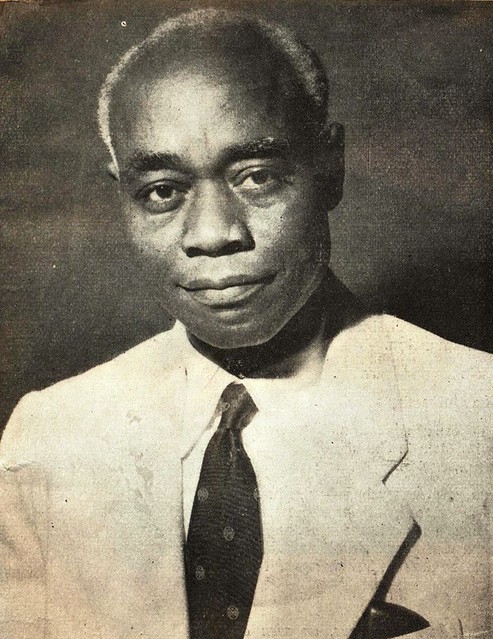
112th birthday of the venerable Akanu Ibiam

(Born 29 November 1906, Unwana, Biafra)
Herbert Ekwe-Ekwe

AFFABLE physician, erudite theologian, principled statesperson, works for 30 years in the Church of Scotland/Presbyterian Church rural medical programme in central and east regions of Biafra and who, in August 1967, returns to Queen Elizabeth II of England the three insignias of knighthood (OBEKBEKCMG) conferred on him by both her and her father, King George VI,  in protest against the instrumental role being played by Britain in the perpetration of the Igbo genocide, the foundational genocide of post-(European)conquest Africa, when it and its Fulani islamist/jihadist-led client state Nigeria murder 3.1 million Igbo people, 25 per cent of this nation’s population, between 29 May 1966 and 12 January 1970, phases I-III of the genocide. This genocide, phase-IV, continues unabated since 13 January 1970. The Anglo-Nigerian genocidists have murdered tens of thousands of Igbo during this period.
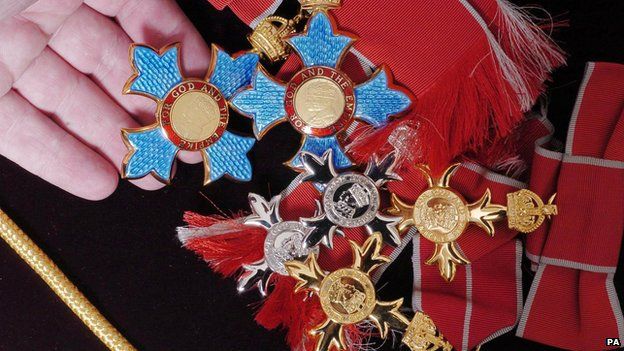
Dr Ibiam’s towering position against the Igbo genocide is a challenge particularly to those clusters of the Igbo intelligentsia, especially in the diaspora, who have exercised a mortifying silence over the existential emergency that the Igbo face, currently, as the genocidists pursue phase-IV of the slaughtering… 

It is also a reminder of how deeply embedded British involvement in the execution of the genocide is as shown in that historic August 1967 letter of Dr Ibiam’s to Queen Elizabeth II in which he renounces the awarded 3-set knighthood from the English crown (see excerpts of letter below) and illustrated further by the calculated indifference of the Church of England, markedly its present leadership, to the genocide. 

Church of England

SINCE NOVEMBER 2015, during the course of the notorious génocidaire Muhammadu Buhari regime in Nigeria (http://re-thinkingafrica.blogspot.co.uk/2016/01/herbert-ekwe-ekwe-it-is-indeed.html), imposed on the country by ex-British Prime Minister David Cameron and ex-US President Barack Obama (first African-descent US president in 233 years of the founding of the republic – https://re-thinkingafrica.blogspot.com/2017/05/on-30-march-2016-i-published-essay.html), 3000 Igbo have been murdered in expanded scorched earth campaigns by its military and adjunct Fulani militia terrorists across Biafra. Sixty per cent of these murders have occurred in Onicha and neighbouring towns and villages, southwest Biafra, which are all located in the Onicha diocese of the Anglican communion, part of the Church of England, one of this denomination’s largest population districts in the world. Neither the Church of England nor its head, Justin Welby, the archbishop of Canterbury, who has known Muhammadu Buhari personally since the former enjoyed an exponentially-lucrative post working for French oil company Elf Aquitaine in the early 1980s in the petroleum oil industry in Biafra’s Oshimili Delta, has condemned any of these Igbo slaughters of the past three years or offered public condolences to the aggrieved and traumatised Anglican communion congregants... 

(paragraphs 14-20 of Dr Ibiam’s letter to Queen Elizabeth II of England, August 1967)

...

YOUR MAJESTY, the British officials in Nigeria are fully aware of all these. They know that we are injured and deeply grieved people and had been cruelly treated by our erstwhile fellow citizens of Federal Republic of Nigeria. The British officials not only knew the crux of the matter, but they also encouraged Northern Nigeria to carry out and execute their nefarious plan against us. They are angry with Biafra because Biafra categorically refused to remain as part of the Nigeria federation and political unit only to be trampled upon, discriminated against and hated, ruthlessly exploited and denied her rights and privileges, and slaughtered whenever it suited the whims and caprices of the favoured people of Northern Nigeria. To add insult to injury, Your Majesty’s Britannic Government, instead of being neutral in our quarrels or finding ways and means to mediate and bring peace to the two countries, has now taken it upon herself to supply military aid to Nigeria to help them defeat and subjugate Biafra.

It is simply staggering for a Christian country like Britain to help a Moslem country militarily to crush another Christian country like Biafra. This is just too much for me, Your Gracious Majesty, this act of unfriendliness and treachery by the British Government towards the people of Republic of Biafra who, as Eastern Nigerians, had so much regard for Britain and British people.

In the circumstance, Your Majesty, I no longer wish to wear the garb of the British Knighthood. British fair play, British justice, and the Englishman’s word of honour which Biafra loved so much and cherished have become meaningless to Biafrans in general and to me in particular. Christian Britain has shamelessly let down Christian Biafra.

I love the Republic of Biafra very dearly and pray that, by grace of God, she may remain and continue to grow and live and always act like a truly Christian country for all times.

I am, your Majesty

Yours Most Respectfully

(AKANU IBIAM)
(John Coltrane Quintet, “The believer” {composer: McCoy Tyner} [personnel: Coltrane, tenor saxophone; Donald Bryd, trumpet; Red Garland, piano; Paul Chambers, bass; Louis Hayes, drums; recorded: Van Gelder Studio, Hackensack, NJ, US, 10 January 1958)

*****Herbert Ekwe-Ekwe is the author of Biafra Revisited (2006) and author, with Lakeson Okwuonicha, of Why Donald Trump is great for Africa (2018)

Twitter @HerbertEkweEkwe


Wednesday, 29 November 2017

111th birthday of the venerable Akanu Ibiam

(Born 29 November 1906, Unwana, Biafra)
Herbert Ekwe-Ekwe

AFFABLE physician, erudite theologian, principled statesperson, works for 30 years in the Church of Scotland/Presbyterian Church rural medical programme in central and east regions of Biafra and who, in August 1967, returns to Queen Elizabeth II of England the three insignias of knighthood (OBEKBEKCMG) conferred on him by both her and her father, King George VI,  in protest against the central role being played by Britain in the perpetration of the Igbo genocide, the foundational genocide of post-(European)conquest Africa, when it and its Hausa-Fulani/islamist-led client state Nigeria murder 3.1 million Igbo people, 25 per cent of this nation’s population, between 29 May 1966 and 12 January 1970 (phases I-III of the genocide).
Dr Ibiam’s towering position against the Igbo genocide is a challenge particularly to those clusters of the Igbo intelligentsia, especially in the diaspora, who have exercised a mortifying silence over the existential emergency that the Igbo face, currently, as the genocidists pursue phase-IV of the slaughtering … It is also a reminder of how deeply embedded British involvement in the execution of the genocide is as shown in that historic August 1967 letter of Dr Ibiam’s to Queen Elizabeth II in which he renounces the awarded 3-set knighthood from the English crown (see excerpts of letter below) and illustrated further by the calculated indifference of the Church of England to the genocide. 

Church of England

SINCE NOVEMBER 2015, during the course of the génocidaire Muhammadu Buhari regime in Nigeria (http://re-thinkingafrica.blogspot.co.uk/2016/01/herbert-ekwe-ekwe-it-is-indeed.html), over 2000 Igbo have been murdered in expanded scorched earth campaigns by its military/adjunct Fulani militia across Biafra. Sixty per cent of these murders have occurred in Onicha and neighbouring towns and villages, southwest Biafra, which are all located in the Onicha diocese of the Anglican communion, part of the Church of England, one of this denomination’s largest population districts in the world. Neither the Church of England nor its head, Justin Welby, the archbishop of Canterbury, who has known Muhammadu Buhari personally since the former worked in the petroleum oil industry in Nigeria in the early 1980s, has condemned any of these Igbo slaughters of the past two years or offered public condolences to the aggrieved and traumatised Anglican communion congregants...

(paragraphs 14-20 of Dr Ibiam’s letter to Queen Elizabeth II of England, August 1967)

...

YOUR MAJESTY, the British officials in Nigeria are fully aware of all these. They know that we are injured and deeply grieved people and had been cruelly treated by our erstwhile fellow citizens of Federal Republic of Nigeria. The British officials not only knew the crux of the matter, but they also encouraged Northern Nigeria to carry out and execute their nefarious plan against us. They are angry with Biafra because Biafra categorically refused to remain as part of the Nigeria federation and political unit only to be trampled upon, discriminated against and hated, ruthlessly exploited and denied her rights and privileges, and slaughtered whenever it suited the whims and caprices of the favoured people of Northern Nigeria. To add insult to injury, Your Majesty’s Britannic Government, instead of being neutral in our quarrels or finding ways and means to mediate and bring peace to the two countries, has now taken it upon herself to supply military aid to Nigeria to help them defeat and subjugate Biafra.

It is simply staggering for a Christian country like Britain to help a Moslem country militarily to crush another Christian country like Biafra. This is just too much for me, Your Gracious Majesty, this act of unfriendliness and treachery by the British Government towards the people of Republic of Biafra who, as Eastern Nigerians, had so much regard for Britain and British people.

In the circumstance, Your Majesty, I no longer wish to wear the garb of the British Knighthood. British fair play, British justice, and the Englishman’s word of honour which Biafra loved so much and cherished have become meaningless to Biafrans in general and to me in particular. Christian Britain has shamelessly let down Christian Biafra.

I love the Republic of Biafra very dearly and pray that, by grace of God, she may remain and continue to grow and live and always act like a truly Christian country for all times.

I am, your Majesty

Yours Most Respectfully

(AKANU IBIAM)
(John Coltrane Quintet, “The believer” {composer: McCoy Tyner} [personnel: Coltrane, tenor saxophone; Donald Bryd, trumpet; Red Garland, piano; Paul Chambers, bass; Louis Hayes, drums; recorded: Van Gelder Studio, Hackensack, NJ, US, 10 January 1958)
Twitter@HerbertEkweEkwe

Tuesday, 29 November 2016

110th birthday of Akanu Ibiam

(Born 29 November 1906, Unwana, Biafra)
Affable physician, erudite theologian, principled statesperson, works for 30 years in the Church of Scotland/Presbyterian Church rural medical programme in central and east regions of Biafra and who, in 1967, returns to Queen Elizabeth II of England the three insignias of knighthood (OBEKBEKCMG) conferred on him by both her and her father, King George VI,  in protest against the central role being played by Britain in the perpetration of the Igbo genocide, the foundational genocide of post-(European)conquest Africa, when it and its client state Nigeria murder 3.1 million Igbo people, 25 per cent of this nation’s population, between 29 May 1966 and 12 January 1970
(John Coltrane, “Dear Lord” [personnel: Coltrane, tenor saxophone; McCoy Tyner, piano;  Jimmy Garrison, bass; Roy Haynes, drums; recorded: Van Gelder Studio, Englewood Cliffs, NJ, US, 26 May 1965]) 
Twitter @HerbertEkweEkwe


Friday, 19 August 2016

Dr Akanu Ibiam’s letter to Queen Elizabeth II: The world appears to have hardly changed in 50 years…

(Venerable: Dr Akanu Ibiam)
Herbert Ekwe-Ekwe

Forty-nine years ago to the day, in August 1967, the venerable Dr Akanu Ibiam, Christian missionary physician, erudite theologian and statesperson who had worked for 30 years in the Church of Scotland/Presbyterian Church rural medical programmes across central and east regions of Biafra, wrote a 20-paragraph historic letter to Queen Elizabeth II of England. 

In his letter, Dr Ibiam denounced, unreservedly, the central role being played by Britain in the Igbo genocide, the foundational genocide of post-(European)conquest Africa, which had then entered its second year of unremittingly ruthless slaughter. In protest to this role, Dr Ibiam renounced and returned to the British head of state the three insignias of knighthood (OBE, KBE, KCMG) that both she and her father, King George VI, had earlier conferred on the esteemed missionary physician for services to church and state.

Britain and Nigeria would ultimately murder 3.1 million Igbo people, 25 per cent of this nation’s population, by 12 January 1970 at the end of phase-III of the genocide. The genocide then moved on to phase-IV which has gone on to this day...

Testament vs that establishment consensus

As is evident in the last four main paragraphs of Dr Ibiam’s letter published below (paragraphs 14-17 in the original), this document could easily have been written by the great humanist to Queen Elizabeth last year, 2015, after the month of  March, when this same Britain, now under the political leadership of Prime Minister David Cameron, who was born 5 months after the 29 July 1966 launch of the genocide (coordinated then by No. 10 Downing Street resident Prime Minister Harold Wilson), installed Muhammadu Buhari, the notorious genocidist trooper of north/north central Biafra killing fields (July 1967-January 1970), as new head of Nigeria regime. No, Dr Ibiam could well have written this testament a few days ago! As the world duly knows, Buhari now drives this segment of phase-IV of the Igbo genocide as ruthlessly as he deems fit, murdering thousands of Igbo people in all regions of Biafra especially since October 2015, aware that, as before, he and Nigeria have the back of the British government to ensure, particularly, that Nigeria is shielded from international outrage and sanctions in its strategic goal to destroy Igbo people. Consequently, the British government is yet to condemn any of these murders nor confront its own involvement in the perpetration of the entire 50-year stretch of this most gruesome and devastating genocide of contemporary history. 

Quite gravely, there is a haunting half-a-century-old consensus shared by the critical clusters of the British establishment including the political “class”, academia, media, charities, human rights, even the church, to maintain a deafening silence as the British state uninterruptedly wages this Igbo genocide in alliance with its on the ground Hausa-Fulani north region islamist-led client state in Nigeria. The goal is pointedly to protect, in perpetuity, Britain’s perceived strategic and economic interests in this southwestcentral Africa region – 3500 miles away from Britain. The fact that this alliance appears to challenge some of the more predictable characterisation of the salient features of contemporary international politics is indicative of how much more resilient and enduring shared worldviews (for instance, in this case, to collaborate to wage a genocide on a third party, a mutually-targeted people, for complementary interests) from supposedly or seemingly contradictory state systems can be.

(Paragraphs 14-20 of Dr Ibiam’s letter to Queen Elizabeth II of England, August 1967)

(Queen Elizabeth II: recipient of Dr Ibiam’s August 1967 letter)

...

YOUR MAJESTY, the British officials in Nigeria are fully aware of all these. They know that we are injured and deeply grieved people and had been cruelly treated by our erstwhile fellow citizens of Federal Republic of Nigeria. The British officials not only knew the crux of the matter, but they also encouraged Northern Nigeria to carry out and execute their nefarious plan against us. They are angry with Biafra because Biafra categorically refused to remain as part of the Nigeria federation and political unit only to be trampled upon, discriminated against and hated, ruthlessly exploited and denied her rights and privileges, and slaughtered whenever it suited the whims and caprices of the favoured people of Northern Nigeria. To add insult to injury, Your Majesty’s Britannic Government, instead of being neutral in our quarrels or finding ways and means to mediate and bring peace to the two countries, has now taken it upon herself to supply military aid to Nigeria to help them defeat and subjugate Biafra.

It is simply staggering for a Christian country like Britain to help a Moslem country militarily to crush another Christian country like Biafra. This is just too much for me, Your Gracious Majesty, this act of unfriendliness and treachery by the British Government towards the people of Republic of Biafra who, as Eastern Nigerians, had so much regard for Britain and British people.

In the circumstance, Your Majesty, I no longer wish to wear the garb of the British Knighthood. British fair play, British justice, and the Englishman’s word of honour which Biafra loved so much and cherished have become meaningless to Biafrans in general and to me in particular. Christian Britain has shamelessly let down Christian Biafra.

I love the Republic of Biafra very dearly and pray that, by grace of God, she may remain and continue to grow and live and always act like a truly Christian country for all times.

I am, your Majesty

Yours Most Respectfully

(AKANU IBIAM)
(John Coltrane Quartet, “Wise one” [personnel: Coltrane, tenor saxophone; McCoy Tyner, piano; Jimmy Garrison, bass; Elvin Jones, drums; recorded: Van Gelder Studio, Englewood, Cliff, NJ, US, 24 April 1964)
Twitter@HerbertEkweEkwe

Sunday, 29 November 2015

109th birthday of Akanu Ibiam

(Born 29 November 1906, Unwana, Biafra)
Affable physician, erudite theologian, principled statesperson, works for 30 years in the Church of Scotland/Presbyterian Church rural medical programme in central and east regions of Biafra and who, in 1967, returns to Queen Elizabeth II of England the three insignias of knighthood (OBE, KBE, KCMG) conferred on him by both her and her father, King George VI,  in protest against the central role being played by Britain in the perpetration of the Igbo genocide, the foundational genocide of post-(European)conquest Africa, when it and its client state Nigeria murder 3.1 million Igbo people, one-quarter of this nation’s population, between 29 May 1966 and 12 January 1970

Twitter @HerbertEkweEkwe

Thursday, 6 August 2015

Nigeria perpetuates violence and insecurity in Igboland

In the wake of the murder of three, possibly four, Igbo businesspeople in the Ariara International Market, Aba, eastcentral Igboland, last Friday (31 July 2015; see africanspotlight.com) by the Nigerian occupation military, the following essay, first published on 16 July 2010 and reissued on 8 June 2013, is again republished without any changes in the original. This is to ensure that these latest horrendous crimes are aptly situated within their pressing historical contexts. (HE-E)

[Following the all-day “sit-at-home” declaration held across Igboland and by some in the diaspora in Nigeria earlier on today (Saturday 8 June 2013) to mourn the hundreds of Igbo people murdered in recent months by the Boko Haram islamic insurgents in north Nigeria, and the murder, in January 2013, of an additional group of 30-50 Igbo in Igboland itself by the Nigerian occupying military and police (bodies of the latter murders were subsequently gagged and dumped in the River Ezu, northwestcentral Igboland), I reissue, here, an essay (“Nigeria perpetuates violence and insecurity in Igboland”) on the broader tenor of  this day of remembrance which was first published on 16 July 2010. The essay, with no changes made in the original, is aptly preceded by the John Coltrane Quartet playing “Lonnie’s lament” – personnel: Coltrane, tenor saxophone; McCoy Tyner, piano, piano; Jimmy Garrison, bass; Elvin Jones, drums (recorded: Van Gelder Studio, Englewood Cliffs, NJ, US, 27 April/I June 1964).]

Herbert Ekwe-Ekwe

In these very turbulent times, the recent high profile summit of leading Igbo human rights scholars (including respected literary critic Ben Obumselu) and activists (including influential lawyer Olisa Agbakoba) at the Ofuobi African Centre, Enuugwu, may well be the turning point on the ground in Igboland to decisively chart the final phase of the course to the restoration of Igbo sovereignty.

Away from the usual heart-rending equivocations and staggering untruths that emanate from occupation-appointed officials and acolytes and by uncritical commentators (some of who are, amazingly, Igbo!) on the source of the current violence and insecurity in Igboland, the summit’s communiqué lays the case squarely on the Nigeria state – its “siege and occupation” of Igboland, as the text appositely states. It elaborates, most profoundly:
[Igboland] has become militarized with a vast deployment of expeditionary and predatory police and army personnel who are from outside the region. For instance, there are 61 Police check-points between Abakal[e]k[e] … to Nsukka … (a distance of about 130km). In [contrast] between Obolo-Afo [Igboland] and Lokoja [Nigeria] (a distance of nearly 400 km) no checkpoints exist. This state of siege is exemplified by the current [situation] of … [Igbo] cities [including] Aba, [Enuugwu, Abakaleke, Onicha, Owere] and Nnewi – hitherto the fastest growing and thriving industrial cum commercial cities in the African continent now being turned into refuse dumps and ghettos. Businesses that would have provided jobs to engage our youths have been strangulated by incompetent and criminal leadership.
The summiteers conclude with a 10-point resolution and demand made on the occupation state, three of which are particularly pertinent:
1. Immediate demilitarisation of Igboland by dismantling all checkpoints and security barricades that it has set up across the country

2. Immediate rescinding of the deployment of Nigeria military forces to Igboland on the spurious mission of fighting kidnapping, instead reorienting policing from expeditionary operations to intelligence-based operations in cooperation with communities

3. Immediate and unconditional release and withdrawal of illegal criminal charges of members of the Movement for Actualization of the Sovereign State of Biafran (MASSOB) including Ralph Uwazurike, Uche Okwukwu, and other prisoners of conscience
What is clearly evident is that the accent, presently, on Nigeria’s unrelenting genocide on the Igbo, since the 1966-1970 foundational stretch when it murdered 3.1 million of the people, focuses on demolishing the crucial socioeconomic architecture of their collective being. Pointedly, this preoccupation constitutes one of the five acts of genocide explicitly defined in article 2 of the December 1948 UN Convention on the Prevention and Punishment of the Crime of Genocide: “deliberately inflicting upon the group conditions of life designed to bring about its physical destruction in whole or in part” (the Sudan’s head of regime Omar al-Bashir’s recent indictment for genocide, by the International Criminal Court, was effected partly because of his regime’s perpetration of this particular act of genocide in Darfur – see previous blog posting).

If one refers, for example, to the innumerable public statements on the Igbo genocide made over the years by Olusegun Obasanjo, a fiendish operative of this heinous crime and ex-head of regime in Nigeria, Nigeria has since been deeply troubled by its failure to accomplish its dreadful objective of annihilating the Igbo population 44 years ago. It therefore considers its current project of destroying the socioeconomic heritage and viability of the Igbo nation a sufficiently lethal tactical plank to accomplish its much vaunted, gruesome mission. Since 1970, the primary ambition of a typical Nigerian police officer graduating from police colleges in Nigeria is to be deployed to Igboland; he/she readily bribes their commandants to receive the coveted Igboland posting where they make an incredible fortune in just a few years of their placements at the myriad checkpoints, detaining/kidnapping/extorting money or a range of choice consumer products from road users. Even Igbo school children going to and from school, are not exempt from this officially-sponsored, openly-organised brigandage. Igbo homes and businesses (particularly shops and markets), as can be expected, are also regular targets of this institutionalised thieving spree. We mustn’t forget that, just over seven years to the day (10 July 2003), it was a Raphael Ige, a Nigerian assistant inspector general of police, who spectacularly carried out the kidnapping of then governor Chris Ngige of the Anambra region, northwest Igboland. Ige was a key executioner in the Ngige abduction plot, which was planned and authorised by the Obasanjo regime to divert Anambra public funds to Obasanjo-recruited hirelings opposed to the ongoing reconstruction of Igboland.

Abduction, detention and extortion constitute the 3-headed monster that the Nigerian occupation employs to savage the Igbo economy – most ruthlessly and most remorselessly. In essence, and perhaps most perversely cast, the Igbo nation subsidises its very own occupation – an indirect taxation thereof, amounting to millions and millions of US dollars of savings annually for the near-bankrupt Nigeria treasury. Given the paltry state of its finances, Nigeria cannot afford its continuing occupation of Igboland without its simultaneous ravaging of the legendary wealth of Igboland. The Igbo therefore carry the burden of this occupation with all its tragic ramifications. There are no comparable occupations elsewhere in the contemporary world with the same viciousness and severity.

What happens next in Igboland? When will the Nigeria military and police forces depart – as duly demanded by the Igbo human rights practitioners? How do the Igbo shut down this occupation? The Igbo demands are for immediate implementation. Nigeria must comply with these demands. The Igbo should now ensure that Nigeria evacuates its occupying military and police forces from their country forthwith. The Igbo are not Nigerian. The Igbo are from Biafra. The Igbo are Biafran. Whilst the Igbo worked extraordinarily hard by playing the vanguard role in the liberation of Nigeria from the British conquest (beginning from the 1930s), the Igbo ceased to be Nigerian on 29 May 1966. This was the day Nigeria launched the Igbo genocide. The Igbo renouncement of their Nigerian citizenship is the irrevocable Igbo indictment on a state that embarked on the destruction of 3.1 million Igbo people, one-quarter of the nation’s population at the time. The only future a genocide-state has is its dismantling – nothing else.

The Igbo should now stop paying the millions and millions of US dollars worth of expropriation tax that sustains the occupation and their subjugation. One must never, ever, be a participant in their incarceration, their deindividuation. A general, indefinite strike across the Igbo country should be called forthwith, demanding the unconditional dismantling of Nigeria’s barriers of extortion and expropriation, and the evacuation of its military/police bases from their land. An extensive and continuing-evolving organisation is required as this march of freedom develops. All strata of the 50 million Igbo population, at home and abroad, must be mobilised – particularly women organisations, farmers, youth/students’ bodies, the redoubtable umuada and umunna circuits, market/allied trade guilds, custodians and overseers of Igbo traditional religious places of worship, the clergy and the rest of the intellectuals. The Igbo clergy, for instance, has its work cut out. The role of the church in national freedom movements has been invaluable as the world has seen in places like Poland, the United States (the African American church, for example), several countries in Latin America and, of course, back home in Biafra as occurred 44 years ago – surely in the next sermon in the churches and cathedrals of the land, the congregation will be interested to learn of the legacies of the venerables Akanu Ibiam, Godfery Okoye, Benjamin Nwankiti… The Igbo expect their intellectuals, many of who are part of the world’s best and brightest, to play a critical role in responding to this existential threat to their nation. Already, there exists a rich legacy of the outstandingly selfless role played by Igbo intellectuals to Igboland at the onset of the genocide (phase-I, phase-II, phase-III) to build upon.

Finally, the rest of the world must know of the historic Enuugwu human rights community declaration and the measures being taken by the Igbo to free their homeland. The text of the communiqué should be distributed worldwide, particularly to institutions and agencies working on genocide, human rights, peace and freedom. The use of all the creative avenues of new technology is paramount. Igbo website networks will indeed be very busy in the coming days and weeks. The millions of Igbo émigrés, especially those in Europe and North America, should begin, right away, to lobby their elected representatives(members of parliament/deputies/congresspeople/senators) on these breathtaking developments and also seek support and solidarity from civil and human rights bodies in their community, region or country of domicile. Students should take up this campaign in their unions, clubs and societies on resumption after the summer vacation. The office of Luis Moreno-Ocampo, the chief prosecutor of the International Criminal Court, The Hague, should be contacted at once with the astonishingly vast documentation that the current (phase-IV, since 13 January 1970) and previous phases of the Igbo genocide attest to. Last year’s British Broadcasting Corporation’s investigation of the Nigeria police murdering-escapades in Enuugwu as well as that of Amnesty International’s wider canvass of investigation on the same police barbarities in other parts of occupied Igboland and Nigeria (see links below) are indispensible additions to the existing dossier on the genocide:

1. http://news.bbc.co.uk/1/hi/world/africa/8400799.stm

2. http://news.bbc.co.uk/1/hi/world/africa/8401119.stm

3. http://news.bbc.co.uk/1/hi/world/africa/7986039.stm

4. https://www.amnesty.ie/sites/default/files/report/2014/09/Welcome-to-hell-fire-torture-and-other-ill-treatment-in-Nigeria-Amnesty-International-report.pdf

Additional information (posted 1103 Hours, Pacific Daylight Time, Sunday 9 June 2013) – According to press reports, the Nigerian occupation military and police shot dead 3-6 Igbo mourning-organisers in the important market town of Onicha in the Oshimili Delta, Igboland, during yesterday’s “sit-at-home” observance. The Lagos Guardian (Sunday 8 June 2013),  quoting an official of the organising team, names Sunday Idum, Emeka Ibe and Okechukwu Okolo as having been “shot dead by soldiers at Bida Road ... while five others were critically injured and are receiving treatment in an undisclosed hospital ... [T]hree [others] unconfirmed ... were also shot dead at the [city’s Oshimili River] bridgehead ... 

Twitter @HerbertEkweEkwe


Saturday, 29 November 2014

108th birthday of Akanu Ibiam

(Born 29 November 1906, Unwana, Igboland)
Affable physician, erudite theologian, principled statesperson, works for 30 years in the Church of Scotland/Presbyterian Church rural medical programme in central Igboland and west of the Ibibio country and who, in 1967, returns to Queen Elizabeth II of England the three insignias of knighthood (OBE, KBE, KCMG) conferred on him by both her and her father (King George VI) in protest against the central role being played by Britain in the perpetration of the Igbo genocide, the foundational genocide of post-(European)conquest Africa, when Nigeria murders 3.1 million Igbo people, one-quarter of this nation’s population, between 29 May 1966 and 12 January 1970

Twitter @HerbertEkweEkwe

Friday, 29 November 2013

107th birthday of Akanu Ibiam

(Born 29 November 1906, Unwana, Igboland)
Affable medical doctor, theologian, and principled statesperson who works for 30 years in the Church of Scotland/Presbyterian Church rural medical programme in central Igboland and west of the Ibibio country and who, in 1967, returns to Queen Elizabeth II of England the three insignias of knighthood (OBE, KBE, KCMG) conferred on him by both her and her father (King George VI) in protest to the central role being played by Britain in the perpetration of the Igbo genocide, the foundational genocide of post-(European)conquest Africa, when Nigeria murders 3.1 million Igbo people, one-quarter of this nation’s population, between 29 May 1966 and 12 January 1970

Twitter @HerbertEkweEkwe

Saturday, 8 June 2013

Nigeria perpetuates violence and insecurity in Igboland

[Following the all-day “sit-at-home” declaration held across Igboland and by some in the diaspora in Nigeria earlier on today (Saturday 8 June 2013) to mourn the hundreds of Igbo people murdered in recent months by the Boko Haram islamic insurgents in north Nigeria, and the murder, in January 2013, of an additional group of 30-50 Igbo in Igboland itself by the Nigerian occupying military and police (bodies of the latter murders were subsequently gagged and dumped in the River Ezu, northwestcentral Igboland), I reissue, here, an essay (“Nigeria perpetuates violence and insecurity in Igboland”) on the broader tenor of  this day of remembrance which was first published on 16 July 2010. The essay, with no changes made in the original, is aptly preceded by the John Coltrane Quartet playing “Lonnie’s lament” – personnel: Coltrane, tenor saxophone; McCoy Tyner, piano, piano; Jimmy Garrison, bass; Elvin Jones, drums (recorded: Van Gelder Studio, Englewood Cliffs, NJ, US, 27 April/I June 1964).]


In these very turbulent times, the recent high profile summit of leading Igbo human rights scholars (including respected literary critic Ben Obumselu) and activists (including influential lawyer Olisa Agbakoba) at the Ofuobi African Centre, Enuugwu, may well be the turning point on the ground in Igboland to decisively chart the final phase of the course to the restoration of Igbo sovereignty.

Away from the usual heart-rending equivocations and staggering untruths that emanate from occupation-appointed officials and acolytes and by uncritical commentators (some of who are, amazingly, Igbo!) on the source of the current violence and insecurity in Igboland, the summit’s communiqué lays the case squarely on the Nigeria state – its “siege and occupation” of Igboland, as the text appositely states. It elaborates, most profoundly:
[Igboland] has become militarized with a vast deployment of expeditionary and predatory police and army personnel who are from outside the region. For instance, there are 61 Police check-points between Abakal[e]k[e] … to Nsukka … (a distance of about 130km). In [contrast] between Obolo-Afo [Igboland] and Lokoja [Nigeria] (a distance of nearly 400 km) no checkpoints exist. This state of siege is exemplified by the current [situation] of … [Igbo] cities [including] Aba, [Enuugwu, Abakaleke, Onicha, Owere] and Nnewi – hitherto the fastest growing and thriving industrial cum commercial cities in the African continent now being turned into refuse dumps and ghettos. Businesses that would have provided jobs to engage our youths have been strangulated by incompetent and criminal leadership.

The summiteers conclude with a 10-point resolution and demand made on the occupation state, three of which are particularly pertinent:
1. Immediate demilitarisation of Igboland by dismantling all checkpoints and security barricades that it has set up across the country

2. Immediate rescinding of the deployment of Nigeria military forces to Igboland on the spurious mission of fighting kidnapping, instead reorienting policing from expeditionary operations to intelligence-based operations in cooperation with communities

3. Immediate and unconditional release and withdrawal of illegal criminal charges of members of the Movement for Actualization of the Sovereign State of Biafran (MASSOB) including Ralph Uwazurike, Uche Okwukwu, and other prisoners of conscience

What is clearly evident is that the accent, presently, on Nigeria’s unrelenting genocide on the Igbo, since the 1966-1970 foundational stretch when it murdered 3.1 million of the people, focuses on demolishing the crucial socioeconomic architecture of their collective being. Pointedly, this preoccupation constitutes one of the five acts of genocide explicitly defined in article 2 of the December 1948 UN Convention on the Prevention and Punishment of the Crime of Genocide: “deliberately inflicting upon the group conditions of life designed to bring about its physical destruction in whole or in part” (the Sudan’s head of regime Omar al-Bashir’s recent indictment for genocide, by the International Criminal Court, was effected partly because of his regime’s perpetration of this particular act of genocide in Darfur – see previous blog posting).

If one refers, for example, to the innumerable public statements on the Igbo genocide made over the years by Olusegun Obasanjo, a fiendish operative of this heinous crime and ex-head of regime in Nigeria, Nigeria has since been deeply troubled by its failure to accomplish its dreadful objective of annihilating the Igbo population 44 years ago. It therefore considers its current project of destroying the socioeconomic heritage and viability of the Igbo nation a sufficiently lethal tactical plank to accomplish its much vaunted, gruesome mission. Since 1970, the primary ambition of a typical Nigerian police officer graduating from police colleges in Nigeria is to be deployed to Igboland; he/she readily bribes their commandants to receive the coveted Igboland posting where they make an incredible fortune in just a few years of their placements at the myriad checkpoints, detaining/kidnapping/extorting money or a range of choice consumer products from road users. Even Igbo school children going to and from school, are not exempt from this officially-sponsored, openly-organised brigandage. Igbo homes and businesses (particularly shops and markets), as can be expected, are also regular targets of this institutionalised thieving spree. We mustn’t forget that, just over seven years to the day (10 July 2003), it was a Raphael Ige, a Nigerian assistant inspector general of police, who spectacularly carried out the kidnapping of then governor Chris Ngige of the Anambra region, northwest Igboland. Ige was a key executioner in the Ngige abduction plot, which was planned and authorised by the Obasanjo regime to divert Anambra public funds to Obasanjo-recruited hirelings opposed to the ongoing reconstruction of Igboland.

Abduction, detention and extortion constitute the 3-headed monster that the Nigerian occupation employs to savage the Igbo economy – most ruthlessly and most remorselessly. In essence, and perhaps most perversely cast, the Igbo nation subsidises its very own occupation – an indirect taxation thereof, amounting to millions and millions of US dollars of savings annually for the near-bankrupt Nigeria treasury. Given the paltry state of its finances, Nigeria cannot afford its continuing occupation of Igboland without its simultaneous ravaging of the legendary wealth of Igboland. The Igbo therefore carry the burden of this occupation with all its tragic ramifications. There are no comparable occupations elsewhere in the contemporary world with the same viciousness and severity.

What happens next in Igboland? When will the Nigeria military and police forces depart – as duly demanded by the Igbo human rights practitioners? How do the Igbo shut down this occupation? The Igbo demands are for immediate implementation. Nigeria must comply with these demands. The Igbo should now ensure that Nigeria evacuates its occupying military and police forces from their country forthwith. The Igbo are not Nigerian. The Igbo are from Biafra. The Igbo are Biafran. Whilst the Igbo worked extraordinarily hard by playing the vanguard role in the liberation of Nigeria from the British conquest (beginning from the 1930s), the Igbo ceased to be Nigerian on 29 May 1966. This was the day Nigeria launched the Igbo genocide. The Igbo renouncement of their Nigerian citizenship is the irrevocable Igbo indictment on a state that embarked on the destruction of 3.1 million Igbo people, one-quarter of the nation’s population at the time. The only future a genocide-state has is its dismantling – nothing else.

The Igbo should now stop paying the millions and millions of US dollars worth of expropriation tax that sustains the occupation and their subjugation. One must never, ever, be a participant in their incarceration, their deindividuation. A general, indefinite strike across the Igbo country should be called forthwith, demanding the unconditional dismantling of Nigeria’s barriers of extortion and expropriation, and the evacuation of its military/police bases from their land. An extensive and continuing-evolving organisation is required as this march of freedom develops. All strata of the 50 million Igbo population, at home and abroad, must be mobilised – particularly women organisations, farmers, youth/students’ bodies, the redoubtable umuada and umunna circuits, market/allied trade guilds, custodians and overseers of Igbo traditional religious places of worship, the clergy and the rest of the intellectuals. The Igbo clergy, for instance, has its work cut out. The role of the church in national freedom movements has been invaluable as the world has seen in places like Poland, the United States (the African American church, for example), several countries in Latin America and, of course, back home in Biafra as occurred 44 years ago – surely in the next sermon in the churches and cathedrals of the land, the congregation will be interested to learn of the legacies of the venerables Akanu Ibiam, Godfery Okoye, Benjamin Nwankiti… The Igbo expect their intellectuals, many of who are part of the world’s best and brightest, to play a critical role in responding to this existential threat to their nation. Already, there exists a rich legacy of the outstandingly selfless role played by Igbo intellectuals to Igboland at the onset of the genocide to build upon.

Finally, the rest of the world must know of the historic Enuugwu human rights community declaration and the measures being taken by the Igbo to free their homeland. The text of the communiqué should be distributed worldwide, particularly to institutions and agencies working on genocide, human rights, peace and freedom. The use of all the creative avenues of new technology is paramount. Igbo website networks will indeed be very busy in the coming days and weeks. The millions of Igbo émigrés, especially those in Europe and North America, should begin, right away, to lobby their elected representatives(members of parliament/deputies/congresspeople/senators) on these breathtaking developments and also seek support and solidarity from civil and human rights bodies in their community, region or country of domicile. Students should take up this campaign in their unions, clubs and societies on resumption after the summer vacation. The office of Luis Moreno-Ocampo, the chief prosecutor of the International Criminal Court, The Hague, should be contacted at once with the astonishingly vast documentation that the current and previous phases of the Igbo genocide attest to. Last year’s British Broadcasting Corporation’s investigation of the Nigeria police murdering-escapades in Enuugwu as well as that of Amnesty International’s wider canvass of investigation on the same police barbarities in other parts of occupied Igboland and Nigeria (see links below) are indispensible additions to the existing dossier on the genocide:

http://news.bbc.co.uk/1/hi/world/africa/8400799.stm

http://news.bbc.co.uk/1/hi/world/africa/8401119.stm

http://news.bbc.co.uk/1/hi/world/africa/7986039.stm

http://www.amnesty.org/en/library/asset/AFR44/038/2009/en/f09b1c15-77b4-40aa-a608-b3b01bde0fc5/afr440382009en.pdf


Additional information (posted 1103 Hours, Pacific Daylight Time, Sunday 9 June 2013) – According to press reports, the Nigerian occupation military and police shot dead 3-6 Igbo mourning-organisers in the important market town of Onicha in the Niger Delta, Igboland, during yesterday’s “sit-at-home” observance. The Lagos Guardian (Sunday 8 June 2013),  quoting an official of the organising team, names Sunday Idum, Emeka Ibe and Okechukwu Okolo as having been “shot dead by soldiers at Bida Road ... while five others were critically injured and are receiving treatment in an undisclosed hospital ... [T]hree [others] unconfirmed ... were also shot dead at the [city’s Niger River] bridgehead ... 


Twitter @HerbertEkweEkwe


Friday, 16 July 2010

Nigeria perpetuates violence and insecurity in Igboland


Herbert Ekwe-Ekwe

In these very turbulent times, the recent high profile summit of leading Igbo human rights scholars (including respected literary critic Ben Obumselu) and activists (including influential lawyer Olisa Agbakoba) at the Ofuobi African Centre, Enuugwu, may well be the turning point on the ground in Igboland to decisively chart the final phase of the course to the restoration of Igbo sovereignty.

Away from the usual heart-rending equivocations and staggering untruths that emanate from occupation-appointed officials and acolytes and by uncritical commentators (some of who are, amazingly, Igbo!) on the source of the current violence and insecurity in Igboland, the summit’s communiqué lays the case squarely on the Nigeria state – its “siege and occupation” of Igboland, as the text appositely states. It elaborates, most profoundly:
[Igboland] has become militarized with a vast deployment of expeditionary and predatory police and army personnel who are from outside the region. For instance, there are 61 Police check-points between Abakal[e]k[e] … to Nsukka … (a distance of about 130km). In [contrast] between Obolo-Afo [Igboland] and Lokoja [Nigeria] (a distance of nearly 400 km) no checkpoints exist. This state of siege is exemplified by the current [situation] of … [Igbo] cities [including] Aba, [Enuugwu, Abakaleke, Onicha, Owere] and Nnewi – hitherto the fastest growing and thriving industrial cum commercial cities in the African continent now being turned into refuse dumps and ghettos. Businesses that would have provided jobs to engage our youths have been strangulated by incompetent and criminal leadership.

The summiteers conclude with a 10-point resolution and demand made on the occupation state, two of which are particularly pertinent:
1. Immediate demilitarisation of Igboland by dismantling all checkpoints and security barricades that it has set up across the country

2. Immediate rescinding of the deployment of Nigeria military forces to Igboland on the spurious mission of fighting kidnapping, instead reorienting policing from expeditionary operations to intelligence-based operations in cooperation with communities
What is clearly evident is that the accent, presently, on Nigeria’s unrelenting genocide on the Igbo, since the 1966-1970 foundational stretch when it murdered 3.1 million of the people, focuses on demolishing the crucial socioeconomic architecture of their collective being. Pointedly, this preoccupation constitutes one of the five acts of genocide explicitly defined in article 2 of the December 1948 UN Convention on the Prevention and Punishment of the Crime of Genocide: “deliberately inflicting upon the group conditions of life designed to bring about its physical destruction in whole or in part” (the Sudan’s head of regime Omar al-Bashir’s recent indictment for genocide, by the International Criminal Court, was effected partly because of his regime’s perpetration of this particular act of genocide in Darfur – see previous blog posting).

If one refers, for example, to the innumerable public statements on the Igbo genocide made over the years by Olusegun Obasanjo, a fiendish operative of this heinous crime and ex-head of regime in Nigeria, Nigeria has since been deeply troubled by its failure to accomplish its dreadful objective of annihilating the Igbo population 44 years ago. It therefore considers its current project of destroying the socioeconomic heritage and viability of the Igbo nation a sufficiently lethal tactical plank to accomplish its much vaunted, gruesome mission. Since 1970, the primary ambition of a typical Nigerian police officer graduating from police colleges in Nigeria is to be deployed to Igboland; he/she readily bribes their commandants to receive the coveted Igboland posting where they make an incredible fortune in just a few years of their placements at the myriad checkpoints, detaining/kidnapping/extorting money or a range of choice consumer products from road users. Even Igbo school children going to and from school, are not exempt from this officially-sponsored, openly-organised brigandage. Igbo homes and businesses (particularly shops and markets), as can be expected, are also regular targets of this institutionalised thieving spree. We mustn’t forget that, just over seven years to the day (10 July 2003), it was a Raphael Ige, a Nigerian assistant inspector general of police, who spectacularly carried out the kidnapping of then governor Chris Ngige of the Anambra region, northwest Igboland. Ige was a key executioner in the Ngige abduction plot, which was planned and authorised by the Obasanjo regime to divert Anambra public funds to Obasanjo-recruited hirelings opposed to the ongoing reconstruction of Igboland.

Abduction, detention and extortion constitute the 3-headed monster that the Nigerian occupation employs to savage the Igbo economy – most ruthlessly and most remorselessly. In essence, and perhaps most perversely cast, the Igbo nation subsidises its very own occupation – an indirect taxation thereof, amounting to millions and millions of US dollars of savings annually for the near-bankrupt Nigeria treasury. Given the paltry state of its finances, Nigeria cannot afford its continuing occupation of Igboland without its simultaneous ravaging of the legendary wealth of Igboland. The Igbo therefore carry the burden of this occupation with all its tragic ramifications. There are no comparable occupations elsewhere in the contemporary world with the same viciousness and severity.

What happens next in Igboland? When will the Nigeria military and police forces depart – as duly demanded by the Igbo human rights practitioners? How do the Igbo shut down this occupation? The Igbo demands are for immediate implementation. Nigeria must comply with these demands. The Igbo should now ensure that Nigeria evacuates its occupying military and police forces from their country forthwith. The Igbo are not Nigerian. The Igbo are from Biafra. The Igbo are Biafran. Whilst the Igbo worked extraordinarily hard by playing the vanguard role in the liberation of Nigeria from the British conquest (beginning from the 1930s), the Igbo ceased to be Nigerian on 29 May 1966. This was the day Nigeria launched the Igbo genocide. The Igbo renouncement of their Nigerian citizenship is the irrevocable Igbo indictment on a state that embarked on the destruction of 3.1 million Igbo people, one-quarter of the nation’s population at the time. The only future a genocide-state has is its dismantling – nothing else.

The Igbo should now stop paying the millions and millions of US dollars worth of expropriation tax that sustains the occupation and their subjugation. One must never, ever, be a participant in their incarceration, their deindividuation. A general, indefinite strike across the Igbo country should be called forthwith, demanding the unconditional dismantling of Nigeria’s barriers of extortion and expropriation, and the evacuation of its military/police bases from their land. An extensive and continuing-evolving organisation is required as this march of freedom develops. All strata of the 50 million Igbo population, at home and abroad, must be mobilised – particularly women organisations, farmers, youth/students’ bodies, the redoubtable umuada and umunna circuits, market/allied trade guilds, custodians and overseers of Igbo traditional religious places of worship, the clergy and the rest of the intellectuals. The Igbo clergy, for instance, has its work cut out. The role of the church in national freedom movements has been invaluable as the world has seen in places like Poland, the United States (the African American church, for example), several countries in Latin America and, of course, back home in Biafra as occurred 44 years ago – surely in the next sermon in the churches and cathedrals of the land, the congregation will be interested to learn of the legacies of the venerables Akanu Ibiam, Godfery Okoye, Benjamin Nwankiti… The Igbo expect their intellectuals, many of who are part of the world’s best and brightest, to play a critical role in responding to this existential threat to their nation. Already, there exists a rich legacy of the outstandingly selfless role played by Igbo intellectuals to Igboland at the onset of the genocide to build upon.

Finally, the rest of the world must know of the historic Enuugwu human rights community declaration and the measures being taken by the Igbo to free their homeland. The text of the communiqué should be distributed worldwide, particularly to institutions and agencies working on genocide, human rights, peace and freedom. The use of all the creative avenues of new technology is paramount. Igbo website networks will indeed be very busy in the coming days and weeks. The millions of Igbo émigrés, especially those in Europe and North America, should begin, right away, to lobby their elected representatives(members of parliament/deputies/congresspeople/senators) on these breathtaking developments and also seek support and solidarity from civil and human rights bodies in their community, region or country of domicile.

Students should take up this campaign in their unions, clubs and societies on resumption after the summer vacation. The office of Luis Moreno-Ocampo, the chief prosecutor of the International Criminal Court, The Hague, should be contacted at once with the astonishingly vast documentation that the current and previous phases of the Igbo genocide attest to. Last year’s British Broadcasting Corporation’s investigation of the Nigeria police murdering-escapades in Enuugwu as well as that of Amnesty International’s wider canvass of investigation on the same police barbarities in other parts of occupied Igboland and Nigeria (see links below) are indispensible additions to the existing dossier on the genocide:

http://news.bbc.co.uk/1/hi/world/africa/8400799.stm

http://news.bbc.co.uk/1/hi/world/africa/8401119.stm

http://news.bbc.co.uk/1/hi/world/africa/7986039.stm

http://www.amnesty.org/en/library/asset/AFR44/038/2009/en/f09b1c15-77b4-40aa-a608-b3b01bde0fc5/afr440382009en.pdf