Rethinking Africa is a forward looking blog dedicated to the exchange of innovative thinking on issues affecting the advancement of African peoples wherever they are. We provide rigorous and insightful analyses on the issues affecting Africans and their vision of the world.
Showing posts with label foundational genocide of post-(European)conquestAfrica. Show all posts
Showing posts with label foundational genocide of post-(European)conquestAfrica. Show all posts
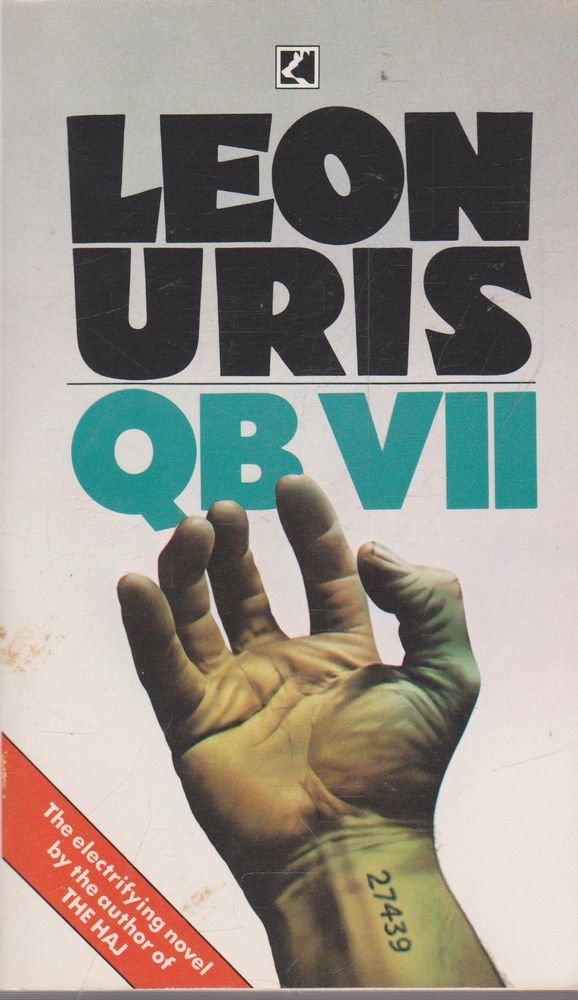
– excerpts from the gripping and indelible lines on the Igbo genocide (29 May 1966-12 January 1970), the foundational genocide of post-(European)conquest Africa during which Britain and client-state Nigeria, southwestcentral Africa, murder 3.1 million Igbo people, beginning 21 years after end of the Jewish genocide, in Leon Uri’s classic, QB VII (London: Bantam Books, 1970), pp. 392-393:
Abe studied them all, his worn-out little band of idealists.
“Ladies and gentlemen of the jury,” he said in a voice that literally moaned with sorrow, “I would like to make a statement by quoting in effect the words of Thomas Bannister, Q.C., when he said that no one in their wildest imaginations would have believed Hitler’s Germany before it actually happened. And he said, if the civilized world knew what Hitler intended to do then they would have stopped him. Well, here we are in 1967, and the Arabs vow daily to finish Hitler’s work. Certainly the world will not stand for another chapter of this holocaust. There is a right and a wrong. It is right for a people to want to survive. It is wrong to want to destroy them. But alas, the kingdom of heaven is concerned with righteousness alone. The kingdoms of the earth run on oil. Well now, certainly the world should be appalled by what is happening in Biafra. The stink of genocide is everywhere. Certainly, after Hitler’s Germany, the world should step in and stop genocide in Biafra. However, that becomes impractical when one considers England’s investments in Nigeria conflict with France’s interests in Biafra. After all, members of the jury, it is only [African] people killing other [African] people.
“We should like to think,” Abe said, “that Thomas Bannister was right, when he said more people, including the German people, should have risked punishment and death by refusing orders. We should like to believe there would have been a protest and ask why didn’t the Germans protest? Well today, young people march in the streets to protest Biafra and Vietnam and the principle of murdering their fellow man through the medium of war. And we say to them … why are you protesting so much? Why don’t you go there and kill like your father killed? …” (added emphasis)
(Eric Dolphy Duo, “Alone together” [personnel: Dolphy, bass clarinet; Richard Davis, double bass; recorded: Fuel Records, New York, US, {May?June?July?} 1963])
Herbert Ekwe-Ekwe Forty-nine years ago to the day, in August 1967, the venerable Dr
Akanu Ibiam, Christian missionary physician, erudite theologian and statesperson
who had worked for 30 years in the Church of
Scotland/Presbyterian Church rural medical programmes across central and east
regions of Biafra, wrote a 20-paragraph historic letter to Queen Elizabeth II
of England. In his letter, Dr Ibiam denounced, unreservedly, the central role being
played by Britain in the Igbo genocide, the foundational genocide of
post-(European)conquest Africa, which had then entered its second year of
unremittingly ruthless slaughter. In protest to this role, Dr Ibiam renounced
and returned to the British head of state the three insignias of knighthood (OBE,KBE,KCMG) that both she and her father, King George VI, had earlier conferred on the esteemed missionary
physician for services to church and state.
Britain and Nigeria would ultimately murder 3.1 million Igbo people, 25
per cent of this nation’s population, by 12 January 1970 at the end of
phase-III of the genocide. The genocide then moved on to phase-IV which has gone on to this day...
Testament vs that establishment consensus As is evident in the last four main paragraphs of Dr Ibiam’s letter published
below (paragraphs 14-17 in the original), this document could easily have been
written by the great humanist to Queen Elizabeth last year, 2015, after the month of March, when this same Britain, now under the political leadership of Prime Minister David Cameron,
who was born 5 months after the 29 July 1966 launch of the genocide (coordinated
then by No. 10 Downing Street resident Prime Minister Harold Wilson), installed Muhammadu Buhari, the notorious
genocidist trooper of north/north central Biafra killing fields (July
1967-January 1970), as new head of Nigeria regime. No, Dr Ibiam could well have written this testament a few days ago! As the world duly knows, Buhari now drives this segment
of phase-IV of the Igbo genocide as ruthlessly as he deems fit, murdering
thousands of Igbo people in all regions of Biafra especially since October 2015,
aware that, as before, he and Nigeria have the back of the British government to ensure, particularly, that Nigeria is shielded from international outrage and sanctions in its strategic goal to destroy Igbo people. Consequently,
the British government is yet to condemn any of these murders nor confront its own involvement in the perpetration
of the entire 50-year stretch of this most gruesome and devastating genocide of
contemporary history. Quite gravely, there is a haunting half-a-century-old consensus shared by the critical clusters of the British establishment including the political “class”, academia, media, charities, human rights, even the church, to maintain a deafening silence as the British state uninterruptedly wages this Igbo genocide in alliance with its on the ground Hausa-Fulani north region islamist-led client state in Nigeria. The goal is pointedly to protect, in perpetuity, Britain’s perceived strategic and economic interests in this southwestcentral Africa region – 3500 miles away from Britain. The fact that this alliance appears to challenge some of the more predictable characterisation of the salient features of contemporary international politics is indicative of how much more resilient and enduring shared worldviews (for instance, in this case, to collaborate to wage a genocide on a third party, a mutually-targeted people, for complementary interests) from supposedly or seemingly contradictory state systems can be.
(Paragraphs 14-20 of Dr Ibiam’s letter to Queen Elizabeth II of England, August 1967)
(Queen Elizabeth II:recipient of Dr Ibiam’s August 1967 letter) ... YOUR MAJESTY, the British officials in Nigeria are fully
aware of all these. They know that we are injured and deeply grieved people and
had been cruelly treated by our erstwhile fellow citizens of Federal Republic
of Nigeria. The British officials not only knew the crux of the matter, but
they also encouraged Northern Nigeria to carry out and execute their nefarious
plan against us. They are angry with Biafra because Biafra categorically
refused to remain as part of the Nigeria federation and political unit only to
be trampled upon, discriminated against and hated, ruthlessly exploited and
denied her rights and privileges, and slaughtered whenever it suited the whims
and caprices of the favoured people of Northern Nigeria. To add insult to
injury, Your Majesty’s Britannic Government, instead of being neutral in our
quarrels or finding ways and means to mediate and bring peace to the two
countries, has now taken it upon herself to supply military aid to Nigeria to
help them defeat and subjugate Biafra.
It is simply staggering for a
Christian country like Britain to help a Moslem country militarily to crush
another Christian country like Biafra. This is just too much for me, Your
Gracious Majesty, this act of unfriendliness and treachery by the British
Government towards the people of Republic of Biafra who, as Eastern Nigerians,
had so much regard for Britain and British people.
In the circumstance, Your
Majesty, I no longer wish to wear the garb of the British Knighthood. British fair
play, British justice, and the Englishman’s word of honour which Biafra loved
so much and cherished have become meaningless to Biafrans in general and to me
in particular. Christian Britain has shamelessly let down Christian Biafra.
I love the Republic of Biafra
very dearly and pray that, by grace of God, she may remain and continue to grow
and live and always act like a truly Christian country for all times.
I am, your Majesty
Yours Most Respectfully
(AKANU IBIAM)
(John Coltrane Quartet, “Wise one” [personnel: Coltrane, tenor saxophone; McCoy Tyner, piano; Jimmy Garrison, bass; Elvin Jones, drums; recorded: Van Gelder Studio, Englewood, Cliff, NJ, US, 24 April 1964)
Herbert Ekwe-Ekwe TWENTY-SIX years later, beginning on 31 March 1967, genocidist Nigeria, very similar to Claudia Moscovici’s reviewed Germany’s strategy in Leningrad, the Soviet Union (http://176.223.121.197/content/siege-leningrad-genocide-starvation, accessed 17 February 2015), embarks on the comprehensive land, naval and aerial blockade of Biafra in phase-II of the Igbo genocide which it enforces through phase III (beginning 6 July 1967) till 12 January 1970 with devastating consequences in Africa’s most densely populated region outside the Nile Delta. Nigeria employs starvation as one of its critical weapons to prosecute the genocide, this foundational genocide of post-(European)conquest Africa formally launched earlier on 29 May 1966 (phase-I). Obafemi Awolowo(lawyer and senior advocate of the Nigerian bar), Nigeria’s chief genocidist “theorist”, deputy head of the prosecuting regime in Lagos and head of the powerful finance ministry publicly states, right from the outset, that starvation of the Igbo is a “legitimate instrument” of the campaign, a policy voiced openly and variously throughout the period by several other senior regime officials including, especially, Anthony Enaharo(head of information ministry), Allison Ayida (regime special advisor), and field commanders Benjamin Adekunle and Olusegun Obasanjo.
Adekunle-Obusonjoist amalgam Benjamin Adekunle, one of the most notorious of the genocidist commanders in south Biafra, reminds the world of his regime’s starvation strategy in an August 1968 press conference which includes foreign correspondents: “I want to prevent even one I[g]bo having even one piece to eat before their capitulation. We shoot at everything that moves, and when our forces march into the centre of I[g]bo territory, we shoot at everything, even at things that don’t move” (The Economist, London, 24 August 1968).
(Adekunle: “I want to prevent even one I[g]bo having even one piece to eat ... We shoot at everything that moves in ... I[g]bo territory ... even at things that don’t move”)
IT IS ALSO in pursuit of this starvation strategy that Olusegun Obasanjo, who takes over this sector’s command from Adekunle later in 1968, orders his air force, in May 1969, to shoot down any Red Cross planes flying in urgently-needed relief supplies to the millions of surviving but encircled, blockaded and bombarded Igbo. Within a week of his infamous order, 5 June 1969, Obasanjo recalls, nostalgically, in his memoirs, unambiguously titled My Command (London: Heinemann, 1981),genocidist air force pilot Gbadomosi King “redeem[s] his promise”, as Obasanjo clinically asserts (Obasanjo, 1981: 79) – the “promise”: Gbadomosi King shoots down a clearly marked, incoming relief-bearing International Committee of the Red Cross (ICRC) DC-7 aircraft near Eket, south Biafra, with the loss of its 3-person crew. Obasanjo’s perverse satisfaction over the aftermath of this crime is fiendish, grotesquely revolting. He writes: “The effect of [this] singular achievement of the Air Force especially on 3 Marine Commando Division [name of the death squad Obasanjo, who subsequently becomes head of Nigeria regime for 11 years, commands] was profound. It raised morale of all service personnel, especially of the Air Force detachment concerned and the troops they supported in [my] 3 Marine Commando Division” (79).
(Obusonjo: “The effect of [this] singular achievement of the Air Force [shooting down of Red Cross relief aircraft] especially on 3 Marine Commando Division was profound. It raised morale of all service personnel...”)
Harold Wilson’s “... a half million dead Biafrans ...” The British government under Prime Minister Harold Wilson is Nigeria’s strategic ally in this campaign – militarily, politically, diplomatically. Britain had since been riled by the Igbo vanguard role, begun in the 1930s, to terminate its conquest and occupation of Nigeria (one of the very prized lands of the British conquest of Africa). By supporting the genocide, Britain seeks to “punish” the Igbo for the latter’s historic role in the liberation of Nigeria.During the course of the 1968/69 gruesomely catastrophic apogee of the campaign when thousands of Igbo are dying daily from starvation, disease and enhanced land and aerial bombardment of survivors in ever-shrinking territory encapsulated by the siege, Harold Wilson is totally unfazed when he informs C. Clyde Ferguson, the US state department special coordinator for relief to Biafra, that he, Harold Wilson, “would accept a half million dead Biafrans if that was what it took” Nigeria to destroy the Igbo resistance to the genocide (Roger Morris, Uncertain Greatness: Henry Kissinger and American Foreign Policy [London and New York: Quartet Books, 1977]: 122). For the record, Wilson’s “a half a million dead Biafrans” represents 4.2 per cent of the Igbo population at this time; by the time that this third phase of the genocide comes to an end, 6-9 months after Wilson’s wish-declaration, 25 per cent of this nation’s population or 3.1 million Igbo people are murdered by the genocidists. Undoubtedly, the Nigerian toady “boys” have handsomely obliged their“massa” Harold Wilson’s wish...
(Wilson:“would accept a half million dead Biafrans if that was what it took...”)
IT MUST be stressed that Harold Wilson’s “[W]ould accept a half a million dead Biafrans”-wish is not a declaration made by some dictator, some leader of a loony party, a fascist party or anything of that ilk; on the contrary, this is a declaration made by an elected politician, a politician in an advanced western representative democracy, the leader of the British Labour party, one of Europe’s leading social democratic parties. “[W]ould accept a half million dead Biafrans if that was what it took”-declaration is made by the prime minister of Britain; not the prime minister of some “peripheral”, seemingly inconsequential country but the prime minister of a “centre” state and power that was part of the victorious alliance that defeated a fascist global amalgam in a global war that ended barely 23 years earlier. This is a prime minister of a “centre” state and power (sixth to occupy this exalted position since the end of the war) that was one of the key countries that worked on the panel that drafted the historic 1948 United Nations “Convention on the Prevention of the Crime of Genocide” – in the wake of the 1930s-1940s deplorable perpetration of the Jewish genocide and other genocides in Europe. 6 million Jews were murdered then by Germany. It is to ensure that no human beings are ever subjected to what the Jews and others went through in central Europe and elsewhere that this genocide convention is rated as one of the key international documents of the new age. Britain is a signatory to the convention. Surely, Harold Wilson’s “[W]ould accept a half million dead Biafrans if that was what it took”-declaration cannot fit into the hallowed pages of the UN “Convention on the prevention of the Crime of Genocide”.
“[L]etting the little buggers starve out”,Defoliant
FINALLY, a senior British foreign office official, who echoes Harold Wilson’s disposition to the Igbo slaughter, is no less chilling in their own characterisation ofBritain’s strategic goal. Describing the British response to the concerted international humanitarian effort to dispatch urgently needed relief material to the blockaded and bombarded Igbo, this official notes that the British government position is designed to “show conspicuous zeal in relief while in fact letting the little buggers starve out” (Morris: 122). In a courageous and admirable public admission he makes in 1970, ColonelRobert Scott breaks ranks with his employer, the British diplomatic mission in Lagos where he works as military advisor, to acknowledge, gravely, that as the Nigerian genocidists unleash their Adekunleist campaigns across Igbo cities, towns and villages, they are the “best defoliant agent known” (Sunday Telegraph, London, 11 January 1970).
Straight from the horse’s mouth itself: “[Nigeria] is jinxed and cursed; we should all go to hell”! This declaration is from none other but OlusegunObasanjo – speaking in Ibadan, west Nigeria, in August 2013. In the speech, not surprisingly (saharareporters.com, 13 August 2013), Obasanjo, who had been head of regime for 11 years, totally absolves himself of being a key agency in facilitating the status of his “jinxed and cursed”-Nigeria as can be shown clearly in the following (“‘Cargo cult mentality’, Nigeria and the illusions of NEPAD”, http://re-thinkingafrica.blogspot.com.br/2011/03/cargo-cult-mentality-nigeria-and.html).
(Obusonjo’s unmistakeable verdict: “[Nigeria] is jinxed and cursed...”)
Age of pestilence “[J]inxed and cursed”-Nigeria has the unenviable accolade of having carried out the foundational genocide of post-(European)conquest Africa against Igbo people, thus inaugurating the current age of pestilence in Africa that includes the ravaging terrorist campaigns which affect all regions of the continent with Nigeria’s Boko Haram emerging as the world’s deadliest (Institute of Economics & Policy, “Global
Terrorism Index 2015”, New York: IEP, November 2015). During the course of 44 months, beginning from 29 May 1966, Nigeria murdered 3.1 million Igbo, or one-quarter of this nation’s population. And Olusegun Obasanjo is one of the most notorious Nigerian military commanders of this genocidal campaign. At its apogee, 1968/1969, the Obasanjo-led brigade, operating in the outstretched south Biafra, had converted this panhandle into a veritable killing field in which it slaughtered “… everything that moves … we shoot at everything, even at things that don’t move”, as its previous commander, the equally notorious Benjamin Adekunle, had so grimly proffered. The skies of Biafra were neither spared from this “shoot-at-everything” monstrosity. In June 1969 Obasanjo ordered his air force to shoot down a 3-person crew international Red Cross aircraft bringing urgent relief to the encircled, blockaded and bombarded Igbo and he later boasted fiendishly of this crime in his memoirs, aptly entitled My Command (Ibadan & London, 1980: 78-79).
(DC-7 aircraftsimilar to the ICRC relief-carrying plane shot down over south Biafra by genocidist Nigeria military on the orders of Obusonjo)
Not since the German genocide against the Herero, Nama and Berg Damara peoples in contemporary Namibia in the early 1900s had Africa witnessed such brazen act of savagery on expansive display. As I have argued, severally, Nigeria collapsed as a state with few prospects on that Sunday 29 May 1966 it launched the Igbo genocide (See, for instance, Herbert Ekwe-Ekwe, “29 May 1966”,
Obasanjo’s imprimatur is writ large on this catastrophe. Given that it is, after all, not just unbridled opportunism that the London Financial Times not too long ago dubbed this same Obasanjo “godfather of modern Nigeria” (Financial Times, London, 14 April 2012), the hardly disguised FT’s sardonic characterisation in the pointed reference to the kakistocracy that most know is Nigeria notwithstanding, the génocidaire’s Nigeria-is-“jinxed-and-cursed” acknowledgement, albeit belated, is testimony that the offspring indeed carries the unmistakeably doomed DNA signature of its paternity.
(The New York Contemporary Five plays Bill Dixon’s composition, “Trio” – [personnel: Archie Shepp, tenor saxophone; Don Cherry, pocket trumpet; Tchicai, alto saxophone; Don Moore, bass; JC Moses, drums [recorded: live, Jazzhus Montmarte, Copenhagen, Denmark, 15 November 1963][note particularly Tchicai’s ethereal solo - first - at this session])
– excerpts from the
gripping and indelible lines on the Igbo genocide (29 May 1966-12 January 1970),
the foundational genocide of post-(European)conquest Africa launched by Nigeria and Britain 21 years after end of the Jewish genocide, in Leon Uri’s
classic, QB VII (London: Bantam Books, 1970), pp. 392-393:
Abe studied them all, his worn-out little band of idealists.
“Ladies and gentlemen of the jury,” he said in a voice that
literally moaned with sorrow, “I would like to make a statement by quoting in
effect the words of Thomas Bannister, Q.C., when he said that no one in their
wildest imaginations would have believed Hitler’s Germany before it actually
happened. And he said, if the civilized world knew what Hitler intended to do
then they would have stopped him. Well, here we are in 1967, and the Arabs vow
daily to finish Hitler’s work. Certainly the world will not stand for another
chapter of this holocaust. There is a right and a wrong. It is right for a
people to want to survive. It is wrong to want to destroy them. But alas, the
kingdom of heaven is concerned with righteousness alone. The kingdoms of the
earth run on oil. Well now, certainly the world should be appalled by what is
happening in Biafra. The stink of genocide is everywhere. Certainly, after
Hitler’s Germany, the world should step in and stop genocide in Biafra.
However, that becomes impractical when one considers England’s investments in
Nigeria conflict with France’s interests in Biafra. After all, members of the
jury, it is only [African] people killing other [African] people.
“We should like to think,” Abe said, “that Thomas Bannister
was right, when he said more people, including the German people, should have
risked punishment and death by refusing orders. We should like to believe there
would have been a protest and ask why didn’t the Germans protest? Well today,
young people march in the streets to protest Biafra and Vietnam and the
principle of murdering their fellow man through the medium of war. And we say
to them … why are you protesting so much? Why don’t you go there and kill like
your father killed? …”
(Eric Dolphy Duo, “Alone together” [personnel: Dolphy, bass clarinet; Richard Davis, double bass; recorded: Fuel Records, New York, US, {May?June?July?} 1963])
Herbert Ekwe-Ekwe is specialist on the state and on genocide & wars in Africa in the post-1966 epoch – beginning with the Igbo genocide, 29 May 1966-present day, the foundational and most gruesome genocide of post-(European)conquest Africa. 3.1 million Igbo or 25 per cent of this nation’s population were murdered by Nigeria and its allies, principally Britain. Africa and the rest of the world largely stood by and watched as the perpetrators enacted this horror most ruthlessly. The world could have stopped this genocide; the world should have stopped this genocide. This genocide inaugurated Africa’s current age of pestilence. During the period, 12 million additional Africans have been murdered in further genocide in Rwanda (1994), Zaïre/DRCongo (variously, since the late 1990s) and Darfur – west of the Sudan – (since 2004) and in other wars in Africa. African peoples have, presently, no other choice but exit/dismantle the extant genocide-state (the bane of their existence & progress) & construct own nation-centred states that serve their interests. He is author of several books & papers on the subject and his new book is entitled The longest genocide – since 29 May 1966 (2019).