Showing posts with label Côte d’Ivoire. Show all posts

Tuesday, 15 January 2019

Laurent Gbagbo is free!

(Laurent Gbagbo: ... freed of all charges at the International Criminal Court, The Hague, Holland)
Herbert Ekwe-Ekwe

CÔTE D’IVOIRE’s former head of regime Laurent Gbagbo has been freed by the International Criminal Court in The Hague, Holland, where he has been detained since 2011, accused of “crimes against humanity”. He is found “not guilty” to all the charges brought against him.
Gbagbo’s detention and charge in the ICC, at the very instance of France, were obviously suspect, right from the outset.

Sarkozy & Obama

France, under the staggeringly racist President Nicolas Sarkozy, had earlier on invaded Côte d’Ivoire with full support of the new US President Barack Obama 
(https://re-thinkingafrica.blogspot.com/2018/07/herbert-ekwe-ekwe-main-thrust-of-ex-us.html), overthrew Laurent Gbagbo, and installed Allassane Ouatarra, its francophonie acolyte, to power. The French murdered 2300 Ivoriens during the course of the invasion and destroyed significant residential and industrial districts of Abidjan in its stride.

FRANCE’s decision to hand over Gbagbo to the ICC was a cynical ploy to cover up this glaring crime of invasion and also allow its Ouatarra stooge to consolidate the imposition. France and Britain, particularly, have ensured that the stretch of genocidists from a Nigeria, for instance, are shielded from appearing at the ICC, whilst they cooperate readily and send critical African leaders to the court. The ICC, consequently, has been rendered utterly redundant.

For Barack Obama, first African-descent US president in 233 years of the US republic, his support of this French invasion of an African state was the deadly first salvo fired in his aggressive foreign policy to Africa during his eight years in office which also included the tripartite US-British-French invasion of Libya and murder of head of regime Muammar Gadaffi, and, most catastrophically, Obamas support of the raging Igbo genocide. An abhorrent presidential legacy indeed.

CÔTE D’IVOIRE heartily awaits the return of Laurent Gbagbo home.
(Max Roach Quartet, “A variation-part I” [personnel: Roach, drums; Clifford Jordan, tenor saxophone; Mal Waldron, piano; Eddie Khan, bass; recorded live, The Jazz Workshop, San Francisco, US, 27 October 1962])

*****Herbert Ekwe-Ekwe is the author, with Lakeson Okwuonichaof Why Donald Trump is great for Africa (2018)
                                                                                                                                 

Friday, 23 March 2018

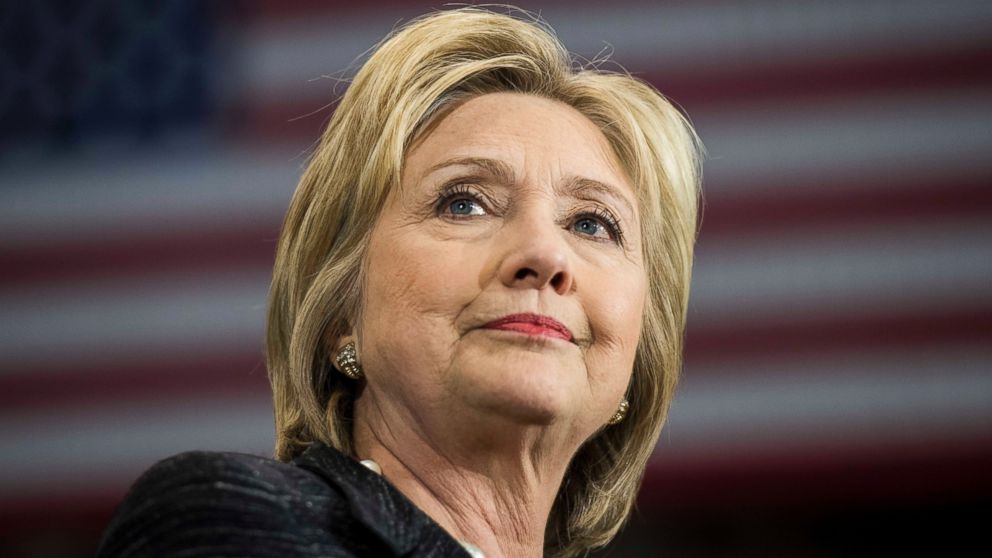
Hillary Clinton, “white men”, “[not]white men” and Africa

(Hillary Clinton:... unrelentingly tortured tale ... now blames “white men” for loss)
Herbert Ekwe-Ekwe

HILLARY CLINTON has continued her unrelentingly tortured tale of why she lost the November 2016 US presidential election to Donald Trump, her anti-establishment opponent. In the latest episode, narrated to an audience in Mumbai, India, where she was on a visit, Clinton now blames “white men” for her poll defeat: “We [did] not do well with white men and [did] not do well with married, white women. And part of that is … a sort of ongoing pressure [for the latter] to vote the way [their] husband, [their] boss, [their] son, whoever, believes [they] should…” (Jack Crowe, “Hillary: white women were ‘pressurised’ to vote for Trump by their husbands”, National Review, 13 March 2018).

The reflections here will not assess the veracity or otherwise of Clinton’s claims on the role of “white men” in that election but would focus more pointedly to what impact this demographic constituency, which Clinton undoubtedly feels is crucially important to her political ambitions and destiny, had on her performance and policy outcomes on Africa specifically, whilst she was US secretary of state in January 2009-February 2013.

Contradictory

THE background to Clinton becoming US secretary of state in 2009 would, in the overall, appear to lend some element of credibility to the premise of her presumed problematic relationship with the country’s “white men” electorate, albeit contradictorily. In the previous year, 2008, Clinton had had a bitterly fought presidential election contest with Barack Obama, an African American, in which she was beaten. On winning, Obama actively sought Clinton’s goodwill by offering her the position of secretary of state in his incoming administration and paying off her huge outstanding campaign debts with surplus funds from the former’s campaign organisation. Clinton’s acceptance of Obama’s cabinet position offer helped in the process of “healing” in the Democratic party after the evidently rancorous poll and her tacit agreement not to challenge the latter in the 2012 election cycle, if he were to seek another term’s presidential run, also included an “understanding” that a 2-term President Obama would deploy the incalculable resources of such an incumbency to support his former rival to run again for the presidency in 2016.

So, thanks to Barack Obama, the African American, i.e., “[not]white man”, indeed the first African-descent elected president after 233 years of the founding of the US republic, Hilary Clinton becomes secretary of state in January 2009 and is duly emplaced on the path of contesting for the presidency, yet again, this time with the expected robust backing of her new “ally” and employer.   

Imposition and invasion

On Africa, right from the outset, two distinct policy areas defined the Obama administration’s focus: imposition and invasion – not too distinct from generally the case in previous US administrations. And both (new) president and secretary of state were in tandem in the formulation and implementation of this mission. A year in office, Obama reinstated the notorious trail of France’s invasion history in Africa which his predecessor, George W Bush (“white man”, “right-wing”!), had blocked for 
seven years as “punishment” for the 2003 French refusal to join the US-led coalition invasion of Iraq. Prior to Bush’s ban, the French had carried out 48 military invasions of most of the so-called 22 so-called francophonie states in Africa between 1960 and 2003 which every US president of the era each supported.

Elated by the Obama approval, French President Sarkozy at once resumed his country’s 50 years of flagrant military campaigns in Africa. Sarkozy ordered his military to invade Côte d’Ivoire (French invasion no. 49 of an African state since 1960) which overthrew the government of President Laurent Gbagbo in the process and installed a new regime headed by an Ivorian puppet who would oversee the vast French economic and strategic interests in the country and region. During the assault, 2300 Africans were murdered and several business and residential districts of the commercial city of Abidjan, the principal focus of the invasion, were significantly destroyed.

Emboldened by the French “success” in Côte d’Ivoire in southwestcentral Africa, Obama mapped out further to the north of the continent, to Libya, a year later, 2011, to implement his next invasion target in Africa which would be executed by the US and the French, and Britain, the other lead EuropeanConqueror-state of Africa. This time round, the US would be a far more active, direct participant in the operation. Indeed, Hillary Clinton took up the composite range of most uncompromising advocacy for the US involvement in the Libya invasion that its politics and aftermath became the central plank of her record as secretary of state.

Just as in Côte d’Ivoire, the invasion of Libya was catastrophic. The West tripartite force overthrew the Muammar Gaddafi regime during the attack, Gaddafi himself was murdered as well as some members of his family in addition to some influential officials of his regime, hundreds of other Libyans were murdered, and most Libyan cities and principal communication network (outstanding achievements of the Gaddafi years in office) were spectacularly smashed up. Obama could not restrain himself in emphasising the crucial role of the US in this operation: “we [the US] had wiped out all [Libyan] air defenses and essentially set up the entire infrastructure [for the invasion]” (Jeffery Goldberg, “The Obama Doctrine”, The Atlantic, April 2016 Issue, April 2016).

Besides these military invasions of stipulated states, the other method that the Obama administration pursued its aggressive policy of “leadership” imposition in Africa was to interfere or meddle in elections/“elections” in countries elsewhere on the continent as shown in Egypt (2012), Kenya (2013) and Nigeria (2015). Both interferences in the polls in Egypt and Kenya failed spectacularly but in Nigeria Obama succeeded in imposing Muhammadu Buhari, one of the vilest Nigerian genocidist islamist/jihadist operatives during these 52 years of the Igbo genocide (1966-present day) as head of Nigeria regime. For Obama, given the historical background noted earlier as the first African-descent president of the US republic in 233 years of existence, his unflinching support for an African-led genocidist regime in Africa waging genocide, a crime against humanity, against an African people is the abhorrent legacy of his presidency. In that last 18 months’ duration of the presidency after the Buhari imposition (May 2015-November 2016), the genocidist Buhari military and its Boko Haram and Fulani militia adjunct terrorist forces (two of the world’s five deadliest terrorist organisations – Melissa Clarke, “Globally, terrorism is on the rise – but little of it occurs in Western countries”, ABC News, 17 November 2017) murdered 2000 Igbo across Biafran cities, towns and villages. Neither Obama’s White House nor his state department nor his embassy in Nigeria ever condemned any of these stretches of murders.

IT should be added that Obama’s imposition of Buhari was carried out with David Cameron, then British prime minister, and had been preceded by the Obama-Clinton insistence, whilst Clinton was secretary of state, of not designating Boko Haram terrorist despite the latter’s murder of thousands of African peoples, overwhelmingly Igbo, during the period. It was therefore not surprising to quite a few observers when a US-based social group claimed in November 2016 that the Buhari regime had donated “[US]$500 million to the [Hillary] Clinton [election] campaign” (247ureports.com, 16 November 2016, accessed 17 November 2016). It was no secret that the Buhari regime was confident that Clinton would win the election and continue Obama’s support for its genocide against Igbo people.

The score: “white men” vs “[not]white men”

As far as the Obama presidency (January 2009- January 2017) was concerned, it was in fact business as usual on Africa as its policy programme developed and implemented on the continent explicitly demonstrated. Following Hillary Clinton’s choice of that lexical configuration, “white men”, other likely expressions in the same semantic field should now be invoked to elaborate on this policy programme in the concluding notes here.

It would undoubtedly be the case that the former secretary of state wouldn’t state that she worked for an administration headed by a “white man” but a “[not]white man”. During two terms of presidency, this “[not]white man”-headed government deployed a dual track policy on Africa marked by invasions of states and impositions of “leaders” as we have indicated. Prior to January 2009, in US administrations since the 1960s, all headed by “white men”, invasions and impositions of leaders, directly or indirectly (especially in approval or in complicity with allies particularly 
France, Britain, Portugal, South Africa, Rhodesia [see, for instance, Mohamed A El Khawas and Barry Cohen, ed. The Kissinger Study of Southern Africa: National Security Memorandum 39 {SECRET}, 1976]) also featured highly as foreign policy goals in Africa. Indeed, given the overriding importance of Libya to Clinton’s work in the Obama administration, we should recall that on 14 April 1986 the “white man”/“right-wing”-led Ronald Reagan government ordered the US air force to bomb Libya, pointedly for a raid that was over in just an hour;  25 years later, in 2011, another US president, this time a “[not]white man”, ordered the same US air force to bomb Libya – but for a much longer duration and the consequences duly recorded. Additionally, it should be noted that Hillary Clinton was closely supported in her hardline “invade-Libya” position by none other than Susan Rice, an African American woman, another “[not]white man”, Obama’s advisor on national security who was assistant secretary of state on Africa in the Bill Clinton presidency back in 1994 during the Rwanda genocide, executed by “[not]white men”, and had covered up this crime at the time because the administration she worked for decided not to intervene to stop the slaughter. (cf. Alice Gatebuke, “On this anniversary of Rwandan genocide, Bill Clinton’s words ring hollow”, Huffpost, 14 April 2017.)

IT SHOULD now be obvious that:

1a. “white man”-president can invade, overthrow, impose; “[not]white man”-president can invade, overthrow, impose

1b.white man”-state functionaries can pursue policies to invade, overthrow, impose; “[not]white man”-state functionaries can pursue policies to invade, overthrow, impose

2. “white man”-president/“white man”-king/ “white man”-chancellor/“white man”-prime minister/“white man”-general/“white man”-journalist/“white man”-academic/“white man”-cleric/“white man”-farmer…  has planned, executed, supported genocide(s) against a people or peoples over the course of recent history

3. “[not]white man”-president/“[not] white man”-king/“[not]white man” attorney/“[not]white man”-journalist/“[not]white man-academic/“[not] white man”-cleric/“[not] white man”-sergeant/“[not]white man”-corporal/“[not]white man”-general… has planned, executed, supported genocide(s) against a people or peoples over the course of recent history

Surely, a serious, fruitful examination of any feature of human society requires the development, articulation and deployment of critical tools of analysis to help or enhance interpretation and understanding. As we have shown, Hillary Clinton’s “white man” lexicon and its variations have surely not been helpful tools to enable us understand what, in fact, presents as the unchanging thrust and tenor in the trajectory of US foreign policy in Africa for the greater part of the past 50 years irrespective of whether or not the president and/or other state officials in office are “white men” or “[not]white men”.

JUST as in Africa, Clinton’s “white man” mantra would hardly be fit for purpose as an explanation for why she lost the United States November 2016 presidential poll.

References

Clarke, Melissa. “Globally, terrorism is on the rise – but little of it occurs in Western countries”. ABC News, 17 November 2017, https://www.abc.net.au/news/2015-11-17/global-terrorism-index-increase/6947200, accessed 17 November 2015.

Crowe, Jack. “Hillary: white women were ‘pressurised’ to vote for Trump by their husbands”. National Review, 13 March 2018, https://www.nationalreview.com/2018/03/hillary-clinton-white-women-pressured-husbands-vote-trump/, accessed 13 March 2018.

El Khawas, Mohamed A. and Barry Cohen, ed. The Kissinger Study of Southern Africa: National Security Memorandum 39 (SECRET). Wesport: Lawrence Hill, 1976.

Gatebuke, Alice. “On this anniversary of Rwandan genocide, Bill Clinton’s words ring hollow”. Huffpost, 14 April 2017,  https://www.huffingtonpost.com/alice-gatebuke/on-22nd-anniversary-rwandan-genocide-bill-clinton_b_9677440.html, accessed 1 June 2018.

Goldberg, Jeffery. “The Obama Doctrine”. The Atlantic, April 2016 Issue, April 2016, https://www.theatlantic.com/magazine/archive/2016/04/the-obama-doctrine/471525/, accessed 16 March 2016.

247ureports.com. “Buhari donated $500 million to Clinton campaign: US group”. 16 November 2016, http://247ureports.com/2016/11/buhari-donated-500m-to-clintons-campaign-us-group/, accessed 17 November 2016.
(Jaki Byard Trio, “Trendsition zlidjian” [personnel: Byard, piano; David Izenzon, bass; Elvin Jones, drums; recorded: Prestige, New York, US, 31 October 1967])

*****Herbert Ekwe-Ekwe is the author of Readings from Reading: Essays on African Politics, Genocide, Literature (2011) and author, with Lakeson Okwuonicha of Why Donald Trump is great for Africa (2018)


Twitter @HerbertEkweEkwe


Thursday, 5 May 2011

France must now leave Côte d’Ivoire

“Without Africa, France will have no history in the 21st century”
- French President François Mitterand, March 1998

“A little country, with a small amount of strength, we can move a planet because [of our] … relations with 15 or 20 African countries”
- Jacques Godfrain, former head, French foreign ministry, March 1998

For whoever wished to know, it was evident, right from the outset, that the French mission in Côte d’Ivoire since November 2010 had little to do with the locally disputed presidential elections. If France’s ambitions were to help resolve a fractious presidential poll, it indeed was confronted with a pressing opportunity during the period within its own European homeland – in Belarus, just a thousand miles away. Perhaps, for a “nobler” transcontinental effect, if it felt so compelled, it could have sought to resolve that mother of all presidential disputes that has dragged on for 21 years in Myanmar between Aung San Suu Kyi and the country’s aging military junta.

No, France had no and has no such lofty aspirations. In Côte d’Ivoire, to employ that late 20th century/early 21st century awful euphemism for the flagrant invasion and occupation of a country and the overthrow of its government by an aggressor state, the French objective here has been nothing but “regime change”. It achieved this so ferociously and viciously recently by unleashing a raging cascade of violence in Abidjan that was at once aimed at re-creating, on the African scene, the bestial kidnapping of Congo’s Patrice Lumumba in 1960 (centrally organised, we mustn’t fail to recall, by France’s Belgian francophonie cousin) and the 1973 attack and virtual destruction of Salvador Allende’s presidential palace in Santiago, Chile, by Pinochet’s putschist military. Hundreds of Ivoriens and others were murdered during this brigandage with one report placing the final casualty tally at 2300. On the morrow of its Abidjan rampage on 6 April 2011, the brute seized President Gbagbo, along with his wife and family and aides, dismissed him from office and turned him over to his very implacable electoral foes for incarceration or worse. Finally, the brute imposed Alassane Ouattara, its francophonie acolyte and barely competent ex-IMF official, on the peoples of Côte d’Ivoire as la président du république!

Origins

But why Côte d’Ivoire, a sovereign African country 3000 miles away from France? Why indeed Africa? France has long been wracked by chronic anxieties about its “status” and “prestige” in the world since its military was dealt a humiliating defeat during a 12-year old uprising by enslaved African military forces led by Toussaint L’Ouverture in French-occupied San Domingo (Haiti) – the “greatest individual market” of the 18th century European enslavement of the African humanity, which accounted for two-thirds of French foreign trade at the time. The Africans of San Domingo, “The Black Jacobins”, as CLR James, the illustrious African Caribbean scholar would describe them in such searing irony and sardonicism in his 1938-published classic of the same title on the subject, “defeated in turn the local whites and the soldiers of the French monarchy, a Spanish invasion, a British expedition of some 60,000 men, and a French expedition of similar size under [Napoleon] Bonaparte’s brother-in-law”. Following the latter’s victory in 1803, the Africans proclaimed and established their republic of Haiti on 1 January 1804.

France has yet to recover from the catastrophic damage to its psyche, elicited by its losses in San Domingo. The transformation of enslaved Africans, as James notes perceptively in his study, “trembling in hundreds before a single white man … into a people able to organise themselves and defeat the most powerful European nations of their day … is one of the great epics of revolutionary struggle and achievement”. Consequently, in its relationship with Africans, wherever this occurs on earth, France feels that it is still fighting Toussaint L’Ouverture and his formidable forces all over again and again… Furthermore, San Domingo is gravely etched indelibly in French consciousness as the precursor to the catalogue of crushing French military defeats in the subsequent 150 years of its history, aptly illustrated by the following: the 1871 Franco-Prussian War, the 1914-1918 World War I, the 1939-1945 World War II and the 1954 Battle of Dien Bien Phu resulting in the débâcle of its elite French Far East Expeditionary Corps’s occupation garrison in Vietnam, inflicted by the resolute Viet Minh commanded by General Giáp. It would require another commentary to sketch, more fully, how the French angst over San Domingo must be working through the mindset of the current occupant of the Élysée Palace whose regime thrives in its serial fantasy as the neo-Napoleonic imperium of these early decades of the 21st century.

Irony

Interestingly, to mention the Second World War French experience is to invoke a fascinating, albeit uncanny irony which French history shares currently with that of the peoples of Côte d’Ivoire in the wake of Paris’s unprovoked and unpardonable aggression. Despite the iron-fist texture of the German blitzkrieg that overran France in July 1940 resulting in French surrender and the establishment of the Vichy regime to oversee the Nazi occupation for four debilitating years, majority of French people had to work very had to believe, correctly, that the success of this invasion was essentially a Pyrrhic victory; eventual termination of the occupation and consequently the restoration of French sovereignty was therefore possible and had to be assiduously pursued with those French men and women who identified uncompromisingly with the free French.

Thankfully, the Ivoriens haven’t had long to wait to draw their own conclusions on the character and intent of the overwhelming brutish terror visited on them in April 2011 by the military from that same country that was so virulently subjected to a similar experience, almost 71 years to the day. Despite the savagery of its violence, despite its subterfuge, despite its obfuscations and despite its hackneyed rationalisations for these dreadful deeds, France must know that the African peoples of Côte d’Ivoire and Africans elsewhere in the world regard the presumed successes of its 6 April 2011 bombardment of Abidjan as, at best, a Pyrrhic victory. Just as France ultimately found out in its own experience in 1945, a free Côte d’Ivoire, free of France, will surely occur. Additionally, its reincarnated, entrenched overseer-Marshal Pétain, now dubbed with an altered second name that begins with “O”, pointedly the next alphabet up from “P”, will end up agonising how to precisely answer the overriding question of an enraged epoch: “Why have I allowed myself to be so fouled-up by the course of history where I exist and operate miserably, pathetically and disgustingly as the mere pawn of an active agency?”

Post-"Berlin-states" or Successor states

In the meantime, a group of Southern World countries headed by South Africa and including Botswana, Cape Verde, India, Jamaica and Bolivia should visit Côte d’Ivoire and support the process of organising a referendum to determine the competing sovereignties in the country, occasioned by the murderous collapse of the Ivorien state. Côte d’Ivoire, as so presently constituted, can no longer provide security to all its incorporated African nations or peoples. Instead, it murders them most horribly.

Tragically, Côte d’Ivoire has now joined that dreadful league of states of Africa inaugurated in May 1966 by Nigeria, the obligatory haematophagous monster in the region, whose raison d’être is to murder Africans most routinely and ritualistically. Enough! Every African life in Côte d’Ivoire is worth much more than the state of Côte d’Ivoire in addition to all of Africa’s states of death. The peoples, including the hundreds of thousands who have been displaced by the emergency to neighbouring countries in west Africa and elsewhere must determine freely and democratically which post-Côte d’Ivoire successor states they wish to belong.