Showing posts with label Laurent Gbagbo. Show all posts

Tuesday, 15 January 2019

Laurent Gbagbo is free!

(Laurent Gbagbo: ... freed of all charges at the International Criminal Court, The Hague, Holland)
Herbert Ekwe-Ekwe

CÔTE D’IVOIRE’s former head of regime Laurent Gbagbo has been freed by the International Criminal Court in The Hague, Holland, where he has been detained since 2011, accused of “crimes against humanity”. He is found “not guilty” to all the charges brought against him.
Gbagbo’s detention and charge in the ICC, at the very instance of France, were obviously suspect, right from the outset.

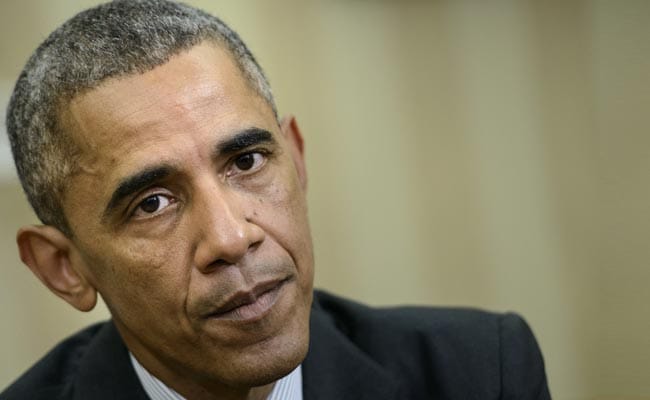
Sarkozy & Obama

France, under the staggeringly racist President Nicolas Sarkozy, had earlier on invaded Côte d’Ivoire with full support of the new US President Barack Obama 
(https://re-thinkingafrica.blogspot.com/2018/07/herbert-ekwe-ekwe-main-thrust-of-ex-us.html), overthrew Laurent Gbagbo, and installed Allassane Ouatarra, its francophonie acolyte, to power. The French murdered 2300 Ivoriens during the course of the invasion and destroyed significant residential and industrial districts of Abidjan in its stride.

FRANCE’s decision to hand over Gbagbo to the ICC was a cynical ploy to cover up this glaring crime of invasion and also allow its Ouatarra stooge to consolidate the imposition. France and Britain, particularly, have ensured that the stretch of genocidists from a Nigeria, for instance, are shielded from appearing at the ICC, whilst they cooperate readily and send critical African leaders to the court. The ICC, consequently, has been rendered utterly redundant.

For Barack Obama, first African-descent US president in 233 years of the US republic, his support of this French invasion of an African state was the deadly first salvo fired in his aggressive foreign policy to Africa during his eight years in office which also included the tripartite US-British-French invasion of Libya and murder of head of regime Muammar Gadaffi, and, most catastrophically, Obamas support of the raging Igbo genocide. An abhorrent presidential legacy indeed.

CÔTE D’IVOIRE heartily awaits the return of Laurent Gbagbo home.
(Max Roach Quartet, “A variation-part I” [personnel: Roach, drums; Clifford Jordan, tenor saxophone; Mal Waldron, piano; Eddie Khan, bass; recorded live, The Jazz Workshop, San Francisco, US, 27 October 1962])

*****Herbert Ekwe-Ekwe is the author, with Lakeson Okwuonichaof Why Donald Trump is great for Africa (2018)
                                                                                                                                 

Saturday, 21 July 2018

Barack Obama, the “strongman”, history and these times

(Barack Obama: ... legacy of support for ...)
Herbert Ekwe-Ekwe

THE MAIN thrust of ex-US President Barack  Hussein Obama’s 16th Nelson Mandela Annual Lecture in Johannesburg, South Africa, earlier on in the week is its focus on “democracy” in the world and ways and means to sustain it. Three excerpts from the lecture are illustrative (Barack Obama, “The Nelson Mandela Lecture”, The New Yorker, New York, 18 July 2018):

1.And, yes, democracy can be messy, and it can be slow, and it can be frustrating … For all its imperfections, real democracy best upholds the idea that government exists to serve the individual, and not the other way around. And it is the only form of government that has the possibility of making that idea real.”

2. “So, for those of us who are interested in strengthening democracy, it’s time for us to stop paying all of our attention to the world’s capitals and the centers of power, and to start focussing more on the grassroots, because that’s where democratic legitimacy comes from. Not from the top down, not from abstract theories, not just from experts, but from the bottom up. Knowing the lives of those who are struggling.”

3. “We have to stop pretending that countries that just hold an election where sometimes the winner somehow magically gets ninety per cent of the vote, because all the opposition is locked up or can’t get on TV, is a democracy. Democracy depends on strong institutions, and it’s about minority rights and checks and balances,and freedom of speech and freedom of expression and a free press, and the right to protest and petition the government, and an independent judiciary, and everybody having to follow the law.”

OBAMA alerts his audience on those individuals and social forces which he feels pose or constitute sources of obstacles to the growth or strengthening of “democracy” across the world. These include (a) the “autocrat”, (b) “strongman politics”, (c) “right-wing billionaires” and (d) “populist movements”.

AS I read this speech, that profound rumination on history a decade ago by Aimé Césaire (poet and philosopher) weighed heavily on my thoughts. Césaire had told interviewer Annick Thebia Melson in 2008 that “[h]istory is always dangerous, the world of history is a risky world; but it is up to us at any given moment to establish and readjust the hierarchy of dangers” (“The liberating power of words: An interview with Poet Aimé Césaire”, The Journal of Pan-African Studies, Vol. 2, No 4, June 2008, p. 7). It is indeed in the very course to construct and “readjust” this “hierarchy of dangers” by focussing solely on Africa here that I will respond to Obama’s lecture. 
(Aimé Césaire: [h]istory is always dangerous...)
ARGUABLY the most expressively covered and discussed news item in the United States presently is on special counsel Robert Mueller and team’s work investigating alleged Russian interference in the 2016 US elections. An investigation of this calibre is deemed vital by the Americans because any such purported interference in this election, particularly from a foreign power, would undoubtedly have had negative impact and consequences on the course of democracy in the United States, very much in the overarching context sketched above by Obama.

Yet no such investigations are underway to probe those hardly disguised meddling-in-elections/“elections”/referendum by none other than the ex-President Barack Obama US government itself in the following seven countries between 2009 and 2016: HondurasMacedoniaBritainEgyptKenyaIsraelNigeria.

Abhorrent legacy of support for Igbo genocide and imposition and invasions of states in Africa or quintessential disarticulation of grounds for democracy

APART from Nigeria where Obama, first African-descent elected president after 233 years of the founding of the US republic, imposed Muhammadu Buhari, an islamist/jihadist and one of the vilest Nigerian genocidist operatives during these 52 years of the ongoing Igbo genocide, as head of Nigeria regime in March 2015 (this imposition was carried out with then British prime minister David Cameron whose country is a co-genocidist state in this crime), his administration’s robust interferences in elections in the other six states in the group, including the June 2016 British referendum on Brexit, were spectacularly a failure.

BESIDES the Buhari-imposition catastrophe during which the Buhari-led Nigeria military and its Boko Haram and Fulani militia adjunct forces have murdered 3000 Igbo people in Biafra, Barack Obama intervened elsewhere in African politics:

1. supported the 2010 French military invasion of Côte d’Ivoire , ordered by President Nicolas Sarkozy (one of the most openly racist French political leaders in the contemporary era who made his views on Africans explicit, on record, in his notorious “The tragedy of Africa is that the African has not fully entered into history-speech at Dakar’s Cheikh Anta Diop University in July 2007 [see “The unofficial English translation of Sarkozy’s speech”, africaResource, 13 October 2007]), in which 2300 Africans were ruthlessly murdered and the Laurent Gbagbo regime in Abidjan overthrown and replaced by a personage more acceptable to French strategic and economic interests in the country

2. was part of the 2011 US-Britain-France (Obama & Cameron & Sarkozy) tripartite military invasion of Libya during which head of regime Muammar Gaddafi was murdered as well as some members of his family in addition to some influential officials of his regime, hundreds of other Libyans also murdered during the operations, and several Libyan cities and infrastructure destroyed

3. supported French military invasion of Central African Republic, ordered by President François Hollande (2013)

4. supported French military invasion of Mali, ordered by François Hollande (2013)

QUESTION: Which of the four sources of obstacles to “democracy” raised in Obama’s Johannesburg lecture and quoted above (a, b, c, d) explains or identifies Barack Hussein Obama’s own vast range of operation in disrupting the cause and course of democracy in Africa whilst in office as the 44th president of the United States? Just one? A couple? More than a couple? None?
(Sonny Rollins Quartet, “Dance of the reed pipes” [personnel: Rollins, tenor saxophone; Don Cherry, pocket trumpet; Bob Cranshaw, bass; Billy Higgins, drums; recorded: live, Village Gate, New York, US, 27-30 July 1962])
Twitter @HerbertEkweEkwe


Wednesday, 7 March 2018

Why these other elections interfered in from abroad probably don’t require investigative special counsels à la Robert Mueller


Herbert Ekwe-Ekwe

As US special counsel Robert Mueller and team continue their work investigating alleged Russian interference in the 2016 US elections, no such investigations are currently underway to probe those hardly disguised meddling-in-elections/“elections”/referendum by the ex-President Barack Obama US government itself in the following seven countries between 2009 and 2016: Honduras, Macedonia, Britain, Egypt, Kenya, Israel, Nigeria.

Legacy of imposition & invasions

APART from Nigeria where Obama, first African-descent elected president after 233 years of the founding of the US republic, imposed Muhammadu Buhari, one of the vilest Nigerian genocidist operatives during these 52 years of the Igbo genocide, as head of Nigeria regime in March 2015 (this imposition was carried out with then British prime minister David Cameron), his administration’s robust interferences in elections in the other six states in the group including the June 2016 British referendum on Brexit were spectacularly a failure.

BESIDES the Buhari-imposition catastrophe, Obama intervened elsewhere in African politics:

1. supported the 2010 French military invasion of Côte d’Ivoire in which 2300 Africans were ruthlessly murdered and the Laurent Gbagbo regime in Abidjan overthrown and replaced by a personage more acceptable to French strategic and economic interests in the country

2. was part of the 2011 US-Britain-France tripartite military invasion of Libya during which head of regime Muammar Gaddafi was murdered as well as some members of his family in addition to some influential officials of his regime, hundreds of other Libyans also murdered during the operations, and several Libyan cities and infrastructure destroyed

3. supported French military invasion of Central African Republic (2013)

4. supported French military invasion of Mali (2013)
(John Coltrane & Don Cherry, “Focus on sanity” [personnel: Coltrane, tenor saxophone; Cherry, pocket trumpet; Percy Heath, bass; Ed Blackwell, drums; recorded: Atlantic Studios, New York, US, 28 June/8 July 1960])
Twitter@HerbertEkweEkwe

Thursday, 5 May 2011

France must now leave Côte d’Ivoire

“Without Africa, France will have no history in the 21st century”
- French President François Mitterand, March 1998

“A little country, with a small amount of strength, we can move a planet because [of our] … relations with 15 or 20 African countries”
- Jacques Godfrain, former head, French foreign ministry, March 1998

For whoever wished to know, it was evident, right from the outset, that the French mission in Côte d’Ivoire since November 2010 had little to do with the locally disputed presidential elections. If France’s ambitions were to help resolve a fractious presidential poll, it indeed was confronted with a pressing opportunity during the period within its own European homeland – in Belarus, just a thousand miles away. Perhaps, for a “nobler” transcontinental effect, if it felt so compelled, it could have sought to resolve that mother of all presidential disputes that has dragged on for 21 years in Myanmar between Aung San Suu Kyi and the country’s aging military junta.

No, France had no and has no such lofty aspirations. In Côte d’Ivoire, to employ that late 20th century/early 21st century awful euphemism for the flagrant invasion and occupation of a country and the overthrow of its government by an aggressor state, the French objective here has been nothing but “regime change”. It achieved this so ferociously and viciously recently by unleashing a raging cascade of violence in Abidjan that was at once aimed at re-creating, on the African scene, the bestial kidnapping of Congo’s Patrice Lumumba in 1960 (centrally organised, we mustn’t fail to recall, by France’s Belgian francophonie cousin) and the 1973 attack and virtual destruction of Salvador Allende’s presidential palace in Santiago, Chile, by Pinochet’s putschist military. Hundreds of Ivoriens and others were murdered during this brigandage with one report placing the final casualty tally at 2300. On the morrow of its Abidjan rampage on 6 April 2011, the brute seized President Gbagbo, along with his wife and family and aides, dismissed him from office and turned him over to his very implacable electoral foes for incarceration or worse. Finally, the brute imposed Alassane Ouattara, its francophonie acolyte and barely competent ex-IMF official, on the peoples of Côte d’Ivoire as la président du république!

Origins

But why Côte d’Ivoire, a sovereign African country 3000 miles away from France? Why indeed Africa? France has long been wracked by chronic anxieties about its “status” and “prestige” in the world since its military was dealt a humiliating defeat during a 12-year old uprising by enslaved African military forces led by Toussaint L’Ouverture in French-occupied San Domingo (Haiti) – the “greatest individual market” of the 18th century European enslavement of the African humanity, which accounted for two-thirds of French foreign trade at the time. The Africans of San Domingo, “The Black Jacobins”, as CLR James, the illustrious African Caribbean scholar would describe them in such searing irony and sardonicism in his 1938-published classic of the same title on the subject, “defeated in turn the local whites and the soldiers of the French monarchy, a Spanish invasion, a British expedition of some 60,000 men, and a French expedition of similar size under [Napoleon] Bonaparte’s brother-in-law”. Following the latter’s victory in 1803, the Africans proclaimed and established their republic of Haiti on 1 January 1804.

France has yet to recover from the catastrophic damage to its psyche, elicited by its losses in San Domingo. The transformation of enslaved Africans, as James notes perceptively in his study, “trembling in hundreds before a single white man … into a people able to organise themselves and defeat the most powerful European nations of their day … is one of the great epics of revolutionary struggle and achievement”. Consequently, in its relationship with Africans, wherever this occurs on earth, France feels that it is still fighting Toussaint L’Ouverture and his formidable forces all over again and again… Furthermore, San Domingo is gravely etched indelibly in French consciousness as the precursor to the catalogue of crushing French military defeats in the subsequent 150 years of its history, aptly illustrated by the following: the 1871 Franco-Prussian War, the 1914-1918 World War I, the 1939-1945 World War II and the 1954 Battle of Dien Bien Phu resulting in the débâcle of its elite French Far East Expeditionary Corps’s occupation garrison in Vietnam, inflicted by the resolute Viet Minh commanded by General Giáp. It would require another commentary to sketch, more fully, how the French angst over San Domingo must be working through the mindset of the current occupant of the Élysée Palace whose regime thrives in its serial fantasy as the neo-Napoleonic imperium of these early decades of the 21st century.

Irony

Interestingly, to mention the Second World War French experience is to invoke a fascinating, albeit uncanny irony which French history shares currently with that of the peoples of Côte d’Ivoire in the wake of Paris’s unprovoked and unpardonable aggression. Despite the iron-fist texture of the German blitzkrieg that overran France in July 1940 resulting in French surrender and the establishment of the Vichy regime to oversee the Nazi occupation for four debilitating years, majority of French people had to work very had to believe, correctly, that the success of this invasion was essentially a Pyrrhic victory; eventual termination of the occupation and consequently the restoration of French sovereignty was therefore possible and had to be assiduously pursued with those French men and women who identified uncompromisingly with the free French.

Thankfully, the Ivoriens haven’t had long to wait to draw their own conclusions on the character and intent of the overwhelming brutish terror visited on them in April 2011 by the military from that same country that was so virulently subjected to a similar experience, almost 71 years to the day. Despite the savagery of its violence, despite its subterfuge, despite its obfuscations and despite its hackneyed rationalisations for these dreadful deeds, France must know that the African peoples of Côte d’Ivoire and Africans elsewhere in the world regard the presumed successes of its 6 April 2011 bombardment of Abidjan as, at best, a Pyrrhic victory. Just as France ultimately found out in its own experience in 1945, a free Côte d’Ivoire, free of France, will surely occur. Additionally, its reincarnated, entrenched overseer-Marshal Pétain, now dubbed with an altered second name that begins with “O”, pointedly the next alphabet up from “P”, will end up agonising how to precisely answer the overriding question of an enraged epoch: “Why have I allowed myself to be so fouled-up by the course of history where I exist and operate miserably, pathetically and disgustingly as the mere pawn of an active agency?”

Post-"Berlin-states" or Successor states

In the meantime, a group of Southern World countries headed by South Africa and including Botswana, Cape Verde, India, Jamaica and Bolivia should visit Côte d’Ivoire and support the process of organising a referendum to determine the competing sovereignties in the country, occasioned by the murderous collapse of the Ivorien state. Côte d’Ivoire, as so presently constituted, can no longer provide security to all its incorporated African nations or peoples. Instead, it murders them most horribly.

Tragically, Côte d’Ivoire has now joined that dreadful league of states of Africa inaugurated in May 1966 by Nigeria, the obligatory haematophagous monster in the region, whose raison d’être is to murder Africans most routinely and ritualistically. Enough! Every African life in Côte d’Ivoire is worth much more than the state of Côte d’Ivoire in addition to all of Africa’s states of death. The peoples, including the hundreds of thousands who have been displaced by the emergency to neighbouring countries in west Africa and elsewhere must determine freely and democratically which post-Côte d’Ivoire successor states they wish to belong.