Showing posts with label Chuka Umunna. Show all posts

Monday, 1 October 2018

On this “independence” day of genocidist Nigeria (2): Reminder of Britain’s key role in the execution of the Igbo genocide ... As the British Labour party faces meltdown over the antisemitism/racism crisis of its leader Jeremy Corbyn, we must stress that this affliction in the party started half a century ago – 52 years ago to be exact, when the then Labour leader and prime minister, Harold Wilson, centrally directed the prosecution of the Igbo genocide, the foundational genocide of post-(European)occupation Africa, with Britain’s client-state Nigeria

(Harold Wilson: ... “would accept half a million dead Biafrans...)   
Herbert Ekwe-Ekwe 
Diminution-of-African life”

AT the apogee of phase-III of this genocide, summer 1968-autumn 1969, 23 years after the horrendous Jewish genocide in east and central Europe carried out by Germany, Harold Wilson informed Clyde Ferguson (United States state department special coordinator for relief to Biafra), on record, that he, Harold Wilson, “would accept half a million dead Biafrans if that was what it took” the Nigerian génocidaires to destroy the Igbo resistance to the genocide (Roger MorrisUncertain Greatness: Henry Kissinger and American Foreign Policy, 1977: 122). Wilson pursued his genocide drive against the Igbo, steeped in that overarching ideological rubric of the expressed “diminution-of-African life” that constitutes the engaging, subjugating template of 400 years of pan-European enslavement of the African humanity in the Americas and elsewhere, beginning in the 15th century, and Europe’s consequent occupation of the African homeland itself.

Wilson’s Igbo death-wish tally of 500, 000 represented 4.2 per cent of the Igbo population at the time. The prime minister’s on the ground African executioners led by Fulani islamist/jihadists, fulsomely obliged their “massa” Wilson, murdering 3.1 million Igbo by 12 January 1970 – 2.6 million more Igbo than the Labour leader’s slaughtering target or 25 per cent of the Igbo population. Wilson would later acknowledge the extent of the British role in the sheer savagery of the Igbo genocide. In his memoirs, he noted that the Nigeria genocidist military, equipped zealously by Britain, expended more small arms ammunition in its campaign to achieve its annhilative mission in Biafra than the amount used by the British armed forces “during the whole” of the Second World War (Harold Wilson, Labour Government, 1964-1970: A Personal Record, 1971: 630, added emphasis). Colonel Robert Scott, military advisor in the British diplomatic mission in Nigeria then couldn’t agree more with Wilson on the subject. Scott stated that as Nigerian genocidist military forces unleashed their attacks on Biafran cities, towns and villages, they are the “best defoliant agent known” (Daily Telegraph, London, 11 January 1970). Chillingly dreadful...  
Intelligible
SEEN AGAINST this background of Harold Wilson’s repugnant involvement in the Igbo genocide, the very trenchant charge of antisemitism and racism that current Labour party leader Jeremy Corbyn has had from some of his colleagues and other prominent persons in Britain, becomes hugely intelligible:
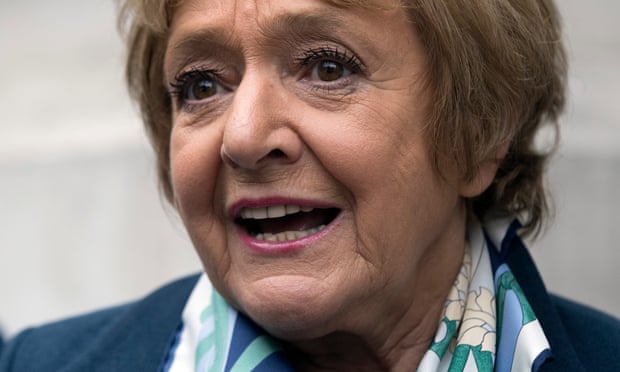
(Margaret Hodge, British Labour party member of parliament: “Jeremy Corbyn is f****** racist and antisemite”, The Independent, London, 18 July 2018)
(Chuka UmunnaBritish Labour party member of parliament: “The Labour party [under Jeremy Corbyn] is institutionally racist  ... very painful”, Daily Mail, London, 9 September 2018)
(Jonathan Sacksformer British chief rabbi“[Jeremy Corbyn] is anti-semite [who has] given support to racists, terrorists and dealers of hate”, New Statesman, London, 28 August 2018)
(Trevor Philipsformer head of British equality commission“[Jeremy Corbyn] is anti-semite and racist”, Daily Mail, 13 September 2018)
(Jeremy CorbynBritish Labour party leader...)
(John Coltrane & Don Cherry, “Focus on sanity” [personnel: Coltrane, tenor saxophone; Cherry, pocket trumpet; Percy Heath, bass; Ed Blackwell, drums; recorded: Atlantic Studios, New York, US, 28 June/8 July 1960])
 Twitter@HerbertEkweEkwe


Thursday, 13 September 2018

As the British Labour party faces meltdown over the antisemitism/racism crisis of its leader Jeremy Corbyn, a reminder that this affliction in the party started half a century ago – 52 years ago to be exact, when the then Labour leader and prime minister, Harold Wilson, centrally directed the prosecution of the Igbo genocide, the foundational genocide of post-(European)occupation Africa, with Britain’s client-state Nigeria

(Harold Wilson: “would accept a half million dead Biafrans if that was what it took...”)
Herbert Ekwe-Ekwe

“Diminution-of-African life”

AT the apogee of phase-III of this genocide, summer 1968-autumn 1969, 23 years after the horrendous Jewish genocide in east and central Europe carried out by Germany, Harold Wilson informed Clyde Ferguson (United States state department special coordinator for relief to Biafra), on record, that he, Harold Wilson, “would accept half a million dead Biafrans if that was what it took” the Nigerian génocidaires to destroy the Igbo resistance to the genocide (Roger MorrisUncertain Greatness: Henry Kissinger and American Foreign Policy, 1977: 122). Wilson pursued his genocide drive against the Igbo, steeped in that overarching ideological rubric of the expressed “diminution-of-African life” that constitutes the engaging, subjugating template of 400 years of pan-European enslavement of the African humanity in the Americas and elsewhere, beginning in the 15th century, and Europe’s consequent occupation of the African homeland itself.

Wilson’s Igbo death-wish tally of 500, 000 represented 4.2 per cent of the Igbo population at the time. The prime minister’s on the ground African executioners led by Fulani islamist/jihadists, fulsomely obliged their “massa” Wilson, murdering 3.1 million Igbo by 12 January 1970 – 2.6 million more Igbo than the Labour leader’s slaughtering target or 25 per cent of the Igbo population. Wilson would later acknowledge the extent of the British role in the sheer savagery of the Igbo genocide. In his memoirs, he noted that the Nigeria genocidist military, equipped zealously by Britain, expended more small arms ammunition in its campaign to achieve its annhilative mission in Biafra than the amount used by the British armed forces “during the whole” of the Second World War (Harold Wilson, Labour Government, 1964-1970: A Personal Record, 1971: 630, added emphasis). Colonel Robert Scott, military advisor in the British diplomatic mission in Nigeria then couldn’t agree more with Wilson on the subject. Scott stated that as Nigerian genocidist military forces unleashed their attacks on Biafran cities, towns and villages, they are the “best defoliant agent known” (Daily Telegraph, London, 11 January 1970). Chillingly dreadful...

Intelligible

SEEN AGAINST this background of Harold Wilson’s repugnant involvement in the Igbo genocide, the very trenchant charge of antisemitism and racism that current Labour party leader Jeremy Corbyn has had from some of his colleagues and other prominent persons in Britain, becomes hugely intelligible:
(Margaret Hodge, British Labour party member of parliament: “Jeremy Corbyn is f****** racist and antisemite”, The Independent, London, 18 July 2018)
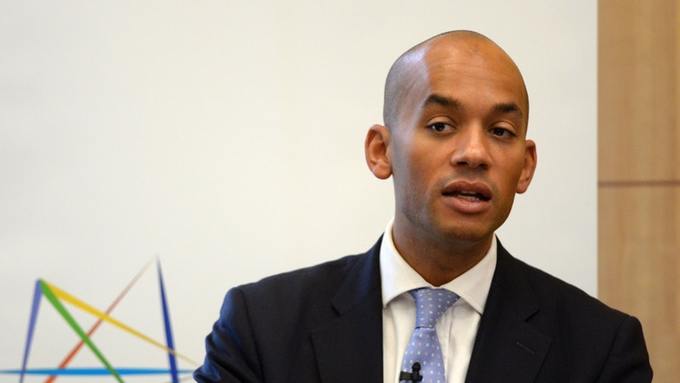
(Chuka Umunna, British Labour party member of parliament: “The Labour party [under Jeremy Corbyn] is institutionally racist  ... very painful”, Daily Mail, London, 9 September 2018)
(Jonathan Sacks, former British chief rabbi“[Jeremy Corbyn] is anti-semite [who has] given support to racists, terrorists and dealers of hate”, New Statesman, London, 28 August 2018)
(Trevor Philips, former head of British equality commission“[Jeremy Corbyn] is anti-semite and racist”, Daily Mail, 13 September 2018)
(Jeremy Corbyn, British Labour party leader...)
(John Coltrane & Don Cherry, “Focus on sanity” [personnel: Coltrane, tenor saxophone; Cherry, pocket trumpet; Percy Heath, bass; Ed Blackwell, drums; recorded: Atlantic Studios, New York, US, 28 June/8 July 1960])
 Twitter@HerbertEkweEkwe

Friday, 22 May 2015

FWD: Dan Hodges on Chuka Umunna and that British Labour party leadership quest… (The Spectator, London, Thursday 21 May 2015)

(Chuka Umunna, member of British parliament, Streatham, south London constituency)
 A few months after Ed Miliband was elected Labour leader I met with one of his supporters in the shadow cabinet. Who, I asked, were “Ed’s People?” He began reeling off a list of names. “Chuka Umunna, Peter Hain, John…” “Chuka?” I said. “But he’s walking round the Commons with a giant target on his back. They’re out to get him.” He was, even then, the bookies’ favourite – which, in politics, normally means that you are a dead man walking. The shadow minister smiled. “Well, they haven’t got him yet.”

Well, now they have. Umunna has finally been cut down, withdrawing from Labour’s leadership race just three days after entering. There was no proper reason, and no proper scandal. He was the victim of an elegant, silent old-fashioned Westminster character assassination.
For some it wasn’t personal, just business. Umunna was a candidate for Labour leader, and there were other people who wanted to be leader. So the whispers started. “Chuka isn’t going to run,” I was told by a trade union official back in March. “Personal issues.” He smiled, and tapped the side of his nose. A former Minister had heard it too. “The word is ‘Chuka’s out’. He won’t even enter.” Again, “personal issues” were cited.
The briefings became so intense that at the Daily Telegraph we discussed whether or not to run a story about them. But we decided that, if we did so, we’d become part of the spin operation. Umunna had been on what is called “a journey”. He had been a member of Compass, the anti-Blairite think tank run by former Gordon Brown aide Neal Lawson. Then, as his parliamentary ambitions looked like bearing fruit, he began building bridges with the Blairites. He angered them again by endorsing Ed Miliband for the Labour leadership, then he angered Team Ed by keeping his distance as the project began to unravel.

To some, this was evidence that Umunna possessed acute political antenna. To others, it was evidence of his being an untrustworthy chameleon. At the start of last year, in a sign of the direction the wind was blowing, the Blairite think-tank Progress switched its allegiance to Dan Jarvis.
Umunna also frequently harmed himself through his clumsy interaction with fellow Labour MPs. Despite his image as an ambitious sophisticate, he can be a quite introspective and sensitive man. And not very good at making friends with his northern colleagues. “A couple of us were at a reception,” one MP told me, “and Chuka turned up. And it was all ‘what are you couple of northern rogues doing here! Bet you’re up to no good!’. We just looked at him and said ‘actually, we’re just having a drink’”. His attempt to “speak northern” had backfired.

There was also the unspoken issue of Ummuna’s race. While the parliamentary Labour party is robustly progressive in political terms, it can also be quite culturally conservative. Umunna would frequently find himself the only non-white face in the room. This at a time when a number of Labour MPs were demanding a much tougher line on immigration to help stop their supporters defecting to Ukip. Labour MPs would openly ask one another whether Britain was quite “ready” for a black Prime Minister. While he never faced anything remotely resembling overt prejudice, the sense of remoteness identified by several of Umunna’s critics was explained by more than just his arrogance.
And there was one other reason that Chuka colleagues felt he had to be swiftly taken out of the contest for Labour leader: the unwritten rules of Westminster demanded it. When he first arrived at the member’s entrance of the House of Commons, he carried far too much baggage for a freshman MP. He had already been dubbed “Britain’s Obama”. One magazine had already run a feature on how he would save the world. Within twelve months he had been appointed to the shadow cabinet. All of which went against the natural order of political accession and succession.
“You do know what all the MPs think of him, don’t you?” one shadow cabinet minister once asked me. “They all hate him.” “Why do they hate him?” I asked. “Basically, because they’re jealous of him.” So there is no great mystery to the fall of Chuka Umunna. By entering the Labour leadership contest he did the one thing he could not afford to do – placed his political future in the hands of his colleagues. And they casually disposed of it.
There is not necessarily anything improper or tragic in any of this. If you look at that scratchy video Umunna produced to launch his campaign, it was a recognition of his disadvantages. The footage of his glad-handing of the defeated Labour candidates was an admission that he needs to be more collegiate. His decision to film the video in Swindon – a whole 80 miles away from Westminster – hinted that he realised the concerns about his reach outside the M25.
So in a sense, the system of scrutiny worked. The whispers. The re-scheduled meetings. The unreturned phone-calls. If he could not survive more than 72 hours of a Labour leadership contest (and the nastiness that comes with it) he was clearly nowhere near ready for the ordeal of a run at Downing Street. Those who questioned the breaches of the iron laws of succession were ultimately vindicated. “I’m gutted,” one of his small band of shadow cabinet supporters told me on Thursday, “but I also believe Chuka still has a huge contribution to make to the Labour party.” And now the natural order of things has been restored, perhaps he does.

Twitter @HerbertEkweEkwe