Showing posts with label Roger Morris. Show all posts

Monday, 1 October 2018

On this “independence” day of genocidist Nigeria (2): Reminder of Britain’s key role in the execution of the Igbo genocide ... As the British Labour party faces meltdown over the antisemitism/racism crisis of its leader Jeremy Corbyn, we must stress that this affliction in the party started half a century ago – 52 years ago to be exact, when the then Labour leader and prime minister, Harold Wilson, centrally directed the prosecution of the Igbo genocide, the foundational genocide of post-(European)occupation Africa, with Britain’s client-state Nigeria

(Harold Wilson: ... “would accept half a million dead Biafrans...”)   
Herbert Ekwe-Ekwe 
“Diminution-of-African life”

AT the apogee of phase-III of this genocide, summer 1968-autumn 1969, 23 years after the horrendous Jewish genocide in east and central Europe carried out by Germany, Harold Wilson informed Clyde Ferguson (United States state department special coordinator for relief to Biafra), on record, that he, Harold Wilson, “would accept half a million dead Biafrans if that was what it took” the Nigerian génocidaires to destroy the Igbo resistance to the genocide (Roger Morris, Uncertain Greatness: Henry Kissinger and American Foreign Policy, 1977: 122). Wilson pursued his genocide drive against the Igbo, steeped in that overarching ideological rubric of the expressed “diminution-of-African life” that constitutes the engaging, subjugating template of 400 years of pan-European enslavement of the African humanity in the Americas and elsewhere, beginning in the 15th century, and Europe’s consequent occupation of the African homeland itself.

Wilson’s Igbo death-wish tally of 500, 000 represented 4.2 per cent of the Igbo population at the time. The prime minister’s on the ground African executioners led by Fulani islamist/jihadists, fulsomely obliged their “massa” Wilson, murdering 3.1 million Igbo by 12 January 1970 – 2.6 million more Igbo than the Labour leader’s slaughtering target or 25 per cent of the Igbo population. Wilson would later acknowledge the extent of the British role in the sheer savagery of the Igbo genocide. In his memoirs, he noted that the Nigeria genocidist military, equipped zealously by Britain, expended more small arms ammunition in its campaign to achieve its annhilative mission in Biafra than the amount used by the British armed forces “during the whole” of the Second World War (Harold Wilson, Labour Government, 1964-1970: A Personal Record, 1971: 630, added emphasis). Colonel Robert Scott, military advisor in the British diplomatic mission in Nigeria then couldn’t agree more with Wilson on the subject. Scott stated that as Nigerian genocidist military forces unleashed their attacks on Biafran cities, towns and villages, they are the “best defoliant agent known” (Daily Telegraph, London, 11 January 1970). Chillingly dreadful...  
Intelligible
SEEN AGAINST this background of Harold Wilson’s repugnant involvement in the Igbo genocide, the very trenchant charge of antisemitism and racism that current Labour party leader Jeremy Corbyn has had from some of his colleagues and other prominent persons in Britain, becomes hugely intelligible:

(Margaret Hodge, British Labour party member of parliament: “Jeremy Corbyn is f****** racist and antisemite”, The Independent, London, 18 July 2018)
(Chuka Umunna, British Labour party member of parliament: “The Labour party [under Jeremy Corbyn] is institutionally racist  ... very painful”, Daily Mail, London, 9 September 2018)
(Jonathan Sacks, former British chief rabbi: “[Jeremy Corbyn] is anti-semite [who has] given support to racists, terrorists and dealers of hate”, New Statesman, London, 28 August 2018)
(Trevor Philips, former head of British equality commission: “[Jeremy Corbyn] is anti-semite and racist”, Daily Mail, 13 September 2018)
(Jeremy Corbyn, British Labour party leader...)
(John Coltrane & Don Cherry, “Focus on sanity” [personnel: Coltrane, tenor saxophone; Cherry, pocket trumpet; Percy Heath, bass; Ed Blackwell, drums; recorded: Atlantic Studios, New York, US, 28 June/8 July 1960])
 Twitter@HerbertEkweEkwe


Thursday, 13 September 2018

As the British Labour party faces meltdown over the antisemitism/racism crisis of its leader Jeremy Corbyn, a reminder that this affliction in the party started half a century ago – 52 years ago to be exact, when the then Labour leader and prime minister, Harold Wilson, centrally directed the prosecution of the Igbo genocide, the foundational genocide of post-(European)occupation Africa, with Britain’s client-state Nigeria

(Harold Wilson: “would accept a half million dead Biafrans if that was what it took...”)
Herbert Ekwe-Ekwe

“Diminution-of-African life”

AT the apogee of phase-III of this genocide, summer 1968-autumn 1969, 23 years after the horrendous Jewish genocide in east and central Europe carried out by Germany, Harold Wilson informed Clyde Ferguson (United States state department special coordinator for relief to Biafra), on record, that he, Harold Wilson, “would accept half a million dead Biafrans if that was what it took” the Nigerian génocidaires to destroy the Igbo resistance to the genocide (Roger Morris, Uncertain Greatness: Henry Kissinger and American Foreign Policy, 1977: 122). Wilson pursued his genocide drive against the Igbo, steeped in that overarching ideological rubric of the expressed “diminution-of-African life” that constitutes the engaging, subjugating template of 400 years of pan-European enslavement of the African humanity in the Americas and elsewhere, beginning in the 15th century, and Europe’s consequent occupation of the African homeland itself.

Wilson’s Igbo death-wish tally of 500, 000 represented 4.2 per cent of the Igbo population at the time. The prime minister’s on the ground African executioners led by Fulani islamist/jihadists, fulsomely obliged their “massa” Wilson, murdering 3.1 million Igbo by 12 January 1970 – 2.6 million more Igbo than the Labour leader’s slaughtering target or 25 per cent of the Igbo population. Wilson would later acknowledge the extent of the British role in the sheer savagery of the Igbo genocide. In his memoirs, he noted that the Nigeria genocidist military, equipped zealously by Britain, expended more small arms ammunition in its campaign to achieve its annhilative mission in Biafra than the amount used by the British armed forces “during the whole” of the Second World War (Harold Wilson, Labour Government, 1964-1970: A Personal Record, 1971: 630, added emphasis). Colonel Robert Scott, military advisor in the British diplomatic mission in Nigeria then couldn’t agree more with Wilson on the subject. Scott stated that as Nigerian genocidist military forces unleashed their attacks on Biafran cities, towns and villages, they are the “best defoliant agent known” (Daily Telegraph, London, 11 January 1970). Chillingly dreadful...

Intelligible

SEEN AGAINST this background of Harold Wilson’s repugnant involvement in the Igbo genocide, the very trenchant charge of antisemitism and racism that current Labour party leader Jeremy Corbyn has had from some of his colleagues and other prominent persons in Britain, becomes hugely intelligible:
(Margaret Hodge, British Labour party member of parliament: “Jeremy Corbyn is f****** racist and antisemite”, The Independent, London, 18 July 2018)
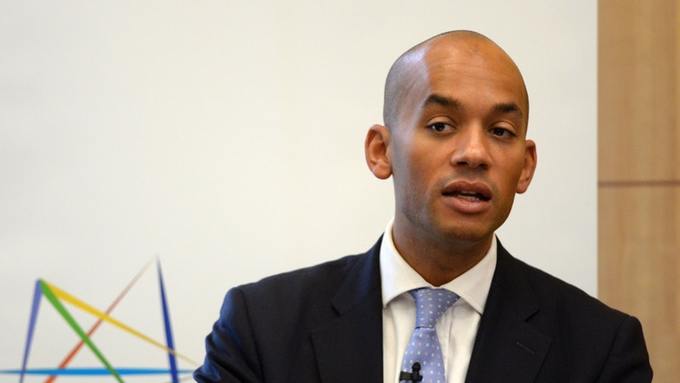
(Chuka Umunna, British Labour party member of parliament: “The Labour party [under Jeremy Corbyn] is institutionally racist  ... very painful”, Daily Mail, London, 9 September 2018)
(Jonathan Sacks, former British chief rabbi: “[Jeremy Corbyn] is anti-semite [who has] given support to racists, terrorists and dealers of hate”, New Statesman, London, 28 August 2018)
(Trevor Philips, former head of British equality commission: “[Jeremy Corbyn] is anti-semite and racist”, Daily Mail, 13 September 2018)
(Jeremy Corbyn, British Labour party leader...)
(John Coltrane & Don Cherry, “Focus on sanity” [personnel: Coltrane, tenor saxophone; Cherry, pocket trumpet; Percy Heath, bass; Ed Blackwell, drums; recorded: Atlantic Studios, New York, US, 28 June/8 July 1960])
 Twitter@HerbertEkweEkwe

Wednesday, 24 January 2018

Britain and the Igbo genocide – this annihilative mission, 29 May 1966-24 January 2018

(Harold Wilson: “would accept half a million dead Biafrans if that was what it took...”)
Herbert Ekwe-Ekwe

BRITISH SUPPORT FOR the perpetration of the Igbo genocide, this foundational genocide of post-(European)conquest Africa, 29 May 1966-Present Day, is driven principally by one factor: to “punish” Igbo people for playing the vanguard role in the mid 1930s-October 1960 movement to terminate 100 years of Britain’s conquest and occupation of the constellation of states and peoples of this southwestcentral region of Africa that it calls Nigeria. At the apogee of the genocide, 1968/1969, British Prime Minister Harold Wilson is adamant: “[I] would accept a half million dead Biafrans if that was what it took”  Nigeria to destroy the Igbo resistance to the genocide (Roger Morris, Uncertain Greatness: Henry Kissinger and American Foreign Policy, London & New York: Quartet Books, 1977, p. 122).

HAROLD WILSON probably had the perverted satisfaction of having his Nigerian co-genocidist league of slaughters on the ground in SWC Africa, 3140 miles away from Britain, perform far in excess of their “massa”’s  grim target by murdering 3.1 million Igbo instead – an outcome coldly recounted indeed in Wilson’s own memoirs where he notes that the Nigerian génocidaires, duly led by Hausa-Fulani/islamists trenchantly opposed to the mid 1930s-1960 African peoples’ restoration-of-independence goal and therefore equipped zealously by Britain, expended more small arms ammunition in its campaign to achieve its annihilative mission in Biafra than the amount used by the British armed forces  “during the whole” of  the Second World War (Harold Wilson, Labour Government, 1964-1970: A Personal Record, London: Weidenfeld & Nicolson, 1971, p. 630, emphasis added).
(New York Art Quartet plays “Mohawk”, a composition by Charlie Parker [personnel:  John Tchicai, alto saxophone; Roswell Rudd, trombone; Reggie Workman, bass; Milford Graves, drums; recorded: Nippon Phonogram, New York, US, 16 July 1965]) 
Twitter@HerbertEkweEkwe

Tuesday, 24 January 2017

Britain and the Igbo genocide – this annihilative mission, 29 May 1966-24 January 2017

(Harold Wilson: “would accept half a million dead Biafrans if that was what it took...”)
Herbert Ekwe-Ekwe

BRITISH SUPPORT FOR the perpetration of the Igbo genocide, this foundational genocide of post-(European)conquest Africa, 29 May 1966-Present Day, is driven principally by one factor: to “punish” Igbo people for playing the vanguard role in the mid 1930s-October 1960 to terminate 100 years of Britain’s conquest and occupation of the constellation of states and peoples of this southwestcentral region of Africa that it calls Nigeria. At the apogee of the genocide, 1968/1969, British Prime Minister Harold Wilson is adamant: “[I] would accept a half million dead Biafrans if that was what it took”  Nigeria to destroy the Igbo resistance to the genocide (Roger Morris, Uncertain Greatness: Henry Kissinger and American Foreign Policy, 1977: 122).

Harold Wilson probably had the perverted satisfaction of having his Nigerian genocidist subalterns on the ground in SWC Africa, 3140 miles away from Britain,  perform far in excess of their “massa”’s  grim target by murdering 3.1 million Igbo instead – an outcome coldly recounted in Wilson’s own memoirs where he notes that the Nigerian génocidaires, equipped zealously by Britain, expended more small arms ammunition in its campaign to achieve its annihilative mission in Biafra than the amount used by the British armed forces  “during the whole” of  the Second World War (Harold Wilson, Labour Government, 1964-1970: A Personal Record, 1971: 630, added emphasis).
(New York Art Quartet plays “Mohawk”, a composition by Charlie Parker [personnel:  John Tchicai, alto saxophone; Roswell Rudd, trombone; Reggie Workman, bass; Milford Graves, drums; recorded: Nippon Phonogram, New York, US, 16 July 1965]) 
Twitter@HerbertEkweEkwe

Sunday, 17 July 2016

The imperative of Biafra


Herbert Ekwe-Ekwe

It is indeed striking if not extraordinary that quite a few don’t seem to recognise the underlying features that link the almost routinised murder perpetrated by the police/other agents of the state in Africa on an African people in the streets of Onicha, Igwe Ocha, Aba, Nairobi, Oka, Uzo-Uwani, Bujumbura, Owere,  Enuugwu and Asaba, for instance, with the stretch of murders of African-descent people in the United States carried out by police in innumerable cities including, especially,  New York, Tulsa, Orlando, Washington DC, Omaha, Baton Rouge, Jacksonville, Dallas, Minnesota, San Francisco, Columbus, Oklahoma City, Las Vegas, Baltimore, Chicago and  Los Angeles.

Rubric

These murders, east or west of the Atlantic, are configured and executed under that same overarching ideological rubric of the expressed “diminution-of-African life” that constitutes the engaging, subjugating template of 400 years of pan-European enslavement of the African humanity in the Americas and elsewhere, beginning in the 15th century, and Europe’s consequent occupation of the African homeland itself. Europe’s “Berlin state”-aftermath of this scourge of history in contemporary Africa duly operationalises the agelong legacy. 

Thus, the significance of the late 1960s British Prime Minister Harold Wilson’s notorious declaration that he, Harold Wilson, “would accept the death of half a million Biafrans if that was what it took” Britain’s client and co-genocidist Nigeria to destroy the Igbo resistance to the ongoing Igbo genocide (Roger Morris, Uncertain Greatness: Henry Kissinger and American Foreign Policy, 1977: 122) is a reminder to anyone who would wish to think otherwise (in the globe’s post-World War II era) that the raison d’être of the state that would “oversee” the lives of African peoples forthwith wouldn’t differ, significantly, from what Britain and the rest of Europe had constructed, in variegated forms, since the 1490s. The Nigerian executioners on the ground end up murdering 3.1 million Biafrans or 25 per cent of the Igbo population during 44 gruesome months (29 May 1966-12 January 1970) – far in excess of “massa” Harold Wilson’s  “half a million Biafrans”-death wish, representing 4.2 per cent of the Igbo.

Just as the murderous gangs of camp overseers in the African enslaved estates in the Americas of earlier epochs, the overseers in present day Africa matrix estate formations, often drawn from constituent African nations opposed to the restoration of African freedom from the pan-European conquest and subjugation (e.g. Hausa-Fulani in a British Nigeria), are primed by the estate to murder conscientiously liberatory and transformative Africans as instantly, overwhelmingly and savagely as they deem fit.

Prize

It is precisely as a result of this devastating tract of antecedent that the soon to be freed Igbo people from genocidist Nigeria occupation have an opportunity to begin to build a new civilisation in Biafra where African life, human life, fundamentally, is sacrosanct. This is the immediate prize of the restoration of Biafran freedom. And Biafrans share this prize with the rest of African humanity – wherever they are emplaced across the world. Surely, for African peoples, 500 years later, this salient goal of Biafra cannot be overstressed. Never again does anyone anywhere on earth devalue African life as a ritualised instrument of state power. 

Beginning

Biafra is an inclusive state where women and men live as co-operators and co-creators in fundamentally transforming their society. This is a state that accepts and accords full rights to all its people. This is a state where people enjoy the rights to differ and to dream dreams and dream different sets of dreams as they choose.

Biafra is a state dedicated to furthering and nurturing the resilience of its people and to enable them advance their highest creative endeavours. This state continuously strives to remove all limitations in the paths of its people and committed to making life better and better and better.  This is a state that tasks its people to flourish.  Already, 50 years since the first dreadful murders of the genocide were committed in north Nigeria on Sunday 29 May 1966, Biafrans have written an extraordinary essay on human survival and fortitude, a beacon of the tenacity of the spirit of human overcoming of the most desperate, unimaginable, brutish forces.

Alas, this chokingly long drawn out catastrophe that is at once Britain’s Nigeria hotchpotch and the expanded timeframe of Europe’s totalising hegemony in Africa is over and truly African peoples do stand poised on the eve of a new beginning. Biafra.
(John Coltrane Quartet, “The promise” [personnel: Coltrane, soprano saxophone; McCoy Tyner, piano; Jimmy Garrison, bass; Elvin Jones, drums; recorded: live at Birdland, New York, US, 8 October 1963])
Twitter@HerbertEkweEkwe


Monday, 14 December 2015

When Nigerian genocidists waged war on the sun


Herbert Ekwe-Ekwe

“Denial is the final stage that lasts throughout and always follows a genocide. It is among the surest indicators of further genocidal massacres. The perpetrators of genocide … try to cover up the evidence … They deny that they committed any crimes, and often blame what happened on the victims. They block investigations of the crimes, and continue to govern … with impunity … unless they are captured and a tribunal is established to try them. The response to denial is punishment by an international tribunal or national courts...” (Gregory Stanton, president, Genocide Watch; professor in genocide studies and prevention, George Mason University, Virginia)
Abolish the sun!
For a genocidist state, the pressing task after perpetrating its heinous crime couldn’t be more predictable: memory erasure of the crime scene at the targeted nation is pursued aggressively and unrelentingly. On the morrow of the conclusion of its execution of the third phase of the Igbo genocide in January 1970, Nigeria wheeled out pretentious cartographers to embark on erasing the illustrious name Biafra from all maps and records that it could lay its hand on! During its meetings, the genocidist junta in power banned the words “sun”, “sunlight”, “sunshine”, “sundown”, “sunflower”, “sunrise” or any other word-derivatives from the great sun star that unmistakably reference the inveterate Land of the Rising Sun. This task and symbolism of sun-banning and sun-bashing, some inter-stellar assault, were of course bizarre if not daft as the junta itself was to discover much sooner than later – and from a most unlikely source indeed… 

Poland

At the time, a British military advisor to the junta, who was out dining with a senior member of the cabal in Lagos, unwittingly compared Igbo national consciousness and tenacity, displayed brazenly during their defence against the genocide, with that of the Poles. The advisor, who had studied modern history at university and was a great admirer of the exceptional endurance of Polish people in history, stated that the Igbo had demonstrated similar courage in the latter’s defence of Biafra and that the “rebirth of Biafra is a distinct possibility in my lifetime” – this was unlike the 123 (one hundred and twenty-three) years it took the Polish state to re-appear in history after its disappearance from the world map! The advisor was then in his early 30s and the obvious implications of his Igbo-Polish analysis were not lost on his host. The junta member co-diner was understandably most outraged by the advisor’s crass insensitivity on the subject which he readily shared with his camarilla colleagues. Predictably, the immediate consequence of the hapless advisor’s impudence was an early recall home to Britain. 

Biafra

There were other bouts of farcical treats on display in Nigeria during the period aimed at erasing the memory of the Igbo genocide. Junta and other state publications and those of their sympathisers would print the name Biafra, a proper noun, a name on ancient world maps centuries before the British conqueror-regime in west Africa concocted “Nigeria” at the turn of the 19th century, with a lower case “b” or box the name in quotes or even invert the “b” to read “p” – such was the intensity of the schizophrenia that wracked the minds of the members of the cabal over the all-important subject of the historic imprint of Igbo resistance and survival. Finally, Nigeria abolished the teaching of history in its schools subsequently in the desperate hope that its Igbo genocide-denial stratagem was complete. 

3.1 million Igbo or a quarter of this nation’s population were murdered in the genocide between 29 May 1966 and 12 January 1970 by Nigeria and its allies, principally Britain. This is the foundational and most gruesome genocide of post-(European)conquest Africa. As the slaughter of the Igbo intensified, particularly in the catastrophic months of 1968-1969, British Prime Minister Harold Wilson unabashedly informed Clyde Ferguson of the United States state department that he, Harold Wilson, “would accept a half million dead Biafrans if that was what it took” Nigeria to destroy the Igbo resistance to the genocide (Roger Morris, 
Uncertain Greatness: Henry Kissinger and American Foreign Policy, 1977: 122).  As the final tally of the murder of the Igbo demonstrates, Harold Wilson probably had the perverted satisfaction of having his Nigerian subalterns perform far in excess of the prime minister’s grim target.
(Harold Wilson: “would accept a half million dead Biafrans if that was what it took...”)
Business-as-usual
Despite the catastrophic stretch of slaughter in 44 months, it was business-as-usual, or so it appeared, for the genocidists after the conclusion of phase-III of the murder on 12 January 1970. Lest we forget, the new phase was pursued with utmost vengeance, with the added highly prized fiscal and capital assets sequestrated by the genocidists – namely, the pillaging of the multibillion(US)dollar-Igbo economy at home and those located in Nigeria, particularly in the Lagos/greater Lagos industrial-commercial region. Many operatives who worked as advisors, at varying layers of the genocidist command and control infrastructure, went to, or returned to universities and colleges as professors and researchers, some became university administrators, bureaucrats, media editors and executives, company chief executives and directors, ministers of state, ministers of religion, businesspeople; many of the commanders and commandants became “generals” and “admirals” and “marshals”, and state legislators, administrators and the like; some even sought the highest office of state – head of regime (Obafemi Awolowo, variously, without success; Olusegun Obasanjo, three times successful; Muhammadu Buhari, twice successful; Murtala Muhammed, once successful; Ibrahim Babangida, once successful; Sanni Abacha, once successful; Abdulsalami Abubakar, once successful).
(O Obusonjo: ... from genocidist commanding in south Biafra to head of Nigeria regime for 11 years)
Awolowoist/Awolowoid
The Awolowoists and Awolowoids (supporters of Obafemi Awolowo – junta deputy chair, genocidist “theorist”, “starvation-weapon” strategist, head of finance ministry) on the junta even toyed with the idea of abolishing money altogether in the economy of the soon occupied-land of the resourceful and enterprising Igbo. They reasoned that this would deliver the “final solution” that had eluded them during the “encirclement, siege, pounding and withering away”-strategy of the previous 44 months… They ended up with the “compromise” pittance of £20.00 sterling (twenty pounds sterling only) per the surviving male-head of the Igbo family – a derisory sum, which, they reckoned, stood no chance of averting the catastrophe of social implosion they envisaged would occur in Igboland subsequently. We mustn’t fail to note that the £20.00-handout excluded the hundreds of thousands of Igbo families whose “male-heads” had been murdered during the genocide… Dreadfully, the accent placed by Nigeria on this phase-IV of the genocide, starting from 13 January 1970, was the economic strangulation of the 9 million Igbo survivors…
(Obafemi Awolowo: £20.00 sterling dole-of-vengeance per surviving Igbo family male-head...)
Survival
Igbo survival from the genocide is arguably the most extraordinary feature for celebration in an otherwise depressing and devastating age of pestilence in Africa of the past 49 years. Few people believed that the Igbo would survive their ordeal, especially from September 1968 when 8-10,000 Igbo, mostly children and older people, died each day as the overall brutish conditions imposed by the genocidist siege and bombardment deteriorated calamitously. 

The Igbo are probably the only people in the world who were convinced that they would survive. And when they did, the aftermath was electrifying. In spontaneous celebration, the Igbo prefaced their exchange of greetings with each other, for quite a while, with the exaltation, “Happy Survival”! 

Igbo survival, at the end, does represent the stunning triumph of the human spirit over the savage forces unleashed by Nigeria and its allies that had tried determinably, for four years, to destroy it.
(John Coltrane Quartet, “Sun ship” [personnel: Coltrane, tenor saxophone; McCoy Tyner, piano; Jimmy Garrison, bass; Elvin Jones, drums; recorded: Impulse!, New York, US, 26 August 1965])
(John Coltrane Duo, “Jupiter” [personnel: Coltrane, tenor saxophone, bells; Rashied Ali, drums; recorded: Van Gelder Studio, Englewood Cliff, NJ, US, 22 February 1967])
Twitter @HerbertEkweEkwe