Rethinking Africa is a forward looking blog dedicated to the exchange of innovative thinking on issues affecting the advancement of African peoples wherever they are. We provide rigorous and insightful analyses on the issues affecting Africans and their vision of the world.
Showing posts with label Indigenous People of Biafra. Show all posts
Showing posts with label Indigenous People of Biafra. Show all posts
(Nnamdi Kanu:...leader of the Indigenous People of Biafra ...Biafrans are poised
to free themselves from genocidist & kakistocratic Nigeria ... Igbo freedom will
inaugurate the age of freedom for African peoples with inestimable
transformative possibilities...)
(Sonny Rollins Trio, “The freedom suite” [personnel: Rollins, tenor saxophone; Oscar Pettiford, bass; Max Roach, drums; recorded: Riverside Records, New York, US, 7 March 1958])
******Herbert Ekwe-Ekwe’s latest books on the Igbo genocide and Biafra are The longest genocide – since 29 May 1966 (2019) and co-author, with Lakeson Okwuonicha, Why #DonaldTrump is #great for #Africa (2018)
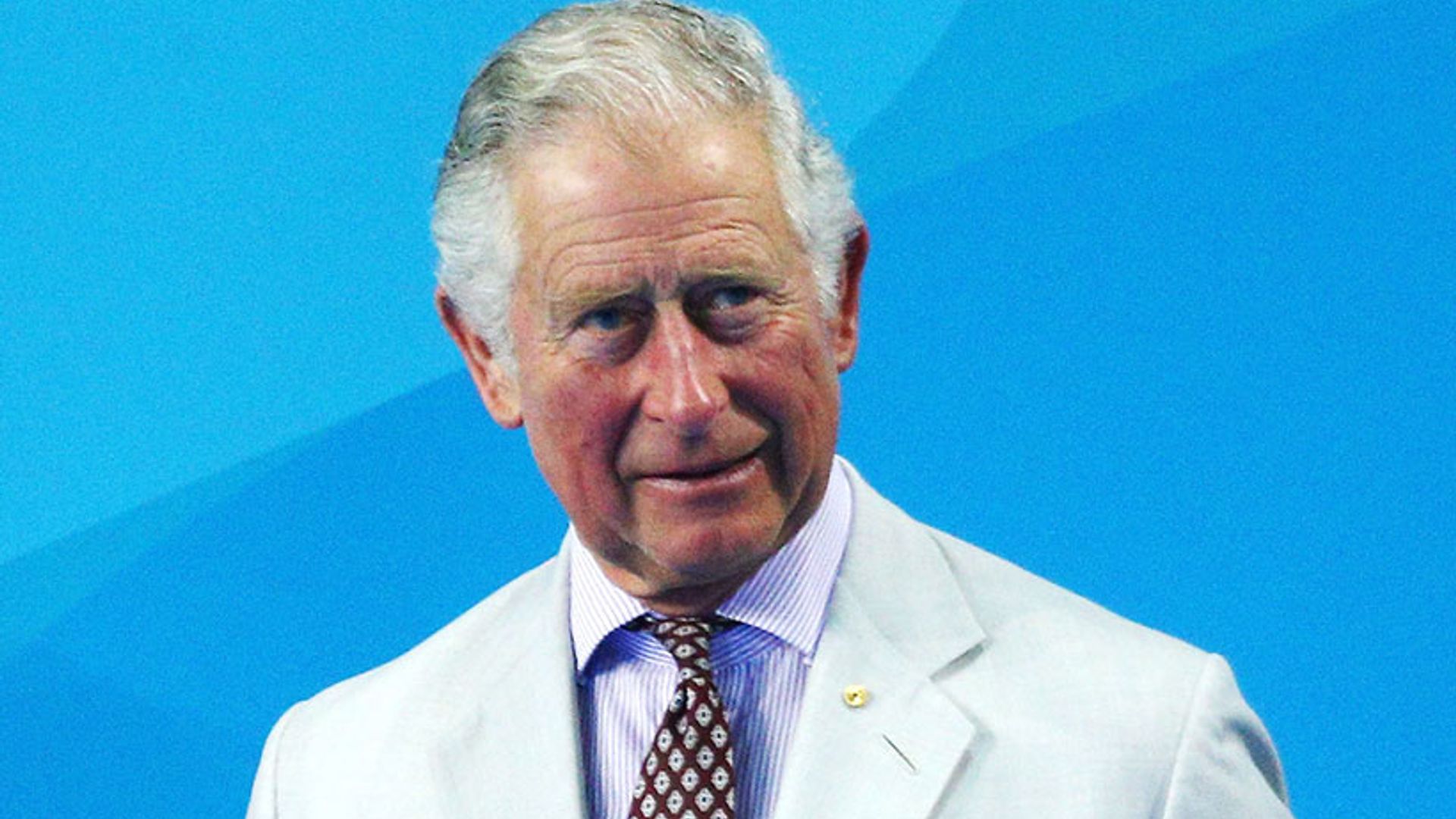
(Prince Charles: heir apparent to the British throne)
Herbert Ekwe-Ekwe Britain, history, Africa IN A December 2006 article for the New Nation (the
London-based weekly newspaper that appeals to a wide African people’s
readership), former British Prime Minister Tony Blair writes that he feels
“deep sorrow” for Britain’s central role in the European World’s enslavement of
African peoples. This declaration is surely not good enough as Britain is the
leading beneficiary of this holocaust. Blair should have apologised
unreservedly to Africans across the world for Britain’s role in a holocaust
that remains humanity’s most gruesome, most expansive, and most enduring (Herbert Ekwe-Ekwe, African Literature in Defence of History: An essay on Chinua Achebe, 2001: especially ch. 1). Blair should have announced a comprehensive package of reparations paid to surviving Africans in Africa, Europe,
the Americas and elsewhere in the world for this crime.
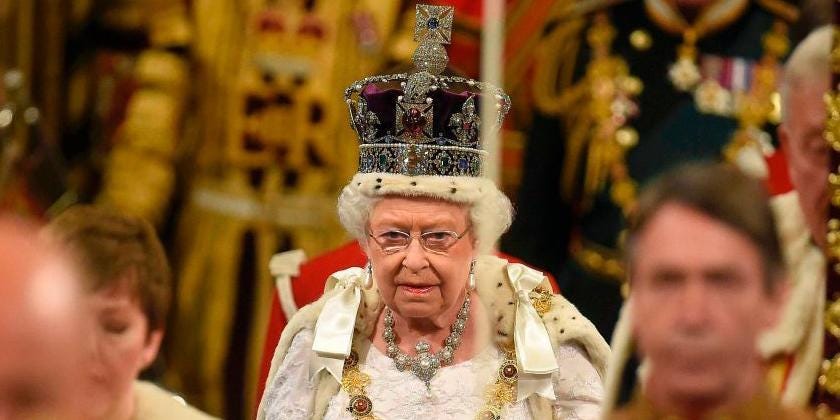
(Theresa May:... British Prime Minister)
IT must be emphasised that within 300 years of achieving the
strategic control of Africa’s human and material resources, namely at the
apogee of the African enslavement, Europe lays the foundation for the West’s
political and economic hegemony of the world as we know it presently. This is a
fact – “though largely erased and ignored in Western thought”, as Michel Beaud,
the influential French economist, is keen to remind the European World. (Michel Beaud, A History of
Capitalism: 1500-1980, 1983: 44.) Britain, the first truly effective
Western global power, uses the gargantuan wealth it acquires during the course
of its late 17th century/early 18th century pre-eminent role in the enslavement
and mass exportation of millions of Africans to the Americas to consolidate its
conquest of the Americas (especially the north/the Caribbean basin), embark on
its conquest of India and other regions of Asia, embark on the subsequent
pan-European (Britain, France, Portugal, Belgium, Spain, Germany and Italy)
conquest and occupation of a (subsequently) weakened Africa, and lastly, but
surely not least in importance, finance its 19th century industrial revolution
which is the turning point in the development of Western capitalism.
Backwater
Britain’s success on
this score cannot be over-stressed. This was a country which, prior to the
mid-17th century, was still a “cultural and scientific backwater”, to quote the
graphic description made by Christopher Hill, the eminent British historian who
is an authority on this period of British history. (Christopher Hill, “Lies about crimes”, The
Guardian, London, 29 May 1989.)
By the beginning of the 18th
century, Britain had established virtual world monopoly in the seizure and
transportation of millions of Africans from their homelands to the Americas
after displacing the Iberian states of Portugal and Spain. It used the enormous
resources that accrued to it as a result to finance its burgeoning scientific
and technological enterprises. Soon, as Hill further notes, Britain became the
“centre of world science”. (Hill, “Lies about crimes”, The Guardian, London, 29
May 1989.) And to underline the sheer size of
the wealth Britain was accumulating during the period, Charles Davenant, a late
17th century economist who studied the comparative worth of an enslaved African
in the Caribbean and a worker in England, concludes: “[The labour of this
enslaved African] is worth six times as much as the labour of an Englishman at
home”. (Christopher
Hill, “Lies about crimes”, The Guardian, London, 29 May 1989.)
(Olaudah Equiano:Distinguished Igbo-British intellectual of the 1780s-1790s England ... leading exponent of African freedom)
WHILST studying the work of African labour force in the
Guyanese sugar industry in the 1870s, it does not come as a shock to Joseph
Beaumont, the British chief justice of Guyana, that it takes two to three days
of work by the “best English laborer” (in England) of the day to complete a
day’s work done by a typically enslaved African plantation worker. (Alan
Adamson, Sugar without Slaves, 1972: 112.) “We have [in England] no
excavating work so heavy as trench digging in Demerara [Guyana]”, Beaumont
recalls, “and if the reader were to see a stalwart n[****] ... sweltering under
the blazing sun throughout the day ... standing up to his knees and often to
his hips in water, not only lifting (or more properly wrenching) 4000 to
5000 spits of dense clay ... throwing these twelve or sixteen feet clear on
each side – not with a pleasant hammer throwing swing, but delivered straight
from the loins at the end of a seven foot shovel ... I venture to think he
would not only wonder at but admire ... the ‘lazy n[*****]’” (emphasis
in the original). (Sidney Mintz,
“Descrying the Peasantry”, 1982: 210)
During the 300 years of Britain’s ascendancy as the world’s
principal enslaver-power in Africa and the Americas, leading members of its
state establishment (especially in royalty, clergy, parliament, industry,
academia, science and the arts) personally and collectively profited enormously
from this unprecedented holocaust in human history. Cities such as London,
Bristol, Cardiff, Liverpool, Manchester and Glasgow became extremely rich,
showcasing the spectacular transformation that each had undergone from being
key destinations of prime investment of profits accruing to the British
treasury from the enslavement of the African humanity. Thereafter, Britain
became the epicentre of the intellectual activity of an ever-expanding
collective of European World genocidist scholars, scientists and writers who
offered the “requisite” cultural/scientific/literary rationalisation for the
African holocaust. Influential members of this collective would include
Spencer, Petty, Darwin, Lyell, Prichard, Reade, Locke, White, Knox, Marx, Hume,
Lee, Farrar, Coupland, Egerton, Trevor-Roper, Conrad, Kipling, Carey, Haggard,
Burroughs, Buchan, Mitford, Monsarrat, Ballantyne, Huxley and Blixen. (Ekwe-Ekwe,
African Literature in Defence of History, passim.)
These practitioners, in a sentence, turned Britain into the
creator, cardinal codifier, and pivotal publicist of pan-European racism as an
ideology – to effectuate that strategic goal of erasure that Michel Beaud so
cogently refers to.
The stupendous fortune Britain earned from this holocaust and
the accompanying gullies of socio-economic devastation it unleashed across
Africa and African survivors in Africa itself, the Americas and elsewhere in
the world, ensured that a triumphant Prime Minister Salisbury confidently
insisted, in a speech in London in 1898, that “One can roughly divide the nations
of the world into the living and the dying ... [T]he living nations will
fraudulently encroach on the territory of the dying.” (Sven Lindqvist, “Exterminate All the Brutes”, 1997: 140) Less than 50 years after these remarks, the dire consequences of pogroms and holocausts would be felt much closer home to the heart of Europe rather than just the targeted lands further
afield in Africa and elsewhere. On this, Sven Lindqvist has observed solemnly:
I am fairly sure the nine-year-old Hitler was not at Albert
Hall when Lord Salisbury was speaking. He had no need to. He knew it already.
The air he and all other Western people in his childhood breathed was soaked in
the conviction that imperialism is a biologically necessary process, which,
according to the laws of nature, leads to the inevitable destruction of the
lower races. It was a conviction which already cost millions of human lives
before Hitler provided his highly personal application. (Lindqvist, “Exterminate
All the Brutes”, 1997: 141)
AS should be expected, the effects on Africans and their
homeland of this earlier holocaust, have been grave indeed: the active human
power of millions of future African generations were uprooted and shipped off
to the Americas by European enslavers to work the cotton, sugar and tobacco
plantations, excavate the gold and silver mines, and build new towns and cities
in territories being conquered by expansionist European conqueror forces. In
the process, as Cheikh Anta Diop has shown, Africa lost about 150 million of
its peoples as enslaved, including those who died during the overland journey,
crisscrossing west Africa and elsewhere, to conveyor-ships and the voyage to
the Americas. (Cheikh Anta Diop, Precolonial Africa, 1987: 142.)
Soon,
Britain and the rest of the European powers (France, Germany, Italy, Portugal,
Belgium, Spain), who eventually occupied Africa, turned the continent into a
reservoir of cheap labour for intensive and extensive agricultural and
mineralogical exploitation. The African farmer was converted overnight into a
“cash crop farmer”, a term that at face value has a dubious meaning as it is
aimed to describe a farmer who cultivates assorted crops such as cotton, cocoa,
palm produce, groundnut, cloves and sisal solely for export to European
markets. The farmer who cultivates other crops, but for the home market, which
he or she still sells for cash, is not a “cash crop farmer”! Instead, goes the
conquest-economics jargon, the latter farmer is involved in “subsistent
farming”. Considering that the overwhelming majority of Africans were, and are
still farmers, these millions of people were, as a result of the European
conquest and occupation, being culturally alienated at the crucial site
of their economic activity with obvious far-reaching implications, which are
still at the core of Africa’s current tragedy. If the African labour was not
bound for agricultural activity, “cash crop”, or not, he or she was instead
deployed by the occupation-state to the European mining corporations dotted all
over the continent to extract various types of minerals including diamonds,
gold, tin, bauxite, coal, copper, iron ore and petroleum products – again for
export to the European World. All forms of taxes were imposed to expedite this
European take-over of Africa, and the strategic spheres of the continent’s
independent pre-conquest cultural, industrial and other forms of technological
creativity therein were curtailed or suppressed.
IN EFFECT, African land and property relations were abolished by the occupation to
make way for the seizure of land for both plantation agriculture and mining
enterprises already referred to, or for the construction of new communication
infrastructure, or for the direct population settlement by European immigrants
as exemplified in east Africa (Kenya), southern Africa (Mozambique, Zimbabwe, South
Africa, Angola, Namibia), west Africa (São Tomé and Principé, Equatorial
Guinea, Guinea Bissau, Cape Verde) and north Africa (Algeria). Again, Britain
was the leading conqueror-state beneficiary during this phase of the direct
occupation of Africa, having particularly seized lands with major population
centres and vast and multiple natural resource emplacements: South Africa,
Namibia (proxy control, post-1918 – after the defeat of Germany in World War
I), Zimbabwe, Botswana, Swaziland, Lesotho, Zimbabwe, Zambia, Kenya, Uganda,
Tanzania (post-1918, after the defeat of Germany in World War I), the Sudan,
Nigeria, south Cameroons (post-1918, after the defeat of Germany in World War
I), Ghana, Sierra Leone, Gambia. In each of these conquered lands as well as
others, now arbitrarily carved out from hitherto existing African states, the
European regime imposed its monetary system on society and also ensured that
the terms for the exchange of goods and services, fundamental for the logical
development of any socio-economic activity or relation, was inextricably
tailored to the needs and expectations of the home market back home (in
Europe). No doubt, the economies that emerged subsequently in Africa,
particularly on the eve of the so-called re-establishment of the peoples’
independence from the mid-1950s, were structurally bereft of local needs and
priorities. Instead, these were mineralogical and agricultural redoubts to
service a European home market, and, at the same time, conduits for European
emigration. In summary, three distinct
consequences on the African humanity can be discerned from the British-led
(i.e. post-mid 17th century) enslavement of Africans or the African holocaust.
First, the seizure and exportation of 150 million Africans from Africa to the
Americas and elsewhere. Second, the destruction/near destruction of local
populations and the dispatch of survivors/others into labour
reserves/“townships” to make way for direct European occupation (particularly
east/southern Africa) as from the 19th century, and, finally, the overall
control of subjugated populations and the conversion of human and material
resources to serve pan-European interests (rest of Africa), which has continued
virtually uninterrupted to this day.
Kakistocracy
and genocide
THE CONCERTED African drive, beginning soon after the Second
World War, to free the continent of European control has yet to achieve its
strategic objective: unfettered restoration-of-independence. Britain and France
and Belgium and Portugal and Spain just won’t let go of Africa; for these
countries, the phenomenal bounties of the African conquest are yet to be fully
expropriated, despite the holocaust, despite the hundreds of years of
occupation, and, more importantly, despite the insistence of the post-1945 African
liberating mission. Starting from 1956 in Sudan, Britain (once again!) embarked
on the construction of a constellation of kakistocratic states across the
continent to precisely neutralise the emergence of this new, free Africa.
Nigeria, Uganda, Kenya, Ghana, Sierra Leone, Gambia and others, as well as the
Belgian and French derivatives of these monstrous constructs (Democratic
Republic of Congo, Rwanda, Burundi, Congo Republic, Chad, Central African
Republic, Cameroon, etc., etc.) soon followed suit. In Nigeria, in 1966,
Britain perfected, even further, the catastrophic tentacles of kakistocracy in
Africa. (Herbert Ekwe-Ekwe, Biafra Revisited, 2006) In concert with
the Nigeria state (religious, military, police, academic, bureaucracy, media)
and the leaderships of key constituent nations in the country, Britain
inaugurated the quintessential genocidal state in Africa: Nigeria. Britain and
its Fulani islamist/jihadist-led Nigerian allies murdered 3.1 million Igbo
people during the course of 1966-1970 in the most horrendous genocide of
Africans not seen on the continent since the mid-19th century. At the apogee of the genocide, Harold Wilson, the British prime minister who oversaw the perpetration of this crime from his office and home at 10 Downing Street London was completely unperturbed to informClyde Ferguson (United States state department
special coordinator for relief to Biafra), on record, that he, Harold
Wilson, “would accept half a million dead Biafrans if that was what it
took” the Nigerian génocidairesto destroy the Igbo
resistance to the genocide. (Roger Morris, Uncertain Greatness: Henry Kissinger and American
Foreign Policy, 1977: 122) And to ensure that the the génocidaires achieved whatever annihilative threshold on the destruction of Igbo people they had set for this mission in Biafra, Wilson duly reinforced and saturated the Nigeria armoury with assorted British military resources. Wilson was gravely effusive on the range and impact of Nigerian use of British arms in the genocide as he recalled in his memoirs: Nigerian
military expended more small arms ammunition in its campaign in Biafra than the amount used by the British armed forces “during
the whole” of the 1939-1945 war. (Harold Wilson,
Labour Government, 1964-1970: A Personal Record, 1971: 630; added emphasis) Wilson’s government’s diplomatic mission military advisor in genocidist Nigeria
at the time, Robert Scott, acknowledged his employer’s empirical evidence,
albeit linguistically (at the height of the genocide, mid 1968- January 1970),
that as the Nigerian genocidists unleashed their campaigns across Biafran
cities, towns and villages, they were the “best defoliant agent known” (Sunday
Telegraph,
London, 11 January 1970). Whilst Wilson’s own preferred and projected death-wish tally for the Igbo was 500,000, which represented 4.2 per cent of the Igbo population at the time, his co-Nigerian genocidists on the ground instead murdered 3.1 million Igbo people – 2.6 million more or 25 per cent of the total Igbo population; definitely, the Nigerians had handsomely obliged their “massa” Harold Wilson’s extermination edict...
(Harold Wilson: ... “would accept half a million dead Biafrans if that was what it took..)
IT IS therefore extraordinary that in his study, Crimes Against Humanity: The Struggle for
Global Justice (2006), Geoffrey
Robertson, a British human rights lawyer, a queen’s counsel, does not
discuss the Igbo genocide anywhere in his 759-page text nor Britain’s
instrumental role in perpetrating this foundational genocide of post-(European)conquest
Africa. Robertson’s is clearly the case of a scholar who wishes to deny the most catastrophic of genocides.
Indeed, the
mass murder of the Igbo, centrally organised by Britain, sets the grotesque
precedence that would chart and characterise the defining features of African
politics during the subsequent 30 years: Sierra Leone, Liberia, Chad,
Democratic Republic of the Congo, Congo Republic, Uganda, Ethiopia, Somalia,
Burundi, Rwanda, Sudan. A total of 12 million Africans have been murdered in
these countries since the Igbo genocide. As Britain (and France and Belgium
particularly) would surely attest, the kakistocratic state of Africa,
especially its genocidal variety in Nigeria, the Democratic Republic of the Congo
and the Sudan for instance, pays handsomely. An examination of any index of
statistical data on Anglo-Nigeria relations, or indeed Anglo-Sudan
interactions, won’t shock for the very obvious.
As the Africans in a Nigeria or a
Sudan languish in perpetuity in these perditions of “homeland” of British
creation, the British continue to enjoy unprecedented levels of profits from
these “countries”, day in, day out, receive net capital inflows from these
territories, including those looted by thieving “leaderships” and officials,
and appropriate critical resources from there at will ... Britain, and the rest
of the European World, couldn’t ask for a more enabling environment to
expropriate and expropriate the vast riches of Africa indefinitely.
FOR Africans, the next move in the
much-sought-after liberation couldn’t be clearer: (1) dismantle the extant
genocide state or quickly abandon their membership therein and (2) create new
state forms of civilisation that expressly serve their own interests and
aspirations – not those of others,
including, especially, the notorious overlords of persons, groups and the
“ascribed” African constituent nations or nationalities on the ground who carry
out the day-to-day policing of this retrograde, hierarchical architecture of
doom on behalf of Britain.
(Nnamdi Kanu: ... leader of the Indigenous People of Biafra ... Biafrans are poised to free themselves from genocidist & kakistocratic Nigeria ... Igbo freedom will inaugurate the age of freedom for African peoples with inestimable transformative possibilities...)
References
Adamson, Alan. Sugar without Slaves. New Haven: Yale University, 1972.
Beaud, Michel. A History of Capitalism: 1500-1980. New York: Monthly Review, 1983
Diop, Cheikh Anta. Precolonial Africa. New York: Lawrence Hill, 1987.
Ekwe-Ekwe, Herbert. Readings from Reading: Essays on African Politics, Genocide, Literature. Dakar and Reading: African Renaissance, 2011.
Ekwe-Ekwe, Herbert. Biafra Revisited. Dakar and Reading: African Renaissance, 2006.
Ekwe-Ekwe, Herbert. African Literature in Defence of History: An essay on Chinua Achebe. Dakar and Reading: African Renaissance, 2001.
Hill, Christopher. “Lies about crimes”. The Guardian, London, 29 May 1989.)
John Coltrane Quartet. A Love Supreme. Van Gelder Studio, Englewood Cliffs, NJ, US, 9 December 1964. Lindqvist, Sven. “Exterminate All the Brutes”. London: Granta Books, 1997.
Mintz, Sidney. “Descrying the Peasantry”. Review (Fernand Braudel Center), VI, 2, Fall 1982, pp. 209-225.
Morris, Roger.Uncertain Greatness: Henry Kissinger and American Foreign Policy. London and New York: Quartet Books, 1977.
Robertson, Geoffrey, Crimes Against Humanity: The Struggle for Global Justice. London: Penguin Books, 2006. Sunday Telegraph. London, 11 January 1970. Wilson, Harold. Labour Government, 1964-1970: A Personal Record. London:
Weidenfeld & Nicolson, 1971.
(John Coltrane Quartet, “Resolution” {part-II of A Love Supreme suite} [personnel: Coltrane, tenor saxophone; McCoy Tyner, piano; Jimmy Garrison, bass; Elvin Jones, drums; recorded: Van Gelder Studio, Englewood Cliffs, NJ, US, 9 December 1964])
IT HAPPENED on the afternoon of 14 September last year, 2017.
I
had come back to visit my family home in Biafra a few weeks earlier from
Germany, where I now live. I call it Biafra because Biafra is my country,
not Nigeria.
My
mother and father, my older brother Nnamdi Kanu and I were in the house, along
with friends. It was my son’s thirteenth birthday. I had just been on the phone
congratulating him when the first gas canisters were thrown over the fence
followed by gunfire. It was 4pm. The house was surrounded by Nigerian soldiers.
I found it
hard to breathe. Everyone was panicking. I was witnessing a full on military
attack on my parents’ home. I saw a soldier jump over the high fence that
surrounds our house and open our main gate. He started shooting at the young
men inside. That was when I realised if I didn’t escape now I would die.
There
were soldiers and guns everywhere. How I got out only heaven knows. I remember
I had to jump two walls. There was sporadic firing from the soldiers and one of
the people who tried to follow me, a good family friend, was killed. My
youngest brother, Emmanuel, had left a few minutes before and was only a few
metres away. Since that afternoon, I’ve heard nothing from my mother and father
and my brother Nnamdi.
THE ONLY explanation for my family being targeted by the Nigerian government is that we
believe in an independent Biafra. People may remember the Biafran War fifty
years ago. For a few years, between 1967 and 1970 we were a free state. I was
born during the war in December 1969. My family had to leave our home in
Umuahia to escape the invasion by the Nigerian army then. My mother was
pregnant with me and it was no longer safe. There was fighting just behind our
house.
Biafran
people were shot and bombed and starved to death; millions of them. Our
experience was genocide. My parents lost most of their relatives.
SO I GREW up in an occupied country, an unhappy country. We were forced to be part
of a state manufactured by colonial rule: Nigeria. I remember my father,
like everyone else, was given the equivalent of £20 in recompense, to start
again.
But despite
everything, we had a very happy childhood and a loving family life. My older
brother Nnamdi and I did everything together. We were about the same height, so
we even shared clothes and shoes. He took care of me as a younger brother and
guided me. My father traded in farm produce. Now he is a traditional ruler.
People look up to him. They trust him.
When
I was younger I knew I couldn’t stay in Biafra. Since the mid-’70s our culture,
our history, our people had been all but erased. My brother and I needed to do
something to help people to remember and we couldn’t do it there.
I moved to
Germany sixteen years ago and raised a family. He moved to London and began the
online Radio Biafra, broadcasting in English and Igbo, the language of
Biafra, stories about our country, music, commentary and news. The
Nigerian government has wanted to shut this down since it first broadcast in
2010.
NNAMDI also started our organisation, Indigenous Peoples of Biafra, IPOB, seeking
peaceful ways to bring about self-determination and independence for Biafra
through democracy. We are a young organisation. Many of our members are too
young to remember the war, but we are passionate that we will see an
independent Biafra and a free Biafran people in our lifetimes.
Many Biafrans have
been killed or detained before, during and after the 14th September 2017.
There have been peaceful protests to commemorate the war where the security
services have just opened fire on us.
AS FAR AS we are concerned, the government of Mohammadu Buhari is
determined to stifle the independence movement. This week, President Buhari will
meet the Queen at the Commonwealth Heads of Government Meeting. The Queen needs
to know that, if my experience is anything to go by, Buhari’s government
will resort to the most serious human rights violations in order to gag the
people of Biafra. *****Kingsley Kanu who lives in Germany is younger brother of Nnamdi Kanu, leader of Indigenous People of Biafra
THE BIAFRA freedom movement surely dictates the terms of the
freedom of the people of Biafra from Nigeria despite the savagery of the
Hausa-Fulani/islamist-led genocidist Nigeria occupation and the overseeing
ruthlessness on the ground by the quislings-of-occupation. The movement insists
on a referendum, nothing else including bogus regime-elections,***** to
democratically secure the next crucial phase of the restoration-of-independence
process.
(Nnamdi Kanu: ... leader of Indigenous People of Biafra and freedom broadcaster, Radio Biafra)
The first of these “elections” since
the movement’s proclamation, the one on “local government” in Biafra’s Enuugwu
northcentral region last Saturday (4 November 2017) was boycotted
overwhelmingly by the people. The same level of mass boycott is expected in yet
another regime-scheduled “election” – in the southwest Anambra region on
Saturday 18 November 2017. “Ofe nsala day” THE freedom movement, true to form in its assured peaceful
trajectory, has already designated the Saturday 18 November 2017 day boycott
call of the Anambra “poll” the “ofe nsala day”, after a local delicacy – essentially
asking the population to stay firmly home with loved ones throughout the day and
enjoy a scrumptious dinner and don’t partake in the desperate occupation’s
strategy to prolong its murderous stay which is now clearly unsustainable.
(Wynton Kelly Quintet,
“What I know” {composer: Wayne Shorter}[personnel: Kelly, piano; Lee Morgan, trumpet; Shorter, tenor saxophone; Paul Chambers, bass; Philly Joe Jones, drums; recorded: Fine Sound Studios, New York, US, 12
August 1959]
*****IT IS DOUBLY farcical that this lead grouping of genocidist Nigeria occupation regime that pursues the election phantasia currently in occupied Biafra has no tradition of democratic discourse or engagement whatsoever in its brutish history of terror, conquests, occupations, expropriations, decadence, genocide... Twitter @HerbertEkweEkwe
TODAY marks one
month since the 14 September 2017 genocidist Nigeria military stormed the home
of Nnamdi Kanu’s parents at Afaraukwu-Ibeku, eastcentral Biafra. Consequently,
the whereabouts of Nnamdi Kanu, the leader of the Indigenous People of
Biafra (constituted integrally in the Biafra freedom
movement), and his parents, remain unknown. Scores of the Kanus’ relatives
and friends were murdered during the assault and scores of others are still
unaccounted for. GENOCIDIST Nigeria
surely knows that it will account for the safety of Nnamdi Kanu and his parents
and take full responsibility of the consequences of that savage raid on a
family home.
(The New York Contemporary Five, “Consequences” [personnel: Archie Shepp, tenor saxophone; Don Cherry, pocket trumpet; John Tchicai, alto saxophone; Don Moore, bass; JC Moses, drums; recorded: live, Jazzhus Montmarte, Copenhagen, Denmark, 15 November 1963])
THE Indigenous
People of Biafra, led by Nnamdi Kanu,
is constituted integrally in the
Biafra freedom movement which campaigns peacefully for the
restoration-of-independence of the 50 million indigenous people of Biafra.
This is the most peaceful freedom movement in Africa and one of the very few of
its kind across the entire South World – Africa, Asia, the Caribbean and South
America. It will stop 51 years of the Igbo genocide by genocidist Nigeria/co-genocidist
state Britain (29 May 1966-present day) and will free Biafra from 47 years of occupation (since 13 January 1970) by these dual states. Finally, it will work assiduously to prosecute all individuals and institutions involved in the Igbo genocide since its 29 May 1966 launch, including those involved in the ongoing unimaginable stretch of programmed savagery perpetrated in Biafra by the Nigeria genocidist military-led Hausa-Fulani/islamists.
(Herbert
Ekwe-Ekwe)
(John Coltrane Quartet, “Acknowledgement” {part-I of A Love Supreme suite} [personnel: Coltrane, tenor saxophone; McCoy Tyner, piano; Jimmy Garrison, bass; Elvin Jones, drums; recorded: Van Gelder Studio, Englewood Cliffs, NJ, US, 9 December 1964])
(Nnamdi Kanu: ... leader of Indigenous People of Biafra and freedom broadcaster, Radio Biafra)
Herbert Ekwe-Ekwe
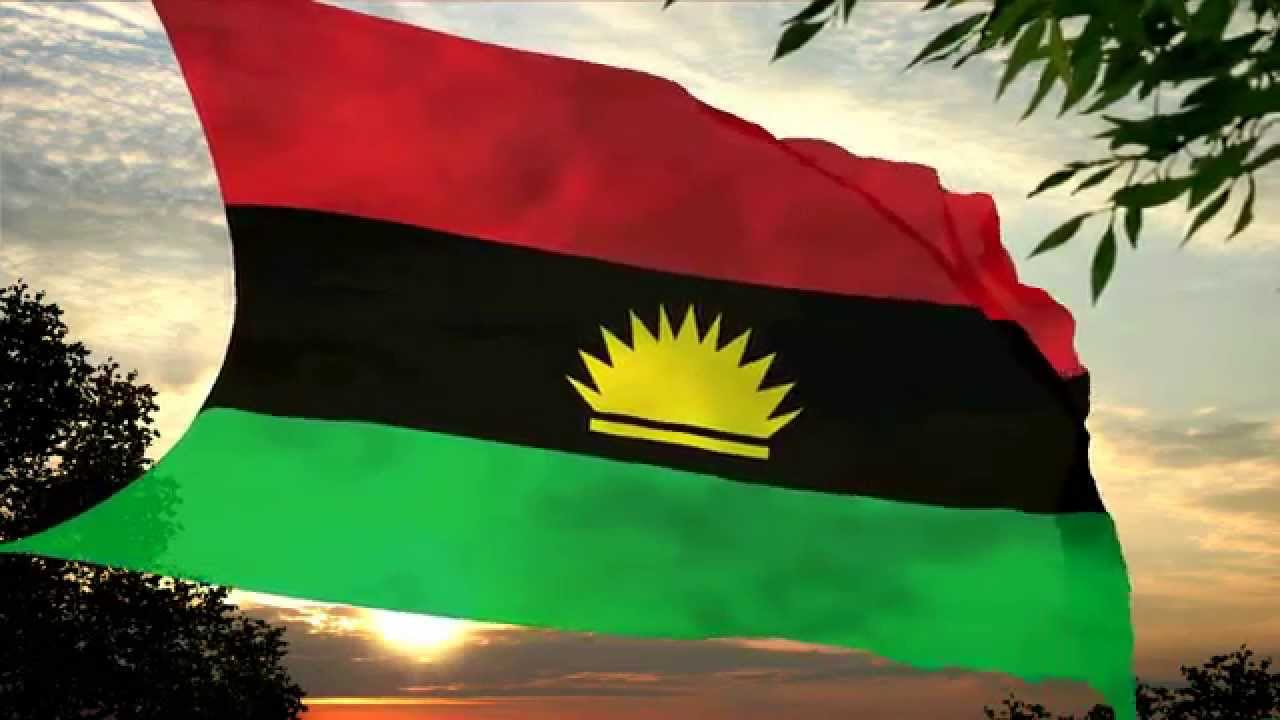
IN THIS PAST YEAR, beginning from the 14 October 2015 illegal detention of Nnamdi Kanu by the Nigeria genocidist regime, the freedom movement of Biafra has made giant strides in its restoration-of-independence goal the likes of which the world hasn’t seen since the January 1970 end of phase-III/launch of phase-IV of the Igbo genocide when Nigeria and its suzerain state Britain murdered 3.1 million Igbo people or 25 per cent of this nation’s population. Contrary to regime expectation that Kanu’s incarceration would ground the resistance, the freedom movement has demonstrated its profoundly decentralised leadership capabilities which encapsulate multiple spaces in occupied Biafra, the contiguous diasporic territory of Nigeria, and the broader world-wide diaspora. The decentralised leadership has not only exerted a microscopic focus on the politics, security, legal and welfare dynamics of Kanu’s detention for the world’s apt attention but it has used the period to engage in the arduous labour of concientisation on Biafra in Biafra and elsewhere in the world. Consequently, at a stroke, the Biafran resistance has abolished that contrived “fear” always generated hitherto by the genocidists and their allies especially in academia and media (particularly those emplaced in the Lagos-Ibadan [Nigeria] conurbation) of regime threats to “relaunch” the Igbo genocide full scale to thwart any “escalation” in the manifestation and drive for freedom by the freedom movement. So, despite the sheer savagery of the regime’s military/Fulani militia murders of hundreds of Biafrans across Biafra since last October, Biafrans have emerged even more focused, steadfast, resilient. They have converted their strategic goal of independence restoration to a tactical tool which they employ almost effortlessly here and there with exponential impact locally and internationally. This is extraordinary. The Biafra Sun is on the ascent. Any referendum conducted in Biafra presently on the restoration-of-independence for this population of 50 million will result in a high 90 per cent score. Biafrans now dictate the terms of this long drawn-out journey. On Nnamdi Kanu, the regime must now know that it has no other credible option than release this exponent of freedom unconditionally. Biafrans are redefining the tenor of the march for freedom in Africa. And the freedom movement has done it, in the past 12 months, it should be stressed, without firing a shot – either in defence or offence.
(Sonny Rollins Trio, “The freedom suite” [personnel: Rollins, tenor saxophone; Oscar Pettiford, bass; Max Roach, drums; recorded: Riverside Records, New York, US, 7 March 1958])
(Nnamdi Kanu: ... leader of Indigenous People of Biafra and freedom broadcaster, Radio Biafra ... must be releasedunconditionally)
The following news report from The Guardian, Lagos, Nigeria, 15 August 2016, is forwarded unedited: The Editor, “IPOB ties peace deal
to Kanu’s freedom”, The Guardian,
Lagos, Monday 15 August 2016
The Indigenous People of Biafra (IPOB)
has declared that there cannot be genuine peace in the country unless their
leader, Nnamdi Kanu, is unconditionally released.
Restates pact with Niger Delta Avengers
It said that Nigeria could only avert imminent doom if President Muhammadu
Buhari is prevailed upon by civilised nations to obey existing court orders to
release Kanu, adding that the attempt to create acrimony and hatred between
Kanu and the Niger Delta Avengers has failed.
IPOB also reiterated its partnership with the Niger Delta
Avengers, saying that both organs are inseparable in their quest for Biafra
restoration: “The Indigenous People of Biafra (IPOB) hereby categorically state
that we and our brothers, the Niger Delta Avengers (NDA), are inseparable in
our quest for Biafra restoration,” IPOB said in a joint statement signed by
Emma Nmezu and Dr Clifford Iroanya yesterday. The statement continues:
“Just as NDA stated in their demands, which the Nigerian
government is very much aware of, but has chosen to ignore, there will be no
negotiation if there is no freedom for the leader of IPOB, Mazi Nnamdi Kanu.
“Nigeria will avert imminent doom only if Buhari is
compelled by civilised nations to obey existing court orders and release Nnamdi
Kanu unconditionally… South-South and South-East are united in this noble quest
for freedom and no amount of media manipulation can alter this fact.
“If only Buhari knows who Nnamdi Kanu truly is or
the amount of influence he commands among the people of South-East and
South-South, he won’t listen to lies…”
IPOB, which disclosed that its lawyers spoke out of
tune in a recent press conference, stressed that they were also aware that a
certain South-East governor had been working as front for the Presidency to
penetrate and compromise IPOB’s governance structure and its lawyers.
The group alleged that some of the lawyers retained
by it are currently undergoing investigations by the Economic and Financial
Crimes Commission (EFCC) on land case settled years ago so as to unsettle them
sufficiently and make them become informants for government.
IPOB further alleged that the move was to undermine
the legal defence of its leader, as was the case with Vincent Obetta: “We are
aware of the grand conspiracy orchestrated by this governor to penetrate IPOB
by any means.”
(Sonny Rollins Trio, “The freedom suite” [personnel: Rollins, tenor saxophone; Oscar Pettiford, bass; Max Roach, drums; recorded: Riverside Records, New York, US, 7 March 1958])
Herbert Ekwe-Ekwe is specialist on the state and on genocide & wars in Africa in the post-1966 epoch – beginning with the Igbo genocide, 29 May 1966-present day, the foundational and most gruesome genocide of post-(European)conquest Africa. 3.1 million Igbo or 25 per cent of this nation’s population were murdered by Nigeria and its allies, principally Britain. Africa and the rest of the world largely stood by and watched as the perpetrators enacted this horror most ruthlessly. The world could have stopped this genocide; the world should have stopped this genocide. This genocide inaugurated Africa’s current age of pestilence. During the period, 12 million additional Africans have been murdered in further genocide in Rwanda (1994), Zaïre/DRCongo (variously, since the late 1990s) and Darfur – west of the Sudan – (since 2004) and in other wars in Africa. African peoples have, presently, no other choice but exit/dismantle the extant genocide-state (the bane of their existence & progress) & construct own nation-centred states that serve their interests. He is author of several books & papers on the subject and his new book is entitled The longest genocide – since 29 May 1966 (2019).