Rethinking Africa is a forward looking blog dedicated to the exchange of innovative thinking on issues affecting the advancement of African peoples wherever they are. We provide rigorous and insightful analyses on the issues affecting Africans and their vision of the world.
Showing posts with label 3.1mil Igbo murdered. Show all posts
Showing posts with label 3.1mil Igbo murdered. Show all posts
Herbert Ekwe-Ekwe TOWERING goalkeeper of the majestic and indomitable Enuugwu Rangers International – the football club, based in Enuugwu, Biafra, whose incomparable performances in local, regional and Africa continental football leagues’ engagements during the 1970s-1980s most symbolise, so dramatically, the dogged and resilient spirit of Igbo people in the aftermath of the cataclysmic Igbo genocide, 29 May 1966-12 January 1970, phases I-III, the foundational genocide of post-(European)conquest Africa when Fulani islamist/jihadist-led Nigeria and the assemblage of pan-African constituent nations therein, especially Yoruba, Edo, Jukun, Hausa, Kanuri, Nupe, Gwari, Urhobo, Tiv, Jarawa and its co-genocidist state Britain, under Prime Minister Harold Wilson, murder 3.1 million Igbo or one-quarter of this nation’s population
(Tina Brooks Sextet, “Back to the tracks” [personnel: Brooks, tenor saxophone; Blue Mitchell, trumpet; Jackie McLean, alto saxophone; Kenny Drew, piano; Paul Chambers, bass; Art Taylor, drums; recorded: Van Gelder Studio, Englewood Cliffs, NJ, US, 1 September 1960)
******Herbert Ekwe-Ekwe is the author of The longest genocide – since 29 May 1966 (2019) and co-author, with Lakeson Okwuonicha, of Why #DonaldTrump is #great for #Africa (2018)
Herbert Ekwe-Ekwe TOWERING goalkeeper of the majestic and indomitable Enuugwu Rangers International, the football club during the 1970s-1980s, which, arguably, most symbolises the dogged and resilient spirit of Igbo people in the wake of the cataclysmic genocide, 29 May 1966-12 January 1970, phases I-III, the foundational genocide of post-(European)conquest Africa, when Hausa-Fulani/islamist jihadist-led Nigeria and its suzerain state Britain under the premiership of Harold Wilson murder 3.1 million Igbo or 25 per cent of this nation’s population
(Tina Brooks Sextet, “Back to the tracks” [personnel: Brooks, tenor saxophone; Blue Mitchell, trumpet; Jackie McLean, alto saxophone; Kenny Drew, piano; Paul Chambers, bass; Art Taylor, drums; recorded: Van Gelder Studio, Englewood Cliffs, US, 1 September 1960)
ILLUSTRIOUS world middleweight and light-heavyweight boxing champion of the mid-1960s, Biafran ambassadeur extraordinaire during the Igbo genocide perpetrated jointly by Nigeria and Britain, 29 May 1966-12 January 1970, when 3.1 million Igbo or 25 per cent of this nation’s population are slaughtered, proclaims, solemnly, to the world at the time: “Without Biafra, the championship title is no good to me. Without Biafra, my title is nothing” – Dick Tiger’s is an impressive legacy that
resonates most profoundly on the current phase of the Biafra freedom movement focused
on liberating Biafra from 47 years of the genocidist Nigeria occupation
(Andrew Hill Nonet, “Yesterday’s tomorrow” [personnel: Hill, piano; Dizzy Reece, trumpet; Woody Shaw, trumpet; Howard Johnson, tuba; Julian Priester, trombone; Robert Northern, french horn; Joe Farrell, reeds; Ron Carter, bass; Lenny White, drums; recorded: Van Gelder Studio, Englewood, Cliffs, NJ, US, 14 November 1969])
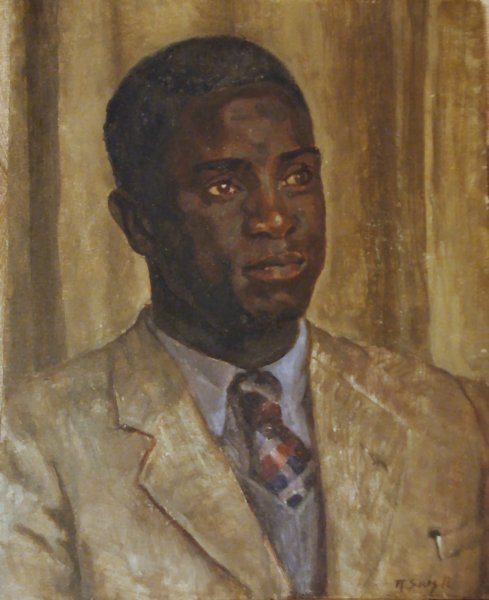
HISTORIAN, doyen of the Reconstructionary School of African Historical Studies in the aftermath of 400 years of the pan-European enslavement, dispersal, conquest and occupation of the African World, lays the foundation of this restoration of the African as subject and agency in history in the 1956 publication of his classic, Trade and Politics in the Niger Delta, 1830-1885, inaugurates a stretch of an encompassing African heritage archive and becomes the first African vice-chancellor (president/rector) of the University of Ibadan, and later, 1966-1969, travels the world as one of the envoys of eminent Biafran intellectuals who campaigns tirelessly against the Igbo genocide waged by Nigeria and its suzerain state Britain, under the premiership of Harold Wilson, in which 3.1 million Igbo people (25 per cent of this nation’s population) are murdered between 29 May 1966 and 12 January 1970 in this foundational genocide of post-(European)conquest Africa
(John Coltrane Quintet, “Miles’ mode” or “Red planet” [personnel: Coltrane, tenor saxophone; Eric Dolphy, alto saxophone; McCoy Tyner, piano; Reggie Workman,
bass; Elvin Jones,
drums; recorded: live, Village Vanguard, New York, US, 1 November 1961])
Herbert Ekwe-Ekwe is specialist on the state and on genocide & wars in Africa in the post-1966 epoch – beginning with the Igbo genocide, 29 May 1966-present day, the foundational and most gruesome genocide of post-(European)conquest Africa. 3.1 million Igbo or 25 per cent of this nation’s population were murdered by Nigeria and its allies, principally Britain. Africa and the rest of the world largely stood by and watched as the perpetrators enacted this horror most ruthlessly. The world could have stopped this genocide; the world should have stopped this genocide. This genocide inaugurated Africa’s current age of pestilence. During the period, 12 million additional Africans have been murdered in further genocide in Rwanda (1994), Zaïre/DRCongo (variously, since the late 1990s) and Darfur – west of the Sudan – (since 2004) and in other wars in Africa. African peoples have, presently, no other choice but exit/dismantle the extant genocide-state (the bane of their existence & progress) & construct own nation-centred states that serve their interests. He is author of several books & papers on the subject and his new book is entitled The longest genocide – since 29 May 1966 (2019).