Rethinking Africa is a forward looking blog dedicated to the exchange of innovative thinking on issues affecting the advancement of African peoples wherever they are. We provide rigorous and insightful analyses on the issues affecting Africans and their vision of the world.
Showing posts with label Max Roach Sextet. Show all posts
Showing posts with label Max Roach Sextet. Show all posts
(Born 10 January 1924, Newland, North Carolina, US)
Drummer, one of the influential innovators of the be-bop jazz revolution of the 1940s-1950swith fellow-drummer Kenny Clarke and lead proponents Charlie Parker (alto saxophone), Dizzy Gillespie (trumpet), Thelonious Monk (piano) and Bud Powell (piano) and later Charles Mingus (bass) and Miles Davis (trumpet), influential band leader, composer, academic
(Max Roach Sextet, “Freedom day” [personnel: Roach, drums; Abbey Lincoln, vocals; Booker Little, trumpet; Julian Priester, trombone; Walter Benton, tenor saxophone; James Schenk, bass; recorded: Nola Penthouse Sound Studio, New York, US, 31 August/6 September 1960)
Today marks the 131st anniversary of the beginning of the
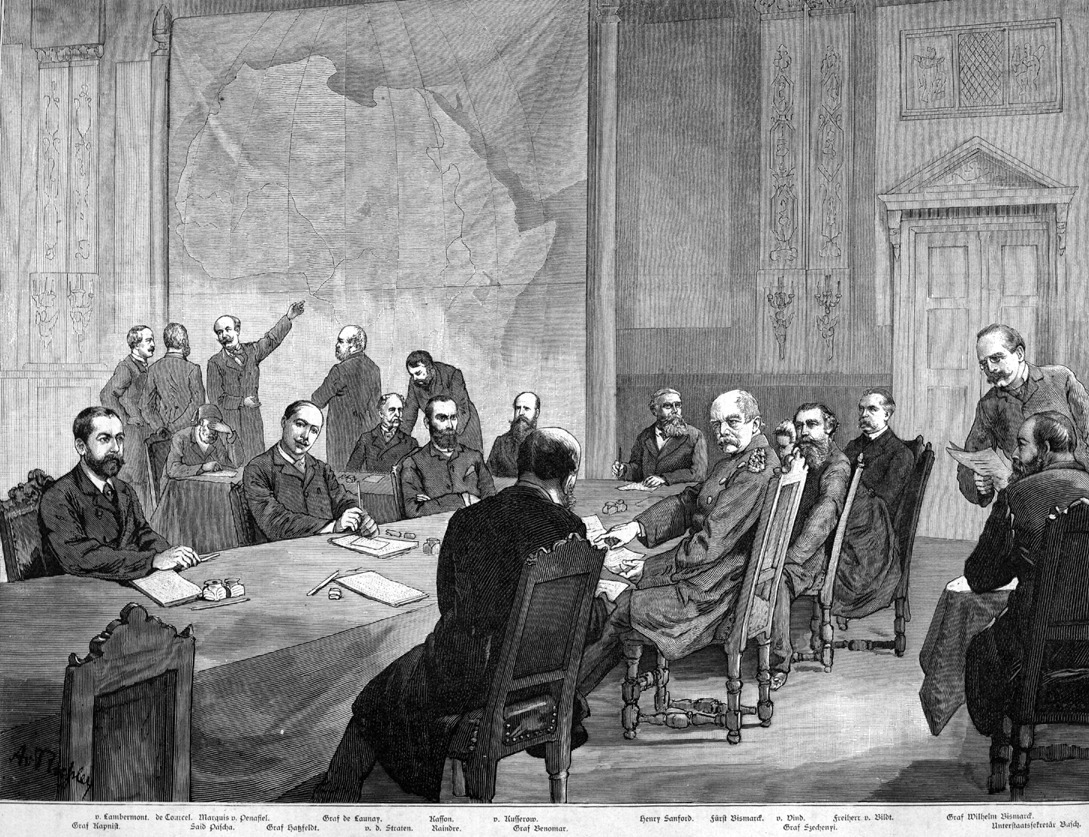
infamous 15 November 1884-26 February 1885 European leaders’ Berlin conference
on Africa. The gathering was chaired by German
Chancellor von Bismarckto formalise the pan-European seizure, planned occupation, and irrepressible exploitation of the gargantuan riches of the African World. The following countries attended the meeting: Britain, France, Portugal, Holland, Belgium, Ottoman “empire”, Germany, Italy, Spain, Austria-Hungary, Denmark, Czarist
Russia, Sweden-Norway, United States. The catastrophic aftermath of this Berlin-assembly still prevails which peoples in contemporary
Africans must rectify if they have to survive.
(2. infamous gathering in session: to formalise the pan-European seizure, planned occupation, and irrepressible exploitation of the gargantuan riches of the African World)
(Max Roach Sextet, “All Africa” [personnel: Roach, drums;
Abbey Lincoln, vocals; Booker Little, trumpet; Michael Olatunji, congas,
vocals; Raymond Mantilla, percussion; Tomas du Vall, percussion; recorded: Nola
Penthouse Sound Studio, New York, US, 31 August/6 September 1960)
Herbert Ekwe-Ekwe is specialist on the state and on genocide & wars in Africa in the post-1966 epoch – beginning with the Igbo genocide, 29 May 1966-present day, the foundational and most gruesome genocide of post-(European)conquest Africa. 3.1 million Igbo or 25 per cent of this nation’s population were murdered by Nigeria and its allies, principally Britain. Africa and the rest of the world largely stood by and watched as the perpetrators enacted this horror most ruthlessly. The world could have stopped this genocide; the world should have stopped this genocide. This genocide inaugurated Africa’s current age of pestilence. During the period, 12 million additional Africans have been murdered in further genocide in Rwanda (1994), Zaïre/DRCongo (variously, since the late 1990s) and Darfur – west of the Sudan – (since 2004) and in other wars in Africa. African peoples have, presently, no other choice but exit/dismantle the extant genocide-state (the bane of their existence & progress) & construct own nation-centred states that serve their interests. He is author of several books & papers on the subject and his new book is entitled The longest genocide – since 29 May 1966 (2019).