Rethinking Africa is a forward looking blog dedicated to the exchange of innovative thinking on issues affecting the advancement of African peoples wherever they are. We provide rigorous and insightful analyses on the issues affecting Africans and their vision of the world.
(Born 20 May 1743, Bréda at Haut de Cap enslaved estate [probably], Saint-Domingue)
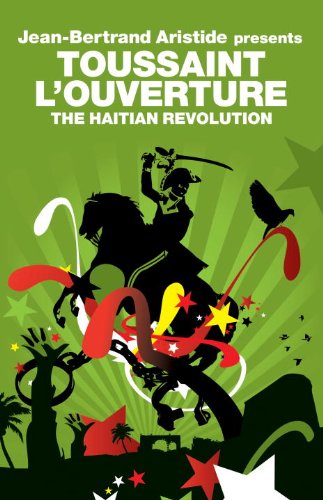
LEADER of the Haitian Revolution, embarks on the armed mobilisation oftens of thousands of enslaved Africans, beginning 1789, in revolt against French-occupied Saint-Domingue, west Hispaniola, the Caribbean, wealthiest African-enslaved territory of the Americas during the epoch, with the eventual historic 1804 African military victory against not only France but also the expanded forces of its pan-European allies, including, particularly, British and Spanish, who come to its aid, when the free Africans proclaim the Republic of Haiti (Herbert Ekwe-Ekwe)
(Max Roach Sextet, “Freedom day” [personnel: Roach, drums; Abbey Lincoln, vocals; Booker Little, trumpet; Julian Priester, trombone; Walter Benton, tenor saxophone; James Schenk, bass; recorded: Nola Penthouse Sound Studio, New York, US, 31 August/6 September 1960)
(Born 10 January 1924, Newland, North Carolina, US)
Drummer, one of the influential innovators of the be-bop jazz revolution of the 1940s-1950swith fellow-drummer Kenny Clarke and lead proponents Charlie Parker (alto saxophone), Dizzy Gillespie (trumpet), Thelonious Monk (piano) and Bud Powell (piano) and later Charles Mingus (bass) and Miles Davis (trumpet), influential band leader, composer, academic
(Max Roach Sextet, “Freedom day” [personnel: Roach, drums; Abbey Lincoln, vocals; Booker Little, trumpet; Julian Priester, trombone; Walter Benton, tenor saxophone; James Schenk, bass; recorded: Nola Penthouse Sound Studio, New York, US, 31 August/6 September 1960)
ACCLAIMEDlyricist, actress, freedom exponent, plays central role in Max Roach Decatet’s classic composition, We Insist!: Max Roach’s Freedom Now Suite (1960) – undoubtedly music to the ears of the Biafra freedom movement which must free 50
million Biafrans from genocidist Nigeria in one of the pressing liberation
quests of the contemporary era
(Max Roach Sextet, “Freedom day” [personnel: Roach, drums; Abbey Lincoln, vocals; Booker Little, trumpet; Julian Priester, trombone; Walter Benton, tenor saxophone; James Schenk, bass; recorded: Nola Penthouse Sound Studio, New York, US, 31 August/6 September 1960)
Herbert Ekwe-Ekwe African World– history and geography RETHINKING AFRICA focuses and discusses the multifaceted stream of socioeconomic and cultural heritage that encapsulates 6000 years of African history: from Kemet (“ancient Egypt”) to Biafra, from ancient Ghana (contemporary Sénégal, Guinea-Bissau, Mauritania, part of west Mali) to Gĩkũyũland and Ethiopia of east Africa, from the Atlas Mountains of the north to South Africa, from Canada and the United States to Uruguay and Brazil, from Panama/Jamaica/Haiti/Cuba across the Caribbean to Trinidad/St Lucia/St Kitts & Nevis/Barbados, from Colombia/Venezuela to Guyana/Surinam, from Britain/Europe to Australasia…
Subject, agency, history Rethinking Africa is a rigorously studious reference and dependable companion as ever. In Rethinking Africa, African World history is live, continuous, daily, now – not just seasonal! Visit Rethinking Africa daily, all year round, and explore its vast archive which includes commentaries, essays, reports/reviews of publications, conferences, seminars, debates, lectures, concerts, festivals... and snap biographical sketches on persons and anniversaries of occurrences across the African World that are at once succinct profiles and earmarked opportunities for further reading, analysis, research:
1. Here, the African, Africans – wherever they are in the world (African continent, African American, African British, African Caribbean, African Mexican, African Venezuelan, African French, African Brazilian, African Spanish, African Canadian, African Indian, African Portuguese, etc., etc), are subject and agency in history. African peoples are definitely not some racist epithets, tags and stereotyping often referenced cavalierly in the West and elsewhere as “ethnic”, “ethnic minority”, “black and ethnic minority”, “coloured”/“n”/“t” and the threesome poisoned terms’ other linguistic derivatives, etc., etc. As many are surely aware, the myriads of these typologisations have been the hallmark of
both European World and (earlier) Arab/muslim post-conquest sociological constructions to essentially dehistoricise and thus dehumanise African peoples.
2. Find out, for instance, why the survival of the Igbo peopleof Biafra (southwestcentral Africa) from the three phases of the genocide of 29 May 1966-12 January 1970, the foundational genocide of post-(European)conquest Africa, executed jointly by Nigeria and its suzerain state Britain (http://re-thinkingafrica.blogspot.co.uk/2014/10/phase-i-sunday-29-may-1966-30-march.html), is one of the most extraordinarily emancipatory developments of recent history. Indeed to understand the politics of the Igbo genocide and the politics of the “post”-Igbo genocide is to have an invaluable insight into the salient features and constitutive indices of politics across Africa in the past 50 years. The Igbo are in the throes of restoring their independent Biafra, distinctly a turning point in recent African history. 3. Why are Nelson Mandela and Chinua Achebe the dual-colossi of 20th century/21st century African renaissance?
(Nelson Mandela: ...Colossus)
(Chinua Achebe: ...Colossus)
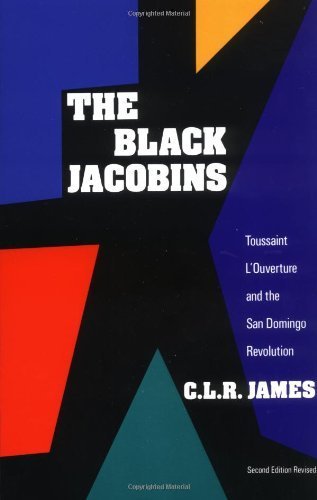
4. As film director Steve McQueen and actor Chiwetel Ejiofor remind the world of the perspicuity of African resistance in the enslaved emplacements of the United States in 12 Years (2014), what does CLR James’s classic, Black Jacobins (1938), tell us about that historic African uprising in the west Caribbean of the late 18th century/early 19th century? Does Saint Domingue teach the world anything presently? What? What is the title of another classic on African enslavement in the Americas, his Oxford University doctoral thesis, published in 1944 by the African Trinidadian historian, Eric Williams? What does Williams establish in this study? 5. What are James Baldwin’s and Toni Morrison’s contributions to African American letters and history? 6. Why is Kenneth Onwuka Dike’s reconstructionary scholarship on African history so seminal? 7. What does “civil war” really mean? (http://re-thinkingafrica.blogspot.com.br/2013/09/what-is-civil-war.html) and why is “sub-Sahara Africa” such a repugnant racist epithet? Who employs “sub-Sahara Africa”? Why? (http://re-thinkingafrica.blogspot.com.br/2013/06/still-read-or-hear-of-sub-sahara-africa.html) 8. What epistemology does Flora Nwapa inaugurate in 1966 when she publishes the novel, Efuru?
9. What identical every day-used, important personal product does 20th century/21st century philosopher Cornel West share with men and women of Kemet– 5000 years ago? 10. Why is the role of Cheikh Anta Diop’s near-40 years of scholarship on Kemet of such vital importance? 11. How has agriculture played a crucial role in the development of African civilisations across the continent’s regions and epochs? 12. What is the extent of the research and inventions of George Washington Carver to contemporary society, worldwide? 13. What business does 20th continental African entrepreneur Louis-Philip Ojukwu share with 19th century African American entrepreneur Paul Cufee? 14. What is the “Berlin-state” in Africa? Who are its beneficiaries? Why does the “Berlin-state” have no future for African peoples? What are the alternatives to this state? (http://re-thinkingafrica.blogspot.co.uk/2014/05/rethinking-state-in-africa-whose-state.html) 15. What compelling lessons on the African-in-the-world-today do we learn from the January 2015 Boko Haram (currently the world’s most ruthless terrorist organisation, according to the Institute of Economics & Peace [http://www.abc.net.au/news/2015-11-17/global-terrorism-index-increase/6947200, accessed 7 December 2015]) islamist insurgent attack on Baga, northeast Nigeria, in which the group murdered 2000 townspeople? (http://re-thinkingafrica.blogspot.co.uk/2015/01/baga-paris-two-massacres-contrasting.html)
Preeminent African World intellectuals: Freedom
In a word, what is it about the African that is the central preoccupation in the lives and work of the following intellectuals? Olaudah Equiano, Nelson Mandela, Martin Luther King, Chinua Achebe, Ida B Wells, CLR James, Christopher Okigbo, Toni Morrison, Malcolm X, Léopold Sédar Senghor, James Baldwin, Louis Mbanefo, Alain Locke, Kenneth Onwuka Dike, Arthur Schomburg, WEB Du Bois, Duke Ellington, Sojourner Truth, Ignatius Sancho, Charlotte Gardens, Claude McKay, Chukwuemeka Odumegwu-Ojukwu, Frederick Douglass, Mary Seacole, Daniel Hale Williams, Carter G Woodson, Patrice Lumumba, Edward Kamau Brathwaite, Eubie Blake, Maulana Karenga, Cheikh Anta Diop, Akanu Ibiam, Louis Armstrong, Flora Nwapa, Thelonious Monk, Théophile Obenga, Paul Robeson, Ann Petry, Fela Anikulapo-Kuti, Edward Wilmot Blyden, Amilcar Cabral, Langston Hughes, Tchicaya U Tam’si, Palmer Hayden, Samuel Coleridge-Taylor, Mordecai Wyatt Johnson, Horace Pipping, Nicolás Guillén, Aimé Césaire, Kwame Nkrumah, Margaret Danner, Ladipo Solanke, Frantz Fanon, Martin Delaney, Chike Obi, Dean Dixon, Ossie Davis, Julius Nyerere, Noble Lee Sissle, Felix Oragwu, Agostinho Neto, Charlie Parker, Bessie Head, Pius Okigbo, Ruby Dee, Maurice Bishop, Nikki Giovanni, Emmanuel Obiechina, Kofi Awoonor, Chancellor Williams, Léon-Gontran Damas, Gwendolyn Brooks, Percy Lavon Julian, Eric Williams, Mbonu Ojike, Mahaila Jackson, Charles Drew, Okot p’Bitek, Billie Holiday, Theophilus Enwezor Nzegwu, George Lamming, Sterling Brown, Adiele Afigbo, George Russell, Arna Bontemps, Sydney Poitier, Margaret Walker, John Coltrane, Steve Biko, Era Bell Thomson, E Franklin Frazier, Alexander Animalu, Charles Mingus, Alioune Diop, George Bridgetower, Michael Echeruo, Ornette Coleman, Ngũgĩ wa Thiong’o, Don Cherry, Constance Baker Motley, Stevie Wonder, Benedict Obumselu, Grace Ogot, Molefi Kete Asante, Ivan Van Sertima, Funmilayo Ransome-Kuti, Countee Cullen, James Brown, Paul Revere Williams, Harriet Tubman, Ray Charles, Sonia Sanchez, George Washington Carver, Walter Rodney, JJ Johnson, Mariama Bâ, Paul Chambers, Cornel West, Bede Okigbo, Miles Davis, George James, Max Roach, John Henrik Clarke, Elvin Jones, Amiri Baraka, Ama Ata Aidoo, JC Moses, McCoy Tyner, Peter Tosh, Sonny Simmons, Andrew Hill, Ousmane Sembéne, Paule Marshall, Wynton Kelly, Adu Boahen, Eric Dolphy, John Tchicai, Obiora Udechukwu, Clifford Jordan, Jewel Plummer Cobb, Jaki Byard, Lerone Bennett, Prince Lasha, Mal Waldron, Abbey Lincoln, Danny Glover, Bob Marley, Horace Silver, Arthur Agwuncha Nwankwo, Oscar Peterson, Mariamba Ani, Dannie Richmond, Uzo Egonu, Eddie Khan, Gani Fawehinmi, Johnny Coles, Ayi Kwei Armah, Archie Shepp, Ifeanyi Menkiti, Richard Williams, Faye Harrison, Ihechukwu Madubuike, Ray Brown, Archie Mafeje, Ishmael Reed, Dudu Pukwana, Mĩcere Gĩthae Mũgo, Valentine Mudimbe, Wangari Maathai, Bob Marley, Simon Gikandi, Herbie Hancock, Jimmy Garrison, Kwame Anthony Appiah, Ed Thigpen, Carole Boyce Davies, Spike Lee, Zeal Onyia, Denzel Washington, Hilary Beckles, David Murray, Esiaba Irobi, Thomas Sankara, Rita Dove, Tony Medina: Freedom
(Max Roach Sextet, “Freedom day” [personnel: Roach, drums; Abbey Lincoln, vocals; Booker Little, trumpet; Julian Priester, trombone; Walter Benton, tenor saxophone; James Schenk, bass; recorded: Nola Penthouse Sound Studio, New York, US, 31 August/6 September 1960)
Herbert Ekwe-Ekwe is specialist on the state and on genocide & wars in Africa in the post-1966 epoch – beginning with the Igbo genocide, 29 May 1966-present day, the foundational and most gruesome genocide of post-(European)conquest Africa. 3.1 million Igbo or 25 per cent of this nation’s population were murdered by Nigeria and its allies, principally Britain. Africa and the rest of the world largely stood by and watched as the perpetrators enacted this horror most ruthlessly. The world could have stopped this genocide; the world should have stopped this genocide. This genocide inaugurated Africa’s current age of pestilence. During the period, 12 million additional Africans have been murdered in further genocide in Rwanda (1994), Zaïre/DRCongo (variously, since the late 1990s) and Darfur – west of the Sudan – (since 2004) and in other wars in Africa. African peoples have, presently, no other choice but exit/dismantle the extant genocide-state (the bane of their existence & progress) & construct own nation-centred states that serve their interests. He is author of several books & papers on the subject and his new book is entitled The longest genocide – since 29 May 1966 (2019).