Showing posts with label Mobutu Sese Seko. Show all posts

Friday, 25 September 2015

Diamonds, queen and “poor” country


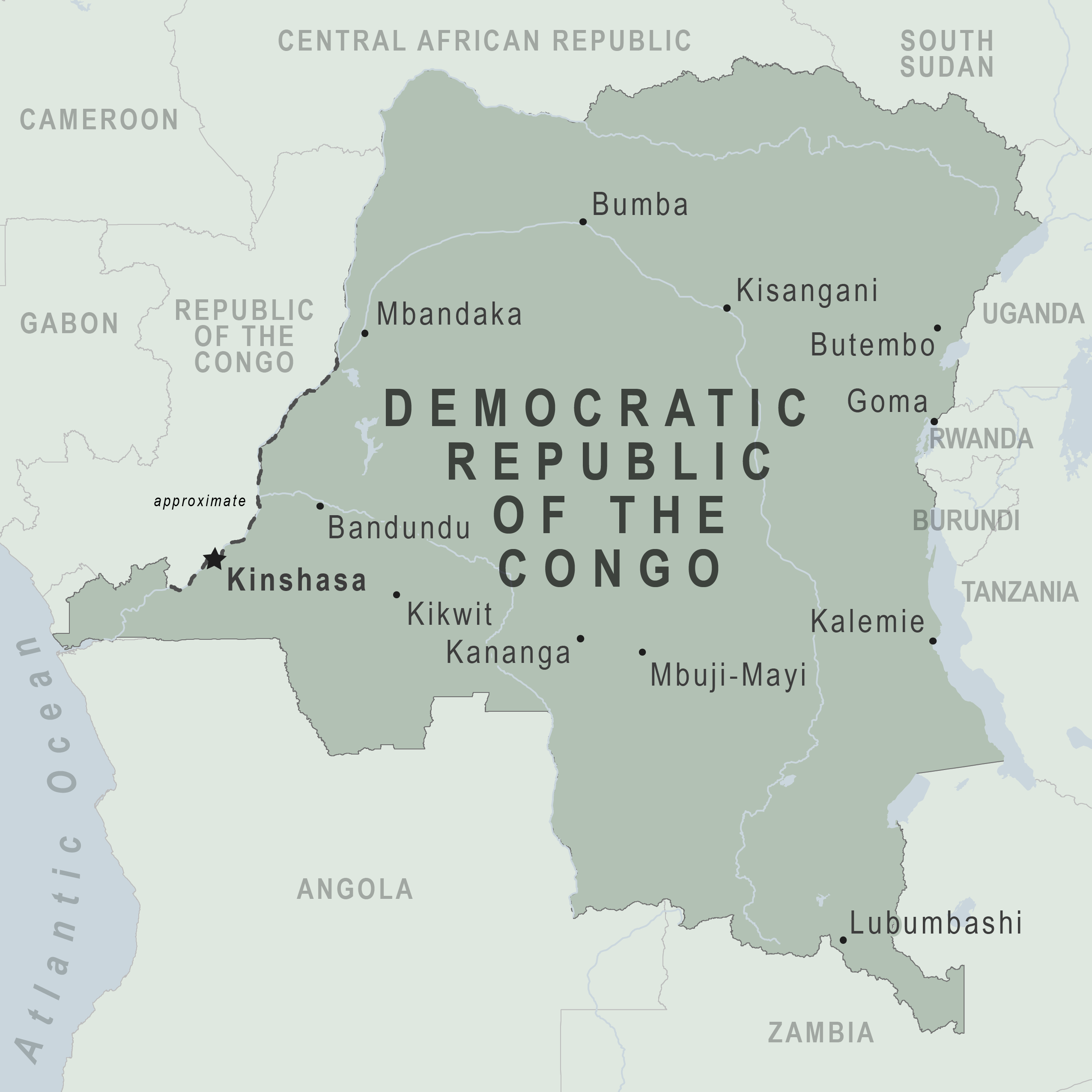
Dateline: Kinshasa, Democratic Republic of the Congo, 28 July 2010
There is an apparent controversy raging in Belgium and elsewhere in Europe over Belgian Queen Paola’s receipt of a gift of Congolese diamonds during a recently concluded visit to the Democratic Republic of Congo (DRC). Paola had accompanied her husband, King Albert II, to represent Belgium at the Kinshasa commemorative festivities to mark the 50th anniversary of the country’s so-called restoration of independence (30 June). The DRC’s head of regime Joseph Kabila gave Paola the priceless diamond set of necklace, bracelet and earrings, an impressively rich package indeed which led La Dernière Heure, the influential Belgian daily newspaper, to note, most pointedly: “a gift of choice and certainly with a high price”.
(rough diamonds  DRC)
Some commentators in Belgium, the Netherlands and France appear surprised, with a few even “shocked” to learn of the Belgian royal family’s “acceptance of such (sic) expensive presents” from a country a Reuters’s and Agence France-Presse’s dispatches on the gift describe, respectively, as “impoverished” and “one of the poorest in the world”.
(Queen Paola of the Belgians)
“Magnificent African cake”
Really!? It is inconceivable that either Paola or Albert would have thought or would think that the central African country they visited a month ago is anywhere “impoverished” nor is it “one of the poorest [countries] in the world”. The Democratic Republic of Congo is overwhelmingly richer than Belgium and no one is better placed than the Belgian royal family, itself, to confirm this fact of comparative international economics. The family cannot but be aware that King Leopold II, their 19th century/early 20th century “illustrious” ancestor (some would differ by using the adjective “notorious” or even “bloody” to describe Leopold instead) wrestled that Congo basin of central Africa from Africa for the Belgian royalty and state. This was after an indescribably brutal campaign, a genocide waged on the African population by Leopold’s private army and forces of the Belgian state during which 13 million Africans were murdered between 1878 and 1908. In effect, Leopold’s army ravaged the Congo in search of diamond, rubber, ivory and the like, accumulating gargantuan wealth for the king (by the time Leopold dies in 1909, he had reaped a personal fortune of US$1.1 billion dollars [in early 21st century adjusted value terms] from the Congo genocide, making him one of the richest monarchs of his age) and transforming the nascent Belgian state into a modern European state.

To his credit, Leopold II made no secrets at all of the instrumentalist impact that the riches of the Congo would have on his poor Belgium. He had insisted all along: “I d[idn’t] want to miss the chance of getting us a slice of this magnificent African cake”.
(King Leopold II of the Belgians)
Scrumptious as ever!
This African cake remains as scrumptious as ever for Belgium! Thirty-one years after Leopold’s death, Nazi Germany invaded Belgium, forcing the then Belgian royal family and government to flee to London on exile. Thanks to the inexhaustible wealth of the Congo bakery, the entire financing of the Belgian war effort including the expenses of the exiled royals and government, which totalled the grand sum of £40 million, was paid off comfortably. Thus, Belgium neither borrowed any money to pay for the war nor was its gold reserves used.

The historic effort made 15 years later by the irrepressible Patrice Lumumba, the young Congolese postal clerk and itinerant salesperson, to recover this bakery of his people for his people was violently suppressed by Belgian special forces and some of their foreign allies operating in concert with those Congolese hostile to the restoration of African independence. Lumumba was murdered and a Joseph Mobutu (or Mobutu Sese Seko) was ultimately installed instead to oversee the preservation of the bakery to its agelong exclusivist access, but with some modification in response to the exigencies of the epoch: Belgian royalty and government, the emerging “francophonie” constellation of states under French hegemony, Mobutu and his African cohorts. 
(Mobutu Sese Seko)
Yet the Congo, Africa, and the rest of the world will never forget Lumumba’s moving speech, addressed to his people and the Belgians, after being sworn in as prime minister on that 30th day of June 1960, part of which reads as follows:
… We are proud of this struggle, of tears, of fire, and of blood, to the depths of our being; for it was a noble and just struggle and indispensable to put an end to the humiliating slavery which was imposed upon us by force…
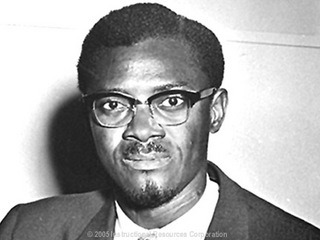
(Patrice Lumumba)
The “magnificent African cake”, so graphically expressed by Leopold II (he should know!), is indeed the metaphor at the crux of the Congo story, the Sudan story, the Nigeria story, the Burundi story, the-rest-of-the-Africa story...

Obfuscation
It should now be clear that there is no such thing as “poor Africa”. The latter is an inexcusable obfuscation of language – and reality. Besides, it is an unpardonable slur on the humanity of African bakers who year in, year out, bake the cake that they are shut out from eating. Just as the Congo, Africans have been shut into anti-African caricatures of the state where they live, principally, to create incredible levels of wealth – not for themselves and their children and grandchildren and theirs, but for the continuing expropriation by extracontinental interests and their local African allies.

There is no future of African progress in the existing “Berlin states” of Africa. The inexorable logic of these states’ existence is to alienate Africans from their being and wealth. Africans have no other choice but break out of these states and create new states of organic sensibility where they are certain to not only bake their own nation’s cake but participate fully in the meal as well.
(Art Blakey & the Jazz Messengers – featuring Wayne Shorter, “Chess players” [personnel: Blakey, drums; Lee Morgan, trumpet; Shorter, tenor saxophone; Bobby Timmons, piano; Jymie Merritt, bass; recorded: Van Gelder Studio, Englewood Cliffs, NJ, US, 6 March 1960])
Twitter@HerbertEkweEkwe


Wednesday, 28 July 2010

Congolese diamonds for Belgian Queen Paola – What’s really the fuss?

It isn’t quite clear what the seeming controversy is all about in Belgium and elsewhere in Europe over Queen Paola’s receipt of a gift of Congolese diamonds during a recently concluded visit to the Democratic Republic of Congo (DRC). Paola had accompanied her husband, King Albert II, to represent Belgium at the Kinshasa commemorative festivities to mark the 50th anniversary of the country’s so-called restoration of independence. The DRC’s head of regime Joseph Kabila gave Paola the priceless diamond set of necklace, bracelet and earrings, an impressively rich package indeed which led La Dernière Heure, the influential Belgian daily newspaper, to note, most pointedly: “a gift of choice and certainly with a high price”.

Some commentators in Belgium, the Netherlands and France are apparently surprised, with a few even “shocked” to learn of the Belgian royal family’s “acceptance of such (sic) expensive presents” from a country a Reuters’s and Agence France-Presse’s dispatches on the gift describe, respectively, as “impoverished” and “one of the poorest in the world”.

Really!? It is inconceivable that either Paola or Albert would have thought or would think that the central African country they visited a month ago is anywhere “impoverished” nor is it “one of the poorest [countries] in the world”. The Democratic Republic of Congo is overwhelmingly richer than Belgium and no one is better placed than the Belgian royal family, itself, to confirm this fact of comparative international economics. The family cannot but be aware that King Leopold II, their 19th century “illustrious” ancestor (some would differ by using the adjective “notorious” or even “bloody” to describe Leopold instead) wrestled that Congo basin of central Africa from Africa for the Belgian royalty and state. This was after an indescribably brutal campaign on the African population by Leopold’s private army and forces of the Belgian state during which 10-15 million Africans were murdered. In effect, Leopold’s army ravaged the Congo in search of diamond, rubber, ivory and the like, accumulating gargantuan wealth for the king (by the time Leopold dies in 1909, he had reaped a personal fortune of US$1.1 billion dollars [in early 21st century adjusted value terms] from the Congo genocide, making him one of the richest monarchs of his age) and transforming the nascent Belgian state into a modern European state.

To his credit, Leopold II made no secrets at all of the instrumentalist impact that the riches of the Congo would have on his poor Belgium. He had insisted all along: “I d[idn’t] want to miss the chance of getting us a slice of this magnificent African cake”.

This African cake remains as scrumptious as ever for Belgium! Thirty-one years after Leopold’s death, Nazi Germany invaded Belgium, forcing the then Belgian royal family and government to flee to London on exile. Thanks to the inexhaustible wealth of the Congo bakery, the entire financing of the Belgian war effort including the expenses of the exiled royals and government, which totalled the grand sum of £40 million, was paid off comfortably. Thus, Belgium neither borrowed any money to pay for the war nor was its gold reserves used.

The historic effort made 15 years later by the irrepressible Patrice Lumumba, the young Congolese postal clerk and itinerant salesperson, to recover this bakery of his people for his people was violently suppressed by Belgian special forces and some of their foreign allies operating in concert with those Congolese hostile to the restoration of African independence. Lumumba was murdered and a Joseph Mobutu (or Mobutu Sese Seko) was ultimately installed instead to oversee the preservation of the bakery to its agelong exclusivist access, but with some modification in response to the exigencies of the epoch: Belgian royalty and government, the emerging “francophonie” constellation of states under French hegemony, Mobutu and his African cohorts. Yet, the Congo, Africa and the rest of the world will never forget Lumumba’s moving speech, addressed to his people and the Belgians, after being sworn in as prime minister on that 30th day of June 1960, part of which reads as follows:
… We are proud of this struggle, of tears, of fire, and of blood, to the depths of our being; for it was a noble and just struggle and indispensable to put an end to the humiliating slavery which was imposed upon us by force…

The “magnificent African cake”, so graphically expressed by Leopold II (he should know!), is indeed the metaphor at the crux of the Congo story, the Sudan story, the Nigeria story, the Burundi story, the-rest-of-the-Africa story...

It should now be clear that there is no such thing as “poor Africa”. The latter is an inexcusable obfuscation of language – and reality. Besides, it is an unpardonable slur on the humanity of African bakers who year in, year out, bake the cake that they are shut out from eating. Just as the Congo, Africans have been shut into anti-African caricatures of the state where they live, principally, to create incredible levels of wealth – not for themselves and their children and grandchildren and theirs, but for the continuing expropriation by extracontinental interests and their local African allies.

There is no future of African progress in the existing “Berlin states” of Africa. The inexorable logic of these states’ existence is to alienate Africans from their being and wealth. Africans have no other choice but break out of these states and create new states of organic sensibility where they are certain to not only bake their own nation’s cake but participate fully in the meal as well.

Friday, 16 April 2010

Sénégal recovers the bases

Fifty years after the apparent restoration of its independence from over a century of French conquest and occupation, Sénégal is about to take over a stretch of military bases in the country that France has, until now, continued to control and operate. Congratulations to Sénégal! It is never too late to secure one’s freedom – even if it is 50 years or more down the line... The quest for freedom is an ever-ongoing human endeavour. Provided people remain resolute and focused, no setbacks are enduring and no hurdles insurmountable.

France has used these bases, during the period, as essentially its eyes and ears to keep tabs on its vast and entrenched interests across Africa. The bases are France’s pivotal intelligence tracking station to oversee and coordinate its uninterrupted exercise of hegemony over the political and socioeconomic affairs of those 22 so-called francophone African countries that it (and Belgium, and Germany until 1918) had conquered and occupied hitherto. Immanent in the worldview of the French political establishment since Charles de Gaulle in the 1960s, i.e. irrespective of ideological/political colouration, none of these states is considered really independent or sovereign by any breadth or shade of either of these definitions. Instead, according to this conception, they are “francophonie” backwoods, which, at best, have some measure of local administrative autonomy (hence, “francophone Africa”!), with ultimate sovereign power supposedly lodged at Paris.

Each of these states “hosts” a French military base of varying capabilities and configuration as part of this overarching network in which Dakar is at the epicentre, in turn linked to requisite interventionist brigades positioned back home in Corsica. Thanks to this network, the French military has invaded this continental “francophonie” enclave 50 times since 1960 – from Chad to Congo Democratic Republic (CDR), Côte d’Ivoire to the Comoros. Such invasions provide the French the opportunity to directly manipulate local political trends in line with their strategic objectives, install new client regimes, if need be, and expand the parameters of expropriation of critical resources even further. On this score, the CDR (or Zaïre or Congo-Kinshasa as it was variously called), the jewel in the crown of “francophonie”, is aptly illustrative. Between 1961 and 1996, France intervened militarily in the country 17 times to prop up the notorious dictatorship of Mobutu Sese Seko which ravaged one of Africa’s richest economies. For France, therefore, its hegemonic control of “francophone Africa” in the past 50 years has been a lucrative and prestigious enterprise to maintain a stranglehold of influence in the Southern World. Jacques Godfrain, a one time French government official with special responsibility for “francophonie”, is perfectly right to observe: “A little country, with a small amount of strength, we can move a planet because [of our] ... relations... with 15 or 20 African countries.”

It is extraordinary that despite its lived status of “limited sovereignty” for one-half of a century, Sénégal has emerged as arguably Africa’s most successful “nation-state”. This has occurred as a result of the amicable relationship nurtured, shared and displayed by the country’s constituent nations and faiths – a far cry from the genocidal turbulence that maps the sociology of a polity located just a few hundreds of miles away in the region. The exception of course to Sénégal’s highly laudable tale is Casamance, its south region. This is clearly a restoration-of-independence subject that the Sénégalese peoples can and should resolve peacefully.

With the imminent return of the bases, Sénégal should strike off new vistas of “firsts” in its exemplary Africa journey. The excellent housing units in the bases should be converted to affordable social housing for the people rather than being “taken over” by the Sénégalese military. Sénégal should indeed think of disbanding its military. It does not need it. As I have argued severally for nearly a decade, there should be a mandatory global ban on all arms sales and transfers to Africa and the dismantling of the military on the continent. No African state needs the presence or the use of the military and arms on its soil except, as the world has witnessed in anguish since May 1966, to murder targeted peoples of its population. Sénégal, as usual, can show the way in this stride for the new Africa by cancelling all existing arms procurements and abolishing its military.