Showing posts with label Sénégal. Show all posts

Monday, 1 January 2018

95th birthday of Ousmane Sembéne

(Born 1 January 1923, Ziguinchor, Sénégal)
Father of African Cinema
Twitter @HerbertEkweEkwe

Friday, 29 December 2017

94th birthday of Cheikh Anta Diop

(Born 29 December 1923, Caytou, Sénégal)
Herbert Ekwe-Ekwe

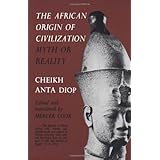
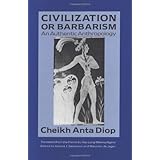
MATHEMATICIAN, physicist, linguist, anthropologist, philosopher, historian and Egyptologist, demonstrates, most copiously in his near-40 years of research (beginning in the 1940s) and publication of papers and books, especially Nations Nègres et Culture, 1955 (English translation: African Origin of Civilization, 1974), L’unité culturelle de l’Afrique noire, 1959 (English: The Cultural Unity of Black Africa: The Domains of Matriarchy & Patriarchy in Classical Antiquity, 1989)  and Civilisation ou barbarie, 1981 (English: Civilization or Barbarism, 1991), that Kemet, “ancient Egypt”, is an African civilisation and that African peoples are the indisputable heirs to its heritage
Cheikh Anta Diop,  African Origin of Civilization (Chicago: Chicago Review, 1989), 336 pp, US$11.30/£10.73 pbk
Cheikh Anta Diop, Civilization or Barbarism (Chicago: Lawrence Hill, 1991), 464 pp, US$15.64/£15.49 pbk

FOR AN ASSESSMENT of Cheikh Anta Diop’s  salient contribution to the scholarship of the African World, see, for instance, Herbert Ekwe-EkweReadings from Reading: Essays on African Politics, Genocide, Literature (Dakar & Reading: African Renaissance, 2011), pp.7-11. 
(Alice Coltrane Quintet, “Blue Nile” [personnel: Coltrane, harp; Joe Henderson, alto flute, Pharoah Sanders, alto flute; Ron Carter, bass; Ben Riley, drums; recorded: Coltrane home studios, Dix Hills, New York, US, 26 January 1970])
Twitter @HerbertEkweEkwe

Monday, 9 October 2017

111th birthday of Léopold Sédar Senghor

(Born 9 October 1906, Joal, Sénégal)
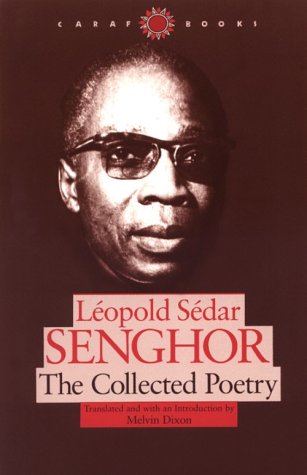
ONE OF THE most outstanding poets of the African World, academic, and race and cultural theorist, statesperson, first African president of Sénégal, September 1960, following the termination of 300 years of the French conquest, occupation and immisiration
(John Coltrane SextetDakar [personnel: Coltrane, tenor saxophone, Cecil Payne, baritone saxophone; Pepper Adams, baritone saxophone; Mal Waldron, piano;  Doug Watkins, bass; Art Taylor, drums; recorded: Van Gelder Studio, Hackensack, NJ, US, 20 April 1957])
Twitter @HerbertEkweEkwe

Sunday, 1 January 2017

94th birthday of Ousmane Sembéne

(Born 1 January 1923, Ziguinchor, Sénégal)
Father of African Cinema
Twitter @HerbertEkweEkwe

Thursday, 29 December 2016

93rd birthday of Cheikh Anta Diop

(Born 29 December 1923, Caytou, Sénégal)
Mathematician, physicist, linguist, anthropologist, philosopher, historian and Egyptologist, demonstrates, most copiously in his near-40 years of research (beginning in the 1940s) and publication of papers and books, especially Nations Nègres et Culture, 1955 (English translation: African Origin of Civilization, 1974), L’unité culturelle de l’Afrique noire, 1959 (English: The Cultural Unity of Black Africa: The Domains of Matriarchy & Patriarchy in Classical Antiquity, 1989)  and Civilisation ou barbarie, 1981 (English: Civilization or Barbarism, 1991), that Kemet, “ancient Egypt”, is an African civilisation and that African peoples are the indisputable heirs to its heritage
Cheikh Anta Diop,  African Origin of Civilization (Chicago: Chicago Review, 1989), 336 pp, US$11.30/£10.73 pbk
Cheikh Anta Diop, Civilization or Barbarism (Chicago: Lawrence Hill, 1991), 464 pp, US$15.64/£15.49 pbk

For an assessment of Cheikh Anta Diop’s  salient contribution to the scholarship of the African World, see, for instant, Herbert Ekwe-EkweReadings from Reading: Essays on African Politics, Genocide, Literature (Dakar & Reading: African Renaissance, 2011), pp.7-11. 
(Alice Coltrane Quintet, “Blue Nile” [personnel: Coltrane, harp; Joe Henderson, alto flute, Pharoah Sanders, alto flute; Ron Carter, bass; Ben Riley, drums; recorded: Coltrane home studios, Dix Hills, New York, US, 26 January 1970])
Twitter @HerbertEkweEkwe

Monday, 26 March 2012

Would Obasanjo understand peace if he saw it? – Dakar update, Monday 26 March 2012

Opposition candidate Macky Sall defeats Abdoulaye Wade, Sénégal’s president, in the country’s second round presidential election run-off. Once again, the Sénégalese electorate, arguably Africa’s most sophisticated and resilient, has shown that it can be done! A salute to this beacon! This electorate has not only stopped Wade from his attempt to unconstitutionally extend his maximum 2-term duration in office, implicitly supported by Nigeria’s Olusegun Obasanjo (the AU and ECOWAS so-called mediating envoy to Sénégal), it has, also, resoundingly voted against the president despite that much bandied, seeming armour of certitude so beloved by Africa’s dictators – “incumbency”.

Friday, 16 April 2010

Sénégal recovers the bases

Fifty years after the apparent restoration of its independence from over a century of French conquest and occupation, Sénégal is about to take over a stretch of military bases in the country that France has, until now, continued to control and operate. Congratulations to Sénégal! It is never too late to secure one’s freedom – even if it is 50 years or more down the line... The quest for freedom is an ever-ongoing human endeavour. Provided people remain resolute and focused, no setbacks are enduring and no hurdles insurmountable.

France has used these bases, during the period, as essentially its eyes and ears to keep tabs on its vast and entrenched interests across Africa. The bases are France’s pivotal intelligence tracking station to oversee and coordinate its uninterrupted exercise of hegemony over the political and socioeconomic affairs of those 22 so-called francophone African countries that it (and Belgium, and Germany until 1918) had conquered and occupied hitherto. Immanent in the worldview of the French political establishment since Charles de Gaulle in the 1960s, i.e. irrespective of ideological/political colouration, none of these states is considered really independent or sovereign by any breadth or shade of either of these definitions. Instead, according to this conception, they are “francophonie” backwoods, which, at best, have some measure of local administrative autonomy (hence, “francophone Africa”!), with ultimate sovereign power supposedly lodged at Paris.

Each of these states “hosts” a French military base of varying capabilities and configuration as part of this overarching network in which Dakar is at the epicentre, in turn linked to requisite interventionist brigades positioned back home in Corsica. Thanks to this network, the French military has invaded this continental “francophonie” enclave 50 times since 1960 – from Chad to Congo Democratic Republic (CDR), Côte d’Ivoire to the Comoros. Such invasions provide the French the opportunity to directly manipulate local political trends in line with their strategic objectives, install new client regimes, if need be, and expand the parameters of expropriation of critical resources even further. On this score, the CDR (or Zaïre or Congo-Kinshasa as it was variously called), the jewel in the crown of “francophonie”, is aptly illustrative. Between 1961 and 1996, France intervened militarily in the country 17 times to prop up the notorious dictatorship of Mobutu Sese Seko which ravaged one of Africa’s richest economies. For France, therefore, its hegemonic control of “francophone Africa” in the past 50 years has been a lucrative and prestigious enterprise to maintain a stranglehold of influence in the Southern World. Jacques Godfrain, a one time French government official with special responsibility for “francophonie”, is perfectly right to observe: “A little country, with a small amount of strength, we can move a planet because [of our] ... relations... with 15 or 20 African countries.”

It is extraordinary that despite its lived status of “limited sovereignty” for one-half of a century, Sénégal has emerged as arguably Africa’s most successful “nation-state”. This has occurred as a result of the amicable relationship nurtured, shared and displayed by the country’s constituent nations and faiths – a far cry from the genocidal turbulence that maps the sociology of a polity located just a few hundreds of miles away in the region. The exception of course to Sénégal’s highly laudable tale is Casamance, its south region. This is clearly a restoration-of-independence subject that the Sénégalese peoples can and should resolve peacefully.

With the imminent return of the bases, Sénégal should strike off new vistas of “firsts” in its exemplary Africa journey. The excellent housing units in the bases should be converted to affordable social housing for the people rather than being “taken over” by the Sénégalese military. Sénégal should indeed think of disbanding its military. It does not need it. As I have argued severally for nearly a decade, there should be a mandatory global ban on all arms sales and transfers to Africa and the dismantling of the military on the continent. No African state needs the presence or the use of the military and arms on its soil except, as the world has witnessed in anguish since May 1966, to murder targeted peoples of its population. Sénégal, as usual, can show the way in this stride for the new Africa by cancelling all existing arms procurements and abolishing its military.