Showing posts with label Thelonious Monk. Show all posts

Sunday, 23 September 2018

92nd birthday of John Coltrane

(Born 23 September 1926, Hamlet, NC, United States)
ICONOCLASTIC tenor (and soprano) saxophonist and composer who, arguably, has had the most profound impact on the development of jazz in the past 50 years
(Herbert Ekwe-Ekwe)
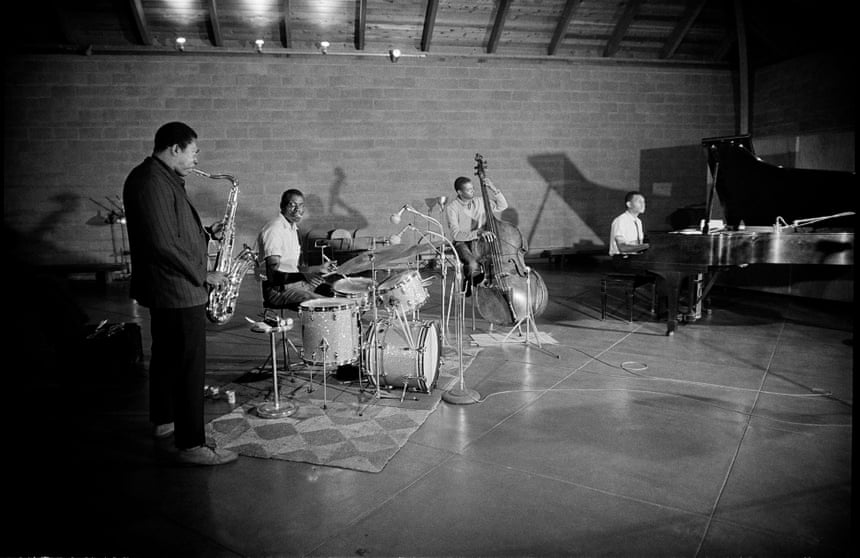
(John Coltrane Quartet at work –  left to right: Coltrane, Jones, Garrison, Tyner)
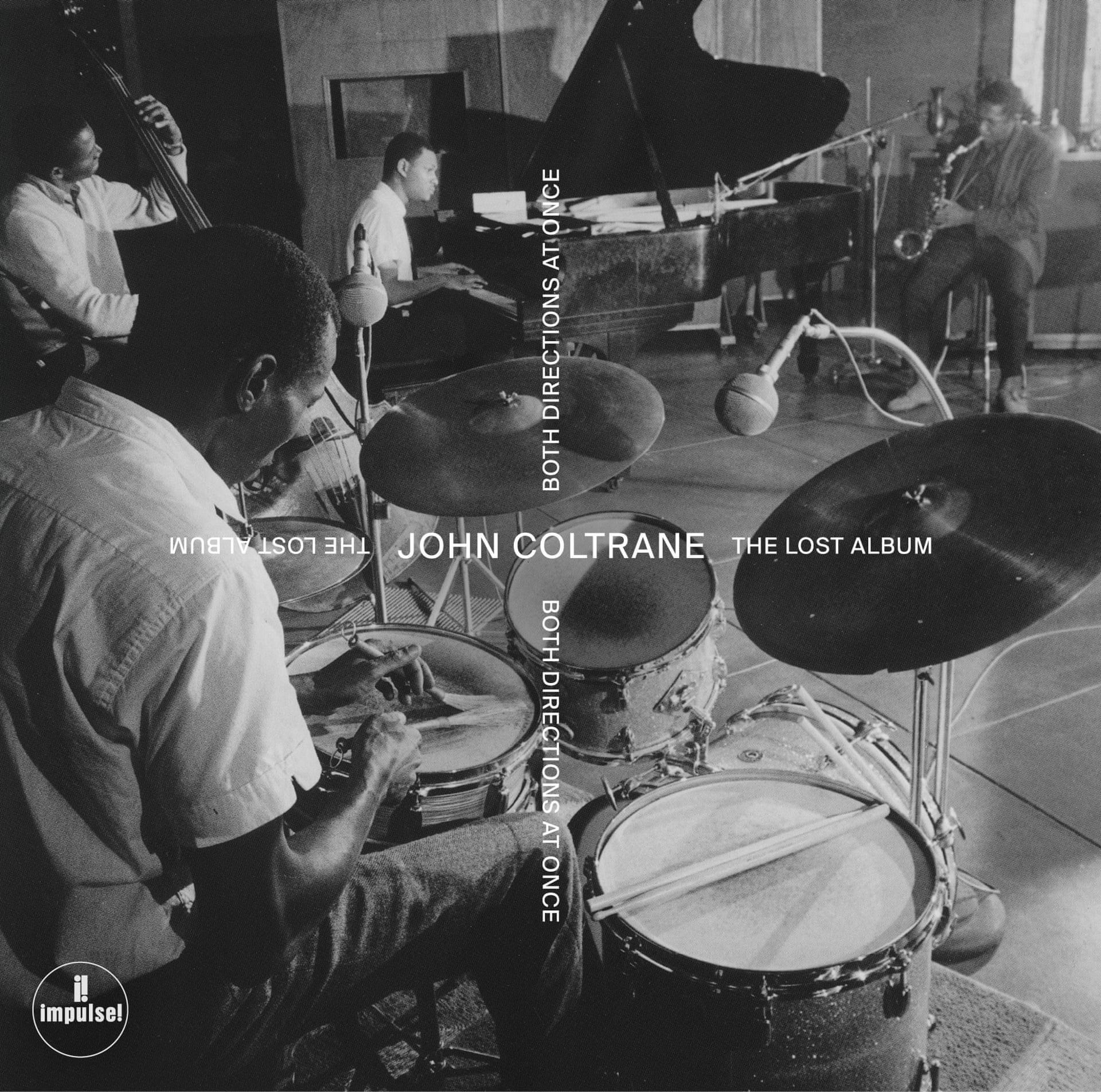
(John Coltrane Quartet, Both directions at once – the lost album [personnel: Coltrane, tenor saxophone, soprano saxophone; McCoy Tyner, piano; Jimmy Garrison, bass; Elvin Jones, drums; additional personnel: Ravi Coltrane, compiler, Ken Druker, compiler, Rudy Van Gelder, mixing, Sonny Rollins, liner notes; recorded: Van Gelder Studio, Englewood Cliffs, NJ, US, 6 March 1963; released 55 years later, 29 June 2018!])
Twitter@HerbertEkweEkwe

Friday, 13 July 2018

Thelonious Monk, “Friday the 13th”

(Thelonious Monk ...:composer, pianist)
(Joe Henderson Trio plays Thelonious Monk’s composition, “Friday the 13th” [personnel: Henderson, tenor saxophone; Ron Carter, bass; Al Foster, drums; recorded: live, Village Vanguard, New York, US, 14-16 November 1985])
Twitter @HerbertEkweEkwe

Tuesday, 26 June 2018

81st birthday of Reggie Workman

(Born 26 June 1937, Philadelphia, US)
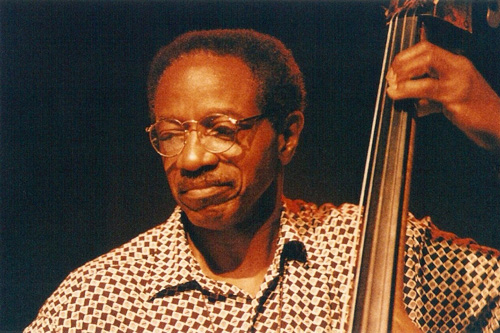
VERSATILE and celebrated bassist with an expansive collaborative recording register that includes ensembles led by John Coltrane, Thelonious Monk, Max Roach, Art Blakey,  Lee Morgan, Mal Waldron, Wayne Shorter, Archie Shepp, John Tchicai, Freddie Hubbard and David Murray; band leader, composer, academic whose outstanding music education initiatives stretch beyond the confines of the academy to address varying community needs and aspirations particularly those involving the youth
(Reggie Workman Quartet, “Evolution” [personnel: Workman, bass; Sam Rivers, soprano saxophone; Geri Allen, piano; Gerry Hemingway, drums; recorded: Sound on Sound, New York, US, 27/28 April 1995])
Twitter @HerbertEkweEkwe


Friday, 13 April 2018

“Friday the 13th”

(Thelonious Monk ...:composer, pianist)
(Joe Henderson Trio plays Thelonious Monk’s composition, “Friday the 13th” [personnel: Henderson, tenor saxophone; Ron Carter, bass; Al Foster, drums; recorded: live, Village Vanguard, New York, US, 14-16 November 1985])
Twitter @HerbertEkweEkwe


Monday, 12 February 2018

African peoples or constituent nations ... Post-(European)conquest Africa? Post-(Arab/islamist)conquest Africa? ... African peoples or constituent nations – Biafra and this epoch of restoration-of-independence


Herbert Ekwe-Ekwe

AFRICAN peoples or constituent nations, 7th century CE-21st century CE:

1. Arab/islamist conquest and enslavement and occupation/control of north, northcentral, northeast, northwestcentral/Sahel, east Africa: 7th century CE-21st century CE 


2. European World enslavement, conquest, occupation/control of Africa: 15th century CE-21st century CE 

Is the era post-Arab/islamist conquest Africa?/post-European conquest Africa? Why? How? Where?

Affirmation: Biafra and this epoch of restoration-of-independence for African peoples or nations
(Sonny Rollins Sextet, “Misterioso” {composer: Thelonious Monk} [personnel: Rollins, tenor saxophone, J J Johnson, trombone; Monk, piano; Horace Silver, piano; Paul Chambers, bass; Art Blakey, drums; recorded: Van Gelder Studio, Hackensack, NJ, US, 14 April 1957])
Twitter@HerbertEkweEkwe 

Tuesday, 10 October 2017

100th birthday of Thelonious Monk

(Born 10 October 1917, Rocky Mount, NC, US)
PERSPICACIOUS pianist and composer whose seminal works include a range of contributions to the jazz repertory standards with his “Round Midnight” being the most recorded standard of all time
(The master at work! Thelonious Monk’s solo here on the classic “Blue Monk” begins at 3.10 minutes into this performance [Thelonious Monk Quartet] for 3 minutes after tenorist Charlie Rouse’s own majestic offering [personnel: Monk, piano; Rouse, tenor saxophone; Larry Gales, bass; Ben Riley, drums; recorded: University Aula, Oslo, 15 April 1966]) 
Twitter@HerbertEkweEkwe

Saturday, 23 September 2017

91st birthday of John Coltrane

(Born 23 September 1926, Hamlet, NC, United States)
ICONOCLASTIC tenor (and soprano) saxophonist and composer who, arguably, has had the most profound impact on the development of jazz, African American classical music, in the past 50 years
(John Coltrane Quartet, “Impressions” [personnel: Coltrane, tenor saxophone; McCoy Tyner, piano; Jimmy Garrison, bass; Elvin Jones, drums; recorded: live, Jazz Casual Productions {host: Ralph Gleason}, 7 December 1963])
Twitter@HerbertEkweEkwe


Monday, 26 June 2017

80th birthday of Reggie Workman

(Born 26 June 1937, Philadelphia, US)
Versatile and celebrated bassist with an expansive collaborative recording register that includes ensembles led by John Coltrane, Thelonious Monk, Max Roach, Art Blakey,  Lee Morgan, Mal Waldron, Wayne Shorter, Archie Shepp, John Tchicai, Freddie Hubbard and David Murray; band leader, composer, academic whose outstanding music education initiatives stretch beyond the confines of the academy to address varying community needs and aspirations particularly those involving the youth
(Reggie Workman Quartet, “Evolution” [personnel: Workman, bass; Sam Rivers, soprano saxophone; Geri Allen, piano; Gerry Hemingway, drums; recorded: Sound on Sound, New York, US, 27/28 April 1995])

Twitter @HerbertEkweEkwe


Monday, 10 October 2016

99th birthday of Thelonious Monk

(Born 10 October 1917, Rocky Mount, NC, US)
Perspicacious pianist and composer whose seminal works include a range of contributions to the jazz repertory standards with his “Round Midnight” being the most recorded standard of all time
(The master at work! Thelonious Monk’s solo here on the classic “Blue Monk” begins at 3.10 minutes into this performance [Thelonious Monk Quartet] for 3 minutes after tenorist Charlie Rouse’s own majestic offering [personnel: Monk, piano; Rouse, tenor saxophone; Larry Gales, bass; Ben Riley, drums; recorded: University Aula, Oslo, 15 April 1966])
Twitter @HerbertEkweEkwe

Wednesday, 7 September 2016

Wednesday night prayer meeting*****

(Charles Mingus: bassist, composer)
Herbert Ekwe-Ekwe

It is no mean achievement that Charles Mingus’s music encapsulates all the critical junctures of jazz. His work with the pioneering geniuses of Charlie Parker, Duke Ellington, Louis Armstrong, Lionel Hampton and Art Tatum in New York of the early 1950s gives Mingus the compositional and arranging insights that would soon be the bassist’s forte.

Few jazz scholars would now disagree that the success of that much discussed May 1953 concert at Toronto’s Massey Hall featuring the Parker Quintet (Parker, alto; Dizzy Gillespie, trumpet; Bud Powell, piano; Mingus, bass; Max Roach, drums) is not just a Parkerian triumph but equally that of the iconoclastic bassist from Los Angeles.

Beginning with Mingus, the bass ceases to be merely an “accompanying” time-keeping, harmonic instrument in jazz. It still has to contend with “time-keeping”, but it has entered into the interplay as a polyphonic participant. The work of subsequent bassists particularly Paul Chambers, Ron Carter, Jimmy Garrison, Scott La Faro, Gary Peacock, Eddie Khan, Charles Haden and Dave Holland attest to this Mingusian redesignation

In 1954, Mingus launched his Jazz Workshop experimentation which was to emphasise more of “group” or “collective” improvisation in jazz, away from what was then increasingly becoming the tedious and formularised “theme-solo-theme” structures of the bebop revolution that had been launched in the 1940s by the Parker-Gillespie-Thelonious Monk troika. As a critic once observed, it was not that Mingus was “avoiding Bebop, he straddled it”. He still had to absorb the great jazz heritage to move the music forward to wrestle with the new possibilities.

Creativity and rehearsals and creativity

It is therefore the case of Mingus trying to return jazz to the “group feeling” of those years of its early development in the closing decades of the 1800s. The soloist still has a great deal of space in Mingus’s thinking but their musical concepts has to develop in anticipation and in response to the polyphony of collective interaction; there are now multisided and multiple centres of creativity soon after that infectious bass intro! The act of creativity is no longer dependent on some space and time limitation. The workshops could not distinguish between rehearsals, for instance, and real performances! Creativity during rehearsals becomes rehearsals of creativity occurring at bandstands with or without an audience (for the latter, listen to the ethereal 1962 album Mingus Presents Mingus, featuring multiinstrumentalist Eric Dolphy). The music is always in a state of flux: evolving, developing, maturing, breaking up, only to form the nucleus of another centre of activity, itself interacting with other centres of the medley.

With the classic Pithecanthropus Erectus album (1956), Mingus gives notice to this sense of continuous creativity – after all, this composition is his portrait of the formulaic development of a cataclysmic human form and the (predictable?) resultant chaos that this produces in the world by the end of the 20th century. Using distinct but unusual forms of squeals, grunts, duets and harmony, the composition exacts a coherent understanding of this tragic travelogue that a 1996 earth inhabitant would perhaps be familiar with (exhaustion/appropriation/destruction of the world’s limited resources, rupture of the ozone layer) than their counterpart 40 years before. The impassioned crystalline-striking lyricism of altoist Jackie McLean, the Rollinsesque rebuttals of tenorist J R Monterose and the plodding, haunting echoes of pianist Mal Waldron strokes keep the narrative of the age on course and there is relief, at the final movement, when the pulverising destroyer falls, is destroyed.

In Blues and Roots album that follows suit, Mingus pays homage to the sacred music of his roots. The rhythmic tension at play by soloists McLean, Booker Ervin (tenor), John Handy (alto) and Jimmy Knepper (trombone) over such compositions as “Tensions”, “Moanin’”, “Cryin’ Blues” and “E’s Flat Ah’s Flat Too” always calls for new insights, ever more challenging interpretations on replays. “Wednesday Night Prayer Meeting” is predictably such a joy and by the time this composition is confronted yet again by a new Mingus personnel line up live in Antibes, Juan-Les-Pins (France) in 1960, detailing Mingus (bass and piano), Ted Curson (trumpet), Dolphy (alto), Ervin (tenor) and Dannie Richmond (drums), it has become the launching pad for intuitive flights and virtuosity.

Commentary

Mingus’s vivid commentaries on contemporary American life and worldwide developments are prolific. These samples range from ballads (“Sue’s Changes”, “1 X-Love”, “Bemoanable Lady”, “Celia”) to the very humorous (“Eat that Chicken”, “Hog Callin Blues”, “Wham Bam Thank You Ma’am”, “Old’ Blues for Walt’s Torin”, “My Jelly Roll Soul”), sentimental/sensuous (“Portrait of Jackie”, “Love Chant”, “Orange was the Color of her Dress, then Blue Silk”, “Peggy’s Blue Skylight”) to outright, politically serious (“Pithecanthropus Erectus”, “Ecclusiastics”, “Passions of a Man”, “Wednesday Night Prayer Meeting”,“Letter to Duke”, “MDM – Monk, Duke, Mingus”, “Oh Lord Don’t Let Them Drop That Atomic Bomb On Me”, “Meditations on Integration”, “All the Things You Could Be By Now If Sigmund Freud’s Wife Was Your Mother”, “Fables of Faubus”, “Haitian Fight Song”, “Weird Nightmare”, “So Long Eric”) and dirge – “Goodbye Pork Pie Hat”, Mingus’s salute to tenorist Lester Young, and of course Epitaph, his 127-minute long composition which was performed posthumously by a 30-piece orchestra at the New York’s Lincoln Center in 1989.

Nearly a decade before critics would use the term “free jazz” to describe the music of revolutionaries such as Ornette Coleman and Don Cherry, John Coltrane, Albert Ayler, Cecil Taylor, etc., etc., the Mingus workshops were already redefining and laying the foundation of new points of departure for jazz. Names of workshops’ alumni read like the priority core zone of the restless and most adventurous innovators of the jazz directory of the era: drummers Willie Jones and Dannie Richmond; trumpeters Clarence Shaw, Richard Williams, Ted Curson and Johnny Coles; altoists Jackie McLean, Charlie Mariano, John Handy, Eric Dolphy (also flute and bass clarinet virtuoso), Charles McPherson; tenorists Teo Marcero, J R Monterose, Roland Kirk, Booker Ervin and Clifford Jordan; trombonist Jimmy Knepper; pianists Mal Waldron, Jaki Byard, Horace Parlan, Roland Hanna.

*****This essay was first published 20 years ago to the day in the African Peoples Review (Vol. V, No. 3, September-December 1996, p. 22) under the signature of Nnamdi Nzegwu. It is reissued here in the original – HE-E
(Charles Mingus Sextet – with Eric Dolphy, Cornell University 1964, “Meditations” [personnel: Mingus, bass; Johnny Coles, trumpet; Dolphy, flute, bass clarinet; Clifford Jordan, tenor saxophone; Jaki Byard, piano; Dannie Richmond, drums; recorded: live, Cornell University, 18 March 1964]) 
Twitter@HerbertEkweEkwe

Friday, 13 May 2016

“Friday the 13th”

(Thelonious Monk ...:composer, pianist)
(Joe Henderson Trio plays Thelonious Monk’s composition, “Friday the 13th” [personnel: Henderson, tenor saxophone; Ron Carter, bass; Al Foster, drums; recorded: live, Village Vanguard, New York, US, 14-16 November 1985])
Twitter @HerbertEkweEkwe


Saturday, 10 October 2015

98th birthday of Thelonious Monk

(Born 10 October 1917, Rocky Mount, NC, US)
Perspicacious pianist and composer whose seminal works include a range of contributions to the jazz repertory standards with his “Round Midnight” being the most recorded standard of all time
(The master at work! O di egwu! Thelonious Monk’s solo here on the classic “Blue Monk” begins at 3.10 minutes into this performance [Thelonious Monk Quartet] for 3 minutes after tenorist Charlie Rouse’s own majestic offering [personnel: Monk, piano; Rouse, tenor saxophone; Larry Gales, bass; Ben Riley, drums: recorded: University Aula, Oslo, 15 April 1966])
Twitter @HerbertEkweEkwe

Friday, 10 October 2014

97th birthday of Thelonious Monk

(Born 10 October 1917, Rocky Mount, NC, US)
Perspicacious pianist and composer whose seminal works include a range of contributions to the jazz repertory standards with his “Round Midnight” being the most recorded standard of all time

(The master at work! O di egwu! Monk’s solo here on the classic “Blue Monk” begins at 3.10 minutes into this performance [Thelonious Monk Quartet] for 3 minutes after tenorist Rouse’s own majestic offering [personnel: Monk, piano; Charlie Rouse, tenor saxophone; Larry Gales, bass; Ben Riley, drums: recorded: University Aula, Oslo, 15 April 1966])
Twitter @HerbertEkweEkwe

Thursday, 10 October 2013

96th birthday of Thelonious Monk

(Born 10 October 1917, Rocky Mount, NC, US)
Perspicacious pianist and composer whose seminal works include a range of contributions to the jazz repertory standards, with his “Round Midnight” being the most recorded standard of all time

Twitter @HerbertEkweEkwe

Wednesday, 17 July 2013

Wednesday night prayer meeting*


It is no mean achievement that Charles Mingus’s music encapsulates all the critical junctures of jazz. His work with the pioneering geniuses of Charlie Parker, Duke Ellington, Louis Armstrong, Lionel Hampton and Art Tatum in New York of the early 1950s gives Mingus the compositional and arranging insights that would soon be the bassist’s forte.

Few jazz scholars would now disagree that the success of that much discussed May 1953 concert at Toronto’s Massey Hall featuring the Parker Quintet (Parker, alto; Dizzy Gillespie, trumpet; Bud Powell, piano; Mingus, bass; Max Roach, drums) is not just a Parkerian triumph but equally that of the iconoclastic bassist from Los Angeles. Beginning with Mingus, the bass ceases to be merely an “accompanying” time-keeping, harmonic instrument in jazz. It still has to contend with “time-keeping”, but it has entered into the interplay as a polyphonic participant. The work of subsequent bassists particularly Paul Chambers, Ron Carter, Jimmy Garrison, Scott La Faro, Charles Haden and Dave Holland attest to this Mingusian redesignation

In 1954, Mingus launched his Jazz Workshop experimentation which was to emphasise more of “group” or “collective” improvisation in jazz, away from what was then increasingly becoming the tedious and formularised “theme-solo-theme” structures of the bebop revolution that had been launched in the 1940s by the Parker-Gillespie-Thelonious Monk troika. As a critic once observed, it was not that Mingus was “avoiding Bebop, he straddled it”. He still had to absorb the great jazz heritage to move the music forward to wrestle with the new possibilities.

Rehearsals of creativity

It is therefore the case of Mingus trying to return jazz to the “group feeling” of those years of its early development in the closing decades of the 1800s. The soloist still has a great deal of space in Mingus’s thinking but their musical concepts have to develop in anticipation and in response to the polyphony of collective interaction; there are now multisided and multiple centres of creativity soon after that infectious bass intro! The act of creativity is no longer dependent on some space and time limitation. The Workshops could not distinguish between rehearsals, for instance, and real performances! Creativity during rehearsals becomes rehearsals of creativity occurring at bandstands with or without an audience (for the latter, listen to the 1962 album Mingus Presents Mingus, featuring multiinstrumentalist Eric Dolphy). The music is always in a state of flux: evolving, developing, maturing, breaking up, only to form the nucleus of another centre of activity, itself interacting with other centres of the medley.

With the classic Pithecanthropus Erectus album (1956), Mingus gives notice to this sense of continuous creativity – after all, this composition is his portrait of the formulaic development of a cataclysmic human form and the (predictable?) resultant chaos that this produces in the world by the end of the 20th century. Using distinct but unusual forms of squeals, grunts, duets and harmony, the composition exacts a coherent understanding of this tragic travelogue that a 1996 earth inhabitant would perhaps be familiar with (exhaustion/appropriation/destruction of the world’s limited resources, rupture of the ozone layer) than their counterpart 40 years before. The impassioned crystalline-striking lyricism of altoist Jackie McLean, the Rollinsesque rebuttals of tenorist J R Monterose and the plodding, haunting echoes of pianist Mal Waldron strokes keep the narrative of the age on course and there is relief, at the final movement, when the pulverising destroyer falls, is destroyed.

In Blues and Roots album that follows suit, Mingus pays homage to the sacred music of his roots. The rhythmic tension at play by soloists McLean, Booker Ervin (tenor), John Handy (alto) and Jimmy Knepper (trombone) over such compositions as “Tensions”, “Moanin’”, “Cryin’ Blues” and “E’s Flat Ah’s Flat Too” always calls for new insights, ever more challenging interpretations on replays. “Wednesday Night Prayer Meeting” is predictably such a joy and by the time this composition is confronted yet again by a new Mingus personnel line up live in Antibes (France) in 1960, detailing Ervin, Dolphy (alto, bass clarinet, flute), Ted Curson (trumpet), Mingus himself and Danny Richmond (drums), it has become the launching pad for intuitive flights and virtuosity.

Mingus’s vivid commentaries on contemporary American life and worldwide developments are prolific. These samples range from ballads (“Sue’s Changes”, “1 X-Love”, “Bemoanable Lady”, “Celia”) to the very humorous (“Eat that Chicken”, “Hog Callin Blues”, “Wham Bam Thank You Ma’am”, “Old’ Blues for Walt’s Torin”, “My Jelly Roll Soul”), sentimental (“Portrait of Jackie”, “Love Chant”, “Orange was the Color of her Dress, then Blue Silk”, “Peggy’s Blue Skylight”) to outright, politically serious (“Pithecanthropus Erectus”, “Ecclusiastics”, “Passions of a Man”, “Wednesday Night Prayer Meeting”,“Letter to Duke”, “MDM – Monk, Duke, Mingus”, “Oh Lord Don’t Let Them Drop That Atomic Bomb On Me”, “Meditations on Integration”, “All the Things You Could Be By Now If Sigmund Freud’s Wife Was Your Mother”, “Fables of Faubus”, “Haitian Fight Song”, “Weird Nightmare”, “So Long Eric”) and dirge – “Goodbye Pork Pie Hat”, Mingus’s salute to tenorist Lester Young, and of course Epitaph, his 127-minute long composition which was performed posthumously by a 30-piece orchestra at the New York’s Lincoln Centre in 1989.

Nearly a decade before critics would use the term “free jazz” to describe the music of revolutionaries such as Ornette Coleman and Don Cherry, John Coltrane, Albert Ayler, Cecil Taylor, etc., etc., the Mingus Workshops were already redefining and laying the foundation of new points of departure for jazz. Names of Workshops’ alumni read like the priority core zone of the restless and most adventurous innovators of the jazz directory of the era: drummers Willie Jones and Danny Richmond; trumpeters Clarence Shaw, Richard Williams, Ted Curson and Johnny Coles; altoists Jackie McLean, Charlie Mariano, John Handy, Eric Dolphy (also flute and bass clarinet virtuoso), Charles McPherson; tenorists Teo Marcero, J R Monterose, Roland Kirk, Booker Ervin and Clifford Jordan; trombonist Jimmy Knepper; pianists Mal Waldron, Jaki Byard, Horace Parlan and Roland Hanna.

*This essay was first published in the African Peoples Review (September-December 1996, Vol V, No. 3, p. 22) under the signature of Nnamdi Nzegwu. It is reissued here in the original – HE-E

Wednesday, 13 October 2010

Wednesday night prayer meeting*

(Charles Mingus: bassist, composer)
It is no mean achievement that Charles Mingus’s music encapsulates all the critical junctures of jazz. His work with the pioneering geniuses of Charlie Parker, Duke Ellington, Louis Armstrong, Lionel Hampton and Art Tatum in New York of the early 1950s gives Mingus the compositional and arranging insights that would soon be the bassist’s forte.

Few jazz scholars would now disagree that the success of that much discussed May 1953 concert at Toronto’s Massey Hall featuring the Parker Quintet (Parker, alto; Dizzy Gillespie, trumpet; Bud Powell, piano; Mingus, bass; Max Roach, drums) is not just a Parkerian triumph but equally that of the iconoclastic bassist from Los Angeles. Beginning with Mingus, the bass ceases to be merely an “accompanying” time-keeping, harmonic instrument in jazz. It still has to contend with “time-keeping”, but it has entered into the interplay as a polyphonic participant. The work of subsequent bassists particularly Paul Chambers, Ron Carter, Jimmy Garrison, Scott La Faro, Gary Peacock, Eddie Khan, Charles Haden and Dave Holland attest to this Mingusian redesignation

In 1954, Mingus launched his Jazz Workshop experimentation which was to emphasise more of “group” or “collective” improvisation in jazz, away from what was then increasingly becoming the tedious and formularised “theme-solo-theme” structures of the bebop revolution that had been launched in the 1940s by the Parker-Gillespie-Thelonious Monk troika. As a critic once observed, it was not that Mingus was “avoiding Bebop, he straddled it”. He still had to absorb the great jazz heritage to move the music forward to wrestle with the new possibilities.

Creativity and rehearsals and creativity

It is therefore the case of Mingus trying to return jazz to the “group feeling” of those years of its early development in the closing decades of the 1800s. The soloist still has a great deal of space in Mingus’s thinking but their musical concepts have to develop in anticipation and in response to the polyphony of collective interaction; there are now multisided and multiple centres of creativity soon after that infectious bass intro! The act of creativity is no longer dependent on some space and time limitation. The Workshops could not distinguish between rehearsals, for instance, and real performances! Creativity during rehearsals becomes rehearsals of creativity occurring at bandstands with or without an audience (for the latter, listen to the 1962 album Mingus Presents Mingus, featuring Eric Dolphy). The music is always in a state of flux: evolving, developing, maturing, breaking up, only to form the nucleus of another centre of activity, itself interacting with other centres of the medley.

With the classic Pithecanthropus Erectus album (1956), Mingus gives notice to this sense of continuous creativity – after all, this composition is his portrait of the formulaic development of a cataclysmic human form and the (predictable?) resultant chaos that this produces in the world by the end of the 20th century. Using distinct but unusual forms of squeals, grunts, duets and harmony, the composition exacts a coherent understanding of this tragic travelogue that a 1996 earth inhabitant would perhaps be familiar with (exhaustion/appropriation/destruction of the world’s limited resources, rupture of the ozone layer) than their counterpart 40 years before. The impassioned crystalline-striking lyricism of altoist Jackie McLean, the Rollinsesque rebuttals of tenorist J R Monterose and the plodding, haunting echoes of pianist Mal Waldron strokes keep the narrative of the age on course and there is relief, at the final movement, when the pulverising destroyer falls, is destroyed.

In Blues and Roots album that follows suit, Mingus pays homage to the sacred music of his roots. The rhythmic tension at play by soloists McLean, Booker Ervin (tenor), John Handy (alto) and Jimmy Knepper (trombone) over such compositions as “Tensions”, “Moanin’”, “Cryin’ Blues” and “E’s Flat Ah’s Flat Too” always calls for new insights, ever more challenging interpretations on replays. “Wednesday Night Prayer Meeting” is predictably such a joy and by the time this composition is confronted yet again by a new Mingus personnel line up live in Antibes, Juan-Les-Pins (France) in 1960, detailing Mingus (bass and piano), Ted Curson (trumpet), Dolphy (alto), Ervin (tenor) and Danny Richmond (drums), it has become the launching pad for intuitive flights and virtuosity.

Commentary

 Mingus’s vivid commentaries on contemporary American life and worldwide developments are prolific. These samples range from ballads (“Sue’s Changes”, “1 X-Love”, “Bemoanable Lady”, “Celia”) to the very humorous (“Eat that Chicken”, “Hog Callin Blues”, “Wham Bam Thank You Ma’am”, “Old’ Blues for Walt’s Torin”, “My Jelly Roll Soul”), sentimental/sensuous (“Portrait of Jackie”, “Love Chant”, “Orange was the Color of her Dress, then Blue Silk”, “Peggy’s Blue Skylight”) to outright, politically serious (“Pithecanthropus Erectus”, “Ecclusiastics”, “Passions of a Man”, “Wednesday Night Prayer Meeting”,“Letter to Duke”, “MDM – Monk, Duke, Mingus”, “Oh Lord Don’t Let Them Drop That Atomic Bomb On Me”, “Meditations on Integration”, “All the Things You Could Be By Now If Sigmund Freud’s Wife Was Your Mother”, “Fables of Faubus”, “Haitian Fight Song”, “Weird Nightmare”, “So Long Eric”) and dirge – “Goodbye Pork Pie Hat”, Mingus’s salute to tenorist Lester Young, and of course Epitaph, his 127-minute long composition which was performed posthumously by a 30-piece orchestra at the New York’s Lincoln Center in 1989.

Nearly a decade before critics would use the term “free jazz” to describe the music of revolutionaries such as Ornette Coleman and Don Cherry, John Coltrane, Albert Ayler, Cecil Taylor, etc., etc., the Mingus Workshops were already redefining and laying the foundation of new points of departure for jazz. Names of Workshops’ alumni read like the priority core zone of the restless and most adventurous innovators of the jazz directory of the era: drummers Willie Jones and Danny Richmond; trumpeters Clarence Shaw, Richard Williams, Ted Curson and Johnny Coles; altoists Jackie McLean, Charlie Mariano, John Handy, Eric Dolphy (also flute and bass clarinet virtuoso), Charles McPherson; tenorists Teo Marcero, J R Monterose, Roland Kirk, Booker Ervin and Clifford Jordan; trombonist Jimmy Knepper; pianists Mal Waldron, Jaki Byard, Horace Parlan, Roland Hanna.

*This essay was first published in the African Peoples Review (Vol. V, No. 3, September-December 1996, p. 22) under the signature of Nnamdi Nzegwu. It is reissued here in the original – HE-E

Thursday, 23 September 2010

Coltrane’s creative spirit

On this day, the September equinox, the jazz world celebrates the 84th birthday of John Coltrane, the iconoclastic tenor saxophonist who, arguably, has had the most profound impact on the development of jazz, African American classical music, in the past 50 years.

Prior to forming his own band in 1957, Coltrane spent his first eight years as a professional musician playing in a number of bands of the be-bop movement, most notably the Dizzy Gillespie big band and the various Johnny Hodges combos. But it was during his tenure in the tenor saxophone chair in the Miles Davis Quintet (1955-57 and in the expanded sextet during 1958-1960 incorporating Cannonball Adderley on alto saxophone) and those crucial six months of 1957 whilst at residency (at the New York’s Five Spot) with the compositional genius and pianist Thelonious Monk that the world began to take notice of who would soon be the most influential jazz saxophonist since Charlie Parker. At the time with Davis, Coltrane had moved from the standard be-bop scalar improvisation to begin to explore the possibilities embodied in chord variations of standard compositions – his “sheets of sound” phase as Ira Gitler has graphically described it. Giant Steps, one of Coltrane’s memorable 1957 albums as leader, typifies this shift.

Modes

Next, of course, was the Davis Sextet’s experimentation with modes with fewer chord changes, beginning with the 1958 Milestones to the exquisite Kind of Blue in 1959. Coltrane would use this experimentation on modal jazz as his launch pad for continuous melodic excavations to produce a range of albums in the subsequent five years, including the following landmark signatures: My Favorite Things, Coltrane Jazz, Coltrane’s Sound, Bye Bye Black Bird, Live at Birdland, The European Tour, Impressions, Live at the Village Vanguard, The Avant-Garde, Olé Coltrane, Africa/Brass, Afro-Blue Impressions, Crescent, Duke Ellington and John Coltrane and A Love Supreme.

Following A Love Supreme in 1964, Coltrane gave notice of his abandonment of most rules that had governed jazz compositions to date. Coinciding with the great African American freedom movement of the epoch, the free jazz interplays threaded stretched but interrupted melodic lines, entombed harmonic hubs, and pushed the saliency of the instantaneity that is often the hallmark of jazz creativity to the fore. Reflecting on the period, Coltrane told interviewers: “I’ve got to keep probing. There’s so much more to do … Change is inevitable in our music – Things change”. The albums he recorded during 1965-1967 attest to this change. These include: First Meditations (for quartet), Meditations, New Thing at Newport, Live at the Village Vanguard Again!, Ascension, Om, Live in Seattle, Creation, Brazilia, Cosmic Music, Live in Japan, Live in Antibes, Stella Regions, Kulu Sé Mama, Sun Ship, Interstellar Space, One Down, One Up: Live at The Half Note, Transition and Expression. Other brilliant composers and instrumentalists of free jazz include, particularly, Ornette Coleman, Albert Ayler, Charles Mingus, Cecil Taylor, Donald Ayler, Don Cherry, Ed Blackwell, Booker Little, Clifford Jordan, Scott La Faro, Tony Williams, Max Roach, Sunny Murray, Roswell Rudd, Charlie Haden, Gary Peacock, George Coleman, John Tchicai, Archie Shepp, Dewey Redman, Jimmy Garrison, Bobby Hutcherson, Grachan Moncur III, George Russell, Sun Ra, Andrew Hill, Jackie McLean, Eric Dolphy, Pharoah Sanders, Sam Rivers and Jaki Byard.

African-centredness

It should be stressed that the relevance of the three “phases” of Coltrane’s musical career just sketched lies more for its analytical import rather than any rigid ruptures in what is, on the whole, a clearly coherent testament of an odyssey. A continuing thread that runs through the inner workings of coltraneology is its preoccupation with African-centredness. While ill-health and sudden death in July 1967 denied Coltrane his well-advanced plan to visit and study in Africa, the motherland evoked, centrally, the musical imaginations and cathartic probes of his ten years (1957-1967) as band leader or leading soloist in other groups. In the 1957-59 period, Coltrane’s interpretations of African themes in two critical 1957 personal albums, as well as a couple of 1958 albums made by a sextet led by trumpeter Wilbur Harden are instructive. The Harden albums are appropriately entitled Dial Africa and Tanganyika Strut and the tracts therein have a telephonic urgency of an Africa continental-based directory: “Dial Africa”, “Oomba”, “Gold Coast” and “Tanganyika Strut”. The tracts “Dakar” and “Bakai” from Coltrane’s own albums complement these African references. None of these compositions is actually Coltrane’s but the tone colours and textures of his solos and exchanges with other personnel horns and the underlying rhythmic foundations of the music here are richly embellished with African ornamentation – evident in his conferencing with the dual baritone presence of Cecil Payne and Pepper Adams on “Dakar”; the enduring, alternating 2-cornered discourses with baritone saxophonist Sahib Shihab and trumpeter John Spawn on “Bakai”; the majestic interchanges with Harden and trombonist Curtis Fuller on those other entries in the Harden phonebooks.

In the 1960-67 period, African themes become more programmatic in the Coltrane trajectory. Coltrane reels off several compositions that focus on identifiable African places, persons, personages and events: “Africa”, “Liberia”, “Ogunde”, “Dahomey Dance”, “Tunji” and “Kulu Sé Mama”. No doubt the 1961 big band (15 members) performance of Africa/Brass, with the breadth-taking orchestration and arrangement by his friend and multiintrumentalist Eric Dolphy, is a dress rehearsal of the Africanised spiritual music which we referred to earlier and which would be most pronounced in Coltrane’s output in the last three years of his life, beginning with the December 1964 A Love Supreme and continuing with the eschatological treatise called Stella Regions which was initially recorded in February 1967 but released posthumously in 1995 – 28 years later!

Stella tracts such as “Seraphic Light”, “Sun Star”, “Configuration”, “Tranesonic” and “Stella Region” itself underline the exploratory, and quite often incantatory, transcendental African spirituality which, all along, defines Coltrane’s music but particularly in the last three years of his life beginning with that much discussed, much reflected upon, and most expressive rendering for the gods called A Love Supreme (Coltrane would return to the studios within a year with yet more offerings, Meditations, this time adding two more voices [tenor saxophone and drums] to the original quartet that performed on Supreme and First Meditations).

Interstellar Space, which was recorded a week after Stella Regions (and also released posthumously – 1974), is a duo performance with Rashied Ali on drums. This provides Coltrane with the space to evoke and configure the tapestry of sound that elucidates the planetary references to “Mars”, “Venus”, “Jupiter”, “Saturn” and “Leo”. The proceedings in Stella Regions are executed more conventionally in the quartet mode that had charted and encapsulated most of his work until lately: the master on tenor saxophone; Alice Coltrane, piano; Jimmy Garrison, bass, and Ali, drums. The outcome is nonetheless the same. The interrogative tension and quest in “Seraphic Light”, “Sun Star”, or “Tranesonic” are not too dissimilar to the throbbing and exhilarating escapades in “Mars” nor “The Father and the Son and the Holy Ghost” first movement in Meditations nor the transfigurative and triumphant 11-member ensemble, 40-minute brainstorming workshop in Ascension (2 trumpets, 2 alto saxophones, 3 tenor saxophones, piano, 2 bases, drums). The palpable serenity that prevails in “Venus” is as evocative as the sketch of “Iris” in Stella Regions or “Equinox” (a 1960-recorded blues dedicated to the saxophonist’s birthday) in Coltrane’s Sound or “Serenity” in Meditations or indeed “Psalm” in A Love Supreme. Coltrane’s staggeringly ingenious 27-minute long tenor saxophone solo on “One Down, One Up” in his classic quartet’s March and May 1965-recorded live performances in New York is a compulsory reference for anyone researching the state of the African American freedom struggle as at the first half of 1965 (personnel at the date: Coltrane, tenor and soprano saxophones; McCoy Tyner, piano; Garrison, bass; Elvin Jones, drums; New York’s The Half Note, music not released until October 2005 – One Down, One Up: Live at the Half Note).

The point is that whatever the personnel line up, Coltrane’s music has an integrative spiritual coherence about which is easily traceable to his upbringing in North Carolina (US) in the 1930s where his maternal grandfather was a politically conscious and active minister of St Stephen’s African Episcopal Zion Church in Hamlet. Consequently, the themes on Africa, African Essences and African Reality, become the propelling force in Coltrane’s seminal musical quest for life’s meaning and in his enduring contribution to the great African freedom projects on both sides of the Atlantic.