Rethinking Africa is a forward looking blog dedicated to the exchange of innovative thinking on issues affecting the advancement of African peoples wherever they are. We provide rigorous and insightful analyses on the issues affecting Africans and their vision of the world.
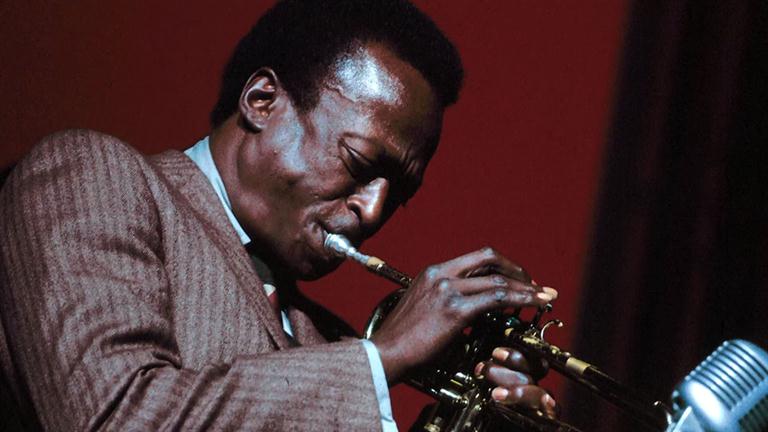
Trumpeter, composer, bandleader, innovative musical genius whoseFirst Great Quintet/Sextet (1955-1958) and Second Great Quintet (1964-1968) as well as the later independent careers of each and everyone in these ensembles – tenor saxophonists John Coltrane and Wayne Shorter, altoist Julian “Cannonball” Adderley, pianists Wynton Kelly, Bill Evans and Herbie Hancock, bassists Paul Chambers and Ron Carter, and drummers Jimmy Cobb and Tony Williams– play a critically contributing role in the phenomenal growth and transformation of jazz during this historic epoch of African American freedom mission (Herbert Ekwe-Ekwe)
(Miles Davis & John Coltrane, Live in Stockholm 1960, “All blues”/“The theme” [personnel:Davis, trumpet; Coltrane, tenor saxophone; Wynton Kelly, piano;Paul Chambers, bass;Jimmy Cobb, drums; recorded: live, Konserthuset, Stockholm, Sweden, 22 March 1960])
AWARD-WINNING trumpeter, bandleader, educator and versatile composer whose output includes a range of film scores especially the critically-acclaimed music for director Spike Lee’s 2006 documentary, When the Leeves Broke:A Requiem in Four Acts on the tragedy of Hurricane Katrina
(Terence Blanchard Sextet & Orchestra, “Levees” [personnel: Blanchard, trumpet; Brice Winston, tenor and soprano saxophones; Aaron Parks, piano; Derrick Hodge, acoustic and electric basses; Kendrick Scott, drums, percussion; Zack Harmon, tabla drums; Northwest Sinofia {40-member string orchestra, conducted by Blanchard}; recorded: Blue Note, New York, 14 August 2007])
(Born 24 December 1944, Laurinburg, North Carolina, US)
ASTOUNDINGLY INNOVATIVE trumpeter, fluguelhornist, clarinettist and composer, collaborates expansively in groundbreaking recordings with fellow leading innovative musicians of the age including multiinstrumentalist Eric Dolphy, trumpeter Freddie Hubbard, vibists Bobby Hutcherfield and Lionel Hampton, alto saxophonist Jackie McLean, tenor saxophonists Joe Henderson, Dexter Gordon, Hank Mobley, Charlie Rouse and Pharoah Sanders, pianists Andrew Hill, Mal Waldron and Horace Silver and drummers Max Roach, Art Blakey and Louis Hayes
(Mal Waldron Quintet, “The seagulls of Kristiansund” [personnel: Waldron, piano; Woody Shaw, trumpet; Charlie Rouse, tenor saxophone; Reggie Workman, bass; Ed Blackwell, drums; recorded: live, Village Vanguard, New York, US, 16 September 1986])
MASTERLY trumpeter, composer and public intellectual whose 1958 composition, the effervescent “Egwu jazz bu egwu Igbo” (“Jazz is Igbo music”), leads him to research Igbo contribution to the development of jazz whilst studying in Germany and the United States, and receives the highest accolade of his career when none other than Satchmo himself, Louis Armstrong, visiting Lagos, Nigeria, in 1961, and listening to Onyia play at Surulere stadium, inquires in that unmistakeably popsian voice, “Who is that hip cat?
(Zeal Onyia and band play “Money trouble” and “Lumumba” – latter composition is in memory of Patrice Lumumba, leader of the the Congolese restoration-of-independence movement and prime minister, who had been brutally murdered on 17 January 1961 by an amalgam of the forces of the notorious pro-Belgian Congolese putschist Mobutu Sese Seko, a brigade of Belgian special forces and operatives of other West espionage services [recording details of this performance, including, especially, full band personnel, are unknown except that it was sometime in 1961].)
VERY BRIGHT trumpeter and composer who records prolifically both on his bands (usually quintets and sextets) and on a stretch of others including those led by Dizzy Gillespie, Art Blakey, John Coltrane, Joe Henderson, Jackie McLean, Wayne Shorter, Art Farmer and Andrew Hill
(Lee Morgan Sextet, “Tom cat” [personnel: Morgan, trumpet; Curtis Fuller, trombone; Jackie McLean, alto saxophone; McCoy Tyner, piano; Bob Cranshaw, bass; Art Blakey, drums; recorded: Van Gelder Studio, Englewood Cliffs, NJ, US, 11 August 1964])
Trumpeter, composer, bandleader, innovative musical genius whose First Great Quintet & Sextet (1955-1958) and Second Great Quintet (1964-1968), as well as the later independent careers of each and everyone in these ensembles – tenor saxophonists John Coltrane and Wayne Shorter, altoist Julian “Cannonball” Adderley, pianists Wynton Kelly, Bill Evans and Herbie Hancock, bassists Paul Chambers and Ron Carter, and drummers Jimmy Cobb and Tony Williams– plays a critically contributing role in the phenomenal growth and transformation of jazz, African American classical music, during this historic epoch of African American freedom mission
(Miles Davis & John Coltrane, Live in Stockholm 1960, “All blues”/“The theme” [personnel:Davis, trumpet; Coltrane, tenor saxophone; Wynton Kelly, piano;Paul Chambers, bass;Jimmy Cobb, drums; recorded: live, Konserthuset, Stockholm, Sweden, 22 March 1960])
Herbert Ekwe-Ekwe is specialist on the state and on genocide & wars in Africa in the post-1966 epoch – beginning with the Igbo genocide, 29 May 1966-present day, the foundational and most gruesome genocide of post-(European)conquest Africa. 3.1 million Igbo or 25 per cent of this nation’s population were murdered by Nigeria and its allies, principally Britain. Africa and the rest of the world largely stood by and watched as the perpetrators enacted this horror most ruthlessly. The world could have stopped this genocide; the world should have stopped this genocide. This genocide inaugurated Africa’s current age of pestilence. During the period, 12 million additional Africans have been murdered in further genocide in Rwanda (1994), Zaïre/DRCongo (variously, since the late 1990s) and Darfur – west of the Sudan – (since 2004) and in other wars in Africa. African peoples have, presently, no other choice but exit/dismantle the extant genocide-state (the bane of their existence & progress) & construct own nation-centred states that serve their interests. He is author of several books & papers on the subject and his new book is entitled The longest genocide – since 29 May 1966 (2019).