Rethinking Africa is a forward looking blog dedicated to the exchange of innovative thinking on issues affecting the advancement of African peoples wherever they are. We provide rigorous and insightful analyses on the issues affecting Africans and their vision of the world.
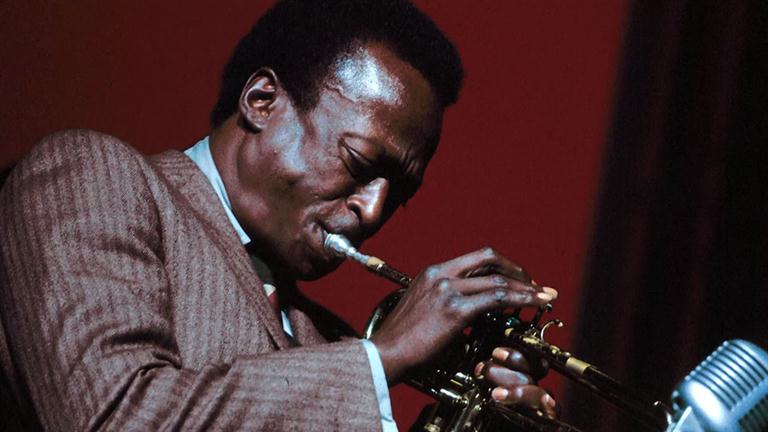
Trumpeter, composer, bandleader, innovative musical genius whose First Great Quintet & Sextet (1955-1958) and Second Great Quintet (1964-1968), as well as the later independent careers of each and everyone in these ensembles – tenor saxophonists John Coltrane and Wayne Shorter, altoist Julian “Cannonball” Adderley, pianists Wynton Kelly, Bill Evans and Herbie Hancock, bassists Paul Chambers and Ron Carter, and drummers Jimmy Cobb and Tony Williams– plays a critically contributing role in the phenomenal growth and transformation of jazz, African American classical music, during this historic epoch of African American freedom mission
(Miles Davis & John Coltrane, Live in Stockholm 1960, “All blues”/“The theme” [personnel:Davis, trumpet; Coltrane, tenor saxophone; Wynton Kelly, piano;Paul Chambers, bass;Jimmy Cobb, drums; recorded: live, Konserthuset, Stockholm, Sweden, 22 March 1960])
(O Obusonjo: “The effect of [this] singular achievement of the Air Force especially on 3 Marine Commando Division was profound. It raised morale of all service personnel...”)
Herbert Ekwe-Ekwe That 51 years almost to the day, Olusegun Obasanjo, a
particularly fiendishly ingrained Nigeria genocidist operative would be asking
for Biafrans, in some meeting in Abuja (genocidist Nigeria capital), to “be
begged” (Vanguard, Lagos, Thursday 25 May 2017) not to march away, exit from
genocidist Nigeria on their Biafra freedom goal begun on 29 May 1966.
Extraordinary...
ON 5 JUNE 1969, génocidaire Olusegun Obasanjo, then
commanding a death squad in south Biafra, ordered
his air force to shoot down any Red Cross planes flying in urgently-needed relief
supplies to the millions of surviving but encircled, blockaded and bombarded
Igbo. Genocidist air force pilot Gbadomosi King duly carried out Obasanjo’s
orders. Gbadomosi King shut down a clearly marked, incoming relief-bearing
International Committee of the Red Cross (ICRC) DC-7 aircraft near Eket, south
Biafra, with the loss of its 3-person crew.
Génocidaire Obasanjo et al will account Génocidaire Obasanjo’s perverse satisfaction over the aftermath
of this crime is grotesquely, chillingly revolting. He writes in his memoirs,
appropriately entitled, My Command:
“The effect of [this] singular achievement of the Air Force especially on 3
Marine Commando Division [name of the death squad Obasanjo, who subsequently
becomes head of Nigeria regime for 11 years, commands] was profound. It raised
morale of all service personnel, especially of the Air Force detachment
concerned and the troops they supported in [my] 3 Marine Commando Division” (Olusegun Obasanjo, My Command, 1981: 79).
ALL THOSE WHO have been involved in this genocide, this foundational
genocide of post-(European)conquest Africa, including particularly génocidaire
Olusegun Obasanjo, will account for their role in this crime against humanity.
There are no statutes of limitation in international law for the pursuit,
apprehension, prosecution, sentencing and conviction of anyone or institutions
involved in genocide.
Surely, no one murders the Igbo child, the Igbo woman, the Igbo
man and gets away with it. This is the punishing realisation that must have
been hunting génocidaire Olusegun Obasanjo as he made his Abuja
"speech" earlier today.
51 YEARS LATER, and after its murder of 3.1 million Igbo and
tens of thousands more, Nigeria genocidists must quickly come to terms with the
following testament: the Igbo have exited genocidist Nigeria – for ever.
(New York Art Quartet plays “Mohawk”, a composition by Charlie Parker [personnel: John Tchicai, alto saxophone; Roswell Rudd, trombone; Reggie Workman, bass; Milford Graves, drums; recorded: Nippon Phonogram, New York, US, 16 July 1965])
Versatile novelist (especially Annie John [1985], A small place [1988], Lucy [1990], Mr Potter [2002], See now then [2014]), essayist (especially in the New Yorker, 1976-1996), academic Twitter @HerbertEkweEkwe
Igbo survived IT IS INDEED an extraordinarysurvival story of historythat someone that goes by the name
Obiageli, Nkechi, Chinyere, Ifeoma, Amaechi, Nwakaego, Ngozi, Chinelo, Ada,
Uzo, Chibundu, Nkemdilim, Chukwuka, Okwuonicha, Chikwendu, Ogonna, Nwafo,
Ikechukwu, Onwuatuegwu, Chukwuemeka, Onyekachi, Nnadozie, Okonkwo, Chido,
Okafo, Chikwendu, Nkeiiru, Ifeyinwa, Nkemakolam, Ikenga, Uchendu, Okennwa, Nwaoyiri, Okonta, Ukpabi, Amaka, Ofokaaja,
Nnamdi, Mbazulike, Chukwuma, Kanayo, Ndukaeze, Chidi, Kamene, Nneka, Onyeka, Osita, Kalu, Ifekandu, Obioma,
Chioma, Ndubuisi… actually walks the face of the earth, today, having
survived this programmed sentence of death by Anglo-Nigeria
genocidists beginning on 29 May 1966 and through to 12 January 1970. The genocidists murdered the grisly total of 3.1 million Igbo or 25 per cent of this nation’s population during the period.
None of the lead génocidaires of this genocide – Harold Wilson, Benjamin
Adekunle, Olusegun Obasanjo, Obafemi Awolowo, Allison Ayida, Ibrahim Haruna,
Tony Enaharo, Yakubu Danjuma, Yakubu Gowon, Jeremiah Useni, Oluwole Rotimi… – reckoned in their
dire prognosis of the outcome of the 44 months of Igbo slaughtering that they
directed and executed that the Igbo stood a chance of surviving. Harold Wilson, then British prime minister who chiefly coordinated the genocide from the comfort of his offices and residence at 10 Downing Street, London, 3000 miles away from Biafra, had notoriously set the pace for his fellows on what he saw as the
future of the Igbo when he informedClyde Ferguson, the United States state department special
coordinator for relief to Biafra, that he, Harold
Wilson, “would accept a half million dead Biafrans if that was what it
took” Nigeria to destroy the Igbo resistance to the genocide (Roger Morris, Uncertain Greatness: Henry Kissinger and American Foreign Policy, 1977: 122).
BY SURVIVING the genocide, the Igbo have not only dramatically repudiated this vile Wilsonian logic of Igbo mass slaughter, but they are poised today, 51 years
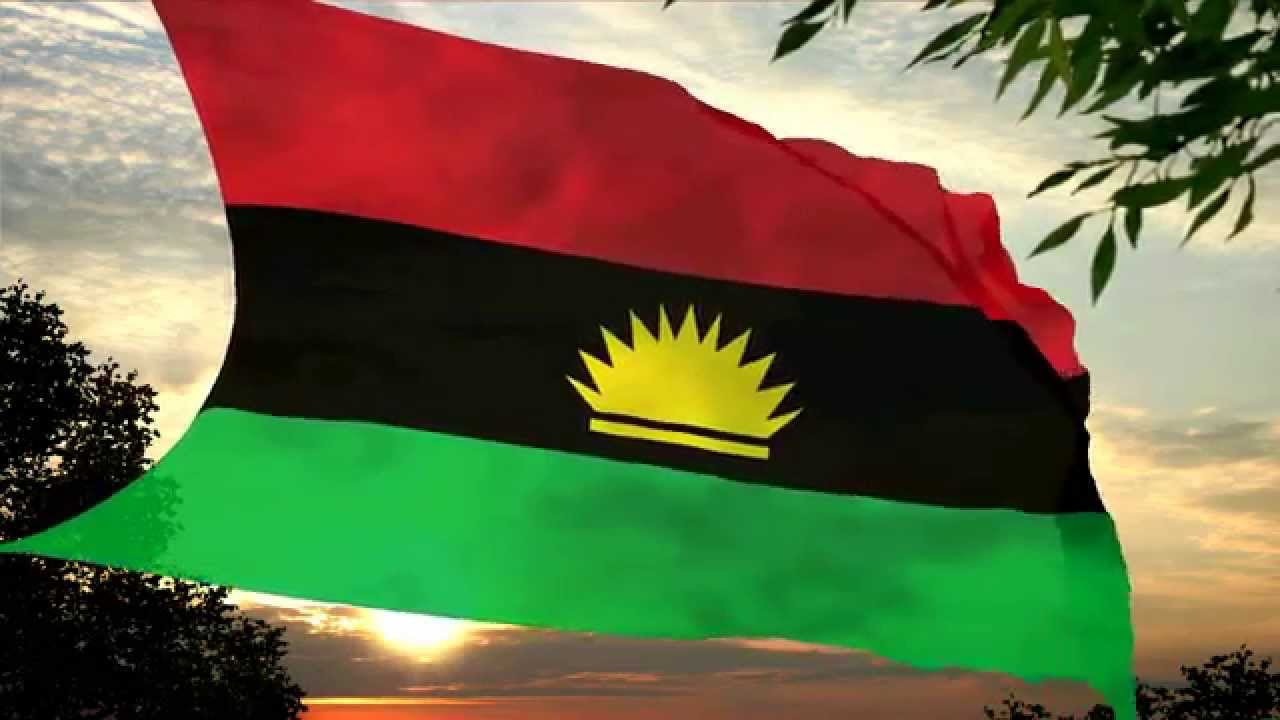
later, as the Biafra freedom movement has grown inexorably, to resume the interrupted construction of their beloved state of Biafra – the Land
of the Rising Sun.
“And those that create out of the holocaust of their own inheritance anything more than a convenient self-made tomb shall be known as ‘Survivors’” (single sentence liner note on Keith Jarrett, The Survivors’ Suite, 1976)
(Keith Jarrett’s American Quartet, The Survivors’ Suite {beginning and conclusion} [personnel: Jarrett, piano, soprano saxophone, bass recorder, celeste, drums; Dewey Redman, tenor saxophone, percussion; Charlie Haden, bass; Paul Motian, drums, percussion; recorded: Tonstudio Bauer, Ludwigsburg, Germany, {?} April 1976])
QUITE appositely, we should begin by stating what the Igbo
genocide is not. It is definitely not a “civil war” (http://re-thinkingafrica.blogspot.co.uk/2015/07/the-oxymoron-civil-war-is-strange-beast.html); neither is it
“Nigeria-Biafra ‘civil war’” nor “first ‘civil war’ in Africa” nor “forgotten
genocide” nor “ignored genocide” nor “hidden genocide” nor indeed any of the
other tracks of quaint, sanitising, obfuscating, occultating and misleading words and
phraseologies bandied about here and there whose proponents, particularly in
some sectors in academia, media, conference circuits/discussion platforms, more often than not aim to pursue a hardly
disguised project of denialism of this
crime against humanity.
Premeditated
ON THE contrary. The Igbo genocide is a premeditated mass slaughtering
of Igbo people, as Igbo people,
planned and executed by Britain, Nigeria’s suzerain state headed then by Prime
Minister Harold Wilsonand Nigeria, Britain’s client state in southwestcentral
Africa, a Fulani islamist jihadist-led state, allied to a coterie of pan-African constituent nations in the “country” including, principally, Yoruba, Tiv, Edo, Urhobo, Jukun, Bachama, Nupe, Kanuri, Jarawa. At the apogee of phase-III of the
genocide in 1968-1969, Wilson reminded the world, on record, of what was the end game of
this dreadful mission he chiefly directed from the comfort of his residence and office at 10 Downing Street, London, 3000 miles from Biafra. Harold Wilson informedClyde
Ferguson, the United States state department special coordinator for
relief to Biafra, that he, Harold Wilson,
“would accept a half million dead Biafrans if that was what it took” Nigeria to
destroy the Igbo resistance to the genocide (Roger Morris, Uncertain Greatness: Henry Kissinger
and American Foreign Policy, 1977: 122). Very much in tune with this
Wilsonian logic of Igbo mass slaughter, Benjamin Adekunle, a fiendish Nigeria
genocidist commander in south Biafra told a news conference in August 1968,
attended mostly by foreign journalists: “I want to prevent even one I[g]bo
having even one piece to eat before their capitulation. We shoot at everything
that moves, and when our forces march into the centre of I[g]bo territory, we
shoot at everything, even at things that don’t move” (The Economist, London, 24 August
1968). Olusegun Obasanjo, an equally fiendish genocidist commander in south Biafra, specifically ordered his air force in June 1969 to shoot down any international relief-bearing aircraft flying urgently needed supplies to the encircled, besieged and bombarded Igbo. On the 5th of June, a week after Obasanjo’s infamous orders, Gbadamosi King of the Nigeria genocidist air force shot down a clearly marked, in coming relief-carrying International Committee
of the Red Cross DC-7 plane near Eket, southBiafra, with the loss of its
3-person crew.
Obasanjo’s perverse satisfaction over the
aftermath of this horrendous crime is chillingly revolting as he notes clearly
in his memoirs, appropriately entitled My
Command:
The effect of [this] singular achievement of the Air Force
especially on 3 Marine Commando Division [the notorious unit Obasanjo, who
later becomes Nigeria’s
head of regime for 11 years, commanded] was profound. It raised morale of all
service personnel, especially of the Air Force detachment concerned and the
troops they supported in [my] 3 Marine Commando Division (Olusegun Obasanjo, My
Command, 1981: 79).
THE principal language used in the prosecution of the genocide is Hausa. Appropriately, the words of the ghoulish anthem of the genocide,
published and broadcast on Kaduna radio and television throughout the duration
of phases I-III (May 1966-January 1970) of the crime, are in Hausa:
Mu je mu kashe nyamiri
Mu kashe maza su da yan maza su
Mu chi mata su da yan mata su
Mu kwashe kaya su
English translation
Let’s go kill the damned Igbo
Kill off their men and boys
Rape their wives and daughters
Cart off their property
Elsewhere, Nigerian genocidist documentation on this
crime is equally malevolent and brazenly vulgar. A study of the
genocide-time/“post”-genocide era interviews, comments, broadcasts and writings
on the campaign by key genocidist commanders, commandants and “theorists” and
propagandists such as Yakubu Danjuma, Yakubu Gowon, Hassan Katsina, Ibrahim Haruna, Oluwole Rotimi, Obafemi Awolowo, Muhammadu Buhari, Anthony Enaharo and Allison Ayida underscores the trend. Quite auspiciously, the record of those who
ordered/executed the Igbo genocide makes no pretences, offers no excuses,
whatsoever, about the goal of their annihilative mission – such was the
maniacal insouciance and rabid Igbophobia that propelled the project. The génocidaires were not into obfuscating over any spheres associated with their studiously orchestrated goal. THE génocidaires stood firmly by the dictates of their assignment. Consequently, students and scholars of this genocide must always be on the alert to challenge anyone, subsequently, who wishes to deny, in any way, this crime of genocide against Igbo people in which its very lead génocidaires, as we have shown, have been openly and distinctly expressive about their mission.
Duo-states genocidists As the evidence overwhelmingly shows, Britain
is the principal agency in the perpetration of the Igbo genocide. Nowhere else
in Africa nor indeed the Southern World, during the 1950s-1970s, does any of
the seemingly departing European occupying-power in a conquered country
effectuate the crime of genocide of a constituent people as a means of
safeguarding its strategic interests subsequently as Britain’s sordid record in
Nigeria shows. Thisgenocide
continues unabatedsince
January 1970 (phase-IV of genocide) withtens
of thousands of additional Igbo murdered across occupied Biafra and in Nigeria itself especially in the north region
including those massacred by the Boko Haram terrorists and their Fulani militia
cousin in the past seven years. NO OTHER PEOPLES IN AFRICA have
suffered such an extensive and gruesome genocide and incalculable
impoverishment in a century as the Igbo. Britain and its client
genocide-prosecuting state Nigeria will surely account for this crime against
humanity as both states are fully aware, being signatories to the relevant
international treaties, that there are no statutes of limitation in
international law in the pursuit, apprehension, prosecution and sentencing of
individuals and institutions involved in committing genocide. Genocide is a
crime against humanity.
The Igbo genocide is thefoundational genocideof post-(European)conquest Africa. It
inaugurated Africa’s current age of pestilence. The genocide has been studied most
expansively subsequently. World Igbo scholars have since pushed the parameters
of their studies of the genocide unto the very frontiers of the underlying crucibles
on which the European-constructed anti-African peoples “Berlin-State” of
contemporary Africa are grounded. Thus, to understand the politics of this ongoing Igbo genocide is to have an invaluable insight into
the salient features and constitutive indices of politics across Africa in the
past 51 years. The “Berlin-State” is a bane to African peoples’ existence and progress; it’s a
neo-enslavement plantation emplacement formulated by Europe, particularly Britain and France (with their fatuous names – Nigeria, Niger, Chad, Guinea-B, Guinea-C, Guinea-E, whatever!) to perpetuate European World
expropriation of legendary African resources in perpetuity. African peoples must exit this state at once to survive and transform their battered inheritances. They have no choice.
TRAGICALLY, Africans elsewhereremained largely silenton the
gruesome events in Nigeria and so did not foresee the grave consequences of such
indifference as subsequent genocides in Rwanda, Darfur, Nuba Mountains, South
Kordofan (latter three in the Sudan) and Zaïre/Democratic Republic of the
Congo, and in other wars and conflicts ineverygeographical
region of Africa during the period have demonstrated catastrophically: Liberia,
Mali, Libya, Egypt, Côte d’Ivoire, Algeria, Sierra Leone, Guinea-Bissau,
southern Guinea, Sudan, Ethiopia, Somalia, Uganda, Democratic Republic of the
Congo, Republic of the Congo, Burundi, Central African Republic, Nigeria (Boko
Haram insurgency in north, northcentral regions). The haunting killing fields
have indeed stretched, almost inexorably, from Igboland, Biafra, to the rest of Africa…
Treasure trove
THANKFULLY, for the interest of posterity, the
Igbo genocide, perpetrated by the duo Anglo-Nigeria states, is one of the most documented
crimes against humanity. Nothing is “hidden”/“ignored” here! Leading university and
public libraries across Europe (particularly in Britain, Ireland, France, the
Netherlands, Germany, Switzerland, Italy, Portugal, Denmark and Sweden) and
North America have invaluable repositories of books, state papers (including,
crucially, hitherto classified material now declassified as part of mandatory
timeframe provisions and freedom-to-information legislations), church papers,
human rights/anti-genocide/anti-war groups’ campaign papers, reports, photographs
and interviews, Red Cross/other third sector papers, reports and photographs,
newspaper/newsmagazine/radio/ television/video archives and sole individual
depositories, some of which are classified as “anonymous contributors”.
These data variously include extensive coverage
of news and analyses of varying features of the genocide between May 1966 and
January 1970 (phases I-III of genocide) as well as still photographs and reels
and reels of film footage of the devastating impact of the genocidist’s
“starvation weapon” attack on Igbo children and older people, the genocidist
air force’s carpet bombings of Igbo population centres (especially refugee
establishments, churches, shrines, schools, hospitals, markets, homes,
farmlands and playgrounds) and the haunting photographs and associated material
that capture the sheer savagery of the slaughter of 100,000 Igbo in north
Nigeria towns and villages and elsewhere in parts of west Nigeria (especially
Lagos and suburbs, Ibadan, Abeokuta, Oyo, Benin) during phase-I of the genocide
in May to October 1966. A stream of these archival references has flowed
steadily onto the youtube website as well as other internet outlets and much
more material on the genocide will be available online in the months and years
ahead.
On the whole, these documentations are a
treasure trove for the conscientious scholar and researcher on the genocide.
For the would-be prosecutor of the perpetrators of this crime, they couldn’t
have wished anything more for that crucial resource base to embark on their historic
enterprise. A total of 3.1 million Igbo, or 25 per cent the nation’s population
at the time, were murdered in the genocide, the worst in Africa since the 19th
century. ON THE MORROW of 44 months of unrelenting slaughtering, Nigeria, the direct perpetrator-on-the-ground, emerges as the undisputed obligatory haematophagous monster in
this southwestcentral region of Africa. Its death-march on the Igbo and Igboland
was soon relayed, across Africa, as earlier indicated, resulting in the
murder of additional 12 million Africans in the subsequent 40 years.
(George Russell Sextet here plays “Nardis”, a composition by Miles Davis[personnel: Russell, piano;Don Ellis, trumpet;Dave Baker, trombone;Eric Dolphy, bass clarinet;Steve Swallow, bass;Joe Hunt, drums; recorded: Riverside Records, New York, 8 May 1961])
*****Herbert Ekwe-Ekwe books on the Igbo genocide and Biafra include Readings from Reading: Essays on African Politics, Genocide, Literature (2011), Biafra Revisited (2006) and African Literature in Defence of History: An essay on Chinua Achebe (2001) Twitter @HerbertEkweEkwe
Herbert Ekwe-Ekwe is specialist on the state and on genocide & wars in Africa in the post-1966 epoch – beginning with the Igbo genocide, 29 May 1966-present day, the foundational and most gruesome genocide of post-(European)conquest Africa. 3.1 million Igbo or 25 per cent of this nation’s population were murdered by Nigeria and its allies, principally Britain. Africa and the rest of the world largely stood by and watched as the perpetrators enacted this horror most ruthlessly. The world could have stopped this genocide; the world should have stopped this genocide. This genocide inaugurated Africa’s current age of pestilence. During the period, 12 million additional Africans have been murdered in further genocide in Rwanda (1994), Zaïre/DRCongo (variously, since the late 1990s) and Darfur – west of the Sudan – (since 2004) and in other wars in Africa. African peoples have, presently, no other choice but exit/dismantle the extant genocide-state (the bane of their existence & progress) & construct own nation-centred states that serve their interests. He is author of several books & papers on the subject and his new book is entitled The longest genocide – since 29 May 1966 (2019).