Rethinking Africa is a forward looking blog dedicated to the exchange of innovative thinking on issues affecting the advancement of African peoples wherever they are. We provide rigorous and insightful analyses on the issues affecting Africans and their vision of the world.
Showing posts with label tenor saxophonist. Show all posts
Showing posts with label tenor saxophonist. Show all posts
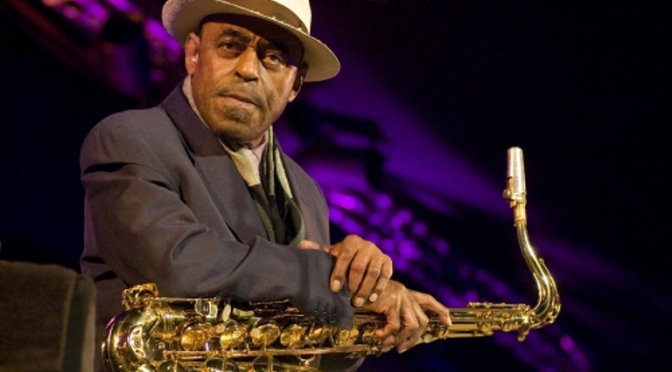
VERSATILE tenor saxophonist, composer and bandleader, collaborates with a number of distinguished artists (especially alto saxophonists Ornette Coleman and Prince Lasha, trumpeter Don Cherry, pianists Cecil Taylor and Keith Jarrett, guitarist Pat Metheny, bassist Charlie Haden, drummers Ed Blackwell, Paul Motian, Charles Moffett, Elvin Jones) in groundbreaking recordings (1960s-1990s), plays in the celebrated Jarrett’s American Quartet of the 1970s particularly in the ensemble’s exquisite composition, The Survivors’ Suite (1976), father of the equally brilliant and accomplished tenorist Joshua Redman
(Ornette Coleman Septet, “Happy house” [personnel:Coleman, alto saxophone;Don Cherry, pocket trumpet; Bobby Bradford, trumpet; Redman, tenor saxophone, musette;Charlie Haden, bass;Billy Higgins, drums; Ed Blackwell, drums; recorded: Columbia Studios E, New York, UK, 9 September 1971])
(Wynton Kelly Trio with George Coleman, “Mr PC” [Kelly, piano; Coleman, tenor saxophone; Paul McLure, bass; Jimmy Cobb, drums; recorded, live, Left Bank Jazz Society, Baltimore, Maryland, US, 22 September 1968])
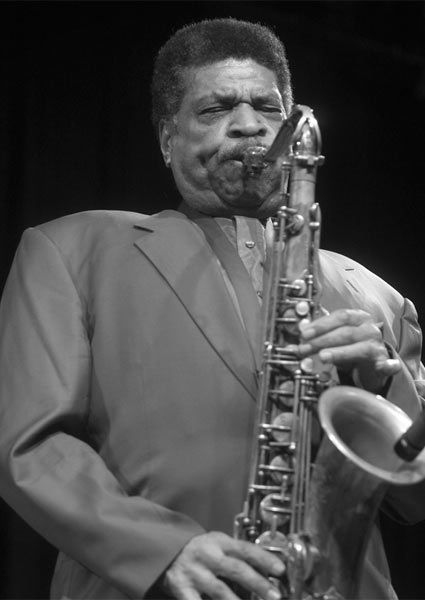
PERCIPIENT tenor saxophonist and composer who, for 30 years, beginning in the mid-1950s, builds up an impressive range of collaborative work with leading rhythm and brass instrument-bandleaders of the age including Roach, Mingus, Chambers, Davis, Waldron, Walton, Weston, Hill, Gillespie, Morgan, Farmer, Reece, as well as work with multiinstrumentalist Dolphy and fellow tenorist Gilmore (ps: the gritty cascading texture of Jordan’s tenor solo in Charles Mingus’s “Meditations”[below], this freedom anthem, beginning 21.07 minutes into the recording, opens up yet another vista of creativity in this seminar at Cornell when it appears that all had been exhausted by the brilliant readings of Dolphy [flute/bass clarinet], Byard [piano], Coles [trumpet] and Mingus [bass] himself premiered 21 minutes earlier...)
(Charles Mingus Sextet – with Eric Dolphy, Cornell University 1964, “Meditations” [personnel: Mingus, bass; Johnny Coles, trumpet; Dolphy, flute, bass clarinet; Clifford Jordan, tenor saxophone; Byard, piano; Dannie Richmond, drums; recorded: live, Cornell University, 18 March 1964])
“Pres”/“Prez” of the tenor, influential tenor saxophonist whose unique, more introverted tone has had an immense impact on several successive lead players of the instrument including, especially, Gordon, Getz, Mulligan, Cohn, Sims, Quinichette and Stitt
(Billie holiday & Her All Stars, featuring Lester Young, play “Fine and mellow” [full personnel: Holiday, vocals; Roy Eldridge, trumpet; Doc Cheatham, trumpet; Vic Dickenson, trombone; Gerry Mulligan, baritone saxophone; Lester Young, tenor saxophone; Ben Webster, tenor saxophone; Coleman Hawkins, tenor saxophone; Danny Baker, guitar; Mal Waldron, piano; Milt Hinton, bass; Osie Johnson, drums; recorded: CBS, “Sound of Jazz”, New York, US, 8 December 1957])
ICONIC tenor saxophonist and composer whose July 1964 album, Spiritual Unity (Ayler, tenor saxophone; GaryPeacock, bass; Sunny Murray, percussion) and subsequent landmark recordings celebrate the concept of rhythmic freedom that captures the saliency of the ongoing age of freedom drive in the United States and elsewhere in the world
(Albert Ayler Trio, Spiritual Unity [“Ghosts: First variation”, “The wizard”, “Spirits”, “Ghosts: Second variation” {personnel: Ayler, tenor saxophone; Gary Peacock, bass; Sunny Murray, drums; recorded: Variety Arts Recording Studio, New York, US, 10 July 1964}])
(Albert Ayler & Don Cherry, Vibrations [“Ghosts: short version”, “Children”, “Holy Spirit”, “Ghosts: extended version”, “Vibrations”, “Mothers” {personnel: Ayler, tenor saxophone, alto saxophone; Don Cherry, pocket trumpet, Gary Peacock, bass; Sunny Murray, drums; recorded: Copenhagen, Denmark, 14 September 1964}])
Versatile tenor saxophonist, composer and bandleader, collaborates with a number of distinguished artists (especially alto saxophonists Ornette Coleman and Prince Lasha, trumpeter Don Cherry, pianists Cecil Taylor and Keith Jarrett, guitarist Pat Metheny, bassist Charlie Haden, drummers Ed Blackwell, Paul Motian, Charles Moffett, Elvin Jones) in groundbreaking recordings (1960s-1990s), plays in the celebrated Jarrett’s American Quartet of the 1970s particularly in the ensemble’s exquisite composition, The Survivors’ Suite (1976), father of the equally brilliant and accomplished tenorist Joshua Redman
(Ornette Coleman Septet, “Happy house” [personnel:Coleman, alto saxophone;Don Cherry, pocket trumpet; Bobby Bradford, trumpet; Redman, tenor saxophone, musette;Charlie Haden, bass;Billy Higgins, drums; Ed Blackwell, drums; recorded: Columbia Studios E, New York, UK, 9 September 1971])
Herbert Ekwe-Ekwe is specialist on the state and on genocide & wars in Africa in the post-1966 epoch – beginning with the Igbo genocide, 29 May 1966-present day, the foundational and most gruesome genocide of post-(European)conquest Africa. 3.1 million Igbo or 25 per cent of this nation’s population were murdered by Nigeria and its allies, principally Britain. Africa and the rest of the world largely stood by and watched as the perpetrators enacted this horror most ruthlessly. The world could have stopped this genocide; the world should have stopped this genocide. This genocide inaugurated Africa’s current age of pestilence. During the period, 12 million additional Africans have been murdered in further genocide in Rwanda (1994), Zaïre/DRCongo (variously, since the late 1990s) and Darfur – west of the Sudan – (since 2004) and in other wars in Africa. African peoples have, presently, no other choice but exit/dismantle the extant genocide-state (the bane of their existence & progress) & construct own nation-centred states that serve their interests. He is author of several books & papers on the subject and his new book is entitled The longest genocide – since 29 May 1966 (2019).