Sunday, 25 November 2018

49th anniversary of John Lennon’s decision to return MBE knighthood medal to Queen Elizabeth II over Britain’s instrumental role in the perpetration of the Igbo genocide

(Medal is sent back to Buckingham Palace, London, 25 November 1969)
ICONIC Beetle’s John Lennon sends back the 1965 MBE knighthood medal bestowed on him by Queen Elizabeth II of England over Britain’s instrumental role in the perpetration of the Igbo genocide with its client state’s Fulani islamist/jihadist-led Nigeria in which 3.1 million Igbo people or 25 per cent of Igbo population are murdered between 29 May 1966 and 12 January 1970 (phases I-III) in the foundational genocide of post-(European)conquest Africa…
Forty-nine years after Lennon’s towering stand, Britain is still deeply embedded in this most devastating, expansive, and longest genocide of contemporary history … It chiefly arms and provides robust political and diplomatic cover internationally to its Nigerian on the ground génocidaires who continue the slaughtering of Igbo people unrelentingly in occupied Biafra (phase-IV) and are now assisted by their Boko Haram and Fulani militia adjuncts, two of the world’s five deadliest terrorist organisations .

Nigeria has murdered tens of thousands of Igbo during this phase including the 3000 killed since October 2015 under the leadership of the fiendish jihadist Muhammadu Buhari imposed in office by ex-British Prime Minister David Cameron and ex-US President Barack Obama – first African-descent president of the United States in 233 years of the founding of the republic and the only US president in office who has actively supported the Igbo genocide in these past 52 years.
-----------------------------------------------------
*****Herbert Ekwe-Ekwe is the author of Biafra Revisited (2006), Readings from Reading: Essays on African Politics, Genocide, Literature (2011) and author, with Lakeson Okwuonicha, of Why Donald Trump is great for Africa (2018)

Twitter @HerbertEkweEkwe

Friday, 23 November 2018

89th anniversary of ogu umu nwanyi Igbo or Igbo women-organised and led resistance against the British conquest and occupation of Biafra – the organisational feat involved in this challenge is a precursor to some of the tactical calculations being employed with astounding success currently by the resilient Biafra freedom movement’s restoration-of-independence mission against the genocidist Nigeria occupation

(Resistance begins 23 November 1929, Aba, Biafra)
WITH the initial mobilisation of 10,000 women which soon expands to 25,000 and joined by women from Ibibioland, Igbo women in Aba and its contiguous provinces, including Igwe Nga (Opobo) and Umu Ubani (Bonny), embark on a 2-month historic resistance against the oppressively expansive stretch of 50 years of the British conquest, paralysing the occupation regime and its myriad institutions of plunder in much of the east, central and southern regions of Biafra consequently; the occupation troops murder 55 members of the freedom movement during the course of the resistance
(Herbert Ekwe-Ekwe)

(Alice Coltrane Trio, “Lovely sky boat” [personnel: Coltrane, harp;  Jimmy Garrison, bass; Rashied Ali, drums; recorded: Coltrane home studio, Dix Hills, New York, US, 6 June 1968]) 

*****Herbert Ekwe-Ekwe is the author of Biafra Revisited (2006) and author, with Lakeson Okwuonicha, of Why Donald Trump is great for Africa (2018)

Twitter @HerbertEkweEkwe


Thursday, 22 November 2018

81st birthday of Adiele Afigbo

(Born 22 November 1937, Ihube, Biafra)
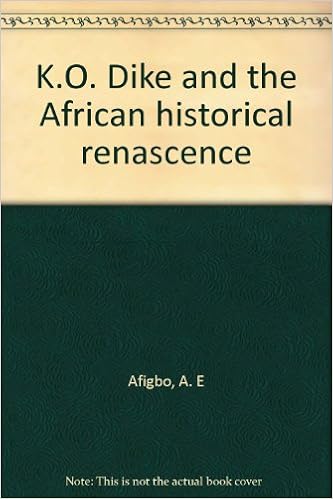
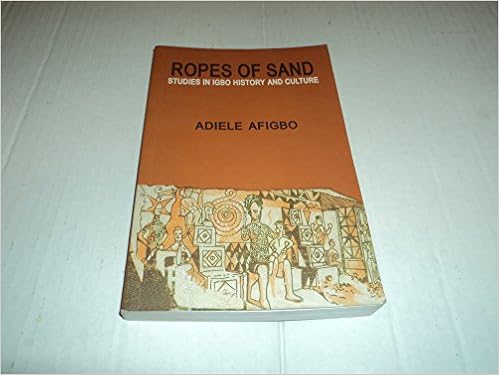
DEAN of Igbo Historical Studies whose seminal books and papers, particularly Warrant Chiefs (1972), Ropes of Sand (1981), Ikenga (1986), K.O. Dike and African historical renascence (1986), The Igbo and their Neighbours (1987), The Image of the Igbo (1991) and Groundwork of Igbo History (1992) are foundational texts and references for the study of Igbo history and civilisation and international relations
(Herbert Ekwe-Ekwe)
(John Coltrane Sextet, “Blue train” [personnel: Coltrane, tenor saxophone, Lee Morgan, trumpet; Curtis Fuller, trombone; Kenny Drew, piano; Paul Chambers, bass; Philly Joe Jones, drums; recorded: Van Gelder Studio, Hackensack, NJ, US, 15 September 1957]) 

*****Herbert Ekwe-Ekwe is the author of Readings from Reading: Essays in African Politics, Genocide, Literature (2011) and author, with Lakeson Okwuonicha, of Why Donald Trump is great for Africa (2018)


Twitter @HerbertEkweEkwe

Sunday, 18 November 2018

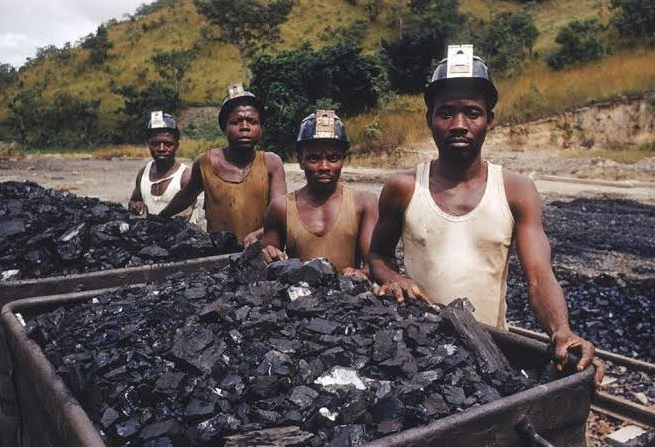
69th anniversary of the Enuugwu, Biafra, colliery massacre by the British occupation police

(Miners at the Enuugwu colliery, undated)
Herbert Ekwe-Ekwe

ON 18 NOVEMBER 1949, 21 coal miners at the Iva Valley colliery, Enuugwu, Biafra, were shot dead by the British occupation police in response to the miners’ peaceful, popular protest for a pay increase, improvement in working and safety mine provisions, and support for the ongoing restoration-of-independence movement, begun in the 1930s and spearheaded by the Igbo, to terminate 64 years of Britain’s conquest of the constellation of states and peoples of this southwestcentral region of Africa. The murder of the coal miners constituted a new front in Britain’s 100 years war against Igboland and the variegated frames of Igbo resistance to it that parallel the very stretch of the British occupation of the states and peoples of this region of Africa it tagged “Nigeria”: especially the 1880s-1914 Ekumeku wars and resistance in Anioma, west Igboland, west of the Oshimiri River; the 1901-1902 war against the Aru in northeastcentral Igboland; the 1929 Ogu umu nwanyi Igbo/Igbo women’s resistance in Aba/Igbo eastcentral region.

The Enuugwu massacre, in addition to the organised pogroms against Igbo people in June 1945 (Jos, northcentral Nigeria) and May 1953 (Kano, north Nigeria) by the Fulani islamist/jihadist political leadership of north Nigeria, on the ground strategic client of the occupation, were dreadful precursors to the Igbo genocide of 29 May 1966-12 January 1970 (phases I-III) – in which Britain and Nigeria murdered 3.1 million Igbo, 25 per cent of this nation’s population, in the foundational genocide of post-(European)conquest Africa. 

Cameron, Buhari, Obama

THE dual genocidist states have murdered tens of thousands of additional Igbo during the course of phase-IV of the genocide (launched on 13 Janauary 1970 and continuing) including the 3000 murdered by the current Muhammadu Buhari regime in Abuja since October 2015. Instrumentally, Buhari, one of the surviving vilest génocidaire-operatives who was an early recruit to this genocide campaign 52 years ago, was imposed on Nigeria as head of regime in March 2015 by the then British Prime Minister David Cameron and ex-US President Barack Obama, the first African-descent president of the United States in 233 years of the founding of the republic. Obama’s support for the Igbo genocide is the abhorrent legacy of his presidency.
(John Coltrane Quintet, “Stardust” [personnel: Coltrane, tenor saxophone; Wilbur Harden, fluegelhorn; Red Garland, piano; Paul Chambers, bass; Jimmy Cobbs, drums;  recorded: Van Gelder Studio, Hackensack, NJ, US, 11 July 1958])

*****Herbert Ekwe-Ekwe is the author of Biafra Revisited (2006) and author, with Lakeson Okwuonicha, of Why Donald Trump is great for Africa (2018)
(https://www.amazon.co.uk/Why-Donald-Trump-great-Africa-ebook/dp/B07KFQHXKV/ref=tmm_kin_swatch_0?_encoding=UTF8&qid=1542585950&sr=8-1)

Twitter @HerbertEkweEkwe

Friday, 16 November 2018

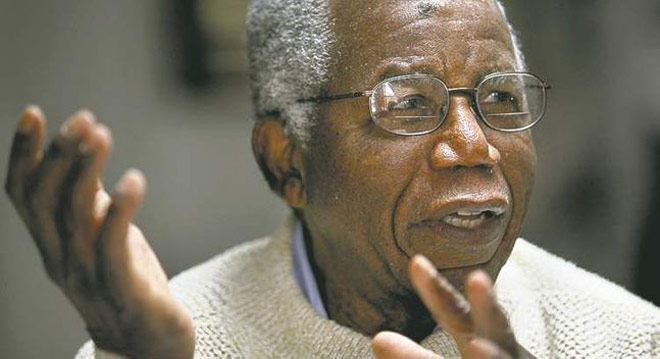
88th birthday of Chinua Achebe

(Born 16 November 1930, Ogidi, Biafra)
Father of African Literature
Selected works: Things Fall Apart (1958) No Longer at Ease (1960),  Arrow of God (1964),  A Man of the People (1966),  Beware Soul Brother (1971), Girls at War and other Stories (1973), Morning Yet on Creation Day (1975), “An Image of Africa: Racism in Conrad’s Heart of Darkness” (1975), Don’t let him die: An anthology of memorial poems for Christopher Okigbo (ed., 1978), The Trouble with Nigeria (1984),  Anthills of the Savannah (1987), Hopes and Impediments (1988), “Our Mission” (1989), “African Literature as Restoration of Celebration” (1990), Home and Exile (2000), Collected Poems (2004), There was a Country (2012)
(George Russell Sextet, “Ezzthetics” [personnel: Russell, piano; Don Ellis, trumpet; Dave Baker, trombone; Eric Dolphy, alto saxophone; Steve Swallow, bass; Joe Hunt, drums; recorded: Riverside Records, New York, US, 8 May 1961])

*****Herbert Ekwe-Ekwe is the author of African Literature in Defence of History: An essay on Chinua Achebe (2001) and author, with Lakeson Okwuonicha, of Why Donald Trump is great for Africa (2018)

Twitter @HerbertEkweEkwe
Thursday, 15 November 2018

Kindle edition out! Why Donald Trump is great for Africa by Herbert Ekwe-Ekwe and Lakeson Okwuonicha - for your copy right away from amazon: £7.70/US$9.99/CDN$9.99/EUR8,81/ ¥1,137/Aust$11.99/R$24,99/₹449.00

(https://www.amazon.co.uk/Why-Donald-Trump-great-Africa-ebook/dp/B07KFQHXKV/ref=sr_1_12?ie=UTF8&qid=1542369730&sr=8-12&keywords=herbert+ekwe-ekwe)

Twitter @HerbertEkweEkwe

134th anniversary of the start of the pan-European World conference on Africa subjugation and plunder in Berlin – 15 November 1884-26 February 1885

(1. infamous gathering in session)
Herbert Ekwe-Ekwe

TODAY MARKS the 134th anniversary of the beginning of the infamous 15 November 1884 – 26 February 1885 European leaders’ Berlin conference on Africa. 

The gathering was chaired by German Chancellor von Bismarck to formalise the pan-European seizure, planned occupation, and irrepressible exploitation of the gargantuan riches of the African World which Leopold II, the génocidaire king of the Belgians, described predatorily as “this magnificent African cake”. It was indeed to “secure for ourselves [Belgians] a slice of this magnificent African cake”, Leopold II’s own haunting words, that this monarch and his private forces and those of the Belgian state and others elsewhere in Europe carried out a devastatingly reprehensible 30-year trail (1878-1908) of genocide against Africans in the Congo basin in which they annihilated 13 million constituent peoples (Isidore Ndaywel  è Nziem, Histoire générale du Congo: De l'héritage ancien à la République Démocratique, Paris: Duculot, 1998: 344).

The following countries attended the Berlin meeting: Belgium, Holland, Britain, France, Portugal, Ottoman “empire”, Germany, Italy, Spain, Austria-Hungary, Denmark, Czarist Russia, Sweden-Norway, United States. 

THE catastrophic aftermath of this Berlin-assembly, essentially its state’s genocidist architecture (genocide in the Congo basin by Belgian Leopold II, Herero genocide, Nama genocide, Berg Damara genocide, Igbo genocide, Rwanda genocide, Darfur genocide, genocide elsewhere in the Sudan, genocide in the Democratic Republic of the Congo ...) is the bane of contemporary Africa which the peoples, themselves, not anyone else, must dispense with to survive. This  “dispense with to survive” precisely encapsulates the historic goal of the Biafra freedom movement in southwestcentral Africa, the continent’s most peaceful restoration-of-independence movement and one of the fewest of its kind in the world, whose imminent victory constitutes a strategic breakthrough for African freedom.
(2. infamous gathering in session: to formalise the pan-European seizure, planned occupation, and irrepressible exploitation of the gargantuan riches of the African World – “this magnificent African cake”)
(George Russell Sextet here plays “Nardis”, a composition by Miles Davis [personnel: Russell, piano; Don Ellis, trumpet; Dave Baker, trombone; Eric Dolphy, bass clarinet; Steve Swallow, bass; Joe Hunt, drums; recorded: Riverside Records, New York, US, 8 May 1961])

*****Herbert Ekwe-Ekwe is the author of Readings from Reading: Essays on African Politics, Genocide, Literature (2011) and author, with Lakeson Okwuonicha, of Why #DonaldTrump is #great for #Africa (2018)
(https://re-thinkingafrica.blogspot.com/2018/10/blog-post_18.html)

Twitter @HerbertEkweEkwe