Showing posts with label history. Show all posts

Tuesday, 25 September 2018

107th birthday of Eric Williams

(Born 25 September 1911, Port of Spain, Trinidad & Tobago)
Herbert Ekwe-Ekwe

ONE OF THE most outstanding African Caribbean intellectuals of all time, author of Capitalism and Slavery (1944), classic on African enslavement in the Americas by the pan-European World – from his 1938 Oxford University doctoral thesis, and first prime minister of Trinidad and Tobago, 31 August 1962, after centuries of the British/European World conquest, enslaving and occupation
(George Russell Sextet, “Honesty” [personnel: Russell, piano; Don Ellis, trumpet; Dave Baker, trombone; Eric Dolphy, alto saxophone; Steve SwallowJoe Hunt, bass; drums; recorded: Riverside Records, New York, US, 8 May 1961])
Twitter@HerbertEkweEkwe

Sunday, 29 July 2018

Titans in conversation: James Baldwin and Chinua Achebe discuss history, art, politics

(James Baldwin and Chinua Achebe: … African Atlantic discourses, University of Florida, Gainesville, 9 April 1980…)
Herbert Ekwe-Ekwe

THURSDAY 2 August 2018 is the 94th birthday of James Baldwin – novelist, essayist, commentator, dramatist, arguably African America’s leading writer and intellectual during its age of freedom affirmation, 1950s-1990s. 

As part of this week’s commemoration of the birthday, re-thinkingafrica here reissues that Baldwin’s historic conversation with Chinua Achebe, Father of African Literature (University of Florida, Gainesville, 9 April 1980), originally published by brainpickings.

...Reflections on history, art, politics, brainpickings, 22 September 2014,
(https://www.brainpickings.org/2016/09/21/james-baldwin-chinua-achebe-art/), accessed 28 September 2014.
(Sam Rivers Quartet, “Ellipsis” [personnel: Rivers, tenor saxophone; Jaki Byard, piano; Ron Carter, bass; Tony Williams, drums; recorded: Van Gelder Studio, Englewood Cliffs, NJ, US, 11 December 1964])
 Twitter@HerbertEkweEkwe

Monday, 25 September 2017

106th birthday of Eric Williams

(Born 25 September 1911, Port of Spain, Trinidad & Tobago)
ONE OF THE most outstanding African Caribbean intellectuals of all time, author of Capitalism and Slavery (1944), classic on African enslavement in the Americas by the pan-European World – from his 1938 Oxford University doctoral thesis, and first prime minister of Trinidad and Tobago, 31 August 1962, after centuries of the British/European World conquest, enslaving and occupation
(George Russell Sextet, “Honesty” [personnel: Russell, piano; Don Ellis, trumpet; Dave Baker, trombone; Eric Dolphy, alto saxophone; Steve SwallowJoe Hunt, bass; drums; recorded: Riverside Records, New York, US, 8 May 1961])
Twitter@HerbertEkweEkwe
Wednesday, 9 August 2017

The potent word is “referendum”!


INDEED. The Biafra freedom movement’s concerted plan to hold a referendum for 50 million Biafrans on restoration-of-independence appears to have dramatically sent the genocidist Nigeria state into free fall. Day in, day out, the Biafrans have continued to challenge and overturn the range of “conventional wisdom” that undergirds liberation quests of recent history.

Twitter@HerbertEkweEkwe

Wednesday, 2 August 2017

93rd birthday of James Baldwin

(Born 2 August 1924, Harlem, New York, US)
Novelist, essayist, commentator, dramatist, arguably African America’s leading writer and intellectual during its age of freedom affirmation, 1950s-1990s
(The iconoclastic Baldwin in conversation with the Father of African Literature: … African Atlantic discourses, Gainesville, Florida, US, 9 April 1980)
...Reflections on history, art, politics, brainpickings, 22 September 2014,
(https://www.brainpickings.org/2016/09/21/james-baldwin-chinua-achebe-art/), accessed 28 September 2014
(Sam Rivers Quartet, “Ellipsis” [personnel: Rivers, tenor saxophone; Jaki Byard, piano; Ron Carter, bass; Tony Williams, drums; recorded: Van Gelder Studio, Englewood Cliffs, NJ, US, 11 December 1964])
 Twitter@HerbertEkweEkwe


Monday, 17 October 2016

Rethinking Africa and these times


Herbert Ekwe-Ekwe


African World   history and geography

RETHINKING AFRICA focuses and discusses the multifaceted stream of socioeconomic and cultural heritage that encapsulates 6000 years of African history: from Kemet (“ancient Egypt”) to Biafra, from ancient Ghana (contemporary Sénégal, Guinea-Bissau, Mauritania, part of west Mali) to Gĩkũyũland and Ethiopia of east Africa, from the Atlas Mountains of the north to South Africa, from Canada and the United States to Uruguay and Brazil, from Panama/Jamaica/Haiti/Cuba across the Caribbean to Trinidad/St Lucia/St Kitts & Nevis/Barbados, from Colombia/Venezuela to Guyana/Surinam, from Britain/Europe to Australasia… 

Subject, agency, history

Rethinking Africa is a rigorously studious reference and dependable companion as ever. 

In Rethinking Africa, African World history is live, continuous, daily, now – not just seasonal! Visit Rethinking Africa daily, all year round, and explore its vast archive which includes commentaries, essays, reports/reviews of publications, conferences, seminars, debates, lectures, concerts, festivals...  and snap biographical sketches on persons and anniversaries of occurrences across the African World that are at once succinct profiles and earmarked opportunities for further reading, analysis, research: 

1. Here, the African, Africans   wherever they are in the world (African continent, African American, African British, African Caribbean, African Mexican, African Venezuelan, African French, African Brazilian, African Spanish, African Canadian, African Indian, African Portuguese, etc., etc), are subject and agency in history. African peoples are definitely not some racist epithets, tags and stereotyping often referenced cavalierly in the West and elsewhere as ethnic”,  ethnic minority”, black and ethnic minority”, coloured”/“n”/“t” and the threesome poisoned termsother linguistic derivatives, etc., etc. As many are surely aware, the myriads of these typologisations have been the hallmark of both European World and (earlier) Arab/muslim post-conquest sociological constructions to essentially dehistoricise and thus dehumanise African peoples.

2. Find out, for instance, why the survival of the Igbo people of Biafra (southwestcentral Africa) from the three phases of the genocide of 29 May 1966-12 January 1970, the foundational genocide of post-(European)conquest Africa, executed jointly by Nigeria and its suzerain state Britain (http://re-thinkingafrica.blogspot.co.uk/2014/10/phase-i-sunday-29-may-1966-30-march.html), is one of the most extraordinarily emancipatory developments of recent history. Indeed to understand the politics of the Igbo genocide and the politics of the “post”-Igbo genocide is to have an invaluable insight into the salient features and constitutive indices of politics across Africa in the past 50 years.  The Igbo are in the throes of restoring their independent Biafra, distinctly a turning point in recent African history.

3. Why are Nelson Mandela and Chinua Achebe the dual-colossi of 20th century/21st century African renaissance? 
(Nelson Mandela: ... Colossus)
(Chinua Achebe: ... Colossus)
4. As film director Steve McQueen and actor Chiwetel Ejiofor remind the world of the perspicuity of African resistance in the enslaved emplacements of the United States in 12 Years (2014), what does CLR James’s classic, Black Jacobins (1938), tell us about that historic African uprising in the west Caribbean of the late 18th century/early 19th century? Does Saint Domingue teach the world anything presently? What? What is the title of another classic on African enslavement in the Americas, his Oxford University doctoral thesis, published in 1944 by the African Trinidadian historian, Eric Williams? What does Williams establish in this study?

5. What are James Baldwin’s and Toni Morrison’s contributions to African American letters and history? 

6. Why is Kenneth Onwuka Dike’s reconstructionary scholarship on African history so seminal? 

7. What does “civil war” really mean? (http://re-thinkingafrica.blogspot.com.br/2013/09/what-is-civil-war.html) and why is “sub-Sahara Africa such a repugnant racist epithet? Who employs “sub-Sahara Africa”? Why?  (http://re-thinkingafrica.blogspot.com.br/2013/06/still-read-or-hear-of-sub-sahara-africa.html

8. What epistemology does Flora Nwapa  inaugurate in 1966 when she publishes the novel, Efuru

9. What identical every day-used, important personal product does 20th century/21st century philosopher Cornel West share with men and women of Kemet – 5000 years ago? 

10. Why is the role of Cheikh Anta Diop’s near-40 years of scholarship on Kemet of such vital importance? 

11. How has agriculture played a crucial role in the development of African civilisations across the continent’s regions and epochs? 

12. What is the extent of the research and inventions of George Washington Carver to contemporary society, worldwide? 

13. What business does 20th continental African entrepreneur Louis-Philip Ojukwu share with 19th century African American entrepreneur Paul Cufee

14. What is the “Berlin-state” in Africa? Who are its beneficiaries? Why does the “Berlin-state” have no future for African peoples? What are the alternatives to this state? (http://re-thinkingafrica.blogspot.co.uk/2014/05/rethinking-state-in-africa-whose-state.html)

15. What compelling lessons on the African-in-the-world-today do we learn from the January 2015 Boko Haram (currently the world’s most ruthless terrorist organisation, according to the Institute of Economics & Peace [http://www.abc.net.au/news/2015-11-17/global-terrorism-index-increase/6947200, accessed 7 December 2015])
islamist insurgent attack on Baga, northeast Nigeria, in which the group murdered 2000 townspeople? (http://re-thinkingafrica.blogspot.co.uk/2015/01/baga-paris-two-massacres-contrasting.html)

Preeminent African World intellectuals: Freedom

In a word, what is it about the African that is the central preoccupation in the lives and work of the following intellectuals? Olaudah Equiano, Nelson Mandela, Martin Luther King, Chinua Achebe, Ida B Wells, CLR James, Christopher Okigbo, Toni Morrison, Malcolm X, Léopold Sédar Senghor, James Baldwin, Louis Mbanefo, Alain Locke, Kenneth Onwuka Dike, Arthur Schomburg, WEB Du Bois, Duke Ellington, Sojourner Truth, Ignatius Sancho, Charlotte Gardens, Claude McKay, Chukwuemeka Odumegwu-Ojukwu, Frederick Douglass, Mary Seacole, Daniel Hale Williams, Carter G Woodson, Patrice Lumumba, Edward Kamau Brathwaite, Eubie Blake, Maulana Karenga, Cheikh Anta Diop, Akanu Ibiam, Louis Armstrong, Flora Nwapa, Thelonious Monk, Théophile Obenga, Paul Robeson, Ann Petry, Fela Anikulapo-Kuti, Edward Wilmot Blyden, Amilcar Cabral, Langston Hughes, Tchicaya U Tam’si, Palmer Hayden, Samuel Coleridge-Taylor, Mordecai Wyatt Johnson, Horace Pipping, Nicolás Guillén, Aimé Césaire, Kwame Nkrumah, Margaret Danner, Ladipo Solanke, Frantz Fanon, Martin Delaney, Chike Obi, Dean Dixon, Ossie Davis, Julius Nyerere, Noble Lee Sissle, Felix Oragwu, Agostinho Neto, Charlie Parker, Bessie Head, Pius Okigbo, Ruby Dee, Maurice Bishop, Nikki Giovanni, Emmanuel Obiechina, Kofi Awoonor, Chancellor Williams, Léon-Gontran Damas, Gwendolyn Brooks, Percy Lavon Julian, Eric Williams, Mbonu Ojike, Mahaila Jackson, Charles Drew, Okot p’Bitek, Billie Holiday, Theophilus Enwezor Nzegwu, George Lamming, Sterling Brown, Adiele Afigbo, George Russell, Arna Bontemps, Sydney Poitier, Margaret Walker, John Coltrane, Steve Biko, Era Bell Thomson, E Franklin Frazier, Alexander Animalu, Charles Mingus, Alioune Diop, George Bridgetower, Michael Echeruo, Ornette Coleman, Ngũgĩ wa Thiong’o, Don Cherry,  Constance Baker Motley, Stevie Wonder, Benedict Obumselu, Grace Ogot, Molefi Kete Asante, Ivan Van Sertima, Funmilayo Ransome-Kuti, Countee Cullen, James Brown, Paul Revere Williams, Harriet Tubman, Ray Charles, Sonia Sanchez, George Washington Carver, Walter Rodney, JJ Johnson, Mariama Bâ, Paul Chambers, Cornel West, Bede Okigbo, Miles Davis, George James, Max Roach, John Henrik Clarke, Elvin Jones, Amiri Baraka, Ama Ata Aidoo, JC Moses,  McCoy Tyner, Peter Tosh,  Sonny Simmons, Andrew Hill, Ousmane Sembéne, Paule Marshall, Wynton Kelly, Adu Boahen, Eric Dolphy, John Tchicai, Obiora Udechukwu, Clifford Jordan, Jewel Plummer Cobb, Jaki Byard, Lerone Bennett, Prince Lasha, Mal Waldron, Abbey Lincoln, Danny Glover, Bob Marley, Horace Silver, Arthur Agwuncha Nwankwo, Oscar Peterson, Mariamba Ani, Dannie Richmond, Uzo Egonu, Eddie Khan, Gani Fawehinmi, Johnny Coles, Ayi Kwei Armah, Archie Shepp, Ifeanyi Menkiti, Richard Williams, Faye Harrison, Ihechukwu Madubuike, Ray Brown, Archie Mafeje, Ishmael Reed, Dudu Pukwana, Mĩcere Gĩthae Mũgo, Valentine Mudimbe, Wangari Maathai, Bob Marley, Simon Gikandi, Herbie Hancock, Jimmy Garrison, Kwame Anthony Appiah, Ed Thigpen, Carole Boyce Davies, Spike Lee, Zeal Onyia, Denzel Washington, Hilary Beckles, David Murray, Esiaba Irobi, Thomas Sankara, Rita Dove, Tony Medina: Freedom
(Max Roach Sextet, “Freedom day” [personnel: Roach, drums; Abbey Lincoln, vocals; Booker Little, trumpet; Julian Priester, trombone; Walter Benton, tenor saxophone; James Schenk, bass; recorded: Nola Penthouse Sound Studio, New York, US, 31 August/6 September 1960)
 Twitter @HerbertEkweEkwe


Monday, 19 September 2016

FWD: Chike Ofili on Biafra, history, geography

Writing on his Facebook wall on Sunday 18 September 2016, Chike Ofili notes [reposted as in the original]:

DELTA STATE IS HISTORICALLY BIAFRA; as it is Geographically and Ethnically so, too

A most stupid thing [by Delta SSG to deny that Delta is part of Biafra] at a time when an Anioma Igbo is the Governor of Delta state, Dr. Ifeanyi Okowa just as an Ikwerre Igbo is also the Governor of Rivers state, Barrister Wysome Wike giving us SEVEN IGBO GOVERNORS.
(Chika Ofili: ... so SS ... take your SS utterance ... to where it rightly belongs ...)
But a historically illiterate government plagued by a peculiar group identity crisis, will always vomit rubbish. No wonder Delta is the most ravished and troubled by armed Fulani herdsmen. Including killing the King of one its oldest kingdoms, the late Obi of Ubulu Uku without any effective check from the Delta state government that ever goes beyond the governor sounding tough in his responsive anger.

The decision whether Dellta state is part of Biafra that it was historically a part of, is no solely theirs. The decision rests squarely with the people. Even Ojukwu as the former Governor of the entire old Eastern region that now makes up South East and South south, knew that the decision was beyond him. He had to seek the peoples permission before he went ahead to fight for the classical Biafra.

Biafra may be geographically South East and South South, Biafra is essentially Igbo. And the Igbo cut across the two regions and onto Edo state and the Middle Belt.

So SS to the Governor, take your SS, sickle cell anemia utterance to where it rightly belongs, A SICK BAY.
(Ornette Coleman Quartet, “C & D” 
{or Civilization and its Discontents – Sigmund Freud}[personnel: Coleman, alto saxophone; Don Cherry, pocket trumpet; Scott LaFaro, bass; Ed Blackwell, drums; recorded: Atlantic Studios, New York, US, 31 January 1961])
Twitter@HerbertEkweEkwe

Friday, 4 March 2016

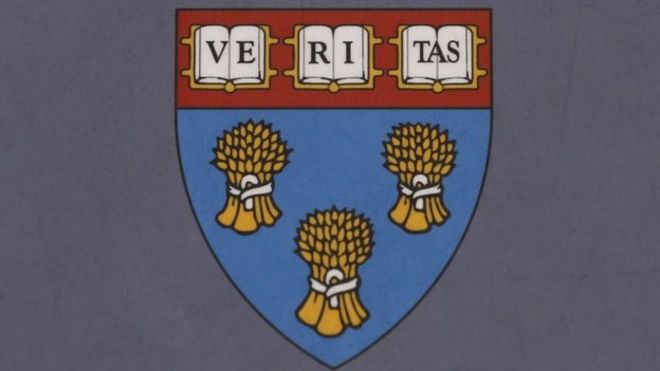
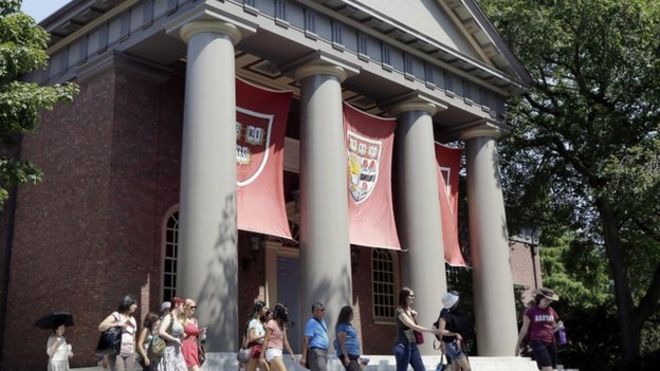
African World, Harvard Law School, History

FWD: Sean Coughlan, “Harvard Law School scraps official crest…”, BBC News, London, Friday 4 March 2015,
(http://www.bbc.co.uk/news/education-35726878, accessed 4 March 2016)

See also:

1. Sean Coughlan, “Smallpox general…”, BBC News, London, Wednesday 18 November 2015,
(http://www.bbc.co.uk/news/business-34802747, accessed 18 November 2015)

2. “FWD: Nomenclature galore… What’s in a name? History… Whose history? Now a jump over the pond from Jesus College, Cambridge to Harvard!”,
(http://re-thinkingafrica.blogspot.co.uk/2016/02/fwd-sean-coughlan-harvard-abolishes.html)

3. FWD: Africa: ‘okuku, history, conquest, history – now’s the turn of Jesus College, Cambridge”,
(http://re-thinkingafrica.blogspot.co.uk/2016/02/fwd-africa-okuko-history-conquest.html)

4.“FWD: Whose lands? Whose resources? Whose scholarship?”, 
(http://re-thinkingafrica.blogspot.co.uk/2015/12/whose-lands-whose-resources-whose.html)

5.“FWD ... History: alumni, endowment, Oriel College, Cecil Rhodes, the statue, funding, future”,
(http://re-thinkingafrica.blogspot.co.uk/2016/01/alumni-endownment-oriel-college-cecil.html)

Twitter @HerbertEkweEkwe

Thursday, 25 February 2016

Nomenclature galore… What’s in a name? History… Whose history? Now a jump over the pond from Jesus College, Cambridge to Harvard!

FWD: Sean Coughlan, “Harvard abolishes ‘master’ in titles...”, BBC News, London, Thursday 25 February 2016, (http://www.bbc.co.uk/news/education-35659685, accessed 25 February 2016) 

See also:

1. FWD: Africa: ‘okuku, history, conquest, history – now’s the turn of Jesus College, Cambridge”,
(http://re-thinkingafrica.blogspot.co.uk/2016/02/fwd-africa-okuko-history-conquest.html)

2.“FWD: Whose lands? Whose resources? Whose scholarship?”, 
(http://re-thinkingafrica.blogspot.co.uk/2015/12/whose-lands-whose-resources-whose.html)

3.“FWD ... History: alumni, endowment, Oriel College, Cecil Rhodes, the statue, funding, future”,
(http://re-thinkingafrica.blogspot.co.uk/2016/01/alumni-endownment-oriel-college-cecil.html)

Twitter @HerbertEkweEkwe

Sunday, 21 February 2016

FWD Africa: “okuku”, history, conquest, history – now’s the turn of Jesus College, Cambridge

Lucy Clarke-Billings, “Cambridge students call for African bronze cockerel statue to fall in latest colonial row”, The Telegraph, London, Sunday 21 February 2016,
(http://www.telegraph.co.uk/news/uknews/12167156/Cambridge-students-call-for-African-bronze-cockerel-statue-to-fall-in-latest-colonial-row.html, accessed 21 February 2016)

See also:

1.“FWD: Whose lands? Whose resources? Whose scholarship?”, 
(http://re-thinkingafrica.blogspot.co.uk/2015/12/whose-lands-whose-resources-whose.html)

2.“FWD ... History: alumni, endowment, Oriel College, Cecil Rhodes, the statue, funding, future”,
(http://re-thinkingafrica.blogspot.co.uk/2016/01/alumni-endownment-oriel-college-cecil.html)

Twitter @HerbertEkweEkwe

Thursday, 11 February 2016

FWD November 2016: Hillary Clinton, Bill Clinton and African American choices

(Michelle Alexander)
Michelle Alexander, professor of law, Ohio State University, here discusses options facing the African American electorate in the November 2016 US presidential election:
(http://www.thenation.com/article/hillary-clinton-does-not-deserve-black-peoples-votes/, accessed 11 February 2016)


Twitter @HerbertEkweEkwe

Sunday, 26 April 2015

FWD: Lovelyn Chidinma Nwadeyi on South Africa

(Lovelyn Chidinma Nwadeyi)
My name is Lovelyn Chidinma Nwadeyi. I am a Nigerian. Born in Nigeria to two Nigerian parents. Raised in Queenstown, Eastern Cape, South Africa, by those same Nigerian parents right up until I completed my Bachelor’s at Stellenbosch.
Childhood

Growing up in South Africa, I was always reminded by those around me that I was different to everyone else. In primary school, I had a much darker complexion than I do now, and super white teeth – the telling marks of a foreigner that betray you even when you put on your best English accent. It is just too obvious.
I bear citizenship of both worlds. I speak fluent Xhosa, Igbo, Afrikaans and English. I can make sense of Tswana and Sotho. I enjoy a good braai, I love vetkoek and bunny-chow. I can’t get enough of Bokomo WeetBix, I love Ouma’s rusks and I can pull off my panstulas with any outfit on a lazy Saturday when I want to head to town. I am the first to break it down with the ngwaza and the dombolo at the sound of some decent house music or kwaito be it in Pick n Pay or at a party.
I can sokkie and I enjoy it (albeit with my two left feet). My darkest moments can be reversed by koeksisters and a cup of rooibos tea any day. I can jump between the high pitched and arguably annoying accents of some Constantia moms, the lank kif and apparently sophisticated English of my Hilton brothers and the heavy accents of my fellow Eastern Capers. I can attempt the fast paced, lyrical Afrikaans of my “coloured” bothers in the Cape and I can serve you the best butternut soup you have ever known. I am as South African as you need me to be.
But my ability to navigate all these spaces did not just happen. Learning to blend into all these spaces was a matter of survival for me.
You see from the day I set foot in Queenstown and started primary school, it was always made very clear to me that I was an outsider. I only had white friends from my first few years in school, because the other black girls couldn’t understand why I was black but only spoke in English. They thought I thought I was better than them. So I spent most of my breaks humbly eating my peanut butter and strawberry jam sandwich, surrounded by those who had Melrose cheese and Provita Crackers with Bovril and/or marmite sandwiches in their lunchboxes. The rest of the time I spent alone, save the few brave souls of similar complexion who tried to befriend me.
Father on the road...

What nobody knew was that for the first three years of my life in South Africa, my little brother and I barely saw my dad more than twice a month. What was he doing absent from the home, other than selling pillowcases, duvets and bedsheets, from door to door on foot through the streets, villages and side roads of the old Transkei and Ciskei? My father would leave the house on Monday mornings as my mom got us ready for school and he would be gone for days and weeks selling the few pillowcases and bedsheets he had from door to door. On foot. We were never sure when he would return. But when he did, we were always more grateful for his safety and aliveness than anything else.
From Queenstown to Cala, Umtata, Qumbu, Qoqodala, Whittlesea, Mount Fletcher, King Williamstown, Mdantsane, Bhisho, Indwe, Butterworth, Aliwal North and even as far as Matatiele and Kokstad. There are so many other places he went to that I do not even know.
That is how my parents put us through school, until they saved up enough money to open their own little shop where they then started selling sewing machines, cotton and then community phones. Then sweets and chips and take-aways; and then hair products and the list goes on and on. It was on this that I was able to go through primary school, high school, and university. My parents have no tertiary education; it was only in their late 40s that both of them decided to register for part-time studies at Walter Sisulu to get their Diplomas. Note: Diplomas.
It took them four years, because they were busy trying to keep their kids in school, and keep selling their sweets and sewing machines while attempting to dignify their efforts with a degree.
My story is not unique – it is the story of most foreigners in South Africa. Very few foreigners come into SA with skills that make them employable here. Unless you are a medical doctor, an academic and maybe an engineer or well-established businessman before coming here, your chances of getting meaningful employment in SA are as limited as those of the United States letting Al-Qaeda members off the hook – almost impossible.
Most foreigners come to SA with the ability to braid hair, carve wood, or sell fruits, veggies, clothes, fizz pops, carpets and soap before they can find their feet here. Some are graduates… but what can another African degree do for you in SA? And any foreigner in SA will tell you that this is the truth. All of us started from below the bottom. Doing work that carries no dignity, no respect and very little financial gain. But when you have left or lost everything that you know and love and end up in a foreign land as unwelcoming in its laws and restrictions as South Africa, you have little choice available to you.
I can bet you that there is not up to 10% of South Africans who would be willing to do the menial and embarrassing work my parents and other foreigners did for as long as they did it, and for as little as they did it, were you to ask them today. So it annoys me, to the deepest part of my being when I see a South African open their mouth and cry “foul” against innocent foreigners. Let’s discuss this:
Definitions
Arachnophobia – the fear of spiders.
Claustrophobia – the fear of small/tight/enclosed spaces.
Xenophobia – the fear of foreigners.
However individuals who are afraid of spiders do not go around killing spiders, rather they avoid spiders. Equally, individuals who are afraid of small and tight spaces do not go around trying to eliminate the existence of small spaces.
Thus xenophobia does not by definition imply the killing of foreigners. Yet, we continue to label this current wave of killings and murders in SA as xenophobic – and now the cooler term – “Afrophobic” attacks. Can we please just get real? What is happening in SA is a genocide, a genocide fuelled by a deep-seated hatred for which no single foreigner is responsible.
Before you say this is too extreme, allow me to explain:
Genocide is the systematic/targeted killing of a specific people or race. 

In South Africa’s case, this would be the senseless killings of non-South Africans, mostly those of African origin and some Pakistani, Bangladeshi and other non-African minorities.
Cowardly

I think the government, South African and international media are being too cowardly to call it what it is. They know what is going on in South Africa and yet they refuse to acknowledge it for fear of who knows what. Is it because their numbers are not high enough? Should we wait until a few good hundred thousand foreigners have been murdered before we speak the truth?
So now the value of human lives is being reduced to a debate on politically correct terms and phrases to protect certain interests. People are being butchered in the streets, and the country is worrying about bad PR. I hate that now, on Facebook, Twitter, Instagram, everyone is now trying to say, “Oh no, it’s not all South Africans that are doing this, hey. Just a few of those people there.” South Africans are trying to distance themselves from what is happening in their own backyards as though it is of any consolation to those watching their family members being sizzled in rubber rings. As if that is what matters – true South African style.
This is not the first wave of attacks of this nature in South Africa. In fact, the 2008 attacks were much worse in terms of raw numbers of casualties suffered than these have been so far. The issue of xenophobia is not a new one in SA. However, the differentiator in 2015 is that this wave is backed by a strong ideology; that somehow these attacks can be and are justified.
Jobs? Whose jobs?

An ideology that sees merit in the argument that foreigners are stealing the jobs of locals, that they are stealing their women, that these “makwerekwere” are the cause of most ills in South African society.
It is a shame how uninformed and how baseless these arguments are. Foreigners do not and CANNOT steal jobs in SA. Do you know how hard it is to get South African papers, just to get into the country – not to talk of getting a work permit and convincing any company to take on the cost of employing you as a foreigner? Unless you have some freaking scarce skills in the country – it just does not happen like that.
Secondly, just shut up and stop it. South Africans who imbibe these arguments are lazy. There is a disgusting entitlement that is attached to this notion that jobs can be stolen. This implies that there are jobs waiting for you – of which there are none.
There are no freaking jobs waiting for anyone. Pick up a bucket and start washing cars. Put on your shoes and walk through your streets, sell tomatoes, eggs and tea – anything people eat, they will buy. Or pick up a book, hustle your way into university, work for a scholarship and get yourself an education. But stop this senselessness. Nobody is stealing your jobs.
I got my first job when I was 11-years-old. I worked on the school bus in my town. I collected money for the bus driver, wrote out receipts and kept order on the bus. I didn’t get paid much, but it helped me learn first that nothing comes easy, I learnt to be responsible and accountable to someone else. Secondly it helped me pay for little extramural expenses I did at school which were not the priority for my parents at the time (and rightly so). At university, even though I had a tuition bursary, I worked two part-time jobs and one contract job for the entire three years at Stellenbosch so I could pay for my good clothes and some additional materials, etc., etc. Yes my parents supported me as best as they could but, naturally, part of growing up is that you don’t bother your parents for every Rand you need!
So people see me and my family now, several years later, driving a decent car and living in an average house and they say, “Ningama kwekwere, asinifuni apha. Niqaphele, aningobalapha” (“You are foreigners, we do not want you here. You better watch out, you are not of this place”) – unaware of and unwilling to hear of the years of struggle and hustle that came with the decent car and the average house. (which, by the way, you can never fully own as SA law now restricts ownership of property by foreigners – but that is another discussion.)
And what has been the government’s response to the worsening unemployment and crime situation in the cities and suburbs that incites this violence and dissatisfaction amongst its people? To tighten immigration laws, border controls and any little room the foreigner may have had to just maybe survive in the menacing streets of Johannesburg. As if that is where the problem began.
Is it not the way our economy is structured? That there is limited room for unskilled labour in the workforce? That those who are not vocationally trained must then settle for employment outside of their existing areas of knowledge such as artisans, plumbers and electricians – whereas these skills are equally needed in a developing economy? That we have this thing called BEE which in practice just ensures that the Black bourgeoisie gets wealthier by hook or by crook while still protecting and cushioning the impact of democracy on old, white money and big business?
Is it really the little Ethiopian man with his spaza shop that is threatening your progress na Bhuthi? Is it really the Nigerian woman who braids hair and sells Fanta that is stealing your job and place in your own land na Sisi? I can’t deal.
If none of these arguments has merit for you, then think of the fact that during apartheid, Nigeria spent thousands of dollars on the ANC protecting and moving its members across borders; Angola, Mozambique, Tanzania, Burundi, Zambia, Zimbabwe, Botswana, Kenya, Rwanda, Uganda all housed, supported and/or trained struggle heroes with open arms and with no strings attached. How dare South Africans forget how much Africans did for them during apartheid. How dare you!
History

South Africans, go and learn your history. When you have read your history, then please teach the correct version to your children. Let them know that Africa helped put SA where it is now. Let them know that all blacks are not Xhosa or Zulu but that is irrelevant to the amount of dignity you accord to another human being. Teach your children that they must work for everything they want to have except your love as a parent. Teach your children that they are nothing without their neighbour – stop being selective about who Ubuntu applies to and does not. Teach them the truth about you.
The greatest enemy of the black man has always been himself. Not the colonialists. Not the apartheid architects. Only himself.
And as long as you refuse to take responsibility for where you are now, you will remain there. Kill us foreigners or not, it actually makes very little difference to your fortunes in life, people of Mzansi.
Lovelyn Chidinma Nwadeyi
20 April 2015