Showing posts with label “Honesty”. Show all posts

Saturday, 13 April 2019

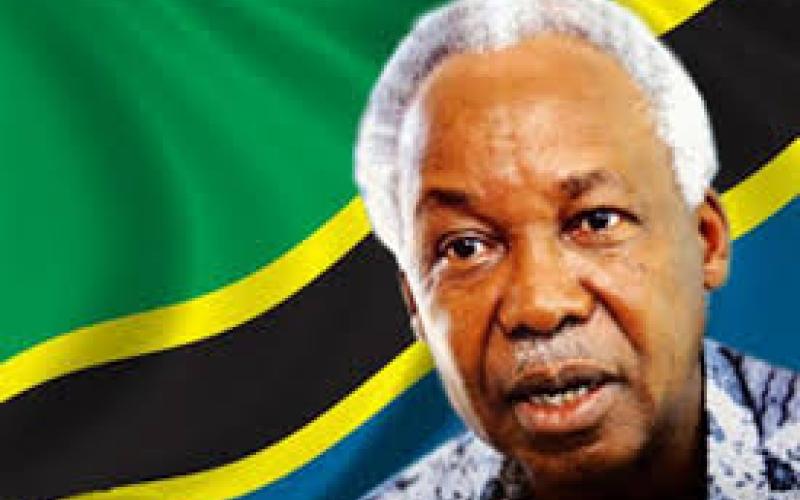
97th birthday of Julius Nyerere

(Born 13 April 1922, Butiama, Tanzania)
Herbert Ekwe-Ekwe

MWALIMU!  Arguably, the African World’s most principled leader of the 20th century... 

Head of Tanganyika African National Union, beginning 1954, which spearheads the restoration-of-independence movement in Tanzania that successfully frees the country in 1961 from 80 years of dual German and British conquests and occupations... Such is Britainraging greed to gobble up every slice of this magnificent African cake”, as génocidaire Belgian King Leopold II once ravenously described the gargantuan riches of Africa, that it seizes Tanganyika in 1918 after the defeat of Germany in the 1914-18 war to prevent the consequential freedom of the constituent African peoples in this state.

Southern Africa freedom

MWALIMU: president of the freed Tanzania republic, October 1964-November 1985, provides rearguard bases for education, medical care and military training (in Tanzania) for numerous southern African restoration-of-independence movements especially from Mozambique,  Zimbabwe, Namibia and South Africa (1960s-1990s) – focussing on the latter, South Africa, students and scholars of this conjunctural epoch of African history, 30-40 years ago, have watched, in recent years, usually incredulously as one can imagine, as hundreds of African émigrés in South Africa from Tanzania, Zimbabwe, Mozambique, Biafra and elsewhere from Africa are murdered in premeditated campaigns clearly organised by groupings in the country with tacit and at times active support from personages within the South Africa state ... additionally, in this vicious campaign, African émigrés’ residents and businesses have been destroyed and thousands of survivors sent into horrid South Africa refugee camps or forced to return to their various countries.

WE mustn’t ever forget that no restoration-of-independence project in any region of the vast African world in history attracted such captivating support and goodwill from African peoples across this universe as the South Africa liberation. Given this history, it is indeed a catastrophic irony that South Africa that now appears compulsorily to hunt down and murder African peoples from elsewhere domiciled within its frontiers is a monstrous shame and tragedy of contemporary Africa. 

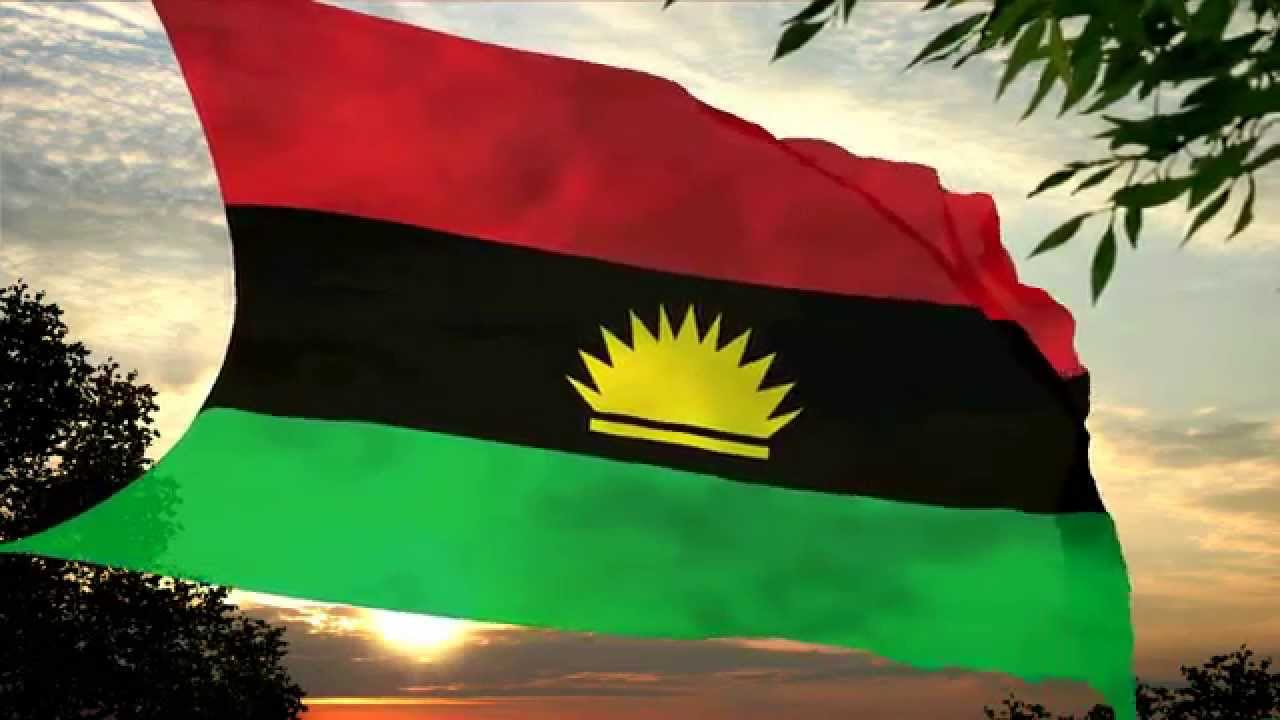
Biafra freedom

MWALIMU: one of the very few leaders in Africa who unequivocally condemns the Igbo genocide, 29 May 1966-12 January 1970 (phases I-III), during which an assemblage of pan-African nations in Nigeria including, especially, FulaniKanuri, HausaTivBachamaNupeJukunYorubaEdo and Urhobo in league with Britain murder 3.1 million Igbo people, 25 per cent of this nation’s population, in this gruesome, foundational genocide of post-(European)conquest Africa, worst genocide in Africa since génocidaire King Leopold II slaughtered 13 Million Africans in the Congo basin of central Africa, 1878-1908; supports the Biafra freedom movement.

East Africa freedom

MWALIMU: plays a key role in the 1978 termination of the Idi Amin Dada (who had earlier on in the 1950s/60s served the British military across the border in Kenya in savage expansive operations to suppress the Mau Mau freedom movement) murderous islamist military junta in neighbouring Uganda, in the same eviscerating squad as genocidists Muhammadu Buhari of Nigeria and Omar al-Bashier of the Sudan, which the British government in January 1971, under Prime Minister Edward Heath, participated centrally in installing to power principally over Uganda’s democratically elected government Milton Obote’s insistent opposition to the Heath administration’s impending arms sales to the European-minority occupation regime in South Africa, expressly contrary to the existing UN comprehensive arms embargo on the regime to which British is a signatory – another consequence on rest of Africa of these “close encounters” with this country South Africa manifesting so dramatically (and brutally) yet again...
(George Russell Sextet, “Honesty” [personnel: Russell, piano; Don Ellis, trumpet; Dave Baker, trombone; Eric Dolphy, alto saxophone; Steve Swallow, bass; Joe Hunt, drums; recorded: Riverside Records, New York, US, 8 May 1961])

*****Herbert Ekwe-Ekwe is the author of The longest genocide – since 29 May 1966 (2019) and co-author, with Lakeson Okwuonicha, of Why #DonaldTrump is #great for #Africa (2018)

Twitter @HerbertEkweEkwe


Tuesday, 25 September 2018

107th birthday of Eric Williams

(Born 25 September 1911, Port of Spain, Trinidad & Tobago)
Herbert Ekwe-Ekwe

ONE OF THE most outstanding African Caribbean intellectuals of all time, author of Capitalism and Slavery (1944), classic on African enslavement in the Americas by the pan-European World – from his 1938 Oxford University doctoral thesis, and first prime minister of Trinidad and Tobago, 31 August 1962, after centuries of the British/European World conquest, enslaving and occupation
(George Russell Sextet, “Honesty” [personnel: Russell, piano; Don Ellis, trumpet; Dave Baker, trombone; Eric Dolphy, alto saxophone; Steve SwallowJoe Hunt, bass; drums; recorded: Riverside Records, New York, US, 8 May 1961])
Twitter@HerbertEkweEkwe

Friday, 13 April 2018

96th birthday of Julius Nyerere

(Born 13 April 1922, Butiama, Tanzania)
Herbert Ekwe-Ekwe

MWALIMU! 

Head of the Tanganyika African National Union, beginning 1954, which spearheads the restoration-of-independence movement in Tanzania that successfully frees the country in 1961 from 80 years of dual German and British conquests and occupations... Such is Britains raging greed to gobble up every slice of this magnificent African cake”, as génocidaire Belgian King Leopold II once ravenously described the gargantuan riches of Africa, that it seizes Tanganyika in 1918 after the defeat of Germany in the 1914-18 war to prevent the consequential freedom of the constituent African peoples in this state.

Southern Africa freedom

MWALIMU: president of the freed Tanzania republic, October 1964-November 1985, provides rearguard bases for education, medical care  and military training (in Tanzania) for numerous southern African restoration-of-independence movements especially from Mozambique,  ZimbabweNamibia and South Africa (1960s-1990s) – focussing on the latter, South Africa, students and scholars of this conjunctural epoch of African history, 30-40 years ago, have watched, in recent years, usually incredulously as one can imagine, as hundreds of African émigrés in South Africa from Tanzania, Zimbabwe, Mozambique and elsewhere from Africa are murdered in premeditated campaigns clearly organised by groupings in the country with tacit and at times active support from personnages within the South Africa state ... additionally, in this vicious campaign, African émigrés’ residents and businesses have been destroyed and thousands of survivors sent into horrid South Africa refugee camps or forced to return to their various countries.

Biafra freedom

MWALIMU: one of the very few leaders in Africa who unequivocally condemns the Igbo genocide, 29 May 1966-12 January 1970, during which an assemblage of pan-African nations in Nigeria including, especially, Hausa-Fulani, Kanuri, Tiv, Bachama, Nupe, Jukun, Yoruba, Edo and Urhobo in league with Britain murder 3.1 million Igbo people, 25 per cent of this nation’s population, in this gruesome, foundational genocide of post-(European)conquest Africa, worst genocide in Africa since génocidaire King Leopold II slaughtered 13 Million Africans in the Congo Basin of central Africa, 1878-1908; supports the Biafra freedom movement.

East Africa freedom

MWALIMU: plays a key role in the 1978 termination of the Idi Amin Dada (who had earlier on in the 1950s/60s served the British military across the border in Kenya in savage expansive operations to suppress the Mau Mau freedom movement) murderous islamist military junta in neighbouring Uganda which the British government in January 1971, under Prime Minister Edward Heath, participated centrally in installing to power principally over Uganda’s democratically elected government Milton Obote’s principled opposition to the Heath administration’s impending arms sales to the European-minority occupation regime in South Africa, expressly contrary to the existing UN comprehensive arms embargo on the regime to which British is a signatory – another consequence on rest of Africa of these “close encounters” with this country South Africa manifesting so dramatically (and brutally) yet again...
(George Russell Sextet, “Honesty” [personnel: Russell, piano; Don Ellis, trumpet; Dave Baker, trombone; Eric Dolphy, alto saxophone; Steve Swallow, bass; Joe Hunt, drums; recorded: Riverside Records, New York, US, 8 May 1961])
Twitter @HerbertEkweEkwe

Monday, 25 September 2017

106th birthday of Eric Williams

(Born 25 September 1911, Port of Spain, Trinidad & Tobago)
ONE OF THE most outstanding African Caribbean intellectuals of all time, author of Capitalism and Slavery (1944), classic on African enslavement in the Americas by the pan-European World – from his 1938 Oxford University doctoral thesis, and first prime minister of Trinidad and Tobago, 31 August 1962, after centuries of the British/European World conquest, enslaving and occupation
(George Russell Sextet, “Honesty” [personnel: Russell, piano; Don Ellis, trumpet; Dave Baker, trombone; Eric Dolphy, alto saxophone; Steve SwallowJoe Hunt, bass; drums; recorded: Riverside Records, New York, US, 8 May 1961])
Twitter@HerbertEkweEkwe

Friday, 14 July 2017

On this eve of the Biafra referendum


Herbert Ekwe-Ekwe

Imprimatur of freedom

AS I OBSERVED recently
 (http://re-thinkingafrica.blogspot.co.uk/2017/06/herbert-ekwe-ekwe-biafra-freedom.html), the preemptive return of the Biafra freedom movement (to Biafra) has not only confronted and overridden the “conventional wisdom” that underscores the key trajectory of comparable liberation projects, the movement’s return is indeed its historic stamp of the imprimatur of the Biafra restoration-of-independence in Biafra for the first time since 13 January 1970 – genocidist Nigeria’s launch date of phase-IV of the Igbo genocide and the accompanying occupation of Biafra.

Appropriately to confront the pressing emergency of the times, the movement has at once planned a referendum throughout Biafra to democratically reestablish five decades of the loss of sovereign rights of the people and withdrawn from participating in any future “elections” organised in Biafra by the occupation. The latter exercises have in the past been distinctively fraudulent and immensely contradictory as the feudal Hausa-Fulani/islamist-led genocidist and occupying regime with no democratic heritage in its culture or history, not to mention genocidist Nigeria itself which has had no credible election throughout its history, would bizarrely posit to organise elections in (occupied) Igboland that has enjoyed an advanced republican democratic tradition for over a thousand years. For the occupation, regimes in the Biafra administrative regions (Abia, Anambra, Delta, Enuugwu, Rivers, etc., etc) that emerge from these “elections” exist solely to contribute to police the occupation. Nothing more. The operationalisation of this envisaged role was demonstrated most tragically, just recently, when not one head of regime in any of these administrative regions condemned the slaughter of their very own citizens by the genocidist military/Fulani militia in the already mentioned pogroms across Biafra since October 2015 in which a total of 2000 Igbo were murdered.

In July 2010, a high profile grouping of Igbo human rights intellectuals met in a conference in Enuugwu to discuss the state of this occupation of Biafra which the Biafra freedom movement, seven years later, must now terminate. In its concluding communiqué, the conference captures most profoundly what it aptly categorises as the “siege and occupation” of Igboland (http://re-thinkingafrica.blogspot.co.uk/2010/07/nigeria-perpetuates-violence-and.html):
[Igboland] has become militarized with a vast deployment of expeditionary and predatory police and army personnel who are from outside the region. For instance, there are 61 Police check-points between Abakal[e]k[e] … to Nsukka … (a distance of about 130km). In [contrast] between Obolo-Afo [Igboland] and Lokoja [Nigeria] (a distance of nearly 400 km) no checkpoints exist. This state of siege is exemplified by the current [situation] of … [Igbo] cities [including] Aba, [Enuugwu, Abakaleke, Onicha, Owere] and Nnewi – hitherto the fastest growing and thriving industrial cum commercial cities in the African continent now being turned into refuse dumps and ghettos. Businesses that would have provided jobs to engage our youths have been strangulated by incompetent and criminal leadership.
THERE CAN BE no other solution to this longest genocide of the contemporary era but the freedom of the Igbo people from Nigerian subjugation and occupation. The return of the Biafra freedom movement, shattering all known “conventions”, is the most strategic development in 47 years of the course of this journey. 

Freedom is inalienable. One does not ask for it; one takes it! The 50 million Igbo know they have to take their freedom as they head to the referendum to pronounce this liberatory choice as the world awaits so eagerly.
(George Russell Sextet, “Honesty” [personnel: Russell. Piano; Don Ellis, trumpet; Dave Baker, trombone; Eric Dolphy, alto saxophone; Steve Swallow, bass; Joe Hunt,
drums; recorded: Riverside Records, New York, US, 8 May 1961])
Twitter@HerbertEkweEkwe

Thursday, 13 April 2017

95th birthday of Julius Nyerere

(Born 13 April 1922, Butiama, Tanzania)
Herbert Ekwe-Ekwe

MWALIMU! 

Head of the Tanganyika African National Union, beginning 1954, which spearheads the restoration-of-independence movement in Tanzania that successfully frees the country in 1961 from 80 years of dual German and British conquests and occupations...

Southern Africa/Biafra freedom

President of the freed Tanzania republic, October 1964-November 1985, provides rearguard bases for education, medical care  and military training (in Tanzania) for numerous southern African restoration-of-independence movements especially from Mozambique,  Zimbabwe, Namibia and South Africa (1960s-1990s) – focussing on the latter, South Africa, students and scholars of this conjunctural epoch of African history, 30-40 years ago, watch, presently, usually incredulously as one can imagine, as hundreds of African émigrés in South Africa from Tanzania, Zimbabwe, Mozambique and elsewhere from Africa are murdered in premeditated campaigns clearly organised by groupings in the country with tacit and at times active support from personnages within the South Africa state and émigrés’ residents and businesses destroyed and thousands of survivors sent into horrid South Africa refugee camps or forced to return to their various countries; one of the very few leaders in Africa who unequivocally condemns the Igbo genocide, 29 May 1966-12 January 1970, during which Britain and client state Nigeria murder 3.1 million Igbo people, 25 per cent of this nation’s population, in this foundational genocide of post-(European)conquest Africa, supports the Biafra freedom movement.

East Africa

Finally, Mwalimu plays a key role in the 1978 termination of the Idi Amin Dada (who had earlier on in the 1950s/60s served the British military across the border in Kenya in savage expansive operations to suppress the Mau Mau freedom movement) murderous islamist military junta in neighbouring Uganda which the British government in January 1971, under Prime Minister Edward Heath, participated centrally in installing to power principally over Uganda’s democratically elected government Milton Obote’s principled opposition to the Heath administration’s impending arms sales to the European-minority occupation regime in South Africa, expressly contrary to the existing UN comprehensive arms embargo on the regime to which British is a signatory – another consequence on rest of Africa of these “close encounters” with this country South Africa manifesting so dramatically (and brutally) yet again...
(George Russell Sextet, “Honesty” [personnel: Russell, piano; Don Ellis, trumpet; Dave Baker, trombone; Eric Dolphy, alto saxophone; Steve Swallow, bass; Joe Hunt, drums; recorded: Riverside Records, New York, US, 8 May 1961])
Twitter @HerbertEkweEkwe