Rethinking Africa is a forward looking blog dedicated to the exchange of innovative thinking on issues affecting the advancement of African peoples wherever they are. We provide rigorous and insightful analyses on the issues affecting Africans and their vision of the world.
TODAY is the 89th birthday of Ornette
Coleman (born 9 March 1930, Fort Worth, Texas, US): alto saxophonist, trumpeter, violinist, composer, one of the very
top inventive jazz artists of all time – leading exponent of the avant-garde/free
jazz movement, beginning late 1950s/early 1960s when his varying working
quartets(personnel: Coleman, alto saxophone [tenor
saxophone on Ornette on Tenor only], Don Cherry,
cornet/trumpet/pocket trumpet; Charlie Haden/Scott LaFaro/Red
Mitchell/Percy Heath/Jimmy Garrison/Don Payne,
bass; Billy Higgins/Ed Blackwell/Shelly Manne,
drums) and quintet (Something Else!!!! only with Walter
Norris on piano) record seven classic albums:
1. Something Else!!!!, 1958
2. Tomorrow is the Question, 1959
3. The Shape of Jazz to Come, 1959
4. Change of the Century, 1959
5. This is our Music, 1960
6. Ornette!, 1961
7. Ornette on Tenor, 1961
and an eighth, this time recorded
by an octet:
8. Free Jazz, 1960
(personnel:Coleman, alto saxophone; Don Cherry, pocket trumpet; Freddie
Hubbard, trumpet; Eric Dolphy, bass clarinet; Charlie
Haden, bass; Scott LaFaro, bass; Ed Blackwell,
drums; Billy Higgins, drums) Biafra
IN this revolutionary epoch in which stretches of peoples and nations across
the globe but especially in the African World have risen against centuries of
pan-European conquest, occupation and subjugation and also pointedly in these
past 53 years, the Igbo resistance to the bludgeoning genocide being waged on
their people in Biafra by the Africa-based
Fulani islamist/jihadist-led Nigeria client state and its suzerain Britain,
Coleman’s music has consistently offered an infectiously gripping optimism for
freedom.
Igbo people have demonstrated extraordinary resilience in the resistance and
will surely overcome this
Anglo-Nigeria haematophagous monster as the strikingly innovative and
irrepressible Biafra freedom movement triumphs.
TWO compositions from the Coleman
repertoire couldn’t be more appropriate to capture the immense
transformational possibilities that success in Biafra will have for constituent
peoples in southwestcentral Africa region and elsewhere in Africa: “Turnaround”
(February 1959) and “Change of the century” (October 1959).
(Ornette Coleman Quartet, “Turnaround” [personnel: Coleman, alto saxophone; Don Cherry, trumpet; Red Mitchell, bass; Shelly Manne, drums; recorded: Contemporary’s Studio, Los Angeles, US, 23 February 1959])
(Ornette Coleman Quartet, “Change of the century” [personnel:Coleman, alto saxophone;Don Cherry, pocket trumpet;Charlie Haden, bass;Billy Higgins, drums; recorded: Radio Recorders in Hollywood, California, US, 8 October 1959])
Herbert Ekwe-Ekwe TODAY is the 88th birthday of Ornette Coleman: alto saxophonist, trumpeter, violinist, composer, one of the very top inventive jazz artists of all time – a leading exponent of the avant-garde/free jazz movement, beginning late 1950s/early 1960s when his varying working quartets (personnel: Coleman, alto saxophone [tenor saxophone on Ornette on Tenor only], Don Cherry, cornet/trumpet/pocket trumpet; Charlie Haden/Scott LaFaro/Red Mitchell/Percy Heath/Jimmy Garrison/Don Payne, bass; Billy Higgins/Ed Blackwell/Shelly Manne, drums) and quintet (Something Else!!!! only with Walter Norris on piano) record seven classic albums (Something Else!!!! [1958], Tomorrow is the Question [1959], The Shape of Jazz to Come [1959], Change of the Century [1959], This is our Music [1960], Ornette! [1961], Ornette on Tenor [1961]), and an eighth, this time recorded by an octet (Coleman, alto saxophone; Cherry, pocket trumpet; Freddie Hubbard, trumpet; Eric Dolphy, bass clarinet; Haden, bass; LaFaro, bass; Blackwell, drums; Higgins, drums), pertinently titled Free Jazz (1960). Biafra In this revolutionary epoch in which stretches
of peoples and nations across the globe but especially in the African World
have risen against centuries of pan-European conquest, occupation and
subjugation, and also, pointedly in these past 52 years, the Igbo resistance to
the bludgeoning genocide being waged on their people in Biafra by the Africa-based Hausa-Fulani/islamist-led
Nigeria client state and suzerain Britain, Coleman’s music has consistently
offered an infectiously gripping optimism for freedom. IGBO PEOPLE have demonstrated extraordinary resilience in their resistance to the genocide and will surely overcome this Anglo-Nigeria haematophagous monster as the strikingly innovative and irrepressible Biafra freedom movement triumphs. Two compositions from the Coleman repertoire couldn’t be more appropriate to capture the immense transformational possibilities that success in Biafra will have for constituent peoples in southwestcentral Africa region and elsewhere in Africa: “Turnaround” (February 1959) and “Change of the century” (October 1959).
(Ornette Coleman Quartet, “Turnaround” [personnel: Coleman, alto saxophone; Don Cherry, trumpet; Red Mitchell, bass; Shelly Manne, drums; recorded: Contemporary’s Studio, Los Angeles, US, 23 February 1959])
(Ornette Coleman Quartet, “Change of the century” [personnel:Coleman, alto saxophone;Don Cherry, pocket trumpet;Charlie Haden, bass;Billy Higgins, drums; recorded: Radio Recorders in Hollywood, California, US, 8 October 1959])
However you disguise it, this thing does not change:
The perpetual struggle between Good and Evil.
(TS Eliot, “Choruses from the Rock”, 1934)
FOR IGBO, prior to 29 May 1966, three important holidays were high up on their annual calendar: the Igbo National Day, the iri ji, or the New Yam Festival, and 1 October. The latter was the day of celebration for the restoration of independence for peoples in Nigeria after 60 years of the British conquest and occupation. Or, so were the thoughts predicated on this date’s designation...
Beacons
Igbo were one of the very few constituent nations in what was Nigeria, again prior to 29 May 1966, who understood, fully, the immense liberatory possibilities ushered in by 1 October and the interlocking challenges of the vast reconstructionary work required for state and societal transformation in the aftermath of foreign occupation. Igbo had the most robust economy in the country in their east region homeland, supplied the country with its leading writers, artists and scholars, supplied the country’s top universities with vice-chancellors (or presidents) and leading professors and scientists, supplied the country with its first indigenous university (the prestigious university at Nsukka), supplied the country with its leading and most spirited pan-Africanists, supplied the country with its top diplomats, supplied the country’s leading high schools with head teachers and administrators, supplied the country with its top bureaucrats, supplied the country with its leading businesspeople, supplied the country with an educated, top-rated professional officers-corps for its military and police forces, supplied the country with its leading sportspersons, essentially and effectively worked the country’s rail, postal, telegraphic, power, shipping and aviation services to quality standards not seen since in Nigeria…
AND THEY WERE surely aware of the vicissitudes engendered by this historic age precisely because the Igbo nation played the vanguard role in the freeing of Nigeria from Britain, beginning from the mid-1930s. The commentator, Sabella Ogbobode Abidde, couldn’t have been more emphatic in summarising the thrust of the Igbo mission during the period:
The Igbo nation ha[s] attributes most other Nigerian nationalities can only dream of and are what most other nations [are] not. The Igbo made Nigeria better. Any wonder then that the Igbo can do without Nigeria; but Nigeria and her myriad nationalities cannot do without the Igbo? Take the Igbo out of the Nigeria equation … and Nigeria will be gasping for air (nigeriavillagesquare.com, 28 July 2004).
The Igbo’s break with Nigeria occurred catastrophically on 29 May 1966. On this day, leaders of the Fulani north region (feudal overlords, muslim clergy, military, police, businesspeople, academics, civic servants, other public officials and patrons, alimajiri), who were long opposed to the liberation of Nigeria (there were no comparable clusters of political, cultural, ideational, religious, national or racial groupings anywhere else in the South World, during the era, which had a similar, unenviable disposition of hostility to emancipation from the European occupation of their lands as the Hausa-Fulani leadership), launched waves of premeditated genocidal attacks on Igbo migrant populations resident in the north. These attacks were later expanded to Biafra during the third phase which began on 6 July 1967, boosted particularly by the robust participation in the slaughter by the Yoruba, Urhobo, and Edo constituent pan-Africannations of west Nigeria as well as others elsewhere in the country, especially Hausa, Tiv, Nupe, Kanuri, Jukun, Bachama, Jarawa. 3.1 million Igbo or one-quarter of this nation’s population were murdered during those 44 dreadful months.
Opportunism THE YORUBA SUPPORT FOR THE GENOCIDE, as from 6 July 1967, for instance, bears all the hallmark of a squelching cadence of opportunism. Influential Yoruba personages (especially Obasanjo, Adekunle, Gbadamosi-King, Akinrinade, Rotimi, Are, Taiwo) under the operational gaze of chief genocidist “theorist” Obafemi Awolowo, plunged headlong, carrying out theirown rolein this gruesome foundational genocide of post-(European)conquest Africa most fiendishly, particularly across their chosen south Igboland killing fields. The Yoruba appeared to have lost, quite spectacularly, the 1930s-1960s Igbo-Yoruba competitive “preparatory drive” to develop the high-level humanpower and ancillary resources required to run the prospective post-conquest state after the British departure. They therefore viewed the outbreak of the mid-1966 Igbo mass killings in the north region and elsewhere as welcome season to “avenge” their “loss” during the great sociocultural rivalry of those previous three decades, clutching onto any bomb or missile available, from July 1967, on their onward death-march east to lob, remorselessly, into besieged Biafra, into a Biafran home, Biafran school, Biafran shrine, Biafran church, Biafran hospital, Biafran office, Biafran market, Biafran farmland, Biafran factory/industrial enterprise, Biafran children’s playground, Biafran town hall, Biafran refugee centre…
Civilisation
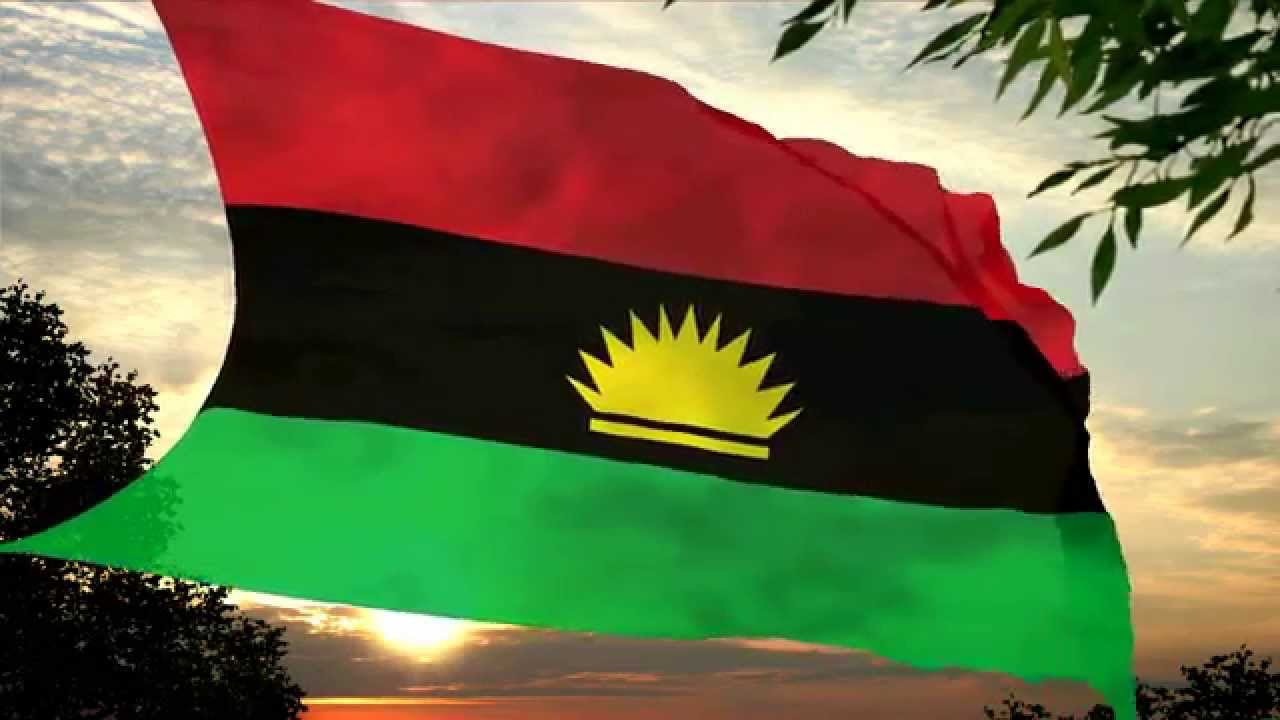
FIFTY years on, Biafrans have written an extraordinary essay on human survival and fortitude, a beacon of the tenacity of the spirit of human overcoming of the most desperate, unimaginable brutish forces. On this eve of the 50th anniversary of the launch of the genocide, Biafrans are putting final touches to the restoration of the sovereignty of their beloved Biafra, thisLand of the Rising Sun. The construction of this advanced civilisation in southwestcentral Africa has already begun.
(Ornette Coleman Quartet, “Turnaround” [personnel: Coleman, alto saxophone; Don Cherry, pocket trumpet; Red Mitchell, bass; Shelly Manne, drums; recorded: Contemporary’s Studio, Los Angeles, US, 23 February 1959])
*****Herbert Ekwe-Ekwe’s books on the Igbo genocide and
Biafra include Readings from Reading: Essays on African Politics, Genocide,
Literature (2011), Biafra Revisited (2006) and African Literature in
Defence of History: An essay on Chinua Achebe (2001)
THE BRITISH BROADCASTING CORPORATION describes Scottish people
in pursuit of independence from Britain or the United Kingdom as “Scottish
nationalists”.
Any researcher can find this characterisation by examining the
BBC’s well-stacked library of broadcasts and publications on the subject. This
is why Alex Salmond, for instance, would be designated as “Scottish
nationalist” or “former Scottish nationalist leader” and Nicola Sturgeon is
described as “Scottish nationalist” or “Scottish nationalist leader”. SCOTS are
5 million in population and had in 1707 joined England out of their own choice (democratically) to
form United Kingdom/British state. As the latter subsequently conquered most of
the world to construct a “British empire”, Scots played a critical role in the
enterprise that belied their much smaller population background. This ensured that
they, now a constituent nation of the UK, became crucial beneficiaries of the stupendous
harvest returns of global conquests and occupations. As a result, Scots indeed became
the most unlikely candidates in 2014 who would wish to declare their
independence from this 300-year-old immensely fruitful union (http://re-thinkingafrica.blogspot.co.uk/2012/01/rights-for-scots-rights-for-igbo.html, accessed 7 December 2015).
THE BBC, on the other hand, categorises the 50 millionpeople
of Biafra, southwestcentral Africa, who, since the 29 May 1966 launch date of
the Igbo genocide by Nigeria have sought their independence from Nigeria, as
“secessionists”.
In tune, the BBC describes Chukwuemeka Odumegwu Ojukwu, the
founding leader of the Biafran independence movement, “secessionist leader” – a
tag it wouldn’t dare use to refer to either Alex Salmond or Nicola Sturgeon, not
even Douglas Young! Similarly, whilst the BBC utilises “secessionist” to refer
to hundreds of thousands of Biafran demonstrators across Biafra and elsewhere in
the world currently involved in historic peaceful marches for independence, it
wouldn’t dare employ such a term in describing those Scots who voted “Yes”
during the September 2014 referendum on Scottish independence. The latter are
cited as “nationalists” or “supporters of Scottish independence”.
Choice: “primary” vs “privilege”
Some would probably wonder what differences, if any, the BBC’s
choice of terminologies makes: aren’t
these terms broadly synonymous – indicating the desire of two peoples, Biafrans
and Scots, to declare their rights for self-determination or independence from Nigeria
and Britain, respectively? No, not totally, except to the cursory observer. In
the Scottish example, the BBC is almost straining itself to the hilt to
emphasise that the Scots are the primary,
actuating agency in deciding to exercise this right for freedom from Britain.
If one is unaware that the United Nations regards this right for all peoples as inalienable, the thrust
of BBC’s coverage on the Scots has surely demonstrated this as such to its
listeners, viewers and readers.
In contrast to the Scots,
the BBC’s approach to Biafran independence or self-determination couldn’t be
starker. Here, by harping on its worn “secessionist” signature, and the latter’s evidently
overarching territorial “decoupling” overtones, the BBC privileges the Nigeria
state, this state that conqueror Britain imposed arbitrarily on scores of
subjugated African nations and peoples in the aftermath of the pan-European leaders’ infamous 1884-1885
Berlin-conquest conference on Africa. NIGERIA is arguably the most notorious of Africa’s “Berlin states”. This is the state, led by Fulani islamist/jihadists and their loyal pan-African constituent nations’ allies (especially Yoruba, Jukun, Edo, Bachama, Urhobo, Nupe, Kanuri, Hausa), that carried out the Igbo genocide, 29 May 1966-12 January 1970 (phases I-III), this foundational
genocide of post-(European)conquest state, murdering 3.1 million Igbo or
one-quarter of this nation’s population and inaugurating Africa’s current age of pestilence during which 12
million additional Africans have been murdered in further genocide in Rwanda
(1994), Zaïre/Democratic Republic of the Congo (variously, since the late
1990s) and Darfur/Nuba Mountains/South Kordofan (all in Sudan since 2003) and
in other wars in Africa. Besides known as a scary kakistocratic lair, the Nigeria
state also harbours the most ruthless terrorist organisation in the world
presently ( http://re-thinkingafrica.blogspot.co.uk/2015/11/institute-for-economics-peace-global.html, accessed 7 December 2015).
Role(s)
So, why is the British Broadcasting
Corporation, a state public broadcaster largely funded by the British taxpayer,
trenchantly hostile to the independence of Biafran people in a homeland in
southwestcentral Africa, 3140 miles away from Britain in Europe?
BRITAIN played a central role in the
Igbo genocide – politically, diplomatically, militarily. Britain’s role covered
the entire stretch of the genocide, phases I-III (May 1966-January 1970), namely
from its conceptualisation in Lagos and Ibadan (west Nigeria) and Kaduna and
Zaria and Sokoto (north Nigeria) to its catastrophic outcome. Without Britain,
the Igbo genocide probably wouldn’t have occurred. It was therefore not
surprising that, as the slaughter of the Igbo intensified,
particularly in those horrendous months of 1968-1969, Harold Wilson, British
prime minister, was totally unperturbed as he informed Clyde Ferguson, the
United States state department special coordinator for relief to Biafra, that
he, Harold Wilson, “would accept a half million dead Biafrans if that was what
it took” Nigeria to destroy the Igbo resistance to the genocide (Roger
Morris, Uncertain Greatness: Henry Kissinger and American Foreign Policy, 1977: 122).
(Harold Wilson:“[I] would accept half a million dead Biafrans if that was what it took...” Nigeria to destroy the Igbo resistance to the genocide)
SUCH IS the grotesquely expressed diminution of
African life made by a supposedly leading politician of the world of the 1960s
– barely 20 years after the deplorable perpetration of the Jewish genocide in
Europe. As the final tally of the murder of the Igbo demonstrates, Harold
Wilson probably had the perverted satisfaction of having his Nigerian
subalterns perform far in excess of the prime minister’s grim target, a subject
coldly stated in Wilson’sownmemoirs where he notes that the
Nigerian military, equipped zealously by Britain, expended more small arms
ammunition in its campaign to achieve its annihilative mission in Biafra than
the amount used by the British armed forces “during the
whole” of the Second World War (Harold
Wilson, Labour Government, 1964-1970: A Personal Record, 1971: 630, added emphasis). On this feature, Robert
Scott, military advisor in the British diplomatic mission in Nigeria, during
the period, acknowledges, equally gravely, that as Nigerian genocidist military
forces unleashed their attacks on Biafran cities, towns and villages, they were
the “best defoliant agent known” (Daily Telegraph, London, 11 January 1970).
As for the BBC, the role of its BBC World Service channel during the
Igbo genocide was nothing short of being the external radio station for the
prosecuting Nigerian genocidist junta in Lagos. This service was much more
robust in its “rationalisation” of the genocide (“one Nigeria”, “territorial
integrity”, “inviolability of colonial-set frontiers”, “indissolubility of
colonial-set borders”, “rebels”, “unacceptable precedence for rest of Africa”,
“secessionist!”, “secessionist!”, “secessionist!”…) than the rambling,
ramshackle Voice of Nigeria.
FIFTY YEARS on, the BBC is still at it – supporting
genocide against Igbo people by Nigeria in its broadcasts, as this crime
against humanity continues to play out in phase-IV currently. It should be
noted that it is this very key BBC favourite “secessionist” tag on Biafran
independence that the Nigerian regime invoked just last Wednesday, 2 December
2015, news item aptly carried by the BBC on its website, before ordering its forces to attack peaceful Biafran freedom
demonstrators in Onicha, the river port of Biafra’sOshimili Delta.
While the BBC has still not found it fit to
broadcast the predictable outcome of this Onicha attack to the world, in other
words inform the world of the aftermath
of the Nigerian regime’s blatant militarist threat on the peaceful
demonstrators which the BBC itself announced hitherto, the following excerpts
from the detailed report on what has since turned out as the Onicha massacre from the respected
Lagos-based Civil Liberties Organisation is of utmost urgency:
A contingent of
the heavily armed joint task force, consisting of personnel from the Army,
Navy, police and Nigeria Security and Civil Defense Corps, last Wednesday [2
December 2015] attacked thousands of unarmed members of the Indigenous People
of Biafra (IPOB), a group seeking a separate republic to be called Biafra … The
joint task force stormed the head bridge at 1:30 a.m. last Wednesday and began
shooting sporadically into the crowd, killing 11 protesters and injuring
numerous more … This is a case of gross violation of human rights, use of
excessive force and a crime against humanity … This barbaric act has no place
in a modern society as it also gravely undermines all UN, AU and other
international, regional and national human rights mechanisms. Nothing,
whatsoever, can justify this flagrant infraction on the rights of the citizens.
ONCE AGAIN, if
anyone needs reminding that Nigeria has been, for the Igbo,
a haematophagousquagmirethroughout its history, the saliency of this latest massacre
cannot be overstressed. In June 1945 and May 1953, right there under the very
watch of the British occupation, the Hausa-Fulani north region allies of the
conquest, opposed to the Igbo-led African restoration-of-independence campaign,
carried out carefully planned pogroms against Igbo migrant populations in Jos
and Kano, respectively. Hundreds of Igbo were murdered in these outrages. The
occupation charged no one for these crimes and the pogroms became
dress-rehearsals for the May 1966-January 1970 genocide. Since the
beginning of phase-IV of the genocide, 13 January 1970, tens of thousands of
Igbo have been murdered across Nigeria but especially in the north region
including those slaughtered by the Boko Haram terrorists.
Wednesday 2 December 2015 has now become a graphically
unnerving day of tragedy across two continents. In north America, an islamist
terrorist couple, husband and wife, embarked on the premeditated massacre of 14
peaceful citizens in San Bernardino, California, United States. In Africa, a
terrorist Nigerian military brigade, assembled from specialised detachments of navy, army, police, secret police, other
undisclosed units, embarked on the premeditated massacre of 11 peaceful
citizens in Onicha, Biafra, a number of them college students. The BBC has
carried out expansive and continuing coverage of the San Bernardino massacre;
the BBC has yet to cover the Onicha massacre in its broadcasts. Few now doubt the
BBC’s doggedly entrenched position as a principal motivational ally in Nigeria’s
prosecution of the Igbo genocide, presently humanity’s longest stretched
genocide.
Babies and children’s survivor-leadership
BIAFRANS will surely free their land. It is
high time BBC editors got used to this eventuality. Since Friday 6 November
2015, 33 days, hundreds of thousands of peaceful Biafrans have turned their
cities and towns and villages into panoramic freedom park marches, unprecedented
in Africa, demanding the restoration of the sovereignty of their beloved Biafra
and insisting on the release of freedom broadcasterNnamdi Kanu, illegally detained by the Nigeria regime.
Biafrans are redefining the dynamics of the march for freedom in Africa. Biafra
will be free. Nigeria, this essentially anti-African imperium created to programmatically enrich British strategic interests in perpetuity is, in fact, in
freefall with its epitaph already signposting its dreadful history:
Haematophagous Monster.
Lest we forget:
Those who lead this current phase of resistance to the Igbo genocide were the
babies/children-survivors of the July 1967-January 1970 refugee death camps
of Biafra, effectively survivors of that dreadful Harold Wilson-death wish.
These great survivors, who have now come of age, will free Biafra.
(Biafra today: ...have turned their cities and towns and villages into panoramic freedom park marches, unprecedented in Africa...)
The crime of genocide, thankfully, has no statute of limitations in
international law. No other African peoples have suffered such an extensive and
gruesome genocide and incalculable impoverishment in a century as the Igbo.
All individuals and institutions involved in committing this crime, wherever
they are or emplaced, will one day account for their role in court.
IN THE MEANTIME, the British Broadcasting Corporation will much sooner than later
begin to come to terms with the fact that “what’s good” in the universal right
of self-determination for those who live between latitudes 55 and 65˚N of the
globe, for instance the Scots, “is good” for those who live between latitudes 4
and 14˚N, for instance Biafrans.
(Ornette Coleman Quartet, “WRU” {or Wit and its Relation to the Unconscious – Freud} [personnel:Coleman, alto saxophone;Don Cherry, pocket trumpet;Scott LaFaro, bass;Ed Blackwell, drums; recorded: Atlantic Studios, New York, US, 31 January 1961])
*****Herbert
Ekwe-Ekwe books on the Igbo genocide and Biafra
include Readings from Reading: Essays on African Politics, Genocide, Literature(2011),
Biafra Revisited (2006) and African Literature in Defence of History: An essay
on Chinua Achebe (2001)
Herbert Ekwe-Ekwe is specialist on the state and on genocide & wars in Africa in the post-1966 epoch – beginning with the Igbo genocide, 29 May 1966-present day, the foundational and most gruesome genocide of post-(European)conquest Africa. 3.1 million Igbo or 25 per cent of this nation’s population were murdered by Nigeria and its allies, principally Britain. Africa and the rest of the world largely stood by and watched as the perpetrators enacted this horror most ruthlessly. The world could have stopped this genocide; the world should have stopped this genocide. This genocide inaugurated Africa’s current age of pestilence. During the period, 12 million additional Africans have been murdered in further genocide in Rwanda (1994), Zaïre/DRCongo (variously, since the late 1990s) and Darfur – west of the Sudan – (since 2004) and in other wars in Africa. African peoples have, presently, no other choice but exit/dismantle the extant genocide-state (the bane of their existence & progress) & construct own nation-centred states that serve their interests. He is author of several books & papers on the subject and his new book is entitled The longest genocide – since 29 May 1966 (2019).