Showing posts with label 3.1m Igbo. Show all posts

Friday, 27 September 2019

What does genocidist Nigeria claim it wishes to “celebrate” on Tuesday 1 October 2019? Is it its savagely earned egregious accolade of perpetrating the Igbo genocide, 29 May 1966-present day, the foundational genocide of post(European)conquest Africa, with its suzerain state Britain, during which it murdered 3.1 million Igbo people and additional tens of thousands of Igbo?


Herbert Ekwe-Ekwe

1966-1970IgboGenocide(phases I-III)IgboPeopleMurdered 
3.1millionIgboPeopleMurdered1966-1970IgboGenocide(phase I-III) 
3.1millionIgboPeopleMurdered1966-1970IgboGenocide(phase I-III)
3.1millionIgboPeopleMurdered1966-1970IgboGenocide(phases I-III)
3.1millionIgboPeopleMurdered1966-1970IgboGenocide (phases I-III)
3.1millionIgboPeopleMurdered1966-1970IgboGenocide(phases I-III)
3.1millionIgboPeopleMurdered1966-1970igboGenocide(phases I-III)
1966-1970IgboGenocide3.1millionIgboPeopleMurdered(phases I-III)
3.1millionIgboPeopleMurdered1966-1970IgboGenocide(phases I-III)
3.1millionIgboPeopleMurdered1966-1970igboGenocide(phases I-III)
1966-1970IgboGenocide3.1millionIgboPeopleMurdered(phases I-III)
(John Coltrane Quartet, “Consequences” – 4th movement in First Meditations {for Quartet} [personnel: Coltrane, tenor saxophone; McCoy Tyner, piano; Jimmy Garrison, bass; Elvin Jonesdrums; recorded: Van Gelder Studio, Englewood Cliffs, NJ, US, 2 November 1965])

*****Herbert Ekwe-Ekwe’s recently published books on the Igbo genocide and Biafra are The longest genocide – since 29 May 1966 (2019) and co-author, with Lakeson OkwuonichaWhy #DonaldTrump is #great for #Africa (2018)


 Twitter @HerbertEkweEkwe


Tuesday, 24 September 2019

Igbo vanguard on the move


Herbert Ekwe-Ekwe

BEGINNING in the early 1930s to October 1960, the Igbo nation played the vanguard role in the campaign for restoration-of-independence to terminate 100 years of the British conquest and occupation of the multiplicity of states and peoples of southwestcentral Africa region which the conqueror regime contemptuously tagged “Nigeria” – the “n*****” area/land, the egregious racist epithet

Britain responded with the genocide of the Igbo and employed its Fulani islamist/jihadist client on the ground, inveterately anti-African who hitherto opposed the restoration-of-independence drive,  and the Fulani’s enduringly loyal pan-African constituent nations’ allies in Nigeria (particularly Yoruba, Jukun, Tiv, Urhobo, Hausa, Edo, Jawara, Nupe, Kanuri, Bachama) to execute this unprecedented mass murder of a people in contemporary Africa history most brazenly. The genocidists slaughtered 3.1 million Igbo or 25 per cent of the Igbo population during the course of 44 months, 29 May 1966-12 January 1970, phases I-III. Tens of thousands of additional Igbo have been murdered subsequently, 13 January 1970-present day, phase-IV, as the genocide continues in its 53rd year.

IGBO PEOPLE have not only survived the genocide but are now in the vanguard to construct Biafra, an African peoples-centred state, that at once effectuates an African people’s control of its destiny not seen for centuries in Africa and the collapse of the Anglo/European World anti-African “Berlin-states” or constellation of EuroConqueror league states dotted across Africa such as that evidently bubonic encampment of doom the British labelled  “Nigeria”.
(John Coltrane Quartet, “Sun ship” [personnel: Coltrane, tenor saxophone, McCoy Tyner, piano; Jimmy Garrison, bass;  Elvin Jones, drums; recorded: Impulse!, New York, US,  26 August 1965])

******Herbert Ekwe-Ekwe’s latest books on the Igbo genocide and Biafra are The longest genocide – since 29 May 1966 (2019) and co-author, with Lakeson OkwuonichaWhy #DonaldTrump is #great for #Africa (2018)

Twitter @HerbertEkweEkwe


Friday, 16 August 2019

89th birthday of Christopher Okigbo – great Biafran and Africa’s most influential and celebrated poet

(Born 16 August 1930, Ojoto, Biafra)

Herbert Ekwe-Ekwe  

TODAY, Friday 16 August 2019, is the 89th birthday of the great Christopher Ifekandu Okigbo.
Okigbo is Africa’s most celebrated and most influential poet. He occupied the poetry chair of the continent’s post- (European)conquest literary academy in the 1960s with Chinua Achebe the head of the novel institute and Wole Soyinka, head of drama.

Okigbo’s scholarship and influences are extensive and varied: Igbo history, mythology, art and philosophy, ancient world religious and spiritual heritage encompassing Nri, Kemet (“ancient Egypt”), Babylon, Judaism, Hinduism, Buddhism, Christianity, Greece and Roman as well as the poetry of Ovid, Virgil, Dante, Milton, Yeats, Mallarmé, Eliot, Pound, Hopkins.

RIGHT from the outset, Okigbo’s perspicacious intellectual contribution in mapping out the tenets of Africa’s renaissance scholarship is his focus on both redeeming the European occupation’s assault on the spiritual embodiment of the African existence, in the wake of the conquest, and confronting a ruthless genocide state-in-the-making in Nigeria at the first half of the 1960s. Okigbo’s worldview does not tolerate any excuses for either the perpetration or perpetuation of any forms of tyranny and subjugation of peoples. Since then, Okigbo’s poetry has had a profound impact on the work of several poets of his generation as well as on the ever-expanding stretch of the continuing-Igbo genocide-generation of poets and writers in other genres.

Crucial site

FIFTY THREE years on, the state in contemporary Africa is essentially a genocide-state – exemplified, most catastrophically, by Nigeria, the Sudan and the so-called Democratic Republic of the Congo.

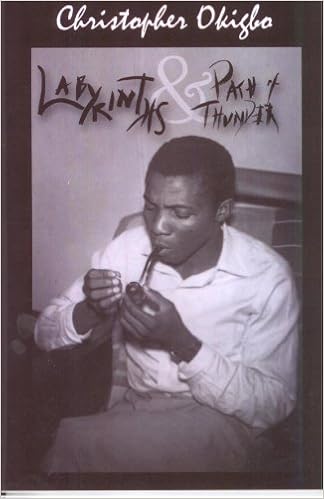
Okigbo’s incisive scholarship (see, especially, Christopher Okigbo, HeavensgateSilencesLimitsDistances, “Laments of the Masks”, “Laments of the Deer”, “Four Canzones” and Path of Thunder), to the poet’s eternal credit, anticipates the nature and characterisation of the multifocal crises of this development and rigorously interrogates their tragic consequences.

For Okigbo, given the operationalising backdrop of the European conquest and occupation, the spiritual is a crucial site of the African resistance and campaign for the restoration of sovereignty. This is because the eventual goal of the occupation’s assault is aimed at burrowing a cataclastic fault-line in the soul of the people to pre-empt or complicate their determined process of recovery on the morrow of the triumph of freedom.

EVIDENTLY, Okigbo responds to this emergency, in his poetry, by weaving a multilayered and panoramic landscape of often-complex fabric of overarching architecture of ideas that meditates on the variegated spiritual universe of the people.
Genocide

In the 1960-1966 Nigeria historical context, particularly, Okigbo’s poetry of resistance pitches its tent squarely on behalf of those who would confront blatantly-rigged election results (1959/1960-1966) and imposed parties and leaderships (1959-1966), rigged census returns (1962, 1963), arbitrary arrests and detentions (1960-1966), rabid and rampant authoritarianism (1960-1966) and, most tragically of all, the Nigeria state & its British suzerain state-organised genocide against the Igbo people (beginning Sunday 29 May 1966). The poet himself was killed defending his beloved motherland. The dual-genocidists murdered 3.1 million Igbo people or one-quarter of the Igbo population during the 44 months of phases I-III of the genocide – 29 May 1966-12 January 1970. In phase-IV, which the genocidists launched on 13 January 1970 and continues unrelentingly to this day, they have murdered tens of thousands of additional Igbo. The latter include the 3000 Igbo murdered since November 2015 by the fiendish Muhammadu Buhari genocidist regime which was installed in power by ex-British Prime Minister David Cameron and Barack Hussein Obama, ex-US president, the first African-descent president in 233 years of the founding of the United States republic. Barack Hussein Obama’s unconscionable support for the Igbo genocide is the abominable legacy of his presidency.

In the gripping lines of Okigbo’s last poem cycle, Path of Thunder, written before the 29 May 1966 outbreak of the Igbo genocide but published posthumously, he breathtakingly presages the contours of the cataclysmic consequences of Africa’s foundational genocide of the 20th century and his own likely death during the slaughter:

AND THE HORN may now paw the air howling goodbye …

For the Eagles are now in sight:
Shadows in the horizon –

THE ROBBERS are here in black sudden steps of showers, of
caterpillar – 
 
THE EAGLES have come again,
The eagles rain down on us –

POLITICIANS are back in giant hidden steps of howitzers, of
detonators – 
THE EAGLES descend on us,
Bayonets and cannons – 

THE ROBBERS descend on us to strip us of our laughter, of our 
thunder – 

THE EAGLES have chosen their game …


POLITICIANS are here in this iron dance of mortars, of
generators – 
 
THE EAGLES are suddenly there,
New stars of iron dawn;

So let the horn paw the air howling goodbye …

O mother mother Earth, unbind me; let this be
my last testament; let this be
The ram’s hidden wish to the sword the sword’s
secret prayer to the scabbard –


BEYOND the iron path careering along the same beaten track – 

THE GLIMPSE of a dream lies smouldering in a cave,
together with the mortally wounded birds.
Earth, unbind me; let me be the prodigal; let this be
the ram’s ultimate prayer to the tether …

AN OLD STAR departs, leaves us here on the shore
Gazing heavenward for a new star approaching;
The new star appears, foreshadows its going
Before a going and coming that goes on forever…
 (Christopher OkigboLabyrinths with Path of Thunder, 2008: 71-72.)
Many a season
CHRISTOPHER IFEKANDU OKIGBO would be appalled by the devastation of Biafra, 53 years after the end of the phases I-III of the Igbo genocide, and 49 years after the launch of phase-IV of the genocide. The Fulani islamist/jihadist-led league of genocidist executioners on the ground in Nigeria and their centrally actuating constituent  pan-African nations’ accomplices – Yoruba, Gwari, Jukun, Jawara, Kanuri, Tiv, Edo, Nupe, Hausa, Urhobo, Bachama – have indeed unleashed a half of century of unmitigated savagery on Igbo people, unprecedented in African history. Co-genocidist Britain, beginning with Prime Minister Harold Wilson on 29 May 1966, couldn’t have bargained for less in constructing such a ghoulish slaughtering coalition with its steadfast Nigerian allies.
Okigbo wouldn’t rest on his laurels, though, in response to challenge and overcome what is undoubtedly a clear, conscious, beastly-scripted and targetedly-driven juggernaut to destroy the Igbo, one of the world’s very talented peoples. Okigbo, who believes in the power of words, would head for his keyboard … and more… 

HISTORY testifies that the quest for human freedom is not often an engagement pursued over just one season. For many, and the Igbo appear to be incorporated in this group, it is rather much more painfully drawn out; it could entail a cast of over several, long seasons. This trajectory, therefore, inevitably, encapsulates its vivid vicissitudes of pain, grief, opportunities, turmoil, setbacks, triumphs, turmoil, grief, opportunities, breakthrough. What is at stake here is for a more focused, more steadfast, and a more enduring understanding of the huge tasks ahead. Surely this is music in the ears of the resourceful and resilient Igbo people.

The Igbo will defeat this half a century of genocide. Unfailingly. The Igbo will rebuild their battered towns and villages and economy – which was Africa’s fastest growing powerhouse on the eve of the genocide. Unquestionably, the Igbo will restore their sovereignty. 
 
AS THE Okigboan œuvre demonstrates, human freedom eventually prevails most luminously. Okaa Omee.
(Sam Rivers Quintet, “Mellifluous cacophony” [personnel: Rivers, tenor saxophone; Freddie Hubbard, trumpet; Herbie Hancock, piano; Ron Carter, bass; Joe Chambers, drums; recorded: Van Gelder Studio, Englewood Cliffs, NJ, US, 21 May 1965])

*****Herbert Ekwe-Ekwe’s latest books on the Igbo genocide and Biafra are The longest genocide – since 29 May 1966 (2019) and co-author, with Lakeson OkwuonichaWhy #DonaldTrump is #great for #Africa (2018)

Twitter @HerbertEkweEkwe

Saturday, 9 March 2019

Ornette Coleman, freedom, Biafra

(Ornette Coleman: ... freedom)
Herbert Ekwe-Ekwe

TODAY is the 89th birthday of Ornette Coleman (born 9 March 1930, Fort Worth, Texas, US):  alto saxophonist, trumpeter, violinist, composer, one of the very top inventive jazz artists of all time – leading exponent of the avant-garde/free jazz movement, beginning late 1950s/early 1960s when his varying working quartets (personnel: Coleman, alto saxophone [tenor saxophone on Ornette on Tenor only], Don Cherry, cornet/trumpet/pocket trumpet; Charlie Haden/Scott LaFaro/Red Mitchell/Percy Heath/Jimmy Garrison/Don Payne, bass; Billy Higgins/Ed Blackwell/Shelly Manne, drums) and quintet (Something Else!!!! only with Walter Norris on piano) record seven classic albums:

1. Something Else!!!!, 1958

2. Tomorrow is the Question, 1959

3. The Shape of Jazz to Come, 1959

4. Change of the Century, 1959

5. This is our Music, 1960

6. Ornette!, 1961

7. Ornette on Tenor, 1961

and an eighth, this time recorded by an octet:

8. Free Jazz, 1960
(personnel: Coleman, alto saxophone; Don Cherry, pocket trumpet; Freddie Hubbard, trumpet; Eric Dolphy, bass clarinet; Charlie Haden, bass; Scott LaFaro, bass; Ed Blackwell, drums; Billy Higgins, drums)

Biafra


IN this revolutionary epoch in which stretches of peoples and nations across the globe but especially in the African World have risen against centuries of pan-European conquest, occupation and subjugation and also pointedly in these past 53 years, the Igbo resistance to the bludgeoning genocide being waged on their people in Biafra by the Africa-based Fulani islamist/jihadist-led Nigeria client state and its suzerain Britain, Coleman’s music has consistently offered an infectiously gripping optimism for freedom. 


Igbo people have demonstrated extraordinary resilience in the resistance and will surely overcome this Anglo-Nigeria haematophagous monster as the strikingly innovative and irrepressible Biafra freedom movement triumphs.

TWO compositions from the Coleman repertoire couldn’t be more appropriate to capture the immense transformational possibilities that success in Biafra will have for constituent peoples in southwestcentral Africa region and elsewhere in Africa: “Turnaround” (February 1959) and “Change of the century” (October 1959).
(Ornette Coleman Quartet, “Turnaround” [personnel: Coleman, alto saxophone; Don Cherry, trumpet; Red Mitchell, bass; Shelly Manne, drums; recorded: Contemporary’s Studio, Los Angeles, US, 23 February 1959])
(Ornette Coleman Quartet, “Change of the century” [personnel: Coleman, alto saxophone; Don Cherry, pocket trumpet; Charlie Haden, bass; Billy Higgins, drums; recorded: Radio Recorders in Hollywood, California, US, 8 October 1959])

*****Herbert Ekwe-Ekwe is author of the recently published The longest genocide  since 29 May 1966 (2019)  (https://re-thinkingafrica.blogspot.com/2019/01/published-longest-genocide-since-29-may.html)

Twitter @HerbertEkweEkwe


Sunday, 4 November 2018

85th birthday of Chukwuemeka Odumegwu Ojukwu

(Born 4 November 1933, Zungeru, Nigeria)
Herbert Ekwe-Ekwe

Historian and general, arguably the most outstanding Igbo leader in history – at just 32, becomes head of the Biafran resistance during phases I-III of the Igbo genocide, 29 May 1966-12 January 1970, this worst catastrophe in Igbo history, when 3.1 million Igbo people or 25 per cent of this nation’s population are murdered by the Fulani islamists/jihadists-led Nigeria and its suzerain state Britain under the Harold Wilson premiership in the foundational genocide of post-(European)conquest Africa; demonstrates, throughout these devastating 44 months of the génocidaires’ comprehensive land, aerial and naval blockade and bombardment and slaughtering of Igbo people (unprecedented in African history), unrelenting purpose, intelligence, poise, dedication, tenacity, resilience; phase-IV of the Igbo genocide has raged since 13 January 1970 and has continued presently with the génocidaires’ murders of tens of thousands of additional Igbo including the 3000 slaughtered by the fiendish Muhammandu Buhari regime and its adjunct Fulani militia and Boko Haram terrorists (both terrorists are part of the contemporary worlds five deadliest terrorist organisations) – beginning in November 2015 soon after Buhari was imposed on Nigeria as head of regime by former US President Barack Obama, first African-descent president of the United States, 233 years after the founding of the republic, and David Cameron, former British prime minister
(John Coltrane Duo, “Leo” [personnel: Coltrane, tenor saxophone, bells; Rashied Ali, drums; recorded: Van Geldar Studio, Englewood Cliffs, NJ, US, 22 February 1967)

*****Herbert Ekwe-Ekwe is the author, with Lakeson Okwuonicha, of the recently published Why #DonaldTrump is #great for #Africa (2018)
(https://re-thinkingafrica.blogspot.com/2018/10/blog-post_18.html)

Twitter @HerbertEkweEkwe

Friday, 9 March 2018

Ornette Coleman, freedom, Biafra

(Born 9 March 1930, Fort Worth, Texas, US)
Herbert Ekwe-Ekwe

TODAY is the 88th birthday of Ornette Coleman: alto saxophonist, trumpeter, violinist, composer, one of the very top inventive jazz artists of all time – a leading exponent of the avant-garde/free jazz movement, beginning late 1950s/early 1960s when his varying working quartets (personnel: Coleman, alto saxophone [tenor saxophone on Ornette on Tenor only], Don Cherry, cornet/trumpet/pocket trumpet; Charlie Haden/Scott LaFaro/Red Mitchell/Percy Heath/Jimmy Garrison/Don Payne, bass; Billy Higgins/Ed Blackwell/Shelly Manne, drums) and quintet (Something Else!!!! only with Walter Norris on piano) record seven classic albums (Something Else!!!! [1958], Tomorrow is the Question [1959], The Shape of Jazz to Come [1959], Change of the Century [1959], This is our Music [1960], Ornette! [1961], Ornette on Tenor [1961]), and an eighth, this time recorded by an octet (Coleman, alto saxophone; Cherry, pocket trumpet; Freddie Hubbard, trumpet; Eric Dolphy, bass clarinet; Haden, bass; LaFaro, bass; Blackwell, drums; Higgins, drums), pertinently titled Free Jazz (1960).

Biafra

In this revolutionary epoch in which stretches of peoples and nations across the globe but especially in the African World have risen against centuries of pan-European conquest, occupation and subjugation, and also, pointedly in these past 52 years, the Igbo resistance to the bludgeoning genocide being waged on their people in Biafra by the Africa-based Hausa-Fulani/islamist-led Nigeria client state and suzerain Britain, Coleman’s music has consistently offered an infectiously gripping optimism for freedom. 

IGBO PEOPLE have demonstrated extraordinary resilience in their resistance to the genocide and will surely overcome this Anglo-Nigeria haematophagous monster as the strikingly innovative and irrepressible Biafra freedom movement triumphs. Two compositions from the Coleman repertoire couldn’t be more appropriate to capture the immense transformational possibilities that success in Biafra will have for constituent peoples in southwestcentral Africa region and elsewhere in Africa: “Turnaround” (February 1959) and “Change of the century” (October 1959).
(Ornette Coleman Quartet, “Turnaround” [personnel: Coleman, alto saxophone; Don Cherry, trumpet; Red Mitchell, bass; Shelly Manne, drums; recorded: Contemporary’s Studio, Los Angeles, US, 23 February 1959])
(Ornette Coleman Quartet, “Change of the century” [personnel: Coleman, alto saxophone; Don Cherry, pocket trumpet; Charlie Haden, bass; Billy Higgins, drums; recorded: Radio Recorders in Hollywood, California, US, 8 October 1959])
Twitter @HerbertEkweEkwe

Friday, 19 January 2018

Mission of Biafra freedom movement restated


Herbert Ekwe-Ekwe


IGBO SURVIVAL from the catastrophe of the genocide by the Hausa-Fulani/islamist jihadist-controlled Nigeria and its suzerain state Britain is one of the preeminently celebratory outcomes of recent history. The Igbo are primed to deploy their phenomenal resilience from this history as they embark on the expansive reconstructionary endeavour to transform their Biafra homeland into a haven of creativity, humanism and progress, in the wake of the genocide. 


Despite the genocide and occupation, Biafra controls one of Africa’s best-developed multidisciplinary humanpower conglomeration of assets which will be invaluable in the mission ahead. Additionally, Biafra will be tapping into an epoch of immense possibilities in Africa – an Africa that, since 1981, contrary to the sophistry of the indolent, propagandist media and certain sectors of academia, has been a net-exporter of capital to the West World and elsewhere, gargantuan resources that should never leave Africa but retained therein solely for the peoples who have created this wealth, and an Africa whose millions of émigirés in the West World and elsewhere are now net-exporters of capital back to Africa through the latter’s remittances year in, year out (see Herbert Ekwe-Ekwe“Rethinking the state in Africa ... Whose state is it?”, 

http://re-thinkingafrica.blogspot.co.uk/2014/05/rethinking-state-in-africa-whose-state.html).


Biafra flowers of rebirth


BIAFRANS have an opportunity to begin to build a new civilisation where human life, African life, fundamentally, is sacrosanct. This salient feature cannot be overstressed. Nigeria has been, for the Igbo, a haematophagous quagmire throughout its history beginning in 1945 with the Igbo pogrom in Jos (northcentral region) by the same Hausa-Fulani/islamist jihadists, duly overseen by the British occupation. A next time” Igbo pogrom was executed in Kano (north region), in 1953, by the same jihadists and again overseen by the British occupation “dress rehearsals” for the Igbo genocide which the dual-genocidists would embark upon on 29 May 1966, slaughtering 3.1 million Igbo or 25 per cent of the Igbo population in the subsequent 44 months of sheer savagery.


Those writing the scores of the Biafra freedom symphony are aware of this quest to celebrate the sanctity of African life. The Biafran freedom mission is therefore not to begin to construct a state that is merely post-genocide or post post-conquest/post post-“colonial” state of Africa; in other words, cancelling out here and there, in some mechanical venture, that which was Nigeria, “Berlin-state” Africa’s most notorious. Instead, Biafra is a realisation, a profound reclamation of that which makes us all human and part of humanity. Biafra is a beacon of the tenacity of the spirit of human overcoming of the most desperate, unimaginable brutish forces. 


Biafran reconstruction at once signals to the rest of the constituent peoples and nations enveloped in the European-created “Berlin-states” of death, immiseration, desolation and hopelessness that freedom and transformation, right there in Africa, are achievable goals – that African peoples can build, reconstruct, embark on all possibilities of working for themselves and appropriating the fruits of their labour from their land and on their own terms... 


THE WORLD must now know that Biafra flowers innumerable Biafras of rebirth not seen in Africa for 500 years since the Europe World launched what irrepressible historian Walter Rodney has categorised, aptly, How Europe Underdeveloped Africa (1972).

(John Coltrane Quartet, “Song of praise” [personnel: Coltrane, tenor saxophone; McCoy Tyner, piano; Jimmy Garrison, bass; Elvin Jones, drums; recorded: Van Gelder Studio, Englewood Cliffs, NJ, US, 17 May 1965])
Twitter @HerbertEkweEkwe

Saturday, 4 November 2017

84th birthday of Chukwuemeka Odumegwu-Ojukwu

(Born 4 November 1933, Zungeru, Nigeria)
Historian and general, arguably the most outstanding Igbo leader in history – at just 32, becomes head of Biafran resistance during phases I-III of the Igbo genocide, 29 May 1966-12 January 1970, this worst catastrophe in Igbo history, when 3.1 million Igbo people or 25 per cent of this nation’s population are murdered by Nigeria and its suzerain state Britain under Harold Wilsons premiership in the foundational genocide of post-(European)conquest Africa; demonstrates, throughout these devastating 44 months of the génocidaires’ comprehensive land, aerial and naval blockade and bombardment and slaughtering of Igbo people, unrelenting purpose, intelligence, poise, dedication, tenacity, resilience
(John Coltrane Quartet, “Sun ship” [personnel: Coltrane, tenor saxophone; McCoy Tyner, piano; Jimmy Garrison, bass; Elvin Jones, drums; recorded: Impulse!, New York, US, 26 August 1965])
Twitter @HerbertEkweEkwe

Wednesday, 20 September 2017

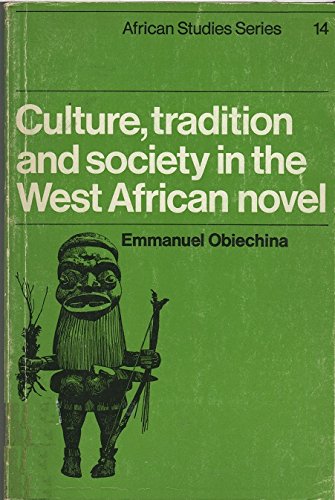
84th birthday of Emmanuel Obiechina

(Born 20 September 1933, Nkpo, Biafra)
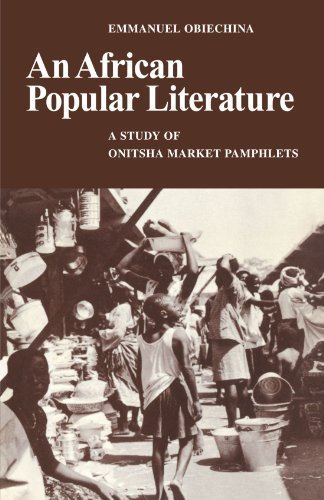
Pioneering and distinguished scholar of the historic *Onicha market literature genre and versatile literary critic and one of the leading Igbo intellectuals who defends Igbo people resolutely during the Igbo genocide (phases I-III, 29 May 1966-12 January 1970) by Nigeria and its suzerain state Britain in which 3.1 million Igbo or 25 per cent of the population are murdered by the genocidists; this is the foundational genocide of post-(European)conquest Africa
*(river port city in Biafra Oshimiri Delta)
(Charles Mingus Sextet – with Eric Dolphy, Cornell University 1964, “Meditations” [personnel: Mingus, bass; Johnny Coles, trumpet; Dolphy, flute, bass clarinet; Clifford Jordan, tenor saxophone; Jaki Byard, piano; Dannie Richmond, drums; recorded: live, Cornell University, 18 March 1964]) 
Twitter@HerbertEkweEkwe

Wednesday, 31 August 2016

At last… Genocidist ideologue reads the handwriting on the wall

ANGO ABDULLAHI, member of the north Nigeria region’s “elders forum” and one of the “country”’s most virulent genocidist ideologues in 50 years of the Igbo genocide by Nigeria and co-genocidist ally Britain has, at last, come to terms with the collapse of genocidist Nigeria: see following excerpts from Paul Obi, Peter Omale & Marvellous Okeke, “Nigeria can break up, it’s not indivisible, says Ango Abdullahi”, ThisDay, Lagos, Wednesday 31 August 2016:

The batures [Europeans, in Hausa, but more pointedly the British in this context] have brought us together … We might not be one ... in terms of language or in terms of geographical location or in terms of customs or in terms of history or in terms of religion and so on but as a people put in one country our first job is to understand one another…

Let’s understand one another. Understanding one another will be the basis for working together … This wish of being one is Utopian because if you look at examples of other parts of the world there’s a lot to learn from…

Take for example India that got independence in 1948 … yet one or two years later Pakistan was created … and in another one or two years [incorrect timeframe  HE-E] … Bangladesh emerged out of Pakistan … because there was insufficient basis on which India would stay together in the first place…

What are we hearing [here in Nigeria]? We’re hearing about the restructuring of Nigeria. We’re hearing about secession, we’re hearing all sorts of things and who are the promoters of this rhetoric … If [foundational British occupation administrator Frederick] Lugard made a mistake in 1914 … let’s correct it now. Why not?

If Nigerians cannot live together and allow peace and development to reign, then let’s go our separate ways and to our different places so that we can concentrate and develop our children and grandchildren in peace. There’s nothing wrong with that.

So many countries have gone through that before. So I don’t believe in all these emotions and sentiments that Nigeria is indissoluble … Take Great Britain, [there’s] been a model for 1,000 years of democracy [incorrect timeframe – HE-E] and then a year or two ago Scotland that had been in the union for about 350 years [incorrect timeframe – HE-E] opted for a referendum to get out; same problem with Ireland...

The Soviet Union was a super power many years ago … today 12 or 13 countries [15 countries in total – HE-E] were created from it … So what is so special about Nigeria? … there is nothing like indissolubility in any country…
(Ornette Coleman Quartet, “Turnaround” [personnel: Coleman, alto saxophone; Don Cherry, pocket trumpet; Red Mitchell, bass; Shelly Manne, drums; recorded: Contemporary’s Studio, Los Angeles, US, 23 February 1959])
 Twitter @HerbertEkweEkwe