Showing posts with label “Turnaround”. Show all posts

Saturday, 9 March 2019

Ornette Coleman, freedom, Biafra

(Ornette Coleman: ... freedom)
Herbert Ekwe-Ekwe

TODAY is the 89th birthday of Ornette Coleman (born 9 March 1930, Fort Worth, Texas, US):  alto saxophonist, trumpeter, violinist, composer, one of the very top inventive jazz artists of all time – leading exponent of the avant-garde/free jazz movement, beginning late 1950s/early 1960s when his varying working quartets (personnel: Coleman, alto saxophone [tenor saxophone on Ornette on Tenor only], Don Cherry, cornet/trumpet/pocket trumpet; Charlie Haden/Scott LaFaro/Red Mitchell/Percy Heath/Jimmy Garrison/Don Payne, bass; Billy Higgins/Ed Blackwell/Shelly Manne, drums) and quintet (Something Else!!!! only with Walter Norris on piano) record seven classic albums:

1. Something Else!!!!, 1958

2. Tomorrow is the Question, 1959

3. The Shape of Jazz to Come, 1959

4. Change of the Century, 1959

5. This is our Music, 1960

6. Ornette!, 1961

7. Ornette on Tenor, 1961

and an eighth, this time recorded by an octet:

8. Free Jazz, 1960
(personnel: Coleman, alto saxophone; Don Cherry, pocket trumpet; Freddie Hubbard, trumpet; Eric Dolphy, bass clarinet; Charlie Haden, bass; Scott LaFaro, bass; Ed Blackwell, drums; Billy Higgins, drums)

Biafra


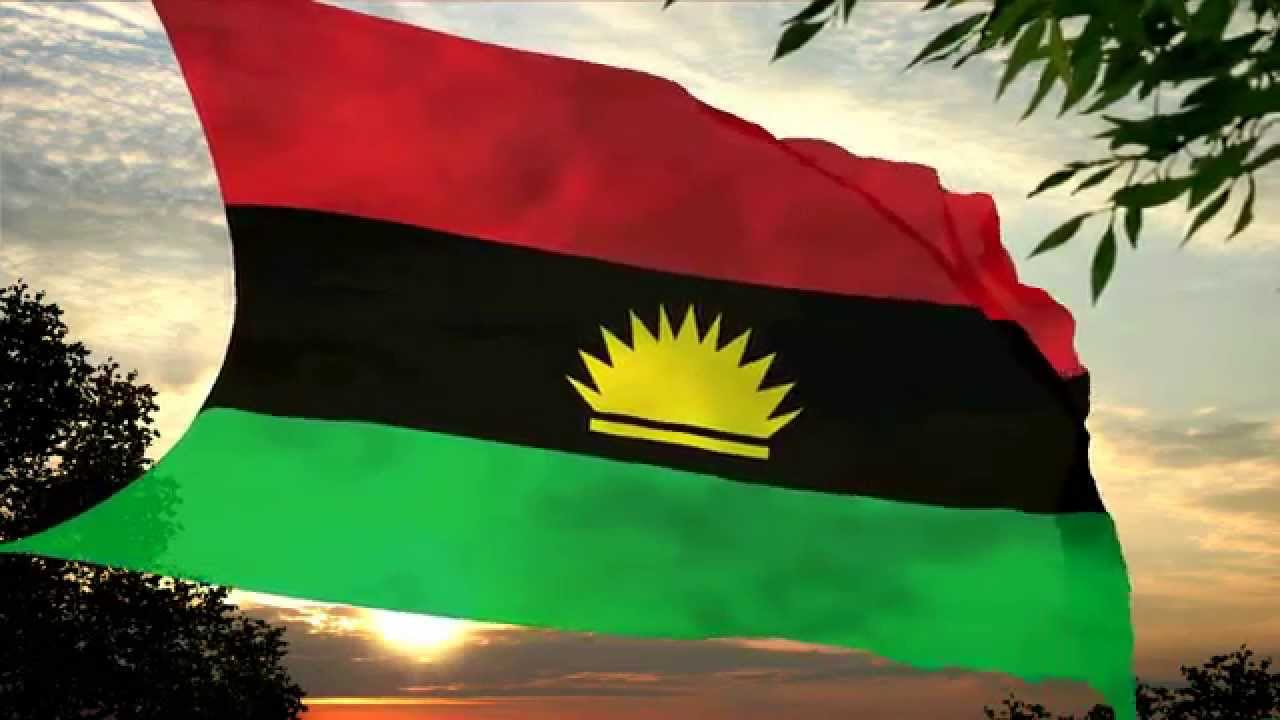
IN this revolutionary epoch in which stretches of peoples and nations across the globe but especially in the African World have risen against centuries of pan-European conquest, occupation and subjugation and also pointedly in these past 53 years, the Igbo resistance to the bludgeoning genocide being waged on their people in Biafra by the Africa-based Fulani islamist/jihadist-led Nigeria client state and its suzerain Britain, Coleman’s music has consistently offered an infectiously gripping optimism for freedom. 


Igbo people have demonstrated extraordinary resilience in the resistance and will surely overcome this Anglo-Nigeria haematophagous monster as the strikingly innovative and irrepressible Biafra freedom movement triumphs.

TWO compositions from the Coleman repertoire couldn’t be more appropriate to capture the immense transformational possibilities that success in Biafra will have for constituent peoples in southwestcentral Africa region and elsewhere in Africa: “Turnaround” (February 1959) and “Change of the century” (October 1959).
(Ornette Coleman Quartet, “Turnaround” [personnel: Coleman, alto saxophone; Don Cherry, trumpet; Red Mitchell, bass; Shelly Manne, drums; recorded: Contemporary’s Studio, Los Angeles, US, 23 February 1959])
(Ornette Coleman Quartet, “Change of the century” [personnel: Coleman, alto saxophone; Don Cherry, pocket trumpet; Charlie Haden, bass; Billy Higgins, drums; recorded: Radio Recorders in Hollywood, California, US, 8 October 1959])

*****Herbert Ekwe-Ekwe is author of the recently published The longest genocide  since 29 May 1966 (2019)  (https://re-thinkingafrica.blogspot.com/2019/01/published-longest-genocide-since-29-may.html)

Twitter @HerbertEkweEkwe


Friday, 9 March 2018

Ornette Coleman, freedom, Biafra

(Born 9 March 1930, Fort Worth, Texas, US)
Herbert Ekwe-Ekwe

TODAY is the 88th birthday of Ornette Coleman: alto saxophonist, trumpeter, violinist, composer, one of the very top inventive jazz artists of all time – a leading exponent of the avant-garde/free jazz movement, beginning late 1950s/early 1960s when his varying working quartets (personnel: Coleman, alto saxophone [tenor saxophone on Ornette on Tenor only], Don Cherry, cornet/trumpet/pocket trumpet; Charlie Haden/Scott LaFaro/Red Mitchell/Percy Heath/Jimmy Garrison/Don Payne, bass; Billy Higgins/Ed Blackwell/Shelly Manne, drums) and quintet (Something Else!!!! only with Walter Norris on piano) record seven classic albums (Something Else!!!! [1958], Tomorrow is the Question [1959], The Shape of Jazz to Come [1959], Change of the Century [1959], This is our Music [1960], Ornette! [1961], Ornette on Tenor [1961]), and an eighth, this time recorded by an octet (Coleman, alto saxophone; Cherry, pocket trumpet; Freddie Hubbard, trumpet; Eric Dolphy, bass clarinet; Haden, bass; LaFaro, bass; Blackwell, drums; Higgins, drums), pertinently titled Free Jazz (1960).

Biafra

In this revolutionary epoch in which stretches of peoples and nations across the globe but especially in the African World have risen against centuries of pan-European conquest, occupation and subjugation, and also, pointedly in these past 52 years, the Igbo resistance to the bludgeoning genocide being waged on their people in Biafra by the Africa-based Hausa-Fulani/islamist-led Nigeria client state and suzerain Britain, Coleman’s music has consistently offered an infectiously gripping optimism for freedom. 

IGBO PEOPLE have demonstrated extraordinary resilience in their resistance to the genocide and will surely overcome this Anglo-Nigeria haematophagous monster as the strikingly innovative and irrepressible Biafra freedom movement triumphs. Two compositions from the Coleman repertoire couldn’t be more appropriate to capture the immense transformational possibilities that success in Biafra will have for constituent peoples in southwestcentral Africa region and elsewhere in Africa: “Turnaround” (February 1959) and “Change of the century” (October 1959).
(Ornette Coleman Quartet, “Turnaround” [personnel: Coleman, alto saxophone; Don Cherry, trumpet; Red Mitchell, bass; Shelly Manne, drums; recorded: Contemporary’s Studio, Los Angeles, US, 23 February 1959])
(Ornette Coleman Quartet, “Change of the century” [personnel: Coleman, alto saxophone; Don Cherry, pocket trumpet; Charlie Haden, bass; Billy Higgins, drums; recorded: Radio Recorders in Hollywood, California, US, 8 October 1959])
Twitter @HerbertEkweEkwe

Thursday, 9 March 2017

Ornette Coleman, freedom, Biafra

(Born 9 March 1930, Fort Worth, Texas, US)
Herbert Ekwe-Ekwe

TODAY IS the 87th birthday of Ornette Coleman. Alto saxophonist, trumpeter, violinist, composer, one of the very top inventive jazz artists of all time – a leading exponent of the avant-garde/free jazz movement, beginning late 1950s/early 1960s, when his varying working quartets (personnel: Coleman, alto saxophone [tenor saxophone on Ornette on Tenor only], Don Cherry, cornet/trumpet/pocket trumpet; Charlie Haden/Scott LaFaro/Red Mitchell/Percy Heath/Jimmy Garrison/Don Payne, bass; Billy Higgins/Ed Blackwell/Shelly Manne, drums) and quintet (Something Else!!!! only, with Walter Norris on piano) record seven classic albums (Something Else!!!! [1958], Tomorrow is the Question [1959], The Shape of Jazz to Come [1959], Change of the Century [1959], This is our Music [1960], Ornette! [1961], Ornette on Tenor [1961]), and an eighth, this time recorded by an octet (Coleman, alto saxophone; Cherry, pocket trumpet; Freddie Hubbard, trumpet; Eric Dolphy, bass clarinet; Haden, bass; LaFaro, bass; Blackwell, drums; Higgins, drums), pertinently titled Free Jazz (1960).

Biafra

In this revolutionary epoch in which stretches of peoples and nations across the globe but especially in the African World have risen against centuries of pan-European conquest, occupation and subjugation, Coleman’s music has consistently offered an infectiously gripping optimism for freedom.  As the world keenly watches the march of the strikingly innovative freedom movement of the people of Biafra in southwestcentral Africa from bludgeoning genocide perpetrated against them presently by Britain and Nigeria, two compositions from the Coleman repertoire couldn’t be more appropriate to capture the immense transformational possibilities that success in Biafra will have for constituent peoples in the region and elsewhere in Africa: “Turnaround” (February 1959) and “Change of the century” (October 1959).
(Ornette Coleman Quartet, “Turnaround” [personnel: Coleman, alto saxophone; Don Cherry, trumpet; Red Mitchell, bass; Shelly Manne, drums; recorded: Contemporary’s Studio, Los Angeles, US, 23 February 1959])
(Ornette Coleman Quartet, “Change of the century” [personnel: Coleman, alto saxophone; Don Cherry, pocket trumpet; Charlie Haden, bass; Billy Higgins, drums; recorded: Radio Recorders in Hollywood, California, US, 8 October 1959])
Twitter @HerbertEkweEkwe

Wednesday, 31 August 2016

At last… Genocidist ideologue reads the handwriting on the wall

ANGO ABDULLAHI, member of the north Nigeria region’s “elders forum” and one of the “country”’s most virulent genocidist ideologues in 50 years of the Igbo genocide by Nigeria and co-genocidist ally Britain has, at last, come to terms with the collapse of genocidist Nigeria: see following excerpts from Paul Obi, Peter Omale & Marvellous Okeke, “Nigeria can break up, it’s not indivisible, says Ango Abdullahi”, ThisDay, Lagos, Wednesday 31 August 2016:

The batures [Europeans, in Hausa, but more pointedly the British in this context] have brought us together … We might not be one ... in terms of language or in terms of geographical location or in terms of customs or in terms of history or in terms of religion and so on but as a people put in one country our first job is to understand one another…

Let’s understand one another. Understanding one another will be the basis for working together … This wish of being one is Utopian because if you look at examples of other parts of the world there’s a lot to learn from…

Take for example India that got independence in 1948 … yet one or two years later Pakistan was created … and in another one or two years [incorrect timeframe  HE-E] … Bangladesh emerged out of Pakistan … because there was insufficient basis on which India would stay together in the first place…

What are we hearing [here in Nigeria]? We’re hearing about the restructuring of Nigeria. We’re hearing about secession, we’re hearing all sorts of things and who are the promoters of this rhetoric … If [foundational British occupation administrator Frederick] Lugard made a mistake in 1914 … let’s correct it now. Why not?

If Nigerians cannot live together and allow peace and development to reign, then let’s go our separate ways and to our different places so that we can concentrate and develop our children and grandchildren in peace. There’s nothing wrong with that.

So many countries have gone through that before. So I don’t believe in all these emotions and sentiments that Nigeria is indissoluble … Take Great Britain, [there’s] been a model for 1,000 years of democracy [incorrect timeframe – HE-E] and then a year or two ago Scotland that had been in the union for about 350 years [incorrect timeframe – HE-E] opted for a referendum to get out; same problem with Ireland...

The Soviet Union was a super power many years ago … today 12 or 13 countries [15 countries in total – HE-E] were created from it … So what is so special about Nigeria? … there is nothing like indissolubility in any country…
(Ornette Coleman Quartet, “Turnaround” [personnel: Coleman, alto saxophone; Don Cherry, pocket trumpet; Red Mitchell, bass; Shelly Manne, drums; recorded: Contemporary’s Studio, Los Angeles, US, 23 February 1959])
 Twitter @HerbertEkweEkwe

Wednesday, 9 March 2016

Ornette Coleman, freedom, Biafra

(Born 9 March 1930, Fort Worth, Texas, US)
Today is the 86th birthday of Ornette Coleman. Alto saxophonist, trumpeter, violinist, composer, one of the very top inventive jazz artists of all time – a leading exponent of the avant-garde/free jazz movement, beginning late 1950s/early 1960s, when his varying working quartets (personnel: Coleman, alto saxophone [tenor saxophone on Ornette on Tenor only], Don Cherry, cornet/trumpet/pocket trumpet; Charlie Haden/Scott LaFaro/Red Mitchell/Percy Heath/Jimmy Garrison/Don Payne, bass; Billy Higgins/Ed Blackwell/Shelly Manne, drums) and quintet (Something Else!!!! only, with Walter Norris on piano) record seven classic albums (Something Else!!!! [1958], Tomorrow is the Question [1959], The Shape of Jazz to Come [1959], Change of the Century [1959], This is our Music [1960], Ornette! [1961], Ornette on Tenor [1961]), and an eighth, this time recorded by an octet (Coleman, alto saxophone; Cherry, pocket trumpet; Freddie Hubbard, trumpet; Eric Dolphy, bass clarinet; Haden, bass; LaFaro, bass; Blackwell, drums; Higgins, drums), pertinently titled Free Jazz (1960).

Biafra

In this revolutionary epoch in which stretches of peoples and nations across the globe but especially in the African World have risen against centuries of pan-European conquest, occupation and subjugation, Coleman’s music has consistently offered an infectiously gripping optimism for freedom.  As the world keenly watches the march of the strikingly innovative freedom movement of the people of Biafra in southwestcentral Africa presently, two compositions from the Coleman repertoire couldn’t be more appropriate to capture the immense transformational possibilities that success in Biafra will have for constituent peoples in the region and elsewhere in Africa: “Turnaround” (February 1959) and “Change of the century” (October 1959).
(Ornette Coleman Quartet, “Turnaround” [personnel: Coleman, alto saxophone; Don Cherry, trumpet; Red Mitchell, bass; Shelly Manne, drums; recorded: Contemporary’s Studio, Los Angeles, US, 23 February 1959])
(Ornette Coleman Quartet, “Change of the century” [personnel: Coleman, alto saxophone; Don Cherry, pocket trumpet; Charlie Haden, bass; Billy Higgins, drums; recorded: Radio Recorders in Hollywood, California, US, 8 October 1959])
Twitter @HerbertEkweEkwe

Friday, 18 December 2015

What Igbo did for Nigeria prior to the Igbo genocide – 1934-29 May 1966


The world turns and the world changes,
But one thing does not change.
In all my years, one thing does not change,
However you disguise it, this thing does not change:
The perpetual struggle between Good and Evil.
(TS Eliot, “Choruses from the Rock”, 1934)

FOR IGBO, prior to 29 May 1966, three important holidays were high up on their annual calendar: the Igbo National Day, the iri ji, or the New Yam Festival, and 1 October. The latter was the day of celebration for the restoration of independence for peoples in Nigeria after 60 years of the British conquest and occupation. Or, so were the thoughts predicated on this date’s designation...

Beacons

Igbo were one of the very few constituent nations in what was Nigeria, again prior to 29 May 1966, who understood, fully, the immense liberatory possibilities ushered in by 1 October and the interlocking challenges of the vast reconstructionary work required for state and societal transformation in the aftermath of foreign occupation. Igbo had the most robust economy in the country in their east region homeland, supplied the country with its leading writers, artists and scholars, supplied the country’s top universities with vice-chancellors (or presidents) and leading professors and scientists, supplied the country with its first indigenous university (the prestigious university at Nsukka), supplied the country with its leading and most spirited pan-Africanists, supplied the country with its top diplomats, supplied the country’s leading high schools with head teachers and administrators, supplied the country with its top bureaucrats, supplied the country with its leading businesspeople, supplied the country with an educated, top-rated professional officers-corps for its military and police forces, supplied the country with its leading sportspersons, essentially and effectively worked the country’s rail, postal, telegraphic, power, shipping and aviation services to quality standards not seen since in Nigeria…

AND THEY WERE surely aware of the vicissitudes engendered by this historic age precisely because the Igbo nation played the vanguard role in the freeing of Nigeria from Britain, beginning from the mid-1930s. The commentator, Sabella Ogbobode Abidde, couldn’t have been more emphatic in summarising the thrust of the Igbo mission during the period:
The Igbo nation ha[s] attributes most other Nigerian nationalities can only dream of and are what most other nations [are] not. The Igbo made Nigeria better. Any wonder then that the Igbo can do without Nigeria; but Nigeria and her myriad nationalities cannot do without the Igbo? Take the Igbo out of the Nigeria equation … and Nigeria will be gasping for air (nigeriavillagesquare.com, 28 July 2004).
The Igbo’s break with Nigeria occurred catastrophically on 29 May 1966. On this day, leaders of the Fulani north region (feudal overlords, muslim clergy, military, police, businesspeople, academics, civic servants, other public officials and patrons, alimajiri), who were long opposed to the liberation of Nigeria (there were no comparable clusters of political, cultural, ideational, religious, national or racial groupings anywhere else in the South World, during the era, which had a similar, unenviable disposition of hostility to emancipation from the European occupation of their lands as the Hausa-Fulani leadership), launched waves of premeditated genocidal attacks on Igbo migrant populations resident in the north. These attacks were later expanded to Biafra during the third phase which began on 6 July 1967, boosted particularly by the robust participation in the slaughter by the Yoruba, Urhobo, and Edo constituent pan-African nations of west Nigeria as well as others elsewhere in the country, especially Hausa, Tiv, Nupe, Kanuri, Jukun, Bachama, Jarawa. 3.1 million Igbo or one-quarter of this nation’s population were murdered during those 44 dreadful months.

Opportunism

THE YORUBA SUPPORT FOR THE GENOCIDE, as from 6 July 1967, for instance, bears all the hallmark of a squelching cadence of opportunism. Influential Yoruba personages (especially Obasanjo, Adekunle, Gbadamosi-King, Akinrinade, Rotimi, Are, Taiwo) under the operational gaze of chief genocidist “theorist” Obafemi Awolowo, plunged headlong, carrying out their own role in this gruesome foundational genocide of post-(European)conquest Africa most fiendishly, particularly across their chosen south Igboland killing fields. The Yoruba appeared to have lost, quite spectacularly, the 1930s-1960s Igbo-Yoruba competitive “preparatory drive” to develop the high-level humanpower and ancillary resources required to run the prospective post-conquest state after the British departure. They therefore viewed the outbreak of the mid-1966 Igbo mass killings in the north region and elsewhere as welcome season to “avenge” their “loss” during the great sociocultural rivalry of those previous three decades, clutching onto any bomb or missile available, from July 1967, on their onward death-march east to lob, remorselessly, into besieged Biafra, into a Biafran home, Biafran school, Biafran shrine, Biafran church, Biafran hospital, Biafran office, Biafran market, Biafran farmland, Biafran factory/industrial enterprise, Biafran children’s playground, Biafran town hall, Biafran refugee centre…

Civilisation

FIFTY years on, Biafrans have written an extraordinary essay on human survival and fortitude, a beacon of the tenacity of the spirit of human overcoming of the most desperate, unimaginable brutish forces. On this eve of the 50th anniversary of the launch of the genocide, Biafrans are putting final touches to the restoration of the sovereignty of their beloved Biafra, this Land of the Rising Sun. The construction of this advanced civilisation in southwestcentral Africa has already begun.
(Ornette Coleman Quartet, “Turnaround” [personnel: Coleman, alto saxophone; Don Cherry, pocket trumpet; Red Mitchell, bass; Shelly Manne, drums; recorded: Contemporary’s Studio, Los Angeles, US, 23 February 1959])

*****Herbert Ekwe-Ekwe’s books on the Igbo genocide and Biafra include Readings from Reading: Essays on African Politics, Genocide, Literature (2011), Biafra Revisited (2006) and African Literature in Defence of History: An essay on Chinua Achebe (2001)


Twitter @HerbertEkweEkwe