Rethinking Africa is a forward looking blog dedicated to the exchange of innovative thinking on issues affecting the advancement of African peoples wherever they are. We provide rigorous and insightful analyses on the issues affecting Africans and their vision of the world.
(City of Westminster London’s (Britain) commemorative plaque for Olaudah
Equiano, the outstanding 18th century Igbo intellectual and irrepressible
exponent of freedom, at 73 Riding House Street, Paddington, London, where Equiano lived and worked and published his classic,
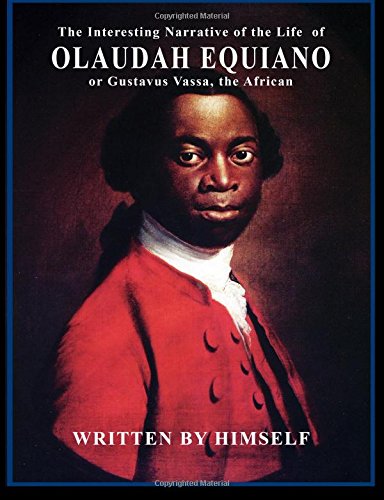
The Interesting Narrative of the Life of
Olaudah Equiano, or Gustavus Vassa, the African in 1789. This building is now owned by the University College London.)
(Ornette Coleman Quartet, “Ecars” [personnel: Coleman, tenor saxophone; Don Cherry, pocket trumpet; Jimmy Garrison, bass; Ed Blackwell, drums; recorded: Atlantic Studios, New York, US, 27 March 1961])
ANGO ABDULLAHI, member of the north Nigeria region’s “elders forum” and one of the “country”’s
most virulent genocidist ideologues in 50 years of the Igbo
genocide by Nigeria and co-genocidist ally Britain has, at last, come to terms with the collapse of genocidist Nigeria: see following excerpts from Paul Obi,Peter Omale & Marvellous Okeke, “Nigeria
can break up, it’s not indivisible, says Ango Abdullahi”, ThisDay, Lagos, Wednesday 31 August 2016:
“Thebatures [Europeans, in Hausa, but more pointedly the British in this context] have
brought us together … We might not be one ... in terms of language or in terms of
geographical location or in terms of customs or in terms of history or in terms
of religion and so on but as a people put in one country our first job is to
understand one another…
“Let’s
understand one another. Understanding one another will be the basis for working
together … This wish of being one is Utopian because if you look at examples of
other parts of the world there’s a lot to learn from…
“Take for
example India that got independence in 1948 … yet one or two years later
Pakistan was created … and in another one or two years [incorrect timeframe – HE-E] … Bangladesh emerged out
of Pakistan … because there was insufficient basis on which India would stay
together in the first place… “What are we
hearing [here in Nigeria]? We’re hearing about the restructuring of Nigeria.
We’re hearing about secession, we’re hearing all sorts of things and who are
the promoters of this rhetoric … If [foundational British occupation
administrator Frederick] Lugard made a mistake in 1914 … let’s correct it now.
Why not?
“If
Nigerians cannot live together and allow peace and development to reign, then
let’s go our separate ways and to our different places so that we can concentrate
and develop our children and grandchildren in peace. There’s nothing wrong with
that. “So many
countries have gone through that before. So I don’t believe in all these
emotions and sentiments that Nigeria is indissoluble … Take Great Britain, [there’s] been a model for 1,000 years of democracy [incorrect timeframe – HE-E] and
then a year or two ago Scotland that had been in the union for about 350 years
[incorrect timeframe – HE-E] opted for a referendum to get out; same problem
with Ireland...
“The Soviet
Union was a super power many years ago … today 12 or 13 countries [15 countries
in total – HE-E] were created from it … So what is so special about Nigeria? … there
is nothing like indissolubility in any country…”
(Ornette Coleman Quartet, “Turnaround” [personnel: Coleman, alto saxophone; Don Cherry, pocket trumpet; Red Mitchell, bass; Shelly Manne, drums; recorded: Contemporary’s Studio, Los Angeles, US, 23 February 1959])
IN 2064, fifty years away, Igbo people and the rest of the world will be making final preparations to
commemorate a century of the Igbo genocide. This will take place on 29 May
2066. It should be recalled that on that dreadful mid-morning of Sunday 29 May
1966 and through the course of 44 subsequent months of indescribable barbarity
and carnage not seen in Africa since the German-perpetration of the genocide
against the Herero, Nama and Berg Damara peoples of Namibia in the early 1900s, the composite
institutions of the Nigeria state, civilian and military, embarked on the
murder of Igbo people. 3.1 million Igbo or one-quarter of this nation’s
population were murdered during the genocide.
The Igbo
genocide is the foundational genocide of post-(European)conquest Africa. It
inaugurated Africa’s current age of pestilence. Singularly and quite
dramatically, the genocide shattered the capacity of this post-conquest state
to capitalise on the vast invaluable resources of multinationality and
multiculturality emplaced at such a critical phase to engineer a determined
reconstructionary and redevelopment programme of the country after the
devastation of 75 years of the British occupation.
TO UNDERSTAND the politics of the Igbo genocide and the politics of the “post”-Igbo
genocide is to have an invaluable insight into the salient features and
constitutive indices of politics across Africa in the past 50 years. Africans
elsewhere remained largely silent on the gruesome events in Nigeria but did not
foresee the grave consequences of such indifference as subsequent genocides in
Rwanda, Darfur, Nuba Mountains, South Kordofan (latter three in the Sudan) and
Zaïre/Democratic Republic of the Congo, and in other wars and conflicts in
every geographical region of Africa during the period have demonstrated
catastrophically: Liberia, Mali, Libya, Egypt, Côte d’Ivoire, Algeria, Sierra
Leone, Guinea-Bissau, southern Guinea, Sudan, Ethiopia, Somalia, Uganda,
Democratic Republic of the Congo, Republic of the Congo, Burundi, Central
African Republic, Nigeria (Boko Haram insurgency in north, northcentral
regions). The haunting killing fields have indeed stretched, almost inexorably,
from Igboland to the rest of Africa…
Just as
the Nigerian operatives of mass murder appeared to have got away without
censure from the rest of Africa, other genocidal and brutal African regimes
soon followed in Nigeria’s footpath, murdering a horrifically additional tally
of 12 million people in their countries considered “undesirables” or “opponents”
since the Igbo genocide in January 1970. These 12 million murdered in the
latter bloodbaths would probably have been saved if Africans and the rest of
the world had intervened, robustly, to stop the initial genocide against the
Igbo people. Surely, the world could have stopped this genocide; the world
should have stopped this genocide.
Bane of
existence FORTY-EIGHT years and 15 million murders on, Africans now realise, finally, that there
cannot be any meaningful advancement in their fortunes without abandoning this
post-(European)conquest state, this “Berlin-state”, essentially a
genocide-state. This state is the bane of African existence and progress. Yet,
thankfully, just as in Berlin, in 1884-1885, when conquering Europeans drafted
their gruesome charter for the occupation of Africa, states are not a gift from
the gods but relationships painstakingly formulated and constructed by a
discernible group of human beings that inhabit an ascertainable geo-historical
territorial expanse on earth to pursue worldviews and interests envisioned and
articulated by these same human beings. The state, any state, therefore, is
transient; in contrast, human beings, people(s) endure.
Aimé
Césaire, the poet and philosopher, once
told interviewer Annick Thebia Melson (“The liberating power of words: An
interview with Poet Aimé Césaire”, The
Journal of Pan-African Studies, Vol. 2, No 4, June 2008, pp. 2-7) during
one of those illuminating discourses of his on history: “History is always
dangerous, the world of history is a risky world; but it is up to us at any given
moment to establish and readjust the hierarchy of dangers” (2008: 7). It is
indeed in the very course to disrupt and “readjust” this hierarchy in this age
of pestilence in the”‘cursed” (to quote historian Basil Davidson) “Berlin-state”
in favour of Africa and African peoples that the constituent Africa nation or
people (Igbo, Darfuri, Gikuyu, Wolof, Ibibio, Bakongo, Jola, Mongo, Akan, Luba,
Ndebele, Mende, Luo, Herero, Serer, Bamileke, etc., etc) – so long maligned, so
long impoverished, so long brutalised, so long humiliated and dehistoricised
with often unprintable epithets (t****, n****, n*****, n******, p********,
b******, w**, sub-*******, sub-*****, e*****, c***, c******, m*****, d******,
h*******, f******-b******, b****, m***, b********, c*******, b*********…), so
long massacred, is recognised, at last, as the principal actor and agency of
its being and geography. So, for
all African peoples or nations, the unambiguous message on the unfurled banner
for their freedom march in this next one-half of a century couldn’t be more
confident and focused: “We are because we are free; We are free because we are”.
Abandon the “Berlin-state” now. Create your own state today, now. Now is the
time! This nation, this people, can and should create its own state if it so
desires. Freedom. IT IS its inalienable right (http://re-thinkingafrica.blogspot.co.uk/2012/01/rights-for-scots-rights-for-igbo.html, accessed 25 July 2015). It does not therefore have to explain to anyone else why
it has embarked on this track of freedom. It can now decide what precepts, what
aspirations, what trajectory, what goals, it has set its new state to embark
upon. As Césaire deftly puts it in the interview referred to, the challenges of
the times become the “quest to reconquer something, our name (sic), our country
… ourselves” (2008: 2).
Let
freedom ring! THUS, the
pressing point to reiterate here is that the immediate emergency that threatens
the very survival of African peoples is the “Berlin-state” encased in African
existence coupled with the pathetic bunch that masquerades here and there as
African leaderships but whose mission is to oversee this enthralling edifice.
African women and men will sooner, now, rather than later, abandon this
fractured, fracturing, conflictive, alienating and terror contraption. Africans
must now focus on real transformation – the revitalisation and consolidation of
the institutions of Africa’s constituent nations and polities. In these institutions and spaces of African
civilisation lie the organic framework to ensure transparency, probity,
accountability, investment in people, humanised wealth creation, respect for
human rights and civil liberties, and a true commitment to radically transform
African existence.
The
future for the constituent nations and peoples of Africa couldn’t be more
reassuring on the morrow of that which, since 1 January 1956, has been
classified as the post-(European)conquest “Berlin-state” or genocide-state of
Africa. All successor states, organically constituted, really have their work
cut out. Their mission is not to begin to construct states that are merely
post-genocide or post post-conquest/post post-“colonial” states (cancelling
out, in some mechanical venture, that which was “Berlin-state” Africa here and
there!) but a realisation, a reclamation of that which makes us all human and
part of humanity. The new states have an opportunity to begin to build a new
civilisation where human life, fundamentally, is sacrosanct. This is an
inclusive state where women and men live as co-operators and co-creators in
fundamentally transforming their society. This is a state that accepts and
accords full rights to all minority groups. This is a state where people enjoy
the rights to differ and to dream dreams and dream different sets of dreams as
they choose. This is a state dedicated to furthering and nurturing the
resilience of its people and to enabling them pursue their highest creative
endeavours. This state continuously strives to remove all limitations in the
paths of its people and committed to making life better and better and better.
This is a state that primes its people to flourish. FINALLY, the long drawn out
nightmare of nearly 200 years, since November 1884- February 1885, is over and
truly Africans do stand poised on the eve of a new beginning.
(Ornette Coleman Quartet, “Change of the century”
[personnel: Coleman, alto saxophone; Don Cherry, pocket trumpet; Charlie Haden, bass; Billy Higgins, drums; recorded: Radio Recorders, Hollywood, California, US, 8 October 1959])
*****(originally
published in Pambazuka News: Pan African
Voices for Freedom and Justice, Issue 680, 29 May 2014 as part of collection
of essays focusing on “Africa in 50 years’ time – inventing a new Africa”)
Herbert Ekwe-Ekwe is specialist on the state and on genocide & wars in Africa in the post-1966 epoch – beginning with the Igbo genocide, 29 May 1966-present day, the foundational and most gruesome genocide of post-(European)conquest Africa. 3.1 million Igbo or 25 per cent of this nation’s population were murdered by Nigeria and its allies, principally Britain. Africa and the rest of the world largely stood by and watched as the perpetrators enacted this horror most ruthlessly. The world could have stopped this genocide; the world should have stopped this genocide. This genocide inaugurated Africa’s current age of pestilence. During the period, 12 million additional Africans have been murdered in further genocide in Rwanda (1994), Zaïre/DRCongo (variously, since the late 1990s) and Darfur – west of the Sudan – (since 2004) and in other wars in Africa. African peoples have, presently, no other choice but exit/dismantle the extant genocide-state (the bane of their existence & progress) & construct own nation-centred states that serve their interests. He is author of several books & papers on the subject and his new book is entitled The longest genocide – since 29 May 1966 (2019).