Rethinking Africa is a forward looking blog dedicated to the exchange of innovative thinking on issues affecting the advancement of African peoples wherever they are. We provide rigorous and insightful analyses on the issues affecting Africans and their vision of the world.
Herbert Ekwe-Ekwe Namibia ERUDITE human rights lawyer and distinguished international jurist at the International Court ofJustice, The Hague, Holland, 1962-1966, where he sets up the defining international legal protocols that ensure the 1990 restoration-of-independence for African peoples in Namibia from a century of European World conquest and occupation (Germany, Britain/European conqueror-South Africa regime), entrenched after Germany had carried out the expansive and catastrophic genocides against the Herero, Nama and Derg Damara peoples of the country, 1904-1907, the first stretch of genocides of the 20th century, a decade before the Armenian genocide executed by the Ottoman “empire”/Turkey…
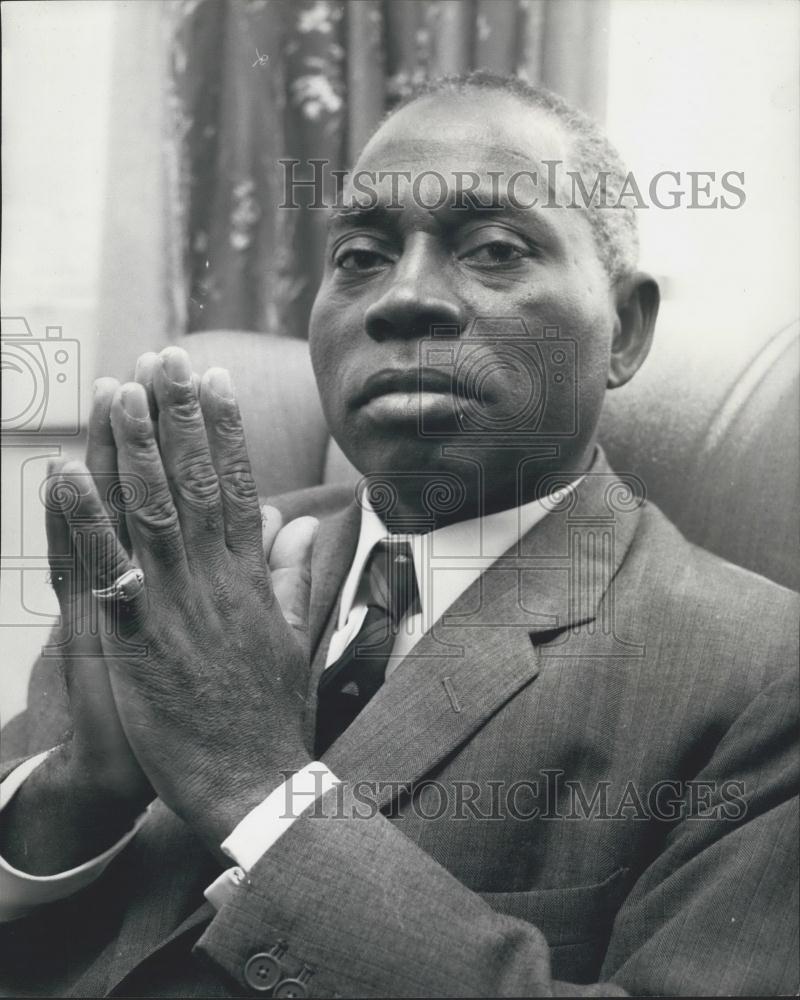
Biafra CHIEF JUSTICEof BIAFRA and ambassador extraordinary in the resistance Biafra government during the Igbo genocide, the foundational genocide of post-(European)conquest Africa, 29 May 1966-12 January 1970, phases I-III, in which 3.1 million Igbo or one-quarter of Igbo population are murdered by Fulani islamist jihadist-led Nigeria and the league of pan-African constituent nations therein, particularly Yoruba, Hausa, Kanuri, Nupe, Gwari, Jukun, Urhobo, Tiv, Jarawa, Edo and its suzerain state Britain under the premiership of Harold Wilson who chiefly coordinates the genocide from his London’s no. 10 Downing Street offices and residence, 3000 miles away from Biafra...
JUSTICE Mbanefopossesses that distinct scholar’s contemplative persona that has come to define the insistent resilience of the Biafra freedom movement.
(John Coltrane Quintet, “Brasilia” [personnel: Coltrane, tenor saxophone; Eric Dolphy, alto saxophone; McCoy Tyner, piano; Reggie Workman, bass; Elvin Jones, drums; recorded: live, at The Village Vanguard, New York, US, 1 November 1961])
******Herbert Ekwe-Ekwe is the author of The longest genocide – since 29 May 1966 (2019) and co-author, with Lakeson Okwuonicha, of Why #DonaldTrump is #great for #Africa (2018)
BRITAIN and FULANI alliance, this genocidist transcontinental dual-headed power configuration that has executed the Igbo genocide with such abiding ruthlessness and monstrosity these past 53 years, has ensured that Igbo people’s history of the past century challenges, quite dramatically, a range of key assumptions in “post-colonial” discourses that centres on race, history and geography.
In 1945, about 50 years after the beginning of the British conquest and occupation of Igboland, Biafra, the Fulani islamist jihadists in occupied north Nigeria, whose home is the Futa Djallon highlands of northwest Africa, 1500 miles away, embarked on the invasion of Igbo territorial spaces emplaced in the overarching architecture of the British occupation (in Jos, northcentral Nigeria) with the latter’s tactical if not strategic connivance. In effect, this attack, in which the Fulani unleashed a pogrom on the Igbo as the mode of invasion, formally inaugurated the dual-headed genocidist cabal that would oversee the perpetration of yet another season of pogrom on the Igbo in 1953 (Kano, north Nigeria), and then launched the horrendously full-blown, extended and expansive Igbo genocide, beginning on 29 May 1966. During phases I-III of the genocide in the 44 subsequent months, the duo genocidists murdered 3.1 million Igbo or 25 per cent of the Igbo population. Tens of thousands of additional Igbo have been murdered in phase IV of the genocide, 13 January 1970-present day. The latter tally includes the 3000 Igbo murdered since November 2015 by the Muhammadu Buhari regime, installed in power in March 2015 by ex-US President Barack Hussein Obama, the first African-descent president of the United States in 233 years of the founding of this republic, and ex-British Prime Minister David Cameron.
What disparity? IT IS precisely because of the very genocidist terror that undergirds the Anglo-Fulani alliance, in the wake of the 1945 Fulani invasion of Igbo homes and other interests in Jos, that the Igbo resistance to this catastrophe does not categorise any of these two invaders as either “primary” or “secondary” despite the sequence of the timeframe of the invasions, despite the nature of the contributing resources that each of the co-operative executioners of this crime against humanity deploys, and despite the predictable array of data readily deployed to project the presumed disparity of the comparative “statuses” of the two complementary genocidist states in world affairs. For the Igbo, the grave existential challenges from both the British and Fulani, in these past 74 years, have occurred almost invariably in more fluid or composite frames...
(John Coltrane Quintet, “Stardust”[personnel: Coltrane, tenor saxophone; Wilbur Harden, fluegelhorn; Red Garland, piano; Paul Chambers, bass; Jimmy Cobbs, drums; recorded: Van Gelder Studio, Hackensack, NJ, US, 11 July 1958])
*****Herbert Ekwe-Ekwe is the author of The longest genocide – since 29 May 1966 (2019) and co-author, with Lakeson Okwuonicha, of Why #DonaldTrump is #great for #Africa (2018)
BIOLOGIST and iconic exponent of freedom and the environment
IN THE following review essay first published on 17 December 2013 and entitled “Daughter-of-the-soil”, Herbert Ekwe-Ekwe reflects on Wangari Maathai’s autobiography, Unbowed: One Woman’s Story (London: Arrow Books, 2008), 314pp:
It is unmistakeably evidentin the early chaptersof this remarkable autobiography by Wangari Maathai, especially those that cover her childhood to adolescence growing up in rural Kenya of the 1940s, how very little appears to exist on the ground to prepare her for the enormous challenges she confronts and overcomes, spectacularly, just a few years subsequently.
RIGHT from the outset, Maathai is indeed the daughter-of-the-soil and she retains this prestigious accolade throughout her most fulfilling life. As she works full time with her mother on the farm, having been allocated a 15-sq.ft. plot to tend herself at the age of 7 cultivating “sweet potatoes, beans maize, and millet” (Wangari Maathai, 2008: 38),
there is no certitude to Maathai’s formal education in a school eventually. But the following year, aged 8, an unexpected conversation between her mother and Maathai’s older brother on one late evening after another hardworking day on the farm, would change the direction of young Wangari’s life. Maathai learns, with staggering incredulity, of her parents and brother’s decision to send her to school:
[A]lthough [my mother] had almost no formal education, she agreed with my brother. How grateful I am that she made the decision she did because I could not have made it for myself, and it changed my life… To this day I do not know where the money for my education came from, but my mother probably raised it by working for people in the village, cultivating their land. At that time you could earn up to sixty cents doing such work. (Maathai: 40)
Contours of conquest and occupation BUT THE deal for Maathai to go to school is not done, yet. Someone else’s approval must be sought, someone who is not even a member of her family. Just as the hundreds of thousands of Gĩkũyũ people’s families whose legendary fertile lands in the central and western Kenyan highlands have been seized by the British occupation regime and handed over to 40,000 European-descent immigrant-“settlers” (predominantly from Britain, Germany, South Africa, Australia and Canada) by the beginning of the 1950s (10), Maathai’s “displaced” family now lives on one such “settler” farm owned by a recent British arrival, D.N. Neylan. Maathai’s family’s official designation in their new abode, as the rest of these nascent landless Africans, is “tenant-at-will”, as distinguished writer Ngũgĩ wa Thiong’o, Maathai’s compatriot and contemporary recalls his own family’s experience (Herbert Ekwe-Ekwe, 2011: 46), or “squatter-on-the-farm” as Maathai prefers instead: “My father had no title to the land where he had established his household – he was effectively a squatter on the farm … [H]e could build housing for his family and cultivate crops on land Mr Neylan apportioned to him … [In return] the man, his wife, and children were all required to provide labor. They were really glorified slaves…” (Maathai: 14-15). So, given this evident use-of-labour status in the “squatters-on-the-farm” provision, Neylan pointedly asks Maathai’s father who would “pick his pyrethrum” on the farm (plant used as insecticide and picking it is a specialism reserved for African children!) if the young Wangari goes to school, to which her father replies: “Don’t worry, [Mr Neylan], there are still many children in my homestead” (Maathai: 29). Educating African children, Maathai recalls, gravely, “was not a priority for the settlers” (29).
Just as Ngũgĩ (Ekwe-Ekwe, 2011: 46-48), Maathai is a keen witness to the momentous clash of two fiercely contradictory streams of consciousness and movement in the Kenya of her childhood whose outcome would impact on her and others of her generation most profoundly subsequently. On the one hand, there is the juggernaut of an insistent, if not desperate occupation regime which wants to consolidate its stranglehold on strategic and wealthy Kenya, 50 years after the beginning of its conquest and despite the lessons of the recently concluded 1939-1945 war and the 1947 liberation of India, and the other hand is the challenge of the land and freedom-bound army of the Mau Mau resistance. The significance of this clash dawns on Maathai perhaps most acutely in her new school, a catholic school run by Italian nuns. She readily excels in all her lessons but is shocked to be confronted with a very important school rule, arguably the most important school rule, which bans the speaking or any other forms of communication in Gĩkũyũ as well as in other African languages throughout the school premises. The only language allowed in school is English. Any student who contravenes this law wears a button of shame known as the “monitor”:
It was sometimes inscribed with phrases in English such as ‘I am stupid. I was caught speaking my mother tongue’. At the end of the day, whoever ended up with the button received a [physical] punishment, such as cutting grass, sweeping, or doing work in the garden. But the greater punishment was the embarrassment you felt because you had talked in your mother tongue. In retrospect, I can see that this introduced us to the world of undermining our self-confidence … trivialization of anything African and lays the foundation for a deeper sense of self-doubt… (59-60)
Maathai soon realises that that much-cherished anchor of family and Gĩkũyũ national life which has sustained her for ten years, this daughter-of-the-soil, is at best tenuous… It is now evident to her that for her family, living on Neylan’s farm in the wake of being thrown out of their land by the occupation, it is not only a material loss, important as this is, but, more tragically, the loss of culture or a people’s identity. Neylan’s question of who would “pick his pyrethrum” is not just the seemingly casual remark uttered by a British head of a “settler”-farm on whether or not an 8-year-old African child in Kenya should go to school but a metaphor that captures, quite graphically, the aftermath of the subjugation of a people. The impact of this history on Ngũgĩ wa Thiong’o, for instance, is that 50 years hence, he writes only in Gĩkũyũ as he makes his contribution to the literary, political and philosophical discourses of the peoples of the world (Ekwe-Ekwe, 2011: 49-50). As for Maathai, the impact of this history is that 50 years later, she takes an unbowed stand to defend Kenya’s environmental heritage.
IN THE mean time, the broader canvass of certain features of Maathai’s own family history begins to acquire some intelligibility, on further reflection by her, in the wake of her school’s encounter with the constrictive edict on African expressivity and being. A clear example is the story of uncle Thumbi, his father’s older brother who had been conscripted by the occupation regime to fight against the Italians and Germans in neighbouring Somalia and Tanganyika, respectively, during the 1914-1918 war. Thumbi never returns from the campaign (later confirmed dead by a fellow Gĩkũyũ comrade who survived and had seen Thumbi “fall” at the battlefield) and his name and memory never mentioned again within the family so as not to upset Maathai’s grandmother who still grieves for her son despite the passage of time. Most tellingly, though, the occupation regime never informs Maathai’s family of what happened to Thumbi. As would be the case of the 100,000 Gĩkũyũ conscripts who died during this campaign (27), the perverse, double-jeopardy fate of an already occupied African national forced by the occupier to fight in the latter’s subsequent wars of intra-imperialist rivalries and expropriations (Ekwe-Ekwe, 2011: 56-57), Maathai describes the death of Thumbi as “still an open wound [in my family]… I want to say to the British government, ‘My uncle went to war and never came back, and nobody ever bothered to come and tell my grandparents what had happened to their son’” (28).
Name, names, naming, presence Yet if there is ever the singular site of a clearly discernible de-Africanisation programme that projects the searing, triumphal outcome of the pan-European conquest and occupation of Africa, the focus must be on that crucial subject of name and naming – precisely the reference to the individual an how he or she is identified by the rest of society: What is your name? In occupied Kenya, the African “loses” their surname or family name. They are “officially” identified by their forename(s). In Maathai’s example, before going to school, she is known, interchangeably, as Wangari Miriam or Mariam Wangari, both being her forenames! On arrival at school, following baptism as a catholic, Maathai becomes Mary Josephine Wangari or Mary Jo Wangari – again, all forenames and no surname. In a few years, in 1960, after wining a scholarship to study at university in the United States, she is called “Miss Wangari” by her professors and fellow students on campus because everyone assumes, of course, that “Wangari” is her second name/surname. Reacting to this development, with her infectious sense of humour, Maathai writes:
This began to seem absurd, since I knew the term ‘Miss’ meant the ‘unmarried daughter of …’ and I knew I was not the unmarried daughter of myself. I decided to put this right and began writing my name as Mary Josephine Wangari Muta [father’s name!], so I’d be called Miss Muta. I then reversed my primary and personal names, becoming Wangari Mary Josephine Muta, and later dropped Mary Josephine because the name had become too long. When I returned to Kenya [1966], I was Wangari Muta. That was what I should always have been. (96)
Maathai is 20 when she finally reconnects with her family name – not within her country but in a foreign land. The legacy of the encompassing African World historical experience of the previous 400 years is not lost on Maathai as she sees a link between her, from east Africa, and African Americans in this country where she is studying for a bachelor’s degree: “The way surnames were forgotten in Kenya struck me as similar to how many African Americans in the times of [enslavement] and segregation were known only by their first names, yet had to address white people as Mr. or Miss, followed by their surnames” (96). On this overriding question of names and naming across the African World, Chinua Achebe, the Father of African Literature, has aptly observed and it is important to quote him at length:
[The European conquest of Africa] may indeed be a complex affair, but one thing is certain: You do not walk in, seize the land, the person, the history of another, and then sit back and compose hymns of praise in his honour. To do that would amount to calling yourself a bandit; and you won’t to do that. So what do you do? You construct very elaborate excuses for your action. You say, for instance, that the man in question is worthless and quite unfit to manage himself or his affairs. If there are valuable things like gold and diamonds which you are carting away from his territory, you proceed to prove that he doesn’t own them in the right sense of the word – that he and they had just happened to be lying around the same place when you arrived. Finally if the worse comes to the worse, you may even be prepared to question whether such as he can be, like you, fully human. From denying the presence of a man standing there before you, you end up questioning his very humanity …[I]n the [European conquest] situation presence was the critical question, the crucial word. Its denial was the keynote of [this conquest’s] ideology. (Chinua Achebe, 1990: 4; emphasis added)
The lift! The scholarship on which Maathai goes to the US to study at Mount St Scholastica College, Atchison, Kansas (now BenedictineCollege) is from the Joseph Kennedy Foundation. Three hundred Kenyans benefitted from this scholarship. The then young Senator John Kennedy of Massachusetts was very interested and personally involved in the programme which included covering transport costs for these students to their various colleges of admission in the US and back home after completion of studies. Following Maathai’s successful bachelor’s degree at Atchison, she studies and earns an MA in biology at the University of Pittsburgh before returning home. Besides enabling her resolve the legacy of historical identity denial, Maathai has fond memories of her six years living in the US: “… America transformed me. It made me into the person I am today. It taught me not to waste any opportunity to do what can be done – and there is a lot to do. The spirit of freedom and possibility that America nurtured in me made me want to foster the same in Kenya, and it was in this spirit that I returned home” (97). Trees
SHE CONTINUES her study in Kenya, registering for a phd in the biological sciences at the University of Nairobi where she also teaches. She is awarded her doctorate degree in 1971 on completion of her research, making her the first woman in east and central Africa with such a qualification. Her main work subsequently is not focused on just teaching and researching in the academy but working outside – the daughter-of-the-soil returns, once again, to her roots, to protect the environment from the degradation of soil erosion and gullying, logging and unbridled deforestation, land-grab commercialisation to grow “cash-crops” tea and coffee, for instance, and ever-expanding desertification. The fate of that enduring fig tree that she had known, whilst growing up, appears to register the definitive spur for Maathai’s founding of the movement that would transform debates on the environment in Kenya and elsewhere in Africa: “I learned that someone had acquired the piece of land where the fig tree I was in awe as a child stood. The new owner perceived the tree to be a nuisance because it took up too much space and he felled it to make room to grow tea …[I]t did not surprise me that when the fig tree was cut down, the stream where I played with tadpoles dried up. My children would never be able to play with the frogs’ eggs as I had … or … enjoy the cool, clear water of that stream. I mourned the loss of that tree” (122).
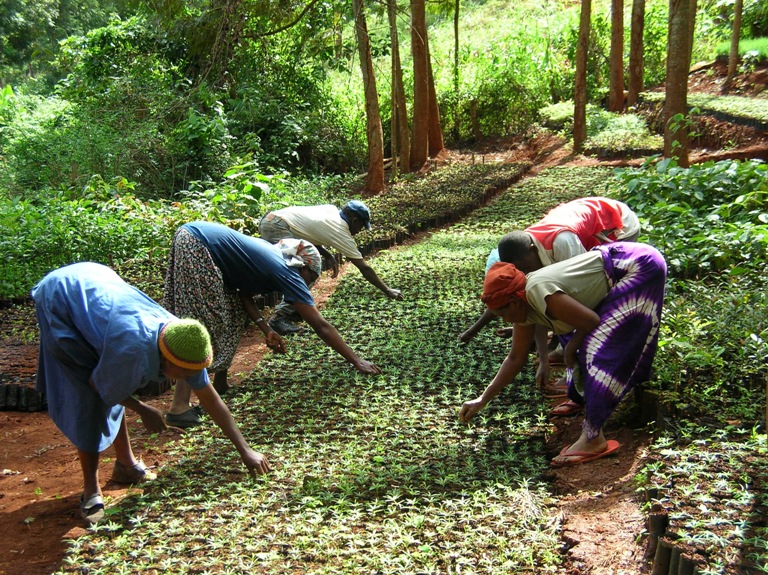
In 1977, Maathai begins to organise women to plant trees and her influential Green Belt Movement is born and soon spreads across the country, urban and rural, involving family and neighbourhood organisations, schools, churches, trades’ bodies and the like. Under the slogan, “One person, one tree”, the goal is to plant a tree in the country for every person in Kenya’s population of 15 million at the time. Soon, the country’s forestry commission is running short of seedlings, such is the demand to plant trees everywhere. After a decade’s work, an assessment of progress so far is hugely impressive: “several million trees” have been planted with the projection that by the year 2000, the movement would be able to plant 30 million trees, twice the target at initiation (175); about 200 women-groups are now working full time in the project – from nurturing nurseries to tending planted trees; more than a 1000 green belts are being overseen by schools and students; the movement is now spreading to other parts of Africa especially Uganda, Tanzania, Ethiopia, Mozambique and Rwanda with study groups from these countries visiting Kenya regularly for exchange of ideas and solidarity (177); consequently, the Pan-African Green Belt Network emerges after workshops in Kenya involving 45 representatives from 15 African countries (177).
But these successes have had huge costs on Maathai. She is subjected to a series of harassments, intimidations, arbitrary arrests and detentions by the police and other state armed agencies and even imprisonment, on a number of occasions, by the increasingly authoritarian state led by Daniel arap Moi which views her work on the environment as essentially “political”. MAATHAI has undoubtedly expanded the parameters of her work to incorporate organised protests against unlawful detentions and gaoling of citizens, support for freedom of speech and association, students’ and workers’ rights, and anti-corruption campaigns against public officials including those in such sensitive sectors that affect people’s everyday life such as the judiciary and law enforcement bureaus. The Maathai-led October 1989-January 1990 mass opposition to the Moi regime’s attempt to build a 60-storey tower office and a shopping complex fronted by an imposing stature of the tyrant in Uhuru Park, Nairobi’s equivalent of London’s Hyde Park or New York’s Central Park, is unquestionably the landmark, epic struggle of her illustrious career and her success in forcing the regime to abandon this project, utterly humiliated, marks the beginning of the end of that dictatorship.
To be On a personal level, though, the strain of such high-profile and very busy work schedule begins to affect family life, and, in Maathai’s case, results in the breakdown of her marriage to an influential Kenyan politician and entrepreneur. The divorce proceedings are very bitter and play out in public with the husband, Mwangi Mathai, insisting that Maathai drop her married name (i.e., the man’s surname, “Mathai”) as part of the “final settlement” of the marriage’s dissolution. Ironically, Maathai had felt even before marriage in 1969, three years after returning from the US, that she would rather retain her name, Wangari Muta, in keeping to her historic resolution of the name-question earlier on in the decade. She didn’t want to be a Mrs Wangari Mathai! Besides, the “Mrs” is a title introduced to the country by the British as women in pre-conquest Gĩkũyũ and other African nations (including, for instance, the Igbo in the southwestcentral region, 2000 miles away) kept their names after marriage. Maathai only relented then on taking on the “Mrs” and becoming Wangari Mathai because the subject was creating some strain early on her marriage. Now, eight years later, she is challenged in court by her estranged husband to drop the name that she had not sought for in the first place. So nearly 20 years since Mount St Scholastica College, Atchison, Maathai faces yet another crisis on name and naming. True to type, she responds intelligently and resolutely:
I remember thinking to myself, ‘I’m not an object the name of which can change with every new owner!’ And I had resisted adopting his name in the first place! As a way to deal with my terrible feelings of rejection, I got the idea of adding another ‘a’ to ‘Mathai’ and to write it as it is pronounced in [Gĩkũyũ]. And so I became ‘Maathai’. The extra syllable also signified that although a part of me would always be connected to Mwangi and his surname, I had a new identity. Henceforth, only I would define who I was: Wangari Muta Maathai. (147)
On 8 October 2004, the Norwegian Nobel Committee announces that the 2004 Nobel Peace Prize has been awarded to Wangari Muta Maathai for her “contribution to sustainable development, democracy and peace”. As Maathai receives this news of her outstanding accomplishment, the daughter-of-the-soil turns and faces Mt Kenya: “the source of inspiration for me throughout my life, as well as for generations of people before me” (293). SADLY, on 25 September 2011, the news is flashed across the world that Wangari Muta Maathai has died unexpectedly in Nairobi after a brief illness. She was 71. She receives a heroine’s funeral by both the Kenyan state and society. According to the latest, 2013 figures from the Green Belt Movement, 51 million trees have been planted in Kenya since the 1977 founding of the organisation. This is well over three times the number of trees envisaged by Maathai’s original conception.
(Alice Coltrane Quintet, “Blue Nile” [personnel: Coltrane, harp;Joe Henderson, alto flute, Pharoah Sanders, alto flute;Ron Carter, bass;Ben Riley, drums; recorded: Coltrane home studios, Dix Hills, New York, US, 26 January 1970])
References Achebe, Chinua. “African Literature as Restoration of Celebration”. Kunapipi, 1990, 12, 2, 1-10.
Alice Coltrane Quintet. “Blue Nile”. Coltrane home studios, Dix Hills, New York, US, 26 January 1970. Ekwe-Ekwe, Herbert. Readings from Reading: Essays on African Politics, Genocide, Literature. Dakar and Reading: African Renaissance, 2011. Maathai, Wangari. Unbowed: One Woman’s Story. London: Arrow Books, 2008.
*****Herbert Ekwe-Ekwe is the author of The longest genocide – since 29 May 1966 (2019) and co-author, with Lakeson Okwuonicha, of Why #DonaldTrump is #great for #Africa (2018)
BRITAIN and FULANI alliance, this transcontinental genocidist dual-headed power configuration that has executed the Igbo genocide with such abiding ruthlessness and monstrosity these past 53 years, has ensured that Igbo people’s history of the past century challenges, quite dramatically, a range of key assumptions in post-conquest studies/“post-colonial” studies/discourses that centres on race, racism, power, viciousness, brigandage, worldview, conquest(s), geography, restoration-of-independence. Contests, collaboration Here, two conqueror-states, twoimperialisms, are initially in contests and later on in fulsome collaboration: British, from northwest Europe, and Fulani, from northwestcentral Africa, both on the prowl across this Africa’s central region in the 1800s ... Both soon, amicably, switch to relay ravages, post-1900, conquering state after state with catastrophic consequences for scores of constituent African peoples, laying the foundation where they ally most strategically, beginning 29 May 1966, in carrying out the Igbo genocide.
EARLIER on in 1945, about 50 years after the beginning of the British conquest and occupation of Igboland, the Fulani (whose home is the Futa Djallon highlands of northwestcentral Africa, 1500 miles away) in occupied north Nigeria embarked on the invasion of Igbo territorial spaces emplaced in the overarching architecture of the British occupation (in Jos, northcentral Nigeria) with the latter’s tactical (if not strategic) connivance. In effect, this attack, in which the Fulani unleashed a pogrom on the Igbo as the mode of invasion, formally inaugurated the Fulani-Britishdual-headed genocidist cabalthat would oversee the perpetration of yet another season of pogrom on the Igbo in 1953 (Kano, north Nigeria), and then launch the horrendously full-blown, extended and expansive Igbo genocide, beginning on 29 May 1966. DURING phases I-III of the genocide in the 44 subsequent months, the duo genocidists murdered 3.1 million Igbo or 25 per cent of the Igbo population. Tens of thousands additional Igbo have been murdered in phase IV of the genocide, 13 January 1970-present day. These include the 3000 Igbo murdered since November 2015 by the regime of the findish génocidaire Muhammadu Buhari who was installed in power by ex-US President Barack Hussein Obama, the first African-descent president in 233 years of the founding of the United States republic, and David Cameron, ex-British prime minister.
Existential It is precisely because of the very genocidist terror that undergirds the Anglo-Fulani alliance in the wake of the 1945 Fulani invasion of Igbo homes and other interests in Jos that the Igbo resistance to this catastrophe does not categorise any of these invaders as either “primary” or “secondary”, despite the sequence of the timeframe of the invasions and despite the nature of the contributing resources that each of the co-operative executioners of this crime against humanity deploys. FOR the Igbo, the grave existential challenges from both the British and Fulani in these past 74 years have occurred almost invariably in more fluid or composite frames.
(John
Coltrane Quintet,
“Stardust”[personnel: Coltrane, tenor saxophone; Wilbur Harden, fluegelhorn; Red
Garland, piano; Paul Chambers, bass; Jimmy Cobbs, drums; recorded: Van Gelder Studio, Hackensack, NJ, US, 11 July 1958])
*****Herbert Ekwe-Ekwe is author of the recently published The longest genocide – since 29 May 1966 (2019) and co-author, with Lakeson Okwuonicha, of Why #DonaldTrump is #great for #Africa (2018)
Herbert Ekwe-Ekwe ERUDITE human rights lawyer and distinguished international jurist at the International Court ofJustice,
The Hague, 1962-1966, where he sets up the defining
international legal protocols that ensure the 1990 restoration-of-independence
for African peoples in Namibia from a century of European World conquest and occupation
(Germany, Britain/European occupied-South Africa), entrenched after Germany had carried
out the expansive and catastrophic genocides against the Herero, Nama and Derg
Damara peoples of the country, 1904-1907…
Chief justice of Biafra and ambassador
extraordinary in the resistance Biafra government during the Igbo
genocide, the foundational genocide of post-(European)conquest Africa, 29 May
1966-12 January 1970, phases I-III, in which 3.1 million Igbo or 25 per cent of
Igbo population are murdered by Hausa-Fulani islamist jihadist-led Nigeria and
its suzerain state Britain under the premiership of Harold Wilson…
Justice Mbanefo possesses that distinct
scholar’s contemplative persona that
has come to define the insistent resilience of the Biafra freedom movement...
(John Coltrane Quintet, “Brasilia” [personnel: Coltrane, tenor saxophone; Eric Dolphy, alto saxophone; McCoy Tyner, piano; Reggie Workman, bass; Elvin Jones, drums; recorded: live, at The Village Vanguard, New York, US, 1 November 1961])
Nigeria
is in southwestcentral Africa. It has a landmass of
923,768
sq km with its southern borders on the Gulf of Guinea and
the
southcentral Atlantic. Cameroon is to its east border, Chad to its
northeast,
Niger to its north and northwest and Benin Republic to
its
west.
It
has a rich multiform landscape which ranges from its
south
coastal belt of mangrove swamps of the Niger Delta and the
rain
forests and the deciduous stretch of the central belt cropland
of
the distinctly “Y”-shaped
confluence basins of the country’s two
dominant
Rivers Niger and Benue. To the north are the regions of
savannah
and Sahelian vegetation that then project to the far north
desertification
zones. The country has prominent highland topography,
the
Chappal Waddi peak, Nigeria’s highest point, and Lake
Chad,
one of Africa’s largest lakes. The climatic map
is also varied.
The
south is characterized by a tropical monsoon climate with heavy
rainfall,
while in the coastal Niger Delta, twice as much rainfall occurs.
Annual
temperatures in this region are in the overall between 26˚C
and
28˚C. In the central belt cropland regions, annual rainfall ranges
between
1100mm and 2000mm while temperatures vary: 18.45˚C in
the
cooler season to 36.9˚C in the hotter months. The further north
Sahelian
region records very low rainfall annually and temperatures
soar
between 30˚C-40˚C, making it the hottest and most arid part of
the
country.
1
Herbert Ekwe-Ekwe is an independent researcher of international relations
who specializes on genocides, conflicts and post-conquest wars in Africa. He is
also a researcher at Observatório das Nacionalidades (Ceará – Brazil).
178
Herbert
Ekwe-Ekwe
History
Nigeria,
which the British formally created in 1900, is the outcome
of
the latter’s conquest and occupation of the
principal states
and
peoples of this southwestcentral African region, begun in the
1860s
and “certified” by the pan-European conquerors’ conference
on
Africa held in Berlin in November 1884-February 1885. These
amalgamated
states include the Igbo republican conurbations to the
east
that had been independent for over 1000 years, the monarchical
metropolies
of the Yoruba and the Bini kingdom to the west and the
bourgeoning
Hausa-Fulani emirates of the north region.
For
Britain, its Nigeria conquered states were indeed prized
lands
of its evolving African seized fortunes. For 300 years, Britain had
maintained
its ascendancy as the world’s principal enslaver-power in
Africa
and the Americas. With its conquest of Nigeria, Ghana, Sierra
Leone,
Gambia and later on southern Cameroon (after Germany’s
defeat
in World War I), all in west Africa, its additional seizure of
south/southeastern
African states Zimbabwe, Botswana, Swaziland,
Lesotho,
Zimbabwe, Zambia, Kenya, Uganda, and Tanzania (after
the
defeat of Germany in World War I), as well as the Sudan (northcentral
Africa),
Britain was now the leading conqueror-state during
this
phase of the direct occupation of Africa by the European World.
These
states constituted Africa’s major population centres and
vast
multiple
natural mineralogical and agricultural emplacements.
Just
as elsewhere in its occupied Africa, Britain quickly turned
its
Nigeria into a reservoir of cheap labour for intensive and extensive
agricultural
and mineralogical exploitation. The farmer in Nigeria
was
converted overnight into a “cash crop farmer”, a term that at
face
value has a dubious meaning as it is aimed to describe a farmer
who
cultivated assorted crops such as cotton, cocoa, palm produce,
groundnut,
cloves and rubber solely for export to British markets. The
farmer
who cultivated other crops, but for the home market, which
he
or she still sold for cash, was not a “cash crop farmer”! Instead,
Nigeria
179
goes
the conquest-economics jargon, the latter farmer was involved
in
“subsistent farming”. Considering that the
overwhelming majority
of
Africans in Nigeria and elsewhere were, and are still farmers, 15-20
millions
of peoples in occupied Nigeria were, as a result of the British
conquest
and occupation, being culturally alienated at the crucial site
of
their economic activity – with obvious far-reaching
implications,
which
are still at the core of Africa’s current tragedy. If the Nigerian
labour
was not bound for agricultural activity, “cash crop”, or not, he
or
she was instead deployed by the occupation-state to the British/
European
mining corporations sprouting up all over the country to
extract
various types of minerals including gold, tin, bauxite, coal,
copper,
iron ore and, later on, petroleum products – again for export
to
the Britain/European World.
Nigeria’s was one of the most “diversified” British conquest
economy
in Africa. Forty years after the conquest and the outbreak
of
the Second World War in 1939, the following agricultural commodities
accounted
for nearly 90 per cent of Nigeria’s export products:
rubber,
cocoa, cotton, groundnuts, palm oil and palm kernels. This
seemingly
admirable range of Nigeria’s “diversification” had however
been
achieved, thanks to the sheer size of the country, stretching
from
the south on the Atlantic shoreline of southwestcentral Africa
to
the deciduous/savannah vegetation belt of the north hinterland
bordering
on the Sahel. This ensured that the occupation regime could
maximally
exploit the varying climatic zones across the territory in its
choices
but these were still dictated fundamentally by the imperatives
of
the British economy. In the 1970s/1980s, this “diversification” of the
Nigeria
economy virtually came to an end. Even though Nigeria had
since
become “independent” (October 1960), it is actually significant
that
the main export product, petroleum, which displaced the basket
of
commodities of economic “diversification” enumerated above,
shares
an equivalent quota of the country’s export trade
currently
as
the latter did a half of a century earlier: 90 per cent. As should
180
Herbert
Ekwe-Ekwe
be
expected, this role of petroleum has been dictated principally by
the
needs of the British/Western economies. Whether as “monocultural”
or
indeed “dualcultural”, the whole logic and character of the
evolving
Nigeria conquest economy was to serve the interests of the
British
occupier. Expectedly, all forms of new taxes were imposed to
expedite
this British take-over of Nigeria, and the strategic spheres of
the
country’s independent pre-conquest
cultural, industrial and other
forms
of technological creativity therein were curtailed or suppressed.
In
effect, pre-conquest African land and property relations
were
abolished by the occupation to make way for the seizure of
land
for both plantation agriculture and mining enterprises, or for the
construction
of new communication infrastructure, or for the direct
population
settlement by European immigrants as found in towns
and
cities such as Lagos, Ibadan, Enuugwu and Port Harcourt in the
south
and Jos, Kaduna, Zaria and Minna in the north.
Economy, World War II and the aftermath
The
course and outcome of the Second World War gave considerable
impetus
to the anti-British occupation struggle in Nigeria. In
1939,
Britain and France declared war on Germany. Nigerians soon
found
themselves fighting in another global war that was not of their
own
making. Apart from Liberia and Ethiopia, the rest of Africa was
under
the occupation of the same European powers at war with each
other,
except, ironically, Germany. Germany had lost its hitherto occupied
African
countries of Tanzania, Namibia, Cameroon and Togo due
to
its defeat in the First World War by Britain and its allies. But instead
of
restoring immediate independence to these African states at the
Versailles
conference terminating the war, Britain and France scandalously
incorporated
them into their own existing conquest empires
overseas
(Tanzania and southern Cameroon were seized by Britain;
northern
Cameroon and Togo were taken over by France), whilst Namibia
was
assigned to the European minority population-ruled South
Nigeria
181
Africa
to “administer”–
a euphemism that hardly disguised Namibia’s
de facto status as Pretoria’s newly conquered land. In contrast, the
defeat
of Austro-Hungary and Turkey, Germany’s central European
allies
in this war, resulted in the liberation of several subject nations
and
peoples, which included the Pole, Czech, Slovak and Greek.
So,
for Africa, whose peoples (in Africa itself, the Caribbean
and
the United States) lost 400,000 soldiers, mostly conscript
combatants
who fought for the conflicting territorial claims of rival
European
powers in the 1914-1918 war, the outcome was grim indeed:
continuing
occupation. (EKWE-EKWE, 1995) The victorious
alliance,
including crucially two leading European conqueror-states
that
then occupied most of Africa, continued to maintain the most
contemptuous
disregard of the human and national rights of African
peoples,
even though Britain and France had claimed that they went
to
war to confront Germany’s territorial ambitions. As
one and half
million
African descent conscripts worldwide went to fight for these
same
European World occupying states in 1939, it was even less likely
that
Africa’s own independence would be reclaimed in
the event of
victory
against Germany.
About
100,000 Nigerians were part of the total number of
Africans
who fought for the anti-German coalition forces during World
War
II. All accounts record the valiant performances of the African
contingents
in the principal fronts of the war: western Europe; the
gruesome
Far East campaigns against Japan, where Africans casualties
were
in tens of thousands; the battles in north-east Africa in
1940-1941,
which led to the liberation of Ethiopia from Italian occupation,
and,
finally, the preparations leading to the coalition’s landings
in
western Europe in 1944, which was decisive in the subsequent
defeat
of Germany. Indeed, the role of the African-Guyanese governor
of
Chad, Félix Éboué, was crucial in the anti-German alliance’s
successes
at this theatre. He provided logistics in west/central Africa
and
his support for the Free French Forces was unequivocal even at
182
Herbert
Ekwe-Ekwe
a
time when influential French, including François Mitterand (who
would
later become president), were collaborating with the German
occupation
regime in France.2 The total number of African descent
casualty
in the war is estimated at 900,000 killed, and hundreds of
thousands
wounded (EKWE-EKWE, 1995).
Besides
providing troops, Nigerian territory was used extensively
as
rear bases and supply lines, particularly for the north African
and
west European campaigns against Germany and its allies. This
was
part of the massive expansion of air and seaport facilities in the
west
African region in 1940-43. The absence of combat activity in
Nigeria
itself provided another advantage for the anti-German coalition.
Britain,
which was now the only effective European occupying
power
in Africa, with the sudden fall of France to the Germans, was
able
to offset the sharp drop that occurred in the early 1940s in the
global
production of palm oil, groundnut, tin and rubber due especially
to
the Japanese overrun and occupation of southeast Asia. It readily
stepped
up the production of these commodities in occupied Nigeria,
Ghana,
Sierra Leone and Gambia. In similar vein, increases in the
production
of sugar and banana were embarked upon in British-occupied
Caribbean,
home to mainly peoples of African descent, as part
of
the war effort at the time. Crucially, direct financial support for the
British
war effort from British-occupied Africa was spectacular – this
totalled
£446 million by the end of the war in 1945 (RODNEY, 1982).
Yet
the feverish increase in all these productive activities for
the
British war effort from across the African World co-existed with
a
sharp deterioration of the living conditions of the majority of the
peoples
in British-occupied Nigeria. Prices of locally produced goods,
as
well as imports, especially foodstuffs, soared. In Lagos, prices of
assorted
meat had increased by at least 90 per cent between 1939
and
1945; prices of pepper and salt had increased by 150 per cent and
400
per cent respectively, during the same period, while price rise for
2 See, for instance, In Memoriam: François Mitterand, a BBC review, at newshour/bb/remember/mitterand_1-8b.html>. Access on: Mar, 11, 2006.
Nigeria
183
rice
was 92 per cent and milk rose by 86 per cent (ANANABA, 1969).
By
1943, there was a distinct possibility of a countrywide famine
in
Nigeria (NJOKU, 1987). The general foodstuff situation had been
made
worse by the occupation regime’s enhanced diversion of local
human
power resources from the farms, producing food for domestic
consumption,
into the military or associated enterprises to support
the
war effort. The regime had also decreed a wage freeze, the paltry
sums
that accounted for payment of African workers notwithstanding,
until
the end of the war, and its resultant effects added to the despair
of
the times. Workers’ mandatory cash payments to the
war effort,
supervised
by regime officials up and down the country, were also
another
source of the tense situation.
In
July 1941, workers embarked on a mass protest, demanding
an
increase in their living allowances or what they called, quite
appositely,
a “war bonus” (ANANABA,1969, p. 26). The regime’s
inability
to meet this demand to the workers’ satisfaction,
coupled
with
the generalised deterioration of the living standards of the
people
across the country, ultimately became the background of
the
1945 countrywide strike – itself, the turning point in the
politics
of
Nigeria’s liberation movement as we shall
soon show. It is also
important
to recall that by January 1941, Nnamdi Azikiwe, whose
party,
the National Council of Nigeria and the Cameroons/NCNC,
would
support the 1945 strike, had begun to show disillusionment in
the
ability of the principal states of the anti-German war coalition to
confront
the issue of the British occupation of Nigeria. After all, the
only
basis that leading officials of the NCNC freedom party could justify
Nigerian
peoples’ support for the anti-German
alliance of the era, in
which
occupier Britain played a central role, was that the outcome
of
the war should lead to Nigeria’s liberation. Azikiwe had observed
in
an editorial in his West African Pilot in January 1941: “Day by day
as
I taste the bitter pills of being a member of a [subjugated] race, I
become
sceptical and laugh at the effusions of those who proclaim
184
Herbert
Ekwe-Ekwe
to
the world how paradisical is the lot of the [occupied] peoples in
the
present scheme of thing” (NJOKU, 1987, p. 3181).
In
May 1945, with victory assured, the European powers were
now
faced with the choice of implementing the Anglo-America Atlantic
charter,
formulated in 1941. A clause in the charter unequivocally
affirms
the “right of all peoples to choose the
form of government
under
which they will live [and] to see [the] sovereign rights and
self-government
restored to those who have been forcibly deprived
of
them [...]” (PORTER, STOCKWELL, 1987, p.
103). But in practice,
Britain
felt that this clause did not apply to Africans (and other conquered
and
occupied peoples in Asia, the Pacific, South America and
the
Caribbean). Its wartime prime minister, Winston Churchill, had
stressed
that he “had not become the King’s First Minister in order
to
preside over the liquidation of the British Empire” (PORTER, STOCKWELL,
1987,
p. 25).3 Bernard Bourdillon, the British occupation
governor
in Nigeria, was equally blunt, even derisive of the demands
for
the restoration of African independence: “The British
government
…
did not anticipate any change in her policy towards Nigeria … The
war
… did not provide opportunities for the acceleration of greater
participation
in the administration of the country by Nigerians …
[No
one] should expect a reward for failure to cut [their] own throat”
(NJOKU,
1987, p. 180).
Once
again, it was evident that Britain, and other European
conqueror
states occupying Africa, was not prepared to pull out of the
continent.
Just as in 1918, London and Paris were about to ignore the
extraordinary
role that African peoples, their countries, and resources
had
played in defeating Germany during this second time round. It
was
clear, though, that unlike 1918, the world after 1945 opened up
3
The French were similarly contemptuous of the liberation of its occupied
African states (as well as
those
in Asia, the Pacific and the Americas), notwithstanding their early
capitulation to the German
invasion
at the outbreak of war. During the 1944 Brazzaville conference of exiled French
occupation
governors
from across the world, which was chaired by General Charles de Gaulle, the
French
position
on the subject was restated emphatically: “Self-government must be rejected – even in the
more
distant future” (DESCHAMBS, 1979, p. 249). Sixty
years on, France’s supercilious disposition to
African
independence and sovereignty continues unabated. For an analysis of the current
epoch, see
Ekwe-Ekwe
(2003).
Nigeria
185
more
advantageous possibilities for African peoples to effect their
liberation,
on their own terms, across Africa and the Americas, in a
manner
that would have a tremendous impact on global development.
In
the meantime, the irony of the pan-European superciliousness
towards
African liberation, given the tragic history of the world of
the
previous six years, was not lost on the consciousness of the rest
of
humanity: Britain, France and Belgium, especially, had fought
against
German cultural supremacism and territorial expansionism,
but
emerged from this war apparently oblivious that their own form
of
cultural supremacism was part of the conquest ideology that had
been
used to “legitimise” the occupation of Africa and several regions
of
the Southern World for centuries. The fact that these conqueror
states
were not willing to withdraw voluntarily from occupied Africa,
despite
the cataclysm of the war of 1939-45, was highly indicative
of
the serious limitations that characterised their publicly-declared
war-time
political aspirations, propaganda, and objectives.
Furthermore,
to underscore its staggering indifference, if not
contempt
for the restoration of African independence in Nigeria, in
the
immediate post-World War II years, the British occupation regime
sought
the expansion of productivity in the Nigeria economy to meet
Britain’s own homeland demands for urgent reconstruction. So, the
occupation
regime in Nigeria directed the intensification of both agricultural
and
mineral export products in the country (especially palm
products,
cotton, rubber, hides and skins, beniseeds, groundnuts,
tin
ore and columbite) in response to this British need (ONIMODE,
1982).
In 1946, the value of Nigerian exports was £23.7 million; by
1955,
it was £129.8, and in 1960, £165.5 (EKUNDARE, 1973). There
was
a distinct growth in Nigeria’s Gross Domestic Product during
the
period,
an annual rate of 4.1 per cent in 1950/51-1957/58; indeed,
not
since 1916 had Nigeria enjoyed a favourable net-barter terms of
trade
with Britain as was recorded between 1951-1955, and 1958-
1960
(ONIMODE, 1982). But Nigeria was still a British occupied land,
186
Herbert
Ekwe-Ekwe
with
a socioeconomy that existed principally to serve British interests.
This
was underlined by the fact that the gargantuan sum of £276.8
million,
the preponderant chunk of the surpluses that accumulated
from
this unprecedented boom, was transferred to Britain between
1947
and 1960 (ONIMODE, 1982). This is not to mention British
surpluses
enjoyed by the corresponding increases in the value of
Nigerian
imports from (mainly) Britain at the time: £19.8 million in
1946,
£136.1 million in 1955, and £215.9 in 1960 (EKUNDARE, 1973).
Britain’s more advantageous trade relations with Nigeria were
further
consolidated in 1955 when Europe slumped into an economic
recession.
The prices that Europeans were prepared to pay for imports
of
agricultural and mineral products abroad fell considerably. This
was
an instant blow to the Nigerian economy. Even though its export
trade
that year increased by 7,000 tons in volume, the value fell by £17
million
(NNOLI, 1981). The result was an increase in Nigeria’s import
bills,
which continued to rise. While a “buoyant” Nigerian economy
with
its reliance on the British economy for imports was an advantage
for
Britain, especially at a time of recession at home, the enormous
strain
on Nigeria’s own accounting was becoming
severe. Not only
did
the country incur deficits in its balance of payments position, it
also
drew heavily from its external reserves; such was the situation
that
Nigeria allocated at least one-fifth of the total investment bill
earmarked
for the 1955/56-1961/62 development plan to be financed
from
abroad (NNOLI, 1981). The leading Western companies in Nigeria
clearly
took advantage of a series of “liberal” measures which the
occupation
regime had instituted to stimulate production in response
to
Britain’s post-war reconstruction
programme.
Road to restoration of independence, pogroms, genocide
Yet
Britain could no longer carry out such control with the
totalising
impunity of the past; it had to be mediated somewhat locally,
and
this historical responsibility lay squarely on the NCNC, formed
Nigeria
187
on
26 August 1944 to spearhead Nigeria’s liberation
struggle. The
background
was of utmost symbolism because this was connected
with
the ongoing Second World War. Earlier in the month, students
at
the Lagos King’s College had gone on strike as a
result of the deterioration
of
social conditions in the institution, caused initially by
poor
management but exacerbated by the wartime emergencies. In a
rash
response to the crisis, the newly appointed occupation governor
ordered
the immediate conscription of the students’ strike leaders
into
military service.4 A number of other students were arrested
and
prosecuted including Chukwuemeka Odumegwu-Ojukwu, the
10-year-old
student, who would in 1966, aged 33, play a leadership
role
in the resistance of the genocide unleashed against the Igbo
people
by the Nigerian state and British. A few days later, the death
of
one of the student conscripts while still in military custody sent
a
shock wave across Nigeria. Leaders of the Nigerian Union of Students
conferred
with Azikiwe, proprietor of the leading newspapers
that
made up the liberation press, who called for a conference of all
Lagos’pro-liberation organisations to discuss the crisis. The students’
union
convened such a conference on 26 August 1944, with the
historic
outcome being the formation of the NCNC. Part of the conference
communiqué
stated categorically: “Believing our country is
rightfully
entitled to liberty and prosperous life ... and determined to
work
in unity for the realisation of ultimate goal of self-government.”
(COLEMAN,
1958, p. 264).
Nine
months before the end of the war, the NCNC had forced
to
the fore the question of the restoration of the independence
in
Nigeria. This was undoubtedly a momentous development in the
peoples’ consciousness and aspirations, but it was unacceptable for
the
occupation regime, especially coming fast on the heels of the
King’s College crisis, not to mention the ongoing war against Ger-
4
Arthur Richards had acquired notoriety in his implacable opposition to African
liberation from
the
European conquest as evident in his previous position as governor of
British-occupied Jamaica
(COLEMAN,
1958).
188
Herbert
Ekwe-Ekwe
many.
The NCNC was essentially a “federal” party with membership
derived
from organisational affiliations such as trades’
and students’
unions,
women’s organisations, and cultural
associations of constituent
nations
in Nigeria and the southern Cameroons.
On
22 June 1945, Nigerian workers declared a countrywide
strike
to back their demands for an increase in wages and improvement
in
the ever deteriorating conditions of the people made worse
by
the war. The strike paralysed Nigeria’s economic life.
It went on
for
44 days in the Lagos capital district, but up to 52 days in some
regions.
The NCNC and the restoration-of-independence press (particularly
West African Pilot and Daily Comet, both edited by
Nnamdi
Azikiwe,
then secretary-general of the NCNC) supported the strike,
underlying
the increasingly cooperation between the trade unions
and
the emerging political leadership in working towards the country’s
liberation. The strike was the most far-reaching mobilisation of
labour
in occupied Nigeria and its implications were not lost on the
occupation
regime.
It
is evident that “Nigerians, when organised”, as James Coleman
(1958)
has noted, “had great power, that they could
defy the
white
bureaucracy, that they could virtually control strategic centers
throughout
the country, and that through force or the threat of force
they
could compel the government to grant concessions”
(COLEMAN,
1958,
p. 259). While the regime agreed to enter into negotiations with
the
workers after the strike was called off, it nonetheless sought to
destroy
the huge “political dividend” of liberation consciousness that
the
shutdown had generated across the country. Earlier on, it had
proscribed
the circulation of the vanguard newspapers, and accused
its
editor and Igbo people for engineering the strike (NNOLI, 1980). The
regime’s propaganda on alleged Igbo responsibility for the strike became
an
instigator prop to Hausa-Fulani leaders’ organised
massacres
of
Igbo immigrants in Jos and the surrounding tin mining towns and
villages
in October 1945 as well as in the north, this time in Kano, in
May
1953. Hundreds of thousands of pounds worth of Igbo business
Nigeria
189
enterprises,
homes, schools and recreational centres were looted or
destroyed.
These latest attacks coincided with the debates on the
possible
date for the formal termination of the British occupation and
the
restoration of independence. In contrast to the Igbo, Yoruba, Bini
and
other nations in the south who favoured the year 1956, the north,
with
total British connivance, as expected, was vehemently opposed
to
any such dates. Essentially, the north unleashed the Igbo pogrom
in
Kano to scuttle these debates – which it succeeded in doing, with
evident
British relief and satisfaction. These attacks were a portent
of
the widespread genocide of the Igbo by Nigeria, beginning in May
1966,
in which a total of 3.1 million Igbo, or 25 per cent of its population
were
murdered during subsequent 44 months.
Britain
was a central operative, along with the Nigeria state, in
the
planning and execution of the Igbo genocide right from its outset
to
its concluding phases in 1969/1970. It was Britain’s “punishment”
of
the Igbo for its audacious lead of the struggle for the freeing of Nigeria
that
began in the 1940s. The pogroms against the Igbo in north
Nigeria
were carried out by pro-British political forces in the region
who
were opposed to the restoration of African independence but
who
Britain would hand over supreme political power of the country
on
the eve of its so-called departure from Nigeria in 1960. Without
British
complicity and massive arms support it was highly improbable
that
Nigeria would have been in the military position to pursue this
foundational
genocide of post-(European)conquest Africa.
Rule of the juntas and the economy: 1970-1999
For
25 years, following its 44 months of perpetrating the
Igbo
genocide, Nigeria was run by a coterie of military officers as the
country
went through a stretch of coup d’états. The era
coincided
with
the phenomenal boom in the petroleum oil-driven economy.
By
the mid-1970s, Nigeria emerged as the sixth largest petroleum
oil
producer in the world. Its gross national product was US$ 22.4
190
Herbert
Ekwe-Ekwe
billion
and had become Africa’s third richest state after South
Africa
and
Egypt. The period was of unrelenting corruption in government
as
top officials lurched ravenously into the public purse in a frenzy.
A
junta leader even boasted that “Nigeria will become one of the ten
leading
nations in the world by the end of the century”.
Of
course, in 1999, Nigeria was anything but a world power –
not
because the country lacked a resourceful population nor because
it
was deprived of an “enabling” natural resource infrastructure to
accomplish
such a task. On the contrary, many countries in history
with
a fraction of Nigeria’s human and natural resource
capacity have
achieved
major societal development in very limited timeframes as,
for
example, Malaysia, South Korea and Taiwan. On material resources,
Nigeria
had by 1999 earned the sum of US$ 300 billion from petroleum-
oil
after 40 years of exploitation and exports. Unfortunately, this
revenue
had by and large been squandered by the country’s
regimes
of
the epoch through its institutionalised corruption and profligacy.
Between
1972 and 1999, one fifth of this sum was looted personally
by
these furacious leaderships and transferred to Western banks and
other
financial institutions. At the time, budgetary allocations to the
Nigerian
military and other paraphernalia of the juntas’
repressive
apparatus
averaged US$2 billion per annum (REPORT…, 2001) with
Britain
enjoying 60-70 per cent of all imports. The dictatorships
were
therefore fully equipped to pursue their state of siege on the
populations
with devastating consequences: a run-down economy,
the
murder of scores of political opponents, the detention of several
others,
the catastrophic military interventions in Liberia and Sierra
Leone
which cost the country US$13 billion (THIS GENERAL…, 2006;
REPORT…, 2001) and thousands of casualties, and the flight of tens
of
thousands of intellectuals and professionals into exile.
This
was the epoch of dubious contractual deals and dealing
that
yielded enormously-inflated financial returns for thieving public
functionaries:
the importation of everything from cement, sand, nails
Nigeria
191
and
rice to champagne and lace, and the staging of innumerable
feasts
and festivals! At some point in 1983, at the apogee of this
scramble
of an economy, Nigeria’s external currency reserves were
reduced
to about US$ 2 billion. Inevitably, this scramble has churned
out
the directory of millionaires and billionaires whose names and
gory
legacy make up the haunting epitaph of a failed state. In this
context,
Edwin Madunagu’s description of this shenanigan
as the
“political
economy of state robbery” (Madunagu, 1983) could not
have
been more evocative.
It
does not require emphasising that with the judicious use
of
the gargantuan sum of US$ 300 billion, not only Nigeria but also
the
entire African World would have been radically transformed.
No
one would dare equate “disaster, degradation and
desperation”
with
contemporary African existence as it is often the norm in many
a
standard discourse. On this very “squandering of
[the peoples’] riches”
(NIGERIA…, 1984), ignoring for once the other striking features
of
successive Nigerian regimes of the era, all those who have been
heads
of regime, as well as all those intellectuals who surrounded
them
as aides and advisors must be ashamed of themselves. They
constitute
the most vivid tragedy of Africa’s recent history.
They have
frittered
away the treasured trove of several generations of peoples.
Furthermore,
they were and remain a monumental disappointment
and
disgrace to the millions of Africans elsewhere in the world. In
effect,
Nigeria’s regimes appear to have ignored
the salient feature
of
the development ethos, any development ethos, that the engine
of
such an enterprise is anchored internally – right there at
the very
locale
of the projected activity. Or have they?
Obasanjo “civilianisation” and the non-militarist regimes:
1999-2015
Contrary
to expectations across the country in 1999, the end
of
military rule did not reverse the underlying anti-democratic policy
192
Herbert
Ekwe-Ekwe
and
manifestation of militarisation. The situation had not least been
helped
by the leadership of the new regime, headed by none other
than
Olusegun Obasanjo, an ex-military dictator himself who led a
junta
for three years in the 1970s and a commander during the Igbo
genocide
of 1966-1970. In an era when the rest of the world appeared
completely
exasperated in watching Africa forced to its knees by a
cyclical
retinue of colonels and generals wielding the cudgel of their
brute
usurpation of state power, Obasanjo had essentially followed
in
the footsteps of former military dictators in west and central Africa
(Togolese
General Eyadema, Ghanaian Flt-Lt Rawlings, Burkinabe
Captain
Compaoré and Central African Republic General Bokassa,
for
instance) to “civilianise” himself into head of regime. His eight
years
in office were a disaster in the country. Rather than slash the
budget
on militarisation, “civilian” regime head Obasanjo increased
it!
In 1999, the junta’s stated budgetary allocation to
militarisation
was
US$ 2.2 billion; in 2000, Obasanjo’s own first
budget, he earmarked
US$
2.4 billion for militarisation, an increase of almost 10
per
cent from the previous year (REPORT…, 2001). In
contrast, US$
500
million was assigned to education while health care received
US$
150 million (OGUNSAKIN et al., 2005). The widespread human
rights
abuse and personal insecurity did not abate. Instead, the situation
worsened
with the increased levels of state and quasi-state
violence
on principally Igbo people and the further strangulation of
the
economy of occupied Igboland.
In
the eight years that Obasanjo was in power, 10,000 people
in
Nigeria were murdered by the state, quasi-state agencies and
others.
Ninety per cent of those murdered were Igbo. In all, Obasanjo
had
overseen one of the most corrupt and incompetent governments
in
Nigeria. Transparency International branded Nigeria the “second
most
corrupt country” in the world (OGUNSAKIN et al., 2005). But
the
Obasanjo regime’s more detailed and graphic
indictment came
from
a January 2003 damning report on its financial life published by
Nigeria
193
its
own auditor general, noting gross irregularities: “over-invoicing,
non-retirement
of cash advances, lack of audit inspection, payments
for
jobs not done, double debiting, contract inflation, lack of receipts
of
back pay, flagrant violation of financial regulations, release of money
without
approving authority…” (UGBOLUE, 2003)5. Thousands of
employees,
especially in public services, were owed salaries ranging
from
12-18 months. Industrial enterprises operated at about 30 per
cent
capacity and acute shortages of petrol and petroleum products
were
the norm for a country that is the world’s sixth largest
exporter
of
petroleum oil! Several universities and other educational institutions
of
higher learning were strike-bound for long stretches during
the
academic year due to both staff and students’ protests over
lack
of adequate state funding for education. Hospitals were also
frequent
sites of strike action by doctors, nurses and other medical
staff
protesting over the government’s poor funding of healthcare.
What
Obasanjo had shown demonstrably in Nigeria was that rather
than
ease an already desperate situation, the “civilianisation” of exmilitary
dictators
in the politics of their countries deepened the crisis
of
militarisation and brutalisation, with the predictable consequences
on
the welfare and aspirations of the people. The haemorrhage on the
economy
as the regime ploughed even more resources into the procurement
of
armaments to suppress targeted populations intensified.
After
the brief interregnum of the non-militarist presidencies
of
Yar’Adua and Jonathan in office (2007-2015), the militarised “civilianisation”-
regime
type was back in power (beginning May 2015)
with
Muhammadu Buhari as head of regime – the position he
earlier
on
occupied in December 1983-August 1985 as a putschist, having
overthrown
the elected Shehu Shagari administration, only to be
overthrown
himself 18 months later by yet another putschist.
5
See, also, an associated study of the Obasanjo regime by Chatham House
(London), which concludes:
“The
scale of the corruption, mismanagement and non-execution of projects in the
Obasanjo
years
has sent shockwaves through Nigeria” (ANGOLA…, 2009).
194
Herbert
Ekwe-Ekwe
Nigeria today – miscellaneous highlights
a)Population
The
population figure, 187 million inhabitants (2016), should
be
treated with caution as there has been no reliable census in Nigeria
throughout
its history. Since the 1950s when the British occupation
regime concocted that historic untruth that the north region was
“50
per cent of [Nigeria’s] population without any census”, to quote
the
startling acknowledgement of the infamous deed 50 years later
by
Harold Smith, a British conquest administrator who was then deployed
in
capital Lagos where he worked on the programme (EKWE
-EKWE,
2006), all subsequent countrywide organised censuses and
outcomes
in Nigeria have been grossly fraudulent. Britain had deliberately
inflated
the north region’s population as a ploy to entrench
its
Hausa-Fulani islamist-clients in power in perpetuity.
b)Economy
Gross
Domestic Product (GDP) is US$493 billion. GDP by
sector
is as follows: services, 54.6 per cent; industry, 25.6 per cent;
agriculture,
17.8 per cent. According to the Nigeria bureau of statistics,
the
Nigerian economy is currently in recession.6 This is its worst
recession
for over a decade. It states that the 2016 second quarter
GDP
declined by -2.06 per cent. Annual inflation rose to 17.1 per cent
in
July 2016, and food inflation rose to 15.8 per cent. The population
below
poverty line is 33 per cent and unemployment countrywide rate
is
6.4 per cent. Exports amount to US$93 billion (2015) – chiefly petroleum
and
petroleum products. The country’s main export partners
are
India, Spain, Holland, South Africa, and Brazil. Its main import
partners
are China, United States, India, and Holland.
6 See Premium Times, Lagos, 31 August 2016.
Nigeria
195
c)Education
In
Nigeria 20, 682, 000 children (6-12 year-old) are enrolled
in
primary schools7 while 9, 057, 000 older children (12-17 year-old)
are
enrolled in secondary schools, representing 44 per cent gross
enrollment
ratio. Tertiary schools’ enrollment is 1, 700, 000 students
or
a 10 per cent gross enrollment ratio. There are 128 universities in
Nigeria,
51 of which are private. The country’s adult literacy
rate (15
and
older) is 61.3 per cent.
d)Political and diplomatic relations– foreign policy:
regional, continental
Africa,
African World and world-wide multilateral relations
Nigeria
is an active member of the principal regional and
supranational
organisations in Africa and elsewhere in the world. It
is
a member of the 15-country west Africa regional economic organisation,
ECOWAS,
formed in 1975. The headquarters of ECOWAS’s
appeal
court is located in Abuja, Nigeria’s capital. Nigeria
is also
active
in the broader continental organisation, the African Union, a
successor
to the Organisation of African Unity, based in Addis Ababa,
Ethiopia. It also belongs to the United Nations and various UN
bodies
and affiliates. In South-South relations, it is a member of the
Non-Aligned
Movement as well as the 24-member states of the Zone
of
Peace and Cooperation of the South Atlantic which it played a key
role
with Brazil to found in 1986. Nigeria participates expansively in
UN-directed
peace-keeping missions in African conflicts, a role it has
played
in west, central, east and southern Africa in the past 40 years.
Background:
Right
from the outset, in the mid-1930s, the principal leaders
of
the National Council of Nigeria and the Cameroon’s
(NCNC) restoration-
of-independence
movement against the British conquest
in
Nigeria had conceptualised the African World, namely the Africa
7 All statistics on education are derived from Education... (2016).
196
Herbert
Ekwe-Ekwe
continent
and the African presence in states and territories outside
the
continent especially in the Americas as the “space of mutual
relations
and solidarity of African peoples” which would be
the important
focus
of cooperation with an independent Nigeria. Many of
these
leaders, especially the political scientist and journalist Nnamdi
Azikiwe,
the economist Mbonu Ojike and the educationist Nwafor
Orizu
had all studied in the United States. They were impressed by
the
African-centred philosophy and writings of Marcus Garvey, the Jamaican
thinker,
journalist and publisher, and had become associated
directly
or experienced the immediate aftermath of the tumultuous
1920s-1930s
Harlem Renaissance African American cultural movement
which
emphasised an encompassing African universalism,
following
centuries of pan-European enslavement of African peoples
and
the occupation of Africa. Azikiwe had worked closely with Kwame
Nkrumah
from Ghana, another African student in the US in the 1930s,
Jomo
Kenyatta from Kenya (who had studied at the London School of
Economics)
and a number of African intellectuals from the Americas
(particularly
US, Jamaica, Trinidad, Martinique, St Lucia, Guyana,
Surinam,
Barbados) to arrange the historic 1945 conference on the
future
of the African World in Manchester, England. Consequently, the
working
principle of “Africa as the centre-piece” of Nigerian foreign
policy
became a defining crucible of independent Nigeria in October
1960
(PINE, 2011). Jaja Wachukwu, first foreign minister and himself
an
African Worldist who had studied in Ireland, was adamant on
this
future policy direction: “charity begins at home and
therefore
any
Nigerian foreign policy that does not take into consideration the
peculiar
position of Africa is unrealistic” (pine, 2011).
Organisation of African Unity:
The
all-Africa continental body, Organisation of African
Unity,
which was formed in 1963 with headquarters in Addis Ababa,
Ethiopia,
was an opportunity for the new Nigeria to begin to pursue
Nigeria
197
its
Africa World-stated vision of international relations. It aligned
with
Ghana, Mali, Guinea-Conakry, Senegal, Uganda, Tanzania and
Zambia
to map out support for African peoples in southern Africa
especially
in South Africa, Zimbabwe, Namibia, Angola and Mozambique,
as
well as in Guinea-Bissau, Cape Verde and São Tomé and
Principe
in west Africa who were still ranged in their freedom movement
to
free themselves from the British or Portuguese conquests
of
their homelands. Nigeria would extend these support activities in
the
Non-Aligned Movement which it had become a member at its
formation
in Belgrade (then Yugoslavia) in 1961 and also at the United
Nations
especially in its several ad hoc “decolonisation
committees”
on
the subject during the era on which Nigeria had served as a
member.
Nigeria also used its membership of the Commonwealth,
an
organisation that incorporates Britain and its former conquered
states,
to bring forth this contentious subject of non-liberated African
countries
in the south and west Africa.
The
OAU was also an opportunity for Nigeria and other
member
states to begin to construct other avenues of collaboration
in
economics, educational and cultural affairs across Africa. Students’
exchange
programmes across states and regions were developed in
addition
to cross-border economics relations that would evolve to
such
regional groupings as the East African Community, ECOWAS
in
west Africa, and, later on, SADEC in southern Africa. Nigeria and
other
states in west Africa were most vocal in the OAU in the 1960s
in
condemning the repeatedly defiant French nuclear tests in the
Sahara,
carried out in flagrant disregard of the lives and heritage of
millions
of Africans in the region and elsewhere on the continent.
Additionally,
the OAU was a platform for Nigeria and others to extend
messages
of solidarity to African Americans during their freedom
movement
uprising in the 1960s and to Africans in the Caribbean and
South
America in their own freedom movements and aspirations.
198
Herbert
Ekwe-Ekwe
The
OAU was replaced in May 2001 by the African Union and
Nigeria
has continued to exercise an active role in this new organisation
as
in its predecessor.
Economic Community of West Africa States (ECOWAS):
ECOWAS
was formed in 1975. Nigeria and Togo played a central
role
in its formation. It comprises 15 members of the countries of
west
Africa except Cameroon. Its principal aim is regional economic
integration,
a goal that has not progressed significantly since its inception.
The
region is still chiefly an exporter of primary agricultural
and
mineralogical products, as was in the epoch of the multipower
European
occupation, and there are limited vistas of “economic
integration”
based
on this unchanged, underlying socioeconomic profile.
There
has been an improvement though on cross-border travels by
peoples
in the zone. It has a common passport and citizens with
their
own national passport no longer require an entry-visa before
travelling
to a member country. The region is currently beset by a
serious
terrorist emergency occasioned by the Boko Haram terrorist
group,
the globe’s deadliest terror organisation,
which is based in
Nigeria.
Besides its murderous campaigns in Nigeria which has resulted
in
the death of over 20,000 people in the past seven years, Boko
Haram
has also been carrying out devastating raids into Niger, Chad
and
Cameroon. It is also linked strategically if not tactically to the
terrorist
group al-Qaeda in the islamic Maghreb which has carried
out
several gruesome attacks in Mali to the west from its bases in
south
Algeria to the north.
Zone of Peace and Cooperation of the South Atlantic (ZPCSA):
The
Zone of Peace and Cooperation of the South Atlantic
was
formally inaugurated at the United Nations on 27 October 1986
by
resolution 41/11. It comprises 24 countries positioned west and
Nigeria
199
east
of the South Atlantic Ocean – 21 countries in Africa, including
Nigeria,
South Africa, Namibia, Angola, Ghana and Guinea Bissau,
and
three in South America, namely Brazil, Argentina and Uruguay.
Principally,
the zone is aimed at maintaining peace and security
across
the region, ensuring complete denuclearisation, and with
the
aspiration of eliminating the military presence of any non-zone
member
states from there.
Nigeria
and Brazil worked closely for the creation of ZPCSA.
Nigeria
had thought of the possibilities of such a zone a decade earlier.
In
1976, the Nigeria Institute of International Affairs in Lagos,
then
the country’s capital, had a seminar to
consider the lessons
and
aftermath of the 1975 major international conflict over the
restoration-of-independence
in Angola which involved the military
forces
and intelligence services of disparate forces external to Angola
which
included South Africa, the United States, Cuba, Portugal and
the
Soviet Union. The Lagos seminar recommended that the Nigeria
government
should work:
towards
the emergence of a South Atlantic zone to
protect
and promote the interests and aspirations of
African
and Latin American countries on both sides of
the
[Atlantic] ocean. This recommendation was clearly
influenced
by the events in Angola at the time, as well
as
concerns for apartheid South Africa’s military and
geo-political
designs on and illegal occupation of Namibia
and
southern Angola, the extension of super-power
military
competition into the South Atlantic region,
reflected
in the establishment of military bases with
their
negative consequences for the states of the region,
and
the desire to straddle the centuries-old colonially
inspired
divide between the African and Latin American
states
bordering the South Atlantic ocean by instituting
a
new era of contact, cooperation and development.
(NILOS,
1993, p. 57-58).
Nigeria
then embarked on intensive discussions with Brazil.
The
outcome of these talks “saw the materialization of the
zone in
1986” (NILOS, 1993, p. 58) with the historic UN resolution. In the
200
Herbert
Ekwe-Ekwe
follow
up, post-resolution major conference, the 24 member states
met
in Rio de Janeiro in July 1988 to work out a full agreement to
formally
establish the zone. The outcome was the defining document,
A/43/512,
signed by all the visiting heads of state or government, and
which
summarises the zone’s mission as follows: “common objective
of
cooperation for peace and development in an environment free
from
tension and in conformity with international law, constructive
relations
based on dialogue, understanding mutual interest and respect
for
the sovereign equality of all [ZPCSA] States, to the benefit
of
the peoples of the region and the international community as a
whole” (NILOS, 1993, p. 58).
The
ZPCSA is indeed a “functioning vehicle for
South-South
cooperation” (NILOS, 1993, p. 57) and can only augur well to determined
efforts
elsewhere in the world towards constructing polycentric
global
fields of international relations – away from the
very conflictual
tri-/dual-,
even uni-polarity, that has tended to characterise world
affairs
since the end of the Second World War in 1945.
e)Terrorism and security, human rights
In
its “Global Terror Index 2015” (CLARKE, 2015), the Institute
for
Economics and Peace, a research institute based in New York,
shows
that the Boko Haram islamist terrorist organisation in Nigeria
is
the world deadliest terrorist group, surpassing the killing of the Islamic
State
in the Middle East. Boko Haram and the Fulani militia,
its
affiliate group that also operates in north Nigeria, are part of the
worst
five lethal terror organisations. The yearly increase of people
murdered
by Boko Haram in Nigeria is more than the total number
of
those killed by terrorism around the world. During 2013-2014,
Boko
Haram murdered 5,662 people in Nigeria making this figure
the
largest number of people killed by terrorists in any one country
across
the world at this period. The Washington-based Fund for
Peace,
which publishes an annual study of the world’s fragile states’
Nigeria
201
index,
has placed Nigeria’s position as 13th out of 178
states in its
latest
research (FFP, 2016). Amnesty International recently published
a
damning report of the latest in the ever-continuing stretch of the
Nigerian
military’s role in the Igbo genocide
(NIGERIA…, 2016).
f)Prospects
Increasingly,
the viability of the Nigeria state, so constituted in
the
wake of the British conquest and occupation, is not sustainable.
Constituent
nations and peoples are defining and redefining liberatory
trajectories
that are bound to transform the politics and economies
of
this strategic southwestcentral region of Africa most profoundly.
References
Ananaba,
W. The Trade Union Movement in
Nigeria. Benin City: Ethiope
Publishing
Corporation, 1969.
ANGOLA
praised on Asian oil deals. BBC News, [on line], Aug. 10, 2009.
Available
at: .
Access
on: Aug. 12, 2009.
CLARKE,
M. Globally terrorism is on the rise – but little of it occurs in
Western
fifty-one-years-o.html>.
Access on: Oct. 10, 2011.
Porter, A.
N.; Stockwell, A. A. British Imperial Policy and
Decolonisation,
1938-51.
Basingstoke; London: Macmillan, 1987.
Report rates
Nigeria, largest defence spender in W/Africa. The
Guardian,
Lagos, Nov.
1, 2001.
Rodney, W. How
Europe Underdeveloped Africa. Washington, DC:
Howard
University, 1982.
This General
doesn’t know when to stop talking. The Punch,
Lagos, Feb.
7, 2006.
UGBOLUE, H.
Nigeria: Old Habits Die Hard. All Africa,
[on line], Feb. 10, 2003.
Available
at: . Access on: Mar. 18, 2003.
(John Coltrane Quintet, “Brasilia” [personnel: Coltrane, tenor saxophone; Eric Dolphy, alto saxophone; McCoy Tyner, piano; Reggie Workman, bass; Elvin Jones, drums; recorded: live, at The Village Vanguard, New York, US, 1 November 1961])
Herbert Ekwe-Ekwe is specialist on the state and on genocide & wars in Africa in the post-1966 epoch – beginning with the Igbo genocide, 29 May 1966-present day, the foundational and most gruesome genocide of post-(European)conquest Africa. 3.1 million Igbo or 25 per cent of this nation’s population were murdered by Nigeria and its allies, principally Britain. Africa and the rest of the world largely stood by and watched as the perpetrators enacted this horror most ruthlessly. The world could have stopped this genocide; the world should have stopped this genocide. This genocide inaugurated Africa’s current age of pestilence. During the period, 12 million additional Africans have been murdered in further genocide in Rwanda (1994), Zaïre/DRCongo (variously, since the late 1990s) and Darfur – west of the Sudan – (since 2004) and in other wars in Africa. African peoples have, presently, no other choice but exit/dismantle the extant genocide-state (the bane of their existence & progress) & construct own nation-centred states that serve their interests. He is author of several books & papers on the subject and his new book is entitled The longest genocide – since 29 May 1966 (2019).


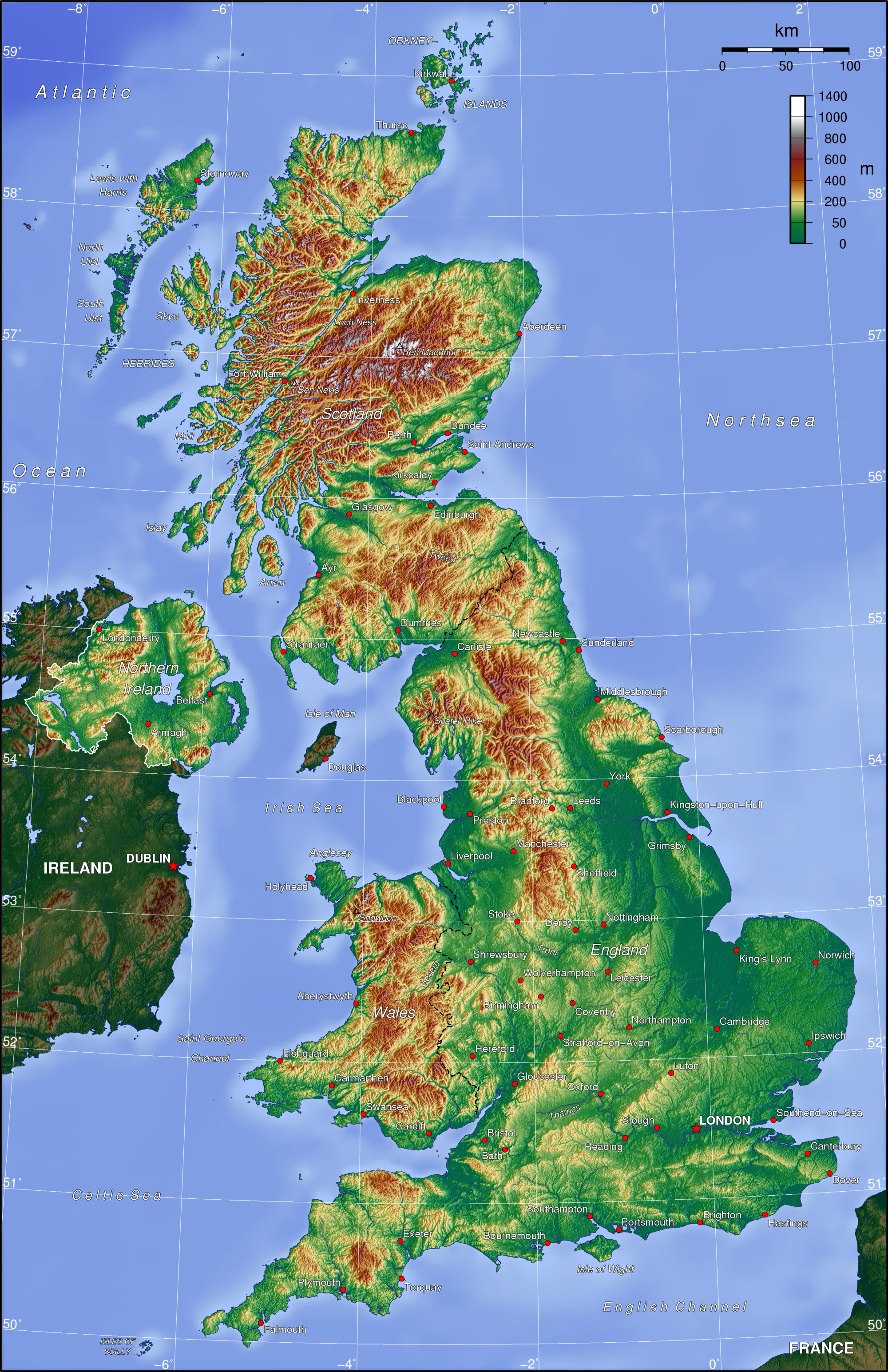

/kenyan-activist-wangari-maathai-525194310-58c341ef5f9b58af5c638e4c.jpg)