Showing posts with label Igbo genocide 29 May 1966-12 January 1970. Show all posts

Wednesday, 21 December 2016

67th birthday of Thomas Sankara

(Born 21 December 1949, Yako, Burkina Faso)
Herbert Ekwe-Ekwe

Military commander, historian, and head of state of Burkina Faso, 4 August 1983-15 October 1987, when he leads a transformative government in “post”-(European)conquest Africa which demonstrates, overwhelmingly with indelible successes, just as the resourceful Biafran resistance had breathtakingly inaugurated this breakthrough on the Africa continental scene during the Igbo genocide, 29 May 1966-12 January 1970, phases I-III, that the engine of societal development is located internally, in the people, themselves – not the prevailing and pervasive fraudulent developmentalism unleashed on Africa in the 1960s by the same France, Britain/other lead European World conqueror-states that had for 400 years enslaved, dispersed, occupied and immiserised Africa and its peoples; thus, Thomas Sankara’s and Biafra’s historic liberatory legacies of transformative outreaches emanating internally, not externally, forged so tenaciously, constitute contemporary Africa’s freedom path to the restoration of unfettered independence from continuing European World seizure via the latter’s imposition of local client states and overseers, enhanced expropriation, and hardly disguised impunity
(Sam Rivers Trio, “Afflatus” [personnel: Rivers, tenor saxophone; Cecil McBee, bass; Steve Ellington, drums; recorded: Van Gelder Studio, Englewood Cliffs, NJ, US, 17 March 1967])
 Twitter@HerbertEkweEkwe

Wednesday, 28 September 2016

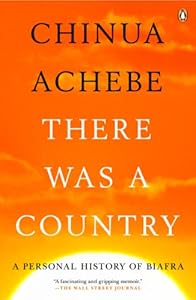
Question: On this 4th anniversary of its publication, why did the great Chinua Achebe write There was a Country?

Just a one-sentence reply: To understand the politics of the Igbo genocide and the politics of the “post”-Igbo genocide is to have an invaluable insight into the salient features and constitutive indices of politics across Africa in the past 50 years.

Twitter@HerbertEkweEkwe

Thursday, 1 October 2015

Nigeria Thursday 1 October 2015 – Celebrating? What? … Unenviable accolade of perpetrating the foundational genocide of post-(European)conquest Africa

1966-1970IgboGenocide3.1millionIgboPeopleMurdered 
3.1millionIgboPeopleMurdered1966-1970IgboGenocide 
3.1millionIgboPeopleMurdered1966-1970IgboGenocide
3.1millionIgboPeopleMurdered1966-1970igboGenocide
1966-1970IgboGenocide3.1millionIgboPeopleMurdered 

Twitter @HerbertEkweEkwe

Monday, 28 September 2015

Question: Why did the great Chinua Achebe write There was a Country?

Just a one-sentence reply: To understand the politics of the Igbo genocide and the politics of the “post”-Igbo genocide is to have an invaluable insight into the salient features and constitutive indices of politics across Africa in the past 50 years.

Friday, 5 June 2015

5 June 1969

The world turns and the world changes,
But one thing does not change.
In all my years, one thing does not change,
However you disguise it, this thing does not change:
The perpetual struggle between Good and Evil.
(TS Eliot, “Choruses from the Rock”, 1934)

There was hardly any day during the entire 44-month duration of the Igbo genocide (29 May 1966-12 January 1970) that the Nigerian assault did not register some dreadful mark of infamy, such was the sheer savagery of this murder mission. 5 June 1969, exactly 46 years ago today, was not different. Genocidist commander Olusegun Obasanjo had, on this day, monstrously ordered his air force to shoot down an international Red Cross aircraft carrying relief supplies to the encircled, blockaded and bombarded Igbo.
(DC-7 aircraft similar to the ICRC relief-carrying plane shot down over south Biafra by genocidist Nigeria military on the orders of commander Olusegun Obasanjo)
Olusegun Obasanjo clearly, unambiguously, records this horrendous crime in his memoirs, appropriately entitled My Command, published in 1981 by the reputable Heinemann publishers. Obasanjo had “challenged”, to quote his words, Captain Gbadomosi King (genocidist air force pilot), who he had known since 1966, to “produce results” in stopping further international relief flight deliveries to the Igbo. Within a week of his infamous challenge, 5 June 1969, Olusegun Obasanjo recalls, most nostalgically, Gbadomosi King “redeemed his promise”. Gbadomosi King had shot down a clearly marked, in coming relief-bearing International Committee of the Red Cross (ICRC) DC-7 plane near Eket, south Biafra, with the loss of its 3-person crew. 
(Olusegun Obasanjo)
Olusegun Obasanjo’s perverse satisfaction over the aftermath of this horrendous crime is fiendish, chillingly revolting. He writes: “The effect of [this] singular achievement of the Air Force especially on 3 Marine Commando Division [the notorious unit Obasanjo, who later becomes Nigeria’s head of regime for 11 years, commanded] was profound. It raised morale of all service personnel, especially of the Air Force detachment concerned and the troops they supported in [my] 3 Marine Commando Division” (Obasanjo, My Command: 79).

Caliban and his Prospero

Yet despite the huffing and puffing, the raving commanding brute is essentially a coward who lacks the courage to face up to a world totally outraged by his gruesome crime. Instead, Obasanjo, the quintessential Caliban, cringes into a stupor and beacons to his Prospero, British Prime Minister Harold Wilson (as he, Obansanjo, indeed unashamedly acknowledges in his My Command) to “sort out” the raging international outcry generated by the destruction of the ICRC plane...

Olusegun Obasanjo must now make the most honourable move over this crime and surrender himself, voluntarily, with his memoirs, at the International Criminal Court in The Hague and explain to the world what happened over the skies of south Biafra on that Thursday 5 June 1969. Failing to do this, it is incumbent on the ICC to declare this man “wanted” – to urgently tell the world why he had ordered the destruction of the ICRC DC-7 aircraft with the death of its 3-person crew and who else in his genocidist high command is culpable of this crime.
(Mal Waldron Quartet, “Hymn from the inferno” [personnel: Waldron, piano; Clifford Jordan, tenor saxophone; Cecil McBee, bass; Dannie Richmond, drums; recorded: Vanguard Studios, New York, US, 15 August 1981]) 
Twitter @HerbertEkweEkwe

Saturday, 4 April 2015

April is Genocide Awareness and Prevention Month (2): Presaging the Igbo genocide

In his Empire: What Ruling the World Did to the British (London: Viking, 2011), Jeremy Paxman allocates just 12 lines of the total 368-page study to British-occupied Nigeria. But the pithy commentary undoubtedly speaks volumes of the mindset of the occupation regime on the very eve of its presumed departure from Nigeria in October 1960. This is clearly a regime that is not prepared or willing to abandon the bounty harvest or lucre that is its Nigeria. Instead, it is exploring across a spectrum of strategies to subvert the goal of the restoration-of-independence movement for the peoples which the Igbo had led since the 1930s.

Using archival material, Paxman presents the crux of the panoramic conversation on the subject in Lagos, in January 1960, between James Robertson, the outgoing occupation governor, and visiting Prime Minister Harold Macmillan:

MACMILLAN: Are the people fit for self-government?

ROBERTSON: No, of course not.

According to Paxman, James Robertson reckons that it would take “another 20 or 25 years” for Nigeria to be “fit for self-government” (Paxman, 2011: 272). Interestingly, this is the same Robertson who had by the time of his Lagos meeting with Macmillan “concluded” the “terms” of the British “exit” from Nigeria in “negotiations” with the country’s restoration-of-independence movement – begun 15 years earlier and had been successively chaired by two previous occupation governors including sessions scheduled and held in England. This is the same Robertson who had just rigged the December 1959 countrywide elections in Nigeria (part of the restoration-of-independence “package”) in favour of the Hausa-Fulani north region (see the irrepressible Harold Smith, member of the occupation regime in Lagos at the time – http://www.thefreelibrary.com/A+squalid+end+to+empire.-a0189071322, accessed 28 March 2015)), Britain’s local clients, vehemently opposed to African independence – and, therefore, the British exit! (This north Nigeria region has the unenviable accolade across the entire Southern World of being home to one of the few peoples who wanted the occupation of their lands indefinitely by one of the pan-European powers of global conquest since the 15th century CE.) Furthermore, this is the same Robertson whose predecessor, in Lagos, had earlier rigged the countrywide census results – again, in favour of Britain’s Hausa-Fulani north regional clients (http://www.thefreelibrary.com/A+squalid+end+to+empire.-a0189071322, accessed 28 March 2015).

Macmillan then asks Robertson for his advice on the way forward for the British continuing occupation of Nigeria: “What do you recommend me to do?”

ROBERTSON: I recommend you give it to them at once.

Really?! What? Why? Doesn’t Roberston’s suggestion to his boss sound wholly contradictory to the tract that this conclave had trodden so far? Well, no, not really… Both prime minister and governor have no disagreement, whatsoever, on holding onto British “interests” in Nigeria in perpetuity; they do not believe that they are necessarily bound by the “terms” of the envisaged British “exit” from Nigeria “negotiated” since 1945 even though, ironically, these had largely preserved British “interests”, thanks to the veto-power that its Hausa-Fulani north region subalterns would exercise in the “new” dispensation; most crucially, both men do not subscribe to the inalienable rights of Africans to recover their conquered lands.

It is the case, though, that if the British officials were to renege on their “exit” from Nigeria at this 11th hour, they would have to contend with a serious crisis – at least in the short/medium term – right there on the ground in Nigeria: “The alternative [is] that most talented people [read: the Igbo and those others elsewhere in south Nigeria who demanded and supported the drive towards unfettered restoration-of-independence for the peoples] would become rebels and the British would spend the next two decades fighting to stave off what [is] inevitable, while incurring the opprobrium of the world” (Paxman: 272).

As the Lagos deliberations end, nine months before the designated British departure date, both prime minister and governor needn’t agonise, too much, over the future prospects of their country’s Nigeria stanglehold. After all, despite the “talented people”, Britain is aware that it holds the trump card to defend this stranglehold via its Hausa-Fulani clients. Twice in the previous 15 years (significantly, it should be noted, during the very years of British “negotiations” of its “exit” from Nigeria with the “talented people”), the clients organised and unleashed pogroms against Igbo people in northcentral town of Jos (1945) and north city of Kano (1953). Hundreds of Igbo were murdered during these massacres and tens of thousands of pounds sterling worth of their property looted or destroyed. No perpetrators of these murders were ever apprehended or punished by the occupation regime.

Six and one-half years hence, from Sunday 29 May 1966, these same British clients would unleash the genocide against the Igbo people. During the course of 44 months, 3.1 million Igbo children, women and men are murdered in this foundational and most gruesome genocide of post-(European)conquest Africa. The Igbo and the world suddenly realise that those anti-Igbo pogroms carried out during the years of the Anglo-“talented people”-in-Nigeria doubtful restoration-of-independence negotiations were indeed “dress rehearsals” for the 29 May 1966-12 January 1970 Igbo genocide.

Reexamination and restitution

Britain plays an instrumental role in the perpetration of the genocide – politically, diplomatically, militarily. Now, a new Harold-the-prime minister, this time Harold Wilson, has no qualms about the “opprobrium of the world” considered by the other Harold during those January 1960 talks with occupation governor Robertson. Wilson’s reasons are obvious: the architecture of control and execution of mass violence in Nigeria have altered, somehow, since January 1960, and the forces on the ground spearheading the Igbo genocide are the trusted Hausa-Fulani subalterns of old and their since locally expanded allies in west Nigeria – not Britain, directly; precisely, what Macmillan and Robertson had sought to avoid! So, as the slaughter of the Igbo intensifies, particularly in the catastrophic months of 1968-1969, Harold Wilson is totally unfazed as he informs Clyde Ferguson (United States state department special coordinator for relief to Biafra) that he, Harold Wilson, “would accept a half million dead Biafrans if that was what it took” Nigeria to destroy the Igbo resistance to the genocide (Roger MorrisUncertain Greatness: Henry Kissinger and American Foreign Policy, London and New York: Quartet Books, 1977, p. 122). Such is the grotesquely expressed diminution of African life made by a supposedly leading politician of the world of the 1960s – barely 20 years after the deplorable perpetration of the Jewish genocide. As the final tally of the murder of the Igbo demonstrates, Harold Wilson probably has the perverted satisfaction of having his Nigerian subalterns perform far in excess of the prime minister’s grim target, a subject coldly stated in Wilson’s own memoirs where he notes that the Nigerian military, equipped zealously by Britain, expends more small arms ammunition in its campaign to achieve its annhilative mission in Igboland than the amount used by the British armed forces  during the whole of World War II (Harold WilsonLabour Government, 1964-1970: A Personal Record, London: Weidenfeld & Nicolson, 1971, p. 630, added emphasis). On this, Colonel Robert Scott, military advisor in the British diplomatic mission in Nigeria, during the period, acknowledges, equally gravely, that as Nigerian genocidist military forces unleash their attacks on Igbo cities, towns and villages, they are the “best defoliant agent known” (Daily Telegraph, London, 11 January 1970).

Jeremy Paxman, a former senior journalist at the British Broadcasting Corporation who anchored the BBC2 “Newsnight” premier current affairs programme for 25 years (1989-2014), has a 3-minute follow-up video where he explains why he has written Empire. Two questions he poses are quite striking: (1) “Why did the British go out (sic) to conquer the world?” (2) “What did it do to them [the British, that is]?” For the Igbo of southwestcentral Africa, the double jeopardy of conquest and occupation and genocide is palpably incalculable. It is now clear that the contemporary British state cannot continue to ignore its responsibilities in embarking on a comprehensive reexamination of the history of its relationship with the Igbo people and make the long-overdue restitution.
(Ornette Coleman Quartet, “Tears inside” [personnel: Coleman, alto saxophone; Don Cherry, pocket trumpet; Percy Heath, bass; Shelly Manne, drums; recorded: Contemporary’s Studio, Los Angeles, US, 9 and 10 March 1959])
Twitter @HerbertEkweEkwe

Thursday, 18 December 2014

Year 48 – Igbo genocide and its comeuppance?

(Tony Williams Quintet, “From before” [personnel: Williams, drums; Sam Rivers, tenor saxophone; Wayne Shorter, tenor saxophone; Herbie Hancock, piano; Gary Peacock, bass; recorded Van Gelder Studios, Englewood Cliffs, NJ, US, 12 August 1965])
Besides all the lead-countries involved in the Igbo genocide which have apparently had or still appear to have their comeuppance as a result, as perceptive sociologist and criminologist Biko Agozino aptly reminds us (“Why Obasanjo May Be Heading To Hell”, http://massliteracy.blogspot.com.br/2013/08/why-obasanjo-may-be-heading-to-hell.html  – accessed 18 December 2014), each lead-personage involved in perpetuating this heinous crime against humanity has had their life/life’s vital interests spectacularly collapse around them: 

1. Olusegun Obasanjo (genocidist commander, south Biafra who ordered the shooting down of an international Red Cross relief-carrying aircraft to the encircled Igbo over south Biafra on 5 June 1969; for an update on this fellow, see, for instance, daughter Iyabo Obasanjo’s December 2013 open letter to her father, http://www.thisdaylive.com/articles/senator-iyabos-11-page-letter-to-her-father-gen-obasanjo/166935/ – accessed 18 December 2014)

2. Murtala Muhammed (genocidist commander, northwestcentral Biafra and commander of brigade that carried out the 7 October 1967 mass execution of 700 Igbo boys and men at Asaba, west Oshimili River) 

3. Harold Wilson

4. Ibrahim Taiwo (parallel commander of brigade that carried out the 7 October 1967 mass execution of 700 Igbo boys and men at Asaba, west Oshimili River)

5. Leonid Brezhnev

6. Abdel Gamal Nasser

7. Benjamin Adekunle (genocidist commander, south Biafra)

8. Yakubu Gowon (head of genocidist-prosecuting  regime)

9. Hosni Mubarak (former commander, Egyptian air force [and later head of regime until swept away by the mass Egypt’s uprising, February 2011] whose pilots, recruited by the genocidists, engaged in the cowardly carpet bombings of Igbo markets, hospitals, city centres, churches, shrines, children’s playgrounds, villages, farms throughout the duration of the genocide)

10. Tony Enaharo (genocidist roving envoy)

11. U Thant

12. Ahmadou Ahidjo

13. Mashood Abiola (expansive weapons-contractor during the genocide who was on the verge of becoming head of regime, Nigeria, 1998)

14. Obafemi Awolowo (chief genocidist “theorist” who desperately craved to be post-genocide head of regime, Nigeria)

15. Gbadamosi King (genocidist air force pilot who shot down the international Red Cross relief-bearing aircraft over the skies of south Biafra, 5 June 1969)

16. Muhammadu Shuwa (genocidist commander, north Biafra)

17. Hafez al-Assad (head of regime, Syria)

18.  Illiya Bisalla (genocidist commander, northcentral Biafra)

19. Sekou Toure (head of regime, Guinea-Conakry)

20. Houari Boumedienne (head of regime, Algeria)

21. Ismail al-Azhari (head of regime, the Sudan)

22. Diallo Telli (OAU first secretary-general)

23. Allison Ayida (“Rise and Fall of Nigeria” [1990], co-principal secretary, genocidist-prosecuting regime)

... 

Boko Haram insurgency incrementally ravages north Nigeria, epicentre of the planning and execution of this genocide and the preceding “dual dress rehearsals”-Igbo pogroms (1945, 1953) without letup...  But, most pointedly, all-Nigeria:  for the alu this genocide state has unleashed on Igbo people these past 48 years (29 May 1966-18 December 2014), it is spiralling in free fall as the rest of the world cogently reflects...

If ever there is any doubt, the evidence, so far, demonstrates the contrary – namely, that no one, no agency, murders 3.1 million Igbo children, women and men in this foundational genocide of post-(European)conquest Africa and walks away free...  Apart from the 50 million Igbo survivors, the 3.1 million are individually and collectively involved in the current Igbo historic quest for justice...  

And the Igbo will get this justice. Undoubtedly.

Twitter @HerbertEkweEkwe

Thursday, 30 October 2014

Igbo and Nigeria’s “election” season

“Election” time in Nigeria is time-of-death. It is also time-of-destruction, time-of-desolation, time-of-waste, time-to-waste...

Obasanjo: Prelude

Olusegun Obasanjo captures the characterisation of this season most vividly, if not horridly, in a February 2007 proclamation at Abeokuta, west Nigeria: “it’s do or die” (all-africa.com, 11 February 2007). And Olusegun Obasanjo should know. Olusegun Obasanjo knows exactly what he is talking about: he has been head of regime in Nigeria for 11 years and had been schooled for this role whilst commander of Nigeria’s death squad in south Biafra during the Igbo genocide, murdering tens of thousands of Igbo people in towns and villages in the region in addition to personally ordering the shooting down of a clearly-marked international Red Cross aircraft flying in urgently needed relief supplies to the besieged and bombarded Igbo in June 1969 (Olusegun Obasanjo, My Command: 1981: 79 ). Nigeria murdered 3.1 million Igbo or one-quarter of this nation’s population between 29 May 1966 and 12 January 1970. Arguably, among his colleagues, Olusegun Obasanjo most espouses the haematophagous signature of this genocide-state he has served so assiduously since 29 May 1966.

Anthem

Already  the strains of  “it’s do or die” anthem shrill ominously in Nigeria 3-4 months before “elections”, if indeed these are eventually held, heralded this time round by that “dog-and-the-baboon-would-all-be-soaked-in-blood” prologue scripted by Muhammadu Buhari (The Vanguard, Lagos, 15 May 2012), another Igbo genocide commander, and prospective candidate for head of regime in the “polls”. Junaid Mohammed, a public official from Kano, north region, had lately, at last, worked through a chorus for this anthem with the predictable, recognisable, hate-filled line to incite the next Igbo murder trail: “Igbo [are] devoid of any shame to show their greed, selfishness and contempt” (nigeriavillagesquare.com, 26 October 2014). The Igbo and the world, surely, have not failed to take note of this evident trigger, in October 2014, to expand, even further, the Igbo genocide.

Position paper

The Igbo response to this Nigerian time-of-death can’t be any clearer and more focused. Igbo must resolutely and totally safeguard Igbo life and property in Igboland forthwith. “Eternal vigilance is the price of liberty”, as Wendell Phillips’s aphorism invokes, aptly becomes the overarching banner of reference to work with.  Igbo in the Nigeria diaspora must similarly take great care of their lives and interests during these times. Inevitably, Igbo will respond to the political platforms of the contending parties and coalitions for the “polls”. For any of these parties/coalitions or whosoever interested in seeking the Igbo vote at any level in any constituency in Igboland or in Nigeria, the following position paper is squarely on the table, articulating Igbo demands for their vote:

1. Publicly acknowledge the Igbo genocide carried out by Nigeria from 29 May 1966 to 12 January 1970. Nigeria murdered 3.1 million Igbo people or one-quarter of this nation’s population in this foundational genocide of post-(European)conquest Africa.

2. Pay comprehensive reparations to all Igbo survivors and families of this genocide since 13 January 1970.

3. Support Igbo current efforts to prosecute all persons and interests involved in the Igbo genocide. Genocide is a crime against humanity. There is no statute of limitations in international law for the apprehension and punishment of those responsible for this crime.

4. Return in full, including interests since 13 January 1970, the sum of Igbo savings and other bank accounts sequestrated by Nigeria soon after the end of that phase of the genocide when a surviving “male-head” of an Igbo family was doled out £20.00.

5. Return in full Igbo property assets sequestrated by Nigeria since 13 January 1970 and pay full compensation for the non-use/loss of earnings on these assets since.

6. Comprehensively account for the pillaging of the oil and gas reserves in the Igbo oil and gas fields in Rivers, Imo, Abia and Delta administrative regions since 13 January 1970. Return in full, in addition to accruing interests, the billions of dollars worth of oil and gas sales from these reserves since.

7. Comprehensively pay compensation for blanket policy of Nigeria’s non-development of Igboland after the latter’s destruction/degradation of the Igbo economy in the wake of the phase of the genocide, 29 May 1966-12 January 1970.

8. Comprehensively pay compensation for Nigeria’s deliberate policy to ignore ever-expanding soil erosion/landslides and other pressing ecological emergencies particularly in northwest Igboland since the mid-1970s.

9. Comprehensively pay reparations to tens of thousands of Igbo people who Nigeria state/quasi-state operatives have murdered since 1980. There have been 21 cases of premeditated pogroms against the Igbo, particularly in north Nigeria, between 1980 and 2014, in which tens of thousands of Igbo have been murdered. 90 per cent of the 54,000 people murdered in Nigeria by the state/quasi-state operatives and agents since 1999 are Igbo people. At least 80 per cent of people murdered by the Boko Haram across swathes of lands in north/northcentral Nigeria since the outbreak of the insurgency are Igbo. Hundreds of thousands of Igbo families have abandoned homes and businesses in the affected region and returned to Igboland.

10. Igbo will not vote APC or any parties/fractions/tendencies affiliated to this party. This party’s Lagos region regime deported Igbo people from Lagos to Igboland twice in the past 24 months (http://re-thinkingafrica.blogspot.com/2013/08/igbo-deportation-from-lagos_2.html).
These deportations are clear violations of the human rights of the Igbo deportees, rights guaranteed by the United Nations relevant conventions and articles to which Nigeria, a UN member state, is a signatory. No APC functionary, at any level, has unambiguously condemned this outrage.

11. Completely dismantle Nigeria’s military and administrative occupation of Igboland, enforced since 13 January 1970. Comprehensively pay reparations for this occupation.

12. Support current Igbo efforts for an internationally organised referendum in Igboland to determine Igbo goal for the restoration of sovereignty. The right of a people to self-determination is inalienable, guaranteed by the UN relevant conventions and articles to which Nigeria, a UN member state, is a signatory.

(Booker Little Sextet, “Moods in free time” [personnel: Little, trumpet; Julian Priester, trombone; Eric Dolphy, alto saxophone; Don Friedman, piano; Art Davis, bass; Max Roach, drums; recorded: Nola’s Penthouse Studios, New York, 17 March 1961])
Igbo are arguably the world’s most brutally targeted and most viciously murdered of peoples presently. Not since 29 May 1966-12 January 1970 has Igbo life under Nigerian occupation acquired such a gripping existential emergency.

Twitter @HerbertEkweEkwe


Wednesday, 1 October 2014

Nigeria Wednesday 1 October 2014 – Celebrating? What?

1966-1970IgboGenocide3.1millionIgboPeopleMurdered 
3.1millionIgboPeopleMurdered1966-1970IgboGenocide 
3.1millionIgboPeopleMurdered1966-1970IgboGenocide
1966-1970IgboGenocide3.1millionIgboPeopleMurdered 

Twitter @HerbertEkweEkwe

Wednesday, 9 April 2014

Presaging the Igbo genocide

In his Empire: What Ruling the World Did to the British (London: Viking, 2011), Jeremy Paxman allocates just 12 lines of the total 368-page study to British-occupied Nigeria. But the pithy commentary undoubtedly speaks volumes of the mindset of the occupation regime on the very eve of its presumed departure from Nigeria in October 1960. This is clearly a regime that is not prepared or willing to abandon the bounty harvest or lucre that is its Nigeria. Instead, it is exploring across a spectrum of strategies to subvert the goal of the restoration-of-independence movement for the peoples which the Igbo had led since the 1930s.

Using archival material, Paxman presents the crux of the panoramic conversation on the subject in Lagos, in January 1960, between James Robertson, the outgoing occupation governor, and visiting Prime Minister Harold Macmillan:

MACMILLAN: Are the people fit for self-government?

ROBERTSON: No, of course not.

According to Paxman, James Robertson reckons that it would take “another 20 or 25 years” for Nigeria to be “fit for self-government” (Paxman, 2011: 272). Interestingly, this is the same Robertson who had by the time of his Lagos meeting with Macmillan “concluded” the “terms” of the British “exit” from Nigeria in “negotiations” with the country’s restoration-of-independence movement – begun 15 years earlier and had been successively chaired by two previous occupation governors including sessions scheduled and held in England. This is the same Robertson who had just rigged the December 1959 countrywide elections in Nigeria (part of the restoration-of-independence “package”) in favour of the Hausa-Fulani north region (see the irrepressible Harold Smith, member of the occupation regime in Lagos at the time – http://www.thefreelibrary.com/A+squalid+end+to+empire.-a0189071322, accessed 27 November 2011)), Britain’s local clients, vehemently opposed to African independence – and, therefore, the British exit! (This north Nigeria region has the unenviable accolade across the entire Southern World of being home to one of the few peoples who wanted the occupation of their lands indefinitely by one of the pan-European powers of global conquest since the 15th century CE.) Furthermore, this is the same Robertson whose predecessor, in Lagos, had earlier rigged the countrywide census results – again, in favour of Britain’s Hausa-Fulani north regional clients (http://www.thefreelibrary.com/A+squalid+end+to+empire.-a0189071322accessed 27 November 2011).

Macmillan then asks Robertson for his advice on the way forward for the British continuing occupation of Nigeria: “What do you recommend me to do?”

ROBERTSON: I recommend you give it to them at once.

Really?! What? Why? Doesn’t Roberston’s suggestion to his boss sound wholly contradictory to the tract that this conclave had trodden so far? Well, no, not really… Both prime minister and governor have no disagreement, whatsoever, on holding onto British “interests” in Nigeria in perpetuity; they do not believe that they are necessarily bound by the “terms” of the envisaged British “exit” from Nigeria “negotiated” since 1945 even though, ironically, these had largely preserved British “interests”, thanks to the veto-power that its Hausa-Fulani north region subalterns would exercise in the “new” dispensation; most crucially, both men do not subscribe to the inalienable rights of Africans to recover their conquered lands.

It is the case, though, that if the British officials were to renege on their “exit” from Nigeria at this 11th hour, they would have to contend with a serious crisis – at least in the short/medium term – right there on the ground in Nigeria: “The alternative [is] that most talented people [read: the Igbo and those others elsewhere in south Nigeria who demanded and supported the drive towards unfettered restoration-of-independence for the peoples] would become rebels and the British would spend the next two decades fighting to stave off what [is] inevitable, while incurring the opprobrium of the world” (Paxman: 272).

As the Lagos deliberations end, nine months before the designated British departure date, both prime minister and governor needn’t agonise, too much, over the future prospects of their country’s Nigeria stanglehold. After all, despite the “talented people”, Britain is aware that it holds the trump card to defend this stranglehold via its Hausa-Fulani clients. Twice in the previous 15 years (significantly, it should be noted, during the very years of British “negotiations” of its “exit” from Nigeria with the “talented people”), the clients organised and unleashed pogroms against Igbo people in northcentral town of Jos (1945) and north city of Kano (1953). Hundreds of Igbo were murdered during these massacres and tens of thousands of pounds sterling worth of their property looted or destroyed. No perpetrators of these murders were ever apprehended or punished by the occupation regime.

Six and one-half years hence, from 29 May 1966, these same British clients would unleash the genocide against the Igbo people. During the course of 44 months, 3.1 million Igbo children, women and men are murdered in this foundational and most gruesome genocide of post-(European)conquest Africa. The Igbo and the world suddenly realise that those anti-Igbo pogroms carried out during the years of the Anglo--“talented people”-in-Nigeria doubtful restoration-of-independence negotiations were indeed “dress rehearsals” for the 29 May 1966-12 January 1970 Igbo genocide.

Reexamination and restitution

Britain plays an instrumental role in the perpetration of the genocide – politically, diplomatically, militarily. Now, a new Harold-the-prime minister, this time Harold Wilson, has no qualms about the “opprobrium of the world” considered by the other Harold during those January 1960 talks with occupation governor Robertson. Wilson’s reasons are obvious: the architecture of control and execution of mass violence in Nigeria have altered, somehow, since January 1960, and the forces on the ground spearheading the Igbo genocide are the trusted Hausa-Fulani subalterns of old and their since locally expanded allies in west Nigeria – not Britain, directly; precisely, what Macmillan and Robertson had sought to avoid! So, as the slaughter of the Igbo intensifies, particularly in the catastrophic months of 1968-1969, Harold Wilson is totally unfazed as he informs Clyde Ferguson (United States State Department special coordinator for relief to Biafra) that he, Harold Wilson, “would accept a half million dead Biafrans if that was what it took” Nigeria to destroy the Igbo resistance to the genocide (Roger Morris, Uncertain Greatness: Henry Kissinger and American Foreign Policy [London and New York: Quartet Books, 1977]: 122). Such is the grotesquely expressed diminution of African life made by a supposedly leading politician of the world of the 1960s – barely 20 years after the deplorable perpetration of the Jewish genocide. As the final tally of the murder of the Igbo demonstrates, Harold Wilson probably had the perverted satisfaction of having his Nigerian subalterns perform far in excess of the prime minister’s grim target.

Jeremy Paxman, a senior journalist at the British Broadcasting Corporation who anchors the BBC2 “Newsnight” programme, has a 3-minute follow-up video where he explains why he has written Empire. Two reasons are quite striking: (1) “Why did the British go out (sic) to conquer the world?” (2) “What did it do to them [the British, that is]?” For the Igbo of southwestcentral Africa, the double jeopardy of conquest and occupation and genocide is palpably incalculable. It is now clear that the contemporary British state cannot continue to ignore its responsibilities in embarking on a comprehensive reexamination of the history of its relationship with the Igbo people and make the long-overdue restitution.

Twitter @HerbertEkweEkwe

Saturday, 5 April 2014

Lest we forget – April is Genocide Awareness and Prevention Month: Did Igbo people “lose a war”?

No, Igbo did not “lose a war”. The Igbo did not “lose a war” between 29 May 1966-12 January 1970. No such “war” was waged in Igboland during this period. And this is not a case of semantics. On the contrary, what went on during those 44 months was a campaign of genocide against Igbo people by Nigeria and its allies, particularly Britain. 3.1 million Igbo, a quarter of this nation’s population, were murdered. This figure is about the total fatality of the Vietnam War (both sides – including all civilians, US combat troops, the Vietcong, North Vietnam troops, South Vietnam troops) between 1959 and 1975. 

The clearly stated goal of the Nigeria campaign is (note tense of operative verb) to annihilate the Igbo, as a people: see anthem of the campaign in Hausa, broadcast throughout the duration of the slaughter on Kaduna radio (shortwave) and television (http://re-thinkingafrica.blogspot.com.br/2010/05/29-may-1966.html); see also key statements made on radio and/or tv broadcasts, interviews/press conference, essays, memoirs, etc., etc, by leading figures involved in the campaign – Awolowo, Harold Wilson, Gowon, Danjuma, Useni, Muhammed, Adekunle, Rotimi, Katsina, Obasanjo, Haruna, Taiwo... 

To embark on a research of the genocide, it is indeed staggering to discover what a treasure trove for the researcher just watching or reading a clipping of statements/commentaries on this crime against humanity by an Obasanjo or an Adekunle or an Useni or an Awolowo or a Wilson or a Haruna or a Rotimi… This genocide is ongoing. Those who carried out the genocide do not, at all, deny their involvement in the crime... It is astonishing.

Survived

The Igbo survived the genocide. At the apogee of the genocide, 1968/69, few expected the Igbo to survive. Igbo survival is one of the most extraordinary human developments of recent history. Some people don’t often appreciate the resilient spirit and drive that ensured this survival outcome. This capacity cannot be exaggerated. Provided they survive, no peoples targeted for genocide lose except, of course, they are obliterated. Those who survive genocide such as the Herero or Armenians or Jews or Igbo or Tutsi or Darfuri, for instance, are indeed victors – because they survived. I am pleased to share the following link where I elaborate on this subject in a presentation at the historic Harvard University international conference on Christopher Okigbo, Africa’s leading poet:


Friday, 27 December 2013

Year 47 – Igbo genocide and its comeuppance?


(Tony Williams Quintet, “From before” [personnel: Williams, drums; Sam Rivers, tenor saxophone; Wayne Shorter, tenor saxophone; Herbie Hancock, piano; Gary Peacock, bass; recorded Van Gelder Studios, Englewood Cliffs, NJ, US, 12 August 1965])

Besides all the lead-countries involved in the Igbo genocide which have apparently had or still appear to have their comeuppance as a result, as perceptive criminologist Biko Agozino pointedly reminds us (“Why Obasanjo May Be Heading To Hell”, http://massliteracy.blogspot.com.br/2013/08/why-obasanjo-may-be-heading-to-hell.html  - accessed 27 December 2013), each lead-personage involved in perpetuating this heinous crime against humanity has had their life/life’s vital interests spectacularly collapse around them: Olusegun Obasanjo (genocidist commander, south Biafra who ordered the shooting down of an international Red Cross relief-carrying aircraft to the encircled Igbo over south Biafra on 5 June 1969; for an update on this fellow, see, for instance, daughter Iyabo Obasanjo’s December 2013 open letter to her father, http://www.thisdaylive.com/articles/senator-iyabos-11-page-letter-to-her-father-gen-obasanjo/166935/ - accessed 27 December 2013), Murtala Muhammed (genocidist commander, northwestcentral Biafra and commander of brigade that carried out the 7 October 1967 mass execution of 700 Igbo boys and men at Asaba, west Oshimili River) Harold Wilson, Ibrahim Taiwo (parallel commander of brigade that carried out the 7 October 1967 mass execution of 700 Igbo boys and men at Asaba, west Oshimili River), Leonid Brezhnev, Abdel Gamal Nasser, Benjamin Adekunle (genocidist commander, south Biafra), Yakubu Gowon (head of the genocidist-prosecuting  regime), Hosni Mubarak (former commander, Egyptian air force [and later head of regime until swept away by the mass Egypt’s uprising, February 2011] whose pilots, recruited by the genocidists, engaged in the cowardly carpet bombings of Igbo markets, hospitals, city centres, churches, shrines, children’s playgrounds, villages, farms throughout the duration of the genocide), Tony Enaharo (genocidist roving envoy), U Thant, Ahmadou Ahidjo, Mashood Abiola (expansive weapons-contractor during the genocide who was on the verge of becoming head of Nigeria’s regime, 1998), Obafemi Awolowo (chief genocidist “theorist” who desperately craved to be post-genocide head of Nigeria’s regime), Gbadamosi King (genocidist air force pilot who shot down the international Red Cross relief-bearing aircraft over the skies of south Biafra, 5 June 1969), Muhammadu Shuwa (genocidist commander, north Biafra), Hafez al-Assad (head of regime, Syria), Illiya Bisalla (genocidist commander, northcentral Biafra), Sekou Toure (head of regime, Guinea-Conakry), Houari Boumedienne (head of regime, Algeria), Diallo Telli (OAU first secretary-general)... 

Quite a few, as these lines are written, are so ill that anguished family and friends continue to link their state of deteriorating health to the alu they committed in Igboland, Biafra, during those dreadful 44 months of 29 May 1966-12 January 1970 ... Boko Haram insurgency incrementally ravages north Nigeria, epicentre of the planning and execution of the genocide, without letup ... 

If ever there is any doubt, the evidence, so far, demonstrates the contrary – namely, that no one, no agency, murders 3.1 million Igbo children, women and men in this foundational genocide of post-(European)conquest Africa and walks away free ... Apart from the Igbo survivors, the 3.1 million are individually and collectively involved in the current Igbo historic quest for justice ...  

And the Igbo will get this justice. Undoubtedly.

Twitter @HerbertEkweEkwe

Tuesday, 1 October 2013

Nigeria Tuesday 1 October 2013 – Celebrating? What?

1966-1970IgboGenocide3.1millionIgboPeopleMurdered 
3.1millionIgboPeopleMurdered1966-1970IgboGenocide 
1966-1970IgboGenocide3.1millionIgboPeopleMurdered 

Twitter @HerbertEkweEkwe