Showing posts with label restoration-of-independence. Show all posts

Monday, 1 October 2018

Vanguard on the move

Herbert Ekwe-Ekwe

BEGINNING in the early 1930s to October 1960, the Igbo nation played the vanguard role in the campaign for restoration-of-independence to terminate 100 years of the British conquest and occupation of the multiplicity of states and peoples of southwestcentral Africa region which the conqueror contemptuously tagged “Nigeria” – the “n*****” area/land.

Britain responded with the genocide of the Igbo and employed its Fulani/islamist clients on the ground, inveterately anti-African who hitherto opposed the restoration-of-independence drive, to enforce this mass murder. The genocidists slaughtered 3.1 million Igbo or 25 per cent of the Igbo population during the course of 44 months, 29 May 1966-12 January 1970. Tens of thousands additional Igbo have been murdered subsequently. 

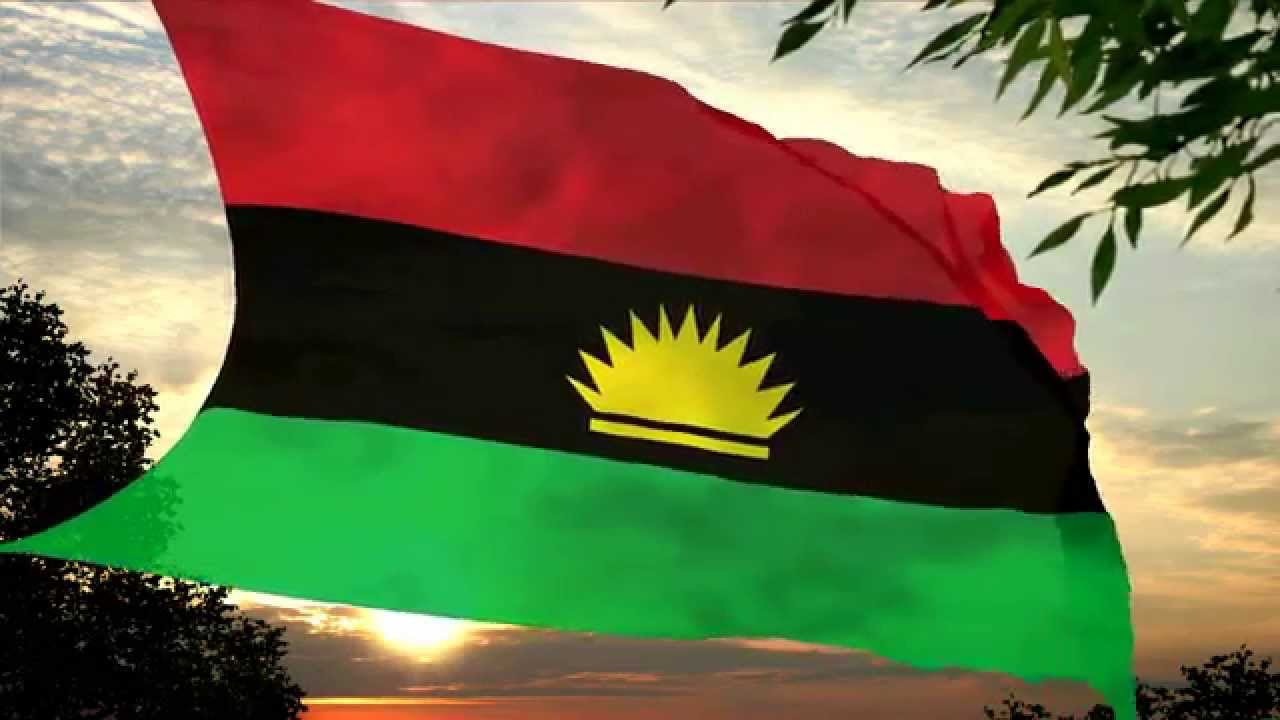
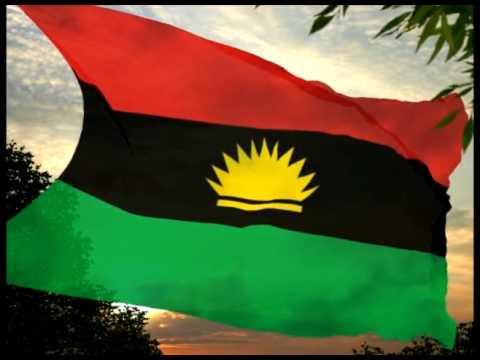
THE Igbo have not only survived the genocide but are now in the vanguard to construct Biafra, an African peoples-centred state, that at once effectuates African control of its destiny not seen for centuries and the collapse of the Anglo/European World anti-African “Berlin-states” or constellation of EuroConqueror league states dotted across Africa such as the “Nigerias”.
(John Coltrane, Ascension {edition II} [personnel – solo sequence –: Coltrane, tenor saxophone, Dewey Johnson, trumpet, Pharoah Sanders, tenor saxophone; Freddie Hubbard, trumpet; John Tchicai, alto saxophone; Archie Shepp, tenor saxophone; Marion Brown, alto saxophone; McCoy Tyner, piano;  Art Davis, bass; Jimmy Garrison, bass; Elvin Jones, drums; recorded: Van Gelder Studio, NJ, US, 28 June 1965]) 
Twitter @HerbertEkweEkwe

Tuesday, 3 July 2018

Biafra freedom movement: Referendum, not “elections” organised by the occupying genocidist Nigeria regime


Herbert Ekwe-Ekwe

THE BIAFRA freedom movement surely dictates the terms of the freedom of the people of Biafra from Nigeria despite the savagery of the feudal Fulani islamist-led genocidist Nigeria occupation and the overseeing ruthlessness on the ground by that league of quislings-of-occupation alternatively known as heads of regime of the administrative regions.

The movement insists on a referendum: nothing else, including bogus regime-elections, to democratically secure the next crucial phase of the restoration-of-independence process. 

“Election” exercises in occupied Biafra have in the past been distinctively fraudulent and immensely contradictory as the Fulani lead-occupiers with no tradition of democratic discourse or engagement whatsoever in its own culture or brutish history of terror, conquests, occupations, expropriations, decadence and genocide, not to mention genocidist Nigeria itself which has had no credible election throughout its history, would bizarrely posit to organise elections in (occupied) Igboland that has enjoyed an advanced republican democratic tradition for over 1000 years. 

THUS, for the Igbo in occupied Biafra or in the diaspora in Nigeria, the way forward couldn’t be clearer: boycott all “elections” organised by genocidist Nigeria.
Besides, “election” time in Nigeria is time-of-death. It is also time-of-destruction, time-of-desolation, time-of-waste, time-to-waste... 

Vile genocidist operative Olusegun Obasanjo captures the characterisation of this season most vividly, if not horridly, in a February 2007 proclamation at Abeokuta, west Nigeria: “it’s do or die” (all-africa.com, 11 February 2007), a haunting disposition echoed readily by co-genocidist Muhammadu Buhari who paints a characteristically morbid portrait of  “dog-and-the-baboon-would-all-be-soaked-in-blood” (The Vanguard, Lagos, 15 May 2012) to attest to the extent of violence he would unleash during this appointed time-of-death.

Biafrans do freedom... 

Biafran people don’t do “it’s do or die” nor “soaked-in-blood”. Tufia kwa! 

EITHER of these is predictably genocidist Nigerian stuff – as Biafrans have known, most devastatingly, in the past 52 years, with 3.1 million of their people murdered, 29 May 1966-12 January 1970, and tens of thousands others additionally murdered since, 13 January 1970-present day, by this most gruesome band of murderers in African history since the 1908 end of the 30 years of genocide of African peoples of the Congo Basin, executed by Belgian King Leopold II/Belgian state during which the latter murdered 13 million Africans (Isidore Ndaywel è Nziem, Histoire générale du Congo: De l'héritage ancien à la République Démocratique, Paris: Duculot, 1998, p. 344).

Biafrans, on the contrary, do freedom.  Freedom is inalienable. One does not ask for it; one takes it! The 50 million Igbo know they have to take their freedom as they head to the referendum to proclaim this liberatory choice. This is the choice the rest of the world awaits eagerly.
(John Coltrane Quartet, “Pursuance” {part-III of A Love Supreme suite} [personnel: Coltrane, tenor saxophone; McCoy Tyner, piano; Jimmy Garrison, bass; Elvin Jones,  drums; recorded: Van Gelder Studio, Englewood Cliffs, NJ, US, 9 December 1964])
Twitter @HerbertEkweEkwe
Saturday, 28 April 2018

Biafra freedom movement: Referendum, not “elections” organised by the occupying genocidist Nigeria regime

Herbert Ekwe-Ekwe

THE BIAFRA freedom movement surely dictates the terms of the freedom of the people of Biafra from Nigeria despite the savagery of the feudal Hausa-Fulani/islamist-led genocidist Nigeria occupation and the overseeing ruthlessness on the ground by that league of quislings-of-occupation alternatively known as heads of regime of the administrative regions.

The movement insists on a referendum: nothing else, including bogus regime-elections, to democratically secure the next crucial phase of the restoration-of-independence process. 

“Election” exercises in occupied Biafra have in the past been distinctively fraudulent and immensely contradictory as the Fulani lead-occupiers with no tradition of democratic discourse or engagement whatsoever in its own culture or brutish history of terror, conquests, occupations, expropriations, decadence and genocide, not to mention genocidist Nigeria itself which has had no credible election throughout its history, would bizarrely posit to organise elections in (occupied) Igboland that has enjoyed an advanced republican democratic tradition for over 1000 years. Thus, for the Igbo in occupied Biafra or in the diaspora in Nigeria, the way forward couldn’t be clearer: boycott all “elections” organised by genocidist Nigeria.
BESIDES, “election” time in Nigeria is time-of-death. It is also time-of-destruction, time-of-desolation, time-of-waste, time-to-waste... Vile genocidist operative Olusegun Obasanjo captures the characterisation of this season most vividly, if not horridly, in a February 2007 proclamation at Abeokuta, west Nigeria: “it’s do or die” (all-africa.com, 11 February 2007), a haunting disposition echoed readily by co-genocidist Muhammadu Buhari who paints a characteristically morbid portrait of  “dog-and-the-baboon-would-all-be-soaked-in-blood” (The Vanguard, Lagos, 15 May 2012) to attest to the extent of violence he would unleash during this appointed time-of-death.

Biafrans do freedom... 

Biafran people don’t do “it’s do or die” nor “soaked-in-blood”. Tufia kwa! Either of these is predictably genocidist Nigerian stuff – as Biafrans have known, most devastatingly, in the past 52 years, with 3.1 million of their people murdered, 29 May 1966-12 January 1970, and tens of thousands others additionally murdered since, 13 January 1970-present day, by this most gruesome band of murderers in African history since 1908.

BIAFRANS, on the contrary, do freedom.  Freedom is inalienable. One does not ask for it; one takes it! The 50 million Igbo know they have to take their freedom as they head to the referendum to proclaim this liberatory choice. This is the choice the rest of the world awaits eagerly.
(John Coltrane Quartet, “Acknowledgement” {part-I of A Love Supreme suite} [personnel: Coltrane, tenor saxophone; McCoy Tyner, piano; Jimmy Garrison, bass; Elvin Jones,  drums; recorded: Van Gelder Studio, Englewood Cliffs, NJ, US, 9 December 1964])
Twitter @HerbertEkweEkwe


Monday, 2 October 2017

BiafraCataloniaBiafraCataloniaBiafraCatalonia...


 Herbert Ekwe-Ekwe
BiafraCataloniaBiafraCataloniaBiafraCataloniaBiafraCataloniaBiafraCataloniaBiafraCataloniaBiafraCataloniaBiafraCataloniaBiafraCataloniaBiafraCataloniaBiafraCataloniaBiafraCataloniaBiafraCataloniaBiafraCataloniaBiafraCataloniaBiafraCataloniaBiafraCataloniaBiafraCataloniaBiafraCataloniaBiafraCataloniaBiafraCataloniaBiafraCataloniaBiafraCataloniaBiafraCataloniaBiafraCataloniaBiafraCataloniaBiafraCataloniaBiafraCataloniaBiafraCataloniaBiafraCataloniaBiafraCataloniaBiafraCataloniaBiafraCataloniaBiafraCataloniaBiafraCataloniaBiafraCataloniaBiafraCataloniaBiafraCataloniaBiafraCataloniaBiafraCataloniaBiafraCataloniaBiafraCataloniaBiafraCataloniaBiafraCataloniaBiafraCataloniaBiafraCataloniaBiafraCataloniaBiafraCataloniaBiafraCataloniaBiafraCataloniaBiafraCataloniaBiafraCataloniaBiafraCataloniaBiafraCatalonia
BiafraCataloniaBiafraCataloniaBiafraCataloniaBiafraCataloniaBiafraCataloniaBiafraCataloniaBiafraCataloniaBiafraCataloniaBiafraCataloniaBiafraCataloniaBiafraCataloniaBiafraCataloniaBiafraCataloniaBiafraCataloniaBiafraCataloniaBiafraCataloniaBiafraCataloniaBiafraCataloniaBiafraCataloniaBiafraCataloniaBiafraCataloniaBiafraCataloniaBiafraCataloniaBiafraCataloniaBiafraCataloniaBiafraCataloniaBiafraCataloniaBiafraCataloniaBiafraCataloniaBiafraCataloniaBiafraCataloniaBiafraCataloniaBiafraCataloniaBiafraCataloniaBiafraCataloniaBiafraCataloniaBiafraCataloniaBiafraCataloniaBiafraCataloniaBiafraCataloniaBiafraCataloniaBiafraCataloniaBiafraCataloniaBiafraCataloniaBiafraCataloniaBiafraCataloniaBiafraCataloniaBiafraCataloniaBiafraCataloniaBiafraCataloniaBiafraCataloniaBiafraCataloniaBiafraCataloniaBiafraCataloniaBiafraCataloniaBiafraCataloniaBiafraCataloniaBiafraCataloniaBiafraCataloniaBiafraCataloniaBiafraCataloniaBiafraCataloniaBiafraCataloniaBiafraCataloniaBiafraCataloniaBiafraCataloniaBiafraCataloniaBiafraCataloniaBiafraCataloniaBiafraCataloniaBiafraCataloniaBiafraCataloniaBiafraCataloniaBiafraCataloniaBiafraCataloniaBiafraCataloniaBiafraCataloniaBiafraCataloniaBiafraCataloniaBiafraCataloniaBiafraCataloniaBiafraCataloniaBiafraCataloniaBiafraCataloniaBiafraCataloniaBiafraCataloniaBiafraCataloniaBiafraCataloniaBiafraCataloniaBiafraCataloniaBiafraCataloniaBiafraCataloniaBiafraCataloniaBiafraCataloniaBiafraCataloniaBiafraCataloniaBiafraCataloniaBiafraCataloniaBiafraCataloniaBiafraCataloniaBiafraCataloniaBiafraCataloniaBiafraCataloniaBiafraCataloniaBiafraCataloniaBiafraCataloniaBiafraCataloniaBiafraCataloniaBiafraCataloniaBiafraCataloniaBiafraCataloniaBiafraCataloniaBiafraCataloniaBiafraCataloniaBiafraCataloniaBiafraCataloniaBiafraCataloniaBiafraCataloniaBiafraCataloniaBiafraCataloniaBiafraCataloniaBiafraCataloniaBiafraCataloniaBiafraCataloniaBiafraCataloniaBiafraCataloniaBiafraCataloniaBiafraCataloniaBiafraCataloniaBiafraCataloniaBiafraCataloniaBiafraCataloniaBiafraCataloniaBiafraCataloniaBiafraCataloniaBiafraCataloniaBiafraCataloniaBiafraCataloniaBiafraCataloniaBiafraCataloniaBiafraCataloniaBiafraCataloniaBiafraCataloniaBiafraCataloniaBiafraCataloniaBiafraCataloniaBiafraCataloniaBiafraCataloniaBiafraCataloniaBiafraCataloniaBiafraCataloniaBiafraCataloniaBiafraCataloniaBiafraCataloniaBiafraCataloniaBiafraCataloniaBiafraCataloniaBiafraCataloniaBiafraCataloniaBiafraCataloniaBiafraCataloniaBiafraCataloniaBiafraCataloniaBiafraCataloniaBiafraCataloniaBiafraCataloniaBiafraCataloniaBiafraCataloniaBiafraCataloniaBiafraCataloniaBiafraCataloniaBiafraCataloniaBiafraCataloniaBiafraCataloniaBiafraCataloniaBiafraCataloniaBiafraCataloniaBiafraCataloniaBiafraCataloniaBiafraCataloniaBiafraCataloniaBiafraCataloniaBiafraCataloniaBiafraCataloniaBiafraCataloniaBiafraCataloniaBiafraCataloniaBiafraCataloniaBiafraCataloniaBiafraCataloniaBiafraCataloniaBiafraCataloniaBiafraCataloniaBiafraCataloniaBiafraCataloniaBiafraCataloniaBiafraCataloniaBiafraCataloniaBiafraCataloniaBiafraCataloniaBiafraCataloniaBiafraCataloniaBiafraCataloniaBiafraCataloniaBiafraCataloniaBiafraCataloniaBiafraCataloniaBiafraCataloniaBiafraCataloniaBiafraCataloniaBiafraCataloniaBiafraCataloniaBiafraCataloniaBiafraCataloniaBiafraCataloniaBiafraCataloniaBiafraCataloniaBiafraCataloniaBiafraCataloniaBiafraCataloniaBiafraCataloniaBiafraCataloniaBiafraCataloniaBiafraCataloniaBiafraCataloniaBiafraCataloniaBiafraCataloniaBiafraCataloniaBiafraCataloniaBiafraCataloniaBiafraCataloniaBiafraCataloniaBiafraCataloniaBiafraCataloniaBiafraCataloniaBiafraCataloniaBiafraCataloniaBiafraCataloniaBiafraCataloniaBiafraCataloniaBiafraCataloniaBiafraCataloniaBiafraCataloniaBiafraCataloniaBiafraCataloniaBiafraCataloniaBiafraCataloniaBiafraCataloniaBiafraCataloniaBiafraCataloniaBiafraCataloniaBiafraCatalonia
(The New York Contemporary Five plays Bill Dixon’s composition, “Trio” [personnel: Archie Shepp, tenor saxophone; Don Cherry, pocket trumpet;  Tchicai, alto saxophone; Don Moore, bass; JC Moses, drums; recorded: live, Jazzhus Montmarte, Copenhagen, Denmark, 15 November 1963; note particularly Tchicai’s ethereal solo – first – here which captures the historic saliency of the restoration-of-independence movement of the Biafran and Catalan peoples])
Twitter @HerbertEkweEkwe 


Sunday, 1 October 2017

Vanguard on the move


Herbert Ekwe-Ekwe

BEGINNING in the early 1930s to October 1960, the Igbo nation played the vanguard role in the campaign for restoration-of-independence to terminate 100 years of the British conquest and occupation of the multiplicity of states and peoples of southwestcentral Africa region which the conqueror contemptuously tagged “Nigeria”. Britain responded with the genocide of the Igbo and employed its Hausa-Fulani/islamist clients on the ground, inveterately anti-African who hitherto opposed the restoration-of-independence drive, to enforce this mass murder. The genocidists slaughtered 3.1 million Igbo or 25 per cent of the Igbo population during the course of 44 months, 29 May 1966-12 January 1970. Tens of thousands additional Igbo have been murdered subsequently. 

THE Igbo have not only survived the genocide but are now in the vanguard to construct Biafra, an African peoples-centred state, that at once effectuates African control of its destiny not seen for centuries and the collapse of the Anglo/European World anti-African “Berlin-states” dotted across Africa such as the “Nigerias”.
(John Coltrane, Ascension [personnel: Coltrane, tenor saxophone, Freddie Hubbard, trumpet; Dewey Johnson, trumpet; John Tchicai, alto saxophone; Marion Brown, alto saxophone; Pharoah Sanders, tenor saxophone; Archie Shepp, tenor saxophone; McCoy Tyner, piano;  Art Davis, bass; Jimmy Garrison, bass; Elvin Jones, drums; recorded: Van Gelder Studio, NJ, US, 28 June 1965]) 
Twitter @HerbertEkweEkwe

Thursday, 21 September 2017

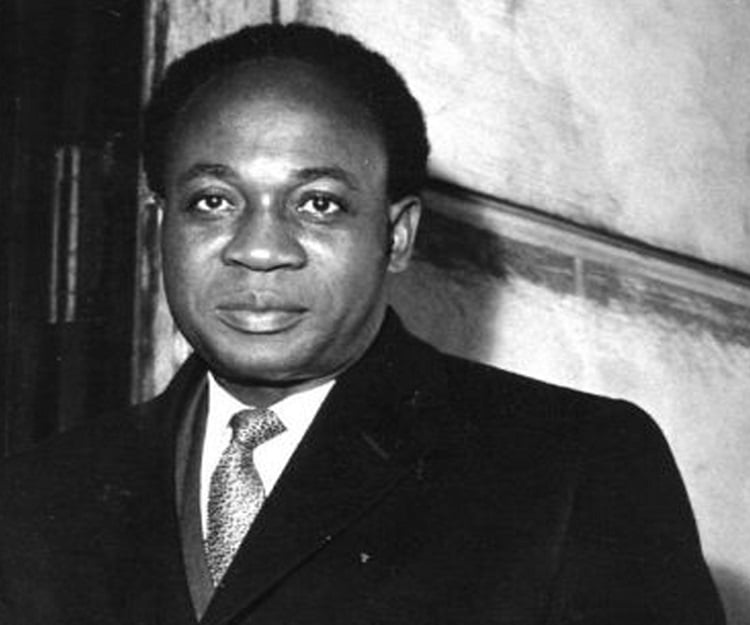
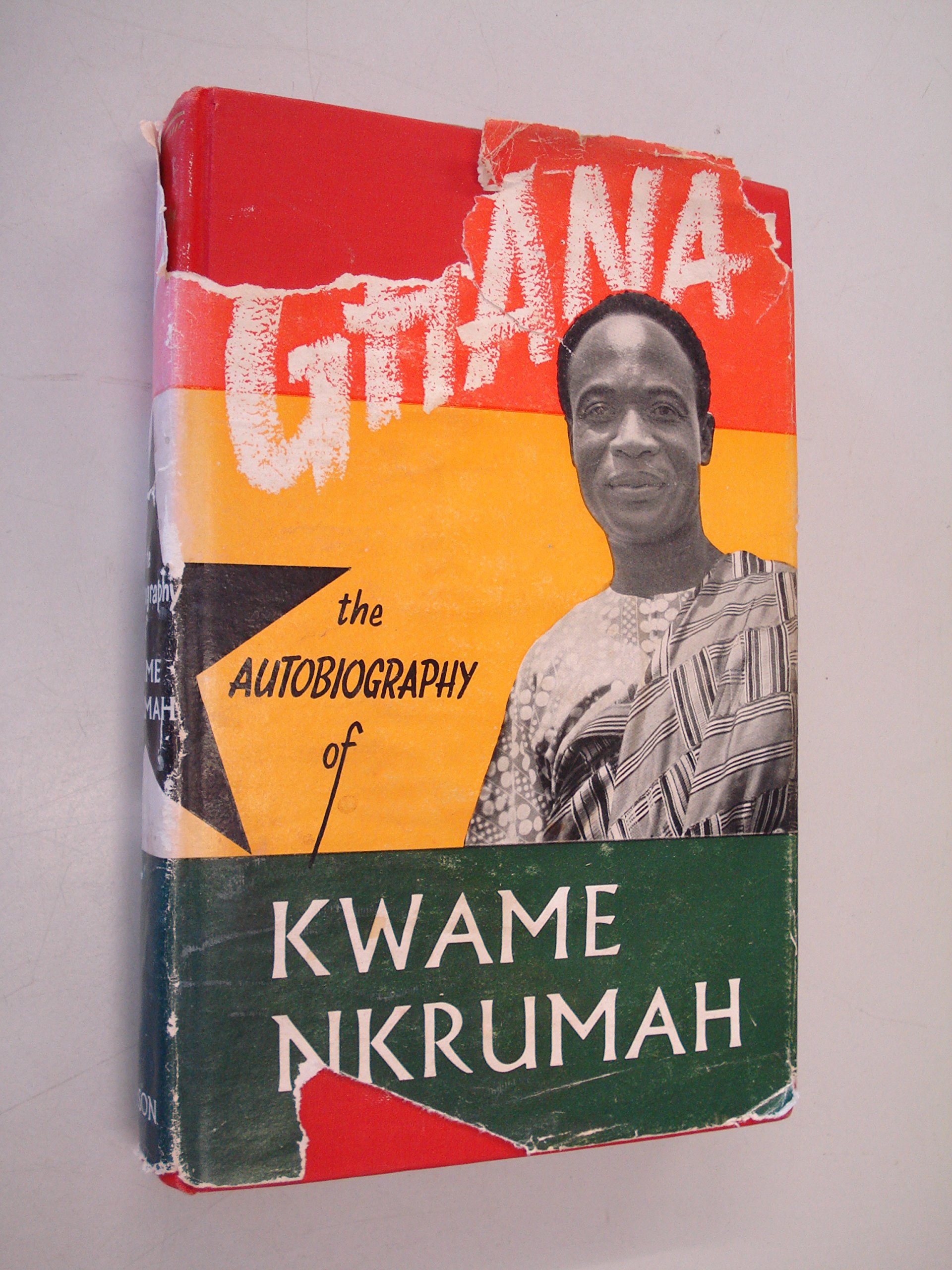
108th birthday of Kwame Nkrumah

(Born 21 September 1909, Nkroful, Ghana)
INFLUENTIAL philosopher and theorist of an encompassing African World*consciousness and first president of contemporary Ghana, July 1960, following the 6 March 1957 restoration-of-independence after a century of the British conquest, occupation and immiseration
*Africans in Africa continent, Europe, the Americas, the MiddleEast, Asia, Australasia, wherever else on earth
(Jackie McLean Sextet, “Appointment in Ghana” [personnel: McLean, alto saxophone; Blue Mitchell, trumpet; Tina Brooks, tenor saxophone; Kenny Drew, piano; Paul Chambers, bass; Art Taylor, drums; recorded: Van Gelder Studio, Englewood Cliffs, NJ, US, 1 September 1960])
Twitter@HerbertEkweEkwe


Wednesday, 9 August 2017

The potent word is “referendum”!


INDEED. The Biafra freedom movement’s concerted plan to hold a referendum for 50 million Biafrans on restoration-of-independence appears to have dramatically sent the genocidist Nigeria state into free fall. Day in, day out, the Biafrans have continued to challenge and overturn the range of “conventional wisdom” that undergirds liberation quests of recent history.

Twitter@HerbertEkweEkwe


Monday, 2 January 2017

“agitate” vs “proclaim”

Herbert Ekwe-Ekwe 
Biafrans do not agitate for freedom. They proclaim their freedom. No one agitates for freedom; freedom is proclaimed! Biafrans proclaim the restoration of their independence. This right to freedom is inalienable.
(Sonny Rollins Trio, “The freedom suite” [personnel: Rollins, tenor saxophone; Oscar Pettiford, bass; Max Roach, drums; recorded: Riverside Records, New York, US, 7 March 1958])
Twitter @HerbertEkweEkwe


Monday, 7 November 2016

Back to elections – in Africa… As Ghanaians go to the polls on Wednesday 7 December 2016 to elect a new president, what indeed are the prospects of a free and fair election in Ghana and elsewhere in Africa?


Herbert Ekwe-Ekwe

ONE OF THE most profoundly enduring iconic imageries of the African scene during an election in any region of the continent – west, south, east or even in the desperately bleak “Arab spring” of the north – is the thrust and enthusiasm of the very patient and disciplined would-be voter waiting, anxiously, in stretched out and meandering queues, quite often in uncomfortable high temperatures or heavy downpours, for their turn to cast their vote in that ballot box… Tens of thousands may have begun queuing first thing at dawn, some having earlier walked many miles to a designated polling station, and several probably not able to vote well into sundown and a few returning the following day, if eventually unable to vote, in cases where a “staggered” election arrangement operated. For this teaming population of the electorate, it is not just a demonstration of some abstract civic responsibility to wish to cast their vote, but, more importantly, their belief, their earnest conviction, that they are involved in a democratic programme to exercise and clearly indicate their personal choice on who or what party should represent and advance their prescribed or preferred interest(s).

Paper

In the paper that follows (link below), I examine, in a continent-wide survey, the salient issues that the voter in Africa contends with in exercising this crucial democratic right:
(http://re-thinkingafrica.blogspot.co.uk/2014/03/elections-in-africa-voter-court-outcome.html)

Twitter @HerbertEkweEkwe


Sunday, 2 October 2016

“agitate” vs “proclaim”

Biafrans do not agitate for freedom. They proclaim their freedom. No one agitates for freedom; freedom is proclaimed! Biafrans proclaim the restoration of their independence.

Twitter @HerbertEkweEkwe


Tuesday, 10 November 2015

Rights for Scots, Rights for the Igbo

Background essay that elucidates the import of the ongoing Igbo one million-person freedom march (http://re-thinkingafrica.blogspot.co.uk/2012/01/rights-for-scots-rights-for-igbo.html, accessed 8 November 2015)
(Scottish population: 5 million)
(Igbo population: 50 million)
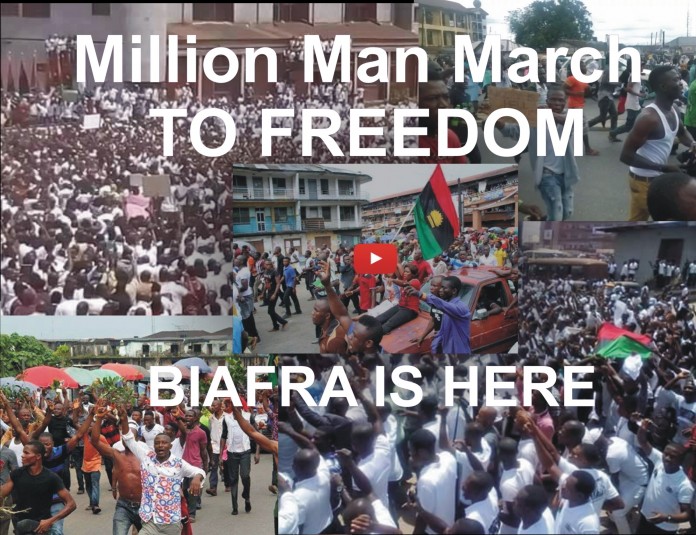
(Igbo one million-person march across Biafra [from Asaba/Onicha Oshimili River ports of the northwest to Igweocha on the Atlantic south coast] demanding unconditional release of freedom journalist Nnamdi Kanu, illegally detained by the regime in Nigeria, and restoration of sovereignty of Biafra: Friday 6 November 2015)

Twitter @HerbertEkweEkwe

Thursday, 7 May 2015

29 May 1966


Herbert Ekwe-Ekwe

SUNDAY 29 May 1966 is undoubtedly the most tragic day in Igbo history. It is the launch date of the Igbo genocide carried out by Nigeria – the most gruesome, devastating and expansive genocide in 20th century Africa. Nigeria murdered 3.1 million Igbo, 25 per cent of this nation’s population, between 29 May 1966 and 12 January 1970 (phases I-III of the genocide).

Open season, erase, “deny”, perverse

The Igbo genocide is the foundational genocide of post-(European)conquest Africa. Not since Germany’s genocide against the Herero, Nama and Berg Damara peoples of Namibia in the early 1900s had any African nation been subjected to such indescribable barbarity and carnage as the Igbo during the course of those 44 gory months. The genocide continues in multiforms and features. Only recently, in the wake of the 28 March 2015 “poll” for “president” in Nigeria, some very influential and easily recognisable public figures in the country including Rilwan Akiolu, the king or oba of Lagos (west region) and even intellectuals (such is this open season of staggeringly virulent pronouncements of Igbo hate and worse...) including, especially, a United States-domiciled cardiologist, called publicly for the mass murder of the Igbo because the Igbo electorate had voted overwhelmingly against the APC “political party”. The Igbo genocide is thus the longest and most remorselessly-sustained genocide of the contemporary era. This genocide inaugurated Africa’s current age of pestilence.

YAKUBU GOWON headed the regime in Nigeria that executed the genocide and Obafemi Awolowo, a lawyer, a senior advocate of the Nigerian bar, was his deputy, effectively the prime minister, the genocidist “chief theorist” for the campaign and head of the all-powerful finance ministry. Awolowo also principally initiated and programmed phase-IV of the genocide (ongoing) aimed, strategically, to dismantle/degrade the Igbo economy in perpetuity. The Igbo economy, pre-genocide, was Africa’s most dynamic and resourceful.

Elsewhere, beginning in 1969, regime Awolowoists/Awolowoids were in the forefront in formulating and implementing Nigeria’s “post”-genocide decision to abolish the teaching of history in its schools as part of its “broad package” of measures to erase the history of the genocide from countrywide consciousness and thus “deny” its occurrence. Thirty years on, 1999, these same regime operatives played a key role in Nigeria’s perverse proclamation of 29th of May as the country’s (new) annual “democracy day”, a desperate, albeit belated effort to try to “neutralise” the historic import of 29 May 1966 for Igbo people if not “celebrate” the genocide itself as some of the leading genocidists of this wing of the Nigeria genocide-state such as Benjamin Adekunle, Oluwole Rotimi, Olusegun Obasanjo and Obafemi Awolowo, himself, have indeed demonstrated in their high-profile gloated commentaries and memoirs on the genocide during the slaughtering and subsequently. 

29 MAY 1966 was the day that Igbo people were subjected to an overwhelming violence and unremitting brutality by supposedly fellow countrymen and women. This atrocity was clinically organised, supervised and implemented by the very state, the Nigeria state, which the Igbo had played a vanguard role to liberate from the British conquest and occupation from the 1930s to October 1960. Consequently, the genocide was perpetrated with full complicity of the British government led by Harold Wilson. This state, now violently taken over by murderous anti-African sociopolitical forces in 1966, had pointedly violated its most sacred tenet of responsibility to its Igbo citizens – provision of security. Instead of providing security to these citizens, the Nigeria state murdered 3.1 million of them or a quarter of their population.

Anthem

THE words in Hausa of the ghoulish anthem of the genocide, broadcast uninterruptedly on state-owned Kaduna radio and television throughout its duration and with editorial comments on the theme regularly published in both state-owned New Nigerian (daily) newspaper and weekly Gaskiya Ta fi Kwabo during the period, were unambiguously clear on the key objectives of this crime against humanity:

Mu je mu kashe nyamiri
Mu kashe maza su da yan maza su
Mu chi mata su da yan mata su
Mu kwashe kaya su
(English translation: Let’s go kill the damned Igbo/Kill off their men and boys/Rape their wives and daughters/Cart off their property)

YET THIS 29th day of May 1966 is also the Igbo Day of Affirmation, Recovery and Freedom. The Igbo people resolved on this day, the day that marked the beginning of the genocide, to survive the catastrophe. This was the day the Igbo ceased to be Nigerian forever – right there on the grounds of those death camps in the sabon gari residential districts (north Nigeria) and offices and churches and schools and colleges and shops and markets and hospitals and rail stations and trains and coach stations and coaches and trucks and airports and planes and highways and village tracks and brooks and rivers and gorges and bridges and woods across Nigeria. They created the state of Biafra in its place and tasked it to provide security to the Igbo and prevent Nigeria, a genocide state, from accomplishing its dreadful mission. The heuristic symbolism defined hitherto by 1 October 1960 (date of the presumed restoration of independence for peoples in Nigeria from the British occupation) shattered in the wake of this historic Igbo declaration.

For the Igbo, the renouncement of Nigerian citizenship is the permanent Igbo indictment of a state that had risen thunderously to murder one of its constituent peoples. The Igbo could not have survived the genocide if they still remained Nigerian. They rightly chose the former course of their fate and not the latter which they decisively cast adrift. Consequently, Nigeria collapsed as a state with scarce prospects. Despite the four murderous years of comprehensive land, naval and aerial siege of Igboland by the genocidists, unprecedented blockade imposed on no other peoples anywhere else in recent African history, the Igbo demonstrated a far greater creative drive towards constructing an advanced civilisation in Biafra than what Nigeria has all but wished it could achieve in the past four decades. Nigeria gburu ochu; Nigeria mere alu. Surely, Nigeria couldn’t recover from committing this heinous crime, this crime against humanity. This is its epitaph.

Freedom

ASTONISHINGLY, though, the world wonders what the Igbo are still doing in Nigeria, the burden of a strangulating occupation notwithstanding. In the past 49 years, the Igbo have written an extraordinary essay on human survival and resilience. These attributes have now been laudably demonstrated and the Igbo must now move on – to another dynamic threshold of their being. O zu gozie. No one should ever feel that they are trapped in the Nigeria quagmire. The Igbo must now actively begin to reconstruct their gravely battered homeland, transform the lives of their 50 million people, and contribute their ingenuity to working on the wider, inventive canvass of the African renaissance. To embark on these pressing tasks, the Igbo should, today, walk away from the Nigeria genocide state, this state of terror. The Igbo should go now. Go, Go, Go.

29 May is a beacon of the resilient spirit of human overcoming of the most desperate, unimaginably brutish forces. It is the new Igbo National Holiday. It is a day of meditation and remembrance in every Igbo household in Igboland and in the diaspora in Nigeria and the rest of the world for the 3.1 million murdered, gratitude and thanksgiving for those who survived, and the collective Igbo rededication to achieve the expectant goal of the restoration of Igbo sovereignty. Now is the time.

IGBO will never forget. Happy Survival! Land of the Rising Sun.
(The New York Contemporary Five plays Bill Dixson’s composition, “Trio” – [personnel: Archie Shepp, tenor saxophone; Don Cherry, pocket trumpet; Tchicai, alto saxophone; Don Moore, bass; JC Moses, drums [recorded: live, Jazzhus Montmarte, Copenhagen, Denmark, 15 November 1963])
Twitter @HerbertEkweEkwe

Saturday, 4 April 2015

April is Genocide Awareness and Prevention Month (2): Presaging the Igbo genocide

In his Empire: What Ruling the World Did to the British (London: Viking, 2011), Jeremy Paxman allocates just 12 lines of the total 368-page study to British-occupied Nigeria. But the pithy commentary undoubtedly speaks volumes of the mindset of the occupation regime on the very eve of its presumed departure from Nigeria in October 1960. This is clearly a regime that is not prepared or willing to abandon the bounty harvest or lucre that is its Nigeria. Instead, it is exploring across a spectrum of strategies to subvert the goal of the restoration-of-independence movement for the peoples which the Igbo had led since the 1930s.

Using archival material, Paxman presents the crux of the panoramic conversation on the subject in Lagos, in January 1960, between James Robertson, the outgoing occupation governor, and visiting Prime Minister Harold Macmillan:

MACMILLAN: Are the people fit for self-government?

ROBERTSON: No, of course not.

According to Paxman, James Robertson reckons that it would take “another 20 or 25 years” for Nigeria to be “fit for self-government” (Paxman, 2011: 272). Interestingly, this is the same Robertson who had by the time of his Lagos meeting with Macmillan “concluded” the “terms” of the British “exit” from Nigeria in “negotiations” with the country’s restoration-of-independence movement – begun 15 years earlier and had been successively chaired by two previous occupation governors including sessions scheduled and held in England. This is the same Robertson who had just rigged the December 1959 countrywide elections in Nigeria (part of the restoration-of-independence “package”) in favour of the Hausa-Fulani north region (see the irrepressible Harold Smith, member of the occupation regime in Lagos at the time – http://www.thefreelibrary.com/A+squalid+end+to+empire.-a0189071322, accessed 28 March 2015)), Britain’s local clients, vehemently opposed to African independence – and, therefore, the British exit! (This north Nigeria region has the unenviable accolade across the entire Southern World of being home to one of the few peoples who wanted the occupation of their lands indefinitely by one of the pan-European powers of global conquest since the 15th century CE.) Furthermore, this is the same Robertson whose predecessor, in Lagos, had earlier rigged the countrywide census results – again, in favour of Britain’s Hausa-Fulani north regional clients (http://www.thefreelibrary.com/A+squalid+end+to+empire.-a0189071322, accessed 28 March 2015).

Macmillan then asks Robertson for his advice on the way forward for the British continuing occupation of Nigeria: “What do you recommend me to do?”

ROBERTSON: I recommend you give it to them at once.

Really?! What? Why? Doesn’t Roberston’s suggestion to his boss sound wholly contradictory to the tract that this conclave had trodden so far? Well, no, not really… Both prime minister and governor have no disagreement, whatsoever, on holding onto British “interests” in Nigeria in perpetuity; they do not believe that they are necessarily bound by the “terms” of the envisaged British “exit” from Nigeria “negotiated” since 1945 even though, ironically, these had largely preserved British “interests”, thanks to the veto-power that its Hausa-Fulani north region subalterns would exercise in the “new” dispensation; most crucially, both men do not subscribe to the inalienable rights of Africans to recover their conquered lands.

It is the case, though, that if the British officials were to renege on their “exit” from Nigeria at this 11th hour, they would have to contend with a serious crisis – at least in the short/medium term – right there on the ground in Nigeria: “The alternative [is] that most talented people [read: the Igbo and those others elsewhere in south Nigeria who demanded and supported the drive towards unfettered restoration-of-independence for the peoples] would become rebels and the British would spend the next two decades fighting to stave off what [is] inevitable, while incurring the opprobrium of the world” (Paxman: 272).

As the Lagos deliberations end, nine months before the designated British departure date, both prime minister and governor needn’t agonise, too much, over the future prospects of their country’s Nigeria stanglehold. After all, despite the “talented people”, Britain is aware that it holds the trump card to defend this stranglehold via its Hausa-Fulani clients. Twice in the previous 15 years (significantly, it should be noted, during the very years of British “negotiations” of its “exit” from Nigeria with the “talented people”), the clients organised and unleashed pogroms against Igbo people in northcentral town of Jos (1945) and north city of Kano (1953). Hundreds of Igbo were murdered during these massacres and tens of thousands of pounds sterling worth of their property looted or destroyed. No perpetrators of these murders were ever apprehended or punished by the occupation regime.

Six and one-half years hence, from Sunday 29 May 1966, these same British clients would unleash the genocide against the Igbo people. During the course of 44 months, 3.1 million Igbo children, women and men are murdered in this foundational and most gruesome genocide of post-(European)conquest Africa. The Igbo and the world suddenly realise that those anti-Igbo pogroms carried out during the years of the Anglo-“talented people”-in-Nigeria doubtful restoration-of-independence negotiations were indeed “dress rehearsals” for the 29 May 1966-12 January 1970 Igbo genocide.

Reexamination and restitution

Britain plays an instrumental role in the perpetration of the genocide – politically, diplomatically, militarily. Now, a new Harold-the-prime minister, this time Harold Wilson, has no qualms about the “opprobrium of the world” considered by the other Harold during those January 1960 talks with occupation governor Robertson. Wilson’s reasons are obvious: the architecture of control and execution of mass violence in Nigeria have altered, somehow, since January 1960, and the forces on the ground spearheading the Igbo genocide are the trusted Hausa-Fulani subalterns of old and their since locally expanded allies in west Nigeria – not Britain, directly; precisely, what Macmillan and Robertson had sought to avoid! So, as the slaughter of the Igbo intensifies, particularly in the catastrophic months of 1968-1969, Harold Wilson is totally unfazed as he informs Clyde Ferguson (United States state department special coordinator for relief to Biafra) that he, Harold Wilson, “would accept a half million dead Biafrans if that was what it took” Nigeria to destroy the Igbo resistance to the genocide (Roger Morris, Uncertain Greatness: Henry Kissinger and American Foreign Policy, London and New York: Quartet Books, 1977, p. 122). Such is the grotesquely expressed diminution of African life made by a supposedly leading politician of the world of the 1960s – barely 20 years after the deplorable perpetration of the Jewish genocide. As the final tally of the murder of the Igbo demonstrates, Harold Wilson probably has the perverted satisfaction of having his Nigerian subalterns perform far in excess of the prime minister’s grim target, a subject coldly stated in Wilson’s own memoirs where he notes that the Nigerian military, equipped zealously by Britain, expends more small arms ammunition in its campaign to achieve its annhilative mission in Igboland than the amount used by the British armed forces  “during the whole” of World War II (Harold Wilson, Labour Government, 1964-1970: A Personal Record, London: Weidenfeld & Nicolson, 1971, p. 630, added emphasis). On this, Colonel Robert Scott, military advisor in the British diplomatic mission in Nigeria, during the period, acknowledges, equally gravely, that as Nigerian genocidist military forces unleash their attacks on Igbo cities, towns and villages, they are the “best defoliant agent known” (Daily Telegraph, London, 11 January 1970).

Jeremy Paxman, a former senior journalist at the British Broadcasting Corporation who anchored the BBC2 “Newsnight” premier current affairs programme for 25 years (1989-2014), has a 3-minute follow-up video where he explains why he has written Empire. Two questions he poses are quite striking: (1) “Why did the British go out (sic) to conquer the world?” (2) “What did it do to them [the British, that is]?” For the Igbo of southwestcentral Africa, the double jeopardy of conquest and occupation and genocide is palpably incalculable. It is now clear that the contemporary British state cannot continue to ignore its responsibilities in embarking on a comprehensive reexamination of the history of its relationship with the Igbo people and make the long-overdue restitution.
(Ornette Coleman Quartet, “Tears inside” [personnel: Coleman, alto saxophone; Don Cherry, pocket trumpet; Percy Heath, bass; Shelly Manne, drums; recorded: Contemporary’s Studio, Los Angeles, US, 9 and 10 March 1959])
Twitter @HerbertEkweEkwe