Showing posts with label Ornette Coleman Quartet. Show all posts

Saturday, 31 March 2018

273rd birthday of Olaudah Equiano

(Born c1745, Essaka, Biafra; dies 31 March 1797, LondonEngland)

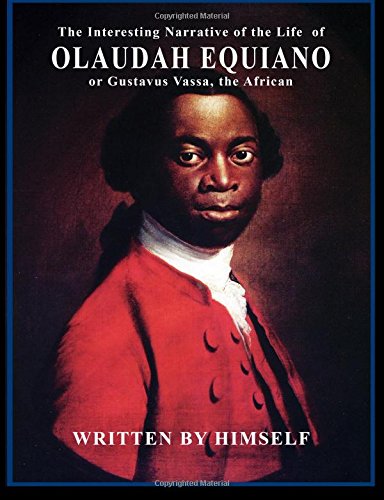
GREAT Biafran and one of African World’s most celebrated intellectuals, sailorexpeditionistentrepreneuroratorversatile campaigneractive exponent of African freedom (during the 1780s in Britain) from enslavement and other spheres of subjugation waged by an assemblage of European World states and interests (including, especiallyBritain, PortugalSpainFrancethe Netherlands, Italian city-statesGerman princely statesSweden-NorwayDenmarkthe United States) and their “successor states” in the Americas/Caribbean, begun in the 15th century, visionary of eventual African liberation, author of the classic, The Interesting Narrative of the Life of Olaudah Equiano, or Gustavus Vassa, the African (1789), towering member of the iconic men and women that constitute the freedom pantheon from which the current Biafra freedom movement derives invaluable insight, tenacity, focus
(City of Westminster London’s (Britain) commemorative plaque for Olaudah Equiano, the outstanding 18th century Igbo intellectual and irrepressible exponent of freedom, at 73 Riding House Street, Paddington, London, where Equiano lived and worked and published his classic, The Interesting Narrative of the Life of Olaudah Equiano, or Gustavus Vassa, the African in 1789. This building is now owned by the University College London.)
(Ornette Coleman Quartet, “Ecars” [personnel: Coleman, tenor saxophone; Don Cherry, pocket trumpet; Jimmy Garrison, bass; Ed Blackwell, drums; recorded: Atlantic Studios, New York, US, 27 March 1961])
Twitter @HerbertEkweEkwe

Sunday, 7 January 2018

128th anniversary of the patenting of William B Purvis’s fountain pen

William Purvis (Philadelphia, US) patents his fountain pen invention, 7 January 1890, and reflects, quite perceptibly: “[T]he object of my invention is to provide a simple, durable and inexpensive construction of the fountain pen adapted to general use and which may be carried in the pocket”
(Ornette Coleman Quartet, “RPDD” {or “Relation of the poet to day dreaming”} [personnel: Coleman, alto saxophone; Don Cherry, pocket trumpet; Scott LaFaro, bass; Ed Blackwell, drums; recorded: Atlantic Records, New York, US, 31 January 1961])

Twitter @HerbertEkweEkwe

Wednesday, 13 September 2017

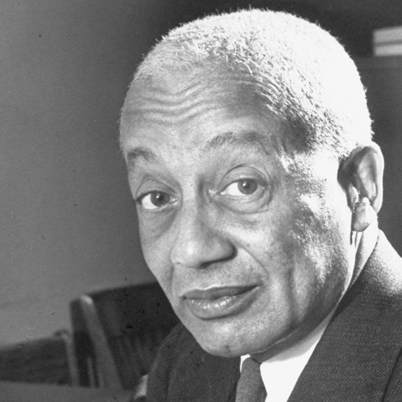
132nd birthday of Alain Locke

(Born 13 September 1885, Philadelphia, US)
DISTINGUISHED philosopher and prolific multidisciplinary scholar aptly described by Martin Luther King as one of the preeminent philosophers that “came through the universe”, dean of the 1920s-1930s Harlem Renaissance
(Ornette Coleman Quartet, “WRU” {or Wit and its Relation to the Unconscious – Sigmund Freud}
[personnel: Coleman, alto saxophone; Don Cherry, pocket trumpet; Scott LaFaro, bass; Ed Blackwell, drums; recorded: Atlantic Studios, New York, US, 31 January 1961])
(Ornette Coleman Quartet, “C & D” {or Civilization and its Discontents – Sigmund Freud}[personnel and recording details: as in above])
Twitter@HerbertEkweEkwe

Thursday, 9 March 2017

Ornette Coleman, freedom, Biafra

(Born 9 March 1930, Fort Worth, Texas, US)
Herbert Ekwe-Ekwe

TODAY IS the 87th birthday of Ornette Coleman. Alto saxophonist, trumpeter, violinist, composer, one of the very top inventive jazz artists of all time – a leading exponent of the avant-garde/free jazz movement, beginning late 1950s/early 1960s, when his varying working quartets (personnel: Coleman, alto saxophone [tenor saxophone on Ornette on Tenor only], Don Cherry, cornet/trumpet/pocket trumpet; Charlie Haden/Scott LaFaro/Red Mitchell/Percy Heath/Jimmy Garrison/Don Payne, bass; Billy Higgins/Ed Blackwell/Shelly Manne, drums) and quintet (Something Else!!!! only, with Walter Norris on piano) record seven classic albums (Something Else!!!! [1958], Tomorrow is the Question [1959], The Shape of Jazz to Come [1959], Change of the Century [1959], This is our Music [1960], Ornette! [1961], Ornette on Tenor [1961]), and an eighth, this time recorded by an octet (Coleman, alto saxophone; Cherry, pocket trumpet; Freddie Hubbard, trumpet; Eric Dolphy, bass clarinet; Haden, bass; LaFaro, bass; Blackwell, drums; Higgins, drums), pertinently titled Free Jazz (1960).

Biafra

In this revolutionary epoch in which stretches of peoples and nations across the globe but especially in the African World have risen against centuries of pan-European conquest, occupation and subjugation, Coleman’s music has consistently offered an infectiously gripping optimism for freedom.  As the world keenly watches the march of the strikingly innovative freedom movement of the people of Biafra in southwestcentral Africa from bludgeoning genocide perpetrated against them presently by Britain and Nigeria, two compositions from the Coleman repertoire couldn’t be more appropriate to capture the immense transformational possibilities that success in Biafra will have for constituent peoples in the region and elsewhere in Africa: “Turnaround” (February 1959) and “Change of the century” (October 1959).
(Ornette Coleman Quartet, “Turnaround” [personnel: Coleman, alto saxophone; Don Cherry, trumpet; Red Mitchell, bass; Shelly Manne, drums; recorded: Contemporary’s Studio, Los Angeles, US, 23 February 1959])
(Ornette Coleman Quartet, “Change of the century” [personnel: Coleman, alto saxophone; Don Cherry, pocket trumpet; Charlie Haden, bass; Billy Higgins, drums; recorded: Radio Recorders in Hollywood, California, US, 8 October 1959])
Twitter @HerbertEkweEkwe

Saturday, 7 January 2017

127th anniversary of the patenting of William B Purvis’s fountain pen

William Purvis (Philadelphia, US) patents his fountain pen invention, 7 January 1890, and reflects, quite perceptibly: “[T]he object of my invention is to provide a simple, durable and inexpensive construction of the fountain pen adapted to general use and which may be carried in the pocket”
(Ornette Coleman Quartet, “RPDD” {or “Relation of the poet to day dreaming”} [personnel: Coleman, alto saxophone; Don Cherry, pocket trumpet; Scott LaFaro, bass; Ed Blackwell, drums; recorded: Atlantic Records, New York, US, 31 January 1961])
Twitter @HerbertEkweEkwe

Monday, 19 September 2016

FWD: Chike Ofili on Biafra, history, geography

Writing on his Facebook wall on Sunday 18 September 2016, Chike Ofili notes [reposted as in the original]:

DELTA STATE IS HISTORICALLY BIAFRA; as it is Geographically and Ethnically so, too

A most stupid thing [by Delta SSG to deny that Delta is part of Biafra] at a time when an Anioma Igbo is the Governor of Delta state, Dr. Ifeanyi Okowa just as an Ikwerre Igbo is also the Governor of Rivers state, Barrister Wysome Wike giving us SEVEN IGBO GOVERNORS.
(Chika Ofili: ... so SS ... take your SS utterance ... to where it rightly belongs ...)
But a historically illiterate government plagued by a peculiar group identity crisis, will always vomit rubbish. No wonder Delta is the most ravished and troubled by armed Fulani herdsmen. Including killing the King of one its oldest kingdoms, the late Obi of Ubulu Uku without any effective check from the Delta state government that ever goes beyond the governor sounding tough in his responsive anger.

The decision whether Dellta state is part of Biafra that it was historically a part of, is no solely theirs. The decision rests squarely with the people. Even Ojukwu as the former Governor of the entire old Eastern region that now makes up South East and South south, knew that the decision was beyond him. He had to seek the peoples permission before he went ahead to fight for the classical Biafra.

Biafra may be geographically South East and South South, Biafra is essentially Igbo. And the Igbo cut across the two regions and onto Edo state and the Middle Belt.

So SS to the Governor, take your SS, sickle cell anemia utterance to where it rightly belongs, A SICK BAY.
(Ornette Coleman Quartet, “C & D” 
{or Civilization and its Discontents – Sigmund Freud}[personnel: Coleman, alto saxophone; Don Cherry, pocket trumpet; Scott LaFaro, bass; Ed Blackwell, drums; recorded: Atlantic Studios, New York, US, 31 January 1961])
Twitter@HerbertEkweEkwe

Wednesday, 24 February 2016

SALUTE to intellectuals who worked tirelessly in defence of the people during the beginning of this most catastrophic epoch in Igbo history – Igbo genocide phases I-III, 29 May 1966-12 January 1970

Chukwuemeka Odumegwu-Ojukwu     Flora Nwapa     Louis Mbanefo     Chinua Achebe     Christopher Okigbo     Michael Echeruo     Ifeagwu Eke     SJ Cookey     Sam Mbakwe     Janet Mokelu   Obiora Udechukwu     Uche Chukwumerije     Kalu Ezera     Philip Efiong    Kamene Okonjo   Ignatius Kogbara     Alvan Ikoku     Celestine Okwu           Benedict Obumselu     Donatus Nwoga     NU Akpan     Adiele Afigbo     Michael Okpara     Chukwuka Okonjo     Akanu Ibiam     Bede Okigbo     Okoko Ndem     Agwu Okpanku     Tim Onwuatuegwu     Chudi Sokei     Pol Ndu     Ben Gbulie      Boniface Offokaja     Chuks Ihekaibeya     Conrad Nwawo     Dennis Osadebe     Osita Osadebe   Eme Awa    Chuba Okadigbo   Okechukwu Ikejiani       Uzo Egonu      Winifred Anuku     Anthony Modebe     Alex Nwokedi   Zeal Onyia   Chukwuedo Nwokolo   Pius Okigbo     Godian Ezekwe     Felix Oragwu    Ogbogu Kalu     Kevin Echeruo     Emmanuel Obiechina   Uche Okeke     Chukwuma Azuonye     Onuora Nzekwu     Chukuemeka Ike     Eddie Okonta     Cyprian Ekwensi   Nkem Nwankwo     John Munonye     Gabriel Okara     Kenneth Onwuka Dike     Eni Njoku   Okechukwu Mezu       William Achukwu       Agwuncha Arthur Nwankwo    Kalu Nsi    Nwafor Orizu   ZC Obi         Anyaogu Elekwachi Ukonu
(Ornette Coleman Quartet, “WRU” {or Wit and its Relation to the Unconscious  Freud} [personnel: Coleman, alto saxophone; Don Cherry, pocket trumpet; Scott LaFaro, bass; Ed Blackwell, drums; recorded: Atlantic Studios, New York, US, 31 January 1961])
Twitter @HerbertEkweEkwe