Showing posts with label Oshimili River. Show all posts

Wednesday, 22 June 2016

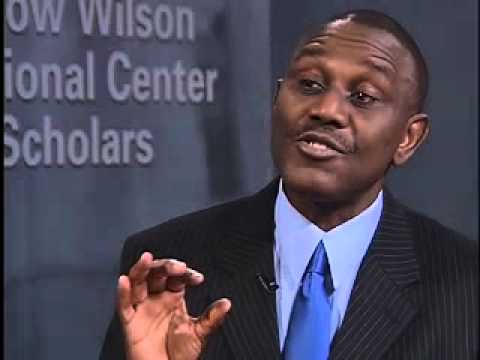
53rd birthday of Emma Okocha

(Born 22 June 1963, Asaba, Biafra: onye amuma ndiigbo)
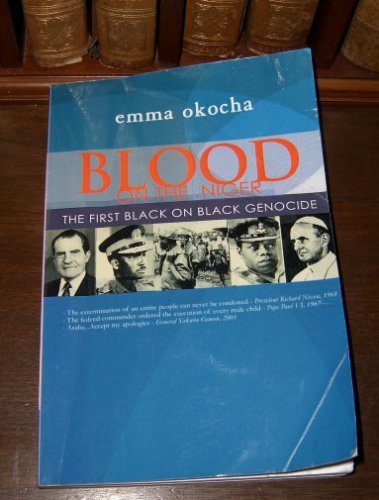
Footballer, sports administrator, journalist, freedom activist, onye amuma ndiigbo, the courageous 4-year-old who, at the early stages of phase-III of the Igbo genocide, survives the Saturday 7 October 1967 mass execution of  700 Igbo boys and men, by a genocidist Nigeria military brigade commanded by Murtala Muhammed and Ibrahim Haruna and Ibrahim Taiwo in Asaba, twin Oshimili River port, during which most of his family and other relatives are murdered; author of Blood on the Niger (TriAtlantic Books, 2006), compulsory reference in the study of the Igbo genocide, carried out by Nigeria and strategic ally Britain, which meticulously catalogues the savagery and aftermath of this massacre.
Hundreds of other Igbo boys and men are also slaughtered by the Muhammed-Haruna-Taiwo brigade in several other towns and villages in this Anioma region of Biafra, west of the Oshimili, as  Okafor Udoka has shown (Okafor Udoka, “Lest we forget the genocide of Asaba”, Skytrend News, 6 October 2014). Ifeanyi Uriah, now 62, another survivor of the Asaba execution, recalls, in an interview with Udoka, the haunting memory of 7 October 1967:
I cannot tell this story without tears in my eyes … They [genocidist brigade] ordered everyone to come out to the [Asaba] town square … They were honest with us. They told us they were going to kill us. They took us to the mounted machine guns. Then it dawned on us that it was true. I was standing with my older brother at the edge of the crowd. He was holding my hand. He had always taken care of me. We shared the same bed. He was the first to be dragged away by the soldiers. He let go of my hand and pushed me into the crowd. He was shot in the back. I could see the blood gushing from his back. He was the first victim of the massacre. Then all hell let loose. I lost count of time. To this day, I live with the smell of the blood of my brethren that night. Even the heavens wept for the victims of this holocaust. Finally the bullets stopped (Udoka: 2014).
*****Nigeria and Britain murdered 3.1 million Igbo people or one-quarter of this nation’s population during the three phases of the genocide – 29 May 1966-12 January 1970. This genocide, the foundational genocide of post-(European)conquest Africa, inaugurated Africa’s current age of pestilence, and its phase-IV, launched on 13 January 1970, continues as these lines are written...  

The world could have stopped this genocide; the world should have stopped this genocide. The world can stop this ongoing genocide. To understand the politics of the Igbo genocide and the politics of the “post”-Igbo genocide is to have an invaluable insight into the salient features and constitutive indices of politics across Africa in the past 50 years.
(John Coltrane Quartet, “Alabama” [personnel: Coltrane, tenor saxophone, McCoy Tyner, piano; Garrison, bass; Elvin Jones, drums; recorded: Jazz Casual [Ralph Gleason], National Educational Television, KQED Studios, San Francisco, US, 1 November 1963])
Twitter @HerbertEkweEkwe

Saturday, 19 December 2015

Yet more Biafrans murdered by Nigerian genocidist military in Onicha, Biafra

The Onicha massacre of Biafrans by the Nigerian occupation genocidist military, begun on Wednesday 2 December 2015, has continued unabated. On Thursday 17 December 2015, the genocidists, positioned at Onicha head bridge, shot dead eight Biafrans celebrating the news of the release of Nnamdi Kanu, illegally detained by the Nigerian regime in a secret police facility in Abuja since mid-October. Scores of other celebrants were seriously wounded in the slaughter.  Every Biafran murdered or wounded in this trail of murders is meticulously documented and archived. Each genocidist unit involved in these murders, including command and control personnel, is meticulously documented and archived. Everyone must now know that no one or institution involved in these murders will escape justice in court for committing the crime of genocide. This crime, it couldn’t be overstressed, has no statute of limitations in international law.

Stunning silence

In the meantime, what the world cannot understand is the deafening silence on these massacres – Wednesday 2 December 2015, Thursday 17 December 2015 – from the Anambra region regime in Oka. Is this regime not aware that its citizens, its own citizens, are being murdered by Nigerian occupation military (navy, army, police, secret police, other undisclosed units) in Onicha, commercial capital of the region and the rest of Biafra? Is Onicha not part of its administrative jurisdiction? Have there been no massacres in Onicha? Why hasn’t there been any condemnation of these murders from regime executive offices in Oka? When will the Anambra region regime in Oka unequivocally condemn this 2-phase massacre of peaceful Biafrans in Onicha since Wednesday 2 December 2015?
(John Coltrane & Don Cherry, “Focus on sanity” [personnel: Coltrane, tenor saxophone; Cherry, cornet; Percy Heath, bass; Ed Blackwell, drums; recorded: Atlantic Studios, New York, 28 June/8 July 1960])
Twitter@HerbertEkweEkwe

Wednesday, 7 October 2015

Igbo genocide: Asaba, 7 October 1967

Today, Wednesday 7 October 2015, is the 48th anniversary of the mass execution of 700 Igbo male, boys and men, in Asaba (twin Oshimili River port of Biafra) by genocidist Nigeria military brigade commanded by Murtala Muhammed and Ibrahim Haruna and Ibrahim Taiwo. This was during phase-III of the Igbo genocide which Nigeria launched on 6 July 1967. 

Emma Okocha’s Blood on the Niger (TriAtlantic Books, 2006), a compulsory reference in the study of the Igbo genocide, meticulously catalogues the savagery and aftermath of this massacre. Okocha, who lost most of his family during the slaughter, survived the execution as a 4-year-old.
(Emma Okocha: onye amuma ndi Igbo)

Hundreds of other Igbo boys and men were also slaughtered by the Muhammed-Haruna-Taiwo brigade in several other towns and villages in this Anioma region of Biafra, west of the Oshimili, as  Okafor Udoka has shown (Okafor Udoka, “Lest we forget the genocide of Asaba”, Skytrend News, 6 October 2014). Ifeanyi Uriah, now 61, another survivor of the Asaba execution, recalls, in an interview with Udoka, the haunting memory of 7 October 1967:
I cannot tell this story without tears in my eyes … They [genocidist brigade] ordered everyone to come out to the [Asaba] town square … They were honest with us. They told us they were going to kill us. They took us to the mounted machine guns. Then it dawned on us that it was true. I was standing with my older brother at the edge of the crowd. He was holding my hand. He had always taken care of me. We shared the same bed. He was the first to be dragged away by the soldiers. He let go of my hand and pushed me into the crowd. He was shot in the back. I could see the blood gushing from his back. He was the first victim of the massacre. Then all hell let loose. I lost count of time. To this day, I live with the smell of the blood of my brethren that night. Even the heavens wept for the victims of this holocaust. Finally the bullets stopped (Udoka: 2014).
Nigeria murdered 3.1 million Igbo people or one-quarter of this nation’s population during the three phases of the genocide – 29 May 1966-12 January 1970. This genocide, the foundational genocide of post-(European)conquest Africa, inaugurated Africa’s current age of pestilence. 

The world could have stopped this genocide; the world should have stopped this genocide. To understand the politics of the Igbo genocide and the politics of the “post”-Igbo genocide is to have an invaluable insight into the salient features and constitutive indices of politics across Africa in the past 50 years.
(Andrew Hill Sextet, “Dedication” [personnel: Hill, piano; Kenny Dorham, trumpet; Eric Dolphy, bass clarinet; Joe Henderson, tenor saxophone; Richard Davis, bass; Tony Williams, drums; recorded: Van Gelder Studios, Englewoods Cliff, NJ, US, 21 March 1964])
Twitter @HerbertEkweEkwe

Tuesday, 7 October 2014

Igbo genocide: Asaba, 7 October 1967

Today, Tuesday 7 October 2014 is the 47th anniversary of the mass execution of 700 Igbo male, boys and men, in Asaba (twin Oshimili River port) by genocidist Nigeria military brigade commanded by Murtala Muhammed and Ibrahim Haruna and Ibrahim Taiwo. This was during phase-II of the Igbo genocide which Nigeria launched on 6 July 1967. Emma Okocha’s Blood on the Niger (TriAtlantic Books, 2006), a compulsory reference in the study of the Igbo genocide, meticulously catalogues the savagery and aftermath of this massacre. Okocha, who lost most of his family during the slaughter, survived the execution as a 4 year-old.

Hundreds of other Igbo boys and men were also slaughtered by the Muhammed-Haruna-Taiwo brigade in several other towns and villages in this Anioma region of Igboland, west of the Oshimili, as  Okafor Udoka writes recently (Okafor Udoka, “Lest we forget the genocide of Asaba”, Skytrend News, 6 October 2014). Ifeanyi Uriah, now 60, another survivor of the Asaba execution, recalls, in an interview with Udoka, the haunting memory of 7 October 1967:
I cannot tell this story without tears in my eyes … They [genocidist brigade] ordered everyone to come out to the [Asaba] town square … They were honest with us. They told us they were going to kill us. They took us to the mounted machine guns. Then it dawned on us that it was true. I was standing with my older brother at the edge of the crowd. He was holding my hand. He had always taken care of me. We shared the same bed. He was the first to be dragged away by the soldiers. He let go of my hand and pushed me into the crowd. He was shot in the back. I could see the blood gushing from his back. He was the first victim of the massacre. Then all hell let loose. I lost count of time. To this day, I live with the smell of the blood of my brethren that night. Even the heavens wept for the victims of this holocaust. Finally the bullets stopped (Udoka: 2014).
Nigeria murdered 3.1 million Igbo people or one-quarter of this nation’s population during the three phases of the genocide – 29 May 1966-12 January 1970.

Twitter @HerbertEkweEkwe