Showing posts with label Igboland. Show all posts

Friday, 8 September 2017

Nigerian regime begins to move heavy military weaponry into Igboland from the north (Thursday 7 September 2017)


By A Correspondent, Enuugwu, 1952HRS, September 7, 2017

TODAY September 7, 2017, the genocidist Nigerian regime, headed by ailing genocidist trooper Muhammadu Buhari, moved in more than ten pieces of heavy motorized military hardware and weaponry from the Caliphate north into Igboland. The motorized trailer convoy bearing the weapons and hardware and soldier escorts were sighted as they snaked their way into the regional capital, Enuugwu at around 5:45pm. The convoy which came on the Makurdi-Nsukka-Enuugwu trunk road followed back streets into the city.

They were sighted as they made their entry when dusk was already descending on the city on a rain-drenched day. The timing is probably intentional to avoid many eye witnesses in the bustling city.

The convoy then made its way to the part of Abakaliki Road where the army’s 82 Division formation outpost is located, where it parked alongside the road in line and waited. The escorts fanned out along it and kept close watch. It is still there at about 6:45pm when this correspondent took leave of the place to file this report after driving past it a number of times.

Since the convoy did not drive right into the sprawling grounds of the outpost that lays on the opposite sides of that portion of Abakaliki Road, the likelihood is that the weaponry and hardware will continue its journey later this night to the parts of the Igbo heartland where they will be deployed.

THIS CORRESPONDENT was alarmed by one of the soldier-escorts who jumped down when the convoy got to the junction of the back street and Abakaliki Road and lifted his assault rifle and aimed it at motorists driving on the opposite direction. Although his intention was clearly to stop traffic to make way for his convoy to join the main highway, the tactic of aiming his assault rifle at motorists is not only frightening. It was also indicative of the wanton bestial disregard of the Igbo by elements of the Hausa-Fulani dominated Nigeria military.

Poor visibility due to the descending dusk incapacitated efforts by this correspondent to capture clear video and still pictures of the convoy on a telephony device.

IT IS ON record that upon his return from an extended medical tourism in the UK, Buhari gave the military specific orders to crush the ongoing agitation for the actualization of the Republic of Biafra in the southeast in a referendum


Tuesday, 23 August 2016

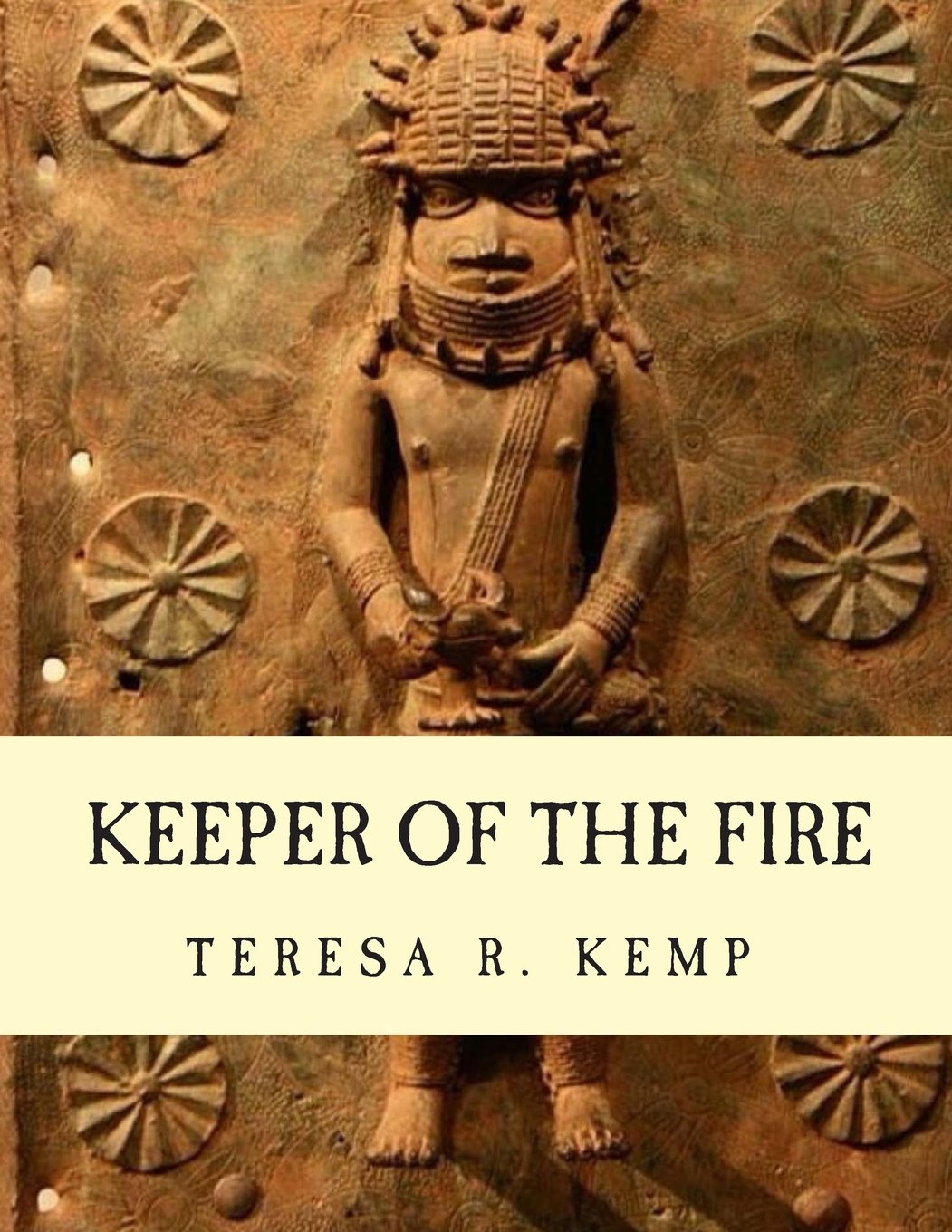
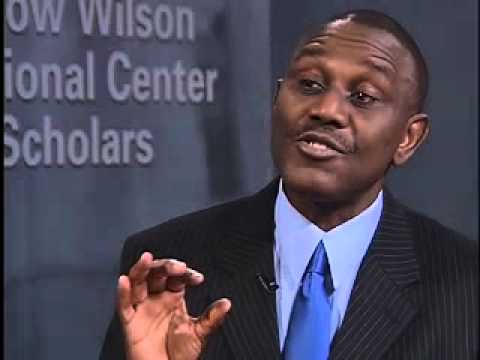
FWD: Teresa R Kemp, African American historian, traces her origin to Oka, Biafra

(Teresa Kemp)
By Biafra Diboh (slightly edited from the original)

Teresa R Kemp, one of African Americans involved in the free medical care trip to the Anambra region, northwest Biafra, has traced the ancestral home of her father to Oka, Biafra.
Kemp, a military historian, who has in the past organised an Igbo arts and cultural festival in South Carolina, United States, said that her great grandfather, named Osinachi, was enslaved and trafficked over 187 years ago as a metalsmith from Oka to the United States, as confirmed by DNA.
With an interest in the works of African peoples, Kemp told The Nation that she had written a book, Keeper of the Fire (CreateSpace Independent Publishing Plaatform, 2014),  of an Igbo metalsmith from Awka, detailing the story of her ancestor. She describes Igbo people as hardworking, intelligent, unassuming, and entrepreneurial in nature: “I am proud to be linked to Ndiigbo, the world has prospered because of Ndiigbo”.
Kemp went to Anambra with an organisation called ASA-World (which has membership in 27 countries), made up of the region’s indigenes resident overseas whose mission is to provide free medical care for the people, costing US$ 800,000.
The team brought diagnostic equipment and medicine to be left behind for resident doctors and other health officials to continue using in Oko, in Orumba north local government, Abagana, Njikoka local government, Obosi, Idemili north local government, Ihembosi and Ozubulu, both Ekwusigo local government, and Oba, Idemili south local government district.
The medical mission treated and provided medicine to people suffering from different ailments. Total treated are: 1,100 in Oko, 8,500 in Abagana, 1,200 in Ihembosi, 1,300 in Obosi, and 1,200 in Ozubulu.
(Sonny Rollins Quintet, “Decision” [personnel: Rollins, tenor saxophone, Donald Byrd, trumpet; Wynton Kelly, piano; Gene Ramey, bass; Max Roach, drums; recorded: Van Gelder Studio, Hackensack, NJ, US, 16 December 1956])
Twitter@HerbertEkweEkwe 


Wednesday, 7 October 2015

Igbo genocide: Asaba, 7 October 1967

Today, Wednesday 7 October 2015, is the 48th anniversary of the mass execution of 700 Igbo male, boys and men, in Asaba (twin Oshimili River port of Biafra) by genocidist Nigeria military brigade commanded by Murtala Muhammed and Ibrahim Haruna and Ibrahim Taiwo. This was during phase-III of the Igbo genocide which Nigeria launched on 6 July 1967. 

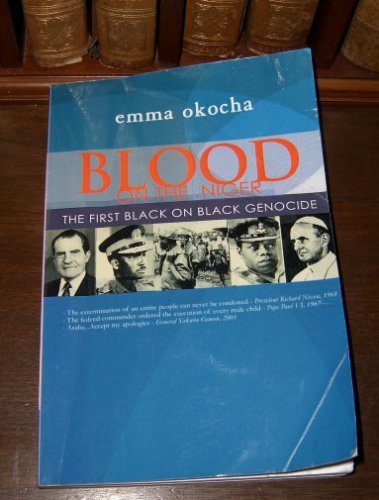
Emma Okocha’s Blood on the Niger (TriAtlantic Books, 2006), a compulsory reference in the study of the Igbo genocide, meticulously catalogues the savagery and aftermath of this massacre. Okocha, who lost most of his family during the slaughter, survived the execution as a 4-year-old.
(Emma Okocha: onye amuma ndi Igbo)

Hundreds of other Igbo boys and men were also slaughtered by the Muhammed-Haruna-Taiwo brigade in several other towns and villages in this Anioma region of Biafra, west of the Oshimili, as  Okafor Udoka has shown (Okafor Udoka, “Lest we forget the genocide of Asaba”, Skytrend News, 6 October 2014). Ifeanyi Uriah, now 61, another survivor of the Asaba execution, recalls, in an interview with Udoka, the haunting memory of 7 October 1967:
I cannot tell this story without tears in my eyes … They [genocidist brigade] ordered everyone to come out to the [Asaba] town square … They were honest with us. They told us they were going to kill us. They took us to the mounted machine guns. Then it dawned on us that it was true. I was standing with my older brother at the edge of the crowd. He was holding my hand. He had always taken care of me. We shared the same bed. He was the first to be dragged away by the soldiers. He let go of my hand and pushed me into the crowd. He was shot in the back. I could see the blood gushing from his back. He was the first victim of the massacre. Then all hell let loose. I lost count of time. To this day, I live with the smell of the blood of my brethren that night. Even the heavens wept for the victims of this holocaust. Finally the bullets stopped (Udoka: 2014).
Nigeria murdered 3.1 million Igbo people or one-quarter of this nation’s population during the three phases of the genocide – 29 May 1966-12 January 1970. This genocide, the foundational genocide of post-(European)conquest Africa, inaugurated Africa’s current age of pestilence. 

The world could have stopped this genocide; the world should have stopped this genocide. To understand the politics of the Igbo genocide and the politics of the “post”-Igbo genocide is to have an invaluable insight into the salient features and constitutive indices of politics across Africa in the past 50 years.
(Andrew Hill Sextet, “Dedication” [personnel: Hill, piano; Kenny Dorham, trumpet; Eric Dolphy, bass clarinet; Joe Henderson, tenor saxophone; Richard Davis, bass; Tony Williams, drums; recorded: Van Gelder Studios, Englewoods Cliff, NJ, US, 21 March 1964])
Twitter @HerbertEkweEkwe

Saturday, 22 August 2015

FWD: Teresa R Kemp, African American historian, traces her origin to Oka, Igboland


BY Biafra Diboh (slightly edited from the original)
(Teresa Kemp)
Teresa R Kemp, one of African Americans involved in the free medical care trip to the Anambra region, northwest Igboland, has traced the ancestral home of her father to Oka, Igboland.
Kemp, a military historian, who recently organised an Igbo arts and cultural festival in South Carolina, United States, said that her great grandfather, named Osinachi, was enslaved and trafficked over 187 years ago as a metalsmith from Oka to the United States, as confirmed by DNA.
With an interest in the works of African peoples, Kemp told The Nation that she had written a book, Keeper of the Fire, of an Igbo metalsmith from Awka, detailing the story of her ancestor. She describes Igbo people as hardworking, intelligent, unassuming, and entrepreneurial in nature: “I am proud to be linked to Ndiigbo, the world has prospered because of Ndiigbo”.
Kemp went to Anambra with an organisation called ASA-World (which has membership in 27 countries), made up of the region’s indigenes resident overseas whose mission is to provide free medical care for the people, costing US$ 800,000.
The team brought diagnostic equipment and medicine to be left behind for resident doctors and other health officials to continue using in Oko, in Orumba north local government, Abagana, Njikoka local government, Obosi, Idemili north local government, Ihembosi and Ozubulu, both Ekwusigo local government, and Oba, Idemili south local government district.
The medical mission treated and provided medicine to people suffering from different ailments. Total treated are: 1,100 in Oko, 8,500 in Abagana, 1,200 in Ihembosi, 1,300 in Obosi, and 1,200 in Ozubulu.

Twitter@HerbertEkweEkwe


Tuesday, 7 July 2015

FWD: “Nigeria federal college cut-off marks released – 2014”*****

The Federal Ministry of Education has released the cut-off marks on State-by-State basis of the just concluded National Common Entrance Examination for admission processes into Federal Unity Colleges nationwide.
(Wayne Shorter Septet, “The all seeing eye”  [personnel: Shorter, tenor saxophone; Freddie Hubbard, trumpet; Grachan Moncur III, trombone, James Spaulding, alto saxophone; Herbie Hancock, piano; Ron Carter, bass; Joe Chambers, drums; recorded: Van Gelder Studio, Englewood CliffNJ,US, 15 October 1965)
Pupils that scored above the cut-off marks based on their state of origin are eligible for admission on merit.

Abia – Male (130) Female (130)

Adamawa – Male (62) Female (62)

Akwa-Ibom – Male (123) Female (123)

Anambra – Male (139) Female (139)

Bauchi – Male (35) Female (35)

Bayelsa – Male (72) Female (72)

Benue – Male (111) Female (111)

Borno – Male (45) Female (45)

Cross-Rivers – Male (97) Female (97)

Delta – Male (131) Female (131)

Ebonyi – Male (112) Female (112)

Edo – Male (127) Female (127)

Ekiti – Male (119) Female (119)

Enugu – Male (134) Female (134)

Gombe – Male (58) Female (58)

Imo – Male (138) Female (138)

Jigawa – Male (44) Female (44)

Kaduna – Male (91) Female (91)

Kano – Male (67) Female (67)

Kastina – Male (60) Female (60)

Kebbi – Male (9) Female (20)

Kogi – Male (119) Female (119)

Kwara – Male (123) Female (123)

Lagos – Male (133) Female (133)

Nassarawa – Male (58) Female (58)

Niger – Male (93) Female (93)

Ogun – Male (131) Female (131)

Ondo – Male (126) Female (126)

Osun – Male (127) Female (127)

Oyo – Male (127) Female (127)

Plateau – Male (97) Female (97)

Rivers – Male (118) Female (118)

Sokoto – Male (9) Female (13)

Taraba – Male (3) Female (11)

Yobe – Male (2) Female (27)

Zamfara – Male (4) Female (2)

FCT Abuja – Male (90) Female (90).

(*****Scholars and researchers can’t but scrupulously note the higher mark expectation trends that uniformly affect the performances of all students, female and male, from the seven regions of occupied Igboland [Abia, Anambra, Ebonyi, Enuugwu, Delta, Imo, Rivers] than their counterparts in Nigeria and will appropriately draw their own considered conclusion/s – Herbert Ekwe-Ekwe)

Twitter@HerbertEkweEkwe


Sunday, 23 November 2014

85th anniversary of Ogu umu nwanyi Igbo or Igbo Women’s War


(Resistance begins 23 November 1929, Aba, Igboland)

With the initial mobilisation of 10,000 women which soon expands to 25,000 and joined by women from the neighbouring Ibibio country, Igbo women in Aba (east Igboland) embark on a 2-month historic resistance against the oppressively expansive stretch of 50 years of the British conquest, paralysing the occupation regime and its institutions in much of the east, central and southern regions of Igboland consequently and losing 50 members of the freedom movement during the campaign, shot by the occupation police

Twitter @HerbertEkweEkwe


Tuesday, 7 October 2014

Igbo genocide: Asaba, 7 October 1967

Today, Tuesday 7 October 2014 is the 47th anniversary of the mass execution of 700 Igbo male, boys and men, in Asaba (twin Oshimili River port) by genocidist Nigeria military brigade commanded by Murtala Muhammed and Ibrahim Haruna and Ibrahim Taiwo. This was during phase-II of the Igbo genocide which Nigeria launched on 6 July 1967. Emma Okocha’s Blood on the Niger (TriAtlantic Books, 2006), a compulsory reference in the study of the Igbo genocide, meticulously catalogues the savagery and aftermath of this massacre. Okocha, who lost most of his family during the slaughter, survived the execution as a 4 year-old.

Hundreds of other Igbo boys and men were also slaughtered by the Muhammed-Haruna-Taiwo brigade in several other towns and villages in this Anioma region of Igboland, west of the Oshimili, as  Okafor Udoka writes recently (Okafor Udoka, “Lest we forget the genocide of Asaba”, Skytrend News, 6 October 2014). Ifeanyi Uriah, now 60, another survivor of the Asaba execution, recalls, in an interview with Udoka, the haunting memory of 7 October 1967:
I cannot tell this story without tears in my eyes … They [genocidist brigade] ordered everyone to come out to the [Asaba] town square … They were honest with us. They told us they were going to kill us. They took us to the mounted machine guns. Then it dawned on us that it was true. I was standing with my older brother at the edge of the crowd. He was holding my hand. He had always taken care of me. We shared the same bed. He was the first to be dragged away by the soldiers. He let go of my hand and pushed me into the crowd. He was shot in the back. I could see the blood gushing from his back. He was the first victim of the massacre. Then all hell let loose. I lost count of time. To this day, I live with the smell of the blood of my brethren that night. Even the heavens wept for the victims of this holocaust. Finally the bullets stopped (Udoka: 2014).
Nigeria murdered 3.1 million Igbo people or one-quarter of this nation’s population during the three phases of the genocide – 29 May 1966-12 January 1970.

Twitter @HerbertEkweEkwe

Monday, 7 July 2014

FWD: “Nigeria federal college cut-off marks released – 2014”

The Federal Ministry of Education has released the cut-off marks on State-by-State basis of the just concluded National Common Entrance Examination for admission processes into Federal Unity Colleges nationwide.
Wayne Shorter Septet, “The all seeing eye” – personnel: Shorter, tenor saxophone; Freddie Hubbard, trumpet; Grachan Moncur III, trombone, James Spaulding, alto saxophone; Herbie Hancock, piano; Ron Carter, bass; Joe Chambers, drums [recorded: Van Gelder Studio, Englewood Cliff, NJ, US, 15 October 1965)

Pupils that scored above the cut-off marks based on their state of origin are eligible for admission on merit.

Abia – Male (130) Female (130)

Adamawa – Male (62) Female (62)

Akwa-Ibom – Male (123) Female (123)

Anambra – Male (139) Female (139)

Bauchi – Male (35) Female (35)

Bayelsa – Male (72) Female (72)

Benue – Male (111) Female (111)

Borno – Male (45) Female (45)

Cross-Rivers – Male (97) Female (97)

Delta – Male (131) Female (131)

Ebonyi – Male (112) Female (112)

Edo – Male (127) Female (127)

Ekiti – Male (119) Female (119)

Enugu – Male (134) Female (134)

Gombe – Male (58) Female (58)

Imo – Male (138) Female (138)

Jigawa – Male (44) Female (44)

Kaduna – Male (91) Female (91)

Kano – Male (67) Female (67)

Kastina – Male (60) Female (60)

Kebbi – Male (9) Female (20)

Kogi – Male (119) Female (119)

Kwara – Male (123) Female (123)

Lagos – Male (133) Female (133)

Nassarawa – Male (58) Female (58)

Niger – Male (93) Female (93)

Ogun – Male (131) Female (131)

Ondo – Male (126) Female (126)

Osun – Male (127) Female (127)

Oyo – Male (127) Female (127)

Plateau – Male (97) Female (97)

Rivers – Male (118) Female (118)

Sokoto – Male (9) Female (13)

Taraba – Male (3) Female (11)

Yobe – Male (2) Female (27)

Zamfara – Male (4) Female (2)

FCT Abuja – Male (90) Female (90)

(*****Scholars and researchers can’t but scrupulously note the higher mark expectation trends that uniformly affect the performances of all students, female and male, from the seven regions of occupied Igboland [Abia, Anambra, Ebonyi, Enuugwu, Delta, Imo, Rivers] than their counterparts in Nigeria and will appropriately draw their own considered conclusion/s – Herbert Ekwe-Ekwe)

Twitter@HerbertEkweEkwe

Saturday, 23 November 2013

84th anniversary of Ogu umu nwanyi Igbo or Igbo Women’s War


(Resistance begins 23 November 1929, Aba, Igboland)

With the initial mobilisation of 10,000 women which soon expands to 25,000 and joined by women from the neighbouring Ibibio country, Igbo women in Aba (east Igboland) embark on a 2-month historic resistance against the oppressively expansive stretch of 50 years of the British conquest, paralysing the occupation regime and its institutions in much of the east, central and southern regions of Igboland consequently and losing 50 members of the freedom movement during the campaign, shot by the occupation police

Twitter @HerbertEkweEkwe


Thursday, 15 March 2012

Reminiscences on this restoration

There is presently a visionary and purposeful spirit felt by the Igbo as well as across Igboland. This development is immensely uplifting. Having duly received the baton recently from their General, the Igbo appear poised to complete the race begun on 29 May 1966 – the reinforcement of their inalienable right to freedom. Surely, the sun is on its ascent. These are indeed extraordinary times the likes of which have not been seen since the 12 January 1970 “end” of the Igbo genocide. During the previous harrowing 44 months (29 May 1966-12 January 1970), the Nigeria state murdered 3.1 million Igbo people, or one-quarter of this nation’s population, in this foundational and most gruesome genocide of post-(European)conquest Africa.

20 YEARS BEFORE…

As this race to restoration dawns, the Igbo should, as a matter of urgency, retrieve from the archives the plan for the reconstruction and transformation of the then east Nigeria drawn up in the 1950s by Mbonu Ojike, the cerebral Chicago University scholar and African-centred economist, who was the minister of the region’s economic development and planning. The Ojike Plan had envisaged a 20-year timeframe, beginning in 1954, during which the east would be transformed into an advanced multifaceted industrial and agricultural economy. The main thrust of this plan is still valid and should be reworked and adapted to 21st century priorities and the advantage of new technologies. Such was the impressive pace of this programme that, by 1964, ten years later, the overall economic performance of the east had not only outstripped the rest of Nigeria but was in fact Africa’s fastest growing economy. The east had the best schools and the first independent university system in the country, the best humanpower development in the country across a range of fields including, crucially, engineering, medicine, the arts, and the middle-range technical cadre. The region also had the most integrated infrastructural development in Nigeria and its manufacturing, distributive and extractive enterprises centred in the Enuugwu-Nkalagu-Emene conurbation to the north, Onicha to the west and Igwe Ocha/Port Harcourt-Aba-Calabar to the south were clearly the hubs of the making of this African industrial revolution of recent history. But for the Igbo genocide, the east was on course to construct the “Taiwan” or the “China” or the “South Korea” or the “India” in Africa – 20 years before these post-World War II much-vaunted “economic transformational miracles” of the era emerged!

COMPLEMENTARITY

The Igbo should now resume this journey in earnest. Right from the outset, Igbo women, who, in the past (i.e. prior to the British conquest and occupation), controlled and exercised extensive rights and authority over their own affairs as well as those of the rest of society, must be repositioned at the epicentre of the shared dual-gender complementary spaces of responsibility, power and authority in this historic transformation of Biafra. The Igbo have one of Africa’s best-developed, multidisciplinary humanpower contingents to work this transformation. Given their well-known hardworking ethic and entrepreneurial drive, the Igbo should be able to achieve an annual 10 per cent growth rate in their economy to effectuate this transformation without difficulty. They should immediately set up a trust fund foundation to finance the enterprise in the next decade. The foundation should have a core membership of distinguished Igbo men and women of which the Igbo have unlimited number. An appeal should be sent out at once, calling on every adult Igbo man and woman at home and in the diaspora in Nigeria and elsewhere in the world to make an annual voluntary contribution of US$100 dollars to the fund with allowances made of course for those who wish to contribute more than this stipulated figure or indeed less. The foundation should set up actualising working/implementation committees made up of experts in their fields to focus on various sectors of the Biafran economy: power generation, town-city/urban revival/development, industrial manufacturing, agriculture, information technology, communication/infrastructure, healthcare, education, culture/history/heritage, recreation/leisure, rural embodiment, environment/regeneration – particularly focusing on the heightened erosion and landslide occurrence in the northwest region.

Hubs of industrial and agricultural activities are already in place in their designated sites of operation in Igboland and these would form the foci of this transformation: the Onicha-Nnewi-Oka-Ihiala industrial conurbation for machine tools and heavy industry; the Enuugwu-Emene-Nsukka information technology valley; the Aba-Umuahia-Abiriba-Igwe Ocha precision equipment/light industry; the Uburu-Okposi-Egbema sodium carbonate deposits/other minerals for potential pharmaceutical and food-processing manufacturing; reactivation of Enuugwu-Udi coal fields for unlimited power generation to work this manufacturing enterprise and provide affordable lighting and other energy requirements for domestic and industrial requirements in addition to exports to countries across west Africa and elsewhere; work on renewable energy resources such as solar, wind, refuse – it is indeed incumbent on Biafran engineers to exponentially increase the country’s access to these renewables in this first vital phase of redevelopment; enhanced agricultural activities in the central and east Asu/Ebonyi valleys/Abakaleke corridor and the Onicha/upper Anambra farming belt...

SKILLS AND TALENTS

The involvement of Igbo expertise, especially that currently based abroad in north America, Europe, Asia and elsewhere in the world is of utmost importance in this transformation project. The utilisation of this asset will understandably be managed with obvious flexibility in the drive and implementation of the enterprise. This will involve opportunities for visiting/adjunct professorships with appropriate colleges/schools/hospitals/laboratories/industrial facilities in Igboland to work in, summertime slots, and sabbatical emplacements.

Restructuring the communication/infrastructure base of Biafra would appear to be the trigger to impact tremendously on other sectors of the economy. Igbo road, rail, waterway and air networks should now be rehabilitated and expanded radically. The entire length and breadth of Igboland from Igwe Nga/Opobo, Azumini, Umuebelengwu, Umu Ubani/Bonny, Ahoada, Igwe Ocha in the Oshimili/Niger Delta (acknowledgement to Mazi Odera for his clarification of the Igbo name of the river called the Niger) to Nsukka, Asaba, Onicha, Aboh, Ogwashi-Ukwu and Agbo in the hinterland should be comprehensively networked by these services. There should, for instance, be daily express rail services linking Igwe Nga, Azumini and Igwe Ocha in the south to Nsukka and Eha Amuufu in the north, via Aba and Enuugwu, and from Umu Ubani and Ahoada in the Oshimili Delta to Orlu, Okigwe, Ugwuta, Onicha, Asaba and Agbo in the west/northwest. Other trains should be crisscrossing on the east-west routes originating from Abakaleke and Ehuugbo to Enuugwu, Oka, Onicha, Asaba and Agbo and vice versa. This transformation should envisage dredging the Oshimili south of Onicha to the Atlantic coast and the construction of an international ocean-bound port facility at Onicha and a dry dock at Aba.

Another road and rail bridge should link the twin cities of Asaba and Onicha and a tunnel service under the Oshimili to carry these dual modes of transport should also be constructed. Both bridge and tunnel should be appropriately named Chukwuemeka Odumegwu-Ojukwu. Asaba and Onicha should also have a modern hovercraft service in operation. Commuter bus, coach, tram and rail services in Igbo cities and towns should quickly replace the ill-suited and unsafe okada or motorcycle provisions of the present. The Igbo, a much travelled people worldwide, must now establish direct flight access entry to Igboland from the outside world that is not dependent on Nigeria via Lagos, Abuja and Kano or any of its other “entry points”. The Enuugwu and Owere airports should be transformed immediately to the status of international airports to ensure the uninterrupted movement of people, goods and services overseas flying directly into Biafra and vice versa. Direct flight routes from Igboland to Equatorial Guinea, Gabon, São Tomé and Principe, South Africa, the United States, Canada, Britain, France and Germany should be in operation here as of utmost priority in this first phase of the implementation, given the high number of Igbo people who live and work in the cited countries. Igbo émigrés in these countries should negotiate with their hosts for the latter to establish or augment existing consular/diplomatic presence in Igboland to ease travel plans and processing especially for those starting their journeys from Igboland. Asaba, Onicha, Enuugwu, Oka, Owere, Umuahia, Igwe Nga, Aba, Abakaleke, Ugwuta and Igwe Ocha should enjoy these upgraded facilities. International airports should also be built at Onicha and Ugwuta to cater for the movement of people, goods and services in the west, and at Nsukka and Abakaleke to respond to demands in the north and east of the country respectively.

The restructuring of city and local governments in Biafra is vital in this transformation project. Igbo cities and towns should enjoy extensive autonomous status in order to transform themselves into advanced modern spaces for living, working, recreating, and the growth and development of culture. Each Biafran city and town should have a municipal authority to raise its own taxes, power its own development including the establishment of educational institutions at all levels, transport systems, including buses, trams and rail services (underground and overground) and city airport facility, cultural institutions (including homes for orchestras and bands of varying musical genres and traditions) and recreational facilities such as parks, theatres, museums, galleries, concert halls, stadiums and the like.

Every Igbo child must have access to a computer and every school in Igboland linked to the internet. Equally crucial, technical colleges should be set up in Igbo cities and towns to develop and expand on that sphere of humanpower resource upon which the advancement of society is largely predicated – growth of plumbers, electricians, draftspeople, carpenters, builders, etc., etc. Cities and towns including Aba, Nnewi, Agbo, Nsukka, Eha Amuufu, Abakaleke, Ohafia, Mbano, Item, Umuahia, Onicha-Ugbo, Owere, Ogwashi-Ukwu, Aboh, Ozubulu, Agbaani, Akaeze, Abaa, Okigwe, Enuugwu, Asaba, Ogidi, Igwe Ocha, Isele-Ukwu, Igwe Nga, Onicha, Mbaise, Okpana, Oshiri, Ahoada, Ogwu, Ehuugbo, Ehuugbo Road, Uburu, Aguleri, Nnobi, Umu Ubani, Ahiara, Abiriba, should be sites for these colleges. These urban centres could also have their own city universities to cope with the continuously high demands from Igbo youths and others who have, since 1970, consistently maintained top position for the highest number of students seeking university places in Nigeria. The existing universities in Igboland need to expand even further to respond to these needs. The trust fund will no doubt be looking into ways to increase funding to these institutions after 42 years of programmed neglect and degradation by the occupation regime.

The 50 million Igbo should now set to work as determinably as ever. The prospects are incredibly exciting. This resultant transformation of Biafra within a generation will at once be a time-honoured memorial to the 3.1 million and the triumph of the nonnegotiable right to freedom.

Thursday, 23 December 2010

17 days: South Sudan – and Africa’s date with history

Aimé Césaire once told an interviewer during one of those illuminating discourses of his on history: “History is always dangerous, the world of history is a risky world; but it is up to us at any given moment to establish and readjust the hierarchy of dangers”. It is indeed in the very course to disrupt – and “readjust” this hierarchy of an age in favour of the African people of south Sudan that this nation heads for an historic referendum just 17 days away, poised to vote for the restoration of their independence from Arab/muslim rule and hegemony.

There is an added verve of audaciousness in the south Sudan choice of or agreement to a January date, the 9th (2011), to make their decision. On another January date, this time the 1st, in 1956, the supposedly departing British occupation regime imposed the minority Arab/muslim population on the south in a bogus independence contraption aimed at perpetuating its vast economic and strategic interests in northcentral Africa. The south’s response was to launch a stretch of resistance which has transformed that monstrosity to a case of referendum and breath of freedom. This time around, south Sudan has indeed wrestled down January and tamed its clime of adversity!

Ten years after 1956, 29 May 1966, the Igbo nation of southwestcentral Africa, some 1800 miles away from the Sudan, spectacularly disrupted the presumed teleological insistence of the burgeoning genocide state in Nigeria, the first in Africa in 60 years. The Igbo had played the vanguard role in the liberation of Nigeria from the British conquest and occupation. As Nigeria embarked on its genocidal campaign to destroy the Igbo, which resulted in the murder of 3.1 million of the people or a quarter of the population within 44 months, the Igbo responded by declaring their independence, the state of Biafra, from yet another outlandish British contraption. Nigeria, to all intents and purposes, collapsed in the wake of the Igbo genocide. We mustn’t forget to recall that the final edifice of the Nigeria contrivance, namely the British positioning of the minority Hausa-Fulani muslim/north region on the apex of its “hierarchy of dangers”, was instructively fitted by the same occupation governor James Robertson who had, on 1 January 1956, officiated the Sudan farce that is on the eve of unravelling. Contrariously, Biafra is the first African people’s-centred state created on African soil since the 1885 formal loss of all-African sovereignty.

The bridging of 29 May 1966 and 9 January 2011, the two most important dates on the African calendar since 1885, will henceforth chart and transform the continent’s political landscape in this evolving epoch of the post-Berlin state of Africa. After 9 January 2011, the bridge becomes a panhandle unto which the new successor states will embark on the construction of an unprecedented polycentric connectivity of relations on the African scene.

Fifty-five years after 1956, the wheel has undoubtedly turned full circle in Africa. Africans are back to the beginnings but this time clearly on their own terms. The constituent African nation – so long maligned, so long impoverished, so long brutalised, so long humiliated, so long massacred, is recognised, at last, as the principal actor and agency of its being. This nation can now decide what precepts, what aspirations, what trajectory, what goals, it has set its new state to embark upon…* Whoever says that history isn’t so incorrigibly fascinating?! As Césaire deftly puts it in the interview already referred to, the challenges of the times become the “quest to reconquer something, our name (sic), our country … ourselves”.

So, which new states will emerge after south Sudan? The overwhelming majority of 50 million Igbo surely wish that theirs is next, following the link with south Sudan. But the Igbo know, particularly from their own experience, that history does not cohere to some logic of sequencing. Given its volatility, a people consciously and actively constructs, humanises and maintains its own passage of history. Igbo base organisations – human rights, civil rights, peace, workers, women, youth, students, enterprise and intellectuals must now begin the process of planning and carrying out a referendum of all Igbo people in occupied Igboland and abroad (Nigeria and elsewhere in the world) to decide freely on the restoration of Biafra. Reports from east/central Africa already indicate that four new states could emerge from the Congo Democratic Republic and two new states from one or two of the Berlin-states of northeast Africa. In the west region, observers, no doubt, will keep developments in the following countries in their sights: Cameroon, Guinea, Côte d’Ivoire, Nigeria … Surely, as from the morrow of 9 January 2011, Africa is back!

*To underscore an important feature of this fast moving development in Africa, even if some might wish to categorise this particular example as “retrogressive”, Omar al-Bashir, the head of the Sudanese regime, made the following broadcast on Khartoum radio and television on 19 December 2010: “If south Sudan secedes, we’ll change the constitution. There will be no question of cultural or ethnic diversity. Sharia will be the only source of the constitution, and Arabic the only official language”. The people of the south would probably have responded, presumably quietly, in the confines of their homes: “This is your right, Mr al-Bashir! We have gone!”

Monday, 8 February 2010

Anambra way forward

The Igbo people of Anambra administrative region must be congratulated for charting the distinguishing pathway to progress. They had a largely peaceful election for the position of governor last Saturday – 6 February. No comparable peaceful poll has been recorded anywhere else in Igboland and Nigeria since 1999. No single individual, elector or candidate, was hurt throughout Anambra’s momentous day; no property, private or public, destroyed, and the electorate reelected the candidate of their choice, incumbent governor Peter Obi. The overwhelming majority of Obi’s fellow contestants have since accepted the result – yet another unprecedented development. All these have occurred despite the depressive sociopolitical realities of the occupation, despite the legendary corruption and incompetence of the Nigeria electoral commission, despite the occupation’s threats to rig in another executive impostor on the people.

The liberatory politics and restoration of sovereignty of the Igbo and by extension African peoples no doubt moved onto a new threshold on 6 February 2010. Surely, the human quest for advancement is unstoppable.