Showing posts with label memory erasure. Show all posts

Monday, 14 December 2015

When Nigerian genocidists waged war on the sun


Herbert Ekwe-Ekwe

Denial is the final stage that lasts throughout and always follows a genocide. It is among the surest indicators of further genocidal massacres. The perpetrators of genocide … try to cover up the evidence … They deny that they committed any crimes, and often blame what happened on the victims. They block investigations of the crimes, and continue to govern … with impunity … unless they are captured and a tribunal is established to try them. The response to denial is punishment by an international tribunal or national courts... (Gregory Stanton, president, Genocide Watch; professor in genocide studies and prevention, George Mason University, Virginia)
Abolish the sun!
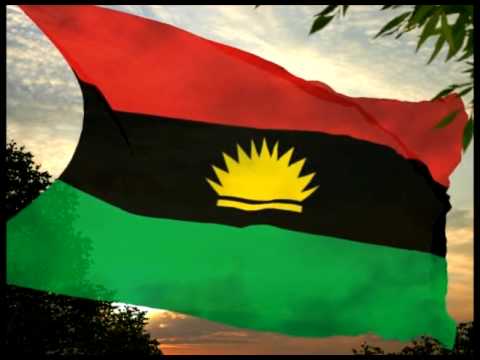
For a genocidist state, the pressing task after perpetrating its heinous crime couldn’t be more predictable: memory erasure of the crime scene at the targeted nation is pursued aggressively and unrelentingly. On the morrow of the conclusion of its execution of the third phase of the Igbo genocide in January 1970, Nigeria wheeled out pretentious cartographers to embark on erasing the illustrious name Biafra from all maps and records that it could lay its hand on! During its meetings, the genocidist junta in power banned the words “sun”, “sunlight”, “sunshine”, “sundown”, “sunflower”, “sunrise” or any other word-derivatives from the great sun star that unmistakably reference the inveterate Land of the Rising Sun. This task and symbolism of sun-banning and sun-bashing, some inter-stellar assault, were of course bizarre if not daft as the junta itself was to discover much sooner than later – and from a most unlikely source indeed… 

Poland

At the time, a British military advisor to the junta, who was out dining with a senior member of the cabal in Lagos, unwittingly compared Igbo national consciousness and tenacity, displayed brazenly during their defence against the genocide, with that of the Poles. The advisor, who had studied modern history at university and was a great admirer of the exceptional endurance of Polish people in history, stated that the Igbo had demonstrated similar courage in the latter’s defence of Biafra and that the “rebirth of Biafra is a distinct possibility in my lifetime” – this was unlike the 123 (one hundred and twenty-three) years it took the Polish state to re-appear in history after its disappearance from the world map! The advisor was then in his early 30s and the obvious implications of his Igbo-Polish analysis were not lost on his host. The junta member co-diner was understandably most outraged by the advisor’s crass insensitivity on the subject which he readily shared with his camarilla colleagues. Predictably, the immediate consequence of the hapless advisor’s impudence was an early recall home to Britain. 

Biafra

There were other bouts of farcical treats on display in Nigeria during the period aimed at erasing the memory of the Igbo genocide. Junta and other state publications and those of their sympathisers would print the name Biafra, a proper noun, a name on ancient world maps centuries before the British conqueror-regime in west Africa concocted “Nigeria” at the turn of the 19th century, with a lower case “b” or box the name in quotes or even invert the “b” to read “p” – such was the intensity of the schizophrenia that wracked the minds of the members of the cabal over the all-important subject of the historic imprint of Igbo resistance and survival. Finally, Nigeria abolished the teaching of history in its schools subsequently in the desperate hope that its Igbo genocide-denial stratagem was complete. 

3.1 million Igbo or a quarter of this nation’s population were murdered in the genocide between 29 May 1966 and 12 January 1970 by Nigeria and its allies, principally Britain. This is the foundational and most gruesome genocide of post-(European)conquest Africa. As the slaughter of the Igbo intensified, particularly in the catastrophic months of 1968-1969, British Prime Minister Harold Wilson unabashedly informed Clyde Ferguson of the United States state department that he, Harold Wilson, “would accept a half million dead Biafrans if that was what it took” Nigeria to destroy the Igbo resistance to the genocide (Roger Morris
Uncertain Greatness: Henry Kissinger and American Foreign Policy, 1977: 122).  As the final tally of the murder of the Igbo demonstrates, Harold Wilson probably had the perverted satisfaction of having his Nigerian subalterns perform far in excess of the prime minister’s grim target.
(Harold Wilson: “would accept a half million dead Biafrans if that was what it took...”)
Business-as-usual
Despite the catastrophic stretch of slaughter in 44 months, it was business-as-usual, or so it appeared, for the genocidists after the conclusion of phase-III of the murder on 12 January 1970. Lest we forget, the new phase was pursued with utmost vengeance, with the added highly prized fiscal and capital assets sequestrated by the genocidists – namely, the pillaging of the multibillion(US)dollar-Igbo economy at home and those located in Nigeria, particularly in the Lagos/greater Lagos industrial-commercial region. Many operatives who worked as advisors, at varying layers of the genocidist command and control infrastructure, went to, or returned to universities and colleges as professors and researchers, some became university administrators, bureaucrats, media editors and executives, company chief executives and directors, ministers of state, ministers of religion, businesspeople; many of the commanders and commandants became “generals” and “admirals” and “marshals”, and state legislators, administrators and the like; some even sought the highest office of state – head of regime (Obafemi Awolowo, variously, without success; Olusegun Obasanjo, three times successful; Muhammadu Buhari, twice successful; Murtala Muhammed, once successful; Ibrahim Babangida, once successful; Sanni Abacha, once successful; Abdulsalami Abubakar, once successful).
(O Obusonjo: ... from genocidist commanding in south Biafra to head of Nigeria regime for 11 years)
Awolowoist/Awolowoid
The Awolowoists and Awolowoids (supporters of Obafemi Awolowo – junta deputy chair, genocidist “theorist”, “starvation-weapon” strategist, head of finance ministry) on the junta even toyed with the idea of abolishing money altogether in the economy of the soon occupied-land of the resourceful and enterprising Igbo. They reasoned that this would deliver the “final solution” that had eluded them during the “encirclement, siege, pounding and withering away”-strategy of the previous 44 months… They ended up with the “compromise” pittance of £20.00 sterling (twenty pounds sterling only) per the surviving male-head of the Igbo family – a derisory sum, which, they reckoned, stood no chance of averting the catastrophe of social implosion they envisaged would occur in Igboland subsequently. We mustn’t fail to note that the £20.00-handout excluded the hundreds of thousands of Igbo families whose “male-heads” had been murdered during the genocide… Dreadfully, the accent placed by Nigeria on this phase-IV of the genocide, starting from 13 January 1970, was the economic strangulation of the 9 million Igbo survivors…
(Obafemi Awolowo: £20.00 sterling dole-of-vengeance per surviving Igbo family male-head...)
Survival
Igbo survival from the genocide is arguably the most extraordinary feature for celebration in an otherwise depressing and devastating age of pestilence in Africa of the past 49 years. Few people believed that the Igbo would survive their ordeal, especially from September 1968 when 8-10,000 Igbo, mostly children and older people, died each day as the overall brutish conditions imposed by the genocidist siege and bombardment deteriorated calamitously. 

The Igbo are probably the only people in the world who were convinced that they would survive. And when they did, the aftermath was electrifying. In spontaneous celebration, the Igbo prefaced their exchange of greetings with each other, for quite a while, with the exaltation, “Happy Survival”! 

Igbo survival, at the end, does represent the stunning triumph of the human spirit over the savage forces unleashed by Nigeria and its allies that had tried determinably, for four years, to destroy it.
(John Coltrane Quartet, “Sun ship” [personnel: Coltrane, tenor saxophone; McCoy Tyner, piano; Jimmy Garrison, bass; Elvin Jones, drums; recorded: Impulse!, New York, US, 26 August 1965])
(John Coltrane Duo, “Jupiter” [personnel: Coltrane, tenor saxophone, bells; Rashied Ali, drums; recorded: Van Gelder Studio, Englewood Cliff, NJ, US, 22 February 1967])
Twitter @HerbertEkweEkwe

Saturday, 17 October 2015

When genocidists waged war on the sun


Herbert Ekwe-Ekwe
Denial is the final stage that lasts throughout and always follows a genocide. It is among the surest indicators of further genocidal massacres. The perpetrators of genocide … try to cover up the evidence … They deny that they committed any crimes, and often blame what happened on the victims. They block investigations of the crimes, and continue to govern … with impunity … unless they are captured and a tribunal is established to try them. The response to denial is punishment by an international tribunal or national courts... (Gregory Stanton, president, Genocide Watch; professor in genocide studies and prevention, George Mason University, Virginia)

Abolish the sun!
For a genocidist state, the pressing task after perpetrating its heinous crime couldn’t be more predictable: memory erasure of the crime scene at the targeted nation is pursued aggressively and unrelentingly. On the morrow of the conclusion of its execution of the third phase of the Igbo genocide in January 1970, Nigeria wheeled out pretentious cartographers to embark on erasing the illustrious name Biafra from all maps and records that it could lay its hand on! During its meetings, the genocidist junta in power banned the words “sun”, “sunlight”, “sunshine”, “sundown”, “sunflower”, “sunrise” or any other word-derivatives from the great sun star that unmistakably reference the inveterate Land of the Rising Sun. This task and symbolism of sun-banning and sun-bashing, some inter-stellar assault, were of course bizarre if not daft as the junta itself was to discover much sooner than later – and from a most unlikely source indeed… 

Poland

At the time, a British military advisor to the junta, who was out dining with a senior member of the cabal in Lagos, unwittingly compared Igbo national consciousness and tenacity, displayed brazenly during their defence against the genocide, with that of the Poles. The advisor, who had studied modern history at university and was a great admirer of the exceptional endurance of Polish people in history, stated that the Igbo had demonstrated similar courage in the latter’s defence of Biafra and that the “rebirth of Biafra is a distinct possibility in my lifetime” – this was unlike the 123 (one hundred and twenty-three) years it took the Polish state to re-appear in history after its disappearance from the world map! The advisor was then in his early 30s and the obvious implications of his Igbo-Polish analysis were not lost on his host. The junta member co-diner was understandably most outraged by the advisor’s crass insensitivity on the subject which he readily shared with his camarilla colleagues. Predictably, the immediate consequence of the hapless advisor’s impudence was an early recall home to Britain. 

Biafra

There were other bouts of farcical treats on display in Nigeria during the period aimed at erasing the memory of the Igbo genocide. Junta and other state publications and those of their sympathisers would print the name Biafra, a proper noun, a name on ancient world maps centuries before the British conqueror-regime in west Africa concocted “Nigeria” at the turn of the 19th century, with a lower case “b” or box the name in quotes or even invert the “b” to read “p” – such was the intensity of the schizophrenia that wracked the minds of the members of the cabal over the all-important subject of the historic imprint of Igbo resistance and survival. Finally, Nigeria abolished the teaching of history in its schools subsequently in the desperate hope that its Igbo genocide-denial stratagem was complete. 

3.1 million Igbo or a quarter of this nation’s population were murdered in the genocide between 29 May 1966 and 12 January 1970 by Nigeria and its allies, principally Britain. This is the foundational and most gruesome genocide of post-(European)conquest Africa. As the slaughter of the Igbo intensified, particularly in the catastrophic months of 1968-1969, British Prime Minister Harold Wilson unabashedly informed Clyde Ferguson of the United States state department that he, Harold Wilson, “would accept a half million dead Biafrans if that was what it took” Nigeria to destroy the Igbo resistance to the genocide (Roger Morris
Uncertain Greatness: Henry Kissinger and American Foreign Policy, 1977: 122).  As the final tally of the murder of the Igbo demonstrates, Harold Wilson probably had the perverted satisfaction of having his Nigerian subalterns perform far in excess of the prime minister’s grim target.
(Harold Wilson)
Business-as-usual
Despite the catastrophic stretch of slaughter in 44 months, it was business-as-usual, or so it appeared, for the genocidists after the conclusion of phase-III of the murder on 12 January 1970. Lest we forget, the new phase was pursued with utmost vengeance, with the added highly prized fiscal and capital assets sequestrated by the genocidists – namely, the pillaging of the multibillion(US)dollar-Igbo economy at home and those located in Nigeria, particularly in the Lagos/greater Lagos industrial-commercial region. Many operatives who worked as advisors, at varying layers of the genocidist command and control infrastructure, went to, or returned to universities and colleges as professors and researchers, some became university administrators, bureaucrats, media editors and executives, company chief executives and directors, ministers of state, ministers of religion, businesspeople; many of the commanders and commandants became “generals” and “admirals” and “marshals”, and state legislators, administrators and the like; some even sought the highest office of state – head of regime (Obafemi Awolowo, variously, without success; Olusegun Obasanjo, three times successful; Muhammadu Buhari, twice successful; Murtala Muhammed, once successful; Ibrahim Babangida, once successful; Sanni Abacha, once successful; Abdulsalami Abubakar, once successful).

Awolowoist/Awolowoid

The Awolowoists and Awolowoids (supporters of Obafemi Awolowo – junta deputy chair, genocidist “theorist”, “starvation-weapon” strategist, head of finance ministry) on the junta even toyed with the idea of abolishing money altogether in the economy of the soon occupied-land of the resourceful and enterprising Igbo. They reasoned that this would deliver the “final solution” that had eluded them during the “encirclement, siege, pounding and withering away”-strategy of the previous 44 months… They ended up with the “compromise” pittance of £20.00 sterling (twenty pounds sterling only) per the surviving male-head of the Igbo family – a derisory sum, which, they reckoned, stood no chance of averting the catastrophe of social implosion they envisaged would occur in Igboland subsequently. We mustn’t fail to note that the £20.00-handout excluded the hundreds of thousands of Igbo families whose “male-heads” had been murdered during the genocide… Dreadfully, the accent placed by Nigeria on this phase-IV of the genocide, starting from 13 January 1970, was the economic strangulation of the 9 million Igbo survivors…
(Obafemi Awolowo)
Survival
Igbo survival from the genocide is arguably the most extraordinary feature for celebration in an otherwise depressing and devastating age of pestilence in Africa of the past 49 years. Few people believed that the Igbo would survive their ordeal, especially from September 1968 when 8-10,000 Igbo, mostly children and older people, died each day as the overall brutish conditions imposed by the genocidist siege and bombardment deteriorated calamitously. 

The Igbo are probably the only people in the world who were convinced that they would survive. And when they did, the aftermath was electrifying. In spontaneous celebration, the Igbo prefaced their exchange of greetings with each other, for quite a while, with the exaltation, “Happy Survival”! 

Igbo survival, at the end, does represent the stunning triumph of the human spirit over the savage forces unleashed by Nigeria and its allies that had tried determinably, for four years, to destroy it.
(John Coltrane Quartet, “Sun ship” [personnel: Coltrane, tenor saxophone; McCoy Tyner, piano; Jimmy Garrison, bass; Elvin Jones, drums; recorded: Impulse!, New York, US, 26 August 1965])
(John Coltrane Duo, “Jupiter” [personnel: Coltrane, tenor saxophone, bells; Rashied Ali, drums; recorded: Van Gelder Studio, Englewood Cliff, NJ, US, 22 February 1967])
Twitter @HerbertEkweEkwe

Saturday, 5 January 2013

2013 – time for reflections


In a seemingly paradoxical vein, 2013 begins on an optimistic note for Africa. Even though more states in Africa failed in 2012 than the previous year and yet more will fail or indeed collapse in this new year
(http://re-thinkingafrica.blogspot.co.uk/2012/07/africas-berlin-states-of-dysfunction.html),
it is to the next dual indices of crucial data on the continent that the immense possibilities of African restorative and reconstructionary quests are typecast – Africa remains, since 1981, a net-capital exporter to the Western World
(http://re-thinkingafrica.blogspot.co.uk/2010/05/salute-to-those-who-make-difference.html) and African émigrés in Europe, the Americas, Asia and elsewhere presently constitute the primary exporters of capital to Africa itself (Ibid.). In a sentence: The African humanity currently generates, overwhelmingly, the capital resource that at once sustains its very existence and is intriguingly exported to the Western World. It is precisely the same humanity that those who benefit immeasurably from this conundrum (over several decades and are guaranteed to benefit indefinitely from it, except this is stopped by Africans) have consistently portrayed, quite perversely, as a “charity case”. Surely, this historic big lie of characterisation can no longer be sustained. Africa is endowed with the human resource and capital resource (in all its calibration and manifestation) to build advanced civilisations provided Africans abandon the prevailing “Berlin-states” of dysfunction that they have been forced into by the West’s creators
(http://re-thinkingafrica.blogspot.co.uk/2012/06/african-population-food-and-future_22.html).

Just in case there are any constituent nations in Africa who still wish to be “boxed in” in these states, they are very welcome to their preferred choice but should be honourable and democratically disposed not to obstruct those who will embark on this inalienable right to flight of freedom. 2012 is a reminder, if we indeed needed one, that the blueprint for African transformation will neither be scripted nor actuated in a London, Paris, Brussels, Washington or New York, or even in a Beijing or Delhi as some fanciful commentaries have appeared to contend. The answer remains firmly lodged in Africa. So, the dynamic of Africa state failure, cited earlier, is nothing else but symptomatic of that defining truism of contemporary Africa: for the fundamental interests of African peoples, the post-(European)conquest state is not fit for purpose
(http://www.tensoesmundiais.net/index.php/tm/article/view/249/307).  

Breakthrough!
2013 will particularly be a year of intense reflections across Africa on the continent’s genocidal regimes. This year marks the 47th anniversary of the beginning of the Igbo genocide, during which the Nigeria state slaughtered 3.1 million Igbo children, women and men – a quarter of the total Igbo population at the time – between 29 May 1966-12 January1970. This is the foundational genocide of post-(European)conquest Africa. Africans elsewhere remained largely silent on the gruesome events in Nigeria but did not foresee the grave consequences of such indifference as subsequent genocides in Rwanda, Darfur, Nuba Mountains, South Kordofan (all three in the Sudan) and Zaïre/Democratic Republic of the Congo, and in other wars in every geographical region of Africa during the period have demonstrated catastrophically.  Just as the Nigerian operatives of mass murder appeared to have got away without censure from the rest of Africa, other genocidal and brutal African regimes soon followed in Nigeria’s footpath, murdering those additional 12 million people in their countries considered “undesirables” or “opponents”. These 12 million murdered in the latter bloodbaths would probably have been saved if Africans had intervened robustly to stop the initial genocide against the Igbo people.
Chinua Achebe’s memoirs on the Igbo genocide, There was a Country, is the most important book published in 2012 on and for Africa. It is a priceless gift to a much-beleaguered people, a compulsory reference to our understanding of Africa of the last 47 years – this turbulent age of pestilence. Just a few months before his 28th birthday, in 1958, Achebe writes Things Fall Apart, the classic restorative narrative of African affirmation which subverts the European conqueror’s frantic efforts to construct a historiography of African-memory erasure in the wake of a devastating conquest. Fifty-four years later, just a couple of months before his 82nd birthday, in 2012, the literary interventionist genius publishes There was a Country, an indefatigable reminder to an oft-complacent world of the Igbo genocide and the incredible survival of Igbo people. 

Forty-seven years and 15 million murders on, Africans finally realise that there cannot be any meaningful advancement without abandoning the post-conquest state, essentially a genocide-state. This state is the bane of African existence and progress. Africans on the ground are working tirelessly to build extensively decentralised new states that ensure full democratic aspiration, participation and representation for constituent nations and the individual. It is in the longer-term interest of the rest of the world, especially in the West, to support African transformations initiated by its peoples rather than the “helmspersons”/“helmsconstituent nations” ostensibly entrenched in the hierarchical architecture that maps the typical continent’s genocide-state.


Monday, 8 October 2012

Lest we forget – Salient features of the Igbo genocide


The major preoccupation of an aggressor/conqueror state is to seek to effectuate a process of memory erasure over its overrun nation and land. This is the opportunity for the conqueror to begin to construct a bogus narrative of possession and control of the targeted society that arrogates it to the fictive role of primary agent of the course of history.

The enduring success of Chinua Achebe’s Things fall Apart
is that the classic not only anticipates this conqueror’s predilection but it subverts the triumphalism of the latter’s Pyrrhic victory. Despite the District Commissioner’s bombastically-captioned anthropological treatise at the end of the novel, heralding the latest European “possession and control” of another region of Africa, this time Igboland, the future direction of history here neither lies with the administrator nor his evolving occupation regime – nor indeed with his conquering capital back home in Europe! 
To locate the source for change and transformation in Igboland, subsequently, we need to examine, carefully, the import and circumstance of historian Obierika’s address to the administrator on the life and times of his friend and people’s hero, Okonkwo, who had recently committed suicide. We are reminded that as he speaks, two full sentences into a third, Obierika’s voice “trembled and choked his words”, trailing off into gasps and silences of deep contemplation. It is precisely within the context of these kaleidoscopic frames of Obierika’s recalls and introspection that we discern the sowing of the Igbo nation’s regenerative seeds of resistance and quest for the restoration of lost sovereignty. It is therefore not surprising that Okonkwo’s grandchildren would spearhead the freeing of Nigeria, to which Igboland had since been arbitrarily incorporated by the conquest, from the British occupation – beginning in the 1930s, just 30 years after the so-called formal inauguration of the conquest.

(George Russell Sextet, “Ezzthetic” [Russell, piano; Don Ellis, trumpet; Dave Baker, trombone; Eric Dolphy, alto saxophone; Steve Swallow, bass; Joe Hunt, drums; recorded: Riverside Records, New York, 8 May 1961])
Abolish the sun now!

For the aggressor state with a clear genocidal goal, memory erasure of the crime scene at the targeted nation is even more frantically pursued. On the morrow of the conclusion of its execution of the third phase of the Igbo genocide in January 1970, Nigeria wheeled out pretentious cartographers to embark on erasing the illustrious name Biafra from all maps and records that it could lay its hand on! During its meetings, the genocidist junta in power banned the words “sun”, “sunlight”, “sunshine”, “sundown”, “sunflower”, “sunrise” or any other word-derivatives from the great sun star that unmistakably reference the inveterate Land of the Rising Sun. This task and symbolism of sun-banning and sun-bashing were of course bizarre if not daft as the junta itself was to discover much sooner than later – and from a most unlikely source indeed… 

At the time, a British military advisor to the junta, who was out dining with a senior member of the council in Lagos, unwittingly compared Igbo national consciousness and tenacity with that of the Poles. The advisor, who had studied modern history at university and was a great admirer of the exceptional endurance of Polish people in history, stated that the Igbo had demonstrated similar courage in the latter’s defence of Biafra and that the “rebirth of Biafra is a distinct possibility in my lifetime” – this was unlike the 123 (one hundred and twenty-three) years it took the Polish state to re-appear in history after its disappearance from the world map! The advisor was then in his early 30s and the obvious implications of his Igbo-Polish analysis were not lost on his host. The junta member co-diner was understandably most outraged by the advisor’s crass insensitivity on the subject which he readily shared with his junta colleagues. Predictably, the immediate consequence of the hapless advisor’s impudence was an early recall home to Britain. 

There were other bouts of farcical treats on display in Nigeria during the period aimed at erasing the memory of the Igbo genocide. Junta and other state publications and those of their sympathisers would print the name Biafra, a proper noun, with a lower case “b” or box the name in quotes or even invert the “b” to read “p”, such was the intensity of the schizophrenia that wracked the minds of the members of the council over the all important subject of the historic imprint of Igbo resistance and survival. 

3.1 million Igbo or a quarter of this nation’s population were murdered in the genocide between 29 May 1966 and 12 January 1970. This is the foundational and most gruesome genocide of post-(European)conquest Africa.
Despite the catastrophic stretch of slaughter in 44 months, it was business-as-usual, or so it appeared, for the genocidists on the morrow of the conclusion of phase-III of the murder on 12 January 1970. Lest we forget, the new phase was pursued with utmost vengeance, with the added highly prized fiscal and capital assets sequestrated by the genocidists – namely, the pillaging of the multibillion(US)dollar-Igbo economy at home and those located in Nigeria, particularly in the Lagos/greater Lagos industrial-commercial region. Many operatives who worked as advisors, at varying layers of the genocidist command and control infrastructure, went to, or returned to universities and colleges as professors and researchers, some became university administrators, bureaucrats, media editors and executives, company chief executives and directors, ministers of state, ministers of religion, businesspeople; many of the commanders and commandants became generals and admirals and marshals, and state legislators, administrators and the like; some even sought the highest office of state – head of regime (Obafemi Awolowo, variously, without success; Olusegun Obasanjo, three times successful; Muhammadu Buhari, once successful; Ibrahim Babangida, once successful; Sanni Abacha, once successful; Abdulsalami Abubakar, once successful).

The Awolowoists and Awolowoids (supporters of Obafemi Awolowo – junta deputy chair, genocidist “theorist” and head of finance ministry) on the junta even toyed with the idea of abolishing money altogether in the economy of the soon occupied-land of the resourceful and enterprising Igbo. They reasoned that this would deliver the “final solution” that had eluded them during the “encirclement, siege, pounding and withering away”-strategy of the previous 44 months… They ended up with the “compromise” pittance of £20.00 sterling (twenty pounds sterling only) per the surviving male-head of the Igbo family – a derisory sum, which, they reckoned, stood no chance of averting the catastrophe of social implosion they envisaged would occur in Igboland subsequently. We mustn’t fail to note that the £20.00-handout excluded the hundreds of thousands of Igbo families whose male-heads had been murdered during the genocide… Dreadfully, the accent placed by Nigeria on this fourth phase of the genocide, starting from 13 January 1970, was the economic strangulation of the 9 million Igbo survivors…

Survival

Igbo survival from the genocide is arguably the most extraordinary feature for celebration in an otherwise depressing and devastating age of pestilence in Africa of the past 46 years. Few people believed that the Igbo would survive their ordeal, especially from September 1968 when 8-10,000 Igbo, mostly children and older people, died each day as the overall brutish conditions imposed by the genocidist siege deteriorated calamitously. 

The Igbo are probably the only people in the world who were convinced that they would survive. And when they did, the aftermath was electrifying. In spontaneous celebration, the Igbo prefaced their exchange of greetings with each other, for quite a while, with the exaltation, “Happy Survival”
Igbo survival, at the end, does represent the stunning triumph of the human spirit over the savage forces unleashed by Nigeria and its allies that had tried determinably, for four years, to destroy it.

Forty-two years on, first and second generations removed from their parents and grandparents, respectively, who freed British-occupied Nigeria in 1960 and survived the follow-up genocide, Okonkwo’s progeny are once again tasked and poised to restore Igbo lost sovereignty and track of progress and transformation. Everyone knows of their firm resolve and ability to achieve this goal. The Igbo can feel it; they indeed feel it; the rest of the world feels it. Surely, the successful outcome of this endeavour is one of the most eagerly awaited news developments in contemporary Africa.


*****Herbert Ekwe-Ekwe’s 2192-word essay on Chinua Achebe’s all-important memoir, Another Country, London: Allen Lane, 2012, is published in Literary Encyclopedia, 4 October 2012,