Showing posts with label incomparable. Show all posts

Friday, 27 September 2019

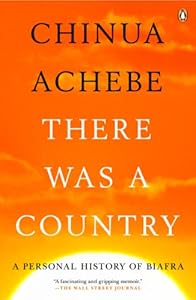
7th anniversary of the publication of Chinua Achebe’s There was a Country


Herbert Ekwe-Ekwe

Father of African Literature’s incomparable memoirs on the Igbo genocide, the foundational genocide of post-(European)conquest Africa, 29 May 1966-12 January 1970 (phases I-III), when Nigeria, headed by the African Yakubu Gowon-Obafemi Awolowo bubonic genocidist dyarchy, and its ruthless suzerain, co-genocidist state Britain, headed by Prime Minister Harold Wilson (“[I] would accept half a million dead Biafrans if that was what it took...”  {Roger MorrisUncertain Greatness: Henry Kissinger and American Foreign Policy, London and New York: Quartet Books, 1977: 122}) murdered 3.1 million Igbo people or 25 per cent of this nation’s population; the genocide continues unabated as these lines are written, phase-IV, beginning 13 January 1970, with tens of thousands of additional Igbo murdered since
(John Coltrane Duo, “Jupiter (variation)” [personnel: Coltrane, tenor saxophone, bells; Rashied Ali, drums; recorded: Van Geldar Studio, Englewood Cliffs, NJ, US, 22 February 1967)
*****Herbert Ekwe-Ekwe’s recently published books on the Igbo genocide and Biafra are The longest genocide – since 29 May 1966 (2019) and co-author, with Lakeson OkwuonichaWhy #DonaldTrump is #great for #Africa (2018)

Twitter @HerbertEkweEkwe


Thursday, 27 September 2018

6th anniversary of the publication of Chinua Achebe’s There was a Country

(Published 27 September 2012, Penguin, LondonBritain)
Father of African Literature’s incomparable memoirs on the Igbo genocide, the foundational genocide of post-(European)conquest Africa, 29 May 1966-12 January 1970 (phases I-III), when Nigeria and its suzerain state Britain, under the primeministership of Harold Wilson, murdered 3.1 million Igbo people or 25 per cent of this nation’s population
(Herbert Ekwe-Ekwe)
(John Coltrane Quartet, “Sun ship” [personnel: Coltrane, tenor saxophone, McCoy Tyner, piano; Jimmy Garrison, bass;  Elvin Jones, drums; recorded: Impulse!, New York, US,  26 August 1965])
Twitter @HerbertEkweEkwe

Wednesday, 27 September 2017

5th anniversary of the publication of Chinua Achebe’s There was a Country

(Published 27 September 2012, Penguin, LondonBritain)
Father of African Literature’s incomparable memoirs on the Igbo genocide, the foundational genocide of post-(European)conquest Africa, 29 May 1966-12 January 1970 (phases I-III), when Nigeria and its suzerain state Britain, under the primeministership of Harold Wilson, murdered 3.1 million Igbo people or 25 per cent of this nation’s population

Twitter@HerbertEkweEkwe

Sunday, 19 May 2013

The organic link between Things Fall Apart and There was a Country


Just a few months before his 28th birthday, in 1958, Chinua Achebe writes Things Fall Apart, the classic restorative narrative of African affirmation which subverts the European conqueror’s frantic efforts to construct a historiography of African-memory erasure in the wake of a devastating conquest. This is the foundational opus on which the African World’s reply to Europe and the world and a redefinition of itself and subsequent aspirations is codified. This author’s achievement is incomparable. Fifty-four years later, just a couple of months before his 82nd birthday, in 2012, the literary interventionist genius publishes There was a Country, an indefatigable reminder to an oft-complacent world of the Igbo genocide, the foundational genocide of post-(European)conquest Africa, and the incredible survival of Igbo people. 3.1 million Igbo people, a quarter of the population, were murdered by Nigeria during 44 months of indescribable barbarity and carnage not seen in Africa since the German-perpetration of the genocide against the Herero people of Namibia in the early 1900s. There was a Country is a priceless gift to a much-beleaguered people and the world, a compulsory reference to our understanding of Africa of the last 50 years – this turbulent age of pestilence. This author’s achievement is incomparable.

Twitter @HerbertEkweEkwe