Showing posts with label Herero genocide. Show all posts

Wednesday, 12 October 2016

No German arms to genocidist Nigeria

(Angela Merkel: … German chancellor)
Herbert Ekwe-Ekwe

Muhammadu Buhari, head of the genocidist Nigeria regime, embarks on a 3-day “state” visit to Germany today. According to a regime spokesperson, “cooperation on security”, a euphemism for possible German arms exports/transfers to Nigeria, will be one of the subjects of Buhari’s discussion with German officials. Indeed, Markus Elderer of the German foreign ministry had been quoted in the Lagos (Nigeria) Vanguard (7 June 2016) that Nigeria had asked for German weapons for “security challenges” especially in its northcentral/northeast region, epicentre of the islamist Boko Haram insurgency.

Igbo genocide

But as I have argued, variously, Buhari is not really at war with Boko Haram not to mention this organisation’s other ruthless cousin, Fulani militia. On the contrary, Buhari is an integral component of Boko Haram/Fulani militants. Buhari’s war, since his March 2015 imposition as head of Nigeria regime by US President Obama and ex-British Prime Minister Cameron, is to the south of Nigeria – in Biafra, occupied by Nigeria since 13 January 1970.

Buhari has continued the Nigeria state genocide against the Igbo people, fully supported by Britain, which he, himself, as a lieutenant then in the genocidist army has been an active participant right from launch date, 29 May 1966. 3.1 million Igbo people were murdered in the three phases of the genocide prior to 13 January 1970. Hundreds of thousands have been murdered subsequently including those murdered since Buhari’s current position in power, especially beginning October 2015 and has continued unabated.
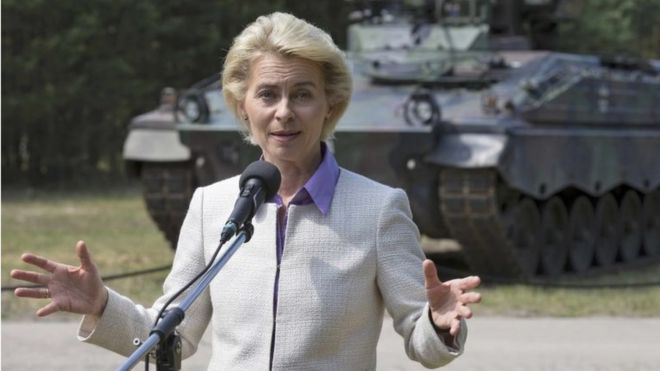
(Ursula von der Leyen:German defence minister)
Any German weapons sold/transferred to Nigeria presently, even a bullet, pistol or grenade, are more likely to be deployed to murder Biafrans. This will amount clearly to German complicity in the Igbo genocide, this foundational genocide of post-(European)conquest Africa. Federal Germany, it must be recalled, in commendation, was one of the first countries which placed a comprehensive arms embargo on Nigeria during the May 1966- January 1970 phases I-III of the genocide unlike its “other half”, the GDR (East Germany), which ignominiously supported the genocide, particularly in its training and reequipping of squadrons of loaned Egyptian air force pilots flying Soviet MiGs who specialised in the carpet bombing of Biafran cities and towns and villages.

What relationship?

Germany started its direct “relationship” with Africa in the early years of the first decade of the last century quite abominably with its organised genocides against the following African peoples in the southwest region of the continent: beginning in 1904 and through to 1907, the German military, operating in the region, murdered 65,000 out of 80,000 Herero people or 80 per cent of the total Herero population wiped out; beginning in 1904 and through to 1907, the German military, operating in the same region, murdered 10,000 Nama people or 50 per cent of the Nama population destroyed. Thirty years later, the German-state would resume this southwest Africa genocidist antecedent 5000 miles away in the heart of Europe, its continental homeland, as it embarked on the gruesome genocide of Jewish people, murdering 6 million of them by 1945.

Given its catastrophic history in the 20th century, it is hopefully inconceivable that Germany would wish to “reengage” with Africa in this second decade of a new century, this time in southwestcentral Africa, by intervening to send weapons to Nigeria to enable the latter intensify its campaign of savagery in the ongoing Igbo genocide, a genocide in which Nigeria and Britain murdered 25 per cent of the Igbo population between 29 May 1966 and 12 January 1970.
(Andrew Hill Sextet, “Dedication” [personnel: Hill, piano; Kenny Dorham, trumpet; Eric Dolphy, bass clarinet; Joe Henderson, tenor saxophone;  Richard Davis, bass; Tony Williams, drums; recorded: Van Gelder Studio, Englewood Cliffs, NJ, US, 21 March 1964]) 
Twitter@HerbertEkweEkwe


Wednesday, 29 May 2013

Longest genocide – Since 29 May 1966

Denial is the eighth stage that always follows a genocide. It is among the surest indicators of further genocidal massacres. The perpetrators of genocide …try to cover up the evidence … They deny that they committed any crimes, and often blame what happened on the victims…” – Gregory Stanton, president, Genocide Watch; professor in genocide studies and prevention, George Mason University, Virginia, US

Today, Wednesday 29 May 2013, is the 47th anniversary of the beginning of the Igbo genocide. Starting from that fateful mid-morning of Sunday 29 May 1966 and through the course of 44 months of indescribable barbarity and carnage not seen in Africa since the German-led genocide against the Herero people of Namibia in the early 1900s, the composite institutions of the Nigeria state, civilian and military, murdered 3.1 million Igbo people or one-quarter of this nation’s population. The Igbo genocide is the foundational genocide of post-(European)conquest Africa. It is still continuing. It is the longest, the most expansive, and the most gruesomely-sustained genocide of the contemporary era. This genocide inaugurated Africa’s current age of pestilence.

Yakubu Gowon headed the junta that executed the genocide and Obafemi Awolowo, a lawyer, was his deputy, effectively the prime minister, the genocidist “chief theorist” for the campaign and head of the all-powerful finance ministry. Awolowo also principally initiated and programmed phase-IV of the genocide aimed, strategically, to dismantle/degrade the Igbo economy in perpetuity. The Igbo economy, pre-genocide, was Africa’s most dynamic and resourceful.

Today’s commemoration will, as in the past, be a day of meditation and remembrance in every Igbo household in Igboland and the Igbo diaspora in Nigeria and elsewhere in the world for the 3.1 million murdered, gratitude and thanksgiving for those who survived, and the collective Igbo rededication to unrelentingly tell the story of the genocide to the world at large (expressively and exhaustively, covering each and every contour of its four discernible phases: 29 May 1966-29 October 1966, 30 October 1966-5 July 1967, 6 July 1967-12 January 1970, 13 January 1970-Present Day) and, finally, strive to achieve the urgent goal of the restoration of Igbo sovereignty.

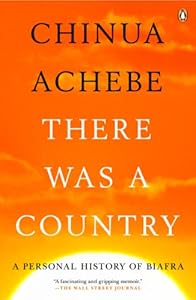
These latter two Igbo endeavours have undergone a quantum leap since September 2012, thanks to the publication of the incomparable, There was a Country. The book has opened up the continent of possibilities that has indeed channelled the Igbo march to freedom to a steadier, assured victory – much sooner than most keen observers of this process of liberation would have contemplated this time last year. This is yet another priceless gift, as always, from the illustrious Chinua Achebe, the Father of African Literature himself, to his people. There was a Country is a resolute reminder to an oft-complacent world of the Igbo genocide and the incredible survival of Igbo people. Not many people in the world thought that the Igbo would survive, such was the savagery of the onslaught that they were subjected to by Nigeria and its allies. It is precisely this dual-track mission of There was a Country that has been most troubling to those fanged assailants of Achebe’s memoirs who, since, have been thrown into utter disarray.  Any reminder of the Igbo genocide and, particularly, the Igbo survival therefrom, riles the sensibilities of assailants whose life’s quest is to continue to dart around the crumbling edifice of a spurious sage, more demonstrably a genocidist “chief theorist” who insensately advocated and co-supervised the murder of 3.1 million children, women and men. That any human being would wish to be associated with the memory of such a vicious personage in history must be one of the most troubling cases of the human condition to be visited and revisited for analyses for quite a while…
 
We mustn’t ever fail to state and re-state that the Igbo could not have survived the genocide if they still remained Nigerian. They rightly chose the former course of their fate and not the latter which they cast adrift. For the Igbo, the renouncement of Nigerian citizenship on that horrific Sunday morning, 29 May 1966, is the permanent Igbo indictment of a state that had risen thunderously to murder one of its constituent peoples. Consequently, Nigeria collapsed as a state with few prospects for the future as illustrated most cogently and graphically today – 47 years to the day. Despite the four murderous years of siege unprecedented in recent African history, the Igbo demonstrated a far greater creative drive towards constructing an advanced civilisation in Biafra than what Nigeria has all but wished it could achieve in the past four decades of frightening and pitiable hopelessness. Surely, Nigeria couldn’t, cannot recover from committing this heinous crime – this crime against humanity. This is its epitaph.

Igbo will never forget. Happy Survival! Land of the Rising Sun. 


Twitter @HerbertEkweEkwe


Sunday, 19 May 2013

The organic link between Things Fall Apart and There was a Country


Just a few months before his 28th birthday, in 1958, Chinua Achebe writes Things Fall Apart, the classic restorative narrative of African affirmation which subverts the European conqueror’s frantic efforts to construct a historiography of African-memory erasure in the wake of a devastating conquest. This is the foundational opus on which the African World’s reply to Europe and the world and a redefinition of itself and subsequent aspirations is codified. This author’s achievement is incomparable. Fifty-four years later, just a couple of months before his 82nd birthday, in 2012, the literary interventionist genius publishes There was a Country, an indefatigable reminder to an oft-complacent world of the Igbo genocide, the foundational genocide of post-(European)conquest Africa, and the incredible survival of Igbo people. 3.1 million Igbo people, a quarter of the population, were murdered by Nigeria during 44 months of indescribable barbarity and carnage not seen in Africa since the German-perpetration of the genocide against the Herero people of Namibia in the early 1900s. There was a Country is a priceless gift to a much-beleaguered people and the world, a compulsory reference to our understanding of Africa of the last 50 years – this turbulent age of pestilence. This author’s achievement is incomparable.

Twitter @HerbertEkweEkwe