Rethinking Africa is a forward looking blog dedicated to the exchange of innovative thinking on issues affecting the advancement of African peoples wherever they are. We provide rigorous and insightful analyses on the issues affecting Africans and their vision of the world.
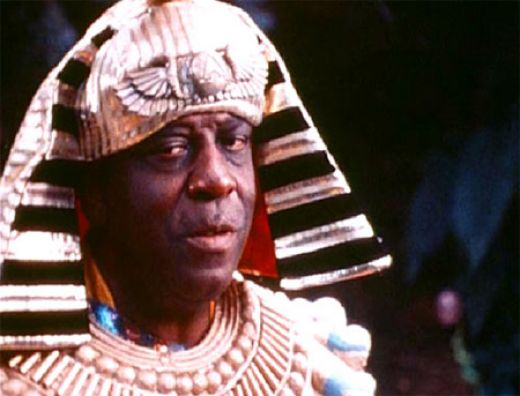
Herbert Ekwe-Ekwe Pianist, bandleader, prolific composer whose output, arrangements and The Arkestra’s performances are influenced profoundly by Kemetic philosophical, astronomical and aesthetic conceptions
(Sun Ra and his Myth Science Arkestra, “Space aura” [personnel: Sun Ra, piano, George Hudson, trumpet; percussion; Marshall Allen, alto saxophone, bells; John Gilmore, tenor saxophone, percussion; Ronnie Boykins, bass, percussion; Jon Hardy, drums; recorded: Saturn, Chicago, US, [?] October 1960])
Pianist, bandleader, prolific composer whose output, arrangements and The Arkestra’s performances are influenced profoundly by Kemetic philosophical, astronomical and aesthetic conceptions
(Sun Ra and his Myth Science Arkestra, “Space aura” [personnel: Sun Ra, piano, George Hudson, trumpet; percussion; Marshall Allen, alto saxophone, bells; John Gilmore, tenor saxophone, percussion; Ronnie Boykins, bass, percussion; Jon Hardy, drums; recorded: Saturn, Chicago, US, [?] October 1960])
PERCIPIENT tenor saxophonist and composer who, for 30 years, beginning in the mid-1950s, builds up an impressive range of collaborative work with leading rhythm and brass instrument-bandleaders of the age including Roach, Mingus, Chambers, Davis, Waldron, Walton, Weston, Hill, Gillespie, Morgan, Farmer, Reece, as well as work with multiinstrumentalist Dolphy and fellow tenorist Gilmore (ps: the gritty cascading texture of Jordan’s tenor solo in Charles Mingus’s “Meditations”[below], this freedom anthem, beginning 21.07 minutes into the recording, opens up yet another vista of creativity in this seminar at Cornell when it appears that all had been exhausted by the brilliant readings of Dolphy [flute/bass clarinet], Byard [piano], Coles [trumpet] and Mingus [bass] himself premiered 21 minutes earlier...)
(Charles Mingus Sextet – with Eric Dolphy, Cornell University 1964, “Meditations” [personnel: Mingus, bass; Johnny Coles, trumpet; Dolphy, flute, bass clarinet; Clifford Jordan, tenor saxophone; Byard, piano; Dannie Richmond, drums; recorded: live, Cornell University, 18 March 1964])
Pianist, bandleader, prolific composer whose output, arrangements and The Arkestra’s performances are influenced profoundly by Kemetic philosophical, astronomical and aesthetic conceptions
(Sun Ra and his Myth Science Arkestra, “Space aura” [personnel: Sun Ra, piano, George Hudson, trumpet; percussion; Marshall Allen, alto saxophone, bells; John Gilmore, tenor saxophone, percussion; Ronnie Boykins, bass, percussion; Jon Hardy, drums; recorded: Saturn, Chicago, US, [?] October 1960])
Intensely studious tenor saxophonist and bass clarinettist who plays in the Sun Ra Arkestra during the course of 42 years (1953-1995) where he becomes the lead instrumentalist
(Freddie Hubbard Sextet – featuringJohn Gilmore, “Summetime” [personnel: Hubbard, trumpet; Curtis Fuller, trombone; Gilmore, tenor saxophone; Tommy Flanagan, piano; Art Davis, bass; Louis Hayes, drums; recorded: Van Gelder Studio, Englewood cliffs, NJ, US, 2 July 1962])
Intensely studious tenor
saxophonist and bass clarinettist who plays in the Sun Ra Arkestra during the course of 42 years (1953-1995) where
he becomes the lead instrumentalist
(Freddie Hubbard Sextet – featuringJohn Gilmore, “Summetime” [personnel: Hubbard, trumpet; Curtis Fuller, trombone; Gilmore, tenor
saxophone; Tommy Flanagan, piano; Art Davis, bass; Louis Hayes, drums;
recorded: Van Gelder Studio, Englewood cliffs, NJ, US, 2 July 1962])
Herbert Ekwe-Ekwe is specialist on the state and on genocide & wars in Africa in the post-1966 epoch – beginning with the Igbo genocide, 29 May 1966-present day, the foundational and most gruesome genocide of post-(European)conquest Africa. 3.1 million Igbo or 25 per cent of this nation’s population were murdered by Nigeria and its allies, principally Britain. Africa and the rest of the world largely stood by and watched as the perpetrators enacted this horror most ruthlessly. The world could have stopped this genocide; the world should have stopped this genocide. This genocide inaugurated Africa’s current age of pestilence. During the period, 12 million additional Africans have been murdered in further genocide in Rwanda (1994), Zaïre/DRCongo (variously, since the late 1990s) and Darfur – west of the Sudan – (since 2004) and in other wars in Africa. African peoples have, presently, no other choice but exit/dismantle the extant genocide-state (the bane of their existence & progress) & construct own nation-centred states that serve their interests. He is author of several books & papers on the subject and his new book is entitled The longest genocide – since 29 May 1966 (2019).