Rethinking Africa is a forward looking blog dedicated to the exchange of innovative thinking on issues affecting the advancement of African peoples wherever they are. We provide rigorous and insightful analyses on the issues affecting Africans and their vision of the world.
“A leader… must at all times stand for justice in dealing with the People… should be the symbol of justice… A leader who serves [the] people well will be enshrined in their hearts and minds. This is all the reward [the leader] can expect in his/[her] life-time…” – Chukwuemeka Odumegwu-Ojukwu, Ahiara Declaration, Ahiara, south Biafra, 1 June 1969
General Chukwuemeka Odumegwu-Ojukwu’s extraordinary service of dedication to the Igbo during the Igbo genocide (29 May 1966-12 January 1970), Africa’s most gruesome and devastating genocide of the 20th century, is his love for his people, for humanity. 3.1 million Igbo people or one-quarter of this nation’s population were murdered by the Nigeria state and its allies during those 44 haunting months of certain death. As the General is laid to rest later on today in his beloved Nnewi, no other than Coltrane’s classic suite, A Love Supreme, sets the panoramic canvass that defines Odumegwu-Ojukwu’s indelible service. Here, the John Coltrane Quartet plays “Psalm”, the fourth and final movement of A Love Supreme – personnel: Coltrane, tenor saxophone; McCoy Tyner, piano; Jimmy Garrison, bass; Elvin Jones, drums (recorded: Van Gelder Studio, Englewood Cliffs, New Jersey, United States, 9 December 1964).
Published conference paper, International Association of Genocide Scholars 9th Biennial Conference, Buenos Aires, Argentina, 19-22 July 2011
(Conference hosts: Genocide Studies Center, Universidad Nacional de Tres de Febrero, Buenos Aires - to download paper after clicking on link, please scroll to foot of page marked VOLVER!)
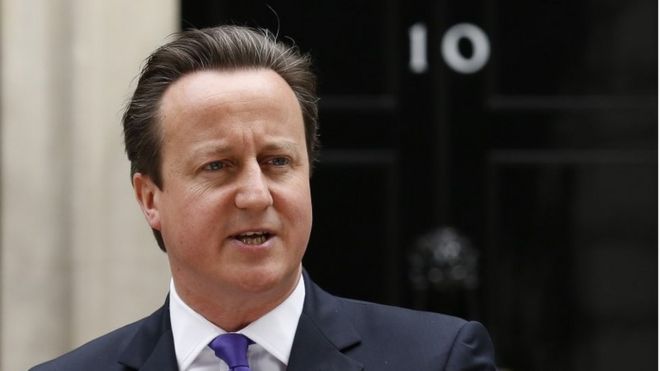
THERE IS presently a hearty debate in Britain on the timetable for a referendum in Scotland on Scottish independence or, more correctly stated, the restoration of Scottish independence. Prime Minister David Cameron prefers an early vote, presumably in the next 18 months, with two “straightforward” questions on whether the Scots want independence or wish to continue to be part of Britain as it has been in the past 300 years. Cameron also wishes that the outcome of the referendum is “legally binding”, quite an unprecedented position to take as referendums in Britain, in the past, have had “advisory” or “consultative” status. Finally, he wants the minimum age of 18 for participants.
(David Cameron)
In contrast, Alex Salmond, the leader of the pro-independence Scottish Nationalist Party and Scotland’s first minister, insists that, thanks to SNP’s majority victory in last May’s elections to the Edinburgh Holyrood assembly, his party has the “mandate for the Scottish parliament to organise the referendum [on its own]… It must be a referendum built in Scotland and decided by Scottish people…” Salmond adds that he will schedule the poll in the autumn of 2014 and besides the “yes”/“no” choices favoured by Cameron, he wouldn’t rule out a third, more nuanced proto-independence choice for voters (the so-called dev-max or “devolution-maximum”) which calls for enhanced financial powers for Scotland, derived from existing devolved provisions – i.e., just short of total sovereignty as these new powers won’t affect defence and foreign affairs! For poll participation, Salmond prefers an age limit of 16 rather than Cameron’s 18.
(Alex Salmond)
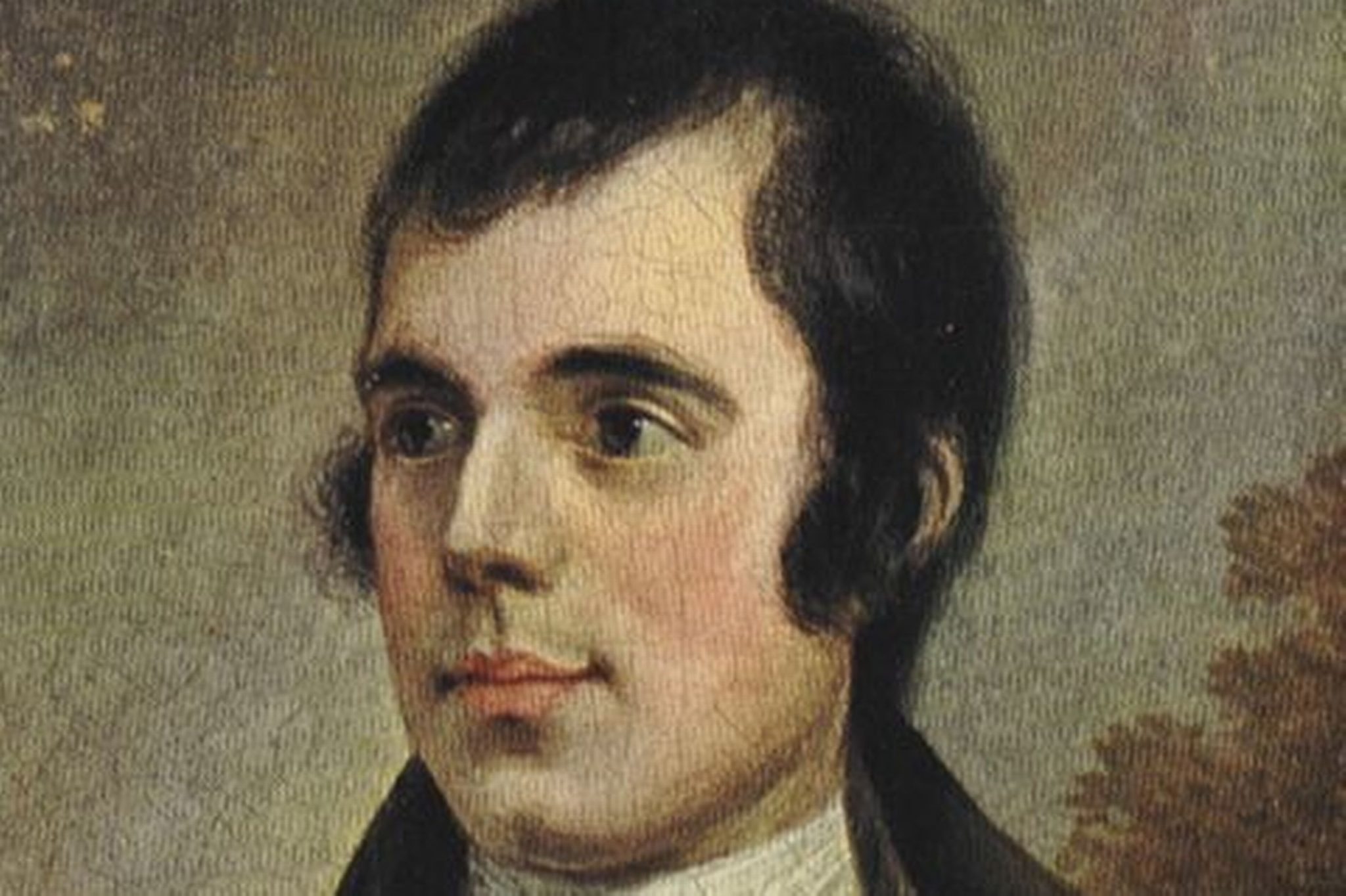
QUITE CLEARLY, the differences between both leaders on this important subject are merely procedural and not on the substantive issue of the rights of Scots, as a people, to decide their future. Despite the oft-quoted, if irreverent lines from Robert Burns, the Scottish national poet, alluding to the deteriorating Scottish economic situation at the time (caused by the so-called Darién scheme) which contributed to its parliamentarians voting for union with England, formally inaugurated in 1707 (“We are bought and sold for English gold. Such a parcel of rogues in a nation”), Scotland has not been “worse off” in the United Kingdom enterprise.
(Robert Burns)
On the contrary, Scots and their country were enriched exponentially by this union. Some scholars have dubbed the vast lands of the world that Britain conquered during its 350 years march across the globe the “Scottish empire”, rather than “British empire”, to underscore this Scottish unprecedented triumph (See, for instance, John M MacKenzie and T M Devine eds., Scotland and the British Empire, Oxford: Oxford University, 2011). And they are not so far off the mark in that characterisation! Scottish financiers and merchants, enslavers, enslaved-plantation owners, tobacco, sugar and cotton growers and the like (in the Americas), along with their English counterparts, were already immersed in reaping the gargantuan fortune wreaked from the hegemonic control of African enslavement they now shared with England. This was occasioned by the two states’ previous century’s dramatic displacement of the central role played hitherto in this holocaust by Portugal and Spain. Huge profits from African enslavement were ploughed back into Scottish sociocultural and financial institutions and cities to power the gestating industrial revolution (especially in the Glasgow conurbation) and the Scottish age of enlightenment, that very much revered heritage in the country’s national narrative. Such was the staggering outcome of this Scottish (and English) transformation that Christopher Hill, the distinguished specialist on this epoch of British history, has observed that, prior to the mid-17th century, these states were still “cultural and scientific backwater” but soon, into the following century, they had become “centre of world science” (Christopher Hill, “Lies about crimes”, The Guardian, London, 29 May 1989). Buoyed
Buoyed by these phenomenal strides in societal fortunes and outlook, the one million Scots, a sixth of the population of the new merger-state relation, pounced on the opportunities thrown up by union with England with much aplomb: Scottish military forces with their specialised fighting units, who in the past fought for English global expansionism, henceforth had a greater stake to defend and conquer ever new seas and lands in continent after continent for the union; Scottish emigration, especially to north America, soared; Scottish conquest administrators prominently policed the union’s “empire” – from the east’s Asian frontiers through Africa to the west’s outstretches of the Americas, and, lastly, its leading intellectuals (philosophers, scientists, political-economists, writers) simultaneously valorised the thrust and goals of union and conquest. Not a few of the latter would join counterparts in England and elsewhere to particularly offer the “requisite” cultural/scientific/literary rationalisation for African enslavement and map out the presumed hermeneutical canvass of the cardinal codifiers of European World racism as an ideology. When pro-independence “colonists” in north America in the later part of the 18th century revolted against the union crown, significant sectors of Scottish émigrés (including their Ulster-Scot cousins) and institutions strongly supported freedom for the United States – a position that would obviously have appeared paradoxical for obvious reasons. One-third of delegates who signed the US independence document were of Scottish descent and 75 per cent of all US presidents since the founding of the republic are of Scottish ancestry.
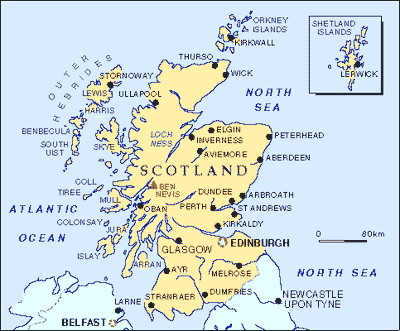
(Scottish population:5 million)
State is transient; people endures
GIVEN THE TRAJECTORY of what many would feel is an illustrious history sketched above, it could appear that Scots are perhaps the most unlikely people to wish to break from Britain. Interestingly, most opinion polls conducted in Scotland show that majority of Scots do not, currently, want a restoration of their country’s independence. Ironically, a most recent of these polls shows that more English and Welsh respondents (from two of the four constituent nations in the union) than the Scots themselves want the Scots to “go”! So, a principal reason that Alex Salmond is working towards a “delayed” referendum date (last quarter of 2014) is to have more time to campaign to garner a majority vote outcome from across a Scottish population still sceptical of the restoration-of-independence for their country. Salmond wants to appeal to younger Scots (hence his intention to lower the minimum deciding voting age to 16), where disposition for independence is much greater than the older population. 2014 also presents Salmond with three “opportunity chords” to play for in the independence drive: commemorating the 700th anniversary of the battle of Bannockburn in which the Scots defeated England, Scottish hosting of the Commonwealth games, and Scottish hosting of the Ryder Cup (golf).
Prime Minister Cameron is very much aware of the Scottish success story in the UK-union and also that a majority of Scots would vote for continuing stay in the union if a referendum on the subject were held presently. The latter particularly explains Cameron’s desire for an early poll. Yet despite being first minister of the union who undoubtedly wishes to preserve the union, Cameron accepts the rights of Scots to decide freely on this subject. It is their right. But this right is not only restricted to the Scots or to the English or to the Welsh or to only peoples in Europe… It is, in fact, a universal right that every people enjoys. Every people.
(David Cameron:“[does] not come out demonising Scots for‘daring’ to wish to leave the union; no, Cameron wouldn’t do this because he respects the rights of Scots to exercise their right to self-determination...”)
THIS RIGHT TO SELF-DETERMINATION for every people is inalienable and is guaranteed by the United Nations. No people is exempt from exercising this right. As everyone expects, Cameron has not come out demonising Scots for “daring” to wish to leave the union; no, Cameron wouldn’t do this because he respects the rights of Scots to exercise their right to self-determination. As everyone expects, surely, Cameron has not come out with the dreadful thoughts of wishing any harm to Scots for wanting to exercise their inalienable rights to self-determination as one Harold Wilson, who once lived and worked from the same London address that Cameron inhabits today, declared when the Igbo of southwestcentral Africa exercised this right between 29 May 1966 and 12 January 1970.
The Igbo had exercised their right to independence from the Nigeria-union (created by UK-union in 1914!) when this Nigeria-union unleashed the genocide against them with the active participation of key constituent nations (in the union) such as the Fulani, Hausa, Tiv and Kanuri in the north region and Yoruba, Edo and Urhobo of the west provinces. Britain and these loyal pan-African nations’ allies murdered 3.1 million Igbo or a quarter of Igbo population during the catastrophic 44 months of phases I-III of the genocide, 29 May 1966-12 January 1970. The genocide, phase-IV, which the genocidists launched on 13 January 1970, has continued till this day with the murder of additional tens of thousands of Igbo in occupied Biafra as well as those domiciled in Nigeria especially in the north region. UK-union supported the
genocide politically, diplomatically and militarily – London’s calculated
“punishment” for the Igbo-lead role (in the 1930s-October 1960) to terminate
the UK-union-occupation of its Nigeria-union lucre. As the slaughtering of the
Igbo intensified especially in those catastrophic months of 1968/1969, Harold
Wilson was totally unfazed when he informed Clyde Ferguson (United States State
Department special coordinator for relief to Biafra) that he, Harold
Wilson, “would accept half a million dead Biafrans if that was what it took”
the Nigeria-union to destroy the Igbo resistance to the
genocide (Roger Morris, Uncertain Greatness: Henry Kissinger
and American Foreign Policy, London and New York: Quartet Books, 1977, p.
122). SUCH is the grotesquely expressed
diminution of African life made by a supposedly leading politician of the world
of the 1960s – barely 20 years after the deplorable perpetration of the Jewish
genocide. As the final tally of the murder of the Igbo demonstrates, Harold
Wilson probably had the perverted satisfaction of having his on the ground Nigeria-union
genocidists perform far in excess of his grim target. Harold Wilson
is not the least surprised of this outcome, thanks to British weapons his
government supplied its co-Nigerian genocidists to accomplish their
exterminating mission – as Wilson recalls most explicitly in his memoirs,
published in 1971, the Nigerian military expended more small arms
ammunition in its campaign to achieve its annihilative goal in Biafra than
the amount used by the British armed forces “during the whole” of
the 1939-1945 war (Harold Wilson, Labour Government, 1964-1970: A
Personal Record,London:
Weidenfeld & Nicolson, 1971, p. 630, added emphasis). Pointedly, Robert Scott, Wilson’s government’s diplomatic mission military advisor in Nigeria at the time, acknowledges that at the apogee of the genocide, mid 1968-12 January 1970, their allied rampaging genocidists had turned swathes of Biafran territory into waste lands by the sheer, uncontrollable use of those British weapons that Wilson supplied so generously (Wilson: 630). Scott is graphically emphatic that as the genocidists unleashed their campaigns across Biafran cities, towns and villages, they are the “best defoliant agent known” (Sunday Telegraph, London, 11 January 1970).
UNLIKE THE IGBO, the Scots, pointedly, never faced any pogrom or genocide by the UK-union or organised by any of the other constituent nations of the union (English, Welsh, Irish) during these past 300 years. Finally, as everyone expects, unfailingly, Cameron has not dabbled into some nonsense of the assumed “inviolability” or “indivisibility” of the UK-union in respect to the rights of Scots to self-determination, two oft-repeated vulgarities with reference to the Nigeria-union that the same Harold Wilson trumpeted with much relish as the Nigeria-union genocidists slaughtered and slaughtered the Igbo during those 44 months of certain death.
(Harold Wilson:“would accept half a million dead Biafrans if that was what it took...”)
WHAT THE DEBATE on the 5 million Scots and Scotland has clearly demonstrated is that the people, the nation, is deemed superior to the state. This is the case of any people in the world vis-à-vis the state. This position is correct for all peoples and nations irrespective ofrace, continent, region, religion/belief system, etc., etc. The people, the nation is enduring; the state is transient. The state is therefore not some “gift” from someone else; definitely not from any conquerors, nor even from gods, but relationships painstakingly formulated and constructed by a discernible group of human beings that inhabit an ascertainable geo-historical territorial expanse on earth to pursue worldviews and interests envisioned and formulated by these same human beings. In Africa, where the contemporary state was created and imposed by the European conquest over decades/centuries as instruments to expropriate and despoil Africa in perpetuity, the goal of organically articulated African-created and owned states to radically transform depressing African fortunes is imperative. In the aggressively genocidist-states such as the Nigeria-union, the Sudan-union and Democratic Republic of the Congo-union, this task is even more pressing.
Even 1000 states…
THE IGBO, with a population of 50 million and
whose homeland has been under occupation by genocidist Nigeria since 13 January
1970, are arguably the world’s most brutally targeted and most viciously murdered
of peoples presently. Nigeria is now firmly the obligatory haematophagous
monster in Africa whoseraison d’êtreappears to be to murder the Igbo most
routinely and ritualistically. Since Nigeria murdered 3.1 million Igbo
during phases I-III of the genocide, 29 May 1966-12 January 1970, this monster
has murdered tens of thousands of additional Igbo during the course of phase-IV
of the genocide, 13 January 1970-present day, signposted here by the eerie
columns that chart the contours of the killing fields: 1980 ... 1982 ... 1985
... 1991 ... 1993 ... 1994 ... 1999 ... 2000 ... 2001 ... 2002 ... 2004 ...
2005 ... 2006 ... 2007 ... 2008 ... 2009 ... 2010 ... 2011 ... 2012 ... ACCORDING to the
recently published research (December 2011) by the International Society for
Civil Liberties & the Rule Of Law, a human rights organisation based in
Onicha, 90 per cent of the 54,000 people murdered in Nigeria-union by the
state/quasi-state operatives and agents since 1999 are Igbo (Emeka Umeh,
“Silent Genocide in Nigeria”, December 2011). Since last Christmas Day, the
Boko Haram islamist insurgent group spearheads these murders. At least 90 per
cent of people murdered by the Boko Haram across swathes of lands in
north/northcentral Nigeria in the past 23 days are Igbo.
(Igbo population:50 million)
THE BOKO HARAM now issues its threats to murder Igbo people almost habitually, on a daily basis, and, true to its words, executes its mission most ruthlessly, most remorselessly. After each of its outrages, Boko Haram acknowledges responsibility and does this most dispassionately… The regime in Abuja appears cruelly powerless to protect Igbo people emplaced within the jurisdiction of the supposedly sovereign state it controls with the well-known consequences in international law that this shocking relegation of responsibility entails. Regime-head Goodluck Jonathan says as much in a recent astonishing radio and television broadcast to his country and the world: “Boko Haram is everywhere in the executive arm of [my] government, in the legislative arm of [my] government and even in the judiciary. Some are also in the armed forces, the police and other security [and] in the judiciary. Some continue to dip their hands and eat with you and you won’t even know the person who will point a gun at you or plant a bomb behind your house” (Reuters, 9 January 2012). The Nigeria-union has, since 1945, gained considerable notoriety for consistently evolving new levers and institutions and processes within itself to murder the Igbo. Following from Jonathan’s proclamation, it is conceivable that right there, closeted in his regime, there are operatives deeply complicit in the ongoing murder of the Igbo. No doubt, Jonathan cannot but elaborate further on this broadcast to a restless, eagerly awaiting world. Not since 29 May 1966-12 January 1970 (phases I-III of the Igbo genocide) has Igbo life in the Nigeria-union Malebogle acquired such a gripping existential emergency…
The right of peoples of Africa to form their own state, away from the extant, murderous European-conqueror-created state, is the central focus of my The Biafra War, Nigeria and the Aftermath (1991), the second of the two books on the Igbo genocide I published in 1990-1991. In the concluding pages of this book (124-125 pp.), I note the following:
Either in peace, or war, the existence of the European post-colonial state is inimical to the interests of African peoples. It is a state that cannot provide the fundamental needs of Africans … The African humanity is presently gripped in a grave crisis for survival. It is now time that it abandoned the contrived post-colonial state in order to survive … African nations, [namely] Igbo, Wolof, Asante, Baganda, Bakongo, Bambara, etc., etc … remain the basis for the regeneration of Africa’s development … [and] the sites of the continent’s intellectual and other cultural creativity … What is being stressed here is that African peoples, themselves, must decide on the … issue of sovereignty … even if the outcome were to lead to 1000 states … For the future survival of the African humanity, let no more Africans have to die for the defence of, or for upholding the territorial frontier of any post-colonial state. No precious life should be wasted for its preservation.
TWENTY-TWO YEARS on, these words
remain crucially pivotal in focusing our minds on the very survival of the Igbo
and all other African peoples. The Igbo and all others who have lived through
the terror of the post-(European)conquest state must abandon it at once to
survive and advance towards the construction of higher levels of civilisation.
They have no other choice. Each and every constituent African people or nation
can build this civilisation outside the existing genocide state of
enthralled and degenerative union. Let Africa’s constituent peoples or
nations unleash a dazzling contest of creativity and progress, a continuing
mutual bombardment and sharing of ideas and streams of possibilities, akin to
what the world has seen elsewhere in the past 40 years – not the
Fulani-led Nigeria and its loyal pan-African constituent nations of Yoruba,
Jukun, Urhobo, Jarawa, Tiv, Hausa, Nupe’s
53 years of Igbo genocide campaign, their Igbo
genocide campaign, their Igbo genocide campaign, their comprehensive
occupation policy to dismantle the engine of Igbo socioeconomics and
simultaneously plunder and pillage Igbo wealth, their comprehensive
occupation policy to dismantle the engine of Igbo socioeconomics and plunder
and pillage Igbo wealth, their comprehensive occupation policy
to dismantle engine of Igbo socioeconomics
and plunder and pillage Igbo wealth, this doomed Nigeria emplacement of
marked goal to destroy the Igbo, one of the world’s very
talented and hardworking peoples. MOST surely, now is the time for each and every constituent
African people or nation involved in prosecuting the Igbo genocide (as shown
repeatedly above) abandons this
appalling quest to destroy the Igbo and embarks, instead, by
joining the march along the pathway of this beginning to construct
genocide-free geographies around itself for the first time in 53 years.
(George Russell Sextet, “Ezz-thetic” – personnel: Russell, piano; Don Ellis, trumpet; Dave Baker, trombone; Eric Dolphy, alto saxophone; Steve Swallow, bass; Joe Hunt, drums [recorded Riverside Records, New York, US, 8 May 1961])
Works cited
Ekwe-Ekwe, Herbert. The Biafra War, Nigeria and the Aftermath. Lewiston: Mellen, 1991. George Russell Sextet, “Ezz-thetic”. New York: Riverside Records, 8 May 1961. Hill, Christopher. “Lies about crimes”. The Guardian. London, 29 May 1989. MacKenzie, John M and T M Devine eds. Scotland and the British Empire. Oxford: Oxford University, 2011. Morris, Roger. Uncertain Greatness: Henry Kissinger and American Foreign Policy. London and New York: Quartet Books, 1977. Reuters.“Islamist sect has support in Nigerian gov’t: president”. 9 January 2012. Umeh, Emeka. “Silent Genocide in Nigeria”. Onicha: International Society for Civil Liberties & the Rule Of Law, 16 December 2011, https://www.facebook.com/rightsbehindyou/posts/a-press-briefing-on-68th-anniversary-of-the-universal-declaration-of-human-right/10202662320996195/, accessed 17 December 2011. Wilson, Harold. Labour Government, 1964-1970: A Personal Record. London: Weidenfeld & Nicolson, 1971.
*****Herbert Ekwe-Ekwe’s recent books on the Igbo genocide and Biafra are Readings from Reading: Essays on African Politics, Literature, Genocide (2011) and Biafra Revisited (2006), and he is also author of African Literature in Defence of History: An essay on China Achebe (2001) among several other titles Twitter @HerbertEkweEkwe
Less than 24 hours away from 2012, the yearnings and aspirations of peoples across the African World for a decisively transformative change in their lives in the New Year is distinctly palpable. This is particularly the case in those three notorious genocide-states that go by the names Nigeria, Congo Democratic Republic/Zaϊre, the Sudan; they all acutely constitute the bane of African existence and progress. For the concerned and/or besieged constituent peoples in these states, the future direction is evidently clear: (1) dismantle the extant genocide state or quickly abandon their membership therein and (2) create new state forms of civilisation that expressly serve their own interests, worldviews and aspirations, and respect human rights.
For the Igbo nation of southwestcentral Africa, the sense of urgency generated by the cataclysmic sociopolitics of these times cannot be more pronounced. The Igbo homeland has been under a blanket occupation by the Nigeria military/police/allied terror institutions since the presumed end of the 44-month long genocide against the Igbo people carried out by this state. Nigeria murdered 3.1 million Igbo or one-quarter of the nation’s population between 29 May 1966 and 12 January 1970. Nigeria has murdered tens of thousands of additional Igbo during the “post”-genocide years of the past 41 years. According to a study published just recently (December 2011) by the International Society for Civil Liberties & the Rule Of Law, a human rights organisation based in Onicha, 90 per cent of the 54,000 people murdered in Nigeria by the state/quasi-state operatives and agents since 1999 are Igbo. On Christmas Day, last Sunday, at least 90 per cent of people murdered by the Boko Haram islamist insurgency group’s bombings of churches in central Nigeria are Igbo. It is increasingly difficult to come to a contrary conclusion that the raison d’être of Nigeria’s existence is to murder the Igbo. Since 1945, i.e. 66 years ago, Nigeria has indeed carried out this dreadful mission so clinically, so ruthlessly, so savagely, so relentlessly, so remorselessly.
BEGINNING ANEW
As we walk into 2012, the Igbo and all peoples of goodwill, the world over, can’t but look forward to the future well beyond the horror of genocidist Nigeria. Predictably, the future for the nations and peoples of this very west Africa region couldn’t be more reassuring on the morrow of that which was once genocidist Nigeria. The restoration of Igbo sovereignty is currently, clearly, in the sights for all to see. Biafra, and the other successor-states from genocidist Nigeria, organically constituted, really has its work cut out. Its mission is not to begin to construct a state that is merely post-genocide or post post-conquest/post post-“colonial” state (cancelling out a stretch of indices which was Nigeria here and there!) but a realisation, a reclamation of that which makes humans humans and part of humanity. Biafra has an opportunity to begin to build a new civilisation where human life, fundamentally, is sacrosanct. This is an inclusive state where women and men live as co-operators and co-creators, a dual-gender complementarity in fundamentally transforming its society. This is a state that accepts and accords full rights to all minority groups, however so defined. This is a state where people enjoy the rights to differ and to dream dreams and dream different sets of dreams as they choose. This is a state dedicated to furthering and nurturing the resilience of its people and to enabling them pursue their highest creative endeavours. This state continuously strives to remove all limitations in the paths of its people and committed to making life better and better and better. This is a state that primes its people to flourish. Finally, the long drawn out nightmare is over and truly we do stand poised on the eve of a new beginning.
The video clip below is staggeringly depressing. Here, Mr Oyedepo fiendishly assaults, humiliates and dehumanises a congregant - a child, a child who is potentially a surgeon, a writer, a professor, an astronaut, a lawyer, a banker, an entrepreneur... but most importantly, a human being - someone's daughter, someone's sister, someone's granddaughter, someone's niece, someone’s cousin, someone's relative, an Igbo child. I don’t know if Mr Oyedepo would have assaulted this child if she were Yoruba or Nupe, or Hausa... It should be noted that the child (boy) who says they are from Jos and repeats words very similar to those made earlier by the Igbo child is spared the Oyedepo punch. Oyedepo’s mindset is a haunting reminder of Benjamin Adekunle’s - also displayed publicly, this time in a 1968 press conference and couched in this grisly prose: “I want to see no Red Cross, no Caritas, no World Council of Churches, no pope, no missionary, and no United Nations Delegation. I want to prevent even one I[g]bo from having even one piece to eat before their capitulation. We shoot at everything that moves and when our troops march into the centre of I[g]bo territory, we shoot at everything even at things that don’t move”... David Oyedepo is a mean, swaggering brute who must be prosecuted for daring to assault this child. All Igbo congregants and all other peoples of goodwill should now withdraw and boycott Mr Oyedepo’s church wherever it is located. David Oyedepo must no longer work with and around children. Today, the David Oyedepo assault is on the Igbo child; tomorrow, it will surely be a child from elsewhere...
Igbo tenacity, drive and relentless optimism to pursue and overcome life’s challenges were acutely an affront to both the sardauna of Sokoto (northwest Nigeria) and British occupation sensibilities in Nigeria. This sardauna interview (video below) must have been recorded in the late 1950s/early 1960s –
definitely after both the 1945 and 1953 north Nigeria-organised pogroms against Igbo immigrant populations in Jos and Kano respectively. Hundreds of Igbo were murdered during the pogroms and tens of thousands of pounds sterling worth of their property were looted/destroyed at the time. Each pogrom was carried out because of the Igbo vanguard role in the restoration-of-independence movement to free Nigeria from the British conquest and occupation, begun in the 1930s. North Nigeria’s sociopolitical leaderships, effectively British regional clients, were opposed to the restoration of African freedom. No other leadership across the entire Southern World (Africa, Asia, the Caribbean/South America) has such an unenviable record during this unprecedented epoch of transglobal freedom charge. North Nigeria leadership, indeed, were disposed to the continuing British occupation of Nigeria.
Enslaved spaces and replicas
As a result, the occupation regime did not apprehend or prosecute anyone for either the 1945 or 1953 pogroms and the outrages became the “dress rehearsals” for the 29 May 1966-12 January 1970 Igbo genocide when the Nigeria state (as a whole, involving other constituent nations including the Yoruba, the Edo and Urhobo of the west region) with full Britain involvement, and others, murdered 3.1 million Igbo or one-quarter of this nation’s population. Britain, nor in fact any of the other pan-European conquerors of Africa (France, Portugal, Belgium, Spain, Germany), did not create a Nigeria, or whatever names these “Berlin states” in Africa are called, as precursor for African emancipation. On the contrary, the Nigerias of Africa are more of replicas of the enslaved plantations of the Americas (in the previous epoch of nearly 400 years) to perpetuate European World control and exploitation of Africa and Africans in perpetuity.
The enslaved Igbo encountered this with unrelenting courage and defiance in the enslaved estates in the Americas (north, south and the Caribbean), as history shows, and wouldn’t have it either at home! The sardauna interview should be part of History/Politics 101 course on Africa because it does tell one, in a nutshell, the “fate” of the Igbo in Nigeria that north Nigeria, with firm support of Britain, had, carefully, contrived right back in the 1950s. Except the Igbo people have signed up for a concerted suicide, they surely cannot see their destiny emplaced in this space of certain death.
This has been the cardinal lesson of the Igbo genocide. Thankfully, some Igbo who were still not sure of the long term implications of the continuing Nigerian occupation of their homeland (since 12 January 1970) have had a baptism of enlightenment since the video of the sardauna interview went viral just recently! Suddenly, historical records become opportunities for rare streams of conscientisation...
IN THAT moving, intensely expansive exposition on the subject of history in James Baldwin’s Just above my Head, the narrative voice states (London: Corgi Books, 1980: 478):
To overhaul a history, or to attempt to redeem it – which effort may or may not justify it – is not at all the same thing as the descent one must make in order to excavate a history. To be forced to excavate a history is, also, to repudiate the concept of history, and the vocabulary in which history is written; for the written history is, and must be, merely the vocabulary of power, and power is history’s most seductively attired false witness.
Baldwin’s interest in history and power of course focuses on world history and its aftermath during that crucial, unprecedented epoch of globalisation, namely the 15th-20th century. In Just above my Head, as well as in his other novels, writings and lectures, Baldwin is wrestling with the position and impact of this history and power on African peoples, peoples of African descent, in the United States and elsewhere. Baldwin’s interest is not predicated on merely assessing and classifying the obvious balance of forces of the principal national/racial/class/continental participants in this interplay of conflict relations, important as this goal may be, but much more in engaging in a challenging enterprise to, to use his word from archaeology, “excavate” the critical agencies at work in the process, during the epoch.
We should now focus more closely on Britain, our own regional tributary in this global stream of history, and explore its variegated course and profile. Contrary to the “conventional wisdom” which is all too eager to limit our comprehension of African-descent presence in Britain to the post-Second World War era, I am not aware of any historian who has categorically stated that the origin of the presence of African peoples, African descent peoples, in Britain began in 1948 with the Tilbury port docking of the SS Empire Windrush ship from Jamaica with 492 African Caribbean immigrants on board. What is true however is that few historians have found it expedient to challenge this seeming “orthodoxy” for all kinds of reason that would become apparent shortly.
Centuries
THE TRUTH is that African-descent peoples have lived in Britain, in varying numbers, for several centuries. There were African soldiers in the Roman legions that invaded Britain thrice (in 55BCE, 54BCE, 43CE) including those who embarked on the Roman occupation of the country in 43 CE. For the interested researcher, there is a veritable storehouse of sources that catalogues the African presence across the ages at the British Library, the London Records Office, local history libraries, museums, churches, art galleries, local governments, municipal councils, health authorities, trading companies, the merchant marine and military records.
These records show that African-descent peoples have maintained a continuously expanding permanent presence in London since 1507. Subsequently, the presence of African peoples in London and elsewhere in Britain, in varying numbers and circumstances, would be inextricably woven with that of British history itself through enslavement, mercantile capitalism, industrial/monopoly capitalism and enhanced global conquest and hegemony. The visit to England in 1555 by five west African merchants from Shama was an opportunity seized by English traders involved in the lucrative west African gold, ivory and pepper business. The English were keen to dislodge the Portuguese from their dominance in the “external” sector of the trade. With the beginning of the European World enslavement of African peoples in 1562 (first evidence of enslaved Africans “physically sold” in England was in 1621) and following the outbreak of the Spanish war of succession in the early 1700s, African peoples began to arrive in Britain in droves. By the 1750s, the African-descent population in Britain was approximately 20,000 with the majority living in the London area (10-15,000). Soon, it was “fashionable” for members of the British aristocracy and the emerging bourgeoisie to “own” one or more enslaved African. Those Africans who became free (the enslaved became free by either buying back their freedom through an agreed payment to their owner/owners or, more audaciously, by escaping from the bondage!) earned their living as entertainers, artists, craftspeople, cleaners or street beggars. In a celebrated painted panel of the royal court at Kenilworth (Warwickshire) in the 1570s, Queen Elizabeth I is shown being entertained by a group of African musicians and dancers. Soon, the essentially racist stereotype of the African, particularly the diasporan African in the West, as a “natural entertainer” was developed. More institutionalised caricatures of the African-descent presence, especially in London, were expressed in the naming of streets and pubs. From the mid-16th to mid-19th century, a total of 61 streets in London were named Black Boy Lane (One still exists in Tottenham, borough of Haringey[!] and there are still popular public houses in Reading, Winchester, Banbury, Caernarfon, Oxford and elsewhere called “Black Boy” Pub/Inn from the same period. In the latter example, Oxford university students tried unsuccessfully to have the pub’s name changed in 1999 because they felt that the name “caused offence”.) and 51 taverns were called “Blackmoor Head” (“blackmoor”, “blackamoor”, “n[****]” and “c[*******]” were some of the other English epithets used in describing Africans during the era).
For African peoples, generally, life in Britain was indeed harsh, turbulent and grim. It was a social existence of deprivation, hopelessness and humiliation – a “Babylon”, to borrow the popular imagery of the Rastafarian movement. Africans were subjected to life on the edge of society. Quite often, in spite of this obvious marginalisation, the African-descent population was blamed for society’s ills and misfortunes. For instance in 1596, during a devastating famine in the country, Queen Elizabeth I signed a decree ordering the deportation of all Africans from the land. She simply felt that the Africans were responsible for the scourge of the times! This was the same monarch who, 30 years earlier, had made fortunes from the African enslavement traffic. Apart from handsomely decorating John Hawkins, the first principal English enslaver of the African mission, the queen also lent Hawkins a ship during his second enslaving voyage to the west Africa coast and the profits made by that mission were shared by both.
Chief enslaver, global power
HUGE SURPLUSES generated by Britain during the 350 years as the leading enslaver- power in Africa (a position it had taken over from the Iberian states of Portugal and Spain) were later used to finance its spectacular industrial revolution, finance its invasion and occupation of India, and emerge as the first truly expansive global power by the end of the 19th century/beginning of the 20th century. Cities such as London, Bristol, Cardiff, Liverpool, Manchester and Glasgow became extremely rich, showcasing the spectacular transformation that each had undergone from being key destinations of prime investment of profits accruing to the British treasury and multifaceted institutions from the enslavement of the African humanity. Thereafter, Britain became the epicentre of the intellectual activity of an ever-expanding collective of scholars, scientists and writers who offered the “requisite” cultural/scientific/literary rationalisation for the African holocaust. As for the Africans, the cataclysmic consequences of this phenomenally long-stretched dehumanisation on themselves and on their African homeland and the new spaces of enforced habitation in the Americas, Britain and elsewhere in Europe are extensively documented in an impressive and challenging African-led scholarship available in schools, colleges, libraries, museums and elsewhere across the world.
Fortitude & resilience
African experience and presence in Britain though was not just a long, dreadful, and uninterrupted age of woe. It was also an epoch when African intellectual ingenuity, artistic expression and activist involvement in the host society’s social struggles flourished. Utilising these crucial sociocultural arenas, even if at times uneven and contradictory, Africans mounted their resistance and embarked on clearly marked liberatory initiatives here and there in Britain. Phyllis Wheatley, the poet, became a celebrity in literary circles in 1773 when her poems (Poems on Various Subjects) were published. Wheatley had been kidnapped from contemporary Sénégal at the age of 8 and transported to Boston (United States) where she became a child prodigy and later arrived in England in 1772. In the 1780s, two Jamaicans, William Davidson and Robert Wedderburn, emerged as leading organisers of the Spencean revolutionary socialist movement in London. The Spenceans (followers of Thomas Spence) were the most radical organisation at the time, which included agrarian communalists, factory workers, tradespeople, shoemakers, sailors and soldiers. Wedderburn was later jailed and his address to the people before he was marched off to prison became an enduring inspiration to the African population:
Oh ye Africans and relatives now in bondage … because you are innocent and poor; receive this the only tribute the offspring of an African can give, for which, I may ere long be lodged in prison … for it is a crime now in England to speak against oppression … I am a West-Indian, a lover of liberty, and would dishonour human nature if I did not show myself a friend, to the liberty of others.
WILLIAM CUFFAY, who was most likely from present-day Ghana or Côte d’Ivoire, was one of the principal leaders of the chartist movement (the first mass political organisation of the British working population) which fought for the human rights of the people, including universal adult suffrage. Cuffay’s militancy and astute political leadership were often satirised in the media, with the Punch once depicting London’s chartists as the “Black man and his party”. Cuffay was later deported to Australia for his work in the movement.
Africans usually found it tactically perspicacious to participate in the great social struggles of the oppressed and disadvantaged sectors of the British population and then use the opportunity to broaden the scope of the protests to incorporate their own worse condition. A notable example was the African-descent involvement in the gripping Gordon Riots of 1780. This was a campaign that initially began as a protest against the social position of rich Catholics. Soon, this turned into a generalised political struggle by the people against the nobility and the political establishment. During the march, state institutions such as the City, Westminster and the Lord Mayor’s office were attacked. A number of leaders of the uprising were later executed at Tower Hill including the prominent African activist, Charlotte Gardens. Ignatius Sancho, the African grocer and diarist, recorded this historic event and his account was published posthumously as Letters of the Late Ignatius, an African, in 1782.
There was another aspect of British society in which Africans played an important role. This was in military service. Africans began to serve in the British armed forces in the late 18th/early19th century. Military historians note that the origins of African active service (earlier on in the 17th century, African servicepeople had been restricted to music duties in band regiments) could be traced to the US war of independence when some Africans fought for the British. After Britain’s defeat, the African soldiers were promised refuge and settlement in England and a large number of them arrived here in 1784. On the whole, the rehabilitation of these ex-servicepeople did not materialise and many of them joined the rank of the very deprived African population. But Britain would in future always resort to this population and those of their cousins in Africa, the Caribbean and South America to fight its wars – most often, ironically, its wars of conquest and occupation across the world. It was in one of such wars, this time in the Crimea, that the services of a legendary African-descent woman must be recalled – Mary Seacole, from Jamaica.
Seacole, from relative obscurity, volunteered her services and projected herself on the international scene of her day and through extraordinary selfless care for the wounded and suffering at war, anticipated the massive humanitarian concerns and support that the world and the British Red Cross would be contending with just a few decades away. A dispatch sent from the Crimea in 1855 by a British assistant field surgeon serving with the British 90th light infantry is a moving reminder of Seacole’s legacy:
She did not spare herself … In rain and snow, in storm and tempest, day after day, she was at her self-chosen post, with her stove and kettle, in any shelter she could find, brewing tea for all who wanted it and there were many. Sometimes, more than 200 sick would be embarked in one day but Mrs Seacole was always equal to the occasion.
Intellectuals for freedom
ANOTHER PROMINENT member of the Africa population in London during this period was the Igbo intellectual, diarist, orator, sailor, explorer, entrepreneur and political organiser named Olaudah Equiano. Equiano had been captured and enslaved in Igboland at the age of 10. He purchased back his freedom in 1766. In the following year, he emerged as leader and spokesperson of the African-descent population in London and campaigned extensively across Britain for the termination of African enslavement. Equiano was appointed commissary of stores for the Sierra Leone resettlement scheme but was outraged by the corruption of government agents who spent much of their time pilfering the basic settlement necessities required for the scheme. Equiano’s outspokenness on this situation and his subsequent volte-face on the entire Sierra Leone programme cost him his job. He was later accused by the authorities of inciting an increasingly restive African population. When in 1789 Equiano published his autobiography, The Interesting Narrative of the Life of Olaudah Equiano, or Gustavus Vassa, the African, it was received with popular acclaim and became a seminal contribution to the African enslavement abolitionist movement. Equiano’s organisation with those of Paul Cuffee’s and Ottobah Cugoano’s, a Fante, another influential resident African, constituted, in essence, an incipient pan-African consciousness that would be transformed into a full-blown liberation movement/uprising in subsequent epochs to free European-occupied Africa and the Caribbean and Guyana (South America) as well as the parallel African American human rights revolts. These would be influenced and led by a range of intellectuals such as Sojourner Truth, Samuel Coleridge-Taylor, James Africanus Beale Horton, King Jaja of Opobo, Edward Wilmot Blyden, Harriet Jacobs, George Washington Carver, Ras Makonnen, Eric Williams, Aimé Césaire, Chukwuemeka Odumegwu-Ojukwu, John Henrik Clarke, Abdulrahman Mohamed Babu, Fela Anikulapo-Kuti, Léon-Gontran Damas, Marcus Garvey, C.L.R. James, Countee Cullen, Malcolm X, Léopold Sédar Sénghor, E. Franklin Frazier, Martin Delaney, Cheikh Anta Diop, W.E.B. Du Bois, Martin Luther King, Nnamdi Azikiwe, Kwame Nkrumah, George James, Ama Ata Aidoo, Walter Sisulu, Louis Armstrong, Funmilayo Ransome-Kuti, Duke Ellington, Nicholás Guillén, Mahaila Jackson, Agostinho Neto, George Lamming, Theophilus Enwezor Nzegwu, Ivan Van Sertima, Louis Mbanefo, Frantz Fanon, Ousmane Sèmbene, Charlie Parkar, J.F.K. Aggrey, Zora Neale Hurston, Charles Mingus, Nelson Mandela, Billie Holiday, Mbonu Ojike, Amiri Baraka, Gani Fawehinmi, Ngũgĩ wa Thiong’o, James Baldwin, Onwuka Dike, Thelonious Monk, Patrice Lumumba, Miles Davis, Edward Kamau Brathwaite, Julius Nyerere, Dizzy Gillespie, Chinua Achebe, John Coltrane, Okot p’Bitek, Jacob Carruthers, Christopher Okigbo, Eric Dolphy, Ladipo Solanke, Molefi Kete Asante, Steve Biko, Toni Morrison, Walter Rodney, Chike Obi, Bob Marley, Cornel West and Théophile Obenga.
We should conclude by returning to Baldwin’s Just above my Head. The narrative voice ends those intense reflections on history and power by stating, “Our history is each other. That is our only guide. One thing is absolutely certain: one can repudiate, or despise no one’s history without repudiating and despising one’s own” (Baldwin: 479). It does appear that these thoughts, made in the mid-1970s as Baldwin writes Just above my Head, underline the thinking being vocalised more keenly by intellectuals, statespersons and many others in our current era in a new millennium – namely, that we are now in a more “interdependent” world which inevitably calls for an honest, multiple, uninhibited flows of our collective narratives of experiences and aspirations from across and from within the varying regions of our world, however seemingly uncomfortable these may be. There cannot be a hegemonic reading of our disparate historical experiences and discourses without simultaneously creating the marginalisation, alienation and subjugation that characterise that overwhelmingly catastrophic globalisation heritage of 500 years, 15th–20th century.
(Andrew Hill Septet, Compulsion [personnel: Hill, piano; Freddie Hubbard, trumpet; John Gilmore, tenor saxophone; Cecil McBee, bass; Joe Chambers, drums; Renaud Simmons, conga, percussion; Nadi Qamar, percussion, African drums, thumb piano; recorded: Van Gelder Studio, Englewood Cliffs, NJ, US, 8 October 1965])
Twitter@HerbertEkweEkwe
*****An earlier version of this essay was a lecture given during the 2009 British Red Cross African-descent History Month, British Red Cross Headquarters, Moorfields, London, 6 October 2009. I wish to acknowledge that the phrase, “They came before”, in the essay caption, is borrowed from the title of the path-breaking study, They came before Columbus, by Ivan Van Sertima, the distinguished African-Guyanese historian and linguist. They came before Columbus was published by Random House in 1976.
Herbert Ekwe-Ekwe’s latest book, Readings from Reading: Essays on African Politics, Genocide, Literature is available at amazon.com/amazon.co.uk, US$29.95/£19.95
Herbert Ekwe-Ekwe is specialist on the state and on genocide & wars in Africa in the post-1966 epoch – beginning with the Igbo genocide, 29 May 1966-present day, the foundational and most gruesome genocide of post-(European)conquest Africa. 3.1 million Igbo or 25 per cent of this nation’s population were murdered by Nigeria and its allies, principally Britain. Africa and the rest of the world largely stood by and watched as the perpetrators enacted this horror most ruthlessly. The world could have stopped this genocide; the world should have stopped this genocide. This genocide inaugurated Africa’s current age of pestilence. During the period, 12 million additional Africans have been murdered in further genocide in Rwanda (1994), Zaïre/DRCongo (variously, since the late 1990s) and Darfur – west of the Sudan – (since 2004) and in other wars in Africa. African peoples have, presently, no other choice but exit/dismantle the extant genocide-state (the bane of their existence & progress) & construct own nation-centred states that serve their interests. He is author of several books & papers on the subject and his new book is entitled The longest genocide – since 29 May 1966 (2019).