Rethinking Africa is a forward looking blog dedicated to the exchange of innovative thinking on issues affecting the advancement of African peoples wherever they are. We provide rigorous and insightful analyses on the issues affecting Africans and their vision of the world.
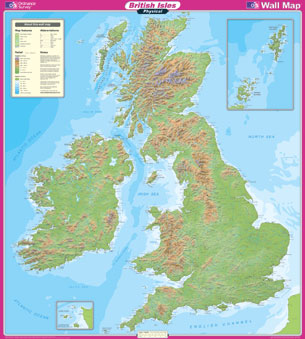
Chukwuemeka Odumegwu Ojukwu: “They call us a dot on the map, and nobody’s sure quite where. Inside that dot were 700 lawyers, 500 physicians, 300 engineers, 8 million poets, 2 novelists of the first rank, and God knows what else – about one-third of all [African] intellectuals in Africa. Some dot. Those intellectuals had once fanned out all over Nigeria … where they had been envied and lynched and massacred. So they retreated to their homeland, to the dot” (30 May 1967) (added emphasis). DURING phases I-III of the Igbo genocide, 29 May 1966-12 January 1970, Nigeria and its co-genocidist suzerain-state Britain murdered 3.1 million Igbo people, 25 per cent of the Igbo population, in this foundational genocide of post-(European)conquest Africa. Tens of thousands of additional Igbo have been murdered by the dual-genocidists subsequently, in phase-IV of the genocide, begun on 13 January 1970 and continues till this day.
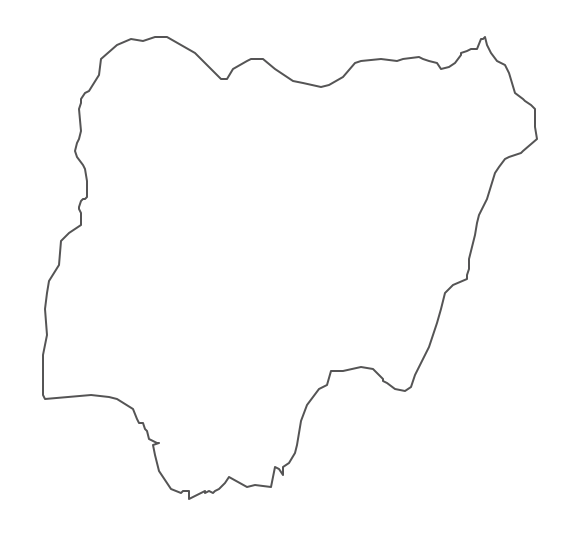
(colossus on the map)
(Tina Brooks Sextet, “Back to the tracks” [personnel: Brooks, tenor saxophone; Blue Mitchell, trumpet; Jackie McLean, alto saxophone; Kenny Drew, piano; Paul Chambers, bass; Art Taylor, drums; recorded: Van Gelder Studio, Englewood Cliffs, US, 1 September 1960])
Few now fail to observe the unassailable ascent of the Biafra freedom movement. The convulsive desperation being exhibited presently by the British chief representative to genocidist Nigeria in speech after speech in this “country” of Britain’s denouncing Igbo/other African peoples’ rights to self-determination speaks volumes of British acknowledgement, however belated, 51 years later, that neither it nor its client co-genocidist state Nigeria can stop the triumph of Biafra freedom. No one else can. The Igbo are gone! Gone! Free!
Some would probably argue that the chief representative’s rantings, condemning African peoples’ inalienable rights to freedom whilst on the ground in the “foreign land” of their posting as a “diplomat”, is “not diplomatic”. This representative would retort, and correctly so, that their position in Nigeria is far beyond that of the “conventional diplomat” but that of a proconsul – from suzerain state Britain.
“Driving seats” of freedom
Two major unfolding events in Britain itself and the perceived, related consequences that these could have on the politics of the ongoing Igbo genocide waged by both Britain and Nigeria account for this proconsul’s unrestrained utterances on African freedom and feeling of bitterness: (1) Scotland’s (nation and state positioned at north region of Britain) quest for restoration-of-independence from Britain after 310 years of union and (2) British departure from the European Union after 44 years of union. Both “unions”, it must be stressed, were consummated because of the voluntary wish or disposition of each of the constituent members/parties. As I have shown elsewhere (http://re-thinkingafrica.blogspot.co.uk/2012/01/rights-for- scots-rights-for-igbo.html), Scotland is a very unlikely candidate to wish to leave the British Union given the exponential benefits that it has derived from the association for three centuries but the Scots insist that they want to exercise their inalienable right to freedom, a right recognised by the United Nations as a right for all peoples. Nicola Sturgeon, Scottish first minister couldn’t be clearer on this goal of the Scottish mission: “Our dream is for Scotland to become independent … To be in the driving seat of our own destiny, to shape our own future”. In her own 29 May 2017 letter to EU President Donald Tusk formally triggering British exit from the EU, British Prime Minister Theresa May unequivocally strikes the chord of freedom: “[we are leaving the EU] to restore our self-determination”.
Both Sturgeon and May declarations on freedom are at the core of the historic Igbo freedom resolve made on 29 May 1966, 51 years earlier, to exit from the British-created Nigeria conquest-“federation” in response to the Anglo-Nigeria launch of the Igbo genocide, this foundational genocide of post-(European conquest) Africa. Both genocidist states’ collaborators murdered 3.1 million Igbo people, 25 per cent of this nation’s population, during phases I-III of the genocide (29 May 1966-12 January 1970) and have subsequently murdered tens of thousands of additional Igbo during phase-IV of the crime which continues to this day.
In the wake of Brexit and the Scots’ restoration-of-independence drive, such high-profile and most unprecedented manifestations of freedom for the peoples not seen recently within Britain, the British government has no confidence at all that its clients in Nigeria can adequately articulate the seeming complexity of explaining to African peoples in Nigeria why their “country” should be waging a 50-year-old genocide against Igbo people, an African people, for demanding to be free to be in the “driving seat of [their] destiny, to shape [their] own future”, “to restore [their] self-determination”, just as the Scots and the other constituent peoples in contemporary Britain so wish. That task of explaining has been assigned to its chief representative in Nigeria and the outcome is the staggering racist vituperation voiced by the envoy and covered in the media in Nigeria. Reading through the vitriol, it appears that the proconsul is not only actively waging this phase of the Igbo genocide but is also confronting the Igbo all over again as in the enslaved plantation estates of Virginia, the Carolinas and elsewhere in southern United States and in Jamaica and Barbados and Saint Domingue of the Caribbean after not too many centuries since... The hostility to African freedom can indeed be devastating to the psyche of its assailant(s)… A Fanonian diagnosis here couldn’t be more instructive.
Genesis British chief representatives in genocidist Nigeria as proconsul did not, of course, emerge with the recent dramatic developments of Scottish freedom and Brexit. Nigeria, it cannot be exaggerated, belongs to Britain; Nigeria is Britain’s (for a more expansive range of discourse on this theme, see Herbert Ekwe-Ekwe, “Igbo genocide, Britain and the United States”,http://re- thinkingafrica.blogspot.co.uk/2015/10/herbert-ekwe-ekwe-conquerors-concord-in.html). Right from the outset, beginning of the Igbo genocide in May 1966, the resident British chief representative, Francis Cumming-Bruce, was proconsul liaising unabashedly with Yakubu Gowon-Yakubu Danjuma-Murtala Mohammed genocidist cells in the Nigeria military and civilian genocidist operatives who were on their premeditated goal raging and murdering any and all Igbo in their sights. During phase-III of the genocide (6 July 1967-12 January 1970), some ex-British conquest administrators/officials who had worked in Nigeria and were back home were often tagged as more “coherent spokespersons” who “rationalised” the genocide than the official Nigerian genocidist spokespersons especially Tony Enaharo, Alison Ayida, Murtala Mohammed, Obafemi Awolowo. The British Broadcasting Corporation, that state broadcaster, particularly its World Servicechannel, was nothing short of being the external radio station for the prosecuting Nigeria genocidist junta in Lagos. This service was much more robust in its “rationalisation” of the genocide (“one Nigeria”, “territorial integrity”, “inviolability of colonial-set frontiers”, “indissolubility of colonial-set borders”, “rebels”, “unacceptable precedence for rest of Africa”, “secessionist!”, “secessionist!”, “secessionist!”…) than the rambling, ramshackleVoice of Nigeria. We should note that neither the BBC nor any major broadcaster, news agency, webcaster and the like in the European World/West would dare use any or a variation of the epithets in the parenthesis above employed to demonise Igbo freedom in commentaries/discussion on the Scottish freedom movement or those of the English, Welsh or Irish peoples of the British Isles or indeed that of Catalonian people in Spain currently on course.
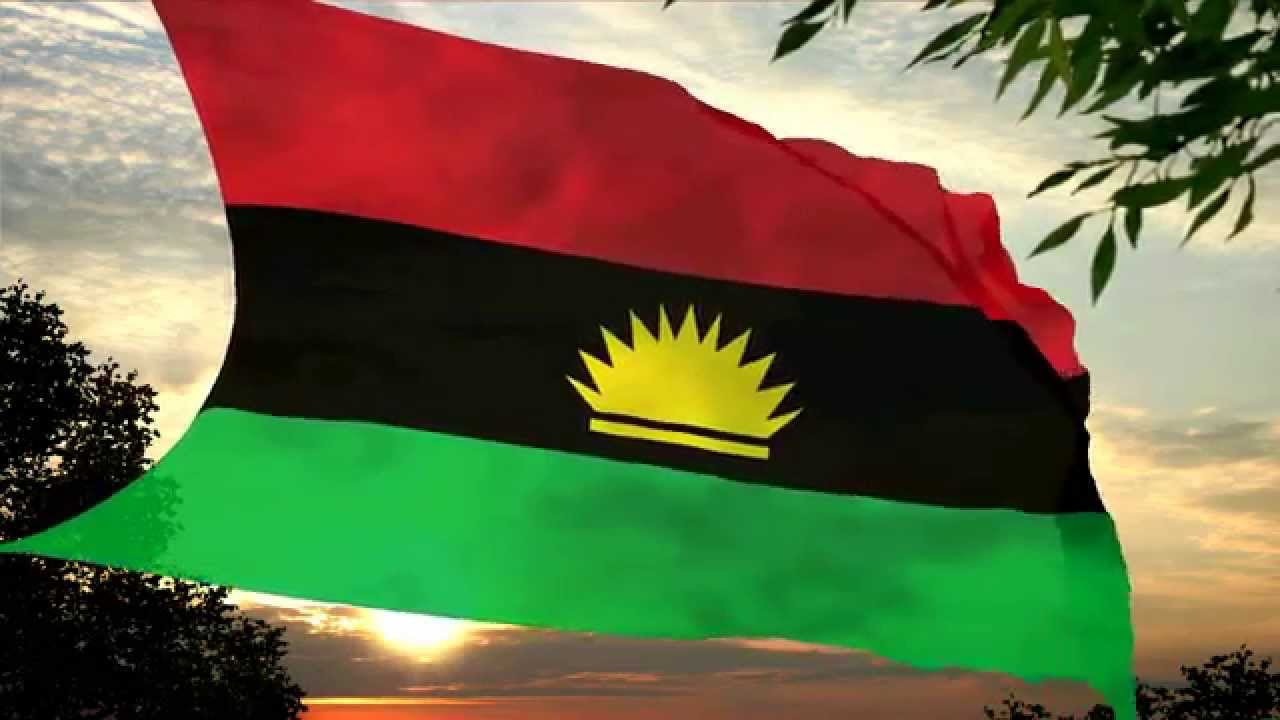
Biafra mission
Biafrans have an opportunity to begin to build a new civilisation where human life, fundamentally, is sacrosanct. This salient feature cannot be overstressed. Nigeria has been, for the Igbo, a haematophagousquagmirethroughout its history especially since 1945 when the first organised pogrom against Igbo immigrants in Jos (northcentral Nigeria) executed by the Hausa-Fulani/islamist north took place under the very watch of the British occupation regime. Hundreds of Igbo were murdered and their homes and other property looted or destroyed. This pogrom was followed by yet another in Kano (further north) in 1953, executed by the same assailants, again under the watch of the British occupation. These dual-pogroms became the prelude, the “dress rehearsals” to the concerted launch of the Igbo genocide by Anglo-Nigeria on 29 May 1966. In neither the Jos nor Kano pogroms did the British prosecute anyone involved in the Igbo massacres. Those writing the scores of the Biafra freedom symphony are aware of these crucial interlocking features of this devastatingly tragic history of Igbo people. The Biafran freedom mission is therefore not geared to begin to construct a state that is merely post-genocide or post post-conquest/post post-“colonial” state of Africa – in other words, cancelling out here and there, in some mechanical venture, that which was Nigeria, arguably “Berlin-state” Africa’s most notorious state. Instead, Biafra is a realisation, a profound reclamation of that which makes us all human and part of humanity. Biafra is a beacon of the tenacity of the spirit of human overcoming of the most desperate, unimaginable brutish forces. Biafra is a haven of creativity, humanism, and progress, in the wake of the gruesome and expansive Igbo genocide.
(Alice Coltrane Quartet, “Lord, help me to be”[personnel: Coltrane, piano; Pharoah Sanders, tenor saxophone; Jimmy Garrison, bass; Ben Riley, drums; recorded: Coltrane home studio, Dix Hills, New York, US, 29 January 1968])
Pianist, pianists’ pianist whose “encyclopaedic knowledge”(to quote the recurring phrase from many a critic) of the jazz piano repertoire ensures he ranges effortlessly in his solo take from the stride traditions of the 1920s-1930s (James Johnson, Willie “The Lion” Smith, Fats Waller) to the late 1940s/early 1950s revolutionary breakthroughs of Thelonious Monk and Herbie Nichols and the later flights of Cecil Taylor but still sounding Jaki Byard; academic, indelible footprints on the Charles Mingus jazz workshop – particularly the classic sextet: Mingus, bass; Johnny Coles, trumpet; Eric Dolphy, alto saxophone, bass clarinet, flute; Clifford Jordan, tenor saxophone; Byard, piano; Dannie Richmond, drums
(Charles Mingus Sextet – with Eric Dolphy, Cornell University 1964, “Orange was the colour of her dress, then blue silk” [personnel: Mingus, bass; Johnny Coles, trumpet; Dolphy, bass clarinet; Clifford Jordan, tenor saxophone; Byard, piano; Dannie Richmond, drums; recorded: live, Cornell University, 18 March 1964])
Herbert Ekwe-Ekwe IN DECEMBER 1920,Hugh Clifford, the British conquest and occupation governor in Nigeria, makes the following contribution to a “Legislative Council Debate, Lagos”:
[Nigeria is a] collection of Independent … States, separated from one another by great distances, by differences of history and traditions and by … racial … political, social and religious barrier.[1]
Today, Tuesday 13 June 2017, 97 years on, would Hugh Clifford conceivably make these same assertions? If so, why? If not, why not?
(The New York Contemporary Five plays Don Cherry’s composition, “Consequences” [personnel: Archie Shepp, tenor saxophone; Cherry, pocket trumpet; John Tchicai, alto saxophone; Don Moore, bass; JC Moses, drums; recorded: live, Jazzhus Montmarte, Copenhagen, Denmark, 15 November 1963])
Twitter @HerbertEkweEkwe
[1]Quoted in George CE Enyoazu, “Sovereign National Conference – Will the people have their say at last?”, African Democrat, 30 October 2013.
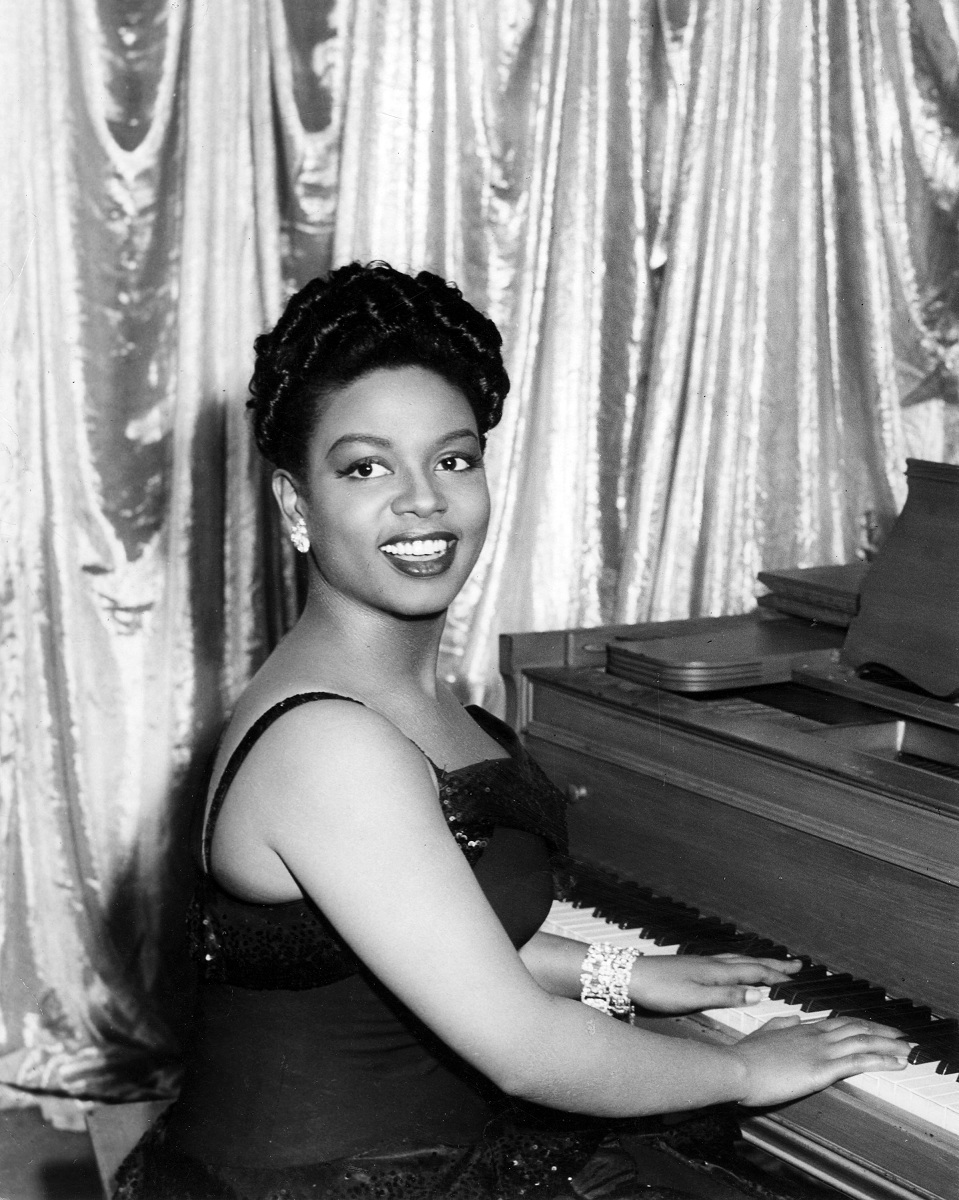
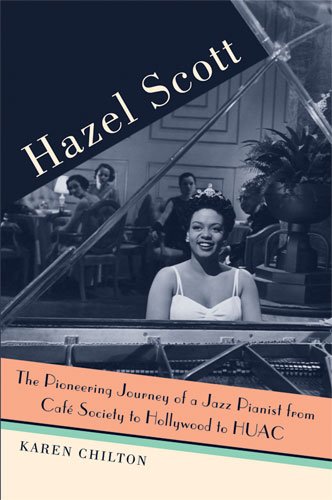
(Born 11 June 1920, Port of Spain, Trinidad & Tobago)
Perspicacious pianist, singer, actress and freedom exponent whose incomparable affirmation of her African American identity in Hollywood of the 1940s-1950s remains a towering legacy
(Professor Scott: Seminar! [The Hazel Scott Show, summer 1950])
(Hazel Scott Trio, “Foggy day” [personnel: Scott, piano; Charles Mingus, bass; Rudy Nichols, drums; recorded: French Television, 1955])
THE 50 MILLION Igbo people will soon know the definitive date of
their historic referendum for the restoration-of-independence, 51 years after
the Anglo/nigerianá launch of the genocide, the foundational genocide of
post-(European)conquest Africa. 3.1 million Igbo people, 25 per cent of this
nation’s population were murdered by the duo-genocidist states during phases I-III of the genocide, 29 May 1966-12 January
1970. Tens of thousands additional Igbo have been murdered, subsequently, since
the genocidists embarked on phase-IV of the slaughter on 13 January 1970.
The Igbo will join the Kurds in Iraq who have announced 25
September 2017 as their referendum date and the people of Catalonia in Spain
who have called theirs on 1 October 2017.
THE straightforward choice for the Igbo referendum is as
follows: Do you want Biafra or Nigeria
(McCoy Tyner Quartet, “Blues on the corner” [personnel: Tyner, piano; Joe Henderson, tenor saxophone; Ron Carter, bass; Elvin Jones, drums; recorded: Van Gelder Studio, Englewood Cliffs, NJ, US, 21 April 1967])
Throughout the stretch of these pulverising five decades of slaughtering 3.1 million and more Igbo people in this genocide, this foundational genocide of post-(European)conquest Africa, the only tangible capability that the nigerianámurderers and their British suzerain-state ally have acquired is one to commit even more murders – nothing else … definitely, not the more challenging capacity to develop and transform their human potential and economy and, in turn, attract and merit the accolades and recognition from peers and others elsewhere in the world. Alas, murders and murdering and murders constitute genocidist nigerianáeasily decipherable DNA signature. Dreadful legacy.
(George Russell Sextet here plays “Nardis”, a Miles Davis’s composition [personnel: Russell, piano;Don Ellis, trumpet;Dave Baker, trombone;Eric Dolphy, bass clarinet;Steve Swallow, bass;Joe Hunt, drums; recorded: Riverside Records, New York, US, 8 May 1961])
Herbert Ekwe-Ekwe is specialist on the state and on genocide & wars in Africa in the post-1966 epoch – beginning with the Igbo genocide, 29 May 1966-present day, the foundational and most gruesome genocide of post-(European)conquest Africa. 3.1 million Igbo or 25 per cent of this nation’s population were murdered by Nigeria and its allies, principally Britain. Africa and the rest of the world largely stood by and watched as the perpetrators enacted this horror most ruthlessly. The world could have stopped this genocide; the world should have stopped this genocide. This genocide inaugurated Africa’s current age of pestilence. During the period, 12 million additional Africans have been murdered in further genocide in Rwanda (1994), Zaïre/DRCongo (variously, since the late 1990s) and Darfur – west of the Sudan – (since 2004) and in other wars in Africa. African peoples have, presently, no other choice but exit/dismantle the extant genocide-state (the bane of their existence & progress) & construct own nation-centred states that serve their interests. He is author of several books & papers on the subject and his new book is entitled The longest genocide – since 29 May 1966 (2019).