Rethinking Africa is a forward looking blog dedicated to the exchange of innovative thinking on issues affecting the advancement of African peoples wherever they are. We provide rigorous and insightful analyses on the issues affecting Africans and their vision of the world.
(Medal is sent back to Buckingham Palace, London, 25 November 1969)
ICONIC BEETLE’s John Lennon sends back the 1965 MBE knighthood medal bestowed on him by Queen Elizabeth II of England over Britain’s instrumental role in the perpetration of the Igbo genocide with its client state Nigeria in which 3.1 million Igbo people or 25 per cent of this nation’s population are murdered between 29 May 1966 and 12 January 1970 (phases I-III) in this foundational genocide of post-(European)conquest Africa Twitter @HerbertEkweEkwe
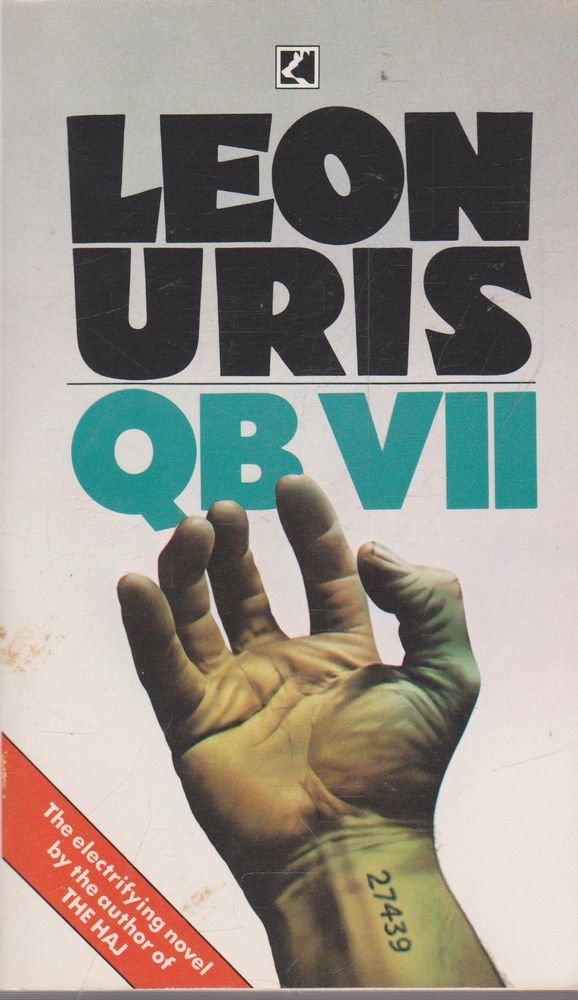
– excerpts from the gripping and indelible lines on the Igbo genocide (29 May 1966-12 January 1970), the foundational genocide of post-(European)conquest Africa during which Britain and client-state Nigeria, southwestcentral Africa, murder 3.1 million Igbo people, beginning 21 years after end of the Jewish genocide, in Leon Uri’s classic, QB VII (London: Bantam Books, 1970), pp. 392-393:
Abe studied them all, his worn-out little band of idealists.
“Ladies and gentlemen of the jury,” he said in a voice that literally moaned with sorrow, “I would like to make a statement by quoting in effect the words of Thomas Bannister, Q.C., when he said that no one in their wildest imaginations would have believed Hitler’s Germany before it actually happened. And he said, if the civilized world knew what Hitler intended to do then they would have stopped him. Well, here we are in 1967, and the Arabs vow daily to finish Hitler’s work. Certainly the world will not stand for another chapter of this holocaust. There is a right and a wrong. It is right for a people to want to survive. It is wrong to want to destroy them. But alas, the kingdom of heaven is concerned with righteousness alone. The kingdoms of the earth run on oil. Well now, certainly the world should be appalled by what is happening in Biafra. The stink of genocide is everywhere. Certainly, after Hitler’s Germany, the world should step in and stop genocide in Biafra. However, that becomes impractical when one considers England’s investments in Nigeria conflict with France’s interests in Biafra. After all, members of the jury, it is only [African] people killing other [African] people.
“We should like to think,” Abe said, “that Thomas Bannister was right, when he said more people, including the German people, should have risked punishment and death by refusing orders. We should like to believe there would have been a protest and ask why didn’t the Germans protest? Well today, young people march in the streets to protest Biafra and Vietnam and the principle of murdering their fellow man through the medium of war. And we say to them … why are you protesting so much? Why don’t you go there and kill like your father killed? …” (added emphasis)
(Eric Dolphy Duo, “Alone together” [personnel: Dolphy, bass clarinet; Richard Davis, double bass; recorded: Fuel Records, New York, US, {May?June?July?} 1963])
Herbert Ekwe-Ekwe Speaking at
a reception with a number of top British establishment figures (captured on camera
– see video below) which noticeably include head of state Queen Elizabeth II, parliamentary
speaker Bercow, archbishop of Canterbury Welby and former justice secretary Grayling,
David Cameron, British prime minister, pronounces: “We’ve got some leaders of
some fantastically corrupt countries coming to Britain … Nigeria and
Afghanistan, possibly the two most corrupt countries in the world”. We must note, though, that despite
Cameron’s affirmation or rather because of it, Nigeria works exponentially for Britain. On 29 May 1966, just 5 months
before David Cameron was born, Britain, under prime minister Harold Wilson,
supported Nigeria militarily, diplomatically and politically as it launched the
genocide against Igbo people. 3.1 million Igbo or one-quarter of this nation’s
population were murdered during the course of 44 dreadful months. This is the
foundational genocide of post-(European)conquest Africa and the most gruesome
campaign of extermination of a people in African history. This genocide
continues today. It is led by Muhammadu Buhari, a genocidist trooper right from
the outset 50 years ago, and the islamist head of the Nigeria regime currently
visiting London on a so-called corruption summit. The genocide is supported
fully by Cameron, just as his 1960s’ predecessor. “Punishment”, capital net-exporters, cavalier Britain waged the genocide
against the Igbo as “punishment” for the vanguard role Igbo people played
between the mid-1930s and October 1960 to terminate 75 years of its conquest
and occupation of Nigeria and emerged as the effective suzerain-state power over
Nigeria subsequently, safeguarding its vast economic and strategic interests in this southwestcentral Africa region. Besides, kakistocratic Nigeria, in addition to the other “Berlin-states”
dotted across Africa, “corrupt” or not, have consistently been net-exporters of capital to Britain and
the rest of the West since 1981. At least the gargantuan sum of US$400 billion
has been transferred in this track of transaction during the period which is
tagged “legitimate” by its recipients. Except African peoples in these “Berlin-states”
embark at once on freeing themselves from this quagmire of existence in states essentially
constructed to serve the European World in perpetuity, a westerner born in 2016
would conceivably, in another 50 years, update David Cameron’s assured, champagne-sipping
breathtaking performance on the subject but this time around with even more
cavalier and pompous disposition than what was on display earlier on in the day...
(David Cameron in conversation ... Nigeria: “fantastically corrupt...”)
(Medal is sent back to Buckingham Palace, London, 25 November
1969)
Iconic Beetle’s John Lennon sends back the 1965 MBE knighthood medal bestowed on him by Queen Elizabeth II of England over Britain’s instrumental role in the perpetration of the Igbo genocide with its client state Nigeria in which 3.1 million Igbo people, one-quarter of this nation’s population, are murdered between 29 May 1966 and 12 January 1970 in this foundational genocide of post-(European)conquest Africa Twitter @HerbertEkweEkwe
(The world’s countries, as reflected
by the risk of mass atrocities in each – Simon-Skjodt Center for the Prevention
of Genocide, United States Holocaust Memorial Museum) Communities
living in the countries in darker colors on the map [above] are at greater risk of
state-led mass violence, according to a think tank connected to the U.S.
Holocaust Memorial Museum.
On
Monday [21 September 2015], the Simon-Skjodt Center for the Prevention of
Genocide launched a tool aimed at forecasting the risk of state-led mass
killings. The Early Warning Project tracks the apparent signs of a
potential pogrom or assault on minorities within a state. Its findings
stitch annual statistical risk assessments of individual countries —
based on a number of models conceived by political scientists —
alongside crowd-sourced opinion surveys of regional experts.
The 10 countries at the highest risk of
experiencing a future episode of mass killing are as follows:
Myanmar
Nigeria
Sudan
Egypt
Central African Republic
South Sudan
Democratic Republic of Congo
Afghanistan
Pakistan
Yemen
Earlier this year, WorldViews talked to Cameron Hudson, director of the
Simon-Skjodt Center, about the threat in Burma (also known as Myanmar). Hudson
had been part of a fact-finding mission to the country, studying the risks
faced by the beleaguered Rohingyas, a Muslim minority that has been
rendered stateless by decades of discriminatory Burmese policies.
A
report concluded then that the Rohingya were a people “at grave risk for
additional mass atrocities and even genocide.”
“We’re very cautious when we invoke the term ‘genocide,’
knowing that it can be quite polarizing and sometimes even unhelpful,” said
Hudson at the time. “But there is a combination of factors
— many of which you saw in 1930s Germany and 1990s Rwanda — that are
quite concerning.”
The project now is anchored in the Holocaust Museum's moral
mission to educate against and prevent future atrocities, says Michael
Chertoff, former secretary of Homeland Security and chairman of the museum's
Committee on Conscience, in an e-mailed news release.
“No longer can governments say that they 'did not know' as a
means of justifying their inaction,” he said.
Ishaan
Tharoo is foreign affairs writer for the Washington Post Twitter@HerbertEkweEkwe
– excerpts from the
gripping and indelible lines on the Igbo genocide (29 May 1966-12 January 1970),
the foundational genocide of post-(European)conquest Africa launched by Nigeria and Britain 21 years after end of the Jewish genocide, in Leon Uri’s
classic, QB VII (London: Bantam Books, 1970), pp. 392-393:
Abe studied them all, his worn-out little band of idealists.
“Ladies and gentlemen of the jury,” he said in a voice that
literally moaned with sorrow, “I would like to make a statement by quoting in
effect the words of Thomas Bannister, Q.C., when he said that no one in their
wildest imaginations would have believed Hitler’s Germany before it actually
happened. And he said, if the civilized world knew what Hitler intended to do
then they would have stopped him. Well, here we are in 1967, and the Arabs vow
daily to finish Hitler’s work. Certainly the world will not stand for another
chapter of this holocaust. There is a right and a wrong. It is right for a
people to want to survive. It is wrong to want to destroy them. But alas, the
kingdom of heaven is concerned with righteousness alone. The kingdoms of the
earth run on oil. Well now, certainly the world should be appalled by what is
happening in Biafra. The stink of genocide is everywhere. Certainly, after
Hitler’s Germany, the world should step in and stop genocide in Biafra.
However, that becomes impractical when one considers England’s investments in
Nigeria conflict with France’s interests in Biafra. After all, members of the
jury, it is only [African] people killing other [African] people.
“We should like to think,” Abe said, “that Thomas Bannister
was right, when he said more people, including the German people, should have
risked punishment and death by refusing orders. We should like to believe there
would have been a protest and ask why didn’t the Germans protest? Well today,
young people march in the streets to protest Biafra and Vietnam and the
principle of murdering their fellow man through the medium of war. And we say
to them … why are you protesting so much? Why don’t you go there and kill like
your father killed? …”
(Eric Dolphy Duo, “Alone together” [personnel: Dolphy, bass clarinet; Richard Davis, double bass; recorded: Fuel Records, New York, US, {May?June?July?} 1963])
Igbo tenacity, drive and relentless
optimism to pursue and overcome life’s challenges are acutely an affront
to both the sardauna of Sokoto (northwest Nigeria) and British occupation
sensibilities in Nigeria. This is particularly evident during the 1930s-1960s epoch when Igbo people spearhead the termination of the British occupation of these lands and peoples of southwestcentral Africa. This sardauna interview (video below) must have been
recorded in the late 1950s/early 1960s – definitely after both the
1945 and 1953 north Nigeria-organised pogroms against Igbo immigrant populations
in Jos and Kano respectively. Hundreds of Igbo were murdered during the pogroms
and tens of thousands of pounds sterling worth of their property were
looted/destroyed at the time. Each pogrom was carried out because of the Igbo
vanguard role in the restoration-of-independence movement to free Nigeria from
the British conquest and occupation, begun in the 1930s. North Nigeria’s sociopolitical
leaderships, effectively British regional clients, were opposed to
the restoration of African freedom. No other leadership across the entire
Southern World (Africa, Asia, the Caribbean/South America) has such an
unenviable record during this unprecedented epoch of transglobal freedom
charge. North Nigeria leaderships, indeed, were disposed to the continuing British
occupation of Nigeria. It is therefore not in the least surprising that, in year 2015, fifty-five years after the essentially bogus sovereignty that Nigeria exercises, this state’s current head of regime, a genocidist and putschist operative, is imposed on the peoples, thanks to a raft of machinations in which Britain plays a critical role.
Enslaved spaces and 20th/21st centuries replicas
As a result,
the occupation regime did not apprehend or prosecute anyone for either the 1945
or 1953 pogroms and the outrages became the “dress rehearsals” for
the 29 May 1966-12 January 1970 Igbo genocide when the Nigeria state (as a
whole, involving other constituent nations including the
Yoruba, the Edo and Urhobo of the west region) with full Britain involvement,
and others, murdered 3.1 million Igbo or one-quarter of this nation’s population.
Britain, nor in fact any of the other pan-European conquerors of Africa
(France, Portugal, Belgium, Spain, Germany), did not create a
Nigeria, or whatever names these “Berlin states” in Africa are
called, as precursor for African emancipation. On the contrary, the Nigerias of
Africa are more of replicas of the enslaved plantations of the Americas (in the
previous epoch of nearly 400 years) to perpetuate European World control and
exploitation of Africa and Africans in perpetuity.
The enslaved
Igbo encountered this with unrelenting courage and defiance in the enslaved
estates in the Americas (north, south and the Caribbean), as history shows, and
wouldn’t have it either at home! The sardauna interview should be part of
History/Politics 101 course on Africa because it does tell one, in a nutshell,
the “fate” of the Igbo in Nigeria that north Nigeria, with firm
support of Britain, had, carefully, contrived right back in the 1950s. Except
the Igbo people have signed up for a concerted suicide, they surely cannot see
their destiny emplaced in this space of certain death and immiseration.
This has been
the cardinal lesson of the Igbo genocide. Thankfully, some Igbo who were still
not sure of the long term implications of the continuing Nigerian occupation of
their homeland (since 12 January 1970) have had a baptism of enlightenment
since the video of the sardauna interview went viral! Suddenly, historical
records become opportunities for rare streams of conscientisation...
“The Federal Ministry of Education has released the cut-off marks on State-by-State basis of the just concluded National Common Entrance Examination for admission processes into Federal Unity Colleges nationwide.”
(Wayne Shorter Septet, “The all seeing eye” [personnel: Shorter, tenor saxophone; Freddie Hubbard, trumpet; Grachan Moncur III, trombone, James Spaulding, alto saxophone; Herbie Hancock, piano; Ron Carter, bass; Joe Chambers, drums; recorded: Van Gelder Studio, EnglewoodCliff, NJ,US, 15 October 1965)
“Pupils that scored above the cut-off marks based on their state of origin are eligible for admission on merit.
Abia – Male (130) Female (130)
Adamawa – Male (62) Female (62)
Akwa-Ibom – Male (123) Female (123)
Anambra – Male (139) Female (139)
Bauchi – Male (35) Female (35)
Bayelsa – Male (72) Female (72)
Benue – Male (111) Female (111)
Borno – Male (45) Female (45)
Cross-Rivers – Male (97) Female (97)
Delta – Male (131) Female (131)
Ebonyi – Male (112) Female (112)
Edo – Male (127) Female (127)
Ekiti – Male (119) Female (119)
Enugu – Male (134) Female (134)
Gombe – Male (58) Female (58)
Imo – Male (138) Female (138)
Jigawa – Male (44) Female (44)
Kaduna – Male (91) Female (91)
Kano – Male (67) Female (67)
Kastina – Male (60) Female (60)
Kebbi – Male (9) Female (20)
Kogi – Male (119) Female (119)
Kwara – Male (123) Female (123)
Lagos – Male (133) Female (133)
Nassarawa – Male (58) Female (58)
Niger – Male (93) Female (93)
Ogun – Male (131) Female (131)
Ondo – Male (126) Female (126)
Osun – Male (127) Female (127)
Oyo – Male (127) Female (127)
Plateau – Male (97) Female (97)
Rivers – Male (118) Female (118)
Sokoto – Male (9) Female (13)
Taraba – Male (3) Female (11)
Yobe – Male (2) Female (27)
Zamfara – Male (4) Female (2)
FCT Abuja – Male (90) Female (90).”
(*****Scholars and researchers can’t but scrupulously note the higher mark expectation trends that uniformly affect the performances of all students, female and male, from the seven regions of occupied Igboland [Abia, Anambra, Ebonyi, Enuugwu, Delta, Imo, Rivers] than their counterparts in Nigeria and will appropriately draw their own considered conclusion/s – Herbert Ekwe-Ekwe) Twitter@HerbertEkweEkwe
Herbert Ekwe-Ekwe AS THE WORLD witnessed last week, rarely
have there been two dreadful massacres carried out almost simultaneously in two
separate continents by two organisations surely operating autonomously but
belonging to the same overarching religiopolitical agency. Boko Haram, the
islamist jihadist group based in north Nigeria,
massacred 2000 people in Baga (The
Guardian, London,
10 January 2015) during the course of two days. In Paris,
France, over a 2-day stretch,
during the same week, a French–based cell affiliated to some islamist caliphate
brigade in the Mid East massacred 17 people
including cartoonists of the satirical journal, Charlie Hebdo, and staff and shoppers at a Jewish supermarket. Boko
Haram is ideologically allied to the global islamist causes and projects of the
Mid East amalgam including al-Qaeda in the Arabian peninsula and the Islamic
State (controls vast swathes of territory in Iraq and Syria), as well as the
Taleban in Afghanistan and al-Qaeda in the Islamic Maghreb in west/northwest
Africa and al-Shabaab in Somalia. Boko Haram leader Abubakar Shekau never tires to extend
solidarity messages to these fellow organisations in his regular video releases
that update the strategic objectives and expectations of the ongoing transnational
insurgency.
THE responses of Nigeria and France to these
tragedies couldn’t be so trenchantly different though. Right from the outset,
the French state robustly came out in defence of its population. It mobilised
the entire range of its security forces to hunt down the murderous cell, stepped
up security for its citizens whilst continually reassuring them, attended to
the dead, the dying and the wounded, and organised a solidarity march in honour
of the 17 and their families and for the reaffirmation of the crucial tenets
and ethos that underpin the existence of the French republic. 3.5 million
French people turned out in Paris
on Sunday 11th January for this historic gathering. The heads of state or
government of most countries of the European World and beyond attended the
march in support of France.
The global media covered this story of a week comprehensively.
Morbid silence
In Nigeria, in contrast, the country’s
regime-leadership and its expanded establishment exercised a morbid silence
over the outrage in Baga – not a word on Baga from the current head-of-regime
nor from any of the seven ex-heads of regime. None of the eight was moved to
act in defence of Baga from its ruthless assailants, not even in the wake of that
haunting, graphic account of the tragedy of his town rendered soon after by Baga
district head survivor Baba Abba Hassan: “…most victims are children, women and
elderly people who could not run fast enough when insurgents drove in … firing
rocket-propelled grenades and assault rifles on town residents”. Silence, punishing
silence, utter silence… Such was the staggering indifference displayed by the Nigeria state
to this massacre, within its frontier, that an observer would be forgiven if
they thought that the slaughter that occurred
in Baga never happened or that Baga were somewhere else on the planet or,
perhaps, that Baga didn’t really exist… In effect,
this state no longer pretends that it exists to serve its peoples (for an expansive
discourse on this feature, see Herbert Ekwe-Ekwe, Readings from Reading:
Essays on African Politics, Genocide, Literature, 2011). If anyone is still
unsure of this crucial characteristic, a reminder of the final segment of
Nigeria’s response to these massacres of a week might be of help: despite the
silence on Baga, the state’s head of regime found the time and purpose to send
a message of condolence to the French head of state on the murder in Paris;
equally silent on Baga, another senior regime official found the time and
purpose to tweet a message of condolence to the people of France on the murder
in Paris. It shouldn’t be found surprising to add that no one marched in Nigeria on
behalf of the 2000 murdered in Baga nor for their families nor indeed for any exhortative
values of a doubtful state. As for the world’s media, the lenses of their camera,
during the week, were of course focussed 2600 miles away from Baga – Paris.
IT IS to this focus of
the world media and some of its wider consequences that led Simon Allison of
the Daily Maverick to observe: “It
may be the 21st century, but African lives are still deemed less newsworthy –
and, by implication, less valuable – than western lives” (Simon Allison, “I am Charlie, but I am Baga too”, Daily Maverick, Johannesburg, 12 January 2015). Allison is undoubtedly
alluding to the catastrophic diminution of the African humanity by the pan-European
World during 400 years of the latter’s enslavement of African peoples and its conquest
and occupation of Africa. But as we now show,
this perceived “less valuable” status of African life in the contemporary epoch has
not just been a teleological transposition from a somewhat distant past. On the
contrary, it is a thoroughly, consciously mapped-out package and practice
designed and formally launched much more recently, in the mid-1960s, by a
not-too-unfamiliar global power central
in this visceral African subjugated history/international politics.
Diarchy
Finally, let us
return to Nigeria’s
deafening silence on Baga. Given Nigeria’s past and recurring
history, does one realistically expect this state to defend Baga from Boko
Haram, comment or mourn the murder of the 2000 from Baga – almost 49 years to
the day after it embarked on the murder of 3.1 million of its Igbo population
in a studiously-organised genocide that is still ongoing? Each of the seven of Nigeria’s ex-heads of regime, referred to
earlier, is a structural participant in this foundational genocide of
post-(European)conquest Africa. They all constitute
a génocidaire septet. This genocide at once shapes the architecture of the
present Nigeria
establishment as the world knows it. Therefore, no one from any spheres or
levers of this state assemblage could have had anything intelligible or/and
credible to say on Baga. Part of the reason of Nigeria’s silence on Baga is that given
the country’s Igbo genocide antecedent, few would have believed any word declared on
this massacre by any officials of its state.
Britain, the ex-conqueror/occupying
state in Nigeria
supported the Igbo genocide from conceptualisation to execution. In supporting
the genocide, Britain sought
to “punish” the Igbo for being in the vanguard, since the 1930s, to terminate
the British occupation ofNigeria – one of the very prized lands of the British conquest of Africa. During the course of the 1968/1969 gruesomely devastating
apogee of the genocide, Harold Wilson, the British prime minister, informed C.
Clyde Ferguson, the US state department special coordinator for relief to
Biafra, that he, Harold Wilson, “would accept a half million dead Biafrans if
that was what it took” Nigeria to destroy the Igbo resistance to the genocide
(Roger Morris,Uncertain
Greatness: Henry Kissinger and American Foreign Policy, 1977: 122). For the
record, Wilson’s “a half a million dead Biafrans”-sentence represented 4.2 per
cent of the Igbo population then; by the time that that phase of the genocide
came to an end, 6-9 months after Wilson’s wish-declaration, 25 per cent of this
nation’s population or 3.1 million Igbo people had been murdered by the
genocidists.
Undoubtedly, the Nigerians, led by Fulani islamist jihadists and their Yoruba, Urhobo, Hausa, Edo, Jukun, Tiv, Kanuri, Nupe, Jawara and Gwari principal pan-African allies, had handsomely obliged their “massa” Harold Wilson’s wish. Those punching words
of historian Chancellor Williams’s were at once vindicated, most dramatically: “…
The Europeans had also been busily building up and training
strong African armies. Africans trained
to hate, kill and conquer Africans…” (Chancellor Williams, The Destruction of Black Civilization, 1987: 218). IN THE CONSTRUCTION of the template of international relations that would embody the
post-1939-1945 war era, the British-Nigerian genocidist diarchy had elevated
the “dispensability of African life in national and international politics” to
the highest calibrated level possible.
(John
Coltrane Quartet, “Dusk-Dawn” [personnel: Coltrane, tenor saxophone; McCoy
Tyner, piano; Jimmy Garrison, bass; Elvin Jones, drums; recorded: Van Gelder
Studio, Englewoods Cliff, NJ, US,
16 June 1965])
References Allison, Simon. “I am Charlie, but I am Baga too”.Daily Maverick, Johannesburg, 12 January 2015. Ekwe-Ekwe, Herbert. Readings from Reading: Essays on African Politics, Genocide, Literature. Dakar and Reading: African Renaissance, 2011. John Coltrane Quartet.“Dusk-Dawn”. Van Gelder Studio, Englewood, Cliff, NJ, US, 16 June 1965. Morris, Roger. Uncertain Greatness: Henry Kissinger and American Foreign Policy. London & New York: Quartet Books, 1977. Williams, Chancellor. The Destruction of Black Civilization. Chicago: Third World, 1987.
The
Federal Ministry of Education has released the cut-off marks on State-by-State
basis of the just concluded National Common Entrance Examination for admission
processes into Federal Unity Colleges nationwide.
Wayne
Shorter Septet, “The all seeing eye” – personnel: Shorter, tenor saxophone;
Freddie Hubbard, trumpet; Grachan Moncur III, trombone, James Spaulding, alto
saxophone; Herbie Hancock, piano; Ron Carter, bass; Joe Chambers, drums
[recorded: Van Gelder Studio, EnglewoodCliff, NJ,
US, 15 October
1965)
Pupils
that scored above the cut-off marks based on their state of origin are eligible
for admission on merit.
Abia – Male
(130) Female (130)
Adamawa –
Male (62) Female (62)
Akwa-Ibom
– Male (123) Female (123)
Anambra –
Male (139) Female (139)
Bauchi – Male
(35) Female (35)
Bayelsa –
Male (72) Female (72)
Benue – Male (111) Female (111)
Borno – Male
(45) Female (45)
Cross-Rivers
– Male (97) Female (97)
Delta – Male
(131) Female (131)
Ebonyi – Male
(112) Female (112)
Edo – Male (127) Female (127)
Ekiti – Male
(119) Female (119)
Enugu – Male (134) Female (134)
Gombe – Male
(58) Female (58)
Imo – Male
(138) Female (138)
Jigawa – Male
(44) Female (44)
Kaduna – Male (91) Female (91)
Kano – Male (67) Female (67)
Kastina –
Male (60) Female (60)
Kebbi – Male
(9) Female (20)
Kogi – Male
(119) Female (119)
Kwara – Male
(123) Female (123)
Lagos – Male (133) Female (133)
Nassarawa
– Male (58) Female (58)
Niger – Male (93) Female (93)
Ogun – Male
(131) Female (131)
Ondo – Male
(126) Female (126)
Osun – Male
(127) Female (127)
Oyo – Male
(127) Female (127)
Plateau –
Male (97) Female (97)
Rivers – Male
(118) Female (118)
Sokoto – Male
(9) Female (13)
Taraba – Male
(3) Female (11)
Yobe – Male
(2) Female (27)
Zamfara –
Male (4) Female (2)
FCT Abuja – Male (90) Female (90)
(*****Scholars
and researchers can’t but scrupulously note the higher mark expectation trends
that uniformly affect the performances of all students, female and male, from
the seven regions of occupied Igboland [Abia, Anambra, Ebonyi, Enuugwu, Delta,
Imo, Rivers] than their counterparts in Nigeria and will appropriately draw
their own considered conclusion/s – Herbert Ekwe-Ekwe) Twitter@HerbertEkweEkwe
Herbert Ekwe-Ekwe is specialist on the state and on genocide & wars in Africa in the post-1966 epoch – beginning with the Igbo genocide, 29 May 1966-present day, the foundational and most gruesome genocide of post-(European)conquest Africa. 3.1 million Igbo or 25 per cent of this nation’s population were murdered by Nigeria and its allies, principally Britain. Africa and the rest of the world largely stood by and watched as the perpetrators enacted this horror most ruthlessly. The world could have stopped this genocide; the world should have stopped this genocide. This genocide inaugurated Africa’s current age of pestilence. During the period, 12 million additional Africans have been murdered in further genocide in Rwanda (1994), Zaïre/DRCongo (variously, since the late 1990s) and Darfur – west of the Sudan – (since 2004) and in other wars in Africa. African peoples have, presently, no other choice but exit/dismantle the extant genocide-state (the bane of their existence & progress) & construct own nation-centred states that serve their interests. He is author of several books & papers on the subject and his new book is entitled The longest genocide – since 29 May 1966 (2019).