Rethinking Africa is a forward looking blog dedicated to the exchange of innovative thinking on issues affecting the advancement of African peoples wherever they are. We provide rigorous and insightful analyses on the issues affecting Africans and their vision of the world.
DISTINGUISHED prolific author of children’s books including the critically acclaimed MC Higgins, the Great
(Multiinstrumentalist Eric Dolphy here plays “God bless the child” [composed by Billie Holiday & Arthur Herzog, Jr] [personnel: Dolphy, bass clarinet; recorded: live, University of Illinoi, Champaign, Illinoi, 10 March 1963])
(Born c1820, Dorchester county, Maryland, US; dies 10 March 1913, Auburn, New York, US)
ACTIVIST exponent of African American freedom who works intensely and expansively on the historic underground railroad/railway liberatory network and whose illustrative stretch of resilient freedom strategy is a rich legacy that the great Biafrans of our age have adapted and deployed variously in the course of the past 53 years (Herbert Ekwe-Ekwe)
(Wynton Marsalis Quintet, “Harriet Tubman” [personnel: Marsalis, trumpet; Joe Henderson, tenor saxophone; Marcus Roberts, piano; Bob Hurst, bass; Jeff “Tain”Watts, drums; recorded: BMG Studios, New York, US, {?} {?} 1991])
TODAY is the 89th birthday of Ornette
Coleman (born 9 March 1930, Fort Worth, Texas, US): alto saxophonist, trumpeter, violinist, composer, one of the very
top inventive jazz artists of all time – leading exponent of the avant-garde/free
jazz movement, beginning late 1950s/early 1960s when his varying working
quartets(personnel: Coleman, alto saxophone [tenor
saxophone on Ornette on Tenor only], Don Cherry,
cornet/trumpet/pocket trumpet; Charlie Haden/Scott LaFaro/Red
Mitchell/Percy Heath/Jimmy Garrison/Don Payne,
bass; Billy Higgins/Ed Blackwell/Shelly Manne,
drums) and quintet (Something Else!!!! only with Walter
Norris on piano) record seven classic albums:
1. Something Else!!!!, 1958
2. Tomorrow is the Question, 1959
3. The Shape of Jazz to Come, 1959
4. Change of the Century, 1959
5. This is our Music, 1960
6. Ornette!, 1961
7. Ornette on Tenor, 1961
and an eighth, this time recorded
by an octet:
8. Free Jazz, 1960
(personnel:Coleman, alto saxophone; Don Cherry, pocket trumpet; Freddie
Hubbard, trumpet; Eric Dolphy, bass clarinet; Charlie
Haden, bass; Scott LaFaro, bass; Ed Blackwell,
drums; Billy Higgins, drums) Biafra
IN this revolutionary epoch in which stretches of peoples and nations across
the globe but especially in the African World have risen against centuries of
pan-European conquest, occupation and subjugation and also pointedly in these
past 53 years, the Igbo resistance to the bludgeoning genocide being waged on
their people in Biafra by the Africa-based
Fulani islamist/jihadist-led Nigeria client state and its suzerain Britain,
Coleman’s music has consistently offered an infectiously gripping optimism for
freedom.
Igbo people have demonstrated extraordinary resilience in the resistance and
will surely overcome this
Anglo-Nigeria haematophagous monster as the strikingly innovative and
irrepressible Biafra freedom movement triumphs.
TWO compositions from the Coleman
repertoire couldn’t be more appropriate to capture the immense
transformational possibilities that success in Biafra will have for constituent
peoples in southwestcentral Africa region and elsewhere in Africa: “Turnaround”
(February 1959) and “Change of the century” (October 1959).
(Ornette Coleman Quartet, “Turnaround” [personnel: Coleman, alto saxophone; Don Cherry, trumpet; Red Mitchell, bass; Shelly Manne, drums; recorded: Contemporary’s Studio, Los Angeles, US, 23 February 1959])
(Ornette Coleman Quartet, “Change of the century” [personnel:Coleman, alto saxophone;Don Cherry, pocket trumpet;Charlie Haden, bass;Billy Higgins, drums; recorded: Radio Recorders in Hollywood, California, US, 8 October 1959])
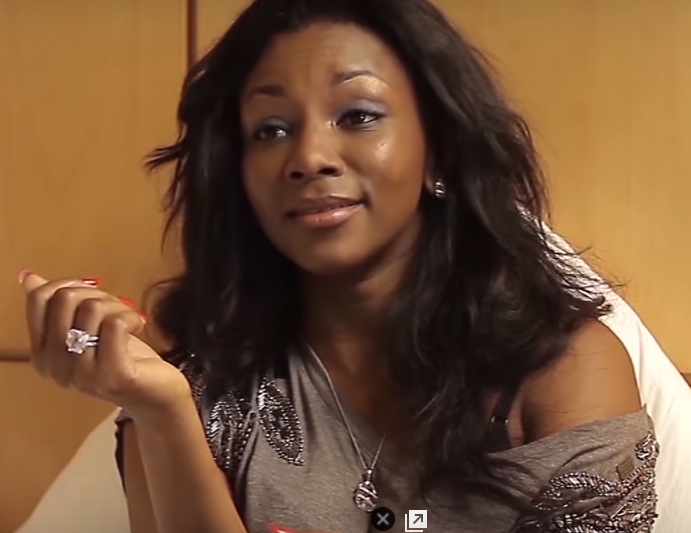
(Genevieve Nnaji: ... one of Biafra’s and
Africa’s leading actresses writes on ongoing
widespread attacks on Igbo immigrants and the destruction/looting of their
business enterprises by regime death-squads in Lagos, west genocidist Nigeria…[from Ngozika Ugochi Chukwu and Samuel Okeke’s Facebook pages, slightly edited])
Genevieve Nnaji THE Igbo have never been the problem with Nigeria or
wherever they find themselves. This is not ethnic jingoism or bigotry.
The Igbo will never foment
troubles where they are because they know that “isi kote ebu, ogbaa ya”.
They also know deep in their
hearts that “ife onye metalu, obulu”.
The Igbo will never kill others to live because they believe
that “ndu bu isi” Yes, murder or “igbu ochu” is one of the most
despicable crimes amongst the Igbo.
The Igbo believe that once you are alive, there is always a way left to succeed.
The “igba mbo” is perhaps the best gift of the Igbo.
Yes, the Igbo struggle to make it in life.
They are industrious, assiduous & sedulous.
The Igbo also believe in helping one another.
That’s why you hear “onye aghana nwanne ya”.
THERE is also no lateness in making it in life amongst the Igbo
because “ebe onye oso ruru, onye ije geru” and “uwa mgbede
ka mma”.
Igbo businesspeople are scattered all over the world.
Wherever they are, they make their homes, building houses &
gentrifying districts. For most lgbo, “ala bu otu”.
Igbo are liberal, accommodating & very friendly to
foreigners.
This is because they are themselves scattered all over the world as
immigrants.
NA LAGOS, ndi Igbo naagba oso ahia, Igbo neere gala na go slow,
Igbo naaru conductor, umu Igbo bu importers buru manufacturers,
Igbo noo into clearing and forwarding,
Igbo neesi nri, umunna neere motor parts, Igbo naaru police na
oru aka.
Ndi Igbo adiro selective with jobs maka na onye ruo, orie.
But the Igbo will never take your lands or countries from you.
The Igbo think about their native home.
Yes, you will never provide them with akpu, bitter leaves soup, palm wine, isi ewu & other
scrumptious dishes they miss at Igboland.
While living in your country or State, never you imagine the Igbo are not thinking
about their village.
My friend, they do that everyday.
Where ever the Igbo habitate, their hearts are not far from their native homes.
STOP KILLING the Igbo.
They will only make their money & go back to their land.
And they know how to make legitimate money.
Yes, where you see nothing, the Igbo with their gimlet eyes see “ego”.
So when next you meet an Igbo, ask them “nna, nne, how far?”
If you are lucky & they had done a successful business deal, they
might just take you out for lunch. Yes, the Igbo like sharing.
On the other hand, if business is low, they will tell you the
normal clichés... “obodo bu igwe” or “ife anaeme adiro easy” or
“ogbogu di tight”.
LOOK AT their face closely as they lament.
You will see no signs of defeatism. Mind you, they might just be
carrying 1 million naira in their pockets.
Just that the money had
already been budgeted for... “Sontin...es”!!!
Daaluu nu
(Alice Coltrane Quartet, “Lord, help me to be”[personnel: Coltrane, piano; Pharoah Sanders, tenor saxophone; Jimmy Garrison, bass; Ben Riley, drums; recorded: Coltrane home studio, Dix Hills, New York, US, 29 January 1968])
BRITAIN and FULANI alliance, this transcontinental genocidist dual-headed power configuration that has executed the Igbo genocide with such abiding ruthlessness and monstrosity these past 53 years, has ensured that Igbo people’s history of the past century challenges, quite dramatically, a range of key assumptions in post-conquest studies/“post-colonial” studies/discourses that centres on race, racism, power, viciousness, brigandage, worldview, conquest(s), geography, restoration-of-independence. Contests, collaboration Here, two conqueror-states, twoimperialisms, are initially in contests and later on in fulsome collaboration: British, from northwest Europe, and Fulani, from northwestcentral Africa, both on the prowl across this Africa’s central region in the 1800s ... Both soon, amicably, switch to relay ravages, post-1900, conquering state after state with catastrophic consequences for scores of constituent African peoples, laying the foundation where they ally most strategically, beginning 29 May 1966, in carrying out the Igbo genocide.
EARLIER on in 1945, about 50 years after the beginning of the British conquest and occupation of Igboland, the Fulani (whose home is the Futa Djallon highlands of northwestcentral Africa, 1500 miles away) in occupied north Nigeria embarked on the invasion of Igbo territorial spaces emplaced in the overarching architecture of the British occupation (in Jos, northcentral Nigeria) with the latter’s tactical (if not strategic) connivance. In effect, this attack, in which the Fulani unleashed a pogrom on the Igbo as the mode of invasion, formally inaugurated the Fulani-Britishdual-headed genocidist cabalthat would oversee the perpetration of yet another season of pogrom on the Igbo in 1953 (Kano, north Nigeria), and then launch the horrendously full-blown, extended and expansive Igbo genocide, beginning on 29 May 1966. DURING phases I-III of the genocide in the 44 subsequent months, the duo genocidists murdered 3.1 million Igbo or 25 per cent of the Igbo population. Tens of thousands additional Igbo have been murdered in phase IV of the genocide, 13 January 1970-present day. These include the 3000 Igbo murdered since November 2015 by the regime of the findish génocidaire Muhammadu Buhari who was installed in power by ex-US President Barack Hussein Obama, the first African-descent president in 233 years of the founding of the United States republic, and David Cameron, ex-British prime minister.
Existential It is precisely because of the very genocidist terror that undergirds the Anglo-Fulani alliance in the wake of the 1945 Fulani invasion of Igbo homes and other interests in Jos that the Igbo resistance to this catastrophe does not categorise any of these invaders as either “primary” or “secondary”, despite the sequence of the timeframe of the invasions and despite the nature of the contributing resources that each of the co-operative executioners of this crime against humanity deploys. FOR the Igbo, the grave existential challenges from both the British and Fulani in these past 74 years have occurred almost invariably in more fluid or composite frames.
(John
Coltrane Quintet,
“Stardust”[personnel: Coltrane, tenor saxophone; Wilbur Harden, fluegelhorn; Red
Garland, piano; Paul Chambers, bass; Jimmy Cobbs, drums; recorded: Van Gelder Studio, Hackensack, NJ, US, 11 July 1958])
*****Herbert Ekwe-Ekwe is author of the recently published The longest genocide – since 29 May 1966 (2019) and co-author, with Lakeson Okwuonicha, of Why #DonaldTrump is #great for #Africa (2018)
Herbert Ekwe-Ekwe THE PAST 45 MONTHS, namely since May 2015, have indeed been a catastrophic track in phase-IV***** of the ongoing Igbo genocide by Nigeria. Under the Fulani-led islamist/jihadist génocidaire Muhammadu Buhari regime, imposed in power by none other than Barack Hussein Obama, the first African-descent president of the United States in 233 years of the founding of the US republic (and ex-British Prime Minister David Cameron), the Nigerian military and its adjunct Fulani militia (one of the world’s five deadliest terrorist groups) have slaughtered 3000 Igbo people across Biafra, especially in cities and towns Onicha, Oka, Nkpo, Igweocha, Enuugwu, Aba, Owere, Asaba, Umuahia and Ubulu-Ukwu. On 14 September 2017, the genocidists stormed the Afaraukwu-Ibeku (eastcentral Biafra) family home of Nnamdi Kanu, leader of the Indigenous People of Biafra and Radio Biafra freedom broadcaster. Kanu narrowly escaped death from the attack in which 28 members of the Biafra freedom movement were ruthlessly murdered.
CONTEMPORANEOUSLY, on the key subject of the universal right of a people, all peoples, to freedom, to self-determination, on focus here, the Nigerian assault on Kanu’s home and its harrowing aftermath would be equivalent to a British military attack on the family homes of restoration-of-independence Scottish leaders Nicola Sturgeon and Alex Salmond ora Spanish military assault on the home of Carles Puigdemont, the Catalan restoration-of-independence leader.
Unpardonable Not one state contiguous to Nigeria nor any of the other 14 states in this southwestcentral region of Africa has condemned this Nigerian sheer savagery unleashed on Biafra nor indeed has there been any condemnation from the rest of the 40 states of Africa. Not one. Silence. But what remains egregiously pronounced in this African response is the silence of most of the 25 million diaspora African population (who have emigrated from Africa since the mid-1980s to Europe, the Americas/Caribbean, Oceania and elsewhere), particularlyintellectuals who would readily express an opinion of outrage from the often more liberal democratic heritage of their new-found domicility. The latter’s position is unquestionably unpardonable. Moral rectitude African peoples’ lives matter. Or don’t they? This must surely be the case wheresoever African peoples live: Biafra, Sénégal, Tanzania, Botswana, United States of America, South Africa, Barbados, Kenya, India, Côte d’Ivoire, Guyana, Canada, Britain, Surinam, St Lucia, Jamaica, Trinidad & Tobago, Brazil, France, Ghana, Finland, Uganda… So, diaspora African publics cannot justifiably restrict their quest to uphold African lives’ interests usually in geographical spaces markedoutsideAfrica but exercise a predictable stone-walled silence when these same interests are assaulted,quite often more viciously, inside Africa, as is the case presently in Biafra. FOR PEOPLES who denounce anti-African racism in all its forms especially in the Americas and Europe (rightly so), day in, day out, Africans, wherever they are, must now know that they stand to forfeit any moral rectitude if they continue this morbid silence over the gruesome, unrelentingly driven Fulani islamist/jihadist-led genocidist Nigeria campaign to annihilate the Igbo, one of Africa’s most talented and enterprising peoples. _______________________________________________
(*****Igbogenocide is the most devastating and expansive genocide in Africa since Belgian King Leopold II/Belgian state-organised genocide against African peoples in the central regions of the Congo River basin, 1878-1908, murdering 13 million Africans. During phases I-III of the Igbo genocide, 29 May 1966-12 January 1970, Nigeria and co-genocidist and [its] suzerain state Britain murdered 3.1 million Igbo people or 25 per cent of the Igbo population. Tens of thousands of additional Igbo people have been murdered by the dual genocidists in the course of phase-IV of the slaughtering which was launched on 13 January 1970 and continues to this day.)
(John Coltrane Quartet, “Lonnie’s lament” [personnel: Coltrane, tenor saxophone; McCoy Tyner, piano; Jimmy Garrison, bass; Elvin Jones, drums; recorded: Van Gelder Studio, Englewood, Cliff, NJ, US, 27 April 1964])
Herbert Ekwe-Ekwe is specialist on the state and on genocide & wars in Africa in the post-1966 epoch – beginning with the Igbo genocide, 29 May 1966-present day, the foundational and most gruesome genocide of post-(European)conquest Africa. 3.1 million Igbo or 25 per cent of this nation’s population were murdered by Nigeria and its allies, principally Britain. Africa and the rest of the world largely stood by and watched as the perpetrators enacted this horror most ruthlessly. The world could have stopped this genocide; the world should have stopped this genocide. This genocide inaugurated Africa’s current age of pestilence. During the period, 12 million additional Africans have been murdered in further genocide in Rwanda (1994), Zaïre/DRCongo (variously, since the late 1990s) and Darfur – west of the Sudan – (since 2004) and in other wars in Africa. African peoples have, presently, no other choice but exit/dismantle the extant genocide-state (the bane of their existence & progress) & construct own nation-centred states that serve their interests. He is author of several books & papers on the subject and his new book is entitled The longest genocide – since 29 May 1966 (2019).