Wednesday, 29 May 2019

Year 53: Igbo people, 29 May 1966 – genocide, survival, remembrance, restoration-of-independence


Herbert Ekwe-Ekwe

TODAY, Wednesday 29 May 2019, marks the 53rd anniversary of the launch of the Igbo genocide. Beginning at mid-morning on Sunday 29 May 1966 to 12 January 1970, Britain, Nigeria’s
suzerain-state, then under the premiership of Harold Wilson, and the composite aggregation of its Nigeria client-state on the ground, 3000 miles away in southwestcentral Africa – military officers, the police, Fulani emirs, muslim clerics and intellectuals, students, civil servants, alimajiri, journalists, politicians, other public figures – planned and embarked on the Igbo genocide. 

This is the foundational genocide of post-(European)conquest Africa. It is also Africa’s most expansive and devastating genocide of the 20th century and the inaugurator of contemporary Africa’s age of pestilence. A total of 3.1 million Igbo people, 25 per cent of this nation’s population at the time, were murdered during those harrowing 44 months – phases I-III of the genocide.  Not since Germany’s genocide against the Herero, Nama and Berg Damara peoples of Namibia in the early 1900s had any African nation been subjected to such indescribable barbarity and carnage as the Igbo.

YAKUBU GOWON headed the regime in Nigeria that executed the genocide and Obafemi Awolowo, a lawyer, a senior advocate of the Nigerian bar, was his deputy, effectively the prime minister, the genocidist “chief theorist” for the campaign and head of the all-powerful finance ministry. Awolowo also principally initiated and programmed phase-IV of the genocide, ongoing, since 13 January 1970, aimed, strategically, to dismantle/degrade the illustrious Igbo economy in perpetuity. The Igbo economy, pre-genocide, was Africa’s most dynamic and resourceful. The genocidists have murdered tens of thousands of additional Igbo in phase-IV of the slaughter and now deploy the Fulani militia and Boko Haram terrorists (presently two of the world’s five deadliest deadliest terrorist groups) as enhanced murdering assets in their scorched earth campaigns across Biafra.

IF THE Fulani islamist/jihadist-led league of genocidist executioners on the ground in Nigeria (whose centrally actuating membership crucially includes the following pan-African nations: Yoruba, Gwari, Jukun, Jawara, Kanuri, Tiv, Edo, Nupe, Hausa, Urhobo, Bachama) which has carried out the Igbo genocide with such fiendishness these past 53 years were European (bekee, oyibo, oyinbo, tubaab, obroni ... ), and not African, there would have been a thundering outrage and expansive campaign against these perpetrators with hollering of “racist”, “fascist”, “exclusivist”, “supremacist”, “segregationist”, “occupationist”, “b***** c******* o********”, “imperialist”… mounted across the rest of the world, particularly from the African World – continental Africans, Africans in Europe, Africans in the Americas, Africans in Asia, Africans in Australasia.

Thus, as far as African critical opinion is concerned, despite its wide geographical spread, Africa’s state-organised mass murderers who slaughter an African people in Africa, it would appear from this devastating history of five decades, can literally get away with murder. Shocking! Unpardonable!

YET the Igbo genocide by the Fulani & co and other Africa-based state/estate’s horrendous crimes against African peoples and nations are distinct empirical determinants of those distressing lines sketched in historian Chancellor Williams’s commanding insight of Africa’s devastating history as shown here:
Now the shadows lengthened. The Europeans had also been busily building up and training strong African armies. Africans trained to hate, kill and conquer Africans. Blood of Africans was to sprinkle and further darken the pages of their history … Indeed, Africa was conquered for the Europeans by the Africans [themselves], and thereafter kept under [conquest] control by African police and African soldiers. Very little European blood was ever spilled. (Chancellor Williams, The Destruction of Black Civilization, 1995: 218)

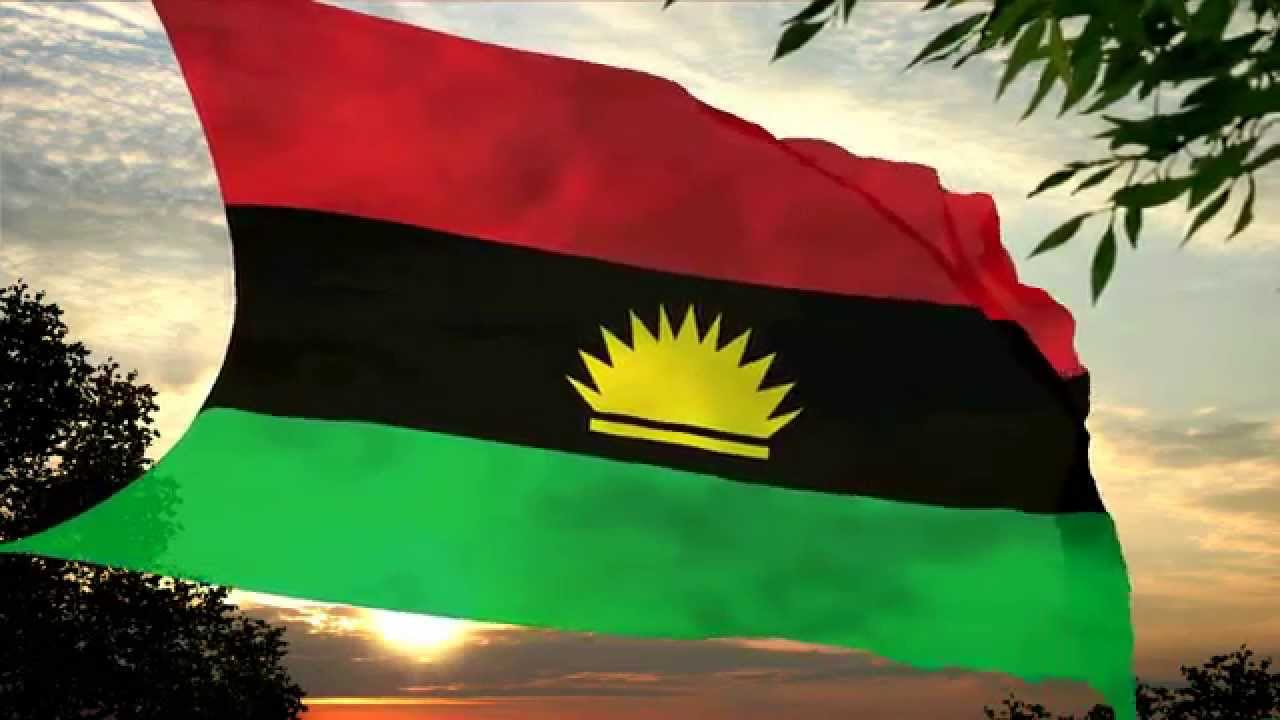
Neither Britain nor Nigeria can destroy the Igbo determination to be free. Igbo are irrepressible. Igbo will restore Biafra’s independence. No one can stop this outcome. Biafra’s restoration-of-independence signals to the rest of the constituent peoples or nations i.e.,  pre-conquest and occupation of Africa, enveloped in the European-created “Berlin-states” of death, immiseration, desolation and hopelessness, that freedom and transformation, right there in Africa, are achievable goals – that African peoples can build, reconstruct, embark on all possibilities of working for themselves and appropriating the fruits of their labour from their land and on their own terms...

THE world must now know that Biafra flowers innumerable Biafras of rebirth not seen in Africa for 500 years, since 1492.

(Andrew Hill Sextet, “Dedication” [personnel: Hill, piano; Kenny Dorham, trumpet; Eric Dolphy, bass clarinet; Joe Henderson, tenor saxophone;  Richard Davis, bass; Tony Williams, drums; recorded: Van Gelder Studio, Englewood Cliffs, NJ, US, 21 March 1964]) 

Herbert Ekwe-Ekwe is a specialist on the state and genocide and wars in Africa. He is the author of several books including The longest genocide – since 29 May 1966 (2019), Readings from Reading: Essays on African History, Genocide, Literature (2011), Biafra Revisited (2006), African Literature in Defence of History: An essay on Chinua Achebe (2001) and co-author, with Lakeson Okwuonicha, of Why Donald Trump is great for Africa (2018)

Twitter@HerbertEkweEkwe


Sunday, 26 May 2019

Why is the archbishop of Canterbury conspicuously silent on the ongoing Igbo genocide?

(Justin Welby... archbishop of Canterbury: conspicuous silence)

Herbert Ekwe-Ekwe

SINCE November 2015, during the course of the fiendish génocidaire Muhammadu Buhari regime in Nigeria, imposed in office by ex-US President Barack Hussein Obama, first African-descent president of the United States in 233 years of the founding of the republic, and ex-British Prime Minister David Cameron, over 3000 Igbo people have been murdered across Biafra in stepped up scorched earth campaigns by the Nigeria military and its adjunct Fulani militia and Boko Haram terrorists (latter are 2 of the world’s 5 deadliest terrorist groups presently).*****

Sixty per cent of the 3000 murdered Igbo have occurred in Onicha and neighbouring towns and villages of southwest Biafra. These are all located in the Onicha diocese of the Anglican communion, part of the Church of England, one of this Christian denomination’s largest population districts in the world. Ninety-six per cent of Igbo are Christians and about 45 per cent of these protestant and overwhelming majority Anglican. 

NEITHER the Church of England nor its head, Justin Welby, the archbishop of Canterbury, who has known Muhammadu Buhari personally since the former enjoyed an exponentially-lucrative post working for French oil company Elf Aquitaine in the early 1980s in the petroleum oil industry in Biafra’s Oshimili Delta, occupied by genocidist Nigeria since January 1970, has condemned any of these Igbo slaughters since it began or offered public condolences to the aggrieved and traumatised Anglican communion congregants... 

Welby has undoubtedly aligned his church to the the key sectors of the British establishment, including, especially, business/finance, academia and the media (except, of course, the British Broadcasting Corporation which has sustained its unenviable position as genocidist Nigeria’s external services’ broadcaster in these past 53 years of the Igbo genocide –  https://re-thinkingafrica.blogspot.com/2015/12/bbc-nationalists-or-secessionists.html) which have chosen total silence on the Igbo genocide, this longest genocide in contemporary history, as their mode of support for the prosecuting Anglo-Nigerian genocidists.  

(*****The 3000 Igbo murdered are part of the tens of thousands Igbo the Anglo-Nigerian genocidists have murdered in phase-IV of the ongoing Igbo genocide, beginning 13 January 1970. In phases I-III, 29 May 1966-12 January 1970, the dual-genocidists murdered 3.1 million Igbo or one-quarter of this nation’s population at the time.)
(Alice Coltrane Quartet, “Lord, help me to be” [personnel: Coltrane, piano; Pharoah Sanders, tenor saxophone; Jimmy Garrison, bass; Rashied Ali, drums; recorded: Coltrane home studio, Dix Hills, New York, US, 6 June 1968]) 

Herbert Ekwe-Ekwe is the author of The longest genocide – since 29 May 1966 (2019) and co-author, with Lakeson Okwuonicha, of Why #DonaldTrump is #great for #Africa (2018)

Twitter @HerbertEkweEkwe


Saturday, 25 May 2019

Igbo people don’t have to justify their current freedom mission; no one ever does


Herbert Ekwe-Ekwe

EVEN IF THE Igbo are not subjected to the cataclysmic genocide of 29 May 1966-present day, this foundational genocide of post-(European)conquest Africa in which suzerain state Britain and its Fulani islamist/jihadist-led Nigeria client state have murdered 3.1 million Igbo or 25 per cent of Igbo population (phases I-III, 29 May 1966-12 January 1970) and the dual-genocidists’ additional murder of tens of thousands of Igbo during phase-IV of the genocide (13 January 1970-present day) which includes the current stretch’s blitzkriegesque offensive (since November 2015) that the notorious Muhammadu Buhari regime (imposed in office by ex-US President Barack Hussein Obama, first African-descent president of the United States in 233 years of the founding of the republic, and David Cameron, ex-British prime minister) and its adjunct duo Boko Haram and Fulani militia (erroneously tagged  “Fulani herdspeople” in the media in Nigeria) forces (presently, 2 of the world’s 5 deadliest terrorist groups) are waging in occupied Biafra, they, the Igbo,  just like any other peoples, have the right to declare themselves free from Nigeria or indeed from any other state in Africa they find themselves domiciled if they so wish.

This was precisely why the Igbo didn’t have to offer some justification for its 30 year-old vanguard role (1930s-October 1960) in formally terminating 76 years of the British conquest and occupation of Nigeria, not even to the north region Fulani islamist/jihadist political establishment, strategic ally of the occupation opposed to African peoples’ liberation and progenitor of the prevailing dominant retrogressive regime forces in Nigeria. 

IT MUST  be continuously stressed, if need be, that no comparable political forces anywhere else in the South World (Africa, Asia, Oceania, the Caribbean, central and south America), during this epoch, wanted their lands occupied indefinitely by any of the rampaging conqueror pan-European states (Britain, Germany, Belgium, France, Italy, Portugal, Spain) as the Fulani islamist/jihadists, this ferociously anti-African peoples’ assemblage. This was why the British aptly “rewarded” them with the responsibility of “overseer”, beginning 1 October 1960, to protect Britain’s vast expropriatory economic interests in Nigeria in perpetuity as well as wage a 53-year-old genocide against the Igbo, one of the most enterprising and transformative peoples in Africa. The glaring catastrophe that is Nigeria becomes hugely intelligible in the context of this history (see Herbert Ekwe-Ekwe, The longest genocide – since 29 May 1966, [2019]).

BESIDES, the compositional aftermath of the (European)conqueror/conquered/conquest-state of Africa (Nigeria, Niger, Chad, Central African Republic, the Sudan, the Congo-B, the Congo-K, Guinea-B, Guinea-C, Guinea-E, whatever!) cannot be the basis of the restoration-of-independence for the peoples as this historic right to freedom affirmation rests incontrovertibly on the hitherto conquered constituent African nation or people – Igbo, Bakongo, Wolof, Luo, Wagogo, Buganda, Ibibio, Darfuri, Gĩkũyũ, Herero, Ndebele, Efik, Akan, Bakongo, Gur, Ijo, Punu, Ovambo, Bamileke...

Freedom train; not “agitators”

THIS RIGHT to freedom for a people, for all peoples, is inalienable. As I have demonstrated severally elsewhere (see, for instance, Ekwe-Ekwe, 2019), it is the state, any state, that is transient; definitely, not the people(s) except, of course, they, such as the Igbo, are a target or programmed for genocide by some state/s (Britain and Nigeria in this specific case) or some other agency. No one, no people, therefore, has to offer a reason for being free, for freedom. 

So, the rather perfunctory remark, “agitating for Biafra”, “Biafra agitators”, often made by some commentators to highlight the current historic drive of the Biafra freedom movement is, ironically, an assault on the very essence of this freedom. One doesn’t “agitate” for freedom; they, instead, proclaim it: “I am because I am free; I am free because I am”.
(Sonny Rollins Trio, “The freedom suite” [personnel: Rollins, tenor saxophone; Oscar Pettiford, bass; Max Roach, drums; recorded: Riverside Records, New York, US, 7 March 1958])

******Herbert Ekwe-Ekwe is the author of The longest genocide – since 29 May 1966 (2019) and co-author, with Lakeson Okwuonicha, of Why #DonaldTrump is #great for #Africa (2018)

Twitter @HerbertEkweEkwe


Wednesday, 22 May 2019

105th birthday of Sun Ra

(Born 22 May 1914, Birmingham, Alabama, US)
Herbert Ekwe-Ekwe

Pianist, bandleader, prolific composer whose output, arrangements and The Arkestra’s performances are influenced profoundly by Kemetic philosophical, astronomical and aesthetic conceptions
(Sun Ra and his Myth Science Arkestra, “Space aura” [personnel: Sun Ra, piano, George Hudson, trumpet; percussion; Marshall Allen, alto saxophone, bells; John Gilmore, tenor saxophone, percussion; Ronnie Boykins, bass, percussion; Jon Hardy, drums; recorded: Saturn, Chicago, US, [?] October 1960])
Twitter @HerbertEkweEkwe

Monday, 20 May 2019

Genocidist nigerianá, 29 May 1966-20 May 2019: What’s the scoreboard?

(Nigeria state proclivity: genocide)

Herbert Ekwe-Ekwe
NOW THE SHADOWS lengthened. The Europeans had also been busily building up and training strong African armies. Africans trained to hate, kill and conquer Africans. Blood of Africans was to sprinkle and further darken the pages of their history … Indeed, Africa was conquered for the Europeans by the Africans [themselves], and thereafter kept under [conquest] control by African police and African soldiers. Very little European blood was ever spilled. (Chancellor Williams, The Destruction of Black Civilization, 1995: 218)
(Harold Wilson... easily decipherable DNA signature: “[I] would accept half a million dead Biafrans if that was what it took...” Nigeria to destroy the Igbo resistance to the genocide [1968])
(Adesanya Maja Adekunle... predictably, this on the ground “boy boy” executioner of the Igbo genocide for his “massa” Harold Wilson duly declares: “I want to prevent even one I[g]bo having even one piece to eat ... We shoot at everything that moves in ... I[g]bo territory ... even at things that don’t move” [1968])
THROUGHOUT the stretch of these pulverising 53 years of slaughtering 3.1 million Igbo people (29 May 1966-12 January 1970) and tens of thousands additional Igbo (13 January 1970- present day) in this genocide, this foundational genocide of post-(European)conquest Africa, the only tangible capability that the Fulani islamist/jihadist-led nigerianá murderers which include the league of pan-African constituent nations therein, particularly Yoruba, Edo, Jukun, Hausa, Kanuri, Nupe, Gwari, Urhobo, Tiv, Jarawa and their co-genocidist British state have acquired is one to commit even more murders –  nothing else … definitely, not the more challenging capacity to develop and transform nigerianá human potential and economy and, in turn, attract and merit the accolades and recognition from peers and others elsewhere in the world. Nigeria, indeed, collapsed as a state with few prospects that Sunday, 29 May 1966, when its state officials and academics and students and alimajiri embarked on the Igbo genocide. This status of Nigeria is irredeemable.

ALAS, murders and murdering and murders constitute genocidist nigerianá’s easily decipherable DNA signature as duly ascribed by that Harold Wilson’s 1968 monstrous Igbo death edict. Abhorrent legacy.
 (George Russell Sextet, “Nardis” [personnel: Russell, piano; Don Ellis, trumpet; Dave Baker, trombone; Eric Dolphy, bass clarinet; Steve Swallow, bass; Joe Hunt, drums; recorded: Riverside Records, New York, US, 8 May 1961]) 

 ******Herbert Ekwe-Ekwe is the author of The longest genocide – since 29 May 1966 (2019) and co-author, with Lakeson Okwuonicha, of Why #DonaldTrump is #great for #Africa (2018)
Twitter @HerbertEkweEkwe


Friday, 17 May 2019

68th birthday of Emma Okala

(Born 17 May 1951, Onicha, Biafra)
Herbert Ekwe-Ekwe

TOWERING goalkeeper of the majestic and indomitable Enuugwu Rangers International – the football club, based in Enuugwu, Biafra, whose incomparable performances in local, regional and Africa continental football leagues’ engagements during the 1970s-1980s most symbolise, so dramatically, the dogged and resilient spirit of Igbo people in the aftermath of the cataclysmic Igbo genocide, 29 May 1966-12 January 1970, phases I-III, the foundational genocide of post-(European)conquest Africa when Fulani islamist/jihadist-led Nigeria and the assemblage of pan-African constituent nations therein, especially Yoruba, Edo, Jukun, Hausa, Kanuri, Nupe, Gwari, Urhobo, Tiv, Jarawa and its co-genocidist state Britain, under Prime Minister Harold Wilson, murder 3.1 million Igbo or one-quarter of this nation’s population
(Tina Brooks Sextet, “Back to the tracks” [personnel: Brooks, tenor saxophone; Blue Mitchell, trumpet; Jackie McLean, alto saxophone; Kenny Drew, piano; Paul Chambers, bass; Art Taylor, drums; recorded: Van Gelder Studio, Englewood Cliffs, NJ, US, 1 September 1960)

******Herbert Ekwe-Ekwe is the author of The longest genocide – since 29 May 1966 (2019) and co-author, with Lakeson Okwuonicha, of Why #DonaldTrump is #great for #Africa (2018) 
Twitter @HerbertEkweEkwe


Thursday, 16 May 2019

Reflections on African freedom, recovery, transformation


Herbert Ekwe-Ekwe

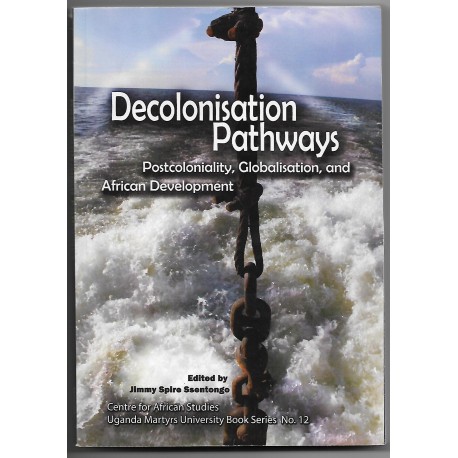
Jimmy Spire Ssentongo, ed., Decolonisation Pathways: Postcoloniality, Globalisation, and African Development (Kampala: Centre for African Studies, Uganda Martyrs University Book Series, No. 12, 2018), pp. 322

IT IS always a delight to read a study that emphasises its engagement with the unfettered restoration-of-independence of African peoples. In Decolonisation Pathways, editor Jimmy Spire Ssentongo, along with his other contributors, is adamant about the goal of this project: to “ … understand the dynamics behind Africa’s colonial history and postcolonial performances/identities in the wake of globalisation … Africa can move forward on a self-decolonisation path and development” (Jimmy Spire Ssentongo, ed., Decolonisation Pathways, 2018: 14). That evocative insight from South Africa’s Steve Biko, “The most potent weapon in the hand of the oppressor is the mind of the oppressed”, posted prominently under the book’s title on the back cover, alerts the reader of how discerning the writers of the text deem the subject of their enterprise.

Despite the certainty of the subject and focus as the title cover demonstrates, most of the contributors are caught up in a level of unclarity, right from the outset of their endeavour, that challenges who, indeed, is the subject of their study. Most fundamentally, the study presented is disquieting in its use of “sub-Sahara Africa”, “sub-Sahara region of Africa”, “sub-Saharan African”, “sub-Saharan Africans”, “sub-Saharan African students”, “sub-Saharan migrations”, “sub-Saharan migrants”,  “sub-Saharan immigrants”, “sub-Saharan countries”, “sub-Saharans”… – definitely not a book on Africa, Africans, African peoples, as the text’s front cover page title projects distinctly.

Epithet of racism

IT cannot be overstated that “sub-Sahara Africa” is gratuitously racist. “Sub-Sahara Africa” defies the science of the fundamentals of geography but prioritises hackneyed, stereotypical, racist labelling. The West’s creators of the “sub-Sahara Africa” epithet have literally deployed an outlandish nomenclatural code to depict an African people’s-led “sovereign” state. This is why, for instance, they never designated South Africa “sub-Sahara Africa” until an African leadership took power there in 1994. These wealth-studded entrepôts of the continent of Africa, namely the African-peoples’-led states that the West and its local allies still control and plunder so ruthlessly, have been boxed with the label “sub-Sahara Africa” on it in contrast to the Arab-led ones (https://re-thinkingafrica.blogspot.com/2016/06/blog-post_25.html).

“Sub-Sahara Africa” creators ensure that the use of their epithet has the effect of a purportedly shrinking African geographical landmass in the popular imagination, particularly within the consciousness of African peoples (cf. Steve Biko’s injunction quoted above), coupled with the continent’s supposedly attendant geostrategic global “irrelevance”. The racism at play in the minds of “sub-Sahara Africa” creators is alarmingly depraved: there are 1 billion Africans who dwell on a continent whose landmass is 30,301,596 sq km which is more than the combined landmasses of Western Europe, the United States, China, India and Argentina that total 29,843,826 sq km. For Decolonisation Pathways, surely, “sub-Sahara Africa” constitutes such a key obstacle that the study must dismantle pointedly, not buy into (!), to guarantee a less stressful passage for its envisaged African peoples’ march to freedom.

IN his chapter contribution on education in contemporary Africa, “Whose education is it? The exclusion of African values from higher education”, Johnnie Muwanga-Zake notes: “[I]n … Africa, education was imported for enhancing political, social and economic independence and development through human and physical structural development” (Ssentongo, ed, 2018: 90). Really? Who “imported” this education? Isn’t this the same EuroConqueror education programme across the continent that exists, introduced and entrenched by the European invasion, strategically, to rationalise its Africa conquest and aftermath which Muwanga-Zake describes as “Eurocentric” (93)? If indeed the reason of this “imported” education is to “enhanc[e]” the expansive goals in Africa that Muwanga-Zake himself maps out, then it is not convincing that the author would in the same breath be advocating some transformative education objective in this same Africa imbued with what he describes as “African values” (92-108). Undoubtedly, these two “streams of consciousness” are intrinsically antithetical.

Work is today’s!

Decolonisation Pathways implicitly acknowledges that the European World “abandoned” a toxic waste in Africa in the aftermath of its devastating conquest and occupation of the continent that goes by the name “state”, the “Berlin-state” in Africa, and Africans, themselves, must get rid of it to survive. It is a dreadful proposition to conceptualise any progress of African peoples in this “state” – the likes of Nigeria, Niger, Chad, the Sudan, Guinea M, Guinea N, Guinea Q … or whatever their ghastly signatures denote. These are contrived contraptions of murder and murdering of African peoples by Africans who lead the “Berlin-states” and the pillaging of critical African resources by the same Africans who lead the “Berlin-states” for transfers to the West and increasingly China.

Every African people, not these notorious leaderships who police the “Berlin-states” on the West’s behalf, is in the position to construct an organic state form that is responsive to their own nation’s worldviews and progress. This is the challenge that Africa faces presently. The quest and its solution are internal – right there in the geography of every constituent African people or nation emplaced in Africa.

AS A RESULT, few researchers elsewhere in the world have the limitless latitude possessed by contemporary African students and scholars to embark on this scholarship of restitution and transformation of a battered history. This enterprise requires scientific rigour and a critical analysis of concepts and ideas.  It also requires focus, tenacity and resilience. This generation of African peoples’ students and scholars cannot afford to pass over the burden of endeavour to their children and children’s children’s generations. This will be unpardonable. The work is today’s. Now’s the time.
(John Coltrane & Don Cherry, “Focus on sanity” [personnel: Coltrane, tenor saxophone; Cherry, pocket trumpet; Percy Heath, bass; Ed Blackwell, drums; recorded: Atlantic Studios, New York, US, 28 June/8 July 1960])

******Herbert Ekwe-Ekwe is the author of The longest genocide – since 29 May 1966 (2019) and co-author, with Lakeson Okwuonicha, of Why #DonaldTrump is #great for #Africa (2018) 
Twitter @HerbertEkweEkwe